Tag: cancels

  • University of Maine Cancels Wind Power Summit

    University of Maine Cancels Wind Power Summit

    The University of Maine cancelled its annual summit on floating offshore wind power as federal support for renewable energy wanes, Maine Public reported.

    The university decided against holding the American Floating Offshore Wind Technical Summit, or AFLOAT, “in recognition of changing federal policies and priorities,” university spokesperson Samantha Warren said in a statement. The university’s Advanced Structures and Composites Center has hosted the summit since 2020.

    The state of Maine came out with an energy plan this year that includes offshore wind as a pivotal part of meeting renewable energy goals. But the Trump administration has shown opposition to such projects—the federal government suspended a $12.5 million grant to the University of Maine’s floating offshore wind power program this spring. The university nonetheless moved forward with the grant project, launching an experimental floating wind turbine a month later.

    The university has no plans at this time to revive AFLOAT in the future, Warren told Maine Public. But the university plans to hold private meetings with relevant parties, like industry, research and government leaders, “given growing interest in commercializing its cutting-edge technology, which has promising applications that advance the nation’s economy and security well beyond ocean energy.”

    Source link

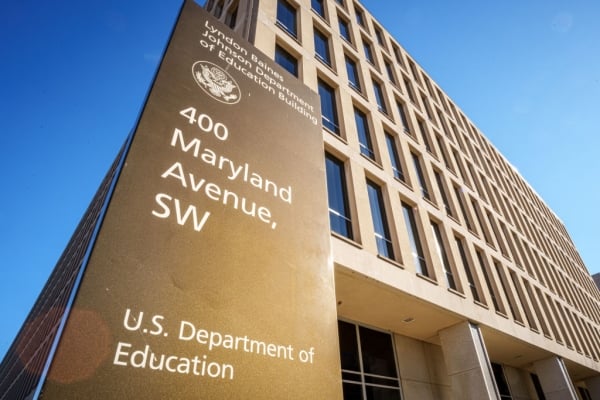
  • Education Department cancels $350M in grants for minority-serving institutions

    Education Department cancels $350M in grants for minority-serving institutions

    Dive Brief: 

    • The U.S. Department of Education is ending funding to several grant programs for minority-serving institutions, calling them racially discriminatory because colleges must enroll certain shares of underrepresented students to qualify for the awards. 
    • In fiscal 2025, the department had been expected to award $350 million in grants to benefit institutions serving large shares of Alaska Native, Asian American, Black, Hispanic, Native American, Native Hawaiian and Pacific Islander students. The agency said on Wednesday it will redirect the funding to other programs “that advance Administration priorities.” 
    • The announcement quickly drew criticism from college leaders, lawmakers and higher education organizations, who argued that cutting the grants would harm students and damage colleges that rely on the funding. 

    Dive Insight: 

    The cut grants have supported myriad initiatives at MSIs, such as purchasing laboratory equipment, improving buildings and classrooms, supporting student services like tutoring, and establishing endowment funds. 

    Eliminating the funding will irreparably harm students, Mildred García, chancellor of the California State University system, said in a Wednesday statement. She panned the move, noting that all but one of the CSU system’s 22 universities are Hispanic-serving institutions. 

    “Without this funding, students will lose the critical support they need to succeed in the classroom, complete their degrees on time, and achieve social mobility for themselves and their families,” García said.

    Higher education leaders also said the funds benefit all students. 

    “The funds granted to HSIs have never supported only Latino students,” David Mendez, interim CEO of the Hispanic Association of Colleges and Universities, said in a statement on Wednesday.  “These funds strengthen entire campuses, creating opportunities and resources that benefit all students, especially those pursuing STEM fields, as well as enhancing the communities where these colleges and universities are located.”

    University of Hawaiʻi President Wendy Hensel voiced concerns specifically about the impact the move would have across the public 10-campus system. 

    “It will affect all of our students, the programs that support them and the dedicated staff who carry out this work,” Hensel said in a Wednesday statement

    However, the Education Department took issue with the eligibility requirements for colleges to receive grants. 

    For instance, to be eligible for grants for the Developing Hispanic-Serving Institutions program, colleges must have student bodies where at least 25% of learners are Hispanic. For grants under the Minority Science and Engineering Improvement program, which is meant to encourage underrepresented students to enter STEM fields, colleges must have student bodies where 50% of learners belong to underrepresented racial or ethnic minority groups. 

    “To further our commitment to ending discrimination in all forms across federally supported programs, the Department will no longer award Minority-Serving Institution grants that discriminate by restricting eligibility to institutions that meet government-mandated racial quotas,” U.S. Education Secretary Linda McMahon said in a statement on Wednesday. 

    McMahon said the department wants to work with Congress to “reenvision these programs to support institutions that serve underprepared or under-resourced students without relying on race quotas.”

    The Education Department’s decision Wednesday targets some of the very grants over which it is currently being sued by the state of Tennessee and Students for Fair Admissions, the anti-affirmative action group that successfully sued to end race-conscious admissions at colleges. In a lawsuit filed in June, the plaintiffs argued that grants for HSIs are discriminatory due to their eligibility requirements. 

    In a July memo, the U.S. Department of Justice said it would not defend the grant programs. Solicitor General D. John Sauer said the agency determined that they violated the constitutional right to equal protection under the law. 

    The Education Department said it will still disburse roughly $132 million in grant funding for fiscal year 2025 that Congress has mandated to be spent for MSIs. “The Department continues to consider the underlying legal issues associated with the mandatory funding mechanism in these programs,” the agency added. 

    The Education Department did not answer Higher Ed Dive’s questions Thursday but cited a Wednesday article from online news publication RealClearPolitics. 

    A senior administration official told RealClearPolitics that the changes would not impact historically Black colleges and universities. The federal designation of HBCU does not include any enrollment criteria. Instead, a college must have been established prior to 1964 and have a principal mission that “was, and is, the education of Black Americans,” according to federal statute. 

    Source link

  • College Board cancels award program for high-performing Black and Latino students

    College Board cancels award program for high-performing Black and Latino students

    The College Board this month changed the criteria for its National Recognition Program awards in a move that could shift tens of thousands of scholarship dollars from Black and Latino students to white students.

    Colleges used the awards to recruit and offer scholarships to high-performing students from groups underrepresented in higher education. The award previously recognized academic achievement by students in five categories — Black, Hispanic, Native American, first-generation and those living in rural areas or small towns.

    The racial categories have been eliminated.

    Now, students living in small towns and rural areas can still earn the award if they score in the top 10 percent among all small-town and rural students in their state on the PSAT — a precursor to the SAT that is administered in high schools around the country. The same is true for first-generation students but not for students in underrepresented racial categories.

    Related: Interested in more news about colleges and universities? Subscribe to our free biweekly higher education newsletter.

    Critics said they were disappointed by the College Board’s decision.

    “They believed racial inequality was something important to address yesterday, and by changing that, they’re implying that it’s not something important to fight for now,” said Rachel Perera, a fellow in government studies at the liberal Brookings Institution. “That’s the heart of the question that’s being debated — although it’s not being debated in explicit terms — does racial discrimination exist?”

    In a statement on its website, the College Board noted the 2023 Supreme Court ruling that prohibited the use of race in admissions, although the National Recognition Program awards were used for scholarships and recruitment, not admissions.

    “Recent legal and regulatory actions have further limited the utility of these awards for students and colleges,” the statement says. Also, President Donald Trump has repeatedly made clear his disapproval of race-conscious policies in higher education, and some states have banned consideration of race in scholarship decisions. 

    In 2023-24, the College Board issued 115,000 recognition awards, and a little less than half were in the racial categories. The previous year there were more than 80,000 awards and the majority were for Black, Hispanic and Native American students. While the College Board doesn’t hand out money itself, universities use it to select students for scholarships. The Board has not maintained a list of which institutions used the racial categories, according to Holly Stepp, College Board’s director of communications.

    The College Board started the program in 1983 to recognize high-performing Hispanic students. In 2020, the other two racial categories and the small town and rural designations were added. First-generation students could win the award starting last year. Small towns could include those with modest incomes or wealthy enclaves like Aspen, Colorado. All students must also have at least a B+ average.

    Related: Cutting race-based scholarships blocks path to college, students say

    While students of all races can now earn the awards, the removal of the racial categories will likely disproportionately affect Black and Hispanic students.

    On average, Asian and white students score higher on PSATs. White students’ average score on the PSAT last year was 994 last year compared with 821 for Black students — a gap of 173 points. Asian students’ average was even higher at 1108 while Hispanic and Native American students averaged 852 and 828 respectively.

    “It’s a move towards race-blind categories when we know that education and access to education isn’t race-blind,” said Wil Del Pilar, senior vice president at the left-leaning policy and advocacy group EdTrust.

    Some conservatives praised the move, however, arguing that race-conscious scholarship and recruitment programs were ways to get around the Supreme Court’s rulings on affirmative action and that they were a form of reverse discrimination.

    Jonathan Butcher, senior research fellow in education policy at the conservative Heritage Foundation, said he believes that racial discrimination does exist and should be addressed, but that race-conscious education policies were both illegal and ineffective.

    “If you are using racial preferences, you are setting students up for a loss of confidence when they struggle in a situation they’re not prepared for,” Butcher said.

    Related: How did students pitch themselves to colleges after last year’s affirmative action ruling?

    In place of the racial categories, a new designation has been added this year that recognizes students who score in the top 10 percent of their high school on the PSAT.

    Experts say colleges are unlikely to offer scholarships to all students who score in the top 10 percent of every high school in the country, given the cost that would entail. Officials at the University of New Mexico, for example, said they would stop using the College Board designations beginning in the 2026-27 school year.

    “We’re currently analyzing our scholarship strategy, but changes will be made across the board,” said Steve Carr, the university’s director of communications, in an email.

    In 2023-24, the University of New Mexico awarded scholarships based on the College Board designations worth $15,000 each to 149 Black, Hispanic and Native American students.

    The University of Arizona also offered scholarships to students who earned National Recognition Program awards in the racial designations last year.

    “The university was already evaluating its scholarship strategy and will consider the College Board’s announcement as we determine how best to move forward and support our students,” said Mitch Zak, spokesman for the University of Arizona, in an email.

    In addition to the PSAT scores, students are eligible for the College Board award if they score a 3 or higher out of 5 on two Advanced Placement exams taken during their ninth and/or 10th grade year, although many high schools don’t uniformly offer AP courses to freshmen and sophomores.

    “We can’t really have a conversation around merit if we’re not all at the same starting point in terms of what we receive from our K-12 education,” said Del Pilar, “and how we’re able to navigate the test prep environment, or the lack of test prep that certain communities receive.”

    Contact senior investigative reporter Meredith Kolodner at 212-870-1063 or [email protected] or on Signal at merkolodner.04

    This story about the College Board was produced by The Hechinger Report, a nonprofit, independent news organization focused on inequality and innovation in education. Sign up for the Hechinger newsletter.

    The Hechinger Report provides in-depth, fact-based, unbiased reporting on education that is free to all readers. But that doesn’t mean it’s free to produce. Our work keeps educators and the public informed about pressing issues at schools and on campuses throughout the country. We tell the whole story, even when the details are inconvenient. Help us keep doing that.

    Join us today.

    Source link

  • USDA Cancels Hundreds of Journal Subscriptions

    USDA Cancels Hundreds of Journal Subscriptions

    The U.S. Department of Agriculture has canceled nearly 400 of the National Agricultural Library’s roughly 2,000 journal subscriptions, Science reported this week.

    The decision to cancel the subscriptions came at the direction of the Department of Government Efficiency, a new agency led by South African billionaire Elon Musk who donated $288 million to President Donald Trump’s 2024 re-election campaign.

    The eliminated journal titles include any of those published by 17 presses, most of which are affiliated with universities or nonprofit scientific societies, including Cambridge University Press; Oxford University Press; the American Phytopathological Society, and the U.S. National Academy of Sciences, which publishes the Proceedings of the National Academy of Sciences.

    However, the cuts spared journals published by for-profit publishers Elsevier, Springer Nature and Wiley, which collectively accounted for more than half of the library’s journal subscriptions, according to Science’s analysis.

    USDA told staff members Friday that though the agency would consider restoring some of the journals, they were only given hours to submit justifications.

    “Peer-reviewed publications are literally the cornerstones and building blocks of science, and taking these away from scientists at USDA is like you’re building a house and pull out the foundation: Everything else above becomes more unstable,” said Chris Stelzig, executive director of the Entomological Society of America. “USDA scientists are doing this work to protect the American food supply, and it frustrates me that that’s not being recognized here.”

    Source link

  • Bunker Hill Cancels Study Abroad Amid Federal Policy Shifts

    Bunker Hill Cancels Study Abroad Amid Federal Policy Shifts

    Bunker Hill Community College is canceling its summer study abroad programs in response to Trump administration immigration policies, WBUR reported.

    “Our first priority in any Study Abroad experience is the safety of our students and staff,” read a statement from the community college to WBUR. “With the changes in national immigration policy and enforcement that have emerged over the last several weeks, including the prospect of renewed travel restrictions, the College will redirect this year’s exploration and learning to U.S.-based sites.”

    The community college planned to send about 60 students to Costa Rica, Ghana, Japan, Kenya and Panama for two-week educational programs between May and July. The decision to cancel the trips came after news reports that the Trump administration is considering a travel ban on dozens of countries.

    Biology professor Scott Benjamin, who’s led the Costa Rica trip since 2002, told WBUR that college leaders were concerned for international students who planned to go on these trips. International students make up 7 percent of the college’s student body.

    “The school was just very worried about the probably remote, but still potential possibility that we could go away and come back, and a student couldn’t come back into the country,” Benjamin told the news outlet.

    Source link

  • Trump admin cancels $400M in grants at Columbia U

    Trump admin cancels $400M in grants at Columbia U

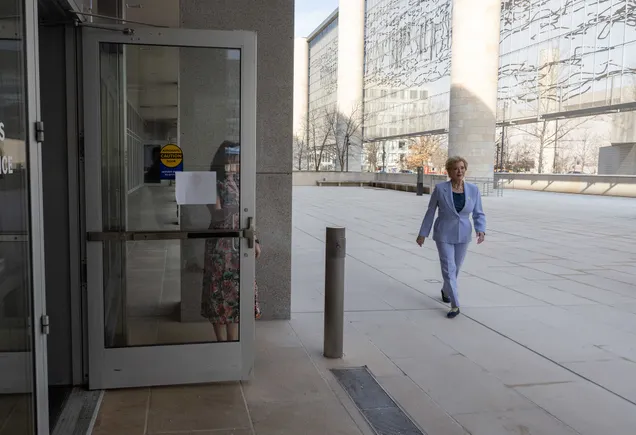
    The Trump administration announced Friday that it’s cutting $400 million in grants and contracts from Columbia University as a result of what Republican officials say is “continued inaction” and failure to protect Jewish students at the Ivy League institution.

    The accusations were made in a joint news release from the Departments of Justice, Health and Human Services, Education, and the General Services Administration, all of which are members of an antisemitism task force the president assembled just one month ago through an executive order. Earlier in the week, the task force said it was reviewing Columbia’s $5 billion in federal grants and hinted that it could halt some of the university’s contracts. That notice was the task force’s first major action, and other universities could face similar reviews, experts said Friday.

    “For too long, Columbia has abandoned that obligation to Jewish students studying on its campus,” Education Secretary Linda McMahon said in the release. “Today, we demonstrate to Columbia and other universities that we will not tolerate their appalling inaction any longer.”

    It remains uncertain exactly what grants and contracts will be affected, and the Department of Education did not respond to Inside Higher Ed’s request for clarity.

    Columbia officials said the university is “reviewing the announcement” and pledged to “work with the federal government to restore Columbia’s federal funding.”

    “We take Columbia’s legal obligations seriously … and are committed to combating antisemitism,” a spokesperson said in an email to Inside Higher Ed.

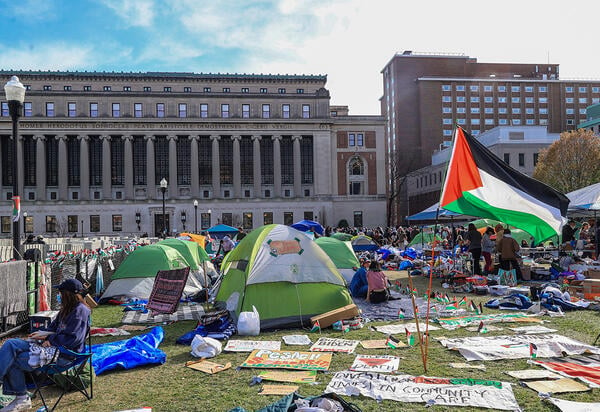
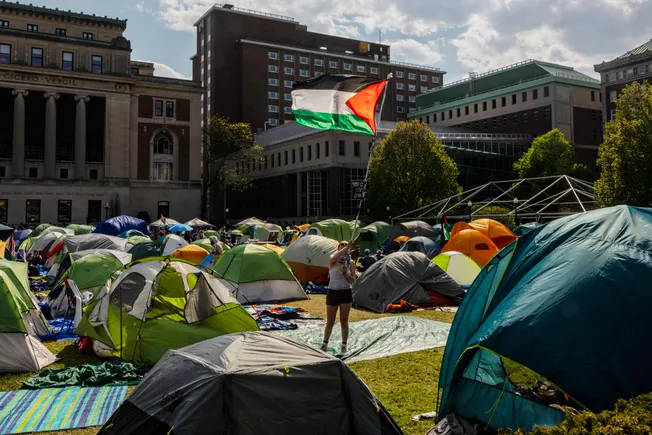
    Columbia has been a frequent target for Republicans who have taken issue with how colleges responded to a spate of demonstrations protesting Israel’s war in Gaza since Oct. 7, 2023. That criticism ratcheted up last spring after pro-Palestinian student protesters erected an encampment of tents and later took over a campus building in hopes of persuading the university to divest from companies affiliated with Israel. Those protests, and Columbia’s decision to call in city police in response, not only sparked a national movement but also attracted strong opposition from critics who declared the demonstrations antisemitic and accused the colleges of failing to defend Jewish students.

    Trump officials have pledged to crack down on campus antisemitism, and this action against Columbia could serve as an early test case of how exactly the new administration could follow through on campaign trail promises.

    But canceling a university’s grants and contracts would be unprecedented. Higher education policy experts say that even if it’s just a threat, the concept of pulling funds without proper investigation from the Office for Civil Rights is deeply alarming.

    “You don’t get to punish people just because you don’t like what they’re doing,” said Jon Fansmith, senior vice president of government relations at the American Council on Education. “The fact that the administration is choosing to simply ignore not just precedent, not just norms, but the actual law covering this should be concerning to a lot of people, not just people at Columbia.”

    The Education Department’s Office for Civil Rights is tasked with enforcing Title VI of the Civil Rights Act of 1964, which prohibits discrimination based on race and national origin, including antisemitic and Islamophobic discrimination. The department’s rules and regulations, which Fansmith said are mandated by Title VI, outline how OCR conducts investigations and what to do if the office finds a violation. OCR is required to attempt to reach a resolution with the institution. In the rare case that a college refuses to comply with the law, the case can be referred to the Department of Justice.

    “So while the law doesn’t specifically dictate the process, it dictates the necessity of the process,” Fansmith said. “Nowhere in federal law is the government given the authority to arbitrarily select different types of federal funding and withhold them from an institution absent any prior finding or decision.”

    Republicans from the House Committee on Education and the Workforce, on the other hand, praised the decision.

    “Americans do not want their money sent to institutions that serve as breeding grounds for hatred and support for terrorism,” Representative Tim Walberg, the Michigan Republican who chairs the committee, said in a statement. “I applaud the Trump administration for listening to the American people and holding institutions accountable when they fail to combat antisemitic, anti-American values.”

    Walberg and then–committee chair Representative Virginia Foxx were key figures in a scathing interrogation of then–Columbia president Minouche Shafik last spring. They also subpoenaed the university for records in August and published a deep-dive campus antisemitism report in November.

    But these congressional actions, as well as the department’s civil rights investigations, are separate from the actions of the task force.

    “The entire House report would be—what I’m sure many people would consider—a great piece of evidence in an OCR investigation,” Fansmith said. “The Trump administration is just missing the step where OCR does an investigation … which they’re required to in statute.”

    The statement said that Columbia should expect more cancellations.

    ‘Weaponizing’ Funding Cuts

    Similarly to Fansmith, First Amendment advocates see the Trump administration’s move as an overreach designed to intimidate institutions and chill campus free speech rather than address civil rights violations and hate speech.

    Kristen Shahverdian, program director for campus free speech at PEN America, said in a statement that while universities must urgently respond to concerns about antisemitism and ensure that students can participate fully and equally in campus life, they also need to be given “space, time and resources” to do so. The task force has not allowed that, and as a result federal research funding hangs in the balance.

    The Trump administration is “weaponizing nearly every instrument it has to suppress ideas it disfavors and pressure institutions into enforcing ideological alignment,” Shahverdian said. “The threat is sure to reverberate across the higher education sector, just as it seems intended to do.”

    Tyler Coward, lead counsel of government affairs at the Foundation for Individual Rights and Expression, told Inside Higher Ed that though the loss of funds is a potential consequence for institutions that violate antidiscrimination law, they may only face liability if they fail to address the unlawful conduct.

    “If the administration is cutting funding to Columbia for violating Title VI, it must be clear and transparent about how it arrived at that decision and follow all relevant procedural requirements before doing so,” Coward said. And First Amendment–protected speech cannot be punished with the retraction of federal funds, he added. (The release offered no specifics on how the task force made its decision.)

    This “immediate cancellation” violates the law. If the Admin thinks Columbia has violated Title VI by being deliberately indifferent to antisemitic harassment, it has to give Columbia a chance for a hearing first, make findings on the record, & wait 30 days.

    www.nytimes.com/live/2025/03…

    [image or embed]

    — Sam Bagenstos (@sbagen.bsky.social) March 7, 2025 at 1:27 PM

    Fansmith said he was “not in a position to say” whether Columbia’s response to the student protests, building raids and encampments of 2024 would qualify for punishment under a proper OCR investigation. But the Trump administration “clearly thinks so,” he added.

    “If they are so certain of what the outcome will be, then there’s no harm from conducting an investigation,” he said. But “there’s plenty of harm from not doing it.”

    Trump ‘Walking the Talk’

    But right-leaning advocates for the protection of Jewish students and faculty members say the move was justified and necessary.

    Kenneth Marcus, a prominent civil rights lawyer who ran OCR during Trump’s first term, described Trump’s latest actions as “incredible.”

    “If anyone wasn’t paying attention before, this will get their attention,” said Marcus, who also founded the Louis D. Brandeis Center for Human Rights Under Law. “There can now be no doubt that the Trump administration has prioritized campus antisemitism far higher than any prior administration has done. They have Columbia University in their scopes today, but no one should doubt that they will be coming after other universities as well.”

    McMahon affirmed Marcus’s take on the situation in an interview with Fox News shortly after the funding cuts were announced.

    “The president has said he’s absolutely not going to allow federal funds to be going to these universities that continue to allow antisemitism,” she said. “Kids ought to go to college and parents ought to feel good about their kids going to college, knowing they’re in a safe environment.”

    Marcus also applauded the Trump administration for utilizing multiple agencies to tackle the problem at once. The Department of Justice was minimally involved in responding to campus antisemitism during Trump’s first term, he said, but this time “the DOJ is leading the charge” and “the difference is palpable.” This weekend, all university administrators should be meeting with their general counsels and ensuring they are doing everything they can to protect all students, Marcus advised.

    “The last administration spoke of a whole-of-government approach. This administration is walking the talk,” he said.

    Liam Knox contributed to this report.


    Source link

  • Trump administration cancels $400M of Columbia’s grants and contracts amid antisemitism probe

    Trump administration cancels $400M of Columbia’s grants and contracts amid antisemitism probe

    This audio is auto-generated. Please let us know if you have feedback.

    Four federal agencies announced Friday they are immediately canceling $400 million of grants and contracts to Columbia University over what they described as the Ivy League institution’s “continued inaction in the face of persistent harassment of Jewish students.” 

    The cancellation of the grants and contracts comes just four days after the Trump administration’s newly created Joint Task Force to Combat Anti-Semitism announced a probe into Columbia. 

    The four agencies — the U.S. Department of Justice, U.S. Department of Health and Human Services, U.S. Department of Education and U.S. General Services Administration — said more cancellations will follow. The university has over $5 billion in federal grant commitments, according to the announcement. 

    Universities must comply with all federal antidiscrimination laws if they are going to receive federal funding,” U.S. Education Secretary Linda McMahon said in a Friday statement.For too long, Columbia has abandoned that obligation to Jewish students studying on its campus. Today, we demonstrate to Columbia and other universities that we will not tolerate their appalling inaction any longer.

    A Columbia spokesperson said Friday that officials are reviewing the announcement and plan to work with the federal government to restore the funding. 

    “We take Columbia’s legal obligations seriously and understand how serious this announcement is and are committed to combatting antisemitism and ensuring the safety and wellbeing of our students, faculty, and staff,” the spokesperson said.

    The four agencies threatened to take similar actions against other colleges. 

     The decisive action by the DOJ, HHS, ED, and GSA to cancel Columbia’s grants and contracts serves as a notice to every school and university that receives federal dollars that this Administration will use all the tools at its disposal to protect Jewish students and end anti-Semitism on college campuses,” they said in Friday’s announcement. 

     The antisemitism task force is already poised to review several other high-profile colleges. Last week, the Justice Department said the group would visit 10 college campuses, including Columbia, where antisemitic incidents have been reported since October 2023, when Hamas attacked Israel. 

     The other campuses are George Washington University, Harvard University, Johns Hopkins University, New York University, Northwestern University, University of California, Los Angeles, University of California, Berkeley, University of Minnesota and University of Southern California. 

    Even more recently, the task force on Wednesday announced a probe into the University of California over allegations that it discriminated against employees by not doing enough to prevent an antisemitic and hostile work environment. 

    Groups raise concerns over free speech

    Columbia has drawn Republican policymakers’ ire for months over the way university administrators have responded to pro-Palestinian protests on its campus. Protesters erected an encampment on the university’s lawn in April, sparking similar demonstrations nationwide that led to hundreds of student arrests. 

    This past fall, many colleges tightened their protest rules to deter encampments. Since then, Columbia and other high-profile institutions largely haven’t seen the same long-running encampments that rocked their campuses last spring, though protesters have held sit-ins and other demonstrations. 

    Columbia itself has made several policy changes — including some that have attracted criticism from free speech scholars. 

    The university’s Office of Institutional Equity — a newly created committee — has recently been bringing disciplinary cases against students who have criticized Israel, the Associated Press reported earlier this week. 

    “Based on how these cases have proceeded, the university now appears to be responding to governmental pressure to suppress and chill protected speech,” Amy Greer, an attorney advising the students under review, told AP. 

    Source link

  • Education Department cancels $350M in contracts, grants

    Education Department cancels $350M in contracts, grants

    J. David Ake/Getty Images

    The U.S. Education Department has canceled 10 contracts with Regional Educational Laboratories totaling $336 million and a further $33 million of grants to Equity Assistance Centers.

    The decision, announced Friday, appears to be another example of Elon Musk’s U.S. Department of Government Efficiency slashing the department’s activities and of anti–diversity, equity and inclusion activist Christopher Rufo’s continuing influence. The cuts also seem to part of the Trump administration’s crusade against programs that could be considered DEI-related, but it’s unclear what all the canceled contracts and grants were actually for.

    Regional Educational Laboratories, or RELs, have been around for more than a half century. Among other things, they contribute “research on how experiences within the nation’s education system differ by context and student group, thereby impacting outcomes,” according to the website of the Institute of Education Sciences, which administers the 10 RELs.

    On Feb. 10, the Trump administration said it canceled nearly $900 million in Institute of Education Sciences contracts. Then, on Thursday night—in a news release titled “U.S. Department of Education Cancels Additional $350 Million in Woke Spending”—the department announced the severing of the REL contracts.

    “Review of the contracts uncovered wasteful and ideologically driven spending not in the interest of students and taxpayers,” the department said. It said REL Midwest “has been advising schools in Ohio to undertake ‘equity audits’ and equity conversations.”

    But the release didn’t say how much REL Midwest was receiving for that work or further explain what the other canceled contracts were for. The department said in an email Friday that no further information was “cleared for release.”

    President Trump has said he plans to close the Education Department, but the release suggested that these contract cancellations might not be part of a permanent reduction in spending. “The department plans to enter into new contracts that will satisfy the statutory requirements, improve student learning and better serve school districts, state departments of education and other education stakeholders,” the release said.

    The release also said the department “terminated grants to four Equity Assistance Centers totaling $33 million, which supported divisive training in DEI, critical race theory and gender identity for state and local education agencies as well as school boards.” It didn’t hint at restoring this funding.

    The Equity Assistance Centers were originally referred to as the Desegregation Assistance Centers program, according to the Education Department, and help to ensure “that all students have equitable access to learning opportunities, regardless of their child’s race, sex, national origin, or religion.”

    On Thursday afternoon, Rufo, a senior fellow at the conservative Manhattan Institute, posted on X a few examples of what he had telegraphed as “a trove of insane videos, slides and documents from the Department of Education. The whole department functions like a Ponzi scheme for left-wing ideologies.”

    Then, roughly three hours before the department announced the cuts, he posted, “I’m hearing murmurs that the @DOGE team is following my posts about the Department of Education.” About an hour before the announcement, he posted that the department’s “DOGE team has terminated $350 million in federal contracts to the DOE’s ‘regional education laboratories’ and ‘equity assistance centers.’ We expose corruption on X, then DOGE wipes it out in D.C.”

    Rufo didn’t return requests for comment Friday. The Knowledge Alliance, a coalition advancing research that’s critical to solving education problems, said in a news release Friday that the REL contract cancellations continue “the unprecedented assault on learning and evaluation in the U.S. education system.”

    “RELs provide research and technical assistance that is tailored to specific states and communities, helping schools and districts tackle the most pressing challenges they face,” the Knowledge Alliance release said. “Working in close partnership with educators, school leaders and policymakers, RELs help design and implement approaches that meaningfully improve outcomes for everyone in our school communities.”

    Source link

  • Hiring freeze cancels internships with federal agencies

    Hiring freeze cancels internships with federal agencies

    Kristin Comrie is set to graduate this semester with a master’s in health informatics from a fully remote program that she balances with a full-time job. But the federal hiring freeze has thrown a wrench into her plans, prompting the Veterans Health Administration to cancel her unpaid internship, which she needed to fulfill a graduation requirement.

    It wasn’t easy to find an opportunity that fit in with her job and schoolwork, but the VHA internship sounded ideal; she could work remotely, and the team at the VHA seemed happy to accommodate her busy schedule. Slated to start Feb. 10, she had just finished her background check and fingerprinting when she received notice that the internship had been canceled.

    “I got a generic email that they were rescinding the offer because of the federal hiring freeze,” Comrie recalled.

    The news left her “scrambling” to find another internship that she could finish in time to graduate in May. Two weeks later, she hasn’t yet found a new position but said she might be able to coordinate with her current employer to take on additional responsibilities in order to fulfill the requirement.

    Comrie isn’t the only student to have had a federal employment opportunity abruptly rescinded. The hiring freeze appears to have forced federal agencies to cancel numerous internships; most prominently, thousands of legal internships and entry-level positions within the Department of Justice and beyond have been impacted, according to reports on social media and in news outlet like Reuters and Law360.

    “We’ve most definitely seen impacts of the federal hiring freeze and subsequent actions related to college recruiting and internships. We’re hearing from colleges that there have been internships that have been canceled and we have heard that federal agencies have pulled out of going onto campuses to recruit,” said Shawn VanDerziel, executive director of the National Association of Colleges and Employers, an advocacy group for campus career centers and the businesses that work with them. “I would hope once the dust settles over the coming weeks and months that we will have many more answers and that the trajectory will be more positive.”

    It represents a stark contrast from just a year ago, when the federal government finalized regulations to expand internship opportunities in an effort to hire younger talent. Government employees skew Gen X and older, with those over 55 making up a third of federal workers and those under 30 composing just 8 percent. To keep the government well staffed as the aging workforce retires, officials vowed to cultivate a younger demographic.

    “Early career programs are critical to recruit the next generation of government leaders,” then–Office of Personnel Management director Kiran Ahuja told Government Executive, a publication focused on the federal government, in a statement. “The updates to the Pathways Programs will increase opportunities and remove barriers to hire interns, fellows, apprentices, recent students and trainees, which will help federal agencies boost their talent pipelines to serve the American people. No matter what your interests are, the federal government offers opportunities in nearly every sector and every industry.”

    Those rules, finalized last April, went into effect in December, meaning they were in place for just over a month before the hiring freeze began on Inauguration Day.

    For students, working in government is a rare opportunity to explore certain career specializations that are difficult to study elsewhere, like diplomacy. Federal internships often allow students to experience America’s center of government firsthand—and to get their foot in the door for a dream job.

    “If you got a federal government internship, it means you’re quite capable,” said Brian Swarts, director of Pepperdine University’s D.C. program, one of approximately 40 satellite campuses in the capital dedicated to supporting and educating student interns. “It’s much more advanced than other internships. Generally speaking, students who have acquired a government internship are very excited about those opportunities … they’re seeing this as their one opportunity to move forward with a future role in the government.”

    Inside Higher Ed reached out to a handful of the agencies that have reportedly cut internships—the Department of Justice, the Environmental Protection Agency, Health and Human Services, and Veterans Affairs.

    In response to a series of questions, an EPA spokesperson responded, “There have been no mass cancellations of EPA internships. The EPA is diligently implementing President Trump’s executive orders and associated guidance.”

    The other three offices did not respond to requests for comment.

    Since the hiring freeze went into effect, the administration has carved out some exceptions, saying that agencies are “permitted” to make allowances for internships through the Pathways Programs, centralized programs that install interns, recent graduates and midcareer fellows across various agencies, aiming to convert them into full-time employees.

    But the majority of interns for federal agencies are not part of the Pathways Programs.

    Other exceptions would have to be carved out by the agencies themselves on a case-by-case basis, McLaurine Pinover, a spokesperson for OPM, said in an email.

    Katie Romano, executive director of the Archer Center, which supports students from the University of Texas system in pursuing internships in D.C., told Inside Higher Ed that two current Archer fellows had spring semester internships rescinded—one a full-time and one a part-time position—but both have been able to transition to other opportunities in the city.

    A director of another college’s D.C. program, who asked to remain anonymous, said no students from her institution had lost federal internships this spring. But she said that’s likely because several students backed out of opportunities with federal agencies after Trump was elected because they disagreed with his politics or feared chaos under his administration.

    “My fear from a macro level is we’re going to turn off an entire generation of young people from civil service as they’re watching all of this. If you were 21 and thinking about what you were going to do after graduation and looking for an internship that would set you up for success and you see this going on, you might just choose to pivot your entire plan,” she said.

    ‘It’s Been Very Stressful’

    Law students, in particular, have found themselves struggling to find new opportunities; since most law interns are hired months before their onboarding date, few private firms have spots left, leaving those who lost internships with minimal options for summer work.

    “In the law school world, not working on your summers is not necessarily going to destroy your future career, but a lot of postgrad employers look at that quizzically,” said Dylan Osborne, a second-year Brooklyn Law School student who was slated to work at the Internal Revenue Service this summer until he received an email that the internship had been canceled due to the hiring freeze.

    Moreover, many of the students with federal job offers in hand had already begun making arrangements to live in D.C. for the summer.

    One second-year law student said that while she was fortunate not to have signed a lease in D.C. before her internship offer was rescinded, she’d already told her current landlord she would not be renewing her lease, which expires in May.

    Now, with no job on the horizon, the student, who requested anonymity out of fear of jeopardizing her career, said she is “in limbo,” unsure where she will live or how much money she will earn over the summer.

    Since she received notice that her internship was canceled, she now spends as many as five hours a day applying for positions and talking on the phone with firms.

    “It’s been very stressful, especially because I took on extra responsibilities knowing I didn’t have to worry about the [job] application process,” she said. “It’s like taking on another job in itself.”

    Andrew Nettels, a third-year law student at George Washington University whose permanent job offer from the DOJ was rescinded, has organized a massive group chat of law students and new lawyers whose employment prospects were impacted by the hiring freeze. He said few members of the group—which maintains a document of opportunities and firms taking interns—have had success finding replacement positions.

    “I’m not personally aware of anyone finding anything new. I’m aware of maybe three people who have had interviews,” he said, noting that members of the chat are encouraged to share their successes. “This isn’t to place any blame at all on the private sector—we’re already several months off the recruitment cycle … their hiring committees have been trying to figure out whether they’d be in a financial position as a firm to commit to hiring one or two or however many students for the summer, and even postgraduates—it’s a huge commitment.”

    Professors, administrators and career center specialists are also working diligently to help students secure replacement positions, with some reaching out to their networks on social media in the hopes of finding leads.

    “The old saying ‘it takes a village’ could not be more appropriate right now. I have no doubt my LinkedIn ‘village’ can help not just William & Mary Law School students but also students at other schools who are anxiously and unexpectedly having to pivot as a result of the hiring freeze,” wrote Michael Ende, associate dean for career services at William & Mary Law School, in a LinkedIn post.

    According to an emailed statement from William & Mary Law School dean A. Benjamin Spencer, 13 students lost their summer internships due to the hiring freeze, and others likely would have secured positions at federal agencies in the coming months.

    “We have met or will be meeting with every student who lost their positions with federal agencies (including graduating 3Ls who lost post-graduation offers). We are helping them to restart their job searches, which includes helping them figure out what types of positions to target and getting them connected to alumni and others in the profession who have been offering their assistance by sharing internship and job openings and expressing a willingness to speak with impacted students to guide them in this time of need,” Spencer wrote.

    Osborne said that he has heard from some law students who are still hoping that their positions might be reinstated after the hiring freeze is slated to end in late April. But it’s a gamble most, including Osborne, aren’t willing to take.

    “There are some people who are hoping to wait the spring out and see if their positions are unfrozen, so to speak,” he said. “But given the attitude the administration has towards the IRS, I don’t think I’m going to be one of those people.”

    Source link

  • After Trump DEI order, MSU cancels Lunar New Year event

    After Trump DEI order, MSU cancels Lunar New Year event

    A college within Michigan State University canceled a lunch celebrating the Lunar New Year in part because of President Trump’s recent executive orders cracking down on diversity, equity and inclusion in the federal government and elsewhere, the news site Bridge Michigan reported Thursday.

    The order, signed last week, doesn’t define DEI but calls on federal agencies to “combat illegal private-sector DEI preferences, mandates, policies, programs, and activities.” Colleges with endowments valued at $1 billion or more could be investigated for potentially violating the order, under the White House directive. Michigan State has a $4.4 billion endowment.

    A handful of colleges have taken down or reworked websites related to DEI since the order, while others have called off events. For instance, a conference at Rutgers University about registered apprenticeships and historically Black colleges and universities was canceled last week following the order. (Rutgers officials say calling off the conference wasn’t a university decision. Rather, it was canceled because the organizers, a group outside the university, received a stop work order from the Department of Labor.)

    Michigan State administrators told Bridge Michigan they canceled the lunch, which was scheduled for Jan. 29 and has been held four times before, after Chinese students “expressed concern about an event tied to one racial group.”

    The College of Communications Arts and Science was set to host the event. Lauren Gaines, the college’s Office of Diversity, Equity and Inclusion director, wrote in an email obtained by Bridge Michigan and the State News student paper that the cancellation was in response to concerns related to Trump’s immigration and DEI executive orders.

    “These actions have prompted feelings of uncertainty and hesitation about gathering for events that highlight cultural traditions and communities,” Gaines wrote. “We feel it is important to honor those concerns with sensitivity and care.”

    Heidi Hennink-Kaminski, the college’s dean, wrote in a follow-up email obtained by the news outlets that the decision was not “a statement of policy, but rather as an appropriate on-the-ground response given a very short decision window.”

    Michigan State officials did not respond to a request for comment by press time but confirmed after publication that staff at the college canceled the event, adding that other Lunar New Year events continue.

    Source link