by Catharine Hill, The Hechinger Report January 20, 2026
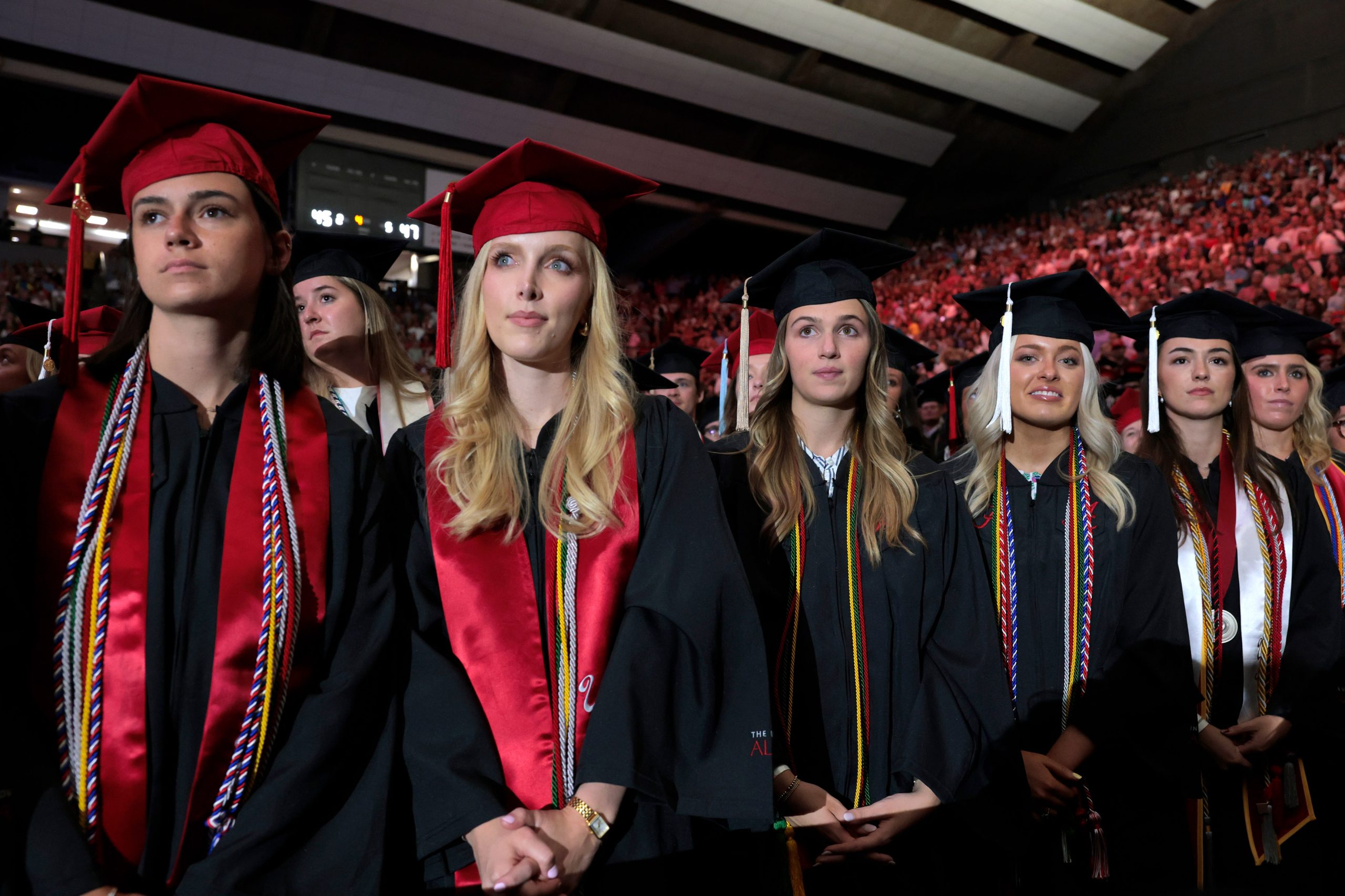
While attending a gathering of Ivy League women years ago, I upset the audience by commenting that a real challenge for U.S. higher education was the declining participation of men in higher education, not just the glass ceiling and unequal pay faced by women.
At the time, I was president of Vassar College (which did not become co-ed until 1969). We surveyed newly admitted students as well as first-year students and learned that the majority expressed a preference for a gender-balanced student body, with as co-educational an environment as possible.
With fewer men applying, that meant admitting them at a higher rate, something some other selective colleges and universities were already doing. While, historically, men were much more likely to attain a college degree than women, that changed by 1980. For more than four decades now, the number of women on campuses has surpassed the number of men.
Related: Interested in innovations in higher education? Subscribe to our free biweekly higher education newsletter.
These days, 27 percent more women than men age 25 to 34 have earned a bachelor’s degree, according to the Pew Research Center. Aiming for greater gender balance, some colleges and universities have put a “thumb on the scale” to admit and matriculate more men.
But the end of affirmative action, along with the Trump administration’s statements warning schools against considering gender identity (or race, ethnicity, nationality, political views, sexual orientation and religious associations) in admissions, could end this preference.
To be clear, I believe that the goal of admissions preferences, including for men, should be to increase overall educational attainment, not to advantage one group over another. Economic and workforce development should be a top higher education priority, because many high-demand and well-paying jobs require a college degree. America should therefore be focused on increasing educational attainment because it is important to our global competitiveness. And the selective schools that have high graduation rates should give a preference to students who are underrepresented in higher education — including men — because it will get more Americans to and through college and benefit our economy and society.
Preferencing students from groups with lower overall educational attainment also helps colleges meet their own goals.
For schools that admit just about all comers, attracting more men — through changes in recruitment strategies, adjustments in curricula and programs to support retention — is part of a strategy to sustain enrollment in the face of the demographic cliff (the declining number of American 18-year-olds resulting from the drop in the birth rate during the Great Recession) and declining international applicants due to the administration’s policies.
Colleges that don’t admit nearly all applicants have a different goal: balancing the share of men and women because it helps them compete for students.
Selective schools don’t really try to admit more men to serve the public good of increasing overall educational attainment. They believe the students they are trying to attract prefer a co-educational experience.
We are living in a global economy that rewards talent. When selective colleges take more veterans, lower-income students and students from rural areas and underrepresented groups, the chance of these students graduating increases. That increases the talent pool, helping to meet employer demand for workers with bachelor’s degrees.
The U.S. has been slipping backward in education compared to our peers for several decades. To reverse this trend, we need to get more of our population through college. The best way to do this is by targeting populations with lower educational attainment, including men. But by adding gender to the list of characteristics that should not be considered in admissions decisions, the Trump administration is telling colleges and universities to take the thumb off the scale for men.
I suspect this was unintended or resulted from a misunderstanding of who has actually been getting a preference in the admissions process, and in assuming incorrectly that women and/or nonbinary applicants have benefited.
Over the last 15 years or more, some attributes, including academic performance, have likely been traded off in order to admit more men. How big these trade-offs have been has differed from college to college and will be hard to calculate, given all the student characteristics that are considered in making admissions decisions.
I’m in favor of making these trade-offs to contribute to improved overall educational attainment in America.
But given the Trump administration’s lumping of gender with race, college and university policies intended to attract men will now face the same legal challenges that affirmative action policies aimed at improving educational attainment and fairness face.
Differential admit rates will be scrutinized. Even if the administration doesn’t challenge these trade-offs, rejected women applicants may seek changes through the courts and otherwise, just as happened with regard to race.
Admitting male athletes could also unintentionally be at risk. If low-income has become a “proxy” for race, then athletic admits could become “proxies” for men. (Some schools have publicly stated that they were primarily introducing football to attract male applicants.)
Colleges and universities, including selective ones, are heavily subsidized by federal, state and local governments because they have historically been perceived as serving the public good, contributing to equal opportunity and strengthening our economy.
Admissions decisions should be evaluated on these grounds, with seats at the selective schools allocated according to what will most contribute to the public good, including improving our nation’s talent pool.
Targeting populations with lower-than-average college-going rates will help accomplish this. That includes improving access and success for all underserved groups, including men.
Unfortunately, the current administration’s policies are working directly against this and are likely to worsen educational attainment in America and our global competitiveness.
Catharine “Cappy” Hill is the former managing director of Ithaka S+R and former president of Vassar College.
This <a target=”_blank” href=”https://hechingerreport.org/colleges-men-trump-new-policies-disadvantage/”>article</a> first appeared on <a target=”_blank” href=”https://hechingerreport.org”>The Hechinger Report</a> and is republished here under a <a target=”_blank” href=”https://creativecommons.org/licenses/by-nc-nd/4.0/”>Creative Commons Attribution-NonCommercial-NoDerivatives 4.0 International License</a>.<img src=”https://i0.wp.com/hechingerreport.org/wp-content/uploads/2018/06/cropped-favicon.jpg?fit=150%2C150&ssl=1″ style=”width:1em;height:1em;margin-left:10px;”>
by Nirvi Shah, The Hechinger Report January 7, 2026
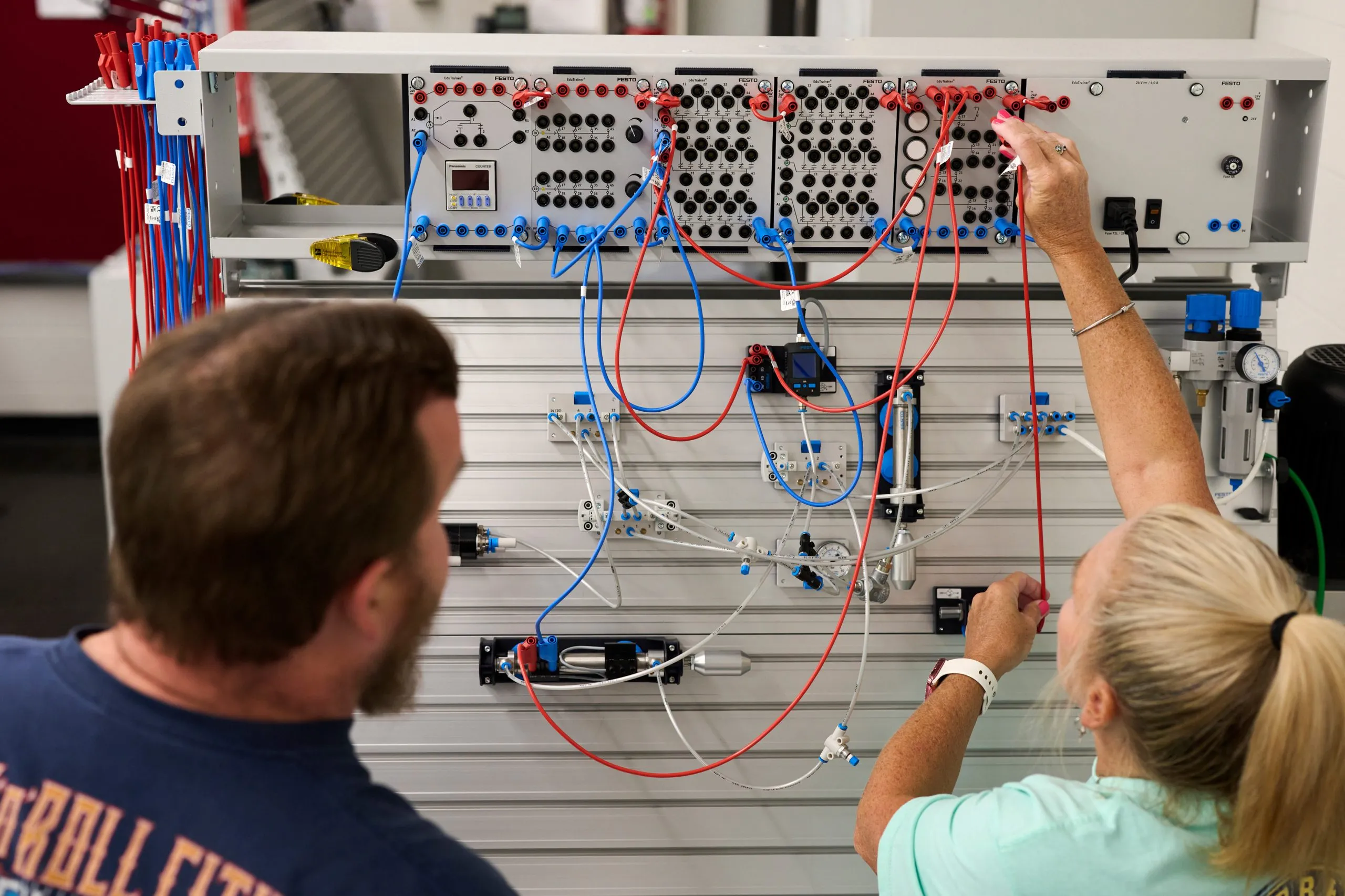
About six years ago, an apprentice training to be a machinist in Washington state told her supervisor she would probably have to drop out of the training program after having her baby: She couldn’t find child care that accommodated her shift.
It was one of the first challenges Shana Peschek was tasked with solving when she became executive director of the Machinists Institute, which trains workers for jobs in the aerospace, manufacturing and automotive industries all over the state.
Peschek knew it was essential to do something for workers with young children.
“That worst shift, the new hires are going to get it. The new hires are generally younger people. They have little kids or they are going to want a little kid,” Peschek said.
“It’s beyond the cost of child care,” she said. “If they can’t find anywhere, we’re going to lose them.”
As Peschek worked on a way to address the situation, she also wondered how she could include apprenticeship in the solution. The answer: incorporating early educator apprenticeships into a custom-built child care center tailored to the trade union’s needs. Last month, The Hechinger Report wrote about San Francisco’s child care apprenticeship program.
“Apprenticeship is my jam,” said Peschek, who emphasized that apprenticeship is a mode of education, not limited to any specific profession. While the word apprentice is often associated with roles like machinists, it is just the term for an educational path that includes paid, on-the-job training. Early educator apprenticeships do just that, providing classes and training alongside paid work experience to help hopeful teachers earn required credentials and get full-time jobs. “I want that pathway available for our teachers and assistant teachers,” she said.
With a combination of institute money, grants and donations, the Machinists Institute bought land and is constructing Little Wings Early Learning Academy in Everett, Washington. Its name is inspired by the local economy, which is powered in part by a nearby Boeing factory. The center will serve workers in the trade union, who will be able to send their young children for care starting as early as 4 a.m. through as late as midnight. Care will also be available on weekends, to accommodate a range of shifts. It is scheduled to open this spring.
Machinists, maritime industry workers and other local tradespeople and apprentices will pay a discounted rate for child care, which will also be available to area residents to enroll their kids.
Peschek’s hopes are high, for all of the apprentices the center will involve.
That’s in part because of the experience some early educator apprentices have had. Apprenticeships have been a part of the trades for centuries, but they are relatively novel in education.
The option changed the course of Carlota Hernández de Cruz’s life. For years, with only an elementary school education from when she grew up in Mexico, she was the primary caregiver for her three children while her husband was the breadwinner. When her youngest child was still in child care, at a California Head Start program run by an area YMCA, she began working a few hours a day as a parent intern at the center.
She eventually encountered Pamm Shaw, who created one of the first early educator apprenticeship programs in the country for the YMCA of the East Bay, in California’s Alameda County. Shaw encouraged Hernández de Cruz to take classes and work toward becoming an early childhood teacher.
“I’m originally from Mexico,” Hernández de Cruz said, remembering her apprehension. “I came with zero English.” But Shaw was convincing.
Hernández de Cruz took classes, one or two at a time, balancing them with motherhood and homekeeping duties. Then her husband got sick and could no longer work. It took years, but she completed the courses for her associate degree. Just a few months before graduation, her husband died.
Hernández de Cruz, now 53, knew that although what she had accomplished was monumental, it wasn’t enough. Thanks to her apprenticeship, however, her bachelor’s degree coursework was paid for, even though it was sometimes a struggle to keep up with the requirements of online courses and lectures in English, while solo parenting and working.
In 2019, Hernández de Cruz earned that bachelor’s degree but turned down a job running a child care center. She wasn’t ready. When she was approached again in 2021 about a director role, at the center where she was working, she agreed. There have been ups and downs: That center closed and she was back to teaching for a while. But now she runs the Vera Casey Center, a Head Start site for infants and toddlers in Berkeley that is part of the YMCA of the East Bay.
“I feel I can say financially I’m stable,” Hernández de Cruz said, and she said she is proud of herself and her children. Her kids grew up watching their mother work and study hard and have had opportunities she didn’t when she was younger, even though she said they all faltered, and flunked a few classes, when their father died. Her younger daughter just graduated from a nursing program and her older daughter completed a bachelor’s degree in child development and is now pursuing a master’s degree. Both daughters live at home with her, as do her parents. (Her son, she said, is still taking classes and finding his way.) “I’m stable but he’s not here with us,” Hernández de Cruz said of her husband, but “being in the classroom with kids, it helped me to heal. That’s what I feel at work. I still feel happy every day.”
This <a target=”_blank” href=”https://hechingerreport.org/early-childhood-educator-apprenticeships-offer-an-answer-to-child-care-shortages/”>article</a> first appeared on <a target=”_blank” href=”https://hechingerreport.org”>The Hechinger Report</a> and is republished here under a <a target=”_blank” href=”https://creativecommons.org/licenses/by-nc-nd/4.0/”>Creative Commons Attribution-NonCommercial-NoDerivatives 4.0 International License</a>.<img src=”https://i0.wp.com/hechingerreport.org/wp-content/uploads/2018/06/cropped-favicon.jpg?fit=150%2C150&ssl=1″ style=”width:1em;height:1em;margin-left:10px;”>
by Nosakhere Griffin-EL, The Hechinger Report January 5, 2026
Across the U.S., public school districts are panicking over test scores.
The National Assessment of Educational Progress, or the Nation’s Report Card, as it is known, revealed that students are underperforming in reading, with the most recent scores being the lowest overall since the test was first given in 1992.
The latest scores for Black children have been especially low. In Pittsburgh, for example, only 26 percent of Black third- through fifth-grade public school students are reading at advanced or proficient levels compared to 67 percent of white children.
This opportunity gap should challenge us to think differently about how we educate Black children. Too often, Black children are labeled as needing “skills development.” The problem is that such labels lead to educational practices that dim their curiosity and enthusiasm for school — and overlook their capacity to actually enjoy learning.
As a result, without that enjoyment and the encouragement that often accompanies it, too many Black students grow up never feeling supported in the pursuit of their dreams.
Narrowly defining children based on their test scores is a big mistake. We, as educators, must see children as advanced dreamers who have the potential to overcome any academic barrier with our support and encouragement.
As a co-founder of a bookstore, I believe there are many ways we can do better. I often use books and personal experiences to illustrate some of the pressing problems impacting Black children and families.
One of my favorites is “Abdul’s Story” by Jamilah Thompkins-Bigelow.
It tells the tale of a gifted young Black boy who is embarrassed by his messy handwriting and frequent misspellings, so much so that, in erasing his mistakes, he gouges a hole in his paper.
He tries to hide it under his desk. Instead of chastening him, his teacher, Mr. Muhammad, does something powerful: He sits beside Abdul under the desk.
Mr. Muhammad shows his own messy notebook to Abdul, who realizes “He’s messy just like me.”
In that moment, Abdul learns that his dream of becoming a writer is possible; he just has to work in a way that suits his learning style. But he also needs an educator who supports him along the way.
It is something I understand: In my own life, I have been both Abdul and Mr. Muhammad, and it was a teacher named Mrs. Lee who changed my life.
One day after I got into a fight, she pulled me out of the classroom and said, “I am not going to let you fail.” At that point, I was consistently performing at or below basic in reading and writing, but she didn’t define me by my test scores.
Instead, she asked, “What do you want to be when you grow up?”
“Because he’s smart and he always interviews famous people and presidents,” I said.
Mrs. Lee explained that Mr. Gumbel was a journalist and encouraged me to start a school newspaper.
So I did. I interviewed people and wrote articles, revising them until they were ready for publication. I did it because Mrs. Lee believed in me and saw me for who I wanted to be — not just my test scores.
If more teachers across the country were like Mrs. Lee and Mr. Muhammad, more Black children would develop the confidence to pursue their dreams. Black children would realize that even if they have to work harder to acquire certain skills, doing so can help them accomplish their dreams.
Years ago, I organized a reading tour in four libraries across the city of Pittsburgh. At that time, I was a volunteer at the Carnegie Library, connecting book reading to children’s dreams.
I remember working with a young Black boy who was playing video games on the computer with his friends. I asked him if he wanted to read, and he shook his head no.
So I asked, “Who wants to build the city of the future?” and he raised his hand.
He and I walked over to a table and began building with magnetic tiles. As we began building, I asked the same question Mrs. Lee had asked me: “What do you want to be when you grow up?”
“An architect,” he replied.
I jumped up and grabbed a picture book about Frank Lloyd Wright. We began reading the book, and I noticed that he struggled to pronounce many of the words. I supported him, and we got through it. I later wrote about it.
Each week after that experience, this young man would come up to me ready to read about his dream. He did so because I saw him just as Mr. Muhammad saw Abdul, and just like Mrs. Lee saw me — as an advanced dreamer.
Consider that when inventor Lonnie Johnson was a kid, he took a test and the results declared that he could not be an engineer. Imagine if he’d accepted that fate. Kids around the world would not have the joy of playing with the Super Soaker water gun.
When illustrator Jerry Pinkney was a kid, he struggled with reading just like Freelon. If he had defined himself as “basic” and “below average,” children across America would not have been inspired by his powerful picture book illustrations.
Narrowly defining children based on their test scores is a big mistake.
Each child is a solution to a problem in the world, whether it is big or small. So let us create conditions that inspire Black children to walk boldly in the pursuit of their dreams.
Nosakhere Griffin-EL is the co-founder of The Young Dreamers’ Bookstore. He is a Public Voices Fellow of The OpEd Project in partnership with the National Black Child Development Institute.
This <a target=”_blank” href=”https://hechingerreport.org/opinion-instead-of-defining-black-children-by-their-test-scores-we-should-help-them-overcome-academic-barriers-and-pursue-their-dreams/”>article</a> first appeared on <a target=”_blank” href=”https://hechingerreport.org”>The Hechinger Report</a> and is republished here under a <a target=”_blank” href=”https://creativecommons.org/licenses/by-nc-nd/4.0/”>Creative Commons Attribution-NonCommercial-NoDerivatives 4.0 International License</a>.<img src=”https://i0.wp.com/hechingerreport.org/wp-content/uploads/2018/06/cropped-favicon.jpg?fit=150%2C150&ssl=1″ style=”width:1em;height:1em;margin-left:10px;”>
by Felicia Mello, The Hechinger Report December 23, 2025
OAKLAND — In 2020, California led the nation in outlawing transcript-withholding, a debt collection practice that sometimes kept low-income college students from getting jobs or advanced degrees. Five years later, 24 of the state’s 115 community colleges still said on their websites that students with unpaid balances could lose access to their transcripts, according to a recent UC Merced survey.
The communications failure has been misleading, student advocates said, although overall, the state’s students have benefited from the law.
It “raises questions about what actual institutional practices are at colleges and the extent to which colleges know the law and are fully compliant with the law,” said Charlie Eaton, a UC Merced sociology professor who led the research team that conducted the survey in October.
California community colleges say they are following the law, which prohibits them from refusing to release the grades of a student who owes money to the school — anywhere from a $25 library fine to unpaid tuition. The misinformation on some college websites is a clerical problem that campuses have been asked to update, the California Community Colleges chancellor’s office said in an emailed statement.
Without an official transcript, students can’t prove they’ve earned college credits to admissions offices elsewhere or to potential employers. Millions of students nationwide have lost access to their transcripts because of unpaid fees, according to estimates from the higher education consulting firm Ithaka S+R.
Student advocates argued that the practice made little money for colleges, while costing graduates opportunities that could help them pay back their debts.
California lawmakers agreed; in 2019, they passed legislation that took effect on Jan. 1 2020, barring colleges from using transcript holds to collect debts.
At least 12 other states have followed California’s lead, passing laws limiting or banning colleges from withholding transcripts.
A similar but less stringent federal rule approved during the Biden administration took effect last year.
The new rules have raised awareness about colleges’ debt collection practices and inspired some to find ways to help their students avoid falling behind on their payments in the first place or to pay off what they owe — including by forgiving their debts.
Related: Interested in innovations in higher education? Subscribe to our free biweekly higher education newsletter.
Colleges and universities, however, argued that withholding transcripts was one of the few ways they had to prevent students from bouncing among institutions and leaving unpaid bills in their wake. Some use another tactic, blocking them from registering for new courses until bills are paid.
When colleges choose to withhold transcripts, the burden falls more heavily on low-income students and students of color, according to the American Association of Collegiate Registrars and Admissions Officers. Often those students accrue debts when they withdraw partway through a course, leading the college to return part of their financial aid to the federal government and charge the bill to the student.
In states with laws limiting transcript withholding, many colleges have begun communicating earlier and more often with students about their debts and offering flexible payment plans, said Elizabeth Looker, a senior program manager at Ithaka S+R. Some have added financial literacy training or required students with unpaid bills to meet with counselors.
Eight public colleges and universities in Ohio went further, offering a deal to former students with unpaid balances: Reenroll at any of the eight, and get up to $5,000 of the outstanding debt forgiven. Called the Ohio College Comeback Compact, the program, which began in 2002 and concludes this fall, was open to former students who had at least a 2.0 GPA and had been out of school a year or more.
The program was designed to give a second chance to students whose educations stalled because of events outside their control, such as losing a job in the middle of the semester, said Steve McKellips, vice president for enrollment management at the University of Akron.
Since the Ohio College Compact’s inception, 79 students have returned to the university under the program, at a cost to the state of $54,174 in debt forgiven. The university netted five times that, or $271,924, in additional tuition, McKellips said. More than 700 students have used the compact to reenroll, according to Ithaka S+R, which helped coordinate the program and is studying the results.
“I think sometimes people have this image of somebody walking away from a tuition bill because they just don’t care,” McKellips said. “But sometimes there’s just a boulder in the way and somebody needs to move it. Once the boulder was moved and they could move forward, we’re finding them continuing happily along the way they always intended to.”
The University of California cited expected cuts to federal and state funding as one reason it opposed the bill. “UC believes that maintaining the ability to hold registration is essential for its ability to reasonably secure unpaid student debt,” UC legislative director Jessica Duong wrote to lawmakers.
Cal State spokesperson Amy Bentley-Smith said that Cal State wanted a flexible approach to debt collection and that campuses had started eliminating registration holds for minor debts such as parking tickets and lost library books.
“Students are able to move forward with their enrollment even with institutional debts in the low hundreds to the low thousands of dollars, depending upon the university,” she said.
Supporters of the failed bill — which also would have barred colleges from reporting a student’s institutional debt to credit agencies — said curbing aggressive debt collection doesn’t just help low-income students; it speeds up the training of workers in industries crucial to the state’s economy.
“Schools think about these institutional debts in a way that is very penny-wise and pound-foolish, and it’s preventing people from participating in the economy,” said Mike Pierce, executive director of Protect Borrowers.
Annette Ayala of Simi Valley, hoping to become a registered nurse, took her for-profit college to court to force it to comply with California’s debt collection law.
She had earned her vocational nursing license from the school, the Professional Medical Careers Institute, and wanted to continue her studies to become a registered nurse. But the college refused to release her transcript — citing a $7,500 debt that Ayala argued in court records she did not owe — and without the transcript she could not apply to other colleges.
In her case, California’s Bureau for Private Postsecondary Education, which regulates for-profit colleges under the state’s Department of Consumer Affairs, cited her former school for violating the state’s transcript-withholding law.
The college was fined $1,000 and ordered to update its enrollment agreement. The school forgave the debt it said Ayala owed. It’s the only case in which a school has been cited for withholding a transcript since the bureau started monitoring compliance with the law more closely two years ago, said Monica Vargas, a spokesperson for consumer affairs.
School officials had been unaware of the California law at the time Ayala sued, the school’s controller, Joshua Taylor, said, and have since updated their catalog to comply with it.
With her vocational nursing license, Ayala has been working in home health care. Now that she has her transcript, she’s applying for RN programs, and said her salary would roughly double once she has the new degree, allowing her to save for the future and help her son pay for college.
“You’ve got to give people the chance to get through their program and pay their debts as they’re working,” she said. “You can’t hold them back from being able to make top dollar with their abilities to pay back these loans.”
This <a target=”_blank” href=”https://hechingerreport.org/5-years-after-california-banned-holding-college-students-transcripts-hostage-for-unpaid-debt-some-colleges-neglect-the-law/”>article</a> first appeared on <a target=”_blank” href=”https://hechingerreport.org”>The Hechinger Report</a> and is republished here under a <a target=”_blank” href=”https://creativecommons.org/licenses/by-nc-nd/4.0/”>Creative Commons Attribution-NonCommercial-NoDerivatives 4.0 International License</a>.<img src=”https://i0.wp.com/hechingerreport.org/wp-content/uploads/2018/06/cropped-favicon.jpg?fit=150%2C150&ssl=1″ style=”width:1em;height:1em;margin-left:10px;”>
by Christina A. Samuels, The Hechinger Report December 18, 2025
Last year, Project 2025 was a conservative wish list: a grab bag of proposals large and small that would transform the federal government, including in education.
Months later, many of those wishes have become reality. That includes, at least in part, Project 2025’s ultimate goal of doing away with the Education Department.
The department still exists — getting rid of it completely would require congressional action— but it is greatly diminished: Much of the department’s work is being farmed out to other federal agencies. Half of its workforce of about 4,100 people have left or been fired. And Education Secretary Linda McMahon wrote after her confirmation that she was leading the department’s “final mission.”
Eliminating the Education Department was just one of many goals, however. While the administration did not meet all the other tasks in this “to-do” list below, compiled by The Hechinger Report and taken directly from Project 2025, there’s still three more years to go.
Early childhood
Eliminate Head Start: NO. Head Start, which provides free preschool for low-income children, still exists, though some individual centers had problems accessing their money because of temporary freezes from the Department of Government Efficiency and the prolonged government shutdown. The federal government also closed five of 10 Head Start regional offices, which collectively served 22 states.
Pay for in-home child care instead of universal (center-based) daycare: NO. Project 2025 states that “funding should go to parents either to offset the cost of staying home with a child or to pay for familial, in-home childcare.” There have been no moves to fulfill this goal, but the budget reconciliation bill the president signed in July increased the child tax credit and introduced “Trump Accounts” for children under age 18.
Expand child care for military families:YES. The National Defense Authorization Act, passed on Dec. 17 and sent to the president for his signature, authorizes over $491 million to design and build new child care centers for these families, among other provisions. The Department of Defense provides child care to military families on a sliding scale based on income. However, about 20 percent of military families who need child care can’t get it because there is not enough space.
Give businesses an incentive to provide “on-site” child care: NO. Project 2025 states that “across the spectrum of professionalized child care options, on-site care puts the least stress on the parent-child bond.”
K-12 education
Move the National Center for Education Statistics to the Census Bureau; transfer higher education statistics to the Labor Department: NO. Education data collection remains at the Education Department. However, the agency’s capacity has been sharply reduced following mass firings and the termination of key contracts — a development not envisioned in Project 2025. At the same time, Donald Trump directed the center to launch a major new data collection on college admissions to verify that colleges are no longer giving preferences based on race, ethnicity or gender.
Expand choice for families by making federal funding portable to many school options: PARTIAL. In January, the president signed an executive order encouraging “educational freedom.” One of the order’s provisions requires the departments of Defense and Interior — which run K-12 schools for military families and tribal communities, respectively — to allow parents to use some federal funding meant for their children’s education at private, religious and charter schools. However, that initiative for Indian schools ended up being scaled back after tribes protested. The “big, beautiful” spending bill signed in July created a national voucher program, but states have to opt in to participate.
Send money now controlled by the federal government, such as Title I and special education funding, to the states as block grants: NO. In the current fiscal year, about $18.5 billion in Title I money flowed to districts to support low-income students. States received about $14 billion to support educating children with disabilities. Project 2025 envisions giving states that money with no strings attached, which it says would allow more flexibility. While the administration has not lifted requirements for all states, it is considering requests from Indiana, Iowa and Oklahoma that would allow those states to spend their federal money with less government oversight. Also, in his fiscal 2026 budget proposal, Trump floated the idea of consolidating several smaller education programs, such as those supporting rural students, homeless students and after-school activities, into one $2 billion block grant. That would be far less than the combined $6.5 billion set aside for these programs in the current budget.
Reject “radical gender ideology” and “critical race theory,” and eliminate requirements to accept such ideology as a condition of receiving federal funds:YES. Immediately after Trump was sworn into office, he reversed a Biden administration rule that included protection of LGBTQ+ students under Title IX, which bans sex-based discrimination in education programs and activities that receive federal money. Trump also signed an executive order threatening to withhold federal dollars from schools over what the order called “gender ideology extremism” and “critical race theory.” In the months since, the administration launched Title IX investigations in school districts where transgender students are allowed to participate on sports teams and use bathrooms that align with their gender identity. It sent letters to schools across the country threatening to pull funding unless they agree to its interpretation of civil rights laws, to include banning diversity, equity and inclusion (DEI) policies and initiatives. The Education Department also pulled federal research grants and investigated schools and colleges over DEI policies it calls discriminatory.
Pass a federal “parents’ bill of rights,” modeled after similar bills passed at the state level: NO. House Republicans passed a Parents’ Bill of Rights Act two years ago, which would have required districts to post all curricula and reading materials, require schools receiving Title I money to notify parents of any speakers visiting a school, and mandate at least two teacher-parent conferences each year, among other provisions. The Senate did not take it up, and lawmakers have not reintroduced the bill in this session of Congress. About half of the states have their own version of a parentsʼ bill of rights.
Shrink the pool of students eligible for free school meals by ending the “community eligibility provision” and reject universal school meal efforts: NO. Under current rules, schools are allowed to provide free lunch to all students, regardless of their family’s income, if the school or district is in a low-income area. That provision remains in place. The Trump administration has not changed income eligibility requirements for free and reduced-price lunch at schools: Families that earn within 185 percent of the federal poverty line still qualify for reduced lunch and those within 130 percent of the poverty line qualify for free lunch.
Higher education
Roll back student loan forgiveness and income-driven repayment plans: PARTIAL.Three income-driven repayment plans will be phased out next year and a new one — the Repayment Assistance Plan — will be added. RAP requires borrowers to make payments for 30 years before they qualify for loan forgiveness. The administration also reached a proposed agreement to end even earlier the most controversial repayment plan known as SAVE (Saving on a Valuable Education). Trump officials have referred to the SAVE plan as illegal loan forgiveness. Under the plan, some borrowers were eligible to have their loans cleared after only 10 years, while making minimal payments.
End Parent PLUS loans: PARTIAL. These loans, which parents take out to help their children, had no limit. They still exist, but as of July 2026, there will be an annual cap of $20,000 and a lifetime limit of $65,000 per child. Grad PLUS loans, which allow graduate students to borrow directly on behalf of themselves, are being phased out. Under the Repayment Assistance Plan, graduates in certain fields, such as medicine, can borrow no more than $50,000 a year, or $200,000 over four years.
Privatize the federal student loan portfolio: NO. The Trump administration reportedly has been shopping a portion of the federal student loan portfolio to private buyers, but no bids have been made public. Project 2025 also called for eliminating the Federal Student Aid office, which is now housed in the Education Department and oversees student loan programs. Education Secretary Linda McMahon said the Treasury Department would be a better home for the office, but no plans for a move have been announced.
End public service loan forgiveness: NO. PSLF allows borrowers to have part of their debt erased if they work for the government or in nonprofit public service jobs and make at least 120 monthly payments. The structure remains, but a new rule could narrow the definition of the kinds of jobs that qualify for loan forgiveness. The proposed rule raises concerns that borrowers working for groups that assist immigrants, transgender youth or provide humanitarian aid to Palestinians, for example, could be disqualified from loan forgiveness. The new rule would go into effect in July.
Rescind Biden-era rules around sexual assault and discrimination: YES. The Department of Education almost immediately jettisoned changes that the Biden administration had made in 2024 to Title IX, which governs how universities and colleges handle cases of sexual assault and discrimination. Under the Biden rules, blocked by a federal judge days before Trump’s inauguration, accused students were no longer guaranteed the right to in-person hearings or to cross-examine their accusers. The Trump Education Department then returned to a policy from the president’s first term, under which students accused of sexual assault will be entitled to confront their accusers, through a designee, which the administration says restores due process but advocates say will discourage alleged victims from coming forward.
Reform higher education accreditation: YES. In an executive order, Trump made it easier for accreditors to be stripped of their authority and new ones to be approved, saying the existing bodies — which, under federal law, oversee the quality of colleges and universities — have ignored poor student outcomes while pushing diversity, equity and inclusion. Florida and Texas have started setting up their own accreditors and said the administration has agreed to expedite the typically yearslong approval process. The Department of Education has earmarked $7 million to support this work and help colleges and universities switch accreditors.
Dismantle DEI programs and efforts: PARTIAL. Though the administration called for eliminating college DEI programs and efforts, most of the colleges that have shut down their DEI offices have done so in response to state-level legislation. Around 400 books removed from the Naval Academy library because of concerns that they contained messages of diversity or inclusion, but most of the books were ultimately returned. The National Science Foundation canceled more than 400 grants related to several topics, including DEI.
Jill Barshay, Ariel Gilreath, Meredith Kolodner, Jon Marcus, Neal Morton and Olivia Sanchez contributed to this report.
This <a target=”_blank” href=”https://hechingerreport.org/trump-administration-makes-good-on-many-project-2025-education-goals/”>article</a> first appeared on <a target=”_blank” href=”https://hechingerreport.org”>The Hechinger Report</a> and is republished here under a <a target=”_blank” href=”https://creativecommons.org/licenses/by-nc-nd/4.0/”>Creative Commons Attribution-NonCommercial-NoDerivatives 4.0 International License</a>.<img src=”https://i0.wp.com/hechingerreport.org/wp-content/uploads/2018/06/cropped-favicon.jpg?fit=150%2C150&ssl=1″ style=”width:1em;height:1em;margin-left:10px;”>
by Alexander Mayer, The Hechinger Report December 16, 2025
Ohio resident Megan Cutright lost her hospitality job during the pandemic. At her daughter’s urging, she found her way to Lorain County Community College in Ohio and onto a new career path.
Community colleges will soon have a new opportunity to help more students like Megan achieve their career goals. Starting next summer, federal funds will be available through a program known as Workforce Pell, which extends federal aid to career-focused education and training programs that last between eight and 15 weeks.
Members of Congress advocating for Pell Grants to cover shorter programs have consistently highlighted Workforce Pell’s potential, noting that the extension will lead to “good-paying jobs.”
That could happen. But it will only happen if states and colleges thoughtfully consider the supports students need for success.
This is important, because helping students pay for workforce programs is not enough. They also need support and wraparound services, much like the kind Megan was offered at Lorain, where her program followed an evidence-based model known as ASAP that assigns each student a career adviser.
Related: Interested in innovations in higher education? Subscribe to our free biweekly higher education newsletter.
Megan’s adviser “helped me from day one,” she said, in a story posted on the college’s website. “I told her I was interested in the radiologic technology program but that I had no idea where to start. We just did everything together.”
Megan went on to secure a job as an assistant in the radiology department at her local hospital, where she had interned as a student. She knew what steps she needed to take because her community college supported and advised her, using an evidence-backed practice, illustrating something we have learned from the experience of the community colleges that use the ASAP model: Support is invaluable.
Megan also knew that her path to a full-time position in radiologic technology required her to pass a licensure test — scheduled for four days after graduation.
The students who will enroll in Workforce Pell programs deserve the same careful attention. To ensure that Workforce Pell is effective for students, we should follow the same three critical steps that helped drive the expansion of ASAP and brought it to Megan’s college: (1) experiment to see what works, (2) collect and follow the data and (3) ensure that colleges learn from each other to apply what works.
Before ASAP was developed, the higher education community had some ideas about what might work to help students complete their degrees and get good jobs. When colleges and researchers worked together to test these ideas and gathered reliable data, though, they learned that those strategies only helped students at the margins.
There was no solid evidence about what worked to make big, lasting improvements in college completion until the City University of New York (CUNY) worked with researchers at MDRC to test ASAP and its combination of longer-lasting strategies. They kept a close eye on the data and learned that while some strategies didn’t produce big effects on their own, the combined ASAP approach resulted in significant improvements in student outcomes, nearly doubling the three-year college completion rate.
CUNY and MDRC shared what they learned with higher education leaders and policymakers, inspiring other community colleges to try out the model. Those colleges started seeing results too, and the model kept spreading. Today, ASAP is used in more than 50 colleges in seven states. And it’s paying off — in Ohio, for example, students who received ASAP services ended up earning significantly more than those who did not.
That same experimentation and learning mindset will be needed for Workforce Pell, because while short-term training can lead to good careers, it’s far from guaranteed.
For example, phlebotomy technician programs are popular, but without additional training or credentials they often don’t lead to jobs that pay well. Similarly, students who complete short-term programs in information technology, welding and construction-related skills can continue to acquire stackable credentials that substantially increase their earning potential, although that also doesn’t happen automatically. The complexity of the credentialing marketplace can make it impossible for students and families to assess programs and make good decisions without help.
A big question for Workforce Pell will be how to make sure students understand how to get onto a career path and continue advancing their wider career aspirations. Workforce Pell grants are designed to help students with low incomes overcome financial barriers, but these same students often face other barriers.
That’s why colleges should experiment with supports like career advising to help students identify stepping-stones to a good career, along with placement services to help them navigate the job market. In addition, states must expand their data collection efforts to formally include noncredit programs. Some, including Iowa, Louisiana and Virginia, have already made considerable progress linking their education and workforce systems.
Offering student support services and setting up data systems requires resources, but Workforce Pell will bring new funds to states and colleges that are currently financing job training programs. Philanthropy can also help by providing resources to test out what works best to get students through short-term programs and onto solid career paths.
Sharing what works — and what doesn’t — will be critical to the success of Workforce Pell in the long-term. The same spirit of learning that fueled innovation around the ASAP model should be embedded in Workforce Pell from the start.
Alexander Mayer is director of postsecondary education at MDRC, the nonprofit research association.
This story about Workforce Pell was produced byThe Hechinger Report, a nonprofit, independent news organization focused on inequality and innovation in education. Sign up for Hechinger’s weekly newsletter.
This <a target=”_blank” href=”https://hechingerreport.org/opinion-workforce-pell-can-lead-to-good-jobs-for-students-if-they-get-the-support-needed-for-long-term-success/”>article</a> first appeared on <a target=”_blank” href=”https://hechingerreport.org”>The Hechinger Report</a> and is republished here under a <a target=”_blank” href=”https://creativecommons.org/licenses/by-nc-nd/4.0/”>Creative Commons Attribution-NonCommercial-NoDerivatives 4.0 International License</a>.<img src=”https://i0.wp.com/hechingerreport.org/wp-content/uploads/2018/06/cropped-favicon.jpg?fit=150%2C150&ssl=1″ style=”width:1em;height:1em;margin-left:10px;”>
This story was produced in partnership with Work Shift and reprinted with permission.
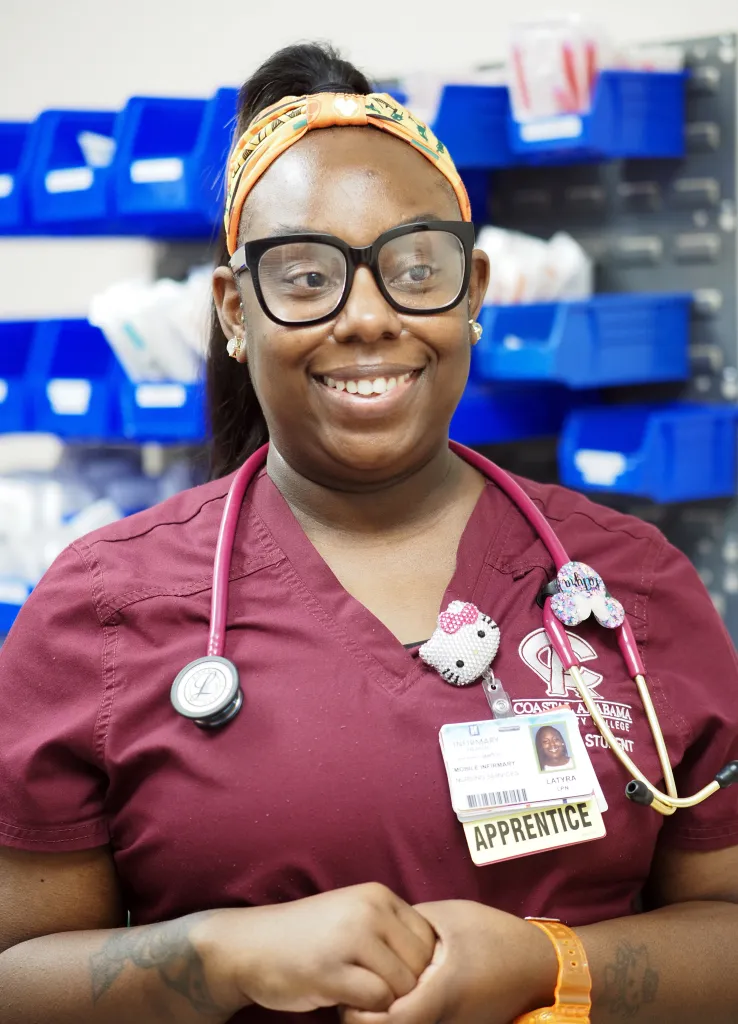
MOBILE, Ala. — Three or four times a week, LaTyra Malone starts her day at Mobile Infirmary hospital at 6:30 a.m. For the next 12 hours, she makes her rounds and visits with patients — asking if they’re in pain, checking vitals, administering fluids. To an outside observer, she appears to be a nurse.
But Malone, 37, is a registered nurse apprentice. Everything she has learned how to do in her nursing classes at Coastal Alabama Community College, she can do at the hospital under the supervision of registered nurse Ondrea Berry, her journeyworker — a term typically used in the skilled trades. Unlike most nursing students who complete their required clinical hours in groups for no pay, Malone gets paid as an employee with benefits. She also gets much more personalized, hands-on learning time.
“It’s like having a little kid attached to your leg all day,” Berry joked.
For Malone, the partnership is invaluable.
“I learn so much more one-on-one,” Malone said. “I might know the basics of disease processes or why we’re giving a certain medicine, but hearing her break it down to me helps a lot.”
The pair work largely as a team, alternating duties to allow Malone a chance to observe and practice. By now, Malone knows the ropes pretty well: In addition to her apprenticeship training and classes, she has 16 years of experience as a certified nursing assistant and a medical assistant. And Berry, who is 25, says she benefits from the working relationship too. “There are teaching moments for both of us,” she said.
Degreed nursing apprenticeships, like the one in Alabama, have emerged nationally as a potential solution to a thorny problem. The national nursing shortage is creeping toward crisis levels, with the demand for RNs like Berry and licensed practical nurses, or LPNs, projected to outstrip the supply for at least the next decade. At the same time, tens of thousands of people like Malone are already working in patient care in hospitals. Many aspire to be nurses — in fact, many certified nursing assistant programs sell the idea that you can start there, quickly land a job and then continue on to become a nurse.
But in reality, that’s a huge leap that requires an entirely different admissions process and English, math and science prerequisites that many nursing assistants don’t have. It also assumes that someone working an eight- or 12-hour shift for $18 an hour can find the time and the money for more education.
“The sort of ‘we are excellent’ ethos in nursing might be self-defeating in that it is weeding out a lot of people who would be amazing nurses,” said Iris Palmer, director for community colleges with the education policy program at New America.
Ondrea Berry, left, dispenses medication at Mobile Infirmary hospital while LaTyra Malone looks on. As an apprentice, Malone must be supervised by Berry at all times. Credit: Mike Kittrell for Work Shift
Related: Interested in more news about colleges and universities? Subscribe to our free biweekly higher education newsletter.
Several states, including Texas, North Carolina and Wisconsin, have begun growing registered apprenticeships in nursing — which have approval from the U.S. Department of Labor — to help address this problem. But no state has done quite as much as Alabama in scaling the model.
In 2021, the Alabama Board of Nursing worked with the state legislature to create a nursing apprenticeship license. Normally, nursing students are not licensed until after they graduate and pass a national licensure exam, and therefore they can’t be paid for their supervised clinical hours. The new apprenticeship license allows them to earn while they learn, making nursing school much more accessible for students like Malone and helping to fill critical staffing needs in hospitals.
Since the law passed, 80 employers and 28 colleges and universities in Alabama have jointly created LPN and RN apprenticeship programs for those who are still working toward a degree. Nearly 450 apprentices — the great majority RNs — have completed the program and passed their exam, with more than 500 currently apprenticing. It’s too soon to say whether apprenticeships will solve the nursing shortage in the state, but early data shows benefits for employers and aspiring nurses alike.
Mobile Infirmary has had over 90 nursing apprentices since the hospital’s program began in 2022, first with the LPN apprenticeship and soon after with the RN one. Graduates are required to stay at the hospital for one year after the apprenticeship ends, but most are staying beyond that. Only five have left so far, according to Stefanie Willis-Turner, the director of nursing school partnership and programs at Mobile Infirmary.
The hospital, like many others, already offered tuition reimbursement for employees who wanted to go back to college and move into nursing or another higher-level position. But such programs have notoriously low uptake, in part because most low-income employees can’t front the cost of tuition and also because many don’t know what steps to take.
“It amazed me the number of people that wanted to go back to school but didn’t really know where to get started,” Willis-Turner said. “Having a person to help guide them has really been our trigger, and that’s how we run this program.”
LaTyra Malone is a two-time apprentice at Mobile Infirmary hospital. Last year, she worked with Ondrea Berry as a licensed practical nurse apprentice while she earned the certification. This year, she is a registered nurse apprentice. Credit: Mike Kittrell for Work Shift
Willis-Turner played a crucial role in recruiting Malone for the apprenticeship. Malone has wanted to be a nurse since she was a teenager when she was president of her high school’s chapter of HOSA-Future Health Professionals, a global student-led organization that promotes careers in health care. But her plans to become a registered nurse were delayed when she became a mother. The financial burden plus the rigid schedules of nursing school made it difficult to make room for parenting, working and studying.
With the apprenticeship, Malone doesn’t have to worry about paying for college, and she can provide for her family while improving her nursing skills. Her path stands in stark contrast to that of Berry, who worked at Dairy Queen throughout nursing school to pay for tuition and health insurance. Berry didn’t have kids to take care of, but she also didn’t have financial support from anyone else in her family. Her only on-the-job training in nursing school was the clinical hours, where she joined a group of students who took turns practicing new skills with just one nurse. Berry says she only attempted two IVs in that time. Malone has done so many she can’t count.
About 75 percent of the apprentices at Mobile Infirmary over the last three years were already working at the hospital. The rest came from surrounding medical facilities. Some even quit their jobs to transfer to Mobile Infirmary for a better chance at getting into the apprenticeship program. In addition to paying students for their work, Mobile Infirmary pays for any tuition that isn’t covered by scholarships or grants. The hospital also provides two uniforms free of charge. And students know they have a guaranteed job after they graduate and pass the nursing exam.
This kind of targeted support is what makes the best apprenticeships successful in boosting individual economic mobility, its advocates say. Another key factor is the type of job an apprenticeship prepares people for. Most health care apprenticeships are for entry-level roles like CNAs, patient care technicians and medical assistants — jobs that, on average, pay $18-$20 an hour.
About half of states offer apprenticeships for LPNs, who make about 50 percent more than that, and half do so for RNs, whose median salaries are close to six figures, according to data from the U.S. Department of Labor. But far fewer apprentices are in those LPN and RN programs — and the majority of RN apprenticeships are for nurses who already have degrees, not for those who are still learning. That means aspiring nurses must still get all the way through the financial and logistical obstacles of nursing school before they can start to work.
Josh Laney helped set up the different model in Alabama when he was director of the state’s Office of Apprenticeship. For a long time, he said, he bought into the “urban legend” that training more people to be certified nursing assistants, especially when they’re young, would get people onto the path to becoming nurses.
“The pitch was, ‘We get you the certificate and then you’re going to work at a hospital because it’s a very high-demand occupation. From there you can go on and move into nursing or whatever else you want to do,’” Laney said. “But there was no specified plan for how to do that — just a low-wage, very stressful and strenuous job.”
The data backs that up. A 2018 study of federal Health Profession Opportunity Grants for CNA training showed that only 3 percent of those who completed the training went on to pursue further education to become an LPN or RN. Only 1 percent obtained an associate degree or above. A study in California showed slightly better odds: 22 percent of people who completed certificate programs at community colleges to become CNAs went on to get a higher-level credential in health care, but only 13 percent became registered nurses within six years.
Because of these outcomes, Laney refused to pursue apprenticeships for CNAs in Alabama. One reason apprenticeships for CNAs and medical assistants are common, however, is that they are jobs that don’t require degrees and have fewer regulations when it comes to training. Setting up a registered apprenticeship for nurses who don’t already have a bachelor’s degree is complex and requires the work of many entities — the nursing board, colleges and employers.
When he went to the state board of nursing to propose LPN and RN apprenticeships, Laney was initially shut down.
“To their credit, they said, ‘Go away, bureaucrat! You’re not industry, you’re not the employer. You don’t really have anything to do with this,’” he recalled. “What I learned there, and what I’ve recommended to every other state who’s tried this, is let the employers carry your water. If they want it, they’ll get it done.”
Laney then talked to the Alabama Hospital Association and Alabama Nursing Home Association, to reach employers. Given the shortages they had been experiencing, they bought into the idea and approached the nursing board themselves. Next, Laney’s team got community colleges on board, then universities. With the assurance that apprenticeships wouldn’t cut down on any of the required classes and clinical hours, the nursing board agreed to create the new license, following legislative approval.
Other states embarking on nursing apprenticeships have faced similar challenges.
Apprenticeships aren’t a panacea. They hold promise for creating upward mobility, diversifying the profession and improving the odds a student makes it through to graduation, but they can’t solve all the knotty challenges of the nursing shortage. A lack of instructors in nursing schools — and therefore a lack of available seats for qualified students — is still one of the biggest factors. And in the apprenticeship model, every student needs one-on-one mentorship, meaning hospitals must have enough staff available and willing to work in a mentoring role for up to a year.
Jay Prosser, executive director of the Massachusetts Nursing Council on Workforce Sustainability, knows all that. But he thinks apprenticeships will bring in more “practice-ready” nurses who are more likely to stay in the field long-term, especially those who were already working in patient care in the United States or other countries. Massachusetts is on the cusp of starting a licensed practical nurse apprenticeship with one employer and one academic partner, after working with the state nursing board and colleges for the past year. Unlike in Alabama, the nursing board didn’t need to create a new license, but rather the board judges whether educational programs meet regulations or not.
The Massachusetts Nursing Council on Workforce Sustainability is also creating a nursing apprenticeship network in the state, to make it easier for different institutions and programs to exchange ideas.
Prosser said one of the biggest barriers was making sure that the scope of practice for apprentices was clearly defined. He worked with local colleges to make sure of this. Prosser had previously worked as an assistant chief nursing officer in Birmingham, Alabama, and moved to Massachusetts in 2021 with the idea of apprenticeships already in mind.
Several other states have also created nursing apprenticeships for students who don’t already have a degree, but they’re limited to single institutions. In 2023, Texas began offering nursing apprenticeships for students who hadn’t already earned a degree in a collaboration between South Texas College and the Texas Workforce Commission.
The University of Wisconsin Health system has created a portfolio of nine registered apprenticeship programs, including an RN program launched in 2023 and a handful of other apprenticeship-style programs. Bridgett Willey, director of allied health education and career pathways, said the hospital started with entry-level apprenticeships, like medical assistants, before proposing degreed programs.
“There’s still kind of a myth that the colleges are going to do all this on their own,” Willey said. “Well, that’s not true. Employers have to sponsor, because we’re the ones hiring the apprentices and often supporting tuition costs, as well.”
The outcomes from the entry-level apprentice programs helped convince the health system that it was worth investing more. A three-year study showed that staff retention rates for those who participated in the hospital’s apprenticeships were 22% higher than for those who didn’t. In the two-year-old RN program, attrition is less than 10% so far — significantly lower than the attrition rate the hospital has seen with traditional students who participate in clinicals at the hospital.
UW Health supports efforts to scale their apprenticeship model across the state, but so far they haven’t panned out. Willey said employers are interested, but conversations often stall when questions arise about how to create more clinical capacity and find funding sources to support apprentices.
Even so, Eric Dunker, founding executive director of the National Center for the Apprenticeship Degree, which is affiliated with Reach University, predicts that nursing apprenticeships are about to see major growth, as teaching apprenticeships did five years ago. Earlier this year, Reach University received a $1 million grant to expand apprenticeships in behavioral health, and is planning for nursing ones. The strict licensing regulations for nursing make it more complicated than scaling up teaching apprenticeships, but Dunker sees the possibility of expanding them if nursing boards, colleges and employers all come to the table, as they did in Alabama.
“There’s a lot of entry-level health care apprenticeships,” Dunker said. “But the key is upward mobility, which is nursing and nurse practitioners. There’s typically been a bottleneck in stacking these pathways, but that’s where you’re starting to see more states and systems become a little more creative.”
Tyler Sturdivant, Coastal Alabama Community College’s associate dean of nursing, knows what that looks like. Figuring out the logistics of setting up an apprenticeship program was a challenge, he said, and required hiring an additional staff member to liaise between the college and hospital partners. But three years into the apprenticeship program for LPNs and RNs, the school is seeing higher completion rates than for traditional students.
This means they’re producing more licensed nurses to fill positions and someday mentor, or even teach, other apprentices.
On a typical Friday morning in September at Mobile Infirmary, Malone and Berry visited a 70-year-old man who came in for a urinary tract infection that then weakened him. That day, the apprentice and journeyworker switched out his bed for one lower to the ground to reduce the fall risk, taught him how to raise the bed so he could sit upright, updated him on a plan for physical therapy and adjusted his socks for him.
Malone appeared comfortable and confident, taking the lead in the patient’s care while Berry assisted her. Malone says the many hours of practice she’s had through the apprenticeship has made her feel prepared for the job and ready to continue to follow her dreams. One day, she wants to become a nurse practitioner specializing in mental health.
“I won’t feel complete until I actually become a nurse,” Malone says. “I thought I was going to be one sooner, but bumps in the road happened and I ended up having a child. If it wasn’t for the apprenticeship, I probably wouldn’t be here now.”
Contact editor Lawrie Mifflin at 212-678-4078 or on email at [email protected].
This story was produced in partnership with Work Shift and reprinted with permission.
Since you made it to the bottom of this article, we have a small favor to ask.
We’re in the midst of our end-of-year campaign, our most important fundraising effort of the year. Thanks to NewsMatch, every dollar you give will be doubled through December 31.
If you believe stories like the one you just finished matter, please consider pitching in what you can. This effort helps ensure our reporting and resources stay free and accessible to everyone—teachers, parents, policymakers—invested in the future of education.
by Lawrence Lanahan, The Hechinger Report December 2, 2025
DENVER — On a bus headed downtown, Cherri McKinney opened a compact mirror and — even as the vehicle rattled and blinding morning sun filled the window — skillfully applied eyeliner.
McKinney is a licensed aesthetician. She went into bookkeeping after graduating from high school in 1992, then ran a waxing salon for years. Later she shifted into human resources at a homeless shelter. But stepping off the bus, she started her work day as a benefits and leave administrator for Colorado’s Department of Labor and Employment.
She wouldn’t have made it past some hiring managers.
“My background is kind of all over the place,” McKinney said. “You might have looked at my résumé and thought, ‘Wow, this girl doesn’t have a college education.’”
In fact, Colorado’s state government was looking for workers just like her. In 2022, Gov. Jared Polis signed an executive order directing state agencies to embrace “skills-based hiring” — evaluating job seekers based on abilities rather than education level — and to open more positions to applicants without college diplomas. When McKinney interviewed with the state in the summer of 2024, she said, she was asked practical questions about topics like the Family Medical Leave Act, not about her academic background.
For a decade, workforce organizations, researchers and public officials have pushed employers to stop requiring bachelor’s degrees for jobs that don’t need them. That’s a response to a hiring trend that began during the Great Recession, when job seekers vastly outnumbered open positions and employers increased their use of bachelor’s degree requirements for many jobs — like administrative assistants, construction supervisors and insurance claims clerks — that people without college diplomas had capably handled. The so-called “paper ceiling,” advocates say, locks skilled workers without degrees out of good-paying jobs. Degree requirements hurt employers, too, advocates argue, by screening out valuable talent.
Related: Interested in more news about colleges and universities? Subscribe to our free biweekly higher education newsletter.
In recent years, at least 26 states, along with private companies like IBM and Accenture, began stripping degree requirements and focusing hiring practices on applicants’ skills. A job seeker’s market after Covid, plus labor shortages in the public sector, boosted momentum. Seven states showed double-digit percentage increases in job listings without a degree requirement between 2019 and 2024, according to the National Governors Association. A 2022 report from labor analytics firm Burning Glass (recently renamed Lightcast) found degree requirements disappearing from private sector listings too.
But less evidence has emerged of employers actually hiring nondegreed job seekers in substantial numbers, and a crumbling economic outlook could stall momentum. Last year, Burning Glass and Harvard Business School found that less than 1 in 700 hires in 2023 benefited from the shift to skills-based hiring. Federal layoffs and other cuts pushing more workers with degrees into the job hunt could tempt employers to return to using the bachelor’s as a filtering mechanism.
“I think it’s a sort of do-or-die moment” for skills-based hiring, said Amanda Winters, who advises state governments on skills-based hiring at the nonprofit National Governors Association.
Winters said the shift to hiring for skills requires time-consuming structural changes. Human resource departments must rewrite job descriptions, and hiring managers must be trained to change their approach to interviewing to assess candidates for skills, among other steps. And even then, said Winters, there’s no reason for managers not to prefer applicants with college degrees if they indeed have the skills.
Colorado is trying to push employers, both public and private, to make this shift. Polis’ 2022 order devoted $700,000 and three staffers to institutionalizing skills-based hiring in state government. According to a case study by the National Governors Association and the nonprofit Opportunity@Work, the state is working with human resources departments at individual agencies, training them to rewrite job descriptions to spell out skills (for example, “active listening and interpersonal skills”). When posting a job, hiring managers are encouraged to click a box that reads: “I have considered removing the degree requirement for this role.”
Polis’ team also built a dashboard to track progress toward “Wildly Important Goals” related to skills-based hiring — like boosting the share of job applicants without a bachelor’s degree by 5 percent by summer 2026. State officials say about 80 percent of job classifications (categories of jobs with specific pay scales and responsibilities — for example, Human Resources Specialist III or Accountant I) now emphasize skills over degrees.
All told, the state says, 25 percent of hires within those job classifications in 2024 — 1,588 in total — were people without degrees, roughly the same share as in 2023, when the state began collecting this information. Similar data from other states on their success in hiring skilled, nondegreed workers is scarce. State officials from Maryland and Pennsylvania, two of the first states with executive orders dropping degree requirements, said they track education levels of applicants but not of new hires.
To spark skills-based hiring in the private sector, the Colorado Workforce Development Council, a quasi-governmental group appointed by the governor, encourages local workforce boards to help assess employers’ needs and job seekers’ skills.
One of those boards — Pikes Peak Workforce Center in Colorado Springs — conducts workshops for local businesses on skills-based hiring and helps them write job descriptions that emphasize skills. When a company registers for a job fair, said CEO Traci Marques, the center asks both what positions are open and which skills are needed for them.
The center also teaches job seekers to identify their skills and show employers how they apply in different fields. A recent high school graduate who served on student council, Marques said, might discuss what that role taught them about time management, conflict resolution and event planning.
The goal is for skills to become the lingua franca between employers and job seekers. “It’s really that matchmaking where we fit in,” Marques said.
One new matchmaking tool is learning and employment records, or LERs. These digital records allow job seekers to verify their degrees, credentials and skills with former schools and workplaces and then share them with potential employers. Two years ago, a philanthropic coalition granted the Colorado Workforce Development Council $1.4 million to create LER systems.
LERs are still in the early stages of development, but advocates say they could eventually allow more precise matching of employers’ needs with job seekers’ skills.
Once nondegreed workers get in the door, employers can also see payoffs, said Cole Napper, vice president of research, innovation and talent insights at Lightcast. His research shows that workers hired for skills get promoted at almost the same rate as education-based hires and stay at their jobs longer.
But as the labor market cools, the question now is whether people without four-year degrees will get in the door in the first place. Nationally, job growth has slowed. Maryland and Colorado froze hiring this summer for state positions.
At a recent job fair at Pikes Peak, single mother Yvette Stanton made her way around the tables, some featuring placards that read “Skills-Based Hiring.” After a few months at a sober living facility, Stanton had lined up day care and was ready to work. She clutched a green folder with a résumé documenting certifications vouching for her skills in phlebotomy and medication administration. “When you have more certifications, there are better job opportunities,” said Stanton.
She approached a table for the Colorado Department of Corrections. Human resources specialist Jack Zeller told her that prisons do need workers with medical certifications, and he said she could also apply to be a corrections officer. But, he said — holding out his phone to show her the job application site — she should wait until Jan. 1.
“If the hiring freeze ends like it’s supposed to,” he said, “there’s gonna be a billion jobs going up on the website.”
Colorado works not just on the demand side, pushing employers to seek out workers based on their skills, but also on the supply side, to arm people who might not choose college with marketable skills and help them find jobs in in-demand industries.
The Polis administration encourages high schools and community colleges to make available industry-recognized credentials — including certified nursing assistant, certified associate in project management and the CompTIA cybersecurity certification— that can earn students credits while giving them skills for better-paying jobs. The governor is also making a big bet on work-based learning opportunities in high school and community college, especially apprenticeships.
If employers meet talented workers who lack degrees, they’ll grow more comfortable hiring for skills, said Sarah Heath, who directs career and technical education for the Colorado Community College System. “You’ve got to prove it to people to get them to buy into it,” she said.
At Red Rocks Community College in Lakewood, a suburb of Denver, President Landon Pirius has set a goal of eventually providing a work-based learning experience to every graduate. Earlier this year, the college hired a work-based learning coordinator and an apprenticeship coordinator, and it partners with Northrop Grumman on a registered apprenticeship that lets cybersecurity students earn money while getting technical instruction and on-the-job learning.
In his frequent discussions with regional employers, Pirius said, “the message is consistently skill-based hiring.” He added: “Our manufacturers are like, ‘I don’t even care about a degree. I just want to know that they can do X, Y, Z skills. So when you’re teaching our students, make sure you teach them these things.’”
Colorado community colleges also see opportunities to equip students with skills in fields like aerospace, quantum computing, behavioral addiction treatment and mental health counseling, where there’s a growing demand for workers and some jobs can be handled without a four-year degree. In 2022, Colorado gave its community college system $15 million to create pathways to behavioral health careers that don’t require a Master of Social Work degree or even a B.A.
Colorado’s skill-based talent pipeline extends to high school. In a “Computer Science and Cybersecurity” class at Warren Tech, a high school in Lakewood, Zachary Flower teaches in-demand “soft skills” like problem solving, teamwork and communication.
“The people who get hired are more often the ones who are better communicators,” said Flower, a software developer who was a director of software engineering and hiring manager for a travel company before he started teaching. Communication skills are half of the grade in Flower’s capstone project: Students communicate independently throughout the year with local industry sponsors, and at the end they present to a panel of engineers and developers.
Despite the emphasis on skills-based hiring, a 2023 study projected that more than 4 in 10 job openings in Colorado from 2021 through 2031 would require at least a bachelor’s degree — the second-highest proportion of any state in the country — because many industries there, like engineering, health care and business services, require higher education, according to Georgetown University’s Center on Education and the Workforce.“But there’s still a significant amount of opportunity for people with less than a bachelor’s degree,” said Nicole Smith, chief economist at the center.
People, in other words, like Cherri McKinney, who couldn’t afford college and didn’t want to spend four years finding her path. McKinney plans to stay in state government, where she believes she can develop more skills and advance without a college degree. Indeed, a 2023 executive order demanded that every state agency develop at least two work-based learning programs by the end of this year.
Gov. Polis, who championed workers like McKinney, ends his second term in January 2027 and cannot run for reelection. State budgets are fragile in the Trump era. McKinney’s colleagues call often, nervous about their benefits in a time of hiring freezes and government shutdowns.
McKinney isn’t worried.
“When I made my first career switch from bookkeeping to aesthetics, what I realized was I am the eye of this storm,” she said. “Things swirl around me, and if I bring myself in my way that I do to my jobs, that’s what is going to create the stability for me.”
Contact editor Caroline Preston at 212-870-8965, via Signal at CarolineP.83 or on email at [email protected].
This <a target=”_blank” href=”https://hechingerreport.org/no-college-degree-no-problem-not-so-fast/”>article</a> first appeared on <a target=”_blank” href=”https://hechingerreport.org”>The Hechinger Report</a> and is republished here under a <a target=”_blank” href=”https://creativecommons.org/licenses/by-nc-nd/4.0/”>Creative Commons Attribution-NonCommercial-NoDerivatives 4.0 International License</a>.<img src=”https://i0.wp.com/hechingerreport.org/wp-content/uploads/2018/06/cropped-favicon.jpg?fit=150%2C150&ssl=1″ style=”width:1em;height:1em;margin-left:10px;”>
by Jason Joseph, The Hechinger Report December 2, 2025
Too many high school graduates are unsure how their education connects to their future. Even the most driven face a maze of options, with little guidance on how classroom experiences connect to real-world careers.
It’s no wonder that fewer than 30 percent of high school students feel “very prepared” to make life-after-graduation decisions, according to a recent study.
This isn’t just an education gap; it’s an economic fault line. During this period of significant economic transition, when the labor market is demanding specialized skills and adaptability, students must be prepared for what comes next.
And yet they are not, in part because our job market is increasingly opaque to those without established networks. Many jobs are filled through networking and referrals. But few young people have access to such resources, and the result is a generation attempting to launch careers through guesswork instead of guidance. This lack of access is hindering not only the repopulation of America’s workforce but also American competitiveness on the world stage.
Consider this: Some 45 percent of employers struggle to fill entry-level roles — often because applicants lack the skills they need, a 2023 McKinsey survey found. Yet nearly half of recent college graduates end up underemployed, Higher Ed Dive reports, providing clear evidence of a disconnect between degrees earned and jobs available.
At the same time, many young people’s post-pandemic disengagement and companies’ growing interest in skills-based hiring and increasing automation have altered the employment landscape forever.
So let’s be clear — we need a top-to-bottom shift from reactive hiring to the pragmatic creation of more intentional pathways. Bipartisan voices are calling for better alignment between K-12 education and workforce needs. Attempting to improve this alignment, in turn, offers critical opportunities to invest in career navigation and employer engagement systems.
Some states are already demonstrating what’s possible. In South Carolina, SC STEM Signing Day honors students from every county who choose career paths in STEM, regardless of whether they’re attending a four-year college, a two-year program or starting a skilled apprenticeship.
This initiative reflects a broader truth: Higher education is one of many valuable pathways, but not the only one.
Initiatives such as SC Future Makers have facilitated tens of thousands of virtual conversations between students and professionals, helping young people understand real-world connections between classroom skills and career outcomes.
This model, which pairs digital scale with local relevance, offers a replicable playbook. And it’s working elsewhere. Tallo, a career development platform, powers dozens of virtual employer events and digital campaigns each year, from regional showcases to national hiring days. In partnership with AVID and SME, Tallo has helped young people secure job interviews, land internships and earn recognized credentials.
States like Indiana and Tennessee are also finding new ways to connect degrees to jobs. Through programs like Next Level Jobs and Tennessee Pathways, these states incentivize employer engagement in high school career navigation and align funding to skills-based training.
All these models emphasize scalable, bipartisan approaches, and they are not only much needed and possible — they’re already in motion.
The consequences of career misalignment extend beyond personal frustration — they ripple across the economy. Youth disconnection cost American taxpayers billions of dollars in government expenditures and in tax revenue lost.
Closing this gap is thus both a moral imperative and an economic strategy. Technology is ultimately playing a growing role in helping students make more informed decisions about their future.
Of course, real obstacles remain: resource constraints, outdated mindsets and legacy policies often slow progress. Yet successful states, communities and technological platforms are proving that it’s possible to build flexible, sustainable models when schools, employers and local leaders align around shared goals: coordinated investment, public-private alignment and bold leadership to move from promising pockets to national progress.
The stakes could not be higher. We need career pathways to succeed.
This is a generation ready to act if we give them the tools. That means better data, stronger networks and clearer paths forward.
Let’s replace chance with strategy and replace confusion with opportunity.
With smarter systems and stronger collaboration, we can help more young people build meaningful careers and meet the needs of a changing economy.
Jason Joseph is corporate chief of staff at Stride Inc., a leading education company that has served more than two million students nationwide.
This <a target=”_blank” href=”https://hechingerreport.org/opinion-we-must-help-the-next-generation-get-from-classrooms-to-careers-with-real-guidance-not-guesswork/”>article</a> first appeared on <a target=”_blank” href=”https://hechingerreport.org”>The Hechinger Report</a> and is republished here under a <a target=”_blank” href=”https://creativecommons.org/licenses/by-nc-nd/4.0/”>Creative Commons Attribution-NonCommercial-NoDerivatives 4.0 International License</a>.<img src=”https://i0.wp.com/hechingerreport.org/wp-content/uploads/2018/06/cropped-favicon.jpg?fit=150%2C150&ssl=1″ style=”width:1em;height:1em;margin-left:10px;”>
by Maxwell Fjeld, The Hechinger Report December 1, 2025
Earning an associate degree alongside my high school diploma was an ambitious goal that turned into a positive high school experience for me. By taking on the responsibilities of a college student, I further prepared myself for life after high school.
I needed to plan out my own days. I needed to keep myself on task. I needed to learn how to monitor and juggle due dates, lecture times and exams while ensuring that my extracurricular activities did not create conflicts.
All of this was life-changing for a rural Minnesota high school student. Dual enrollment through Minnesota’s PSEO program saved me time and money and helped me explore my interests and narrow my focus to business management. After three years of earning dual credits as a high school student, I graduated from community college and was the student speaker at the commencement earlier this year in May — one month before graduating from high school.
As a student earning college credits while still in high school, I gained exposure to different career fields and developed a passion for civic engagement. At the beginning of my senior year, while taking courses at the local community and technical college, I was elected to serve as that school’s first cross-campus student body president.
While most states have dual-enrollment programs, Minnesota’s support for its PSEO students stands out. As policymakers consider legislative and funding initiatives to strengthen dual enrollment in other states, I believe that three features of our program could provide a blueprint for states that want to do more.
First, the college credits I earned are transferable and meet degree requirements.
Second, the PSEO program permitted me to take enough credits each semester to earn my associate degree. While the number of dual-enrollment credits high school students can earn varies by state and program, when strict limitations are set on those numbers, the program can become a barrier to higher education instead of an alternate pathway.
Third, Minnesota’s PSEO program limits the cost burden placed on students. With rising costs and logistical challenges to pursuing higher education credentials, the head start that students can create for themselves via loosened restrictions on dual-enrollment credits can make a real financial impact, especially for students like me from small towns.
Dual-enrollment costs vary significantly from state to state, with some programs charging for tuition, fees, textbooks and other college costs.In Minnesota, those costs are covered by the Department of Education. In addition, if families meet income requirements, the expenses incurred by students for education-related transportation are also covered.
If I did not have state support, I would not have been able to participate in the program. Financial support is a crucial component to being a successful dual-enrollment student. When the barrier of cost is removed, American families benefit, especially students from low-income, rural and farming backgrounds.
Early exposure to college helped me choose my major by taking college classes to experiment — for free. When I first started, I was interested in computer science as a major. After taking a computer science class and then an economics class the following semester, I chose business as my major.
The ability to explore different fields of study was cost-saving and game-changing for me and is an opportunity that could be just as beneficial for other students.
Targeted investments in programs like this have benefited many students, including my father in the 1990s. His dual-enrollment experience allowed him to get a head start on his education and gain valuable life skills at a young age and is a great example of dual enrollment’s potential generational impact.
When dual-enrollment students receive guidance and support, it can be transformational. Early exposure to college introduced me to college-level opportunities. As student government president, I went to Washington, D.C., to attend a national student summit. I was able to meet with congressional office staffers and advocate for today’s students and for federal investment in dual-enrollment programs, explaining my story and raising awareness.
The daily life of high school is draining for some and can be devastating for others. I had many friends who came to believe that the bullying, peer-pressure and culture they experienced in high school would continue in college, so they deemed higher education “not worth it.”
Through dual enrollment, I saw the difference in culture; students who face burnout from daily high school life can refocus and feel good about their futures again.
Congress can help state legislatures by establishing strong dual-enrollment programs nationwide. With adequate government support, dual-enrollment programs can help students from all walks of life and increase college graduation rates. If all states offer access to the same opportunities that I had in high school, our next generation will be better prepared for the workforce and more successful.
Maxwell Fjeld is pursuing his bachelor’s degree at the University of Minnesota Twin Cities’ Carlson School of Management after earning an associate degree upon high school graduation through dual enrollment. He is also a student ambassador fellow at Today’s Students Coalition.
This <a target=”_blank” href=”https://hechingerreport.org/student-voice-i-earned-my-associate-degree-while-still-in-high-school-and-it-changed-my-life/”>article</a> first appeared on <a target=”_blank” href=”https://hechingerreport.org”>The Hechinger Report</a> and is republished here under a <a target=”_blank” href=”https://creativecommons.org/licenses/by-nc-nd/4.0/”>Creative Commons Attribution-NonCommercial-NoDerivatives 4.0 International License</a>.<img src=”https://i0.wp.com/hechingerreport.org/wp-content/uploads/2018/06/cropped-favicon.jpg?fit=150%2C150&ssl=1″ style=”width:1em;height:1em;margin-left:10px;”>