
Tag: career & technical education

  • Four Tips to Help Students and Families Navigate Life After High School – The 74

    Four Tips to Help Students and Families Navigate Life After High School – The 74

    Many high school seniors are now focusing on what they will do once they graduate – or how they don’t at all know what is to come.

    Families trying to guide and support these students at the juncture of a major life transition likely also feel nervous about the open-ended possibilities, from starting at a standard four-year college to not attending college at all.

    I am a mental health counselor and psychology professor.

    Here are four tips to help make deciding what comes after high school a little easier for everyone involved:

    1. Shadow someone with a job you might want

    I have worked with many college students who are interested in a particular career path, but are not familiar with the job’s day-to-day workings.

    A parent, teacher or another adult in this student’s life could connect them with someone they shadow at work, even for a day, so the student can better understand what the job entails.

    High school students may also find that interviewing someone who works in a particular field is another helpful way to narrow down career path options, or finalize their college decisions.

    Research published in 2025 shows that high school students who complete an internship are better able to decide whether certain careers are a good fit for them.

    2. Look at the numbers

    Full-time students can pay anywhere from about US$4,000 for in-state tuition at a public state school per semester to just shy of $50,000 per semester at a private college or university. The average annual cost of tuition alone at a public college or university in 2025 is $10,340, while the average cost of a private school is $39,307.

    Tuition continues to rise, though the rate of growth has slowed in the past few years.

    About 56% of 2024 college graduates had taken out loans to pay for college.

    Concerns about affording college often come up with clients who are deciding on whether or not to get a degree. Research has shown that financial stress and debt load are leading to an increase in students dropping out of college.

    It can be helpful for some students to look at tuition costs and project what their monthly student loan payments would be like after graduation, given the expected salary range in particular careers. Financial planning could also help students consider the benefits and drawbacks of public, private, community colleges or vocational schools.

    Even with planning, there is no guarantee that students will be able to get a job in their desired field, or quickly earn what they hope to make. No matter how prepared students might be, they should recognize that there are still factors outside their control.

    3. Normalize other kinds of schools

    I have found that some students feel they should go to a four-year college right after they graduate because it is what their families expect. Some students and parents see a four-year college as more prestigious than a two-year program, and believe it is more valuable in terms of long-term career growth.

    That isn’t the right fit for everyone, though.

    Enrollment at trade-focused schools increased almost 20% from the spring of 2020 through 2025, and now comprises 19.4% of public two-year college enrollment.

    Going to a trade school or seeking a two-year associate’s degree can put students on a direct path to get a job in a technical area, such as becoming a registered nurse or electrician.

    But there are also reasons for students to think carefully about trade schools.

    In some cases, trade schools are for-profit institutions and have been subjected to federal investigation for wrongdoing. Some of these schools have been fined and forced to close.

    Still, it is important for students to consider which path is personally best for them.

    Research has shown that job satisfaction has a positive impact on mental health, and having a longer history with a career field leads to higher levels of job satisfaction.

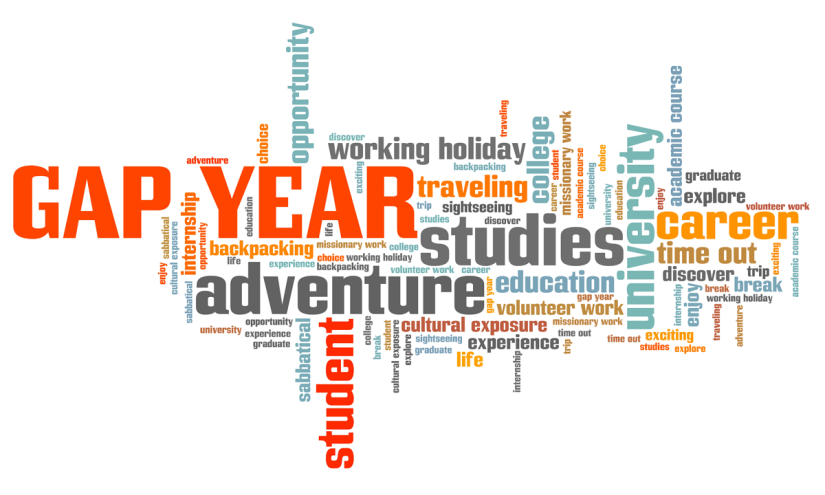
    4. Consider a gap year before shutting down the idea

    One strategy that high school graduates have used in recent years is taking a year off between high school and college in order to better determine what is the right fit for a student. Approximately 2% to 3% of high school graduates take a gap year – typically before going on to enroll in college.

    Some young people may travel during a gap year, volunteer, or get a job in their hometown.

    Whatever the reason students take gap years, I have seen that the time off can be beneficial in certain situations. Taking a year off before starting college has also been shown to lead to better academic performance in college.

    This article is republished from The Conversation under a Creative Commons license. Read the original article.
    Source link

  • With Butchers Disappearing, High Schools Look to Step In – The 74

    With Butchers Disappearing, High Schools Look to Step In – The 74


    Get stories like this delivered straight to your inbox. Sign up for The 74 Newsletter

    LEWISTOWN — Slaughterhouses and butchers used to be scattered throughout the United States, numbering about 10,000 in 1967.

    Only about 3,000 remain and about 85% of the American meatpacking industry is controlled by four companies: JBS, Tyson Foods, Cargill and Smithfield. The other 15% of that market share is held in part by small and very small meat producers scattered across the country, including some in Montana.

    About half of small and medium meat processors have disappeared in the last 20 years, and a decades long University of Illinois study found the average length of a meat processing business surviving was 9.7 years. Between inspections, startup costs and other factors, it’s not an easy business to get into or keep afloat. 

    This is true for much of the agricultural industry, and many small businesses have disappeared as corporate America has exerted its will on farmers and ranchers. About 70% of the consumer’s dollar went to cattle producers in 1970, with the other 30% going to processors and retailers. Cattle producers now get about 30% of the consumer’s dollar, according to Farm Action.

    Additionally, about 98% of America’s beef is processed in just over 50 plants. Beef processing co-ops have been created around the state in an effort to help give beef producers more options, but there’s another problem too — employees.

    That’s the place some educators in Montana are looking to step in. Fergus High School in Lewistown, for example, has a robust agricultural education program. It’s also part of the Central Montana Career and Technology Education Academy, a public charter school that was set up this year to connect students with skills and knowledge needed to work in agriculture.

    ‘A dying art’

    Logan Turner, one the teachers at Fergus High School, put it pointedly.

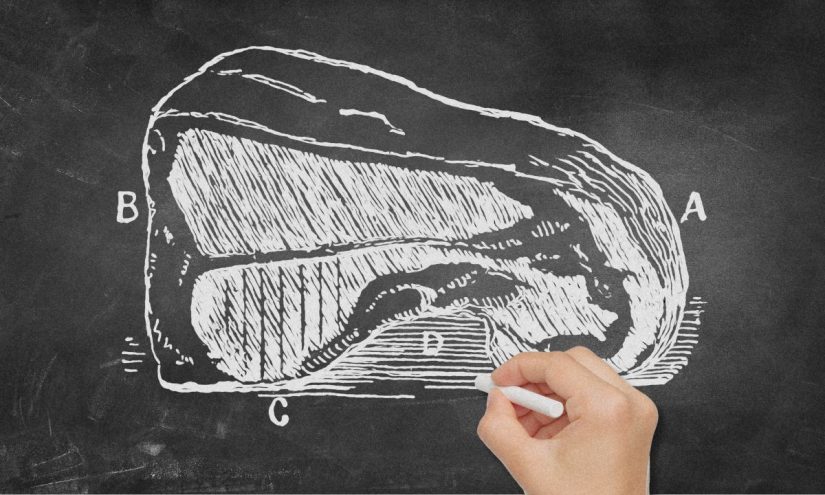
    “Kids aren’t really getting into it,” he said. “Cutting meat is kind of a dying art.”

    His goal has been, in part, to help change that trend. The technical academy seeks to bridge a gap of agricultural knowledge. Beyond meat cutting, classes at the school include farm business management, fabrication and science classes geared toward teaching about soil health among others.

    Turner grew up on his family’s farm outside Missoula and quickly decided he wanted to be a teacher. There’s an urgency for him too, with worries, among them a feeling no one knows where their food comes from and the world’s growing population. 

    “We’ve always been faced with this big issue as agriculturalists,” Turner said. “2050 is right around the corner, and there’s going to be two billion more people on the face of the planet, and how are we going to feed them all? I think it all starts with education and understanding … and so I felt like being an educator probably was the best way for me to contribute.”

    Only about three percent of the food Montanans eat is produced in the state. There are options for eating local food, but they can sometimes be hard to find. 

    Having kids learn about these could also help them enter the workforce with more ideas about what they want to do, which is one of the goals of the program. Orin Johnson, the Central Montana CTE Academy director, said they also want to get students as close as possible to certification in a variety of careers.

    “Every kid doesn’t learn the same way,” Johnson said. “And some really do strive and need to be hands on, and it’s about finding a way to create opportunities that they can be hands on.”

    Students at the school have shown interest and it’s included partnerships with Future Farmers of America and the Montana Farmers Union, which gave the meat processing program two grants totaling about $13,000 over the summer.

    “We do a lot of meat processing at my house because my dad loves hunting, and so we do a lot of wild game,” said Shyanne Ricks, a student at the school who’s gone through the program. “And so doing the meats class really helps with seeing the whole process, not just wild game.”

    Ricks, along with Tori Rindal, a freshman at the school, and the other Lewistown agricultural education teacher — Jared Long — went to the Montana Farmers Union Annual convention and spoke about the program.

    Rindal said she’s hoping to take the meats class next year. Long pointed out agricultural education is broad and students can take many different paths.

    The program offers five pathways: welding, natural resource and conservation, meat processing, animal science and agricultural mechanics. There’s a variety of classes within those, both Long and Turner explained.

    “The common misconception is that it’s just cows and plows,” Long said. “So that’s really our job, we feel like, is to open doors to kids that they might never have.”

    Daily Montanan is part of States Newsroom, a nonprofit news network supported by grants and a coalition of donors as a 501c(3) public charity. Daily Montanan maintains editorial independence. Contact Editor Darrell Ehrlick for questions: [email protected].


    Did you use this article in your work?

    We’d love to hear how The 74’s reporting is helping educators, researchers, and policymakers. Tell us how

    Source link