Tag: cases

  • Which Higher Ed Cases Will SCOTUS Take On?

    Which Higher Ed Cases Will SCOTUS Take On?

    As the Supreme Court begins its new term this week, legal experts predict that higher education will be a frequent subject for the justices. Yet only two college-related cases—both of which center on transgender rights—are currently listed on the main docket.

    That’s in large part because of a less formal but increasingly popular second list of cases known as the shadow docket.

    Historically, the shadow docket, also called the emergency docket, was used on rare occasions for just that—emergencies. In situations when the lack of a ruling from the highest court could lead to immediate, irreversible consequences, this alternate route allowed the justices to move quickly and issue an interim decision without going through traditional processes such as briefings, oral arguments or written opinions. But over the course of the past three administrations, use of this secondary docket has skyrocketed, creating a lack of predictability and an immense sense of uncertainty for the public.

    Normally, it can take months for a case’s petition to be processed, and then once a case is on the docket it can take even longer for it to be heard and ruled upon. This leaves the parties directly involved—and all who may be affected by the decision—time to prepare and create contingency plans for the potential outcomes. But when the shadow docket is used, cases can be introduced and receive a ruling in a matter of weeks, if not days, often without any explanation.

    Higher education institutions have already seen the repercussions this can have: Using the shadow-docket process, SCOTUS has overturned lower-court rulings on critical issues including the continuation of federal research funding and major cuts to staffing at the Department of Education.

    “Some of these are existential issues about whether universities can continue to function in the way in which they functioned for the past half century,” said former Brandeis University president Fred Lawrence, a higher education legal expert and distinguished lecturer at Georgetown Law. “If erring on the side of caution means shutting down your research operation, then you are unrecognizable to yourself. So it creates a very, very difficult situation for higher education to function.”

    While it remains unclear how and when various cases will reach the Supreme Court, Lawrence and others say they have a fairly good idea of what those cases will likely concern. Issues including visa policies for international students and scholars, First Amendment rights, academic freedom, and federal funding are likely to be on the line.

    Here’s a quick summary of the cases—on and off the main docket—that experts say colleges and universities should keep a close eye on.

    Transgender Athletes

    On the first day of his second term in office, President Donald Trump signed an executive order banning “gender ideology” and declaring that the government would only recognize two sexes, male and female. Less than a month later, he signed a second order banning transgender women from participating in women’s sports.

    For now, both declarations—and their implications for collegiate sports—are up for consideration by the highest court through two cases, West Virginia v. B.P.J and Little v. Hecox.

    Though the former concerns a transgender girl in high school and the latter a transgender woman at Boise State University, the cases are otherwise largely the same. Both involve runners who attempted to participate in track and cross-country but were barred from doing so by state law. And up until a little over a month ago, both were set to be heard before the court at some point this term.

    But on Sept. 2 Hecox filed a motion urging the Supreme Court to dismiss her case. In the six-page filing, Hecox’s lawyers explained that due to illness, her father’s recent passing and the “negative public scrutiny” stemming from the litigation, she no longer wished to participate in women’s sports, rendering the case moot.

    Still, given the court’s conservative supermajority and their penchant for siding with the Trump administration, some wonder if Hecox’s plea to the court is an attempt to avoid an unfavorable final decision. (Hecox won her case at both the district and circuit court levels.)

    Jill Siegelbaum, a former assistant general counsel at the Department of Education and now a partner at Sligo Law Group, said that she understands both the theoretical idea that Hecox could be fearing a loss and the more personal rationale for dismissing the case.

    “Every single attorney involved in that case is well aware of who is sitting on the court and the decisions that the court has recently made in the area of transgender rights,” she said. “But I can also say that on its own, simply the fear for her emotional, physical and mental health that would come from further publicity about this case … would certainly be, in my opinion, a reasonable basis for withdrawing.”

    So far, it’s unclear whether the court will respect Hecox’s request. But even if the case were dismissed, Siegelbaum and others said, West Virginia v. B.P.J., will almost certainly remain, eventually leading to a ruling on the same overarching issue—interpreting Title IX’s equal protection clause.

    Sarah Hartley, a partner and co-chair of the higher education team at BCLP, a law firm headquartered in St. Louis, stressed that regardless of the outcome, the ruling’s implications for colleges and universities could be influenced by what questions the justices ask and how they write their opinions.

    “Depending on how the decision is worded, it could have broader impacts than just sport. It could address bathrooms, locker rooms—any number of different things that Title IX and other antidiscrimination laws historically have protected,” she said.

    Hartley added that in her view, lack of access to even recreational activities could be a major blow to the mental health of an already “highly marginalized community.”

    “Imagine it affecting your club sports at universities or in high schools, or in gym class when there’s any sex segregation,” she said. “As someone who’s particularly concerned with the access to sport because of all the positive impacts it can have, I think the trickle-down effect … will be a big deal.”

    Shadow Docket

    Higher education legal experts are also keeping a close eye on the shadow docket, as well as on cases that were already addressed on the emergency docket, were sent back to the lower court and now are steadily working their way back up to the Supreme Court for a final merit ruling.

    Jessica Ellsworth, a partner at Hogan Lovells and adviser for the American Council on Education, said she thinks the shadow docket cases are the ones that have a “real impact” on higher education.

    She added that multiple stays have already been granted on issues like Trump’s ability to terminate congressionally appropriated funds, slash government agencies’ staffs and tighten immigration policies that affect college enrollment. In doing so, the Supreme Court blocked injunctions from the lower courts, allowing the Trump administration to carry out policies before the justices have fully analyzed the facts of the case, considered friend-of-the-court briefs or heard the arguments of each party.

    Moving forward, “I suspect that we will see First Amendment challenges make their way to the court related to ongoing efforts by the administration to force changes across universities and use threats of cutting off funding to compel those changes,” Ellsworth said. “As a result, it’s important for higher education to keep an eye on both the merits and emergency docket for the foreseeable future.”

    Hartley from BCLP noted that transgender rights issues are also on the shadow docket through the case Trump v. Orr, which weighs a transgender or nonbinary individual’s ability to obtain a passport that matches their gender identity. If this ruling is interpreted to extend to IDs beyond passports, it could lead to all kinds of inconsistency between gender presentation and government identification, creating significant hurdles for many university operations, she said.

    “You could see complaints that a student who’s male presenting is living in a female dorm, which could then give rise to invasive investigations and force a student to disclose things that they might want to make otherwise private,” she explained.

    And while any number of these cases could eventually make it back to the Supreme Court for a final ruling, Lawrence from Georgetown said it’s too soon to predict what will make the cut; just a week into the new term, “the Supreme Court has barely put together its docket for the year,” he said.

    But even if these issues do make it back for a full merit review, he added, it may be too late. So far, the Supreme Court has struck down the injunctions blocking Trump from carrying out his policies on every higher ed case that has reached the shadow docket. And in many cases, he said, doing that is like allowing a development company to tear down a historic home before a court has ruled on whether it sits on protected land. Even if the court eventually rules that the property should have been shielded, once the house is gone, it will be impossible to restore.

    “If you don’t provide that temporary remedy, then there may be no point to a remedy at all,” Lawrence explained.
    Source link

  • Supreme Court Rejects Heightened Burden for Majority-Group Plaintiffs in Title VII Cases – CUPA-HR

    Supreme Court Rejects Heightened Burden for Majority-Group Plaintiffs in Title VII Cases – CUPA-HR

    by CUPA-HR | June 5, 2025

    On June 5, the U.S. Supreme Court ruled unanimously that plaintiffs bringing employment discrimination claims under Title VII cannot be held to a higher evidentiary standard simply because they belong to a majority group. The decision in Ames v. Ohio Department of Youth Services resolves a long-standing split among federal appeals courts over how such “reverse discrimination” claims should be evaluated.

    Background

    Marlean Ames, a heterosexual woman, has worked at the Ohio Department of Youth Services since 2004. In 2019, after being passed over for a promotion in favor of a lesbian woman and later demoted from her existing role, Ames filed suit alleging that both decisions were based on her sex and sexual orientation — protected characteristics under Title VII of the Civil Rights Act of 1964.

    Lower courts dismissed her claims. Applying a test used in the 6th U.S. Circuit Court of Appeals and several others, they held that Ames, as a member of a majority group, was required to present additional “background circumstances” — such as evidence that the employer had a pattern of discriminating against majority-group employees — in order to move forward with her case.

    The Court’s Reasoning

    Writing for the Supreme Court, Justice Ketanji Brown Jackson rejected that reasoning, emphasizing that Title VII’s protections apply equally to all individuals. She wrote that the law “draws no distinctions between majority-group plaintiffs and minority-group plaintiffs,” and instead “focuses on individuals rather than groups, barring discrimination against ‘any individual’ because of protected characteristics.”

    The court found that the so-called “background circumstances” rule used by the lower courts added an impermissible hurdle for plaintiffs like Ames. In the ruling, the Supreme Court found that such an approach “cannot be squared with the text of Title VII or the Court’s precedents,” citing the court’s 1971 opinion in Griggs v. Duke Power Co., which held that “discriminatory preference for any group, minority or majority, is precisely and only what Congress has proscribed.”

    The justices also noted that the rule adopted by the 6th Circuit conflicted with the court’s guidance to avoid rigid applications of Title VII’s burden-shifting framework, known as the McDonnell Douglas test. That framework is intended to provide a flexible method for proving discrimination based on circumstantial evidence — not to impose categorical rules based on a plaintiff’s demographic status.

    Justice Clarence Thomas, joined by Justice Neil Gorsuch, wrote separately to question the broader use of the McDonnell Douglas framework altogether. He criticized the reliance on “judge-made rules and standards in the discrimination context” and suggested that the framework “lacks basis in the statutory text” of Title VII. While the court did not revisit that framework in the Ames decision, Justice Thomas’s opinion invites further litigation on its continued use.

    What’s Next

    The decision eliminates the requirement previously used in the 6th, 7th, 8th, 10th and D.C. Circuits that majority-group plaintiffs must meet an elevated evidentiary threshold to proceed with their claims. Instead, all Title VII plaintiffs must satisfy the same standard, regardless of their group status.

    By aligning with the plain text of Title VII and affirming that its protections apply equally to all individuals, the decision in Ames may affect how courts approach other claims involving workplace diversity and inclusion efforts. CUPA-HR is continuing to review the decision and will provide additional updates as the implications for campus employers and HR professionals become clearer.


    Source link

  • Supreme Court takes education cases that could challenge the separation of church and state

    Supreme Court takes education cases that could challenge the separation of church and state

    The Supreme Court over the next two weeks will hear two cases that have the potential to erode the separation of church and state and create a seismic shift in public education.

    Mahmoud v. Taylor, which goes before the court on April 22, pits Muslim, Roman Catholic and Ukrainian Orthodox families, as well as those of other faiths, against the Montgomery County school system in Maryland. The parents argue that the school system violated their First Amendment right of free exercise of religion by refusing to let them opt their children out of lessons using LGBTQ+ books. The content of the books, the parents say, goes against their religious beliefs.

    Oklahoma Statewide Charter School Board v. Drummond, which will be argued on April 30, addresses whether the St. Isidore of Seville Virtual Charter School should be allowed to exist as a public charter school in Oklahoma. The Archdiocese of Oklahoma City and the Diocese of Tulsa had won approval for the charter school from the state charter board despite acknowledging that St. Isidore would participate “in the evangelizing mission of the Church.”

    The state’s attorney general, Gentner Drummond, later overruled the approval, saying the school could not be a charter because charter schools must be public and nonsectarian. The petitioners sued and ultimately appealed to the Supreme Court, claiming Drummond violated the First Amendment’s free exercise clause by prohibiting a religious entity from participating in a public program.

    Teachers unions, parents groups and organizations advocating for the separation of church and state have said that rulings in favor of the plaintiffs could open the door for all types of religious programs to become part of public schooling and give parents veto rights on what is taught. In the most extreme scenario, they say, the rulings could lead to the dismantling of public education and essentially allow public schools to be Sunday schools.

    Related: A lot goes on in classrooms from kindergarten to high school. Keep up with our free weekly newsletter on K-12 education.

    At issue in both cases is the question of whether the First Amendment rights of parents and religious institutions to the free exercise of religion can supersede the other part of the amendment, the establishment clause, which calls for the separation of church and state.

    “I think a chill wind is blowing, and public education as we know it is in extreme jeopardy of becoming religious education and ceasing to exist,” said Rachel Laser, president of Americans United for Separation of Church and State, an advocacy organization that has filed an amicus brief in the St. Isidore case. “The whole idea is to have churches take control of education for American children. It’s about money and power.”

    For some conservative lawmakers, evangelical Christian groups and law firms lobbying for more religiosity in the public square, decisions in the petitioners’ favor would mean religious parents get what they have long been owed — the option of sending their children to publicly funded religious schools and the right to opt out of instruction that clashes with their religious beliefs.

    “If we win this case, it opens up school choice across the country,” said Mathew Staver, founder of Liberty Counsel, an Orlando, Florida-based conservative Christian legal firm that has filed a brief supporting the petitioners in both cases. “I see school choice as a reaction to the failed system in the public schools, which is failing both in academia but also failing in the sense they are pushing ideology that undermines the parents and their relationship with their children.”

    By taking the cases, the Supreme Court once again inserts itself in ongoing culture wars in the nation, which have been elevated by presidential orders threatening to take away funding if schools push diversity, equity and inclusion initiatives and state laws banning teaching on various controversial subjects. Legal scholars predict that the Supreme Court will lean toward allowing St. Isidore and the opt-outs for parents because of how the justices ruled in three cases between 2017 and 2022. In each case, the justices decided that states could not discriminate against giving funds or resources to a program because it was religious.

    Related: How Oklahoma’s superintendent set off a holy war in classrooms

    Of the two cases, St. Isidore likely could have the greatest impact because it is attempting to change the very definition of a public school, say opponents of the school’s bid for charter status. Since charter schools first started in the 1990s, they have been defined as public and nonsectarian in each of the 46 state statutes allowing them, according to officials at the National Alliance for Public Charter Schools. Today, charter schools operate in 44 states, Guam, Puerto Rico and Washington, D.C., and serve roughly 7.6 percent of all public school students.

    “It would be a huge sea change if the court were to hold they were private entities and not public schools bound by the U.S. Constitution’s establishment clause,” said Rob Reed, the alliance’s vice president of legal affairs.

    A victory for St. Isidore could lead to religious-based programs seeping into several aspects of public schooling, said Steven Green, a professor of both law and history and religious studies at Willamette University in Salem, Oregon.

    “The ramification is that every single time a school district does some kind of contracting for any kind of service or curricular issues, you’re going to find religious providers who will make the claim, ‘You have to give me an opportunity, too,’” Green said.

    St. Isidore’s appeal to the Supreme Court is part of an increasing push by the religious right to use public funds for religious education, said Josh Cowen, a professor of education policy at Michigan State University and author of a 2024 book on school vouchers. Because of previous court decisions, several voucher programs across the country already allow parents to use public money to send their children to religious schools, he said.

    “What’s going to happen if the court says a public school can be run by a religious provider?” Cowen asked. “It almost turns 180 degrees the rule that voucher systems play by right now. Right now, they’re just taking a check. They’re not public entities.”

    The effect of a St. Isidore victory could be devastating, he added. “It would be one more slippery slope to really kicking down the wall between church and state,” Cowen said.

    Related: Inside the Christian legal campaign to return prayer to public schools

    Jim Campbell, chief legal counsel for Alliance Defending Freedom, which is representing St. Isidore’s bid to become a charter, discounted the idea that a St. Isidore win would fundamentally change public schools. Like Staver, he views St. Isidore as simply providing another parental option. “We’re not asking the state to run a religious school,” Campbell said. “These are private entities that run the schools. This is a private organization participating in a publicly funded program.”

    Opponents of religious charter schools question whether St. Isidore would have to play by the same rules as public schools.

    “How are they going to handle it when there’s a teacher who has a lifestyle that doesn’t align with Catholic school teaching? They’re talking out of both sides of the mouth,” said Erika Wright, an Oklahoma parent and plaintiff in a lawsuit protesting a Bible in the classroom mandate by Oklahoma’s state superintendent of instruction. She also joined an amicus brief against St. Isidore’s formation.

    “As a taxpayer, I should not be forced to fund religious instruction, whether it’s through a religious charter school or a Bible mandate,” Wright said. “I shouldn’t be forced to fund religious indoctrination that doesn’t align with my family’s personal beliefs.”

    Notably, in the Montgomery County parents’ case going before the court, parents use similar reasoning to support their right to opt out of instruction. “A school ‘burdens’ parents’ religious beliefs when it forces their children to undergo classroom instruction about gender and sexuality at odds with their religious convictions,” the parents’ brief said.

    The school district in 2022 adopted several books with LGBTQ+ themes and characters as part of the elementary language arts curriculum. Initially, families were allowed to opt out. But then the school system reversed its policy, saying too many students were absent during the lessons and keeping track of the opt-outs was too cumbersome. The reversal led to the lawsuit.

    Historically, school districts have given limited opt-outs to parents who, for example, do not want their child to read a particular book, but the Montgomery County parents’ request is broader, said Charles C. Haynes, a First Amendment expert and senior fellow for religious liberty at the Freedom Forum in Washington, D.C. The parents are asking to exclude their children from significant parts of the curriculum for religious reasons.

    “If the court sides with the parents, I think the next day, you’re going to have parents across the country saying, ‘I want my kids to opt out of all the references to fill-in-the-blank.’ … It would change the dynamic between public schools and parents overnight,” Haynes said.

    Related: Tracking Trump: His actions to abolish the Education Department, and more

    Sarah Brannen, author of “Uncle Bobby’s Wedding,” one of the LGBTQ+ books Montgomery County schools adopted, sees major logistical issues if the school system loses. “Allowing parents to interfere in the minutia of the curriculum would make their already difficult jobs impossible,” she said.

    Colten Stanberry, a lawyer with the Becket Fund for Religious Liberty representing the Montgomery County parents, disagreed. School systems manage to balance different student needs all the time, he said.

    A triumph for the Montgomery County families and St. Isidore would cause much more than logistical issues, said Becky Pringle, president of the National Education Association. It could lead to a public education system where parents can pick a school based on religious beliefs or try to change a traditional public school’s curriculum by opting out of lessons in droves.

    “For us to be a strong democracy, then we necessarily need to learn about all of us. To separate us flies in the face of why we were founded,” Pringle said.

    This story about church and state was produced by The Hechinger Report, a nonprofit, independent news organization focused on inequality and innovation in education. Sign up for the Hechinger newsletter.

    The Hechinger Report provides in-depth, fact-based, unbiased reporting on education that is free to all readers. But that doesn’t mean it’s free to produce. Our work keeps educators and the public informed about pressing issues at schools and on campuses throughout the country. We tell the whole story, even when the details are inconvenient. Help us keep doing that.

    Join us today.

    Source link

  • Eight free expression cases pending on SCOTUS docket — First Amendment News 455

    Eight free expression cases pending on SCOTUS docket — First Amendment News 455

    Thus far this term, the Supreme Court has rendered judgments in three free speech cases. In two of them, it vacated and remanded the matters for further consideration in light of Gonzalez v. Trevino (2024) (per curiam, First Amendment retaliation claims). In the other case, TikTok Inc. and ByteDance Ltd v. Garland, the Court rejected the First Amendment claim. 

    At this point, the following eight cases remain on the docket and involve everything from student speech to campaign financing to abortion clinic buffer zones and an occupational licensing case, among other things.

    The Eight Cases

    1. The university bias-response teams case

    Issue: Whether university bias-response teams — official entities that solicit anonymous reports of bias, track them, investigate them, ask to meet with the perpetrators, and threaten to refer students for formal discipline — objectively chill students’ speech under the First Amendment.

    Counsel for PetitionerJ. Michael Connolly of Consovoy McCarthy, former Director of the Free Speech Clinic at the Antonin Scalia Law School at George Mason University.

    2. The conversations between counselors and their clients case

    Issue: Whether a law that censors certain conversations between counselors and their clients based on the viewpoints expressed regulates conduct or violates the free speech clause of the First Amendment.

    Counsel for PetitionerJohn J. Bursch of the Alliance Defending Freedom.

    3. The public middle school that censored a T-shirt case

    Issue: Whether school officials may presume substantial disruption or a violation of the rights of others from a student’s silent, passive, and untargeted ideological speech simply because that speech relates to matters of personal identity, even when the speech responds to the school’s opposing views, actions, or policies. 

    Counsel for PetitionerJohn J. Bursch of Alliance Defending Freedom.

    4. The campaign limits on coordinated party expenditures case

    Issue: Whether the limits on coordinated party expenditures in 52 U.S.C. § 30116 violate the First Amendment, either on their face or as applied to party spending in connection with “party coordinated communications” as defined in 11 C.F.R. § 109.37.

    Counsel for PetitionerNoel J. Francisco of Jones Day, former Solicitor General.

    5. The occupational-licensing law case

    Issue: Whether, in an as-applied First Amendment challenge to an occupational-licensing law, the standard for determining whether the law regulates speech or regulates conduct is this Court’s traditional conduct-versus-speech dichotomy.

    Counsel for PetitionerSamuel B. Gedge of the Institute for Justice.

    6. The sidewalk abortion counseling case

    Issue: Whether the court should overrule Hill v. Colorado.

    Counsel for PetitionerPaul D. Clement of Clement & Murphy, also a former Solicitor General.

    7. Another sidewalk abortion counseling case

    Issue: Whether the court should overrule Hill v. Colorado.

    Counsel for PetitionerWalter M. Weber, senior counsel for the American Center for Law and Justice.

    8. The fee to speak to government officials about political issues case

    Issue: Whether — and if so, under what circumstances — the First Amendment permits the government to require ordinary citizens to register and pay a fee to communicate with their government representatives.

    Counsel for PetitionerKyle D. Hawkins of Lehotsky Keller Cohn, who served as a law clerk to Justice Samuel Alito.

    Revenge against political enemies: Executive tactic?

    In his first week in office, President Trump made clear that his promises to exact revenge on his perceived enemies were not empty campaign pledges — and that his retribution is intended not just to impose punishment for the past but also to intimidate anyone who might cross him in the future.

    By removing security protections from former officials facing credible death threats, he signaled that he was willing to impose potentially profound consequences on anyone he sees as having been insufficiently loyal. That included his former secretary of state, Mike Pompeo, and Dr. Anthony S. Fauci, who helped lead the pandemic response.

    Mr. Trump’s decision to try to scale back civil service protections was aimed at culling federal employees he believes slowed or blocked his first-term agenda and replacing them with loyalists.

    [ . . . ]

    [These and other measures taken] together . . . send a clear signal that Mr. Trump feels unconstrained about punishing the disloyal, that he is potentially willing to go further against his enemies than he had pledged on the campaign trail and that there will be a price for any opposition to come.

    Trump video clip


    WATCH VIDEO: Trump speech: ‘Bring back free speech to America’

    Related

    Controlling academic freedom: Another Executive tactic?

    Will Creeley

    FIRE Legal Director Will Creeley

    “There’s kind of a multifront threat right now as to whether or not you can express views that are unpopular with the folks in the White House and executive agencies and continue to enjoy the protections of the First Amendment on academic freedom,” said Will Creeley, legal director of the Foundation for Individual Rights and Expression, which fights both left- and right-wing infringements on free speech.

    [ . . . ]

    Creeley, at the Foundation for Individual Rights and Expression, predicts that many state legislatures, local officials and university trustees are going to enlist, either out of enthusiasm or expediency, in the crusade to bring the academic left to heel. “I think you’ll see professors investigated and terminated. I think you’re going to see students punished, and I think you’re going to see a pre-emptive action on those fronts,” he said.

    Just look at what’s happened at Harvard this week. On Tuesday it announced that, as part of a lawsuit settlement, it would adopt a definition of antisemitism that includes some harsh criticisms of Israel and Zionism, such as holding Israel to a “double standard” and likening its policies to Nazism. Though Harvard claims that it still adheres to the First Amendment, under this definition a student or professor who accuses Israel of genocidal action in Gaza — as the Israeli American Holocaust scholar Omer Bartov has — might be subject to disciplinary action.

    Trump suit against Pulitzer board — Ballard Spahr for the defense

    Charles Tobin lawyer at Ballard Spahr

    Charles Tobin for the defense

    On Monday, the board that awards the Pulitzer Prizes — which Mr. Trump sued in Florida in 2022 for defamation — said that the case should be put on hold because, as Mr. Trump has argued in two other cases, a state court should not be permitted to exert control over a sitting president.

    “Defendants agree,” wrote the law firm representing the board, Ballard Spahr. “To avoid such constitutional conflicts, the court should stay this case until plaintiff’s term in office has concluded.”

    Mr. Trump’s lawsuit accuses the Pulitzer board of defaming him, in essence, by continuing to honor The New York Times and The Washington Post for their coverage of Russian interference in the 2016 presidential election. A state judge in Florida last year cleared the case to proceed toward trial.

    The Pulitzer board’s filing on Monday leaned heavily on statements the president’s legal team had made in other cases. One involved a suit filed in 2017 by Summer Zervos, a former contestant on “The Apprentice” reality show, who accused the president of unwanted sexual advances. Mr. Trump’s team argued that her suit should be thrown out or delayed because dealing with it — including by producing records during discovery or being forced to appear in court — would “disrupt and impair” Mr. Trump’s ability to do his job. (The suit was settled in 2021, after he was out of office.)

    Mr. Trump’s lawyers repeated that argument last week in a different case in Delaware, in which he and his social media company are defendants.

    Excerpt from Trump v. Members of the Pulitzer Prize Board

    [Motion to temporarily stay civil action]

    It is well-established that “a trial court has broad discretion to grant or deny a motion to stay a case pending before it.” Shake Consulting, LLC v. Suncruz Casinos, LLC, 781So. 2d 494, 495 (Fla. 4th DCA 2001) (affirming trial court’s entry of stay). For three reasons, the Court should exercise that discretion and stay this action until Plaintiff’s term in office has concluded.

    First, as Plaintiff himself has argued, and continues to argue, allowing a lawsuit to proceed in state court while a party to that action is the sitting President would invite irresolvable constitutional conflicts arising from the Supremacy Clause.

    Second, the grounds for staying this action are particularly strong because the prize-winning articles concern — and discovery will thus need to probe — Plaintiff’s official actions during his first term.

    Third, entering a stay will not prejudice Plaintiff, whereas denying a stay would pose constitutional issues both by stopping him from seeking to stay future civil litigation that may arise in state court during his presidency and by raising due process concerns for the Defendants.

    Attorneys for the Defendants 

    Nunes loses defamation case

    Nunes and his family’s farm can’t sufficiently show damages, so the court doesn’t have to reach any of the other elements of defamation.

    Related

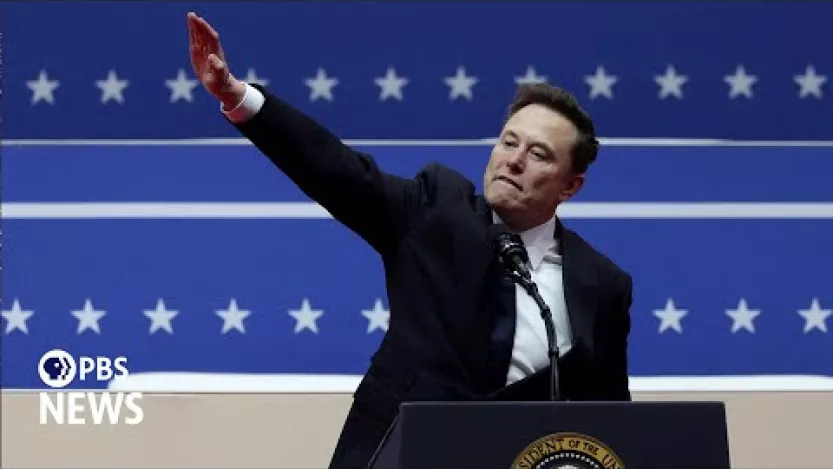
    Protected expression: Elon Musk’s controversial salute


    WATCH VIDEO: Elon Musk appears to give fascist salute during Trump inauguration celebration.

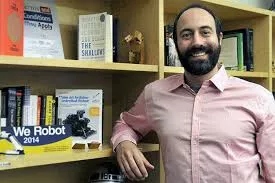
    New scholarly article: Calo on holding social media accountable

    Professor Ryan Calo University of Washington School of Law

    Prof. Ryan Calo

    Plaintiffs are beginning to test the boundaries of tort law once again to fit social media. Seattle and other public-school districts recently sued TikTok, YouTube, and other platforms on the age-old theory of nuisance, arguing that these companies endanger public health by fostering a toxic online environment. When two boys died in a high-speed accident trying to trigger Snapchat’s “Speed Filter,” the Ninth Circuit allowed a cause of action to proceed against the company for negligent design. Snap could be held responsible for the “predictable consequences” of its irresponsible feature, the court reasoned, even though the “Speed Filter” always accompanied user-generated content. Washington election officials successfully sued Facebook, over its Section 230 objection, for failing to keep records on political ads in the state. The emphasis, again, was on Facebook’s own conduct around the ads, rather than the content of the ads themselves.

    There is an admittedly fine line between attributing third party content to the platform, which federal law forbids, and holding the platform accountable for foreseeable harms to people and communities, which tort law encourages. What did TikTok do wrong in Anderson? They did not film or upload a dangerous challenge video, and they cannot be held liable for hosting, distributing, or even recommending it. But has TikTok invested enough time and resources in protecting children on the platform, especially considering what the company knows about the toxic content that appears there?

    Should families like Nylah’s be able to rely upon TikTok’s own community guidelines, which pledge to “[r]estrict content that is not suitable for youth”? Such questions sound less in derivative liability as non- and misfeasance. Section 230 was meant to be a shield, not a shibboleth. Courts should be trying to thread this needle, rather than pretending Section 230 does not exist. Obviously wrong interpretations of Section 230, like the Third Circuit’s in Anderson v. TikTok, Inc., only set the law back.

    Forthcoming scholarly article on AI and free speech

    This paper challenges the assumption that courts should grant outputs from large generative AI models, such as GPT-4 and Gemini, First Amendment protections. We argue that because these models lack intentionality, their outputs do not constitute speech as understood in the context of established legal precedent, so there can be no speech to protect. Furthermore, if the model outputs are not speech, users cannot claim a First Amendment right to receive the outputs.

    We also argue that extending First Amendment rights to AI models would not serve the fundamental purposes of free speech, such as promoting a marketplace of ideas, facilitating self-governance, or fostering self-expression. In fact, granting First Amendment protections to AI models would be detrimental to society because it would hinder the government’s ability to regulate these powerful technologies effectively, potentially leading to the unchecked spread of misinformation and other harms.

    Freedom Forum’s new ad campaign

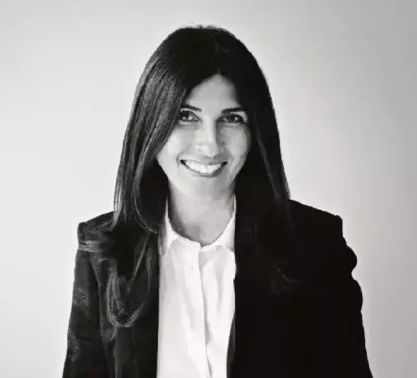
    Barbara Yolles, Ludwig CEO of LUDWIG+

    Barbara Yolles Ludwig, CEO of LUDWIG+

    LUDWIG+, a woman-owned brand actualization and business acceleration agency, is pleased to announce that they have been named as the creative agency for Freedom Forum’s new advertising campaign. Freedom Forum is the nation’s foremost nonpartisan advocate for First Amendment freedoms. As part of this collaboration, LUDWIG+ helped conceptualize and launch “Brought to You By the First Amendment,” a multichannel advertising campaign designed to drive awareness for the everyday freedoms made possible by the First Amendment.

    Today, Freedom Forum launched a dynamic and engaging digital experience with The Onion to further magnify the reach of this campaign. Combining The Onion’s satirical voice with Freedom Forum’s mission to foster First Amendment freedoms for all, this collaboration features onsite and social content strategically created and curated by LUDWIG+. The activation includes several articles published by The Onion that highlight First Amendment freedoms, as well as multiple digital infographics, videos and ad banners that showcase how freedom of speech is central to a thriving and diverse society.

    [ . . . ]

    “It’s an incredible honor to partner with Freedom Forum in championing our First Amendment freedoms and bringing the ‘Brought To You By the First Amendment’ campaign to life,” said Barbara Yolles Ludwig, Founder and CEO of LUDWIG+. “The First Amendment shapes our everyday lives — from the clothes we wear, the music we love, the books we cherish and the beliefs we hold. We look forward to bringing awareness to this paramount mission and the continued success of this campaign.”

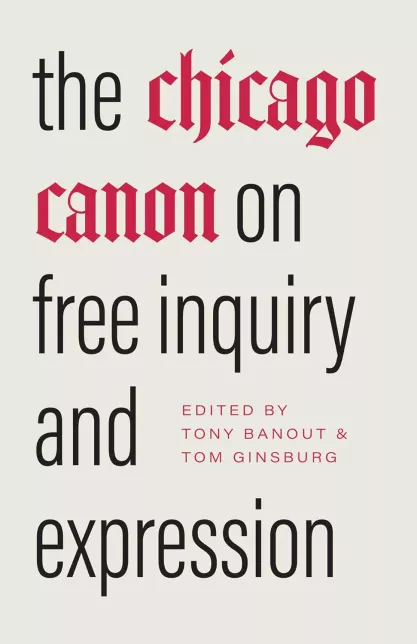
    New Book: The Chicago canon on free inquiry

    A collection of texts that provide the foundation for the University of Chicago’s longstanding tradition of free expression, principles that are at the center of current debates within higher education and society more broadly.

    Cover of "The Chicago Canon on Free Inquiry and Expression" by Tony Banout

    Free inquiry and expression are hotly contested, both on campus and in social and political life. Since its founding in the late nineteenth century, the University of Chicago has been at the forefront of conversations around free speech and academic freedom in higher education. The University’s approach to free expression grew from a sterling reputation as a research university as well as a commitment to American pragmatism and democratic progress, all of which depended on what its first president referred to as the “complete freedom of speech on all subjects.” In 2015, more than 100 years later, then University provost and president J.D. Isaacs and Robert Zimmer echoed this commitment, releasing a statement by a faculty committee led by law professor Geoffrey R. Stone that has come to be known as the Chicago Principles, now adopted or endorsed by one hundred U.S. colleges and universities. These principles are just a part of the long-standing dialogue at the University of Chicago around freedom of expression — its meaning and limits. The Chicago Canon on Free Inquiry and Expression brings together exemplary documents — some published for the first time here — that explain and situate this ongoing conversation with an introductory essay that brings the tradition to light.

    Throughout waves of historical and societal challenges, this first principle of free expression has required rearticulation and new interpretations. The documents gathered here include, among others, William Rainey Harper’s “Freedom of Speech” (1900), the Kalven Committee’s report on the University’s role in political and social action (1967), and Geoffrey R. Stone’s “Free Speech on Campus: A Challenge of Our Times” (2016). Together, the writings of the canon reveal how the Chicago tradition is neither static nor stagnant, but a vibrant experiment; a lively struggle to understand, practice, and advance free inquiry and expression.

    At a time of nationwide campus speech debates, engaging with these texts and the questions they raise is essential to sustaining an environment of broad intellectual and ideological diversity. This book offers a blueprint for the future of higher education’s vital work and points to the civic value of free expression.

    ‘So to Speak’ Podcast: Interview with the editors of ‘The Chicago Canon’

    The University of Chicago is known for its commitment to free speech and academic freedom. Why are these values important to the university? Where do they originate? And how do they help administrators navigate conflicts and controversies?

    Tony Banout and Tom Ginsburg direct the University of Chicago’s Forum for Free Inquiry and Expression, which received a $100 million gift last year. They are also editors of “The Chicago Canon on Free Inquiry and Expression,” a new book that collects foundational texts that inform the university’s free speech tradition.


    WATCH VIDEO: “So to Speak” podcast on the Chicago Canon.

    More in the news


    2024-2025 SCOTUS term: Free expression and related cases

    Cases decided

    • Villarreal v. Alaniz (Petition granted. Judgment vacated and case remanded for further consideration in light of Gonzalez v. Trevino, 602 U.S. ___ (2024) (per curiam))
    • Murphy v. Schmitt (“The petition for a writ of certiorari is granted. The judgment is vacated, and the case is remanded to the United States Court of Appeals for the Eighth Circuit for further consideration in light of Gonzalez v. Trevino, 602 U.S. ___ (2024) (per curiam).”)
    • TikTok Inc. and ByteDance Ltd v. Garland (The challenged provisions of the Protecting Americans from Foreign Adversary Controlled Applications Act do not violate petitioners’ First Amendment rights.)

    Review granted

    Pending petitions 

    Petitions denied

    Last scheduled FAN

    FAN 454: “Trump’s stated promise: ‘Stop all government censorship’ and his free speech Executive Order

    This article is part of First Amendment News, an editorially independent publication edited by Ronald K. L. Collins and hosted by FIRE as part of our mission to educate the public about First Amendment issues. The opinions expressed are those of the article’s author(s) and may not reflect the opinions of FIRE or Mr. Collins.


    Source link