
Tag: cash

  • How no-strings cash changed the lives of teens

    How no-strings cash changed the lives of teens

    NEW ORLEANS — Kapri Clark used the $50 to help pay for her braces. Lyrik Grant saved half of it, and used the rest for dance classes. Kevin Jackson said he squandered the cash on wings, ride shares for dates and some DJ equipment he later tossed.

    For the past five years, Clark, Grant, Jackson and hundreds of high schoolers in New Orleans have shopped — or saved — as part of a project to explore what happens if you give cash directly to young people, no strings attached.

    “That was the most helpful thing ever,” said Clark, now a student at the University of Louisiana at Lafayette, who said she could still use that extra cash.

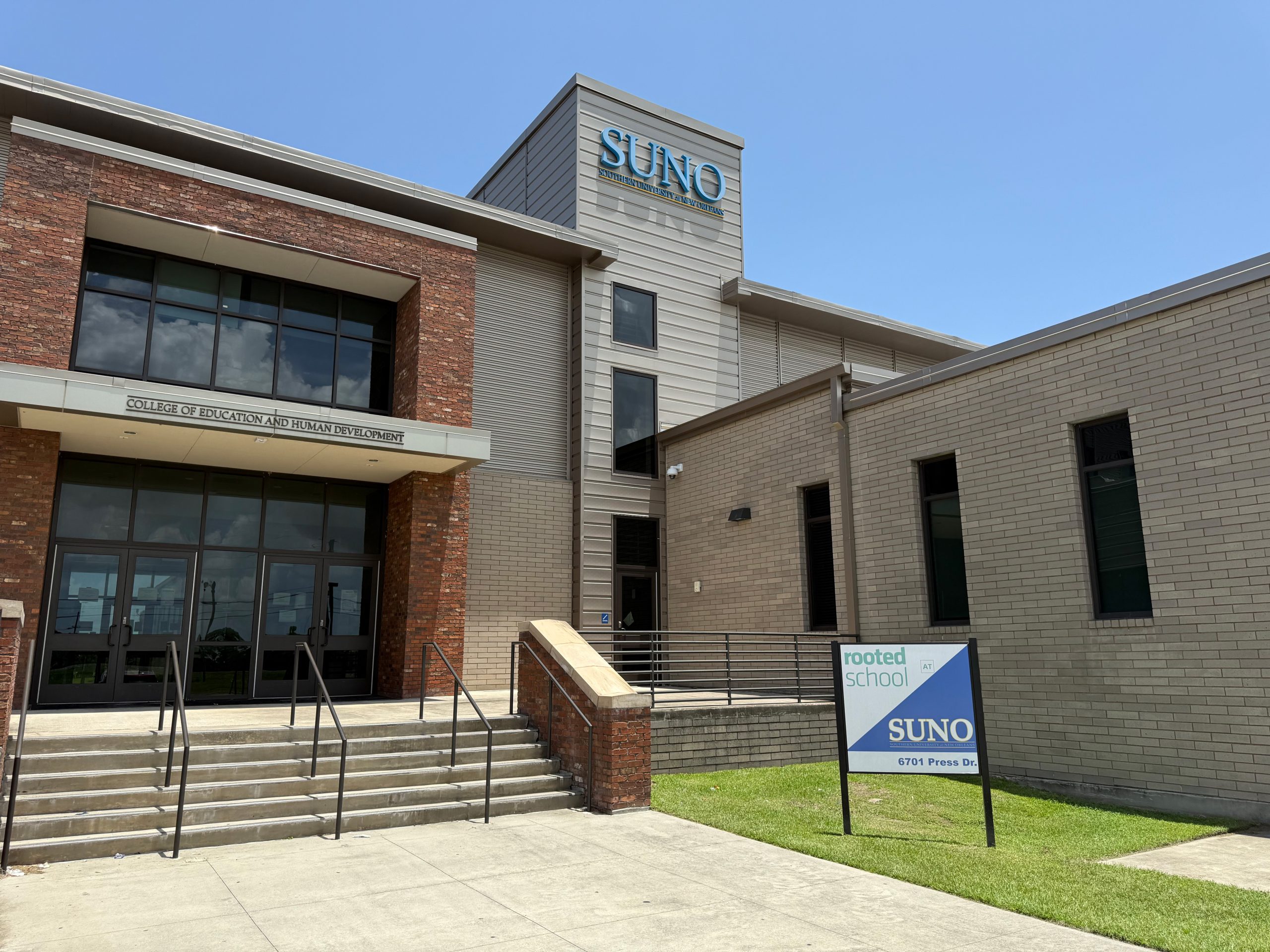
    “The $50 study,” as it’s known, began at Rooted School, a local charter school, as an experiment to increase attendance. The study has since grown to eight other high schools in the city, as well as Rooted’s sister campus in Indianapolis, with students randomly selected to receive $50 every week for 40 weeks, or $2,000 total. By comparing their spending and savings habits to a larger control group, researchers wanted to figure out whether the money improved a teen’s financial capability and perception of themselves. They also wanted to know: Could the cash boost their grade-point averages and reading scores?

    Now, as the experiment expands to Washington, D.C., and perhaps Texas, a final report of the $50 study suggests a little bit of spending cash can make a difference in young people’s lives.

    The report, released Tuesday, shows students who received the cash payments were slightly more likely to attend school than those who didn’t. Academic performance did not differ between the groups. But financially, the extra cash helped students acquire stronger long-term planning skills and familiarity with savings accounts and other financial products. They ended the study, on average, with $300 saved away — a 15 percent savings rate, triple the national average for American adults.

    “When young people are given the opportunity to manage money in low-stakes environments, they build the habits that shape long-term financial health,” said Stacia West, an associate professor at the University of Tennessee, Knoxville and co-founder of the Center for Guaranteed Income Research, which partnered with the Rooted School Foundation to run the study. “The short-term habits we’re seeing are laying the foundation for lifelong financial capability.”

    Related: A lot goes on in classrooms from kindergarten to high school. Keep up with our free weekly newsletter on K-12 education.

    Across the United States and the globe, hundreds of communities have tinkered with some form of universal basic income, or UBI, a social welfare program that provides people with regular cash payments to meet their needs. Direct cash transfer programs like the $50 study or the child tax credit for families are similar, but they often provide smaller amounts and target specific populations to boost a person’s income. Many studies have linked UBI to financial stability and better employment and health outcomes.

    In the U.S. and Canada, researchers have found links between cash transfer pilots that focus on low-income families and better test scores and graduation rates for their kids. So far, though, few experiments have targeted young people or examined how the programs influence their lives specifically.

    Talia Livneh, senior director of programs at the Rooted School in New Orleans, poses for a portrait on the school grounds. Credit: Daniella Zalcman for The Hechinger Report

    “There’s a deep, deep distrust that we adults have of young people,” said Jonathan Johnson, CEO of the Rooted School Foundation, which operates the network’s four charter schools. “That distrust is to their detriment.”

    In New Orleans, roughly 4 in 5 of Rooted students come from economically disadvantaged families, and during the pandemic, many struggled to prioritize school. Some students skipped class to provide child care for their working parents, or because they needed to work themselves, according to Johnson. With some seed funding from a local education nonprofit, Rooted started a “micropilot” to test whether cash could help students make ends meet and get themselves to school.

    The original cohort included 20 students, half of whom received the $50 payment. In that micropilot, those receiving the cash saw their material wellbeing improve, meaning their family could more easily afford rent or utilities, and they gained skills around setting financial goals.  Rooted added students from its Indianapolis campus and another high school in New Orleans, G.W. Carver. And for their final report released this week, researchers sifted through the spending and survey data from 170 students who received the cash payments and 210 students who did not.

    The two-year report found students in the treatment group attended 1.23 more days of school, and  spent close to half their funds on essentials like food and groceries. The report also noted that 70 percent of all students at the participating schools qualify for subsidized meals, suggesting “this spending may reflect efforts to meet immediate nutritional needs.” One 12th grader in a survey mentioned using the money to feed their siblings.

    Kapri Clark recalled waiting every Wednesday morning for the $50 deposit to appear in her banking app. And every Wednesday afternoon, during her senior year at Carver High School, she put that money toward her $200 bill for braces she covered out of pocket.

    She braided hair to cover the rest, and still books clients when she has time in between her studies to become a nurse at the Lafayette campus. Even in college, Clark can see the need for some supplemental income for herself and her peers.

    “I make enough to take care of myself, but I watch every dollar,” said Clark. “There’s a lot of people struggling in life to eat, to live. Think if they got kids.”

    Read Irvin, chief of staff for Collegiate Academies in New Orleans, a network of five charter high schools that includes Carver High, said the $2,000 had provided the extra incentive a few students needed to stick it out until graduation. “That’s incredibly impactful for their life trajectories,” she said.

    Related: How to help young kids: Give their parents cash

    In January 2024, the city of New Orleans invested $1 million to bankroll another extension of the study, as part of an economic mobility initiative that tapped federal Covid relief funding. During the pandemic, a skyrocketing murder rate and spike in overall crime had convinced the city to help more residents, especially young people, find stability.

    “Research shows that people who are economically stable are less likely to commit crime,” said Courtney Wong, the city’s deputy director of economic development.

    The city funding not only expanded the $50 study to nine high schools, it also set a longer timeline for the research: About 800 seniors who participate will have their data tracked for 18 months after their graduation.

    A former high school teacher and administrator, Wong said $50 could have made a difference in the lives of many of her former students.

    “This targets young people in that perfect moment,” she said. “They’re in the right spot where even a little amount of help could have big, positive impacts before issues of crime or unemployment or things like that even come up.”

    Researchers also found students who received the $50 reported greater agency. They felt more control over their finances and more confidence about making long-term financial decisions. Students, according to the report, aligned their spending to future goals such as college prep classes and getting a driver’s license.

    Lyrik Grant, a rising junior at Carver High School, is the second-youngest of six kids with two working parents. She could ask them for help, but the $50 allowed Grant to afford the tights and tops she needed for dance class on her own. The money helped cover a college entrance exam, which she aced, and Grant wants to learn how to drive soon.

    “My first thought was: What am I going to do with all this money?” Grant said, adding that the cash helped some of her classmates find financial stability. “Children don’t always want to spend their parent’s money, and some parents don’t always have money to give them.”

    Still, for some students, the money wasn’t exactly life-changing. Irvin of Collegiate Academies said many used the cash to “just be teenagers.”

    That was true for Kevin Jackson, a rising junior at Rooted School New Orleans.

    “It’s cool to get free money,” he said. “I was spending it on the TikTok shop: posters, keyboards, lights — stuff I liked, not stuff I actually needed.”

    Related: All-charter no more: New Orleans opens its first traditional school in nearly two decades

    Despite the studies that show a positive impact from UBI, many Americans appear skeptical of the idea of a federal program that gives unconditional financial support to people. Aditi Vasan, a pediatrician and researcher at PolicyLab at the Children’s Hospital of Philadelphia, said skeptics often worry about recipients using public dollars for drug use or other illicit behavior, even though the data does not support that.

    Still, that fear will likely keep any large-scale cash transfer program from being adopted in the United States any time soon, she said.

    “That concern exists certainly for cash transfers in general but might be particularly magnified for teens,” Vasan said. “We’ve not seen that play out in the evidence from the quality studies that have been done.”

    Next year, in Washington, D.C., the nonprofit Education Forward will fund a pilot of the $50 study with 40 high schoolers. The Rooted school network resumed talks, meanwhile, to take the study to neighboring Texas, after state lawmakers earlier this year failed to pass legislation that threatened to ban local governments from adopting guaranteed income programs.

    Talia Livneh, senior director of programs for the Rooted School Foundation, said the politics may need to catch up to the research.

    “I don’t think what we’re doing is so radical. I believe this just works,” she said. “Kids don’t lack character. They lack cash,” Livneh added. “They deserve deep, deep trust that students and people know what’s best for them.”

    It’s been four years since Vernell Cheneau III received the $50 for 40 weeks while a student at Rooted in New Orleans, and his economic life isn’t easy. He struggled for months to find part-time work in his hometown. But on a recent summer morning, the same day he finally received a job offer, Cheneau recalled what he learned from the study.

    Vernell Cheneau III (left) with two other students who participated in the cash transfer program at Rooted School, in New Orleans.
    Credit: Courtesy of Rooted School

    “You learn that money goes fast, especially if it’s free,” said Cheneau, 22.

    As a student, he tried to use the money to build some credit history. Since then, he’s learned the full cost of being an adult in America: health care, fuel and maintenance for his car, getting your hair done before a new job. Cheneau has also spent that time trying to convince friends and family to support UBI.

    Most oppose giving “free” money to people, he said. “How much does it cost to feed children? Get to work? We can’t just allow people to drown.”

    “Everything costs something,” Cheneau added. “If you’re stuck in a rut, it’s expensive to restart. In this country, it’s expensive to be poor.”

    Contact staff writer Neal Morton at 212-678-8247, on Signal at nealmorton.99, or via email at [email protected].

    This story about cash transfer programs was produced by The Hechinger Report, a nonprofit, independent news organization focused on inequality and innovation in education. Sign up for the Hechinger newsletter.
    The Hechinger Report provides in-depth, fact-based, unbiased reporting on education that is free to all readers. But that doesn’t mean it’s free to produce. Our work keeps educators and the public informed about pressing issues at schools and on campuses throughout the country. We tell the whole story, even when the details are inconvenient. Help us keep doing that.

    Join us today.

    Source link

  • North Carolina’s Guilford College scrambles for cash to keep its accreditation

    North Carolina’s Guilford College scrambles for cash to keep its accreditation

    Dive Brief:

    • Guilford College is scrambling to raise cash and balance its budget amid an anticipated decline in enrollment revenue. The college needs to provide a balanced fiscal 2026 budget by December in order to remain accredited.
    • Describing the institution as “between the proverbial rock and a hard place,Acting President Jean Bordewich said this week in a community message that the institution’s fiscal 2026 budget will “almost certainly” need cost cuts to meet a projected revenue dip. 
    • Bordewich also listed recent wins for the private North Carolina college, including fundraising progress and a June conservation agreement with the Piedmont Land Conservancy worth some $8.5 million.

    Dive Insight:

    Come December, Guilford will have been on probation with the Southern Association of Colleges and Schools Commission on Colleges for two years due to financial issues. That’s the maximum time allowed for an institution to be on probation with good cause, per the accreditor’s policy. 

    To stay accredited, the historically Quaker college must show it has the financial resources and ability to manage them to sustain its mission. That in part will require Guilford to submit a balanced budget for fiscal year 2026 to SACSCOC. Accreditation loss would mean Guilford would no longer be eligible to receive federal student aid funds.

    “Progress is being made, but we must plan for multiple contingencies,” Bordewich said this week. “Balancing the cash and accrual budgets is non-negotiable.”

    Given that, the college has been on the hunt for cash. The “For the Good of Guilford” fundraising campaign, launched in March, aims to raise $5 million in unrestricted cash to support the college’s operations. The college so far has raised just under $3.8 million toward the $5 million goal. But that still leaves some $1.2 million to go. 

    The same day Bordewich issued her message, Wess Daniels, director of Guilford’s Friends Center and Quaker Studies, published a plea to alumni, noting that their donations were “needed now more than ever.”

    Daniels drew a parallel between today’s “crisis” and a similar episode of financial distress for the college in 1918. 

    “Guilford’s current crisis mirrors 1918 in striking ways,” Daniels wrote. “Once again, the college faces financial uncertainty. Once again, we ask: Who gave us Guilford College? And more importantly: Who will ensure it continues?”

    Along with fundraising, Guilford’s agreement with Piedmont Land Conservancy is set to bring cash into its coffers. Under the memorandum of understanding, the college would retain ownership of 120 acres of land known as the Guilford Woods, while the conservation organization will purchase the development rights once it raises $8.5 million. 

    “The land will be permanently protected, Guilford College will receive vital financial support for its programs, and the public will gain official access to pristine green space in a rapidly growing part of Greensboro,” Mary Magrinat, incoming president of the conservancy, said in a statement. Bordewich described the land as one of the few large privately owned hardwood forests in Greensboro. 

    The proceeds from the agreement will likely be available by 2028, the college has said.

    Founded by North Carolina Quakers in 1837, Guilford has suffered from declining enrollment in recent years along with many other private liberal arts colleges. Between 2018 and 2023, fall headcount declined 23.4% to 1,208 students. And that number is down 57.3% from 2010. 

    With the shrinking student body has come financial struggle. In fiscal 2024, the college reported a total operating deficit of $2.4 million.

    As it tries to rein in its budget, the college is working toward a strategy to recruit students with less tuition discounting and to ramp up its adult education programs — which once reached 1,300 students but have diminished to serve just 50 — among other efforts. 

    In her message this week, Bordewich noted “positive news” in that the college is expecting a $2 million surplus for its fiscal year 2025 cash operating budget.

    Source link

  • Tennessee State University could run out of cash this spring without help

    Tennessee State University could run out of cash this spring without help

    Dive Brief:

    • Tennessee State University is looking for help from state lawmakers as it tries both to stay afloat and to revamp its operations and finances for the long term.
    • The public historically Black institution is on pace to run out of cash by April or May, Interim President Dwayne Tucker said Tuesday at a meeting hosted by Black Caucus members in the state Legislature. 
    • TSU intends to present a five-year turnaround plan to the Legislature. Operations through the first year of the plan could be financed by removing restrictions on roughly $150 million out of $250 million the state previously set aside for university infrastructure, Tucker noted.

    Dive Insight:

    TSU’s financial troubles are steep and immediate. An FAQ page on the university’s website acknowledges that the financial condition has reached crisis levels stemming from missed enrollment targets and operating deficits. This fall, the university posted a projected deficit of $46 million by the end of the fiscal year. 

    The university identified inefficient processes in financial aid, advising and enrollment systems, that contributed to its woes. It also said those problems were exacerbated by 2024’s messy federal rollout of the Free Application for Federal Student Aid. 

    Additionally, and perhaps most damaging, the university launched a full scholarship program for some students without a plan to fund it throughout students’ journey to graduation. It paid $37 million toward the scholarship in fiscal 2022 using federal pandemic emergency funds. When that money ran dry, TSU had to issue tens of millions of dollars in institutional financial aid, causing it to heavily discount its tuition. 

    The scholarship helped attract students, with fall enrollment hitting 8,198 students in 2023, compared to 7,774 in 2018. But the university couldn’t ultimately afford to maintain those aid levels.

    Taking aim at the university’s management, Tennessee lawmakers last March passed a Republican-led bill to replace all of the university’s trustees and restructure its board, over the objection of Democrats. 

    Emergency state funding last fall kept the institution operating, but Tucker said TSU will need more to not just turn around — but to stay open. 

    “It’s a fact that we can’t pay our bills,” Tucker said, noting also that the university would likely not be open today without state help. 

    But Tennessee also owes TSU money, according to a federal assessment. 

    In a letter to Tennessee Gov. Bill Lee in 2023, then-U.S. Education Secretary Miguel Cardona and U.S. Agriculture Secretary Tom Vilsack said the institution had been hurt by “longstanding and ongoing underinvestment” as a public land-grant HBCU. By their estimate, inequitable funding gaps led Tennessee State to miss out on $2.1 billion over 30 years. 

    Tucker dismissed the idea of suing the state for the $2.1 billion, arguing that the legal process could take years — while the university’s financial needs are immediate. Legal action could also potentially anger the legislators whose support TSU needs to help provide funding. Moreover, the institution could lose a legal challenge, he added. 

    Tucker — the university’s second interim president in less than a year — argued for focusing instead on the state funding gap identified by the Legislature in 2021. That gap amounts to over $540 million

    Since identifying the amount, Tennessee lawmakers lined up a one-time $250 million sum for the university to invest in infrastructure. Tucker said the university could use a portion of those funds to keep it afloat through the first year of a five-year plan. 

    Along with state help, TSU and its board are considering financial exigency, a restructuring process that allows an institution experiencing budgetary distress to lay off tenured faculty and shut down academic programs. 

    In a special meeting of TSU’s board on Jan. 31, a consultant with the National Association of College and University Business Officers presented a detailed workshop on how exigency works.

    Tucker said Tuesday that officials were considering exigency but that it wasn’t in the university’s immediate plans. 

    Source link

  • Should universities cash in on cryptocurrency donations?

    Should universities cash in on cryptocurrency donations?

    In 2023, Korean video game company WeMade pledged to donate the equivalent of one billion Korean won ($695,988) in Wemix tokens—a cryptocurrency linked to the blockchain platform of the same name—to Seoul National University.

    What seemed like a moment for celebration quickly descended into controversy, with the university eventually ceasing to accept cryptocurrency donations altogether.

    So, what happened? Shortly after the donation was made, WeMade reportedly liquidated a large share of its coins, causing a significant currency devaluation and meaning SNU’s donation was no longer worth so much—a problem given that the funds had been earmarked for a specific project.

    That wasn’t the only barrier. Under South Korean financial regulations, the university was also unable to open a corporate account for virtual asset exchange. With calls to change the law unanswered, the university was left holding a volatile currency it was unable to convert to cash.

    Now Korean regulators are reportedly considering allowing the country’s universities to convert cryptocurrency for the first time—potentially opening a significant new fundraising stream for the country’s financially ailing sector.

    Elsewhere, universities are already cashing in on the crypto craze, most notably in the U.S. In 2021, the University of Pennsylvania received $5 million in Bitcoin from an unnamed donor. A year later, Vitalik Buterin, co-founder of Ethereum, a leading blockchain, donated the equivalent of $9.4 million in USDC coin to the University of Maryland to fund public health research in the wake of the pandemic.

    The Giving Block, a U.S.-based platform that facilitates cryptocurrency donations to nonprofit organizations, said that the higher education sector has been one of its “biggest growth areas” over the past two years, with Washington State University and Northeastern University among the company’s clients.

    “There are several things driving this, like the booming crypto market and broader mainstream adoption, but the biggest driver for schools is simply following the money,” said Pat Duffy, its co-founder.

    With analysts suggesting popular currencies like Bitcoin will continue to grow in value this year, spurred on by newly inaugurated Donald Trump’s crypto-friendly rhetoric, universities could be set to benefit—if they are prepared to manage the risks that come with the volatile landscape.

    “For donors in the U.S., the biggest driver is the tax incentive,” said Duffy. “You can skip capital gains taxes on appreciated assets and still get a deduction for the full market value.

    “The donor pays no taxes on their appreciated crypto, and neither does the school. Donors across the country are eliminating tens of millions of dollars in tax liability by choosing to give with crypto, and giving larger gifts … as a result.”

    For universities, accepting cryptocurrency may also allow them to target their fundraising at a younger, tech-savvy market. “They can attract more people if they accept crypto payments,” said Nir Kshetri, professor of management at the University of North Carolina at Greensboro.

    It’s not just donations where universities are capitalizing. Some, like Bentley University, have begun accepting tuition fees in cryptocurrency, with significant implications for international students.

    In Nigeria, for example, converting the naira to the U.S. dollar to make fee payments can be a complicated process. For some, paying in decentralized cryptocurrency is simpler and faster, according to Kshetri.

    However, a key risk for universities is the unpredictability of cryptocurrency markets, with fears compounded by the volatility of Bitcoin in recent years. While the market is recovering, crashes such as the one experienced in 2022 have left a lasting impact and made some universities wary.

    “Right now it’s at a peak, but who’s to say we won’t see a return to what we saw two years ago when the bottom fell out?” cautioned Bill Stanczykiewicz, director of the Fund Raising School at Indiana University Indianapolis’s Lilly Family School of Philanthropy.

    According to Stanczykiewicz, best practice is to avoid holding on to cryptocurrency, even if it is predicted to increase in value. “What we say to fundraisers is if you get crypto, turn it into your national currency as quickly as you can,” he said, or use a platform like the Giving Block, which does this for you.

    However, this approach isn’t universal. In Paraguay, Universidad Americana is less risk-averse than some, evaluating the market before converting any cryptocurrency payments.

    Universities considering going down this avenue also need to consider the ethical aspects, said Stanczykiewicz, and whether such donations adhere to their institution’s values.

    Specifically, the environmental impact of currencies like Bitcoin is a concern for some. However, Kshetri argued, the coin has already been mined prior to the donation—that is, the damage has already been done. “Just to transfer that Bitcoin from you to me consumes very little … electricity,” he said.

    Whatever your ethical view, those interviewed for this article agreed on this: Cryptocurrency is here to stay and, for universities, it’s simply a question of how quickly they embrace it.

    “Historically, it was regulatory uncertainty that made universities nervous about crypto acceptance and investing,” said Duffy. Today, he continued, in the U.S., “regulatory clarity and the political support we see on both sides of the aisle have cleared up those concerns.”

    With countries like South Korea set to provide a regulatory green light, too, it may not be long before institutions around the globe follow in the footsteps of their U.S. counterparts.

    Source link
