Tag: censors

  • UK university censors human rights research on abuses in China

    UK university censors human rights research on abuses in China

    Last year, FIRE launched the Free Speech Dispatch, a regular series covering new and continuing censorship trends and challenges around the world. Our goal is to help readers better understand the global context of free expression. Want to make sure you don’t miss an update? Sign up for our newsletter.


    Yet another university erodes academic freedom to appease Beijing

    In August, I released Authoritarians in the Academy, my book about the relationship between higher education, authoritarian regimes, and the censorship that internationalization has introduced into colleges and universities. And this month, an investigation released by The Guardian provided a perfect example of how this influence and censorship play out, in this case in the UK. 

    Earlier this year, Sheffield Hallam University told professor Laura Murphy, whose work the university had previously touted, to abandon her research into Uyghurs and rights abuses in China. The ban ultimately lasted for eight months until the school reversed course and issued an apology in October after Murphy threatened legal action. The Guardian reports that “the instruction for Murphy to halt her research came six months after the university decided to abandon a planned report on the risk of Uyghur forced labour in the critical minerals supply chain.”

    China’s censorship goes global — from secret police stations to video games

    2025 is off to a repressive start, from secret police stations in New York to persecution in Russia, Kenya, and more.


    Read More

    There are multiple alleged reasons for the university’s decision to disavow research critical of the CCP, but they all boil down to fear of legal or financial retaliation from the same government at the center of academics’ investigations. Murphy suggested that Sheffield Hallam was “explicitly trading my academic freedom for access to the Chinese student market.” And this is a real challenge among university administrations today: fear that vindictive governments will punish noncompliant universities by cutting off their access to lucrative international student tuition. 

    Another likely reason was a warning from Sheffield Hallam’s insurance provider that it would no longer cover work produced by the university’s Helena Kennedy Centre for International Justice after a defamation suit from a company named in its research. The HKC has raised the ire of Chinese government officials before, leading to a block of Sheffield Hallam’s websites behind the Great Firewall. Regarding the ill will between CCP officials and the HKC, a university administrator wrote that “attempting to retain the business in China and publication of the [HKC] research are now untenable bedfellows” and complained of the negative effects on recruitment in the country, which looks to have suffered.

    Most disturbing was a visit Chinese state security officials conducted in 2024 to the university’s Beijing office, where they questioned employees about the HKC’s research and the “message to cease the research activity was made clear.” An administrator said that “immediately, relations improved” when the university informed officials the research into human rights abuses would be dropped. 

    The university’s apology and reversal may not spell the end of the story. A South Yorkshire Police spokesperson suggested that, because of potential engagement with security officials in China, Sheffield Hallam may face investigation under the National Security Act related to a provision on “assisting a foreign intelligence service.”

    NYC indie film festival falls victim to transnational repression

    One of the most common misconceptions about free expression today is that nations with better speech protections are immune from the censorship in less free countries. Case in point: New Yorkers hoping to attend the IndieChina Film Festival, set to begin on Nov. 8, could not do so because of repression in China.

    Organizer Zhu Rikun said relentless pressure necessitated the cancellation of the event, with film directors in and outside China telling him en masse that they could not attend or requesting their films not be shown. Human Rights Watch also reports that Chinese artist Chiang Seeta warned that “nearly all participating directors in China faced intimidation” and even those abroad “reported that their relatives and friends in China were receiving threatening calls from police.”

    Zhu, whose parents and friends in China are reportedly facing harassment as well, thought it would “be better” after moving to the U.S. “It turns out I was wrong,” he said. 

    Worrying UN cybercrime treaty nets dozens of signatures, with a notable exception

    Late last month, 72 nations including France, Qatar, and China signed a treaty purportedly intended to fight “cybercrime,” but that leaves the door open for authoritarian nations to use it to enlist other nations — free and unfree — in their campaign to punish political expression on the internet. As I explained last year as the proposal went to the General Assembly, among other problems, the treaty fails to sufficiently define a “serious” crime taking place on computer networks other than that it’s punishable by a four-year prison sentence or more. 

    You might see the immediate problem here: Many nations, including some who ultimately signed on to the treaty, regularly punish online expression with long prison terms. A single TikTok video or an X post that offends or insults government officials, monarchs, or religious bodies can land people around the world in prison — sometimes for decades. 

    Despite earlier statements of support from a representative for the United States on the Ad Hoc Committee on Cybercrime, the U.S. ultimately did not sign the treaty and “is unlikely to sign or ratify unless and until we see implementation of meaningful human rights and other legal protections by the convention’s signatories.”

    That’s not all. There’s plenty more news about speech, tech, and the internet:

    • New amendments to Kenya’s Computer Misuse and Cybercrimes Act are worrying activists in the country, including one that grants the National Computer and Cybercrimes Coordination Committee authority to block material that “promotes illegal activities” or “extreme religious and cultic practices.”
    • Influencers, beware: the Cyberspace Administration of China released new regulations requiring social media users publishing material on “sensitive” topics like law and medicine to prove their qualifications to do so. Platforms will also be required to assist in verifying those qualifications.
    • The much-maligned Online Safety Act continues to create new concerns for free expression in the UK. TechRadar reports that regulatory body OfCom is “using an unnamed third-party tool to monitor VPN use,” one likely employing AI capabilities. VPN use is, to no surprise, spiking in the UK in response to mandated age-checks under the online safety regulations.
    • Brazil is employing a new AI-powered online speech monitor to collect material from social media and blogs that can be used for prosecution of hate speech offenders in the country. Hate speech convictions can result in serious punishment in Brazil, like the one levied against a comedian sentenced to over eight years for offensive jokes this year.
    • The European Union Council’s “Chat Control” proposal to scan online communications and files for CSAM appears to be moving forward. The latest proposal removes the obligation for service providers to scan all material but encourages it to be done voluntarily. However, the text of the proposal allows for a “mitigation measure” requiring providers deemed high risk to take “all appropriate risk mitigation measures.”
    • Apple and Android removed gay dating apps from their app stores in China after “an order from the Cyberspace Administration of China.” A spokesperson for Apple said, “We follow the laws in the countries where we operate.”
    • India has somewhat narrowed the scope of its vast internet takedown machine, limiting the authority of those who can demand platforms block material to officials who reach a certain rank of power. Those ordering removals will now also be required to “clearly specify the legal basis and statutory provision invoked” and “the nature of the unlawful act.”
    • Chief Minister Siddaramaiah of the Indian state Karnataka is threatening a new law against misinformation that will punish those “giving false information to people, and disturbing communal harmony.”
    • Swiss man Emanuel Brünisholz will spend ten days in prison next month after choosing not to pay a 600 Swiss francs fine from his incitement to hatred conviction. Brünisholz’s offense was this 2022 Facebook comment: “If you dig up LGBTQI people after 200 years, you’ll only find men and women based on their skeletons. Everything else is a mental illness promoted through the curriculum.”
    • A Spanish court acquitted a Catholic priest of hate speech charges after a yearslong investigation into his online criticisms of Islam, including a 2016 article, “The Impossible Dialogue with Islam.”

    Russian censorship laws should not dictate expression in the NHL

    NHL teams have decided to entirely abandon Pride warm up jerseys from their programming out of fear of retaliation against their Russian players.


    Read More

    • Continuing its widespread censorship of what it deems “gay propaganda” or “extremist” material, Russian media regulator Roskomnadzor banned the world’s largest anime database last month. Roskomnadzor blamed the block on MyAnimeList’s content “containing information propagating non-traditional sexual relations and/or preference.”
    • Singapore plans to roll out a new online safety commission with authority to order platforms to block posts and ban users and to demand internet service providers censor material as well. Initially, it intends to address harms like stalking but will eventually also target “the incitement of enmity.”
    • South Sudan’s National Security Service released comedian Amath Jok after four days in detainment for insulting President Salva Kiir on TikTok, who she called “a big thief wearing a hat.” But Jok isn’t out of the woods yet. Authorities have indefinitely banned her from using social media. 

    South Korea seeks to punish expression targeting other nations

    In response to controversial protests against China, a Democratic Party of Korea lawmaker is pushing for legislation to punish those who “defame or insult” countries and their residents or ethnic groups. The bill would punish false information with fines and prison terms up to five years, and “insulting” speech with up to a year. 

    That effort garnered support this month when President Lee Jae Myung said that “hate speech targeting specific groups is being spread indiscriminately, and false and manipulated information is flooding” social media. He called it “criminal behavior” beyond the bounds of free expression.

    Media censorship from Israel to Kyrgyzstan to Tunisia 

    • The BBC has apologized to President Trump over “the manner” in which a clip of his speech on Jan. 6, 2021, was edited to give “the mistaken impression that President Trump had made a direct call for violent action,” but notes that its UK-aired “Trump: A Second Chance?” program was not defamatory. It remains unclear whether Trump will still follow through on his threat to file a suit against the British outlet, but in earlier comments he claimed to have an “obligation” to do so.
    • By a vote of 50 to 41, Israel’s Knesset passed the first of three steps in the approval of the Law to Prevent Harm to State Security by a Foreign Broadcasting Authority, which would give authorities permanent power to shut down and seize foreign media they deem “harmful” without needing judicial review or approval.
    • A BBC journalist and Vietnamese citizen who returned home to renew their passport has not been allowed to leave the country for months. The journalist was reportedly held by police for questioning about their journalism.
    • Thai activist Nutthanit Duangmusit was sentenced to two years for lèse majesté for her part in conducting a 2022 opinion poll to “gauge public opinion about whether they agree with the King being allowed to exercise his authority as he wishes.”
    • A Kyrgyz court’s ruling declared two investigative media outlets as “extremist,” banned them from publishing, and made distribution of their work illegal.
    • Investigative outlet Nawaat received a disturbing surprise from Tunisian authorities on Oct. 31: a notice slipped under their office door without even a knock, warning them to suspend all activities for a month. 

    Tanzanian police warn against words or images causing “distress”

    In response to protests over President Samia Suluhu Hassan’s reelection, Tanzanian authorities issued a disturbing warning to the country: text messages or online posts could have serious consequences. The mass text sent to Tanzanian residents warned, “Avoid sharing images or videos that cause distress or degrade someone’s dignity. Doing so is a criminal offense and, if found, strict legal action will be taken.”

    Hundreds have indeed been charged with treason, including one woman whose offense was recommending that protesters buy gas masks for protection at demonstrations.

    Masih Alinejad’s would-be killers sentenced to 25 years in prison 

    In 2022, journalist and women’s rights activist Masih Alinejad was the target of an Iran-coordinated assassination plot that culminated in a hit man arriving outside her New York home with an AK-47. Late last month, two men were sentenced for their involvement in the attempt. The men, Rafat Amirov and Polad Omarov, were handed 25 years each in a Manhattan federal court. Regarding the verdict, Alinejad said: “I love justice.”

    Ailing novelist granted pardon from Algerian president

    Some parting good news: Boualem Sansal, an 81-year-old French-Algerian novelist who is suffering from cancer, has been granted a presidential pardon after serving one year of a five year sentence. Sansal was arrested late last year and convicted of undermining national unity and insulting public institutions. His humanitarian pardon from Algerian president Abdelmadjid Tebboune comes after months of advocacy from European leaders.
    Source link

  • Indiana Censors Newspaper, Fires Adviser

    Indiana Censors Newspaper, Fires Adviser

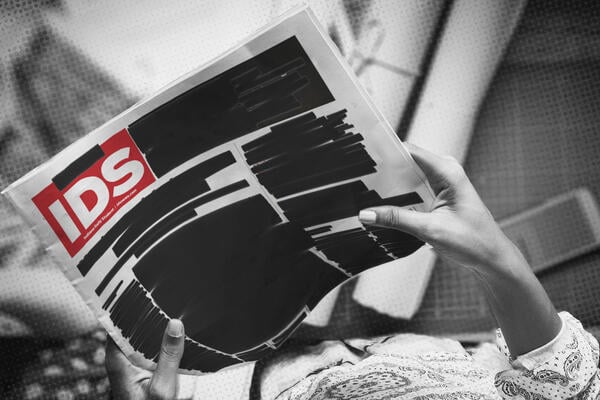
    First Amendment advocates are condemning Indiana University’s decision this week to suspend print publication of the Indiana Daily Student, a move that comes after administrators fired its adviser for allegedly rejecting demands to censor the student newspaper.

    The Foundation for Individual Rights and Expression called the decision “outrageous,” while officials at the Student Press Law Center cast the move as a classic case of censorship. Editors at the newspaper say they want to work with the university to address the issue but pledged “to resist as long as the university disregards the law.”

    “Any other means than court would be preferred,” wrote IDS editors Mia Hilowitz and Andrew Miller in an op-ed Wednesday.

    The decision is the latest flare-up between student journalists and institutions. Earlier this year, Purdue University ended its partnership with the student paper, citing “institutional neutrality.” The move also echoes Texas A&M University’s unilateral decision in 2022 to end its student newspaper’s print edition.

    The IDS editors first brought attention to the firing of Director of Student Media Jim Rodenbush in a Tuesday op-ed. They accused IU of ousting Rodenbush after he refused to follow directions from administrators to censor a homecoming edition of the newspaper. Administrators reportedly told Rodenbush the newspaper was only to contain information about homecoming and “no traditional front page news coverage.” But when he resisted, and editors at the Indiana Daily Student pressed Media School administrators for clarity, Rodenbush was fired.

    A termination letter shared with Inside Higher Ed and signed by Media School dean David Tolchinsky accused Rodenbush of a “lack of leadership” and inability “to work in alignment with the University’s direction for the Student Media Plan,” which he called “unacceptable.” Tolchinsky added that Rodenbush “will not be eligible for rehire at Indiana University.”

    The termination letter sent to Jim Rodenbush.

    After Rodenbush was ousted, administrators canceled publication of the newspaper, citing a plan adopted last year that outlined a shift for the student newspaper from print to digital platforms.

    “In support of the Action Plan, the campus has decided to make this shift effective this week, aligning IU with industry trends and offering experiential opportunities more consistent with digital-first media careers of the future,” Tolchinsky wrote in an email to student editors obtained by Inside Higher Ed.

    Indiana administrators deny that the university censored the paper, despite telling the student publication not to publish news. IU officials say that the newspaper retains full editorial control.

    Accelerating a Shift

    In a statement shared with Inside Higher Ed and attributed only to an IU spokesperson, officials wrote, “Indiana University Bloomington is committed to a vibrant and independent student media ecosystem.” The statement added that the shift from print to digital is geared toward “prioritizing student experiences that are more consistent with today’s digital-first media environment while also addressing a longstanding structural deficit at the Indiana Daily Student.”

    Chancellor David Reingold also pointed to the action plan in his statement, noting that “the campus is completing the shift from print to digital effective this week.” He added that the decision “concerns the medium of distribution, not editorial content,” and IU upholds “the right of student journalists to pursue stories freely and without interference.”

    Tolchinsky, President Pamela Whitten and members of the Board of Trustees did not respond to requests for comment from Inside Higher Ed. IU did not answer specific questions sent by email.

    Although Indiana officials have denied censoring the student newspaper, some officials were concerned about the optics of shutting down coverage, according to the Indiana Daily Student.

    When Rodenbush pushed back on the directive to censor the newspaper in a Sept. 25 meeting, Ron McFall, assistant dean of strategy and administration at the Media School, reportedly asked, “How do we frame that, you know, in a way that’s not seen as censorship?”

    McFall did not respond to a request for comment from Inside Higher Ed.

    ‘Textbook Case of Censorship’

    Rodenbush told Inside Higher Ed in a phone interview that he was surprised by his firing and open to exploring all legal options. He also cast the happenings at IU not as a business decision but pure censorship.

    “This is a textbook case of censorship,” Rodenbush said.

    He also disputed the notion that what happened was part of a shift to a digital product. In fact, Rodenbush argued, that shift largely already happened when university administrators decided last year to scale back the publication of the print edition from weekly to seven editions across the spring semester. Those seven printings were special editions, Rodenbush said, given that those “are generally our biggest revenue generators.” Special editions this year have been printed as supplemental sections, or essentially inserts into the regular editions of the paper.

    Prior to the fall semester, Rodenbush said, he never heard concerns from administrators about that practice until they objected to publishing the homecoming edition as an insert in the regular newspaper in September. When asked to ban news coverage from the homecoming edition, Rodenbush told Media School administrators, including Tolchinsky, he “wasn’t going to participate in censoring the paper,” which he said led to his firing.

    Hilowitz and Miller, the IDS editors, also disputed the notion that the cancellation of the print publication, which was communicated to them by Tolchinsky, was anything but censorship.

    “IU decided to fire Jim Rodenbush after he did the right thing by refusing to censor our print edition. That was a deliberate scare tactic toward student journalists and faculty. The same day, the Media School decided to fully cut our physical paper, fully ensuring we couldn’t print news. We’re losing revenue because of that decision,” they wrote in a joint emailed statement.

    The duo accused IU of trying to “irrationally justify” censorship as a “business decision.”

    Mike Hiestrand, senior legal counsel at the Student Press Law Center, told Inside Higher Ed that IU’s actions amount to content-based censorship and are “a clear violation of the First Amendment.”

    Asked to weigh in on IU’s response, Hiestrand commented, “No censor wants to be called a censor,” but “that’s clearly the case.” He added that being told not to publish certain information is “as content-based an action of censorship as you can get.” In an interview at a media conference in Washington, D.C., with hundreds of student journalists and advisers in attendance, Hiestrand said that there has been a sense of shock and outrage from attendees over the situation.

    “I think there’s shock that this happened here. We have strong laws that protect against this,” Hiestrand said.

    Free Speech Under Fire

    The censorship flap comes amid broad criticism of the state of free expression at IU, which FIRE ranked as one of the nation’s worst institutions on campus speech. Of 257 universities, FIRE ranked IU at 255 in its free speech rankings.

    IU has seen a flurry of campus speech controversies since Whitten became president in 2021.

    Whitten, who is also facing allegations that she plagiarized parts of her dissertation, has been accused of retaliating against a professor for criticizing her and stifling academic freedom. Under her leadership, IU has also imposed broad restrictions on campus speech in the wake of 2023 student protests and attempted to bar faculty who took buyouts from criticizing the university.

    Amid censorship concerns at IU, FIRE sent a letter to Whitten, released a statement and launched a national petition.

    “Censoring a student publication after it reported on a university’s dismal record on free speech isn’t just a stunning display of lack of self-awareness, it’s a violation of the First Amendment,” FIRE student press program officer Dominic Coletti said in a statement. “If Indiana University is embarrassed about its terrible showing in the College Free Speech Rankings, it should put down the shovel and start caring more about its students’ constitutional rights than its own image.”

    Indiana’s Student Government Association also condemned IU’s handling of the matter.

    The university’s chapter of the American Association of University Professors urged administrators to reconsider their decisions to fire the adviser and cut the print edition, saying the situation further deteriorates IU’s commitment to free speech.

    “In refusing to be cowed by demands to voluntarily abrogate constitutionally protected rights, Director Rodenbush and the Indiana Daily Student have indeed shown themselves out of alignment with a University Administration that has consistently silenced dissenting voices with a seeming disregard for First Amendment protections,” the chapter said in a statement.

    This latest controversy is also gaining national attention from big-name donors such as Mark Cuban, the billionaire entrepreneur and IU alum. Cuban, who previously donated money to support the Indiana Daily Student, called out administrators in a post on X.

    “Not happy. Censorship isn’t the way,” Cuban wrote Wednesday. “I gave money to [the] IU general fund for the IDS last year, so they could pay everyone and not run a deficit. I gave more than they asked for. I told them I’m happy to help because the IDS is important to kids at IU.”


    Source link

  • Fifth Circuit: First Amendment protects drag show from campus censors

    Fifth Circuit: First Amendment protects drag show from campus censors

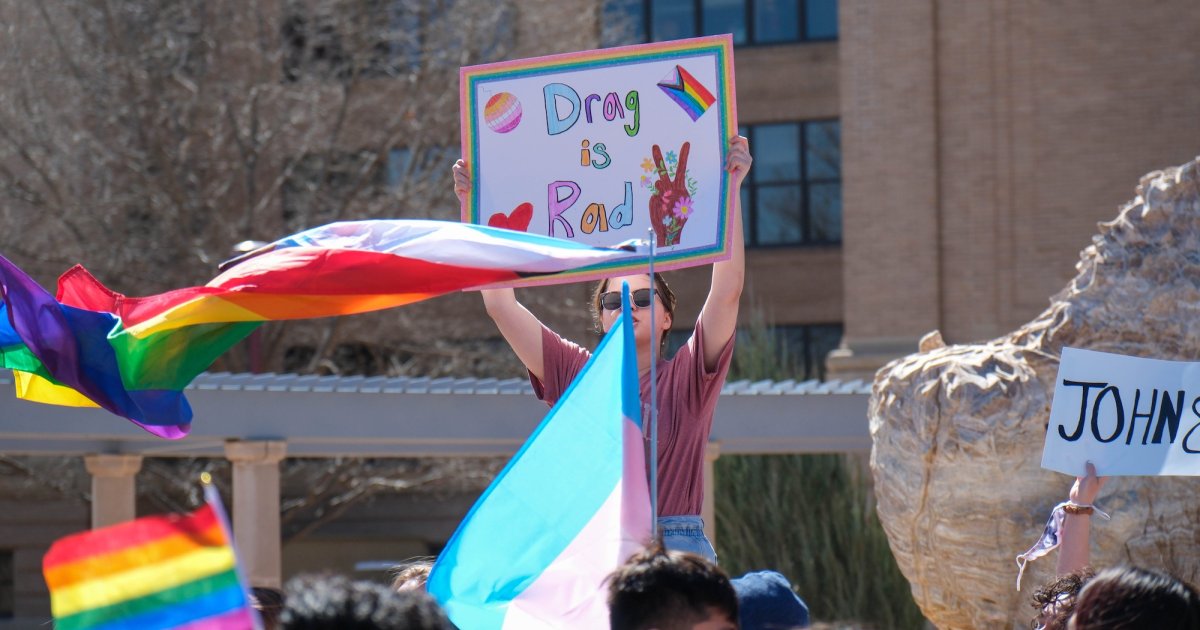
    On March 20, 2023, the students of Spectrum WT — an LGBTQ+ organization at West Texas A&M University — were in the final stages of preparing a charity drag show when University President Walter Wendler sent a community-wide email unilaterally banning all drag shows from campus. In his email, Wendler derided drag shows as “misogynistic,” and enacted the ban despite acknowledging that “the law of the land appears to require” him to allow the show to go on. 

    On Aug. 18, 2025, the U.S. Court of Appeals for the Fifth Circuit confirmed that, indeed, it does. The 2-1 panel opinion overturned the trial court’s denial of Spectrum WT’s motion for a preliminary injunction and ordered the lower court to block Wendler from enforcing the drag ban while the case proceeds. The court held the students are substantially likely to prevail on the merits of their claims that singling out drag performances to ban them from a campus theater, otherwise open to students and the public alike, violates the right to free speech. 

    To start, the court affirmed that the First Amendment protects drag performance — just as it protects other theatrical performance — rejecting the trial court’s holding that drag shows constitute nonexpressive conduct outside the First Amendment’s protection. The appeals court explained that like the “unquestionably shielded painting of Jackson Pollock, music of Arnold Schöenberg, or Jabberwocky verse of Lewis Carroll,” art, whether painted, sung, or performed on stage, is expressive as so long as it is “evident that conveying some message, even if nearly opaque or perhaps smeared, was intended.” 

    Spectrum WT’s drag show passes that test, the court explained, because “the message sent by parading on a theater stage in the attire of the opposite sex,” in support for the LGBTQ+ community, “would have been unmistakable” to its ticketed audience.

    The second question the court considered was whether the university could lawfully keep Spectrum WT’s drag show out of Legacy Hall, a performance venue the college allows both students and outside groups to rent for expressive events like magic shows, beauty pageants, and even a past drag show. Here, again, the court sided with Spectrum WT. The court conducted a public forum analysis, which examines the underlying purposes and practices of government property to determine what restrictions officials can place on protected expression in the property. 

    The court noted that the university had let pretty much anyone beside the plaintiffs use Legacy Hall for expressive events, including, “a local church group’s ‘Community Night of Worship and Prayer,’ a congressional candidate forum, a local high school’s ‘Casino Night’ dance, a local nonprofit’s benefit gala, Randall County’s livestock show, and a religious retreat center’s event dinner.”

    Because President Wendler singled out a particular type of expression to exclude from a space WTAMU generally opens to third parties for expressive use, his drag ban must survive strict scrutiny, the toughest level of judicial review. And because Wendler made no attempt to overcome strict scrutiny, the court held “the plaintiffs are entitled to an injunction protecting their rights, and the district court erred in concluding otherwise.”

    Spectrum WT’s legal battle may not be completely over, as the case waits to return to the trial court, but this opinion represents a real victory for all students at West Texas A&M, reaffirming the First Amendment principles that protect their free speech rights on campus. It’s also another victory for students across Texas — where drag performance bans have become all too common — whose abilities to express themselves shouldn’t be subject to the whims of censorial college administrators.

    Source link

  • Grandpa’s advice for the new wave of American censors

    Grandpa’s advice for the new wave of American censors

    This essay was originally published by The Gazette on April 17, 2025.


    My grandpa was a World War II veteran and a proud American. After the war, he returned to his Melcher farm and became a Marion County supervisor. Although he died months before my birth, my 98-year-old grandma shared stories about him that guide my moral compass.

    One of my favorites is that grandpa would tell folks who gave him a hard time, “Merry Christmas!” and move along to consider their feedback on his public duties. When you’re in charge of plowing the roads in Iowa, folks can get mad at you occasionally.

    A farm in Marion County, Iowa, December 1957

    Decatur County officials should heed my grandpa’s advice and stop harassing citizens for questioning the Decatur County Board of Supervisors.

    As Iowa Freedom of Information Council Executive Director Randy Evans reported, Decatur County Attorney Alan Wilson sent Van Wert resident Rita Audlehelm a cease and desist letter. Why? She wrote to the Leon Journal-Reporter criticizing the board for not acting against a supervisor she believed was out of the county for several weeks. After she asserted that the supervisor attended only one of 17 meetings in person, Audlehelm asked, “My questions are: Why are you not attending BOS meetings and the committee meetings assigned to you?”

    It’s a valid question and the First Amendment fully protects it.

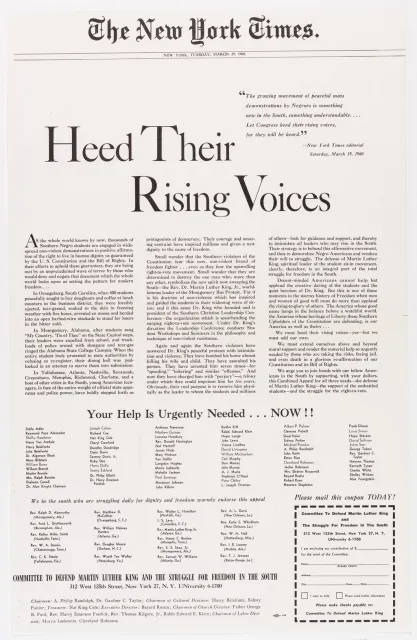
    Newspaper print of Heed Their Rising Voices

    The advertisement published in The New York Times on March 29, 1960, that led to Sullivan’s defamation lawsuit.

    Wilson claimed this question was defamatory and demanded that Audlehelm “Cease and Desist from making any future false, misleading, or defamatory statements against any elected official of Decatur County.” However, the Supreme Court made clear in N.Y. Times Co. v. Sullivan that the First Amendment gives citizens breathing room to comment on public affairs because inaccurate statements are inevitable in free debate. Since Sullivan, the court has repeatedly upheld our “profound national commitment to the principle that debate on public issues should be uninhibited, robust, and wide-open, and that it may well include vehement, caustic, and sometimes unpleasantly sharp attacks on government and public officials.”

    So, even if she is incorrect, Wilson cannot prevent Audlehelm — or any of us — from voicing good-faith criticism of public officials.

    My grandpa taught me that accepting criticism of public duties is part of receiving a taxpayer-funded paycheck. This lesson motivates my work as a First Amendment attorney at the Foundation for Individual Rights and Expression (FIRE).

    For me, this is personal.

    Unfortunately, Wilson’s attempt to silence debate reflects a trend of politicians intimidating journalists and citizens. Here in Iowa, FIRE asked a court to dismiss President Donald Trump’s lawsuit against our client, pollster J. Ann Selzer, and in Mississippi, FIRE came to the defense of a newspaper sued by a mayor for libel.

    Censorship is spreading rapidly, and Americans should urge public officials to address criticism openly rather than resort to lawsuits and threats.

    It is an insult to the sacrifices of my grandpa’s generation for public officials to try to silence critics rather than hear folks out.

    Source link