“We are in the cancel culture part of the tragedy cycle.”
This is the declaration of Adam Goldstein, vice president of strategic initiatives for the Foundation for Individual Rights and Expression, writing at the organization’s website.
In the piece, dated Sept. 12, he chronicles almost three dozen incidents of individuals being sanctioned, suspended or terminated for public remarks following the tragic killing of Charlie Kirk.
The vast majority of these incidents concern schools, colleges and universities. The examples exhibit a pattern of public outrage, which gets the attention of a public official, who then calls for sanction, followed by the sanction being administered by another public entity.
Goldstein says that this is a cycle of “the cancel culture machine. It goes like this: A tragedy happens. Someone reacts by celebrating that tragedy for whatever reason. Then the social media mob comes to demand this person be fired, expelled, or otherwise punished for their views.”
I’m appreciative of Goldstein’s work to compile, publicize and criticize these actions, but I have an important point of disagreement. Most of these are not incidents of cancel culture.
It’s censorship.
The problem is not about “social media mobs” making demands, but on the public officials in power following through and punishing those views.
Whatever anyone thinks about people saying things on social media, all of it (providing it doesn’t run afoul of the law) is a form of protected speech. Some may decry the effect of that speech, but this doesn’t make it not speech. Charlie Kirk’s Professor Watchlist was a documented vector of threats and harassment directed toward college faculty, but the website itself is too is an example of speech, even when the website called for professors to be fired.
The public discussion about these issues has been unfortunately muddled for years, including by FIRE president Greg Lukianoff, who, along with his Coddling the American Mind co-author Jonathan Haidt, invented a psychological pathology they called “safetyism” in order to delegitimize student speech they believed to be “illiberal.”
The “cancel culture” narrative had much the same effect, by categorizing contentious speech where people were advocating for particular outcomes—without having the power to directly enact those outcomes—as something akin to censorship. Whatever one thinks of the phenomenon as a whole or individual examples of it, it was never censorship.
United States senators calling for firings and then college presidents complying is straight-up censorship.
These distinctions very much matter in this moment, because it is clear that numerous government officials are interested in using the response to Kirk’s death as a pretext to crack down on speech they don’t approve of. The United States State Department is “warning” immigrants not to “mock” Kirk’s death.
Legal remedies to illegal firings are also no longer guaranteed in a system where politicians are willing to use the weight of their office to crush dissent. At Clemson, one employee was fired and two faculty members were removed from teaching duties after complaints originating with the Clemson College Republicans surfaced. The South Carolina attorney general, Republican Alan Wilson, issued an opinion holding Clemson harmless if it fired the employees claiming, without evidence, the speech was tantamount to threats.
Other state legislators overtly threatened the school’s state funding should officials fail to act.
Coercion, intimidation.
Representative Clay Higgins declared that he is “going to use Congressional authority and every influence with big tech platforms to mandate immediate ban for life of every post or commenter that belittled the assassination of Charlie Kirk.”
The same Clay Higgins sponsored the Protecting Speech from Government Interference Act in 2023, in which he said, “The American people have the right to speak their truths, and federal bureaucrats should not be dictating what is or isn’t true. We must continue to uphold the First Amendment as our founding fathers intended.”
In 2021, Blackburn, who called for the firing the Cumberland University professor, introduced an anti–cancel culture resolution, declaring, “Cancel culture is a barrier to a free marketplace of ideas and remains antithetical to the preservation and perpetuation of global democracy.”
It is tempting to nail Blackburn and Higgins as hypocrites, but again, this mistakes the underlying aim of the larger political project for surface-level features. Blackburn and Higgins were against “cancel culture” because they did not approve of the potential consequences for speech with which they agreed. They are now calling for sanctions against speech and speakers with which they disagree. In both cases, they are using their power to promote speech of which they approve and discount that of which they don’t approve.
The major difference is that instruments of the state are acting on these calls to sanction, suspend and fire people.
Like I said, censorship.
The only thing that’s changed is the locus of power and a presidential administration that is more than willing to use the instruments of the state to intimidate and silence the opposition.
This isn’t cancel culture; it’s authoritarianism.
As I say, I’m appreciative of FIRE’s attention to these incidents, but the facts of what’s going on show the limits of trying to adjudicate freedoms—including academic freedom—entirely through the lens of free speech. If we’re going to preserve our freedoms, I think it’s important that, at the very least, we use the most accurate descriptive language we can.
FIRE’s Goldstein is wrong. We aren’t in the “cancel culture” part of the cycle.
We’re in the retaliation, censorship, coercion, authoritarianism part of the cycle, and the wheels are turning ever faster.
What’s in a name? To Gallaudet University, quite a lot.
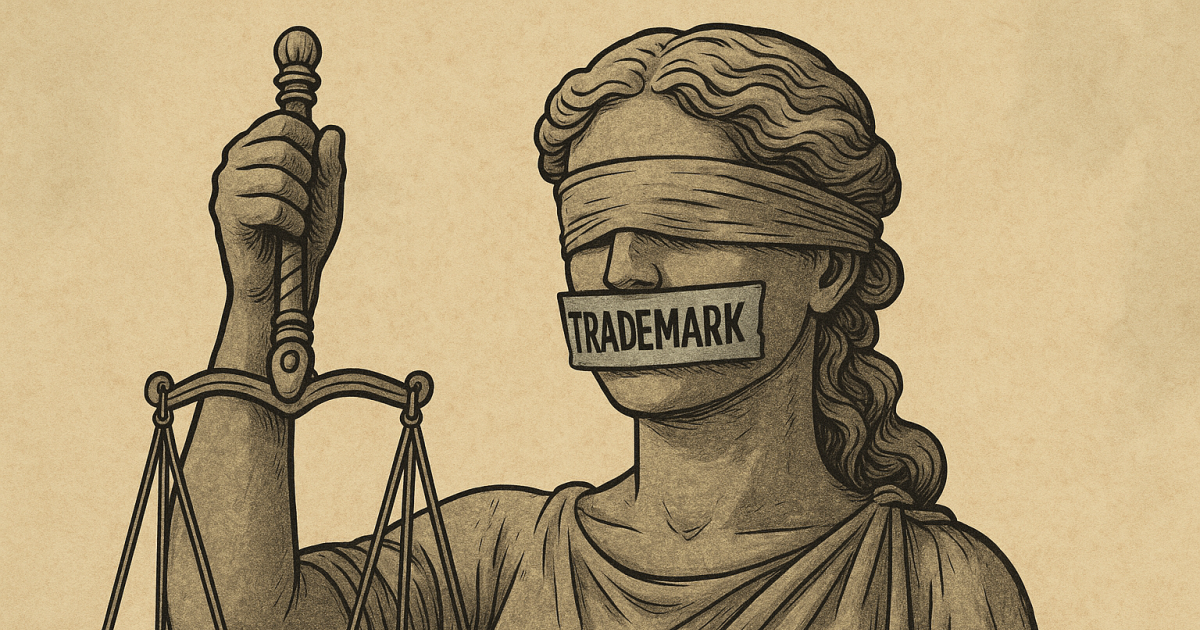
When the Gallaudet chapter of Students for Justice in Palestine protested the war in Gaza, Gallaudet moved swiftly to silence the group, neutering the SJP chapter’s social media presence and sending a campus-wide email condemning the group’s rhetoric. While they initially succeeded, swift action by FIRE and the social media company Meta ensured that free speech — and proper application of trademark law — won the day.
The leadup to last spring’s commencement ceremonies was a tense time at Gallaudet. Gallaudet SJP put up stickers across campus containing the phrase “from the river to the sea.” Many of these placements could fairly be considered vandalism by the university — and thus not protected by First Amendment principles. But rather than focus on where the stickers were placed, or where written materials should be placed, Gallaudet took a more troubling approach.
On May 22, the university released a video “community statement . . . affirming our values and addressing recent concerns.” In it, Provost Khadijat Rashid and President Roberta Cordano noted that the phrase “from the river to the sea” is “associated with rhetoric that promotes violence and hatred” and is “considered hate speech.”
Instead of specifying that the underlying speech is protected but the methods used (i.e., unauthorized stickering on university property) in communicating that speech were unacceptable, Gallaudet conflated the two, stating, “Antisemitism has no place at Gallaudet. These acts of vandalism are not protected speech.”
As FIRE has thoroughly explained, simply repeating the “river to the sea” slogan during a peaceful protest in the United States most certainly is protected speech, regardless of the dispute over whether it is also antisemitic. Gallaudet, which tells its community members it believes in “the principles of freedom of expression and open dialogue without fear of censorship or retaliation,” therefore promises to protect such speech in its own policies. Yet after threatening protected speech, Gallaudet’s leaders went on a curious digression:
We also want to address a source of confusion. A social media account [on Instagram] with the handle @sjpgallaudet uses the university’s name in its profile. This account does not represent a university-sanctioned student organization. The use of “Gallaudet” in this context is unauthorized, and the university filed a trademark infringement complaint [with Meta]. The social media handle has now been removed.
Trademark law (and corresponding Meta guidance) does allow parties with marks — such as distinctive names, logos, or even sounds, textures, or colors — to protect their creative works from infringers. But Gallaudet was stretching trademark law far beyond its bounds. In order to bring a trademark claim, rights holders generally need to show that other parties using their marks will cause confusion among consumers as to who is generating the content. In other words, Gallaudet can protect itself against would-be infringers who want to use its name to fool folks into thinking the infringer represents Gallaudet in some way. Posers beware, says the law.
But few if any social media users would think that a student group — especially one with a clear advocacy posture like SJP — represents a university just because the group references the name of the school where it operates. If someone actually exists who would assume Gallaudet officially sponsors the @sjpgallaudet Instagram handle, they would surely be dissuaded by the prominent message on the account saying: “GALLAUDET UNIVERSITY SHUTS DOWN STUDENTS FOR JUSTICE.” No likelihood of confusion, no trademark infringement.
Intellectual property rights cannot and should not be used to make unpopular speech go away.
FIRE made this simple point to Gallaudet in a June 3 letter, while also taking the time to carefully explain that “from the river to the sea” is protected by the university’s free speech promises. We received no reply, just crickets.
Fortunately, Meta proved significantly more helpful. On July 29, FIRE contacted Meta, urging the company to reinstate the @sjpgallaudet account. On Aug. 26, Meta wrote to FIRE explaining that, upon further review, its legal teams had determined that the account does not violate trademark guidelines, and reinstated it. Meta deserves praise in this case for thoroughly reassessing its earlier trademark determination and changing its decision accordingly.
Is saying ‘From the river to the sea, Palestine will be free’ protected speech under the First Amendment?
While the phrase may offend some listeners, feeling offended is hardly adequate cause to circumvent First Amendment protections for freedom of speech.
But Gallaudet, for its part, refuses to acknowledge its mistake or hostility toward student expression. This creates the troubling possibility that the university will again try to misuse trademark law to bully groups it doesn’t like, even if Meta is onto its shenanigans.
This is not the only time we’ve seen universities try to use their names to knock down perceived opponents. In July, FIRE blogged about a similar case involving Purdue University, where the independent student newspaper The Exponent published an editorial saying it would remove the names and images of pro-Palestinian activists from its website over concerns that the federal government would use them in its efforts targeting what the government called “pro-jihadist” speech.
In response, Purdue’s administration went on the offensive. The university told the publication, run by Purdue students since 1889, to stop using the name “Purdue” in its website address. Purdue also said it would stop circulating the paper and end preferential parking for its staff. As we noted at the time, Purdue’s decision made a mockery of trademark law and threatened independent journalism.
Purdue and Gallaudet surely won’t be the last higher-learning institutions to invoke trademarks to silence dissent. But FIRE will continue to call on universities to protect their marks in a way that respects the First Amendment.
Names are valuable to organizations, who have a right to protect their brands from abuse and safeguard consumers, donors, and passersby from confusion. Yet intellectual property rights cannot and should not be used to make unpopular speech go away.
Last year, FIRE launched the Free Speech Dispatch, a regular series covering new and continuing censorship trends and challenges around the world. Our goal is to help readers better understand the global context of free expression. Want to make sure you don’t miss an update? Sign up for our newsletter.
Exhibit on authoritarianism censored by authoritarians
These days, repressive regimes are not content with just censoring their critics within their own borders. They also think they have the authority to determine what the rest of the world can see, hear, and say, which is how we wind up with news like the latest out of Thailand.
In late July, staff from China’s embassy visited the Bangkok Arts and Cultural Centre, along with local city officials to demand the censorship of the exhibition “Constellation of Complicity: Visualising the Global Machinery of Authoritarian Solidarity.” The gallery granted their demands and “removed pieces included Tibetan and Uyghur flags and postcards featuring Chinese President Xi Jinping, as well as a postcard depicting links between China and Israel.” Words including “Hong Kong,” “Tibet,” and “Uyghur” were redacted. But even this was not enough for the Chinese embassy, whose staff returned to seek further redactions and “reminded the gallery to comply with the One China policy.”
In a statement, China’s foreign ministry said Thailand’s quick action to pressure the gallery to censor “shows that the promotion of the fallacies of ‘Tibetan independence,’ ‘East Turkestan Islamic Movement,’ and ‘Hong Kong independence’ has no market internationally and is unpopular.” What it actually shows, though, is that the Chinese government often throws its weight around on the global scale — and gets its way. Authoritarians in the Academy, my new book out this month, documents precisely how China has attempted to enforce this kind of censorship in global higher education.
The co-curators of the show, a married couple, have since fled Thailand, citing fears of retaliation by Thai authorities. They plan to seek asylum in the UK.
Palestine Action, internet speech, and the disastrous Online Safety Act rollout
As I explained in the last Dispatch, UK police are enacting a widespread crackdown on protests surrounding Palestine Action, a group banned under anti-terrorism legislation for damaging military planes in a protest. They’re not just arresting the group’s activists, but also any and all members of the public who express “support” for the group. That even includes a man who held up a sign of a political cartoon — one legally printed and available for sale in a Private Eye edition — that criticized the ban on Palestine Action, as well as an 80-year-old woman who was held for 27 hours for attending a protest.
Pro-Palestinian activists protest outside the Royal Courts of Justice as a judge hears a challenge to the proscription of Palestine Action under the Terrorism Act. (Pete Speller / Shutterstock.com)
These arrests were just drops in the bucket. Police arrested 532 protesters over one weekend this month, with all but 10 being arrested for words or signs “supporting” the banned group. “We have significant resources deployed to this operation,” Metropolitan Police posted on X. “It will take time but we will arrest anyone expressing support for Palestine Action.” Northern Ireland police also warned protesters that they could face prosecution.
That’s not even the only troubling free speech scandal from UK police these past weeks.
Carmen Lau, a Hong Kong activist now living in the UK and still a target of censorship from the Chinese government, says Thames Valley police asked her to sign an agreement that she would “cease any activity that is likely to put you at risk” and “avoid attending” protests to limit the likelihood of overseas repression. Then a magistrate court overturned a gag order placed on a firefighter, suggesting that police officers were attempting to enforce a “police state.” Police raided the home of Robert Moss, a firefighter who won a wrongful termination challenge in 2023, over Facebook comments he’d posted about Staffordshire’s fire department, and then told him he must not only stay silent about leadership of the fire department, but was also not permitted to even discuss the investigation itself.
Meanwhile, overzealous police are far from the only problems facing internet speech in the UK. Looming even larger is the Online Safety Act, now in effect and wreaking havoc on the UK’s internet users and the companies and platforms they engage with online. A useful collection from Reason’s Elizabeth Nolan Brown shows how requirements that sites verify age for material “harmful to children” created some absurd fallout. Age-gated content has included an X post with the famous painting Saturn Devouring His Son, news about Ukraine and Gaza, and a thread about material being restricted under the act.
The Wikimedia Foundation’s challenge to certain regulations of the law failed this month, meaning many of its concerns about the act’s threats to the privacy of Wikipedia’s anonymous editors remain. But now, the message board site 4chan is pushing back, refusing to pay a fine already doled out for its noncompliance with the law. “American businesses do not surrender their First Amendment rights because a foreign bureaucrat sends them an email,” the site’s lawyers wrote in a statement.
And to the UK citizens who understandably are uncomfortable with the burdensome and privacy-threatening process of age-verification just to use the internet, Secretary of State for Science, Innovation and Technology Peter Kyle warns: Don’t look for a workaround. Bizarrely, Kyle claimed adults verifying their age “keeps a child safe,” as if an adult’s VPN use somehow poses a risk to some child, somewhere.
Two women sentenced to a decade for printing anti-Hugo Chávez shirts
In what certainly looks like a case of entrapment, two Venezuelan women who run a T-shirt printing business were recently sentenced to 10 years in prison on charges of incitement to hatred, treason, and terrorism. They had accepted an order to print shirts featuring a photo of a protester destroying a statue of late Venezuelan President Hugo Chávez. The women were initially wary of taking the order — apparently, for good reason — but eventually accepted it from the insistent customer. While delivering the order, they were arrested by police, who also confiscated their equipment and inventory.
It’s not just in Venezuela. More censorship of political speech, protest, and journalism globally:
Ugandan authorities disappeared a student for weeks, and when public outcry finally forced them to explain his whereabouts, he “resurfaced” at a police station and was charged with “offensive communication” for intent “to ridicule, demean and incite hostility against the president” on TikTok.
Moroccan feminist activist Ibtissam Lachgar was arrested this month for posting a photo of herself wearing a shirt with the message, “Allah is Lesbian.” A public prosecutor cited her “offensive expressions towards God” and post “containing an offense to the Islamic religion.”
An Argentine legislator is being prosecuted for social media posts comparing Israel to the Nazi regime and calling it a “genocide state.” In 2020, Argentina adopted the International Holocaust Remembrance Alliance’s definition of antisemitism. (FIRE has repeatedlyexpressedconcerns about codification of the IHRA definition and the likelihood it will censor or chill protected political speech.)
Belarusian authorities arrested dozens of activists and critics who took part in anti-government protests outside Belarus, in countries including the U.S. and UK.
Russian journalist Olga Komleva was sentenced to 12 years on “extremism” charges for her ties to the late Alexei Navalny and for spreading alleged fake news about the Ukraine invasion.
Cities across Canada have withdrawn permits for performances by Sean Feucht, a right-wing Christian singer and vocal supporter of President Trump, with one Montreal church facing a $2,500 fine for going forward with his concert. Montreal mayor Valérie Plante said, “This show runs counter to the values of inclusion, solidarity, and respect that are championed in Montreal. Freedom of expression is one of our fundamental values, but hateful and discriminatory speech is not acceptable in Montreal.”
Indonesian authorities are warning about the country’s regulations on flag desecration and respect for state symbols in response to a trend of citizens posting the Jolly Roger flag from the manga One Piece as a form of protest.
Six journalists, including four with Al Jazeera, were killed by an Israeli airstrike. The Israeli military accused one of the journalists, Anas al-Sharif, of being a Hamas cell leader, but the Committee to Protect Journalists says it “has made no claims that any of the other journalists were terrorists.”
A 34-year-old Thai security guard, originally sentenced to 15 years, will spend seven years in prison for Computer Crimes Act and lese-majeste violations for insulting the monarchy on social media.
A statement from the U.S. and a number of European nations accused Iranian intelligence authorities of widespread plots “to kill, kidnap, and harass people in Europe and North America in clear violation of our sovereignty.”
Chinese officials in eastern Zhejiang province issued warnings to performers about material on gender relations in response to a comedian’s viral set about her abusive husband. “Criticism is obviously fine, but it should be … constructive rather than revolve around gender opposition for the sake of being funny,” the warning read.
Book banning abroad
Arundhati Roy walking on village the road at Dwaraka, Kerala, India (Paulose NK / Shutterstock.com)
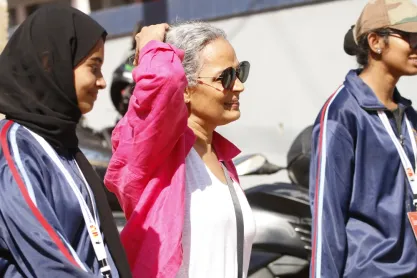
Under the criminal code of 2023, Indian authorities in Kashmir banned over two dozen books, including those by novelist Arundhati Roy and historian Sumantra Bose. The books allegedly promote “false narratives” and “secessionism.” Selling or even just owning these books can result in prison time.
This ban follows raids by Russian authorities of bookshops carrying titles from a list of 48 banned books, often those with LGBT themes.
Tech and the law
In enforcing its under-16 ban for social media, Australia reversed course and now will include YouTube in the group of platforms subject to the country’s age-gate ban.
French prosecutors are investigating Elon Musk’s X to see if the platform’s algorithm or data extraction policies violated the country’s laws.
Indian media outlets are disappearing past reporting amid “growing pressure from the Indian government to limit reporting critical of its policies.” One journalist told Index on Censorship that “404 journalism” is “becoming a new genre of journalism in India — stories that once were, but are now memory.”
A new law in Kyrgyzstan bans online porn to “protect moral and ethical values” in the country and “requires internet providers to block websites based on decisions by the ministry of culture”
Starting this autumn, Meta will no longer allow political or social issue ads on its apps within the EU, citing “significant operational challenges and legal uncertainties” from the forthcoming Transparency and Targeting of Political Advertising rules.
Qatar approved an amendment to a cybercrime law that criminalizes publishing or circulating images or videos of people in public places without their consent, raising an outcry from press freedom advocates. Offenders can face up to one year in prison and/or a fine of up to 100,000 Qatari riyals (about $27,500).
More suppression in and outside Hong Kong, as Jimmy Lai’s trial nears its end
Readers of the Free Speech Dispatch are likely aware of how grim the situation for free expression in Hong Kong has become in the past few years, and there are no improvements in sight. It even reaches globally. Late last month, officials issued arrest warrants for overseas activists, including those based in the U.S., for alleged national security law violations.
In recent weeks within the city, eight of Hong Kong’s public universities signed an agreement announcing their intent to comply with Xi Jinping’s and mainland China’s governance, another conspicuous sign of academic freedom’s decline in the city. The Hong Kong International Film Festival cut a Taiwanese film from its schedule for failing to receive a “certificate of approval” from the city’s film censors. Then a teenager was arrested by national security police for writing “seditious” words in a public toilet. Police said the messages “provoked hatred, contempt or disaffection against” Hong Kong’s government.
And the trial of Jimmy Lai, the 77-year-old media tycoon and founder of dissenting newspaper Apple Daily, is now reaching its conclusion. Lai, who is in poor health, has pleaded not guilty to charges of conspiracy to collude with foreign forces and conspiracy to publish seditious material in Apple Daily.
In a troubling incident in an already disturbing case, a judge overseeing the case cited speech suppression in the U.S. to justify the prosecution of Lai. “People who were freely expressing their views on Palestine, they were arrested in England… [and] in the US,” Judge Esther Toh said in court last week. “It’s easy to say ‘la-di-da, it’s not illegal,’ but it’s not an absolute. Each country’s government has a different limit on freedom of expression.”
It should be a warning sign to Americans when our government’s actions are cited abroad in favor of, not against, censorship.
Ten years ago, on Aug. 24, 2015, Alice Dreger submitted her resignation as a tenured professor at Northwestern University’s Feinberg School of Medicine. Dreger was protesting the censorship of an academic journal at Northwestern called Atrium, for which she had served as guest editor of the 2014 issue with the theme “Bad Girls.” That edition included a controversial essay by disability rights advocate William Peace, who wrote about receiving oral sex from a nurse in the 1970s. Northwestern officials removed Atrium’s online issues for 14 months, restoring access to it only after Dreger announced she was going public about the censorship.
Dreger wasn’t even the first professor to quit in protest over the censorship of Atrium. Kristi Kirschner, a clinical professor of medical humanities and bioethics, resigned in December 2014 because of the repression.
But Northwestern demanded a new editorial board (including a public relations official) to oversee the journal in the future, which Dreger called a “censorship committee.” The faculty editors of Atrium refused to accept administrative control over its content, and it has never published another issue.
Dreger recently wrote about her “disappointment (and that tablespoon of regret) at having accidentally caused the end of Atrium. For the magazine was such a gem.” But, of course, she didn’t cause the end of the journal—Northwestern administrators did by making unacceptable demands for control. The blame for censorship always must belong to the censor for suppressing controversy, and not the censored for causing controversy.
Dreger’s resignation, and the censorship that prompted it, received much less attention than it deserved. This year is also the 10th anniversary of another case at Northwestern that was far more publicized: The Title IX investigation of Laura Kipnis over her essay “Sexual Paranoia Strikes Academe” that examined the case of a Northwestern professor accused of sexually assaulting a graduate student. Two students filed a complaint of retaliation against Kipnis over her writing, and the university cleared her after a lengthy investigation. While Kipnis obviously should never have been investigated for expressing her opinions on a case of campus sexual misconduct, she never suffered any official penalty or censorship.
By contrast, the censorship of Atrium actually did lead to the demise of a respected academic journal (and the loss of the two professors who protested it). But while the Kipnis case fit a very popular narrative of politically correct leftists demanding suppression, the Atrium case exposed the reality on campus: Conservative censorship was more repressive but much less publicized than the trendy complaints about the PC police.
Another example of this at Northwestern occurred in 2016, when political science professor Jackie Stevens was suspended and banned from campus after she complained that an administrator had yelled at her and slammed a door. Without any evidence and in violation of its due process policies, Northwestern officials contended that Stevens posed an immediate violent threat to the campus and forced her to undergo a psychological evaluation (which found no danger) before lifting the suspension and banishment. Stevens had been a harsh critic of the administration and was a leader of the successful faculty effort to prevent a retired general without a Ph.D. from being appointed head of an international studies program.
Looking back at the Dreger resignation a decade ago, it’s hard to feel optimistic, because censorship on campus is even worse today. In the past year, Northwestern University’s actions have been some of the most repressive in the entire history of the institution. In February, Northwestern’s administration adopted the International Holocaust Remembrance Alliance definition of antisemitism, which the Foundation for Individual Rights and Expression has condemned because it “will chill campus speech.”
One little-known example of Northwestern’s censorship is shockingly reminiscent of what happened to Atrium, except that it’s much worse. In February, Northwestern officials took down the entire website of the Gender and Sexuality Resource Center in response to President Donald Trump’s executive order “Ending Illegal Discrimination and Restoring Merit-Based Opportunity.” GSRC director Matt Abtahi didn’t go public about the censorship, but wrote an April 14 email to his staff to explain the removal of the website: “This last month working with the lawyers and senior leadership at NU has been particularly gutting.”
He added, “The use of civil rights law and discrimination policy to advance these kinds of changes is alarming.” When Northwestern officials learned about the email, they immediately suspended Abtahi on April 18 and then fired him on April 29 and banned him from campus. Northwestern finally restored the GSRC website in May but censored all of the LGBTQ+ content. The censorship today is far worse than what happened to Atrium, which was finally restored online without censorship and no one was fired for questioning the repression.
But even more appalling has been Northwestern’s violation of the rights of journalism professor Steven Thrasher. After Thrasher defended a student encampment in spring 2024 to prevent police from arresting protesters, Northwestern’s administration retaliated several months later in the wake of Northwestern president Michael Schill’s testimony before members of Congress who called Thrasher a “goon” and demanded his firing.
Northwestern used its police powers to order Thrasher’s arrest, although the charges were immediately dismissed. In the fall of 2024, Northwestern suspended Thrasher from teaching for two quarters in violation of campus rules and claimed that he had violated professional norms by questioning the concept of “objectivity” in journalism. After a faculty committee cleared Thrasher of any wrongdoing, Northwestern was forced to reinstate him.
However, Thrasher was up for tenure in 2025, and Northwestern denied him tenure. When Thrasher publicly criticized that decision and blamed it on retaliation for his criticism of Israel, Northwestern’s administration promptly banned Thrasher from teaching in the spring quarter and the entire 2025–26 academic year, declaring, “Your public lobbying, mischaracterizations and efforts to encourage pressure from groups complicate and compromise the process of tenure review, decision making, and appeal. Therefore, we are concerned about your presence with students in our community.”
Obviously, criticizing the administration can never be grounds for banning a professor from the classroom for years without due process. Because tenure decisions are secretive, we don’t know if illegitimate, nonacademic judgments affected Thrasher’s case. But we do know that Northwestern’s excuses for twice suspending Thrasher are entirely illegitimate and violate basic norms of academic freedom.
(Full disclosure: I’m a member of the Illinois AAUP’s Committee A on Academic Freedom and Tenure, and we wrote two letters to Northwestern, condemning its initial suspension of Thrasher and its second suspension of Thrasher that denied him the right to teach during his terminal year after being denied tenure.)
Despite the extraordinary repression at Northwestern, where merely speaking out against the administration’s censorship can get you immediately banished, faculty and students are resisting efforts to silence dissent. On April 21, 2025, the entire faculty assembly at Northwestern voted 338 to 83 to support a resolution sponsored by the Northwestern AAUP (led by Jackie Stevens) that called upon the university to defend academic freedom, protect free speech and follow due process. But so far Northwestern refuses to back down from its embrace of censorship.
As Dreger wrote 10 years ago, “An institution in which the faculty are afraid to offend the dean is not an institution where I can in good conscience do my work. Such an institution is not a ‘university,’ in the truest sense of that word.”
Sadly, Dreger’s warning is going unheeded by Northwestern (and many other “universities”) that are part of a growing wave of repression on campus.
John K. Wilson was a 2019–20 fellow with the University of California National Center for Free Speech and Civic Engagement and is the author of eight books, including Patriotic Correctness: Academic Freedom and Its Enemies (Routledge, 2008), and his forthcoming book The Attack on Academia. He can be reached at [email protected], or letters to the editor can be sent to [email protected].
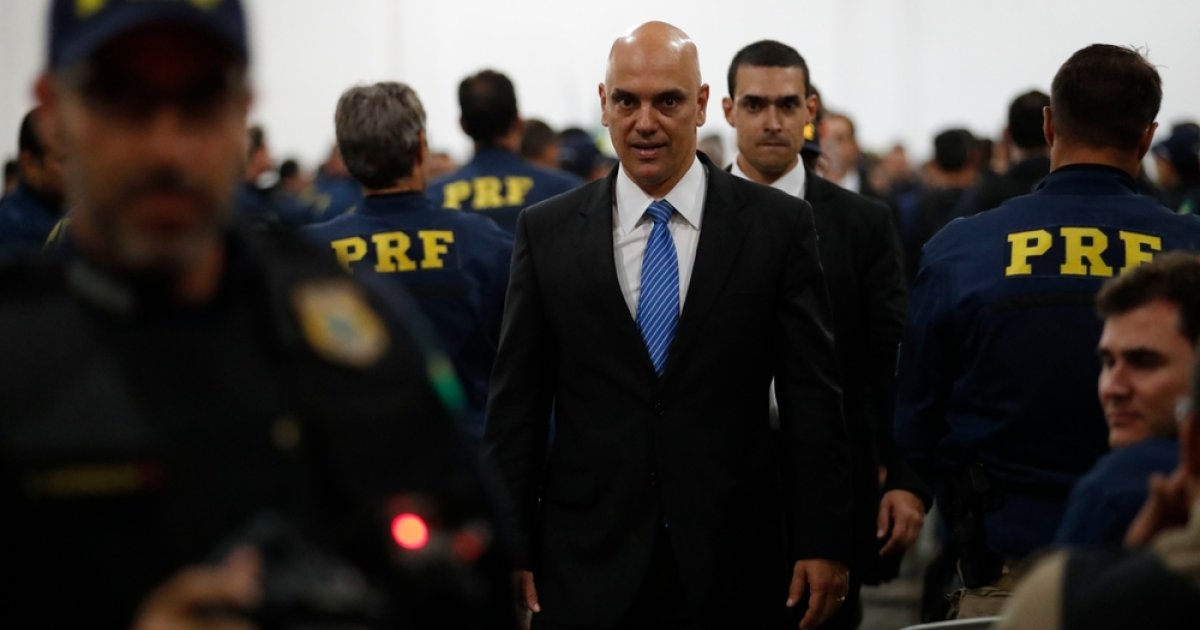
Alexandre de Moraes, the polarizing Brazilian Supreme Court Justice, is no friend to free speech. Though he is a popular figure within Brazil among those who see him as a protector of democracy, he has aggressively wielded his authority to censor, especially on the internet, with little transparency.
From his position in Brazil’s Supreme Court, de Moraes has doggedly pursued wide swaths of speech and speakers off and on the internet, as well as the tech companies hosting them. In a highly public incident last year, Brazil blocked X — and even threatened VPN users accessing it with massive fines — over the company’s noncompliance with de Moraes’ orders.
The actions of de Moraes, and Brazil’s Supreme Court more broadly, have repeatedly drawn the ire of the Trump administration. But chief among President Trump’s grievances is the prosecution of his political ally, former Brazilian President Jair Bolsonaro, who is accused of attempting a coup to overturn his 2022 election loss to President Luiz Inácio Lula da Silva.
How has the Trump administration responded?
Last month, the administration enacted a series of punishments against Brazil’s leadership and de Moraes specifically. In a July 30 executive order, Trump announced tariffs and other sanctions due to Brazil’s prosecution of Bolsonaro and other actions that “conflict with and threaten the policy of the United States to promote free speech and free and fair elections at home and abroad.” The order follows Trump’s weeks-earlier threat of tariffs over the “witch hunt” against Bolsonaro.
Secretary of State Marco Rubio also revoked the visas of de Moraes “and his allies on the court” and their families. And under the Global Magnitsky Human Rights Accountability Act, usually reserved for the most serious human rights abuses, the Department of the Treasury announced sanctions targeting any of de Moraes’s U.S. assets.
Unprincipled, partisan free speech advocacy is no free speech advocacy at all
There is plenty to debate about how to best protect free speech on the global internet, and around the world more generally, and what actions the United States can take in its defense. But, even though Brazil’s adversarial relationship with free expression is deeply alarming, it’s impossible to ignore the incongruity of the Trump administration putting itself in the position of diagnosing and treating government censorship.
Physician, heal thyself.
The opening months of Trump’s second term in office have offered a nonstop, headspinning bonanza of violations, threatened and enacted, against Americans’ First Amendment rights.
I write regularly in the Free Speech Dispatch about the myriad threats to freedom of expression, from Russia to the UK to India to Hong Kong. It’s painfully, brutally clear we need leadership to push back against the wave of global repression that threatens all of our rights. But that leadership must practice what it preaches and avoid simply using concerns about free speech as a pretext to fight partisan political battles. On both counts, this administration has failed.
You will make no converts to the free speech cause by proving right the critics who suspect its advocates are guided by partisan aims, not principled ones. Instead, you will breed cynicism and harm the very cause you claim to support.
This same posturing marred Vice President JD Vance’s objections to European censorship, an ugly trend that’s in dire need of principled critiques. Instead, Vance claimed that under Trump, the “new sheriff in town,” the administration “may disagree with your views, but we will fight to defend your right to offer them in the public square.”
The ugly reality is that the U.S. is rapidly ceding its moral authority to criticize foreign governments’ censorship, like that emanating from Brazil’s Supreme Court, when its own president and agencies are gleefully flouting the First Amendment and free speech principles day in and day out.
Perhaps most baffling was the administration’s objection to the Brazilian government’s targeting of Paulo Figueiredo, a Brazilian journalist, and “U.S. resident, for speech he made on U.S. soil.” Readers may also be able to think of some more government officials targetingimmigrants legally residing in the U.S. for protected speech made on U.S. soil — and they’re doing so from our White House and State Department, not thousands of miles away.
Global censorship is a real challenge, and it’s only getting worse. But until the U.S. removes the censorial beam from its own eye, we may find that other nations are unmoved by our criticisms and cures. Or, they may perhaps even be interested in doling them out to us.
Whenever a bill aimed at policing online speech is accused of censorship, its supporters often reframe the conversation around subjects like child safety or consumer protection. Such framing helps obscure government attempts to shape or limit lawful speech, yet no matter how artfully labeled such measures happen to be, they inevitably run headlong into the First Amendment.
Consider the headline-grabbing Kids Online Safety Act (KOSA). Re-introduced this year by Sens. Marsha Blackburn (R-Tennessee) and Richard Blumenthal (D-Connecticut) as a measure to protect minors, KOSA’s sponsors have repeatedlycharacterized its regulations as merely providing tools, safeguards, and transparency. But in practice, it would empower the federal government to put enormous pressure on platforms to censor constitutionally protected content. This risk of government censorship led KOSA to stall in the House last year after passing the Senate.
Child safety arguments have increasingly surfaced in states pursuing platform regulation, but closer inspection reveals that many such laws control how speech flows online, including for adults. Take Mississippi’s 2024 social media law (HB 1126), which was described as a child safety measure, that compelled platforms to verify every user’s age. Beneath that rhetoric, however, is the fact that age verification affects everyone, not just children. By forcing every user — adult or minor alike — to show personal identification or risk losing access, this law turned a child-safety gate into a universal speech checkpoint. That’s because identity checks function like a license: if you don’t clear the government’s screening, you can’t speak or listen.
A judge blocked HB 1126 last month, rejecting the attorney general’s argument that it only regulated actions, not speech, and finding that age verification gravely burdens how people communicate online. In other words, despite the bill’s intentions or rationales, the First Amendment was very much at stake.
Utah’s 2023 Social Media Regulation Act demanded similar age checks that acted as a broad mandate that chilled lawful speech. FIRE sued, the legislature repealed the statute, and its 2024 replacement — the Minor Protection in Social Media Act — met the same fate when a federal judge blocked it. Finding there was likely “no constitutionally permissible application,” the judge underscored the clear conflict between such regulations and the First Amendment.
Speech regulations often show up with different rationales, not just child safety. In Texas, HB 20 was marketed in 2021 as a way to stop “censorship” by large social media companies. By trying to paint the largest platforms as public utilities and treating content moderation decisions as “service features,” the legislature flipped the script on free expression by recasting a private actor’s editorial judgment as “conduct” the state could police. When the U.S. Court of Appeals for the Fifth Circuit upheld the law, in a decision that was later excoriated by the Supreme Court, the court repeated this inversion of the First Amendment: “The Platforms are not newspapers. Their censorship is not speech.”
Florida tried a similar strategy with a consumer-protection gloss. SB 7072 amended the state’s Deceptive and Unfair Trade Practices Act to include certain content moderation decisions, such as political de-platforming or shadow banning, exposing platforms to enforcement and penalties for their speech. Unlike the Fifth Circuit, the Eleventh Circuit blocked this law, calling platform curation “unquestionably” expressive and, therefore, protected by the First Amendment.
In July 2024, the Supreme Court took up the question when considering challenges to these two state laws in Moody v. NetChoice. Cutting through the branding, the Court rejected the idea that these laws merely regulated conduct or trade practices. Instead, it said content moderation decisions do have First Amendment protection and that the laws in Texas and Florida did, in fact, regulate speech.
The Court clarified in no uncertain terms that “a State may not interfere with private actors’ speech to advance its own vision of ideological balance.” And it added that “[o]n the spectrum of dangers to free expression, there are few greater than allowing the government to change the speech of private actors in order to achieve its own conception of speech nirvana.”
California tried the dual framing of both child safety and consumer protection. AB 2273, the California Age Appropriate Design Code Act, was described as a child-safety bill that just regulated how apps and websites are built and structured, not their content. The bill classified digital product design features, such as autoplaying videos or default public settings, as a “material detriment” to minors as well as an unfair or deceptive act under state consumer-protection statutes. But this too failed and is now blocked because, the court noted, “the State’s intentions in enacting the CAADCA cannot insulate the Act from the requirements of the First Amendment.”
Multiple nationwide lawsuits now claim social media feeds are defective products, using product-liability law to attack the design of platforms themselves. But by calling speech a “product” or forcing it into a product liability claim, it recharacterizes the editorial decisions of lawful content as a product flaw, which attempts to shift the legal analysis from speech protections to consumer protection. State attorneys general, however, cannot erase the First Amendment protections that still apply.
A sound policy approach to online speech looks not at branding, but impact. Even when packaged in terms of child safety, consumer protection, or platform accountability, it is essential to ask whether the rule forces platforms to host, suppress, or reshape lawful content. Regardless of the policy goal or rhetorical framing, if a requirement ultimately pressures platforms to host or suppress lawful speech, expect judges to treat it as a speech regulation.
Unfortunately, re-branding speech regulations can obfuscate their censorial ends and make them politically attractive. That’s what’s happening with KOSA’s obvious appeal of protecting children, combined with the less obvious censorship threat from targeting “design features,” has made it popular in the Senate.
Giving the government power to censor online speech puts everyone’s liberty at risk. Just as Americans enjoy the right to read, watch, and talk about whatever we want offline, those protections extend to our speech online as well. Protecting free expression now keeps the marketplace of ideas open and guards us from sacrificing everyone’s right to free expression.
The Los Angeles Community College District (LACCD) may be facing state takeover within two years due to overextended hiring and budget mismanagement, as discussed during a May 2025 meeting of the Los Angeles Valley College (LAVC) Academic Senate. Faculty warned that the looming financial crisis could result in mass layoffs—including tenured staff—and sweeping program cuts.
Start Minutes LAVC Academic Senate
“R. Christian-Brougham: other campuses have brand new presidents doing strange things. If we don’t do things differently as a district, from the mouth of the president in two years we’ll be bankrupt and go into negative. Chancellor has responsibility C. Sustin asks for confirmation that it is the Chancellor that can and should step in to curb campus budgets and hirings. R. Christian-Brougham: the Chancellor bears responsibility, but in the takeover scenario, the Board of Trustees – all of them – would get fired E. Perez: which happened in San Francisco C. Sustin: hiring is in the purview of campuses, so they can’t directly determine job positions that move forward? R. Christian-Brougham: Chancellor and BoT could step in and fire the Campus Presidents, though. E. Perez: in next consultation with Chancellor, bringing this up. C. Maddren: Gribbons is not sitting back; he’s acting laterally and going upward E. Thornton: looping back to the example of City College of San Francisco: when the takeover happened there the reductions in force extended to multiple long-since-tenured members of a number of disciplines, including English. For this and so many other reasons, it was a reign of terror sort of situation. So we really need to push the Chancellor.”
The dire financial outlook comes as new scrutiny falls on LAVC’s Media Arts Department, already under fire for years of alleged fraud, resume fabrication, and manipulation of public perception. Central to these concerns is the department’s chair, Eric Swelstad, who also oversees a $40,000 Hollywood Foreign Press Association (Golden Globe) grant for LAVC students—a role now drawing sharp criticism in light of mounting questions about his credentials and conduct.
Over the past two months, a troubling wave of digital censorship has quietly erased years of documented allegations. In May 2025, nearly two years’ worth of investigative reporting—comprising emails, legal filings, and accreditation complaints—were scrubbed from the independent news site IndyBay. The removed content accused Swelstad of deceiving students and the public for over two decades about the quality and viability of the Media Arts program, as well as about his own professional qualifications.
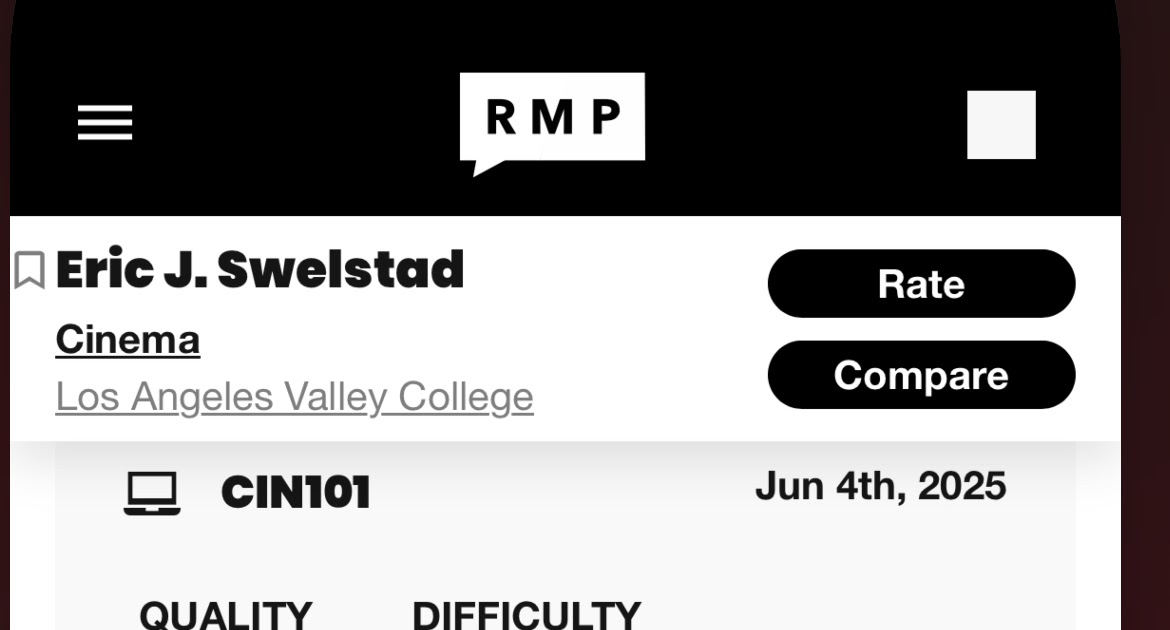
In June 2025, a negative student review about Swelstad—posted by a disabled student—disappeared from Rate My Professor. These incidents form part of what appears to be a years-long campaign of online reputation management and public deception.
An AI-driven analysis of Rate My Professor entries for long-serving Media Arts faculty—including Swelstad, Arantxa Rodriguez, Chad Sustin, Dan Watanabe, and Jason Beaton—suggests that the majority of positive reviews were written by a single individual or a small group. The analysis cited “Identical Phrasing Across Profiles,” “Unusually Consistent Tag Patterns,” and a “Homogeneous Tone and Style” as evidence:
“It is very likely that many (possibly a majority) of the positive reviews across these faculty pages were written by one person or a small group using similar templates, tone, and strategy… The presence of clearly distinct voices, especially in the negative reviews, shows that not all content comes from the same source.”
A now-deleted IndyBay article also revealed emails dating back to 2016 between LAVC students and Los Angeles Daily News journalist Dana Bartholomew, who reportedly received detailed complaints from at least a dozen students—but failed to publish the story. Instead, Bartholomew later authored two glowing articles featuring Swelstad and celebrating the approval of LAVC’s $78.5 million Valley Academic and Cultural Center:
* *”L.A. Valley College’s new performing arts center may be put on hold as costs rise,”* Dana Bartholomew, August 28, 2017.
Among the most explosive allegations is that Swelstad misrepresented himself as a member of the Writer’s Guild of America (WGA), a claim contradicted by official WGA-West membership records, according to another redacted IndyBay report.
This appears to be the tip of the iceberg according to other also scrubbed IndyBay articles
Other questionable appointments, payments, and student ‘success stories’ in the Los Angeles Valley College Media Arts Department include:
* **Jo Ann Rivas**, a YouTube personality and former Building Oversight Committee member, was paid as a trainer and presenter despite reportedly only working as a casting assistant on the LAVC student-produced film *Canaan Land*.
* **Diana Deville**, a radio host and LAVC alumna with media credits, served as Unit Production Manager on *Canaan Land*, but her resume claims high-profile studio affiliations including DreamWorks, MGM, and OWN.
The film *Canaan Land*, made by LAVC Media Arts students, has itself raised eyebrows. Filmmaker Richard Rossi claimed that both it and his earlier student film *Clemente* had received personal endorsements from the late Pope Francis. These assertions were echoed on *Canaan Land*’s GoFundMe page, prompting public denials and clarifications from the Vatican in *The Washington Post* and *New York Post*:
Censorship efforts appear to have intensified following the publication of a now-removed article advising students how to apply for student loan discharge based on misleading or fraudulent education at LAVC’s Media Arts Department. If successful, such filings could expose the department—and the district—to financial liability.
But the highest-profile financial concern is the 2020 establishment of the **Hollywood Foreign Press Association’s $40,000 grant** for LAVC Media Arts students, administered by Swelstad:
As a disreputable academic administrator with a documented history of professional fraud spanning two decades and multiple student success stories that aren’t, future grant donors may reconsider supporting the Department programs – further pushing the Los Angeles Valley College and by extension the district as a whole towards financial insolvency.
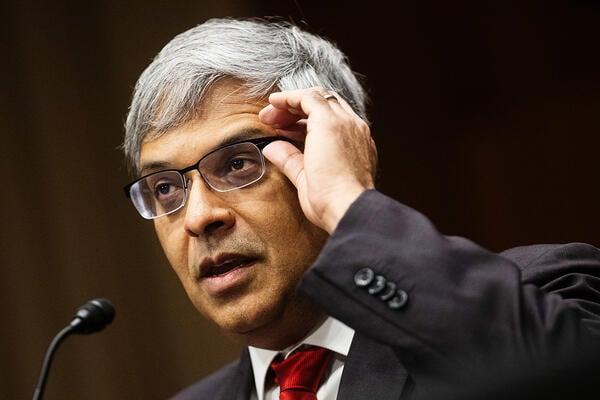
More than 300 NIH employees criticized their director, Jay Bhattacharya, in the letter published Monday.
Jim Watson/AFP/Getty Images
Hundreds of staff at the National Institutes of Health are publicly condemning the agency’s actions in recent months, including firing thousands of workers and canceling research grants for projects that don’t align with the Trump administration’s ideologies.
In a letter sent Monday morning to Jay Bhattacharya, the Trump-appointed NIH director who gained notoriety for his criticism of the NIH’s handling of the COVID-19 pandemic, more than 300 employees from across the agency called on him to deliver on his promise to embrace dissent, which he has called “the very essence of science.”
“We are compelled to speak up when our leadership prioritizes political momentum over human safety and faithful stewardship of public resources,” states the letter, titled the Bethesda Declaration (Bethesda, Md., is the location of the NIH’s main campus) and modeled after Bhattacharya’s own Great Barrington Declaration, which condemned the NIH in 2020 for ignoring his calls to mostly cease pandemic-related precautions.
“This censorship is incompatible with academic freedom, which should not be applied selectively based on political ideology.”
In addition to accusing Bhattacharya of politicizing research, the letter published Monday also criticized the agency for “undermining” peer review, unilaterally capping indirect costs and firing NIH staff.
Bhattacharya is scheduled to appear before the Senate appropriations subcommittee today to discuss Trump’s proposal to cut $18 billion or about 40 percent from the NIH’s budget.
As artificial intelligence technologies make their way into political ads and campaigning, Americans are expressing growing concern. But they’re not just worried about deepfakes and deceptive content’s impact on elections — they also fear how the government might use the fight against misinformation to restrict free speech.
In a recently released FIRE poll of registered American voters, conducted by Morning Consult, one concern stood out: government regulation itself. Nearly half of respondents (45%) said they are “extremely” or “very” concerned that government regulation of election-related AI content could be abused to suppress criticism of elected officials. That’s a powerful signal that while Americans see the risks posed by AI, they don’t trust government regulators to police political expression fairly.
When asked to choose between protecting free speech in politics or stopping deceptive content, a plurality (47%) said protecting free speech in politics is more important, even if that means allowing some deceptive content. Just 37% prioritized stopping deceptive content, even at the expense of limiting speech that would otherwise be protected by the First Amendment. These sentiments are held across the political spectrum, but are stronger among Independents and Republicans, than among Democrats.
This isn’t just a preference — it’s a principled stand in favor of the core freedoms the First Amendment exists to protect. Political speech lies at the heart of those freedoms, and Americans clearly recognize that any government attempts to police what can or can’t be said pose a far greater threat to democracy than free speech itself.
Regulation threatens participation
The chilling effects are already measurable. About 28% of voters said they’d be less likely to share content on social media if the government began regulating AI-generated or AI-altered content. (That’s right: All content, not just AI-generated or AI-altered content.) That may not sound dramatic at first glance, but that’s more than the average voter turnout during the last midterm primaries. As our political culture is increasingly shaped online, discouraging speech — even unintentionally — can have real consequences for public discourse.
These findings suggest a troubling trajectory: Government regulations justified in the name of protecting the public from AI could end up silencing the public instead.
While some polls show that a similar percentage of voters (41%) say it’s important to protect people from misinformation, that concern cannot be used to justify censorship. About 39% said that preserving freedom of speech should be the government’s top priority when crafting AI laws. Only 12% said that view doesn’t describe them at all. In other words, most Americans believe that protecting speech isn’t just one goal among many — it’s the central concern.
And they’re right to think so. The First Amendment doesn’t permit the government to restrict speech simply because it believes the public might be misled. The solution to bad speech is more speech, not less.
These results should serve as a warning to policymakers: The public views efforts to regulate AI in political campaigns as a risk to free expression. FIRE has been actively engaged in legislative advocacy to safeguard First Amendment rights, including vague and overbroad bans or disclosure requirements imposed on AI content.
If voters already believe regulation will be abused — and are already pulling back from political expression using AI — that’s not just a theoretical harm. It’s a chilling effect in action.
Instead of rushing to regulate, elected officials should reaffirm their commitment to protecting political speech, no matter the medium. The technology may be new, but the principle is not: In a free society, the government doesn’t get to decide which ideas are too dangerous to be heard.
The poll was conducted May 13-15, 2025, among a sample of registered voters in the US. A total of 2,005 interviews were conducted online across the US for a margin of error of plus or minus 2 percentage points. Frequency counts may not sum to 2,005 due to weighting and rounding. Topline results are available here.
At the same time, we asked OCR to give colleges additional guidance so they have a better idea of what type of speech or conduct might run afoul of its “Dear Colleague” letter. OCR has not yet done so, and with the compliance deadline set for tomorrow, we fear institutions will over-correct and engage in campus censorship.
In fact, we’ve already seen evidence of exactly that.
Grand View University in Iowa, for instance, reportedly cancelled its planned International Women’s Day activities, allegedly to comply with federal DEI directives. This, even though Bondi’s Feb. 6 memo exempts “educational, cultural, or historical observances — such as Black History Month, International Holocaust Remembrance Day, or similar events — that celebrate diversity, recognize historical contributions, and promote awareness without engaging in exclusion or discrimination.”
This type of overcompliance — in this case, cancelling activities or events that are expressly exempted from enforcement — unnecessarily degrades the extracurricular educational environment at higher education institutions and harms the student learning experience.
As we said last week: OCR is bound by the First Amendment and cannot order or compel colleges and universities to violate it. If there is a conflict between federal guidance and the First Amendment, the First Amendment prevails. Whether institutions are overcomplying out of fear of losing federal funding, or in an attempt to prove a point about the directive’s vague language, colleges and universities like Grand View must not preemptively shut down speech.
OCR’s new Title VI letter: FIRE’s analysis and recommendations
News
The Department of Education should provide more clarity about its ‘Dear Colleague Letter’ to ensure protected speech isn’t censored on campus.
This isn’t the first time institutions have overread government directives to justify censorship. In 2021, for example, Idaho passed the “No Public Funds for Abortion Act.” In implementing the bill, the University of Idaho demanded that faculty not “promote or advocate in favor of abortion” or discuss “abortion or contraception” in classroom conversations unless they remained “neutral.” FIRE wrote to the university explaining that such a reading was flatly at odds with the First Amendment. In a thorough memorandum, Idaho Attorney General Raúl Labrador agreed, explaining that the “plain text of the Act does not prohibit public university employees from engaging in speech relating to academic teaching and scholarship that could be viewed as supporting abortion,” thus ending that censorship policy at the University of Idaho.
In that same vein, OCR cannot force schools to violate the First Amendment, a point we’ve hammered since the Obama-era OCR’s “Dear Colleague” letters forced institutions to adopt harassment policies that did exactly that.
OCR must be clear about the type of conduct that runs afoul of its new directives so that institutions are on notice about what’s permissible and what is prohibited. The office has yet to address vagueness in the “Dear Colleague” letter about “institutional programming” that might violate Title VI. That silence is creating a lot of confusion and preemptive censorship, especially when paired with President Trump’s Jan. 21 executive order declaring that government contractors — which includes many institutions of higher education — cannot “operate any programs promoting DEI that violate any applicable Federal anti-discrimination laws.”
FIRE again urges institutions to hold the line on defending the free speech and academic freedom rights of their students and faculty. And we again ask OCR and the federal government to respect those same rights by immediately clarifying that their directives don’t require colleges and universities to violate those well-established rights.
Last week, a federal court enjoined two executive orders — including the Jan. 21 executive order — that prohibit, among other things, “promoting DEI” in violation of federal anti-discrimination law. The district court held the orders violate the First and Fifth Amendments because they discriminate on the basis of viewpoint and content, and are unconstitutionally vague.
While the government will likely appeal and we won’t know the final resolution for some time, the court’s analysis properly identified the orders’ ambiguity as a damning constitutional flaw. What, precisely, constitutes “promoting DEI” in ways that violate anti-discrimination laws? Can colleges host or sponsor speakers on DEI-related topics? Can institutions advertise DEI-related coursework or promote academic research? Restrictions on these activities would violate the First Amendment, but government attorneys were unable to clarify the meaning of the order when asked by the judge. Precision matters, especially when it comes to restrictions on expression. Vague pronouncements that sweep in protected debate, discussion, and programming raise constitutional and practical problems.
The best way forward for colleges is obvious, even if it might not be easy: Irrespective of the federal DEI directives, ditch speech-restrictive, orthodoxy-enforcing DEI bureaucracies and stand up for free expression and academic debate — in every political season.
As Len Gutkin, editor at The Chronicle of Higher Education, recently wrote: “Colleges should draw a sharp distinction between, on the one hand, DEI used in hiring, promotion, and training, and, on the other, curricular and disciplinary offerings.”
That’s the right balance. FIRE again urges institutions to hold the line on defending the free speech and academic freedom rights of their students and faculty. And we again ask OCR and the federal government to respect those same rights by immediately clarifying that their directives don’t require colleges and universities to violate those well-established rights.