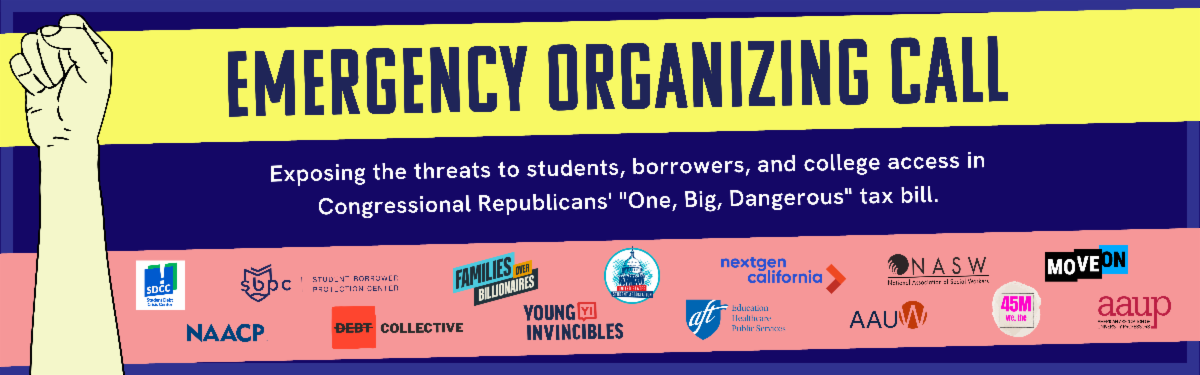
This bill threatens to gut $350 BILLION in critical education programs to deliver $4.5 TRILLION in tax cuts to billionaires. House Republicans’ plan to slash the Pell Grant and other financial aid programs and eliminate basic protections for students—this will only make college more expensive and force millions of working families with student debt further into the red.
So far, we have nearly 1,000 (!) RSVPs from all over the country planning to take part in this call. We will hear from policymakers, movement leaders, and affected students and borrowers on how this bill will harm our communities and how you can get more involved to protect students and working families—NOT billionaires.
You won’t want to miss this—make sure to RSVP below and clear your calendar for TOMORROW at 7PM ET.
Last year, FIRE launched the Free Speech Dispatch, a regular series covering new and continuing censorship trends and challenges around the world. Our goal is to help readers better understand the global context of free expression. Want to make sure you don’t miss an update? Sign up for our newsletter.
Kneecap spurs controversy in the U.S. and investigation in the UK as narcocorridos controversy roils Mexico
Belfast trio Kneecap’s public statements at Coachella and earlier concerts have caused an international stir, and now even the UK’s counter-terrorism police are involved.
The band, already no stranger to controversy, provoked it once again during its Coachella performances by displaying the message, “Israel is committing genocide … enabled by the US,” adding, “Fuck Israel. Free Palestine.”
In the following days, they were uninvited from music festivals in Germany as well as split with their booking agency in the U.S., meaning that the band is likely to face work-visa issues in its upcoming American tour. (And, given the Trump administration’s current track record on the subject, it would not be surprising to see them face visa challenges on the basis of their expression.)
In addition to the Coachella dustup, the group’s past comments have stirred new threats of legal action in the UK, specifically an “Up Hamas, up Hezbollah” chant at a 2024 gig and a band member’s comment at a show the year prior: “The only good Tory is a dead Tory. Kill your local MP.”
Metropolitan police said videos of both comments “were referred to the Counter Terrorism Internet Referral Unit for assessment by specialist officers, who have determined there are grounds for further investigation into potential offences linked to both videos.” A UK government spokesperson also said that authorities will “work with the police and parliament to do everything in our power to crack down on threats to elected officials.” (In the U.S., these comments would not meet either the incitement standard or qualify as material support for terrorism, and would be protected by the First Amendment.) And British politicians have made calls including for their disinvitation from Glastonbury as well as prosecution for the “Kill your local MP” remark.
A group of artists including Massive Attack and Pulp issued a statement against what they called a “clear, concerted attempt to censor and ultimately deplatform the band Kneecap.” The band also objected to what it calls a “smear campaign” to “manufacture moral hysteria” but asserted they “do not, and have never, supported Hamas or Hezbollah” and would not “seek to incite violence against any MP or individual. Ever.”
Some similar questions are at play in Mexico over narcocorridos, ballads about drug trafficking. Mexican President Claudia Sheinbaum says her “position is that it should not be banned, but that other music should be promoted.” In recent weeks, though, some Mexican states have taken action against the genre.
And last month, U.S. Deputy Secretary of State Christopher Landau announced on X that the State Department revoked the visas of a band who “portrayed images glorifying drug kingpin ‘El Mencho’” at a concert in Mexico. “I’m a firm believer in freedom of expression,” Landau wrote, “but that doesn’t mean that expression should be free of consequences.”
The band, Los Alegres del Barranco, may also be facing criminal charges in Mexico “for allegedly promoting criminal activity.”
The UK’s blasphemy debate is still going
Kneecap’s political commentary isn’t the only free expression controversy in the UK. As I’ve discussed in previousdispatches, UK-based activists have set off global controversies in recent months with public Quran burnings resulting in criminal charges.
The Crown Prosecution Service received well-deserved criticism over its decision to charge a man who burned a Quran outside the Turkish consulate in London with intent to cause “harassment, alarm or distress” against “the religious institution of Islam.” There is no other way to put it: protecting a religious institution from “distress” is a blatant blasphemy law.
In response to critics, the CPS admitted the charge was “incorrectly applied” and has substituted a different charge, a public order offense “on the basis that his actions caused harassment, alarm or distress — which is a criminal offence — and that this was motivated by hostility towards a religious or racial group.”
This prosecution, however, remains a serious threat to free expression and the public debate around it suggests this matter is far from settled. In an exchange on X, one member of parliament chastised another for “invest[ing] so much energy into advocating for the right to offend a minority community” and warned that free expression “comes with limitations and protections.”
From Xi’s critics to Israeli protests, political speech is under attack
In a recent episode of his HBO show “The Rehearsal,” Nathan Fielder reveals Paramount+ removed an older “Nathan for You” episode from streaming everywhere after Paramount+ Germany became “uncomfortable with what they called anything that touches on antisemitism in the aftermath of the Israel/Hamas attacks.” That episode focused on Fielder’s satirical pitch for a winter coat company to compete with a real life brand affiliated with a Holocaust denier. (From the stunt, Fielder “likely raised millions of dollars toward Holocaust awareness.”)
Israeli police temporarily warned organizers of a Tel Aviv protest that demonstrators could not use images of Palestinian children and terms like “genocide” and “ethnic cleansing” in protest signs.
A new Human Rights Watch report finds that Vietnam is ramping up enforcement of its law targeting expression “infringing of state interests.” Now “authorities have enlarged the scope and application of article 331 so that it reaches much further into society, beyond human rights and democracy dissidents — most of whom are now in prison — to all those publicly voicing grievances.”
A Thai appeals court sentenced a democracy activist to two years in prison for violating the country’s harsh lese-majeste law. In 2022, she posted on Facebook, “The government is shit, the institution is shit.”
Paul Chambers, the American academic charged with lese-majeste in Thailand, received good news but he’s not out of the woods yet. Prosecutors announced they declined to pursue the charges against him but that decision will face further review.
At April’s Semafor World Economy Summit, Netflix Co-CEO Ted Sarandos shared that the company previously attempted to build a presence in China but “in three years, not a single episode of a single Netflix show cleared the censorship board.”
China has disappeared another “Bridge Man.” In an incident similar to one that set off a global protest movement in 2022, an activist hung banners calling for political reform over a bridge outside Chengdu last month and was quickly detained — and his whereabouts are now unknown.
An investigation of China’s transnational repression methods from the International Consortium of Investigative Journalists found that during “at least seven of Xi’s 31 international trips between 2019 and 2024, local law enforcement infringed on dozens of protesters’ rights in order to shield the Chinese president from dissent, detaining or arresting activists, often for spurious reasons.”
Last month, the U.S. Department of Justice announced that, at the DOJ’s request, Serbian law enforcement arrested two men alleged to have “coordinated and directed a conspiracy to harass, intimidate, and threaten” a Los Angeles-based critic of Xi Jinping.
Hong Kong’s national security police arrested family members of the U.S.-based activist Anna Kwok, who is wanted under the city’s national security law, for handling her “funds or other financial assets.”
Conflict with Pakistan brings spike in India’s censorship
India’s censorship, especially on the internet, is a persistent threat to free expression, and the country’s recent flare-up with Pakistan has worsened the situation. Dozenshavebeenarrested for “anti-India comments” on social media and “content supporting Pakistan.”
In a May 8 notice, the Ministry of Information and Broadcasting advised all social media sites and streaming services to “discontinue” content “having its origins in Pakistan with immediate effect.”
At the government’s request, Meta blocked the 6.7 million follower Instagram account @Muslim, one of “the most followed Muslim news sources on Instagram.” X, too, announced it received orders to block over 8,000 users in the country, including “accounts belonging to international news organizations and prominent X users.” X complied and said “due to legal restrictions, we are unable to publish the executive orders at this time” but is exploring avenues to respond.
YouTube, too, is a target. Officials blocked over a dozen Pakistani YoutTube channels for “disseminating provocative and communally sensitive content, false and misleading narratives and misinformation against India.” India’s Ministry of Electronics and Information Technology also restricted access to The Wire, an independent news site, throughout the country.
The latest wins, losses, and challenges for free speech in tech
It’s not all bad news for free expression in India. This month, India’s Supreme Court reversed a ruling from the Delhi High Court ordering Wikipedia to take down a Wiki page amidst Asian News International’s lawsuit against the Wikimedia Foundation.
The Wikimedia Foundation is also taking on the UK’s Online Safety Act. The foundation is specifically challenging the act’s Categorisation Regulations, which “are written broadly enough that they could place Wikipedia as a ‘Category 1 service’ — a platform posing the highest possible level of risk to the public.” Among Wikimedia’s objections are the risks this classification poses to its users’ privacy and anonymity.
Meta secured a significant victory against Israeli spyware company NSO Group, with a jury awarding $168 million in damages. The NSO Group was accused of exploiting Meta’s WhatsApp to install its Pegasus spyware program, which has been used in high profile hacks of lawyers, journalists, and activists, into over a thousand phones.
X, a regular target of Turkish censorship orders, complied with an order to block the account of imprisoned Istanbul Mayor Ekrem Imamoglu, a rival of President Recep Tayyip Erdogan. X says it is challenging the order.
Bluesky has complied with Turkish orders, too. The platform restricted access to dozens of accounts in the country on “national security and public order” grounds.
Russia restricted internet access in regions of the country ahead of its “Victory Day” celebrations on May 9. “We want the glorious Victory Day to be celebrated at the appropriate level,” Kremlin spokesman Dmitry Peskov said of the shutdowns.
U.S. embassy warns Stockholm against ‘promoting DEI’
Stockholm announced this month that it was surprised to receive a “bizarre” letter from the U.S. embassy in the city. The letter, copies of which went to contractors abroad who work with the federal government, told Stockholm’s planning office to “certify that they do not operate any programs promoting DEI that violate any applicable anti-discrimination laws.” Companies in Europe have reported receiving these letters, but Stockholm’s planning office is the first government agency known to have received one. Officials conveyed that they would not be complying.
Embassies’ efforts to interfere with expression abroad are an issue I discuss at length in my forthcoming book, Authoritarians in the Academy. In 2021, for example, the Chinese embassy unsuccessfully pressured the Italian city of Brescia to cancel an art exhibition it claimed would “endanger the friendly relations between Italy and China” because it was “full of anti-Chinese lies.”
How press freedom is faring today
Argentine President Javier Milei is suing three journalists for defamation for their criticism of him, including a column comparing current events with the rise of Nazism and comments calling him an “authoritarian” and a “despot.”
Swedish journalist Joakim Medin was hit with an 11-month suspended sentence for insulting the Turkish president and is awaiting a trial on terrorism charges. Medin says he was not even in the country when the alleged conduct took place.
Israel’s Attorney General Gali Baharav-Miara warned government agencies that their boycott of the media outlet Hareetz over its coverage of the Israel-Hamas war “was conducted through an improper process that cannot be upheld legally.”
Former Sinn Féin leader Gerry Adams’ libel suit against the BBC over reporting that he sanctioned a killing in 2006 is underway. BBC says the reporting followed its editorial standards.
Two reporters were detained in Macau, a special administrative region of China, for allegedly “disrupting the operations” of authorities after trying to report on a legislative debate.
Four Russian journalists accused of having ties to Alexey Navalny were sentenced to over five years in a prison colony last month.
Palestinian President Mahmoud Abbas reversed the ban on Al Jazeera, permitting it to resume reporting, after it banned the outlet in January on incitement allegations.
Finally, some good news for a victim of blasphemy laws
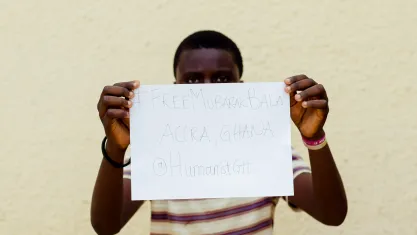
Mubarak Bala, a Nigerian humanist initially sentenced to 24 years in prison, is finally tasting freedom upon being released after spending over four years in prison. Mubarak still feared mob violence after his release, and was forced to live in a safe house due to threats.
But Bala has now arrived in Germany, where he is set to begin a residency at Humanistische Vereinigung. “No longer do I dread the routine sounds of the locks, nor the dark, certainly not the extreme weather, too hot or too cold, no longer ill, no longer hungry, no longer lonely, and no longer dreading that the marauders are coming across the fence, to drag me out and behead me,” Bala said in a statement.
The Community Court of the Economic Community of West African States, a high court governing 12 African nations including Nigeria, found last month that a blasphemy statute used to prosecute Bala must be struck down. The Kano State government, however, defended its blasphemy laws and said it “will not allow religious liberty to be weaponized as a cover for sacrilege, insult, and provocation.”
Are you having trouble keeping up with the chaos of the student loan system? Don’t worry; we got you. There’s a lot going on right now and we’re here to break it all down. Here are some of the most pressing things that happened this week.
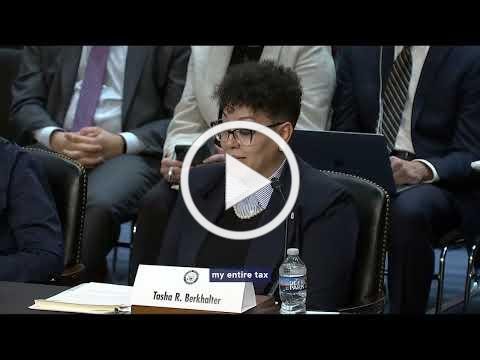
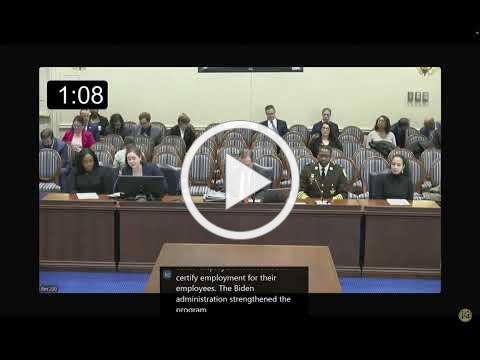
On Tuesday, Senator Patty Murray (D-WA), the Ranking Member of the U.S. Senate Appropriations Committee and senior member of the Senate Health, Education, Labor and Pensions (HELP) Committee chaired an education forum to spotlight the Trump Administration’s radical effort to dismantle the U.S. Department of Education (ED). Tasha Berkhalter, a U.S. Army veteran and student loan borrower who had her debt discharged by the Biden Administration after being defrauded by a predatory for-profit college, gave powerful testimonyat the hearing.
SAN DIEGO, CA — Community members will gather at the San Diego Civic Center Plaza for
a “Hands Off!” march on April 5 to protest DOGE and the Trump
administration’s attack on programs and services used by San Diego
residents. The local march will coincide with a nationwide day of
demonstrations expected to be attended by hundreds of thousands…
Organizers
describe the event as a collective response to policies impacting our
community. “San Diegans who are veterans, who are postal workers and
teachers, who rely on Social Security, Medicaid or Medicare, and who are
horrified at the Trump-Musk billionaire takeover of our government are
coming together to protest the Trump Administration’s attacks on the
rights and services they depend upon, many of them for survival” said
Angela Benson, a member of the organizing coalition.
Event Details:
What:
Over 10,000 San Diegans expected to peacefully demand “HANDS OFF!”
their rights and services in one of over 1,000 HANDS OFF! events
scheduled nationwide on April 5
Who: Coalition of San Diego Pro-Democracy Groups
When: Saturday, April 5, noon, 1 mile march to leave approximately 12:15 PM
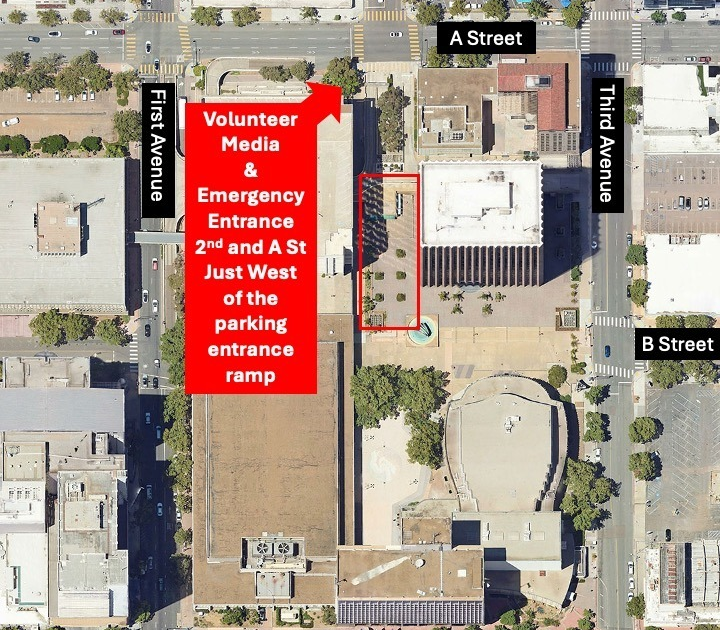
Where: March starts at Civic Center Plaza Fountain by 1200 Third St., ends at Hall of Justice at 330 W Broadway
Transportation: Participants are encouraged to take public transit to the event
Planning group:
Change Begins With ME
CBFD Indivisible
Indivisible49
Indivisible North San Diego County
Democratic Club of Carlsbad and Oceanside
Encinitas and North Coast Democratic Club
SanDiego350
Swing Left/Take Action San Diego
Activist San Diego
50501 San Diego
Media Opportunities:
The following representatives will be available day-of the march for interviews.
If interested, please coordinate with Richard (770-653-6138) prior to
the event, and plan to arrive at the location marked below by 11:30 AM
Pacific
Representatives
Sara Jacobs – House of Representatives, CA-51 district
Scott Peters – House of Representatives, CA-50 district
Chris Ward – California State Assemblymember, 78 district
Stephen Whitburn – San Diego Councilmember
Reverend Madison Shockley II – Pilgrim United Church of Christ
Yusef Miller – Executive Director of North County Equity & Justice Coalition
Brigette Browning – Executive Secretary San Diego and Imperial Counties Labor Council and President, Unite Here!
Crystal Irving – President, Service Employees International Union (SEIU)
Yesterday, President Trump signed an executive order ordering the shutdown of the U.S. Department of Education (ED). The order claims to ensure the “uninterrupted delivery of services, programs, and benefits on which Americans rely,” yet Trump and Secretary Linda McMahon have gutted the arms of ED that make those functions possible. Read our statement on yesterday’s executive order here.Last week, Trump announced a 50 percent reduction in the workforce at the Department. Now he plans to move student loans to the Small Business Administration?!?!
The Trump Administration is intentionally breaking the student loan system and attacking borrowers and working families with student debt. But we’ve been fighting back.
On Tuesday night, the 1.8 million-member AFTsued ED for denying borrowers’ access to affordable loan payments and blocking progress towards Public Service Loan Forgiveness (PSLF)—in violation of federal law.
Three weeks ago, federal education officials eliminated access to Income-Driven Repayment (IDR) plans by removing the application from ED’s website and secretly ordering student loan servicers to halt processing all applications. These IDR plans provide millions of borrowers the right to tie their monthly payment to their income and family size, giving them the option to make loan payments they can afford.
IDR plans are also the only way for public service workers to benefit from PSLF—a critical lifeline for teachers, nurses, first responders, and millions of other public service workers across the country.
Counseling services are a key element of student retention in higher education due to elevated numbers of students reporting mental health conditions, but creating a sustainable practice that addresses students and staff needs remains a challenge, according to survey data from the Association for University and College Counseling Center Directors (AUCCCD).
The association’s annual report, published Feb. 25, highlights a tapering off of the increased demand for mental health services from students, but continued pressure to support clinician and nonclinical staff members through challenging work conditions.
Methodology
The survey includes responses from 367 counseling center directors from the U.S. and its territories and 14 from other countries. The majority of respondents work at four-year institutions and urban campuses. The reporting period ranges from July 1, 2023, to June 30, 2024.
The majority of respondents at four-year institutions reported a decline or no change in the number of unique clients seen (68 percent) and the number of appointments provided (58 percent). Among two-year colleges, 33 percent reported a decrease in the number of unique clients seen and 43 percent reported a decrease in overall appointments provided.
One in four counseling center directors (24 percent) indicated their centers did not have trouble meeting demand for services.
Around 11 percent of students at four-year institutions accessed counseling services, and just under 5 percent of students at community colleges received counseling center support. “Centers at smaller schools served, on average, much larger proportions (8 to 19 percent) of their enrolled populations than centers at larger schools (7 to 8 percent),” according to the report.
Student data indicated a correlation between student success and counseling center usage: 73 percent of clients reported that counseling services positively impacted their academic performance, and 71 percent said it helped them stay in school.
Staffing: The four-year college had 9.2 full-time-equivalent clinical employees, while the average for community colleges was 4.5 employees. Around 2 percent of centers were staffed by only one person, but this was a decline compared to the year prior, when 3.5 percent of directors indicated they were a one-person center.
Diversity of directors who completed the survey continues to rise, with 30 percent of respondents identifying as a person of color, up from 16 percent in the 2012–13 survey.
Staff turnover remains a concern for college counseling centers, with 12 percent of all nontrainee clinical positions and 10 percent of all nontrainee positions turning over in the past fiscal year. The top reasons staff left their roles were low salary (48 percent) and work conditions (32 percent), though fewer staff cited leaving the field as a reason for departure this year, compared to prior surveys.
Embedded counseling services remain limited, with around 30 percent of institutions utilizing counselors assigned to work within other departments. Athletics was the most frequently reported area where embedded clinicians work, followed by a specific school, student affairs office and residence life.
Services: Most clinical sessions were delivered in person (81 percent), followed by video (15 percent) and phone (3 percent). This mirrors the Center for Collegiate Mental Health’s data, published earlier this year, which found 64 percent of clients received exclusively in-person counseling and 13 percent received video-only care.
While a slight majority of centers do not have formal session limits (55 percent), 43 percent of institutions limit the number sessions a student can access by year, with some flexibility in the model. Only 0.6 percent of respondents indicated their campus has a hard session limit with no exceptions.
Teletherapy continues to be a popular offering among institutions, with 53 percent of four-year institutions and 35 percent of community colleges employing a third-party vendor to provide services. Use by students varies widely, even among similarly sized institutions, but the average number of participating students was 453.
“Overall, regardless of the type of service provided by a third-party vendor, the majority of directors reported utilization was less than hoped for or met their expectations,” according to the report.
The number of unique students who attended a crisis appointment averaged across centers was 125, and the average number of crisis appointments was 166. A majority (65 percent) offered psychiatric services within the counseling center, elsewhere on campus or in both locations.
In addition, a majority of respondents indicated their center provides formal or informal consultation services to the community.
Looking ahead: While the report focuses on the previous fiscal year, there remains a need to continue to provide accessible and high-quality counseling services, says Cindy M. Bruns, survey coordinator for AUCCCD. “By fostering a supportive campus culture and ensuring that mental health resources are available, colleges can help students navigate political and social environments while promoting resilience and well-being.”
Some counseling directors have noticed students are experiencing “elevated levels of anxiety, uncertainty, threats to their sense of safety and belonging on campus” due to federal action under the second Trump administration, Bruns says, which could prompt an increase in the number of students seeking services.
Get more content like this directly to your inbox every weekday morning. Subscribe here.
Attacks at the federal level on working families make state and local work like this all the more necessary. States can and must step up to create more protections for borrowers!
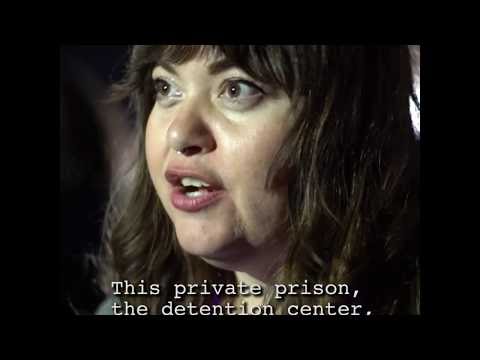
A report about mass incarceration in Eloy, Arizona, from Rebel Diaz, the Chilean American political hip hop duo of Rodrigo Venegas (RodStarz) and Gonzalo Venegas (G1). For 18 years, Rebel Diaz has used their music to educate, agitate, and organize working class folks across the globe. Much of their music is here.
Un informe sobre el encarcelamiento masivo en Eloy, Arizona, de Rebel Diaz, el dúo de hip hop político chileno-estadounidense formado por Rodrigo Venegas (RodStarz) y Gonzalo Venegas (G1). Durante 18 años, Rebel Diaz ha utilizado su música para educar, agitar y organizar a la clase trabajadora en todo el mundo.




.png)