
Tag: Centralized

  • Benefits of Centralized Marketing in Higher Ed Institutions

    Benefits of Centralized Marketing in Higher Ed Institutions

    Why Centralized Marketing Matters for Online Programs in Higher Ed

    At Archer, we’ve onboarded hundreds of institutional partners to help them grow their online programs. And while every partner is unique, there’s one pain point we encounter time and again: decentralized school-level marketing that creates more friction than momentum. 

    In many institutions, individual colleges or schools manage their own marketing campaigns, budgets, and creative direction. While this siloed approach offers an initial promise of agility and autonomy, it often leads to deeper problems in the market, such as: 

    • Fragmented messaging 
    • Inconsistent branding 
    • Internal competition 
    • Wasted spend as schools bid against each other 
    • Missed opportunities for reach and impact at the brand and portfolio level

    The result? Confused students consuming competing voices from the same institution, and internal marketing teams scrambling to scale best practices and measure impact — often without apples-to-apples data and reporting for performance comparisons. 

    Universities need an integrated marketing strategy that balances a holistic brand and portfolio-level approach with maintaining individual school-level autonomy for certain decisions and activities. This hybrid model unlocks collaboration, reduces conflict, and lifts visibility for all programs within a portfolio. 

    With shared goals, aligned messaging, and coordinated tactics across all of their schools, universities can amplify their brand and stretch their budgets further — delivering clear, compelling stories across myriad channels to prospective students. 

    Risks of Decentralized Marketing

    In some models of governance, decentralization can be a strength — empowering local leadership and ensuring responsiveness to specific community needs. But when it comes to marketing online university programs in a highly competitive environment, decentralization alone as a strategy is more often a liability than an asset. 

    Having different departments, schools, or programs run their own campaigns and technology stacks may seem like a way to move faster, but in practice, it creates challenges that can hinder online program growth. Let’s explore some examples.

    Brand Confusion          

    As prospective students evaluate your institution’s online offerings, they are not concerned with the internal structures of your institution. They expect clarity and consistency in the information you provide. When each college or division presents a different tone, design style, and creative messaging approach, you’re left with a weakened institutional brand. 

    Mixed marketing across digital ads, program pages, email drips, and even tuition and scholarship messaging can erode the trust and credibility you’ve been building with prospective students. For example, inconsistent explanations of scholarships or conflicting tuition information (e.g., on program pages and via tuition calculators) can trigger frustration or skepticism. 

    In short: Your audience — the prospective student — sees one university. If your university is in conflict with its own marketing, the brand loses power. 

    Inefficiency and Internal Competition

    Without centralized marketing oversight, different teams often end up targeting the same audiences with overlapping campaigns — sometimes even bidding against each other in paid channels. This dilutes your paid marketing efficacy by driving up your cost per lead, wasting precious budget dollars, and undermining the collective impact of your institution’s marketing investments. 

    Inconsistent Student Experience and Success Metrics

    Perhaps the most concerning result of decentralized marketing is a fragmented and uneven student journey. One program might offer seamless inquiry-to-enrollment processes, while another loses momentum after the application process due to poor follow-up and disconnected systems. 

    When your programs use different customer relationship management (CRM) platforms, it becomes difficult to track leads accurately and measure outcomes with consistency. Reporting becomes murky. Success metrics vary. Problems get misdiagnosed. 

    Instead of addressing the root causes of problems, your teams might blame each other (e.g., the marketing team and the admissions team) for the other’s perceived performance issues, when the real problem is systemic disconnection. 

    The Case for Centralized Marketing 

    Centralization doesn’t mean turning every school or program into a cookie-cutter version of the institution’s mission statement, and it doesn’t mean taking any team’s autonomy away. It’s about aligning around a shared strategy — one that empowers individual teams to execute effectively within a cohesive, coordinated framework. 

    Unified Brand Messaging 

    A strong, centralized brand platform allows your university to speak with one clear voice about its online programs, telling the story of: 

    • What your programs offer 
    • Who your programs serve 
    • Why your programs matter 

    This shared narrative should be rooted in your institution’s values and designed to build trust with prospective students. When every program draws from the same story and messaging pillars, it strengthens your presence across every touchpoint — from digital ads and landing pages to nurture emails and program brochures. Each program’s value propositions may differ, but the institution’s story endures. 

    Additionally, a unified approach enables your institution to leverage the brand and portfolio-level marketing that raises visibility across all your programs. For example, some institutions have an integrated marketing program for their undergraduate experience but lack a cohesive approach for their online graduate programs. This is a missed opportunity to build a portfolio-level branded presence through channels that individual schools may not be able to afford on their own. 

    A robust YouTube presence that highlights the benefits of your online graduate education experience (program agnostic), showcases your alumni and graduate education outcomes, and forefronts your strategic organizational partnerships that span individual schools and programs increases the impact for the entire institution with one investment.

    Integrated Campaign Planning 

    Centralized marketing brings together your paid media, content marketing, email strategy, and organic social media into one master plan. 

    Gone are the days of multiple teams across your institution launching disconnected campaigns, as central calendars and shared audience strategies help ensure each tactic contributes to every team’s strategic goals. This means reduced duplication, avoidance of internal bidding wars, and maximization of every marketing dollar. 

    However, your individual schools can and should have decision-making authority over the key value proposition definitions, target personas, and positioning of programs within their fields. This requires a collaborative conversation in an integrated campaign-planning scenario. 

    And schools should continue to develop campaigns where the impact is greatest for them — for example, hosting prospective student events and webinars, offering ambassador programs for prospective student questions, and attending events meaningful to their specific program field, such as at conferences and exhibit halls. 

    Shared Data and Measurement 

    In a world of data, perhaps the greatest and most immediate impact of centralized marketing will be felt in how your institution tracks performance holistically. With unified key performance indicators (KPIs) and shared access to insights, marketing teams at all levels — central and within academic schools — can identify what’s working for them, pivot when needed, and scale successful tactics across programs. 

    Teams can review where the branded portfolio-level efforts are causing the greatest lift in impressions and leads and determine together how school-level marketing activities can make the most impactful use of funds.

    What Centralized Marketing Looks Like in Practice 

    At Archer, we’ve seen institutions achieve dramatic improvements simply by unifying their marketing strategy — even if execution remains shared and distributed. With a strong central foundation in place, teams tap into shared creative resources, coordinate campaigns across programs, and drive stronger performance through unified media buying and consistent messaging. 

    At its best, centralized marketing can: 

    • Empower programs to amplify one another rather than compete 
    • Allow creative strategy to be produced once then repurposed widely 
    • Create paid efforts that are smarter, more cost effective, and better targeted 

    In sum, when your institution implements an integrated marketing model that fosters collaboration among academic schools, it can result in performance that is greater than the sum of its parts. 

    Archer Education knows what it takes to bring siloed departments together. Our unique partnership-based approach allows us to truly understand your institution, then implement efficiencies to ignite your online programs’ potential through a centralized marketing strategy that is balanced with school autonomy and meaningful participation. Contact us today to learn more.

    Source link

  • Centralized IT governance helps improve learning outcomes

    Centralized IT governance helps improve learning outcomes

    Key points:

    As school districts continue to seek new ways to enhance learning outcomes, Madison County School District represents an outstanding case study of the next-level success that may be attained by centralizing IT governance and formalizing procedures.

    When Isaac Goyette joined MCSD approximately seven years ago, he saw an opportunity to use his role as Coordinator of Information Technology to make a positive impact on the most important mission of any district: student learning. The district, located in northern Florida and serving approximately 2,700 students, had made strides towards achieving a 1:1 device ratio, but there was a need for centralized IT governance to fully realize its vision.

    Goyette’s arrival is noted for marking the beginning of a new era, bringing innovation, uniformity, and central control to the district’s technology infrastructure.  His team aimed to ensure that every school was using the same systems and processes, thereby advancing the students’ access to technology.

    Every step of the way, Goyette counted on the support of district leadership, who recognized the need for optimizing IT governance. Major projects were funded through E-rate, grants, and COVID relief funds, enabling the district to replace outdated systems without burdening the general fund.  MCSD’s principals and staff have embraced the IT team’s efforts to standardize technology across the district, leading to a successful implementation. Auto rostering and single sign-on have made processes easier for everyone, and the benefits of a cohesive, cross-department approach are now widely recognized.

    To successfully support and enable centralization efforts, Goyette recognized the need to build a strong underlying infrastructure. One of the key milestones in MCSD’s technology journey was the complete overhaul of its network infrastructure. The existing network was unreliable and fragmented in design. Goyette and his team rebuilt the network from the ground up, addressing connectivity issues, upgrading equipment, and logically redoing district systems and processes, such as the district’s IP network addressing scheme. This transformation has had a positive impact on student learning and engagement. With reliable connectivity, students no longer face disruptions.

    The implementation of an enterprise-grade managed WAN solution has further transformed the educational experience for MCSD’s students and educators, serving as the backbone for all other technologies. Goyette’s innovative co-management approach, coupled with his deep understanding of network topology, has enabled him to optimize the resources of an experienced K-12 service provider while retaining control and visibility over the district’s network.

    New School Safety Resources

    Another significant milestone MCSD has achieved is the successful deployment of the district’s voice system. This reliable phone system is crucial for ensuring that MCSD’s schools, staff, and parents remain seamlessly connected, enhancing communication and safety across the district.

    Goyette’s innovative leadership extends to his strategies for integrating technology in the district. He and his team work closely with the district’s curriculum team to ensure that technology initiatives align with educational goals. By acting as facilitators for educational technology, his team prevents app sprawl and ensures that new tools are truly needed and effective.

    “Having ongoing conversations with our principals and curriculum team regarding digital learning tools has been critical for us, ensuring we all remain aligned and on the same page,” said Goyette. “There are so many new apps available, and many of them are great. However, we must ask ourselves: If we already have two apps that accomplish the same goal or objective, why do we need a third? Asking those questions and fostering that interdepartmental dialogue ensures everyone has a voice, while preventing the headaches and consequences of everyone doing their own thing.”   

    MCSD’s IT transformation has had a profound impact on student learning and engagement. With reliable connectivity and ample bandwidth, students no longer face disruptions, and processes like single sign-on and auto account provisioning have streamlined their access to educational resources. The district’s centralization efforts have not only improved the educational experience for students and educators but have also positioned Madison County School District as a model of success and innovation.

                                                                                                                ###

    Latest posts by eSchool Media Contributors (see all)

    Source link

  • Centralized Education Management Systems: Revolutionizing Education

    Centralized Education Management Systems: Revolutionizing Education

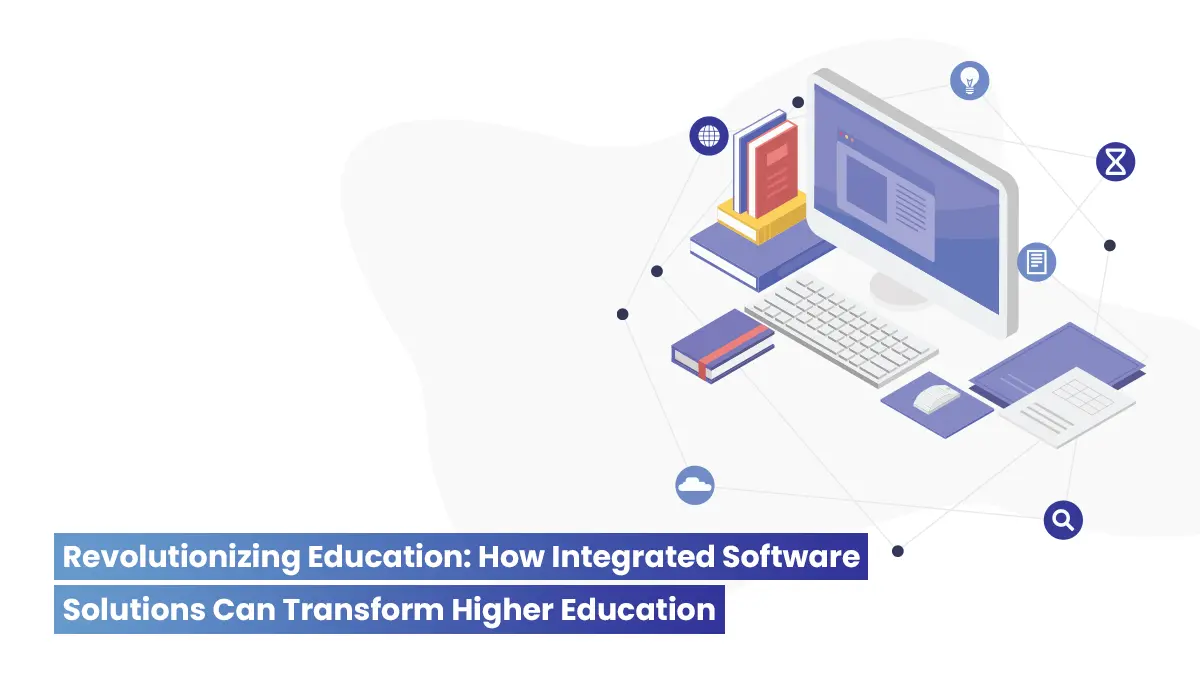
    There is a huge change happening in higher education. Because technology changes so quickly, higher eds have to be able to deal with new problems and meet the changing needs of students, teachers, and managers. Centralized education management systems or Integrated software solutions are no longer a nice-to-have; they’re necessary for making schools more streamlined, efficient, and ready for the future.

    This blog post examines how these centralized education management systems change higher education, deal with problems, and make room for new ideas.


    Understanding Integrated Software Solutions

    Centralized education management systems or integrated software solutions centralize admissions, curriculum creation, faculty management, student services, compliance, and more.

    Instead of managing several technologies that don’t communicate, your institution runs like a symphony. Tracking student progress and managing teacher duties is simple, saving time and resources.

    According to Educause (2023), 68% of institutions that use integrated platforms see a considerable operational efficiency boost in the first year.


    Addressing Core Challenges in Higher Education

    Higher education has obstacles. You may struggle with uncertain enrollment trends, changing accreditation standards, and student needs. However, centralized education administration systems are changing how institutions handle these concerns.


    Deconstructing Obstacle Walls

    Data scattered between platforms is bothersome. Integration solutions function as a bridge, connecting all departments, including admissions, professors, and administration, to ensure that all individuals are on the same page. For the Purpose of Assisting You Now we’re going to be really honest: manual processes can be really draining—automation handles everyday jobs diligently, so your teams can focus on improving learning outcomes or planning strategic projects!


    Students First!

    Students today expect more than lectures, homework, and tests. With centralized education management system technologies, institutions may develop tailored learning pathways, track student progress, provide 24/7 support, and keep students engaged until the end!

    Integrated solutions cut administrative tasks by 30%, according to McKinsey. Not only does it save time, but it also redirects energy toward important things like helping students succeed and moving higher education forward.


    Benefits of integrated software in higher education institution

    These are the genuine benefits of higher education integrated software solutions. Beyond saving time, the centralized education management systems improve student performance, institution efficiency, and success.

    EDUCAUSE found that integrated centralized education management systems in higher education boosted operational efficiency by 25% and student satisfaction. Pretty amazing, huh?

    Let’s list the main benefits:

    Data analytics for improving higher education decision-making

    Everything in One Place: No more platform switching or tab-searching. Your data, tools, and workflows are connected and available with integrated software. Imagine it’s like having everything you need under a single roof.

    Decisions Based on Data: Park the decisions based on guessing and grab the Data analytics for improving higher education decision-making! You can make smart, informed decisions using real-time data and analytics. You’re always informed when tracking student progress or preparing ahead.

    Greater Cooperation: Things get lost when departments in your colleges don’t communicate and sync up! Integrating systems makes it easy for students, instructors, and staff to connect and collaborate. Eliminating barriers lets everyone shine.

    Student Success: Students matter. Personalizing learning journeys with integrated solutions helps students focus, stay on track, and succeed. Lower barriers, more wins!


    AI and Analytics: Their Role

    AI and analytics underpin integrated software. They don’t just process data—they make sense of it. They don’t just process data—they make sense of it.

    • Predictive Analytics: Identifying at-risk students early and offering on-time help!
    • Personalization: AI-powered tools craft tailored learning experiences for students.
    • Resource Optimization: Analytics ensure efficient use of campus facilities and resources.

    According to a survey by Gartner, institutions leveraging AI in education reported a 45% improvement in student retention rates. These tools are more than enhancements—they’re enablers of smarter, data-driven decisions.


    Overcoming Implementation Challenges

    Integrated software solutions in higher education have these actual benefits. Besides saving time, they boost student performance, institution efficiency, and success.

    Transformative technology like integrated software solutions might make technology implementation seem daunting. Every organization confronts problems, and overcoming them is part of progress. Good news? You’re not alone.

    Integrated systems adoption might be difficult, but strategic institutions can make it happen. These important areas may present obstacles and how to overcome them:

    Train and Adopt: Getting everyone on board is difficult. Faculty, staff, and students must master the new system, which takes time. A solution? Provide good training and support. Focus on important users, start small, then grow. Users grow more comfortable, smoothing the transition.

    Moving unorganized data from outdated systems to a new platform can be a headache. Before migrating, clean and organize data to simplify. A coordinated migration plan with your software provider reduces disruptions.

    Change resistance: Hard. Resistance often originates from fear of the unknown or a lack of understanding of how the new system would benefit the institution. As a last step, communicate with stakeholders, show the system’s long-term value, and include decision-makers early!

    Customization requires: Every institution has unique needs, so, keep in mind, a generic solution may not work! Find a customizable system that gets tweaked to however you need. Ask questions and customize the system with the software vendor.

    Planning, patience, and help are needed to overcome these obstacles. Successful organizations deploy with strategy, training, and flexibility. This vacation has long-term benefits.

    EDUCAUSE found that higher education integrated systems increased operational efficiency by 25% and student satisfaction.


    Practical Uses and Success Stories

    Change is coming from integration. Uniformed systems are benefiting institutions globally, as shown in these success stories.

    • Creatrix Campus reduces manual faculty management work by 40% at National University of Singapore.
    • Oxford uses statistics to engage and retain students.
    • Integration of centralized education management systems helped Otago University speed accreditation by simplifying compliance tracking!


    Future Higher Education Integrated Software Trends

    Due to these advances, experts expect over 70% of higher education institutions to have fully embraced integrated software platforms by 2030. Here are some software of the trends you can look for.


    • Blockchain technology is transforming credentialing by creating secure, tamper-proof academic records.
    • Adaptive learning systems give pupils customized content.
    • Global collaboration tools include bridging campuses to allow knowledge sharing.


    Closing Thoughts

    Higher education can transform operations, engagement, and innovation. Integration software solutions or centralized education management systems enable transformation, not just tools.

    Creatrix Campus is happy to help institutions reach their potential with smarter, more connected technologies. Ready to elevate your campus? Let’s chat Improving operational efficiency in universities with software.

    Source link