Tag: Certificate

  • Planning with Purpose: Designing Certificate Programs That Align with Market and Mission

    Planning with Purpose: Designing Certificate Programs That Align with Market and Mission

    Higher education is seeing a surge of interest in non-degree credentials. Learners are seeking faster, more affordable pathways to workforce advancement. Employers are increasingly open to (and in some cases requesting) alternatives to traditional degrees. And with new federal policy expanding Pell Grant eligibility to non-degree programs, institutions are feeling the urgency to act.

    But not all certificate programs are created equal. And while the trend line is clear, the strategy behind how institutions respond is anything but. This moment presents an opportunity, but only for those willing to plan with purpose and set realistic expectations.

    What’s driving demand for short-term credentials?

    Recent data underscores a clear increase in interest:

    • Undergraduate certificate enrollment grew 33% and graduate certificate enrollment grew 21% from Fall 2020 to Fall 2024, according to National Student Clearinghouse data.
    • Google search volume for certificates has increased 19% from 2020 to 2025, according to Google Trends data.

    Today’s learners are drawn to programs that offer accelerated timelines, reduced costs, and clear pathways to meaningful career outcomes. Many working adults are looking to upskill or pivot careers, and a certificate can be a more practical option than a full degree.

    On the employer side, organizations want proof of skills and are increasingly willing to collaborate with institutions on curriculum design. In fact, according to a 2022 employer survey from Collegis and UPCEA, 68% of respondents said they would be interested in teaming up with an institution to develop non-degree credentials to benefit their workforce.

    Certificates are a piece of the puzzle — not the whole strategy

    Despite the interest, many institutions struggle to meet enrollment goals for certificate programs. Strong market trends do not automatically translate into high enrollment volume. The reality is that most certificates serve niche audiences and deliver modest numbers. When treated as stand-alone growth drivers, they often fall short.

    The institutions that see the most strategic value from certificates do so by positioning them within a larger enrollment and academic ecosystem. For example, we’ve helped our partner institutions find success in using certificate interest as a marketing funnel to drive engagement in related master’s programs. Once a prospective student engages, enrollment teams can advise them on the best fit for their career goals, which, for some students, is enrolling in the full degree program.

    Ready for a Smarter Way Forward?

    Higher ed is hard — but you don’t have to figure it out alone. We can help you transform challenges into opportunities.

    What a strategic certificate model looks like

    A certificate program with purpose isn’t just a set of courses — it’s a product with clear value to both learners and the institution. Key elements of a strategic approach include:

    1. Workforce alignment: Programs must be rooted in real-time labor market data. What skills are employers seeking? Which certifications are valued? Aligning with reputable industry certifications is a proven way to ensure relevance and employer recognition.
    2. Accessibility: Pricing should reflect the certificate’s value relative to degree programs, and eligibility for financial aid must be prioritized. Lack of aid is a significant barrier to enrollment for many prospective learners.
    3. Laddering and stackability: Certificates should not be terminal unless intentionally designed that way. They should stack into larger degree pathways or offer alumni incentives for continuing their education.
    4. Delivery speed and flexibility: Busy adult learners expect quick starts, clear outcomes, and minimal red tape. Institutions need streamlined onboarding and agile curriculum design.
    5. Internal collaboration: Designing certificates in isolation often leads to friction. Academic, enrollment, and marketing teams must be aligned on purpose, target audience, and outcomes.
    6. Employer engagement: Employers want to be part of the development process and seek assurance that certificate programs teach the skills they need. Their involvement enhances the recognition and credibility of the credential.

    The role of institutions: Balance mission with market

    Certificate programs are not a shortcut to growth. But they can be a smart strategic lever when grounded in data and designed to complement an institution’s broader mission. They offer colleges and universities an opportunity to:

    • Expand access to underserved learners
    • Respond more nimbly to labor market shifts
    • Strengthen ties with regional employers
    • Drive awareness and enrollment for degree programs

    The key is alignment. When certificate offerings reflect both market demand and institutional mission, they can play a powerful role in expanding reach and impact.

    Plan with purpose, execute with intent

    Certificates are more than just a trending credential. They’re a tool to serve learners in new ways. But institutions must resist the urge to chase quick wins. Success requires thoughtful design, realistic expectations, and cross-functional collaboration.

    With the right foundation, certificate programs can do more than fill a gap. They can open doors for learners, employers, and institutions alike. Collegis supports this effort with integrated services in market research, instructional design, and portfolio development — empowering institutions to make informed, mission-aligned decisions that deliver impact.

    Innovation Starts Here

    Higher ed is evolving — don’t get left behind. Explore how Collegis can help your institution thrive.
    Source link

  • Cosmetology schools and other certificate programs got exemption from rules on graduates’ earning levels

    Cosmetology schools and other certificate programs got exemption from rules on graduates’ earning levels


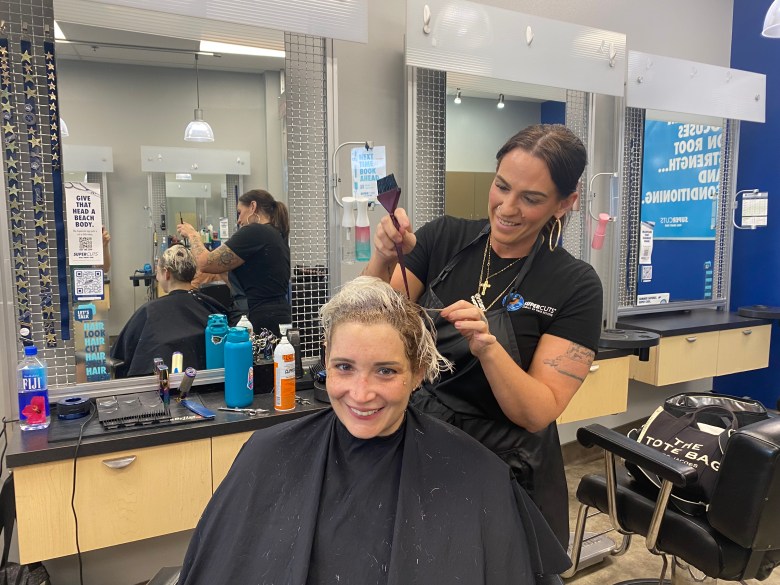
    Remiah Ward’s shift at the SmartStyle salon inside Walmart was almost over, and she’d barely made $30 in tips from the haircuts she’d done that day. It wasn’t unusual — a year after her graduation from beauty school, tips plus minimum wage weren’t enough to cover her rent.

    She scarcely had time to eat and sleep before she had to drive back to the same Walmart in central Florida to stock shelves on the night shift. That job paid $14 an hour, but it meant she sometimes spent 18 hours a day in the same building. She worked six days a week but still struggled to catch up on bills and sleep. 

    The admissions officer at the American Institute of Beauty, where she enrolled straight out of high school, had sold her on a different dream. She would easily earn enough to pay back the $10,000 she borrowed to attend, she said she was told. Ward had no way of knowing that stylists from her school earn $20,200 a year, on average, four years after graduating. Seven years later, her debt, plus interest, is still unpaid.

    In July, Republicans in Congress pushed through policies aimed at ensuring that what happened to Ward wouldn’t happen to other Americans on the government’s dime; colleges whose graduates don’t earn at least as much as someone with a high school diploma will now risk losing access to federal student loans. But one group managed to slip through the cracks — thousands of schools like the American Institute of Beauty were exempt. 

    Remiah Ward worked two jobs while trying to make it as a hair stylist but never made enough to pay her all her bills and has had to put her dream career on hold. Credit: Courtesy Remiah Ward

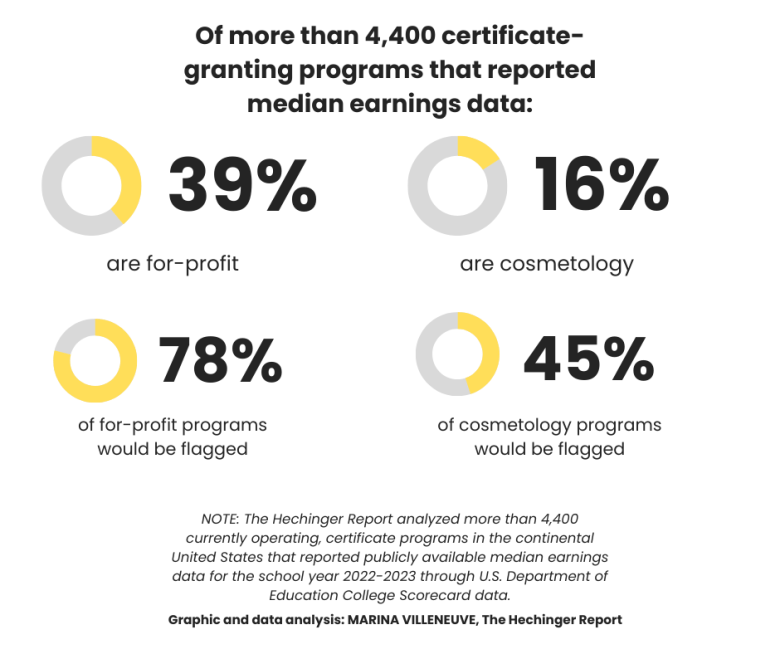
    Certificate schools succeeded in getting a carve-out. The industry breathed a collective sigh of relief, and with good reason. At least 1,280 certificate-granting programs, which enrolled more than 220,000 students, would have been at risk of losing federal student loan funding if they had been included in the bill, according to a Hechinger Report analysis of federal data. [See table.] About 80% of those are for-profit programs, and 45 percent are cosmetology schools.

    “There is this very strange donut hole in accountability where workforce programs are held accountable, two-year degree programs are held accountable, but everything in between gets off without any accountability,” said Preston Cooper, a senior fellow at the conservative think tank American Enterprise Institute.

    The schools spared are known as certificate programs and, with their promise of an affordable and relatively quick path to economic security, are the fastest growing part of higher education. They usually take about a year to complete and train people to be hair-stylists, welders, medical assistants and cooks, among other jobs.

    As with traditional colleges, there are big differences in quality among certificate programs. Some hair stylists can make a middle-class living if they work in a busy salon. But for people who have to pay back hefty student loans, the low wages for stylists in the early years can be an insurmountable obstacle.

    Ward found herself facing that dilemma. When she could no longer sustain the lack of sleep from her double shifts at Walmart, she pressed pause on her styling career and took a job with Amazon, loading and unloading planes. She wasn’t ready to give up her dream career, though, so in addition to her 10-hour days moving boxes, she took part-time gigs at local hair salons. She didn’t have family to help pay rent, not to mention loan payments, so she couldn’t afford to work fulltime at a salon, which is essential to build up a regular clientele — and bigger tips. Without that, she couldn’t get much beyond minimum wage. 

    A representative from the American Institute of Beauty denied that Ward was told she would easily repay her loan.

    “No admissions representative, not at AIB or elsewhere, would ever make such a statement,” Denise Herman, general counsel and assistant vice president of AIB, said in an email. 

    The high cost of many for-profit cosmetology schools — tuition can be upward of $20,000, usually for a one-year program  — can leave former students mired in debt. In May, the government released data showing 850 colleges where at least a third of borrowers haven’t made a loan payment for 90 days or more, putting them on track to default. About 42 percent of those were for-profit cosmetology and barbering schools (including AIB).

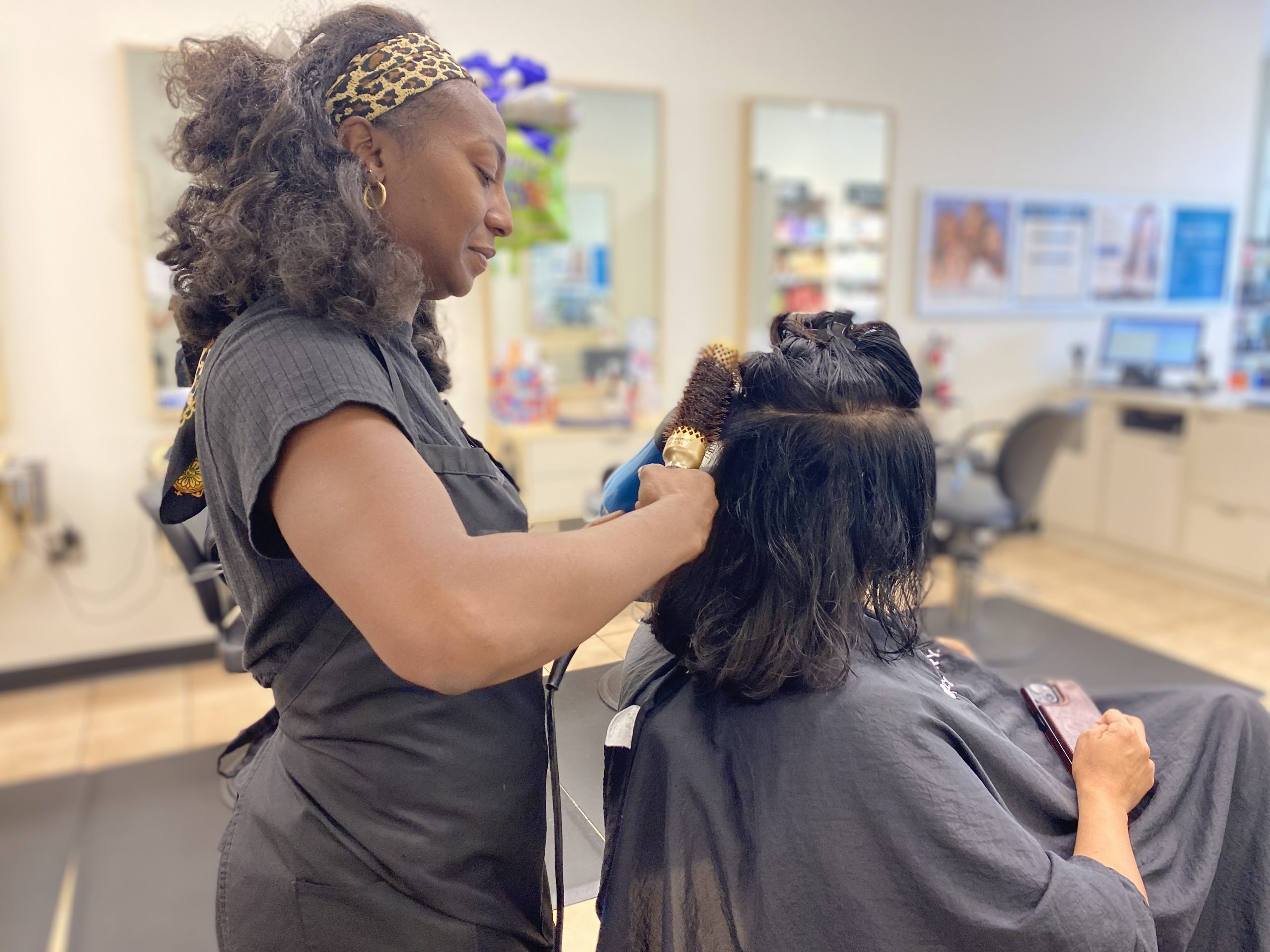
    Brittany Mcnew says she loves working as a stylist but that her income takes a hit when traffic is slow in her salon in Bethlehem, Pennsylvania. Credit: Meredith Kolodner/The Hechinger Report

    Herman blamed the Biden administration policy that after the pandemic let borrowers forgo payments without any penalty.

    “Debtors became ‘comfortable’ not making payments,” said Herman. “AIB provides the graduate with the information graduates need to make their payments. What that graduate decides to pay, or not pay, is not influenced by AIB.”

    Under the “big beautiful bill” passed in July, two- and four-year colleges must ensure that, after four years, graduates on average make at least as much as someone in their state who has only a high school diploma. The colleges must inform students if they fail that test, and if it happens for two out of three years, the college will be ineligible to receive federal loan funds.

    Some for-profit certificate schools lobbied hard for an exemption. The American Association of Career Schools, which represents proprietary cosmetology schools, spent $120,000 lobbying the Education Department and Congress, including on the “big beautiful bill,” in the first six months of this year. At the group’s major lobbying event in April, Sen. Bill Cassidy, chairman of the Senate Health, Education, Labor and Pensions Committee, was the keynote speaker.

    Cassidy declined to answer questions about why certificate programs were excluded, but a fact sheet from his committee noted that they are already covered by something else, the gainful employment rule, which is also being challenged by the for-profit cosmetology industry.

    That federal gainful employment regulation, updated in 2023, requires in essence that graduates from career-oriented schools earn enough to be able to pay back their loans and earn more than a high school graduate. It also requires that consumers, like Ward, be given more information about how graduates from all colleges fare in the workplace.

    The rule posed an existential threat to a huge swath of cosmetology schools.

    In 2023, the American Association of Career Schools sued to block the gainful employment rule. 

    “AACS supports fair and reasonable accountability measures,” Cecil Kidd, the AACS’s executive director, said in an email. “However, we strongly object to arbitrary or discriminatory policies such as the US Department of Education’s Gainful Employment rule, which unfairly targets career schools while exempting many public and private non-profit institutions that fail to meet comparable outcomes.”

    He pointed to public comments in which AACS has argued that the rule imposes an unfair burden on cosmetology schools since stylists are predominantly women, who are more likely to have “personal commitments” that affect their earnings, and who rely on tips that are often pocketed as unreported income.

    Cameron Vandenboom is a successful hair stylist but says the high cost of her private beauty school wasn’t worth thousands of dollars in student debt: “I absolutely should have gone to community college.” Credit: Courtesy Shanna Kaye Photo

    In a twist that surprised advocates on both sides, the Education Department in May asked the court to effectively dismiss AACS’ lawsuit. 

    If the court rules in favor of the cosmetology schools, certificate programs will be free of all accountability requirements on their graduates’ earning levels, because they got the carveout in July. 

    Even if the court rules against cosmetology schools, advocates are pessimistic that the Trump administration will implement the gainful rules. The first Trump administration got rid of the original rules back in 2019 and Nicholas Kent, now the U.S. undersecretary of education, was previously the chief policy officer for Career Education Colleges and Universities, or CECU, the trade group that represents for-profit colleges, including certificate programs. He is a well-known critic of the rule.

    “I would be very surprised, if the unlikely scenario plays out that the Biden rule is upheld, that this Department of Education would just say, OK, the court has spoken,” said Jason Altmire, CECU’s executive director. “We are not opposed to accountability for certificate programs, so long as it’s fair to everybody and we have a voice in how you’re measuring programs.”  

    Altmire said CECU didn’t lobby for certificate programs to be carved out of Congress’ bill, but did argue against the earnings formula that Congress landed on. Altmire said it doesn’t take into account part-time work and the gender gap in wages.

    One objection from AACS, raised by CECU as well, is that the earnings measured don’t include tips, which are crucial to hair stylists’ income. Analyzed without including tips, 576 of 724 cosmetology schools in the Hechinger Report analysis would fail Congress’ earnings test. But even if tips were included and raised stylists’ income by 20 percent, 526 cosmetology schools would still fail.

    Earlier this year, Remiah Ward made the difficult decision to leave Florida and move to Kentucky, where the cost of living was more forgiving. She’s working from 7 p.m. to 7 a.m. at an aluminum factory for $19.50 an hour. 

    One day, she might go back to styling after her debt is paid off. Like many former beauty school students, she wishes she’d had more information when she decided to enroll.

    “They really sugar-coated it. I was 18 years old, and I needed a trade that I was already pretty good at,” said Ward, who is now 26. “Everybody thinks they’re going to make a high return, and it’s just not the reality.”

    Marina Villeneuve contributed data analysis to this story. 

    This story about cosmetology schools produced by The Hechinger Report, a nonprofit, independent news organization focused on inequality and innovation in education. Sign up for the Hechinger higher-education newsletter.

    The Hechinger Report provides in-depth, fact-based, unbiased reporting on education that is free to all readers. But that doesn’t mean it’s free to produce. Our work keeps educators and the public informed about pressing issues at schools and on campuses throughout the country. We tell the whole story, even when the details are inconvenient. Help us keep doing that.

    Join us today.

    Source link

  • Explore the earnings for graduates of beauty schools, other certificate programs

    Explore the earnings for graduates of beauty schools, other certificate programs

    Schools that train hairstylists, dental assistants and health aides will be able to keep getting federal student loan dollars even if the professionals they turn out don’t end up earning any more than a high school graduate.

    That’s because programs like those, which don’t end in a college degree, were granted an exemption from new accountability measures under President Donald Trump’s ”big, beautiful bill.” 

    A Hechinger Report analysis of federal data found at least 1,280 such certificate programs could have been at risk of their students losing access to federal student loans — but a successful lobbying effort excluded them from the accountability measures. 

    Related: Become a lifelong learner. Subscribe to our free weekly newsletter featuring the most important stories in education. 

    Under the new law, most graduates of associate, bachelor’s and graduate degree programs must earn at least as much as someone who has only a high school diploma. If programs fail to hit that benchmark for two out of three years, their students will no longer be eligible for federal student loans. (And the schools must warn students of this possibility if they miss the mark for just one year). Without that borrowing power, many students could not afford to attend. And without those students, some of the schools might not survive. 

    Using the table below, see which certificate programs might have been flagged under the Trump law if not for the exemption. If graduates of a particular program ended up earning less than adults with only a high school diploma, that program could have faced losing eligibility for federal student loans under the Trump law.

    Methodology

    What exactly does the “big, beautiful bill” call for?

    The legislation requires the Department of Education to compare earnings of working adults who have only a high school diploma to the earnings of adults four years after they complete a degree program or graduate certificate. If a postsecondary program’s graduates fail to outearn adults with only high school degrees for two out of three years, students can no longer obtain federal student loans to attend that program. 

    The law also sets up an appeals process and a way for programs to apply to regain eligibility for federal student loans.

    What data was analyzed? 

    The law directs the education secretary to use census data to calculate median earnings for working adults with only a high school degree in the state where a program is located. The Department of Education will release regulations that spell out exactly how to do that math. For example, the law does not spell out whether it will look at census data averaged out over 12 months or a longer period of time. 

    For earnings data for high school graduates, The Hechinger Report relied on calculations from the Department of Education, which were derived from the 2022 American Community Survey 5-Year Estimates Public Use Microdata Sample from the U.S. Census Bureau.

    To calculate median earnings for graduates, the law directs the Education Department to put together earnings data for a cohort of at least 30 graduates who received federal student aid for postsecondary education — which typically includes grants, loans or work-study. Graduates are excluded if they’re currently enrolled in another higher education program. If there are fewer than 30 students in a cohort, the Education Department can lump together several years of data to get to 30 students.

    To get earnings data for graduates of certificate programs, Hechinger used a federal database known as College Scorecard. We downloaded field of study data for the 2022-23 school year. From this data, The Hechinger Report extracted information about certificate programs, at their main campuses, and included only programs that had median earnings data. The federal database suppresses earnings data for small programs. That left 4,431 currently operating certificate programs. 

    How was a program determined to be at possible risk of failing the accountability measure?

    For each program, The Hechinger Report compared median graduate earnings to the high school graduate earnings data of the state where the program was located. If the graduates earned less, the program was considered to be at risk.  

    Under the law, postsecondary programs that don’t meet the earnings benchmark for one year have to inform all current students that they are at risk of losing their eligibility for federal student loans. 

    Are there any limitations to the data? 

    The “big, beautiful bill” takes online programs into account by considering whether students live in the same state where their academic program is based. Under the law, student earnings are compared with national data rather than state data when fewer than half of enrolled students live in the state where the school is located, which may be the case for online programs. 

    The Hechinger Report’s analysis instead compares every program with state earnings. That’s because the College Scorecard field of study data set is limited and only includes information about graduates employed within the same state as the institution, not whether enrolled students live in the same state as the program. In addition, College Scorecard data provides earnings data for all graduates without a breakdown for whether they receive federal aid.

    Also, the Hechinger database looks at the available median earnings of all students four years after graduation for the school year 2022-23, regardless of the number of graduates. Though College Scorecard suppresses data on smaller programs, median earnings data is available for programs with 16 or more working graduates. The “big, beautiful bill” directs the Department of Education to instead lump together years of data to create cohorts of at least 30 students.

    Contact investigative reporter Marina Villeneuve at 212-678-3430 or [email protected] or on Signal at mvilleneuve.78

    This story about beauty schools was produced by The Hechinger Report, a nonprofit, independent news organization focused on inequality and innovation in education. Sign up for the Hechinger newsletter.

    The Hechinger Report provides in-depth, fact-based, unbiased reporting on education that is free to all readers. But that doesn’t mean it’s free to produce. Our work keeps educators and the public informed about pressing issues at schools and on campuses throughout the country. We tell the whole story, even when the details are inconvenient. Help us keep doing that.

    Join us today.

    Source link

  • Vermont’s Dual-Enrollment Cybersecurity Certificate

    Vermont’s Dual-Enrollment Cybersecurity Certificate

    With the cost of a college degree rising, more young people are considering alternative forms of postsecondary education.

    Data from ECMC Group found that fewer high school students today (52 percent) are considering attending a four-year college compared to their peers in 2020 (71 percent), and a number are weighing community college or career and technical education instead (25 percent). Nearly half of respondents to ECMC’s survey said their ideal post–high school education should last three years or fewer.

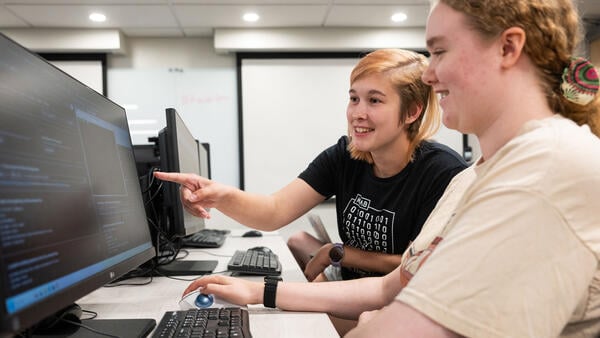
    A new offering from Champlain College in Vermont allows high school students to earn a certificate in cybersecurity before graduation, providing both career exploration and workforce development. The 12-credit certificate equips students with college-ready skills and a pathway to an evolving career.

    The background: The new program, CyberStart, builds on Champlain’s Virtual Gap Program, launched in summer 2020, which allows traditional-aged college students to complete 15 weeks of classes and an internship course remotely before formally enrolling.

    In Vermont, high school students can participate in two college-level courses at no cost. But statewide trends show the students most likely to engage in dual enrollment live in larger towns, have access to a college campus or are enrolled at a high school with an integrated dual-enrollment program, said Adam Goldstein, program director of CyberStart and academic director of the Leahy Center for Digital Forensics and Cybersecurity at Champlain. Most of the programs available to rural high school students consisted of asynchronous courses.

    “We saw a need for something in the middle, where students had the ability to be remote, but to have that synchronous element where they were meeting with other students and working directly with faculty members,” Goldstein said.

    Survey Says

    A 2023 report from the American Council on Education found that 41 percent of high school seniors said the pandemic changed their thinking on their choice of future career, and one in four students changed their view on what college major to pursue.

    How it works: CyberStart is a partnership between Champlain and cybersecurity group NuHarbor Security, designed to give high school students a peek into that work. Champlain also offers certificates for a working adult population, but CyberStart is modeled a little differently, relying on NuHarbor to identify which skills students need to be successful in an entry-level position.

    All Vermont high school juniors and seniors are eligible to participate if they meet dual-enrollment requirements.

    The program consists of 12 credits over four courses: two introductory courses and two internship experiences. The first internship course is led by Champlain faculty and includes other college students at the Leahy Center. The second is orchestrated by NuHarbor and has students work alongside cyber professionals, finessing their workplace skills.

    Courses take place synchronously with a Champlain instructor and follow a flipped classroom model, requiring students to complete readings or lectures prior to meeting and reserving class time for active learning, activities and collaboration among students. Courses are supported by a current student who serves as a mentor.

    A digital focus: CyberStart’s curriculum is built for someone with no prior experience, making it an accessible pathway for students with an interest in STEM. It also provides introductory college courses for students still exploring their career ambitions.

    “We feel that almost anybody in any discipline they want to go into could benefit from a cybersecurity class,” Goldstein said. “Regardless of where they head into the digital age, having an understanding of cybersecurity is a really, really critical skill set.”

    According to the Boys and Girls Club of America’s fall 2024 Youth Right Now survey, over half of high school students are interested in taking science-related courses after they graduate (57 percent), and 48 percent are interested in a STEM-related job in the future.

    Champlain’s program is intentionally structured as an on-ramp for students who want to launch into a career or postsecondary education, allowing them to build professional skills in an emerging field or kick-start their college education. Students who complete the certificate are also given conditional acceptance to Champlain, and high-performing students may be eligible for scholarships.

    “I think it can open up students’ eyes to the possibilities that maybe they weren’t initially thinking of, whether it is a workforce track and thinking about future training and experience or thinking about college and how that can ultimately have a very valuable return on investment,” Goldstein said.

    The initiative also provides students, particularly those in rural areas, with greater insight into career opportunities available to them in the region or remotely.

    State of play: Since launching the program in 2024, Champlain has established relationships with dozens of teachers and high schools across the state, Goldstein said. CyberStart is also available at Vermont’s centers for technology education.

    Some students in the program’s first cohort have continued into a second year or transitioned into a STEM discipline in higher education after graduating high school; many have chosen to pursue cybersecurity.

    The success of CyberStart may provide a model for similar programs in other fields, Goldstein said, such as computer science and data or digital humanities.

    Get more content like this directly to your inbox. Subscribe here.

    Source link