Tag: Challenge

  • Challenge the Establishment, Peacefully

    Challenge the Establishment, Peacefully

    Good history, myth busting, and power analysis are not just retro, they’re rad(ical), and they are critically needed now more than ever.  Education, Agitate, Organize…

    Source link

  • Reviving Engagement in the Spanish Classroom: A Musical Challenge with ChatGPT – Faculty Focus

    Reviving Engagement in the Spanish Classroom: A Musical Challenge with ChatGPT – Faculty Focus

    Source link

  • Education researchers lose to Trump administration in first round of court challenge

    Education researchers lose to Trump administration in first round of court challenge

    The courts have pushed back against much of President Donald Trump’s agenda, but he did win a small victory this week in a dispute with education researchers.

    On June 3, a federal judge in Washington, D.C., denied a request by four education research trade associations for a preliminary injunction, which means that the Education Department doesn’t have to temporarily reinstate fired employees and canceled contracts within its research and data arm, the Institute of Education Sciences.

    Researchers had hoped to return the research division to its pre-Trump status while the court takes time to decide the overall issue in the case, which is whether the Trump administration exceeded its executive authority in these mass firings and contract terminations. Now, the cuts in the research arm of the department will remain while the case proceeds. 

    Four education research groups (the Association for Education Finance and Policy (AEFP), the Institute for Higher Education Policy (IHEP), the National Academy of Education (NAEd) and the National Council on Measurement in Education (NCME)) are suing the Education Department because their federally funded studies, evaluations and surveys have been slashed and their access to data is slated to be curtailed. They also contend that historical data archives are at risk, along with future data quality. Their legal argument is that the cuts were arbitrary and capricious and they say that the Trump administration eliminated many activities that Congress requires by law.

    Related: Education researchers sue Trump administration, testing executive power

    U.S. District Judge Trevor McFadden acknowledged that the “upheaval” at the Institute of Education Sciences is “understandably jarring for those who rely on studies and data produced by the Institute.” However, McFadden explained in a written opinion that the law that the researchers are using to sue the executive branch, the Administrative Procedure Act, was “never meant to be a bureaucratic windbreak insulating agencies from political gales.”

    “It is not this Court’s place to breathe life back into wide swathes of the Institute’s cancelled programs and then monitor the agency’s day-to-day statutory compliance,” McFadden wrote.

    In the opinion, McFadden noted that some of the researchers’ complaints, such as losing remote access to student data for research purposes, may be “ripe for standalone challenges,” but bundling all of their grievances together is a “losing gambit.”

    The ruling not only denied researchers the short-term remedy they sought but also cast doubt on the prospects of their overall case. “We are disappointed with and disagree with the Court’s decision, and are evaluating our next steps,” said Adam Pulver, an attorney at Public Citizen, a nonprofit advocacy organization representing two of the research organizations.

    A federal judge in Maryland is still considering a similar request to temporarily restore research-related cuts at the Education Department by two other education research groups. That suit, which also accuses the Trump administration of exceeding its executive power, was brought by the American Educational Research Association (AERA) and the Society for Research on Educational Effectiveness (SREE). 

    Educators fighting the cuts have had one victory so far, in a separate case filed in federal district court in Boston. On May 22, U.S. District Judge Myong Joun ordered the Trump administration to reinstate 1,300 Education Department employees terminated in March. The Trump administration is challenging the decision, but the court said on June 4 that the Education Department couldn’t postpone rehiring everyone while the appeal works its way through the courts. This case was brought by two Massachusetts school districts, a teachers union and 21 Democratic attorneys general. 

    Contact staff writer Jill Barshay at 212-678-3595, jillbarshay.35 on Signal, or [email protected].

    This story about education researchers suing the Trump administration was written by Jill Barshay and produced by The Hechinger Report, a nonprofit, independent news organization focused on inequality and innovation in education. Sign up for Proof Points and other Hechinger newsletters.

    The Hechinger Report provides in-depth, fact-based, unbiased reporting on education that is free to all readers. But that doesn’t mean it’s free to produce. Our work keeps educators and the public informed about pressing issues at schools and on campuses throughout the country. We tell the whole story, even when the details are inconvenient. Help us keep doing that.

    Join us today.

    Source link

  • Opportunity is a shared challenge

    Opportunity is a shared challenge

    Despite a flurry of announcements for the higher education sector in the first half of 2025, much remains unknown about what is to come in this summer’s promised higher education reform plans. However, it is a pretty safe bet that opportunity and access will feature prominently. The Government has put ‘breaking down barriers to opportunity’ as one of its key missions for this Parliament, and higher education remains a core driver of social mobility.

    Data consistently show that higher education qualifications are clearly and unambiguously associated with increased earnings and employment prospects. Research from the Sutton Trust found that attending a Russell Group university narrows the existing gap between state school students eligible for school meals and their privately educated peers in the likelihood of becoming a top earner.

    At the same time, deeply entrenched inequalities prevail, as the UPP Foundation inquiry into widening participation highlights. The stark findings in its recent report included the difference in progression to higher education across the country: 71.6% of 18-year-olds in Battersea, compared to just 11.1% in Barrow-in-Furness. The Government is right to be looking at ways to address this striking imbalance, and universities are ready to be even more ambitious to reach more young people.

    It is undoubtedly a huge challenge – both the task itself, given these inequalities are largely set at primary school and are already entrenched by the time it comes to post-16 options; and the wider context, given the university sector’s own financial challenges.

    But good progress is being made. The number of young people from the most underrepresented backgrounds studying at Russell Group universities has seen a 56% increase since 2019. The number of Black placed applicants has increased by 62% in the same period. However, there is a mixed picture across the different measures of disadvantage – not helped by a cost-of-living crisis hot on the heels of the pandemic, both of which are still having an impact. 

    In this context, the Russell Group has today published a new paper, Building Opportunity For All. This sets out just some of the ambitious work our universities are already doing alongside new commitments they’ve made to going further. These commitments include expanding participation in regional partnerships, committing to a tailored support package for care leavers and care-experienced students, improving transparency around contextual admissions, and supporting the new TASO Evaluation Library to track the impact of activity.

    These new collective commitments build on the work already detailed in universities’ access plans. These are being supported by an investment of more than £250m a year across the Russell Group.

    Widening access is not a solo endeavour, which is why many of our ambitions involve making the most of partnerships with others inside and outside higher education. Combining ambitions and resources with others means our universities can go even further. Russell Group universities already spend millions of pounds a year on third sector partnerships, enabling us to provide almost 100,000 young people across the UK with practical support in achieving their university ambitions – from tutoring to advice on completing university applications.

    Across the UK, universities are thinking creatively about what participation in higher education means for different people and how we can open up our campuses and opportunities to everyone. At the University of Bristol, partnership working not only helps young people gain a place at the University but also improves community engagement more broadly. The university has two micro-campuses located in areas of the city with the lowest higher education participation rates. Since 2020, the Barton Hill campus has worked with over 60 partners annually and welcomes 160+ users each week as a hub for research, teaching and outreach. Meanwhile, the new Hartcliffe campus is co-developing a micro-qualification with local colleges, employers and community groups to create new routes into work and study.

    Our partnerships with further education are also developing more flexible learning pathways to raise attainment. The University of Glasgow, for example, runs Higher National Certificate (HNC) Articulation Programmes, developed with eight West of Scotland colleges. These enable eligible students – care-experienced individuals, estranged students, carers and those with refugee or asylum seeker status – to progress directly into Year 2 of some undergraduate degrees. Integrating college-based HNC study with university-led sessions and full access to campus resources fosters academic readiness and a sense of belonging, helping participants progress further in their educational journeys.

    Opportunity is a shared challenge, and the Government needs to be our partner on this. We expect the Department for Education – quite rightly – to put opportunity as a central pillar of higher education reform. Our universities are already responding by increasing their ambition and being creative in their thinking. For example, the care leaver support packages our universities are implementing encompass everything from assistance applying to university and finding accommodation, to providing kitchenware, luggage, vouchers and gym memberships to help with a smooth transition and settling into university life.

    But we can’t solve everything alone. We have long been calling on successive governments to improve student maintenance to remove financial barriers. Universities are doing what they can to support students. Over 60% of Russell Group universities’ £250m annual investment in access goes on direct financial support for students who need it the most. However, while significant, this is the context of the poorest students in 2025/26 being entitled to borrow around £1,125 (10%) less in real terms towards their living costs than in 2020.

    It is also challenging to narrow equality gaps that have been growing since childhood. It’s vital that the Government’s opportunity mission considers the whole lifecycle of a student’s journey, from early years to post-16 education and beyond. Universities are ready and willing to be a vital part of the picture of improving opportunity, but they are still just one element. If inequalities are addressed at a young age, it will become easier to ensure access to university for everyone – not only helping students achieve their individual ambitions, but also bringing greater rewards for the government’s skills and workforce ambitions.

    Source link

  • States drop Section 504 constitutional challenge

    States drop Section 504 constitutional challenge

    This audio is auto-generated. Please let us know if you have feedback.

    Dive Brief:

    • A constitutional challenge against Section 504 of the Rehabilitation Act will no longer be pursued in a lawsuit filed by 17 states last year, according to a joint status report submitted by plaintiffs and defendants to the court earlier this month. 
    • Disability rights advocates and families with children who receive Section 504 accommodations in schools have raised concerns about the states’ lawsuit against the U.S. Department of Health and Human Services. That lawsuit, filed in September, challenges an HHS rule that includes gender dysphoria in the definition of a disability under Section 504 and originally argued that Section 504 was unconstitutional. 
    • While Section 504’s constitutionality is no longer being challenged, disability rights advocates say they are still on alert to legal proceedings and regulatory actions that would take away protections for transgender people with disabilities. 

    Dive Insight:

    The joint status report also notes that HHS, as defendants, are continuing to evaluate their position as a result of President Donald Trump’s Jan. 20 executive order shunning “gender ideology extremism.” The directive said U.S. policy will only recognize two sexes — male and female.

    The states’ lawsuit challenges a HHS rule finalized in May 2024 under the Biden administration that requires child care, preschool, elementary, secondary, postsecondary, and career and technical education programs to provide Section 504 services to students with gender dysphoria. The term describes the distress felt when one’s gender expression doesn’t match their gender identity.

    Additionally, on April 11, HHS published a clarification to the preamble of the Section 504 regulation, saying that the language concerning gender dysphoria “does not have the force or effect of law. Therefore, it cannot be enforced.” 

    Section 504 of the Rehabilitation Act of 1973 prohibits discrimination on the basis of disability in K-12 schools and colleges that receive federal funds. Students’ Section 504 accommodations can include academic, mental and physical supports.

    In a Feb. 14 update on its website, Disability Rights Education and Defense Fund said that if Section 504 were declared unconstitutional, it would be “a disaster for people with disabilities.”

    The states involved in the case are: Texas, Alaska, Alabama, Arkansas, Florida, Georgia, Indiana, Iowa, Kansas, Louisiana, Missouri, Montana, Nebraska, South Carolina, South Dakota, Utah and West Virginia. The lawsuit was filed in U.S. District Court Northern District of Texas.

    Source link

  • Supreme Court takes education cases that could challenge the separation of church and state

    Supreme Court takes education cases that could challenge the separation of church and state

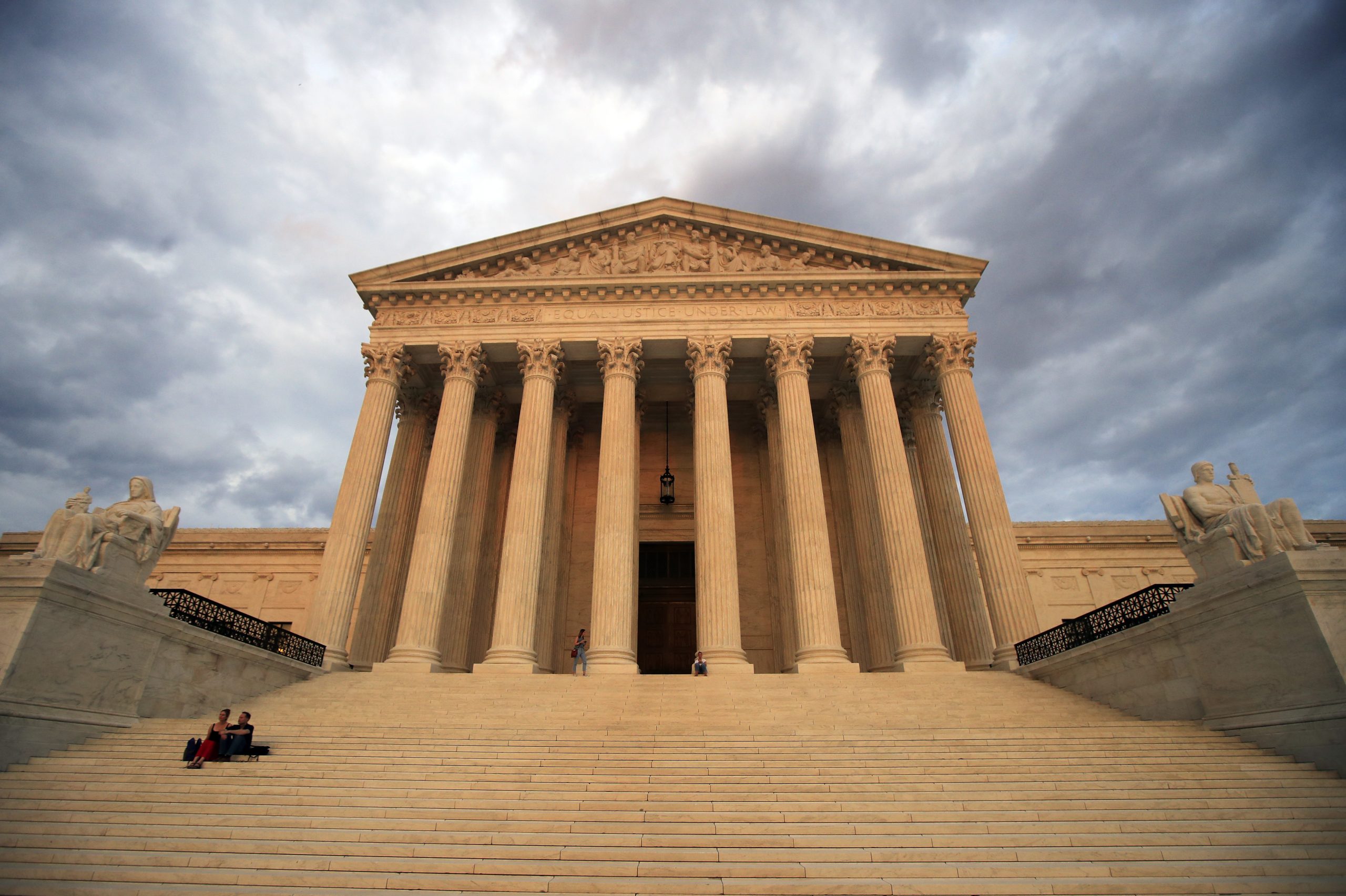
    The Supreme Court over the next two weeks will hear two cases that have the potential to erode the separation of church and state and create a seismic shift in public education.

    Mahmoud v. Taylor, which goes before the court on April 22, pits Muslim, Roman Catholic and Ukrainian Orthodox families, as well as those of other faiths, against the Montgomery County school system in Maryland. The parents argue that the school system violated their First Amendment right of free exercise of religion by refusing to let them opt their children out of lessons using LGBTQ+ books. The content of the books, the parents say, goes against their religious beliefs.

    Oklahoma Statewide Charter School Board v. Drummond, which will be argued on April 30, addresses whether the St. Isidore of Seville Virtual Charter School should be allowed to exist as a public charter school in Oklahoma. The Archdiocese of Oklahoma City and the Diocese of Tulsa had won approval for the charter school from the state charter board despite acknowledging that St. Isidore would participate “in the evangelizing mission of the Church.”

    The state’s attorney general, Gentner Drummond, later overruled the approval, saying the school could not be a charter because charter schools must be public and nonsectarian. The petitioners sued and ultimately appealed to the Supreme Court, claiming Drummond violated the First Amendment’s free exercise clause by prohibiting a religious entity from participating in a public program.

    Teachers unions, parents groups and organizations advocating for the separation of church and state have said that rulings in favor of the plaintiffs could open the door for all types of religious programs to become part of public schooling and give parents veto rights on what is taught. In the most extreme scenario, they say, the rulings could lead to the dismantling of public education and essentially allow public schools to be Sunday schools.

    Related: A lot goes on in classrooms from kindergarten to high school. Keep up with our free weekly newsletter on K-12 education.

    At issue in both cases is the question of whether the First Amendment rights of parents and religious institutions to the free exercise of religion can supersede the other part of the amendment, the establishment clause, which calls for the separation of church and state.

    “I think a chill wind is blowing, and public education as we know it is in extreme jeopardy of becoming religious education and ceasing to exist,” said Rachel Laser, president of Americans United for Separation of Church and State, an advocacy organization that has filed an amicus brief in the St. Isidore case. “The whole idea is to have churches take control of education for American children. It’s about money and power.”

    For some conservative lawmakers, evangelical Christian groups and law firms lobbying for more religiosity in the public square, decisions in the petitioners’ favor would mean religious parents get what they have long been owed — the option of sending their children to publicly funded religious schools and the right to opt out of instruction that clashes with their religious beliefs.

    “If we win this case, it opens up school choice across the country,” said Mathew Staver, founder of Liberty Counsel, an Orlando, Florida-based conservative Christian legal firm that has filed a brief supporting the petitioners in both cases. “I see school choice as a reaction to the failed system in the public schools, which is failing both in academia but also failing in the sense they are pushing ideology that undermines the parents and their relationship with their children.”

    By taking the cases, the Supreme Court once again inserts itself in ongoing culture wars in the nation, which have been elevated by presidential orders threatening to take away funding if schools push diversity, equity and inclusion initiatives and state laws banning teaching on various controversial subjects. Legal scholars predict that the Supreme Court will lean toward allowing St. Isidore and the opt-outs for parents because of how the justices ruled in three cases between 2017 and 2022. In each case, the justices decided that states could not discriminate against giving funds or resources to a program because it was religious.

    Related: How Oklahoma’s superintendent set off a holy war in classrooms

    Of the two cases, St. Isidore likely could have the greatest impact because it is attempting to change the very definition of a public school, say opponents of the school’s bid for charter status. Since charter schools first started in the 1990s, they have been defined as public and nonsectarian in each of the 46 state statutes allowing them, according to officials at the National Alliance for Public Charter Schools. Today, charter schools operate in 44 states, Guam, Puerto Rico and Washington, D.C., and serve roughly 7.6 percent of all public school students.

    “It would be a huge sea change if the court were to hold they were private entities and not public schools bound by the U.S. Constitution’s establishment clause,” said Rob Reed, the alliance’s vice president of legal affairs.

    A victory for St. Isidore could lead to religious-based programs seeping into several aspects of public schooling, said Steven Green, a professor of both law and history and religious studies at Willamette University in Salem, Oregon.

    “The ramification is that every single time a school district does some kind of contracting for any kind of service or curricular issues, you’re going to find religious providers who will make the claim, ‘You have to give me an opportunity, too,’” Green said.

    St. Isidore’s appeal to the Supreme Court is part of an increasing push by the religious right to use public funds for religious education, said Josh Cowen, a professor of education policy at Michigan State University and author of a 2024 book on school vouchers. Because of previous court decisions, several voucher programs across the country already allow parents to use public money to send their children to religious schools, he said.

    “What’s going to happen if the court says a public school can be run by a religious provider?” Cowen asked. “It almost turns 180 degrees the rule that voucher systems play by right now. Right now, they’re just taking a check. They’re not public entities.”

    The effect of a St. Isidore victory could be devastating, he added. “It would be one more slippery slope to really kicking down the wall between church and state,” Cowen said.

    Related: Inside the Christian legal campaign to return prayer to public schools

    Jim Campbell, chief legal counsel for Alliance Defending Freedom, which is representing St. Isidore’s bid to become a charter, discounted the idea that a St. Isidore win would fundamentally change public schools. Like Staver, he views St. Isidore as simply providing another parental option. “We’re not asking the state to run a religious school,” Campbell said. “These are private entities that run the schools. This is a private organization participating in a publicly funded program.”

    Opponents of religious charter schools question whether St. Isidore would have to play by the same rules as public schools.

    “How are they going to handle it when there’s a teacher who has a lifestyle that doesn’t align with Catholic school teaching? They’re talking out of both sides of the mouth,” said Erika Wright, an Oklahoma parent and plaintiff in a lawsuit protesting a Bible in the classroom mandate by Oklahoma’s state superintendent of instruction. She also joined an amicus brief against St. Isidore’s formation.

    “As a taxpayer, I should not be forced to fund religious instruction, whether it’s through a religious charter school or a Bible mandate,” Wright said. “I shouldn’t be forced to fund religious indoctrination that doesn’t align with my family’s personal beliefs.”

    Notably, in the Montgomery County parents’ case going before the court, parents use similar reasoning to support their right to opt out of instruction. “A school ‘burdens’ parents’ religious beliefs when it forces their children to undergo classroom instruction about gender and sexuality at odds with their religious convictions,” the parents’ brief said.

    The school district in 2022 adopted several books with LGBTQ+ themes and characters as part of the elementary language arts curriculum. Initially, families were allowed to opt out. But then the school system reversed its policy, saying too many students were absent during the lessons and keeping track of the opt-outs was too cumbersome. The reversal led to the lawsuit.

    Historically, school districts have given limited opt-outs to parents who, for example, do not want their child to read a particular book, but the Montgomery County parents’ request is broader, said Charles C. Haynes, a First Amendment expert and senior fellow for religious liberty at the Freedom Forum in Washington, D.C. The parents are asking to exclude their children from significant parts of the curriculum for religious reasons.

    “If the court sides with the parents, I think the next day, you’re going to have parents across the country saying, ‘I want my kids to opt out of all the references to fill-in-the-blank.’ … It would change the dynamic between public schools and parents overnight,” Haynes said.

    Related: Tracking Trump: His actions to abolish the Education Department, and more

    Sarah Brannen, author of “Uncle Bobby’s Wedding,” one of the LGBTQ+ books Montgomery County schools adopted, sees major logistical issues if the school system loses. “Allowing parents to interfere in the minutia of the curriculum would make their already difficult jobs impossible,” she said.

    Colten Stanberry, a lawyer with the Becket Fund for Religious Liberty representing the Montgomery County parents, disagreed. School systems manage to balance different student needs all the time, he said.

    A triumph for the Montgomery County families and St. Isidore would cause much more than logistical issues, said Becky Pringle, president of the National Education Association. It could lead to a public education system where parents can pick a school based on religious beliefs or try to change a traditional public school’s curriculum by opting out of lessons in droves.

    “For us to be a strong democracy, then we necessarily need to learn about all of us. To separate us flies in the face of why we were founded,” Pringle said.

    This story about church and state was produced by The Hechinger Report, a nonprofit, independent news organization focused on inequality and innovation in education. Sign up for the Hechinger newsletter.

    The Hechinger Report provides in-depth, fact-based, unbiased reporting on education that is free to all readers. But that doesn’t mean it’s free to produce. Our work keeps educators and the public informed about pressing issues at schools and on campuses throughout the country. We tell the whole story, even when the details are inconvenient. Help us keep doing that.

    Join us today.

    Source link

  • Challenge of Leading Elite Institutions in Populist Age of Distrust

    Challenge of Leading Elite Institutions in Populist Age of Distrust

    In the face of the Gaza protests, presidents at the nation’s most prestigious campuses were caught between a rock and a hard place—and somehow managed to trip over both.

    Pressured on one side by students and faculty demanding moral clarity and action and on the other by donors, trustees and politicians insisting on firm leadership and institutional neutrality, they found themselves in a no-win situation.

    In attempting to balance these competing forces, they pleased no one, offering statements too vague to satisfy activists yet too equivocal to reassure their critics.

    Instead of navigating the crisis with principled leadership, many stumbled into a public relations disaster, alienating both their campus communities and external stakeholders.

    What should have been a moment for measured, thoughtful leadership instead became a showcase of hesitation, miscalculation and rhetorical gymnastics that satisfied neither moral conviction nor strategic pragmatism.

    Could Presidents Have Done Better?

    Yes, the leading university presidents could have handled the Gaza protests more effectively, but doing so would have required a combination of patience, strategic engagement and deft leadership—qualities that many struggled to summon under intense pressure.

    In his forthcoming memoir, former Harvard president Neil Rudenstine argues that navigating the crisis required time, strong relationships with key stakeholders, active faculty involvement and innovative problem-solving—qualities that were largely absent in the response.

    1. Patience: A Scarce Commodity in a Crisis

    Rudenstine’s call for patience underscores a fundamental challenge: Neither protesters nor institutional critics were willing to wait for careful deliberation. Protesters demanded immediate moral clarity and action, while external stakeholders—donors, trustees, politicians—expected firm and unequivocal leadership.

    University presidents, caught between these forces, often reacted hastily, issuing statements that satisfied neither side. A more patient approach would have required resisting the impulse to make rapid, reactive pronouncements and instead creating structured, ongoing dialogue with campus constituencies. It would have meant acknowledging the urgency of the moment while also emphasizing the need for thoughtful decision-making.

    1. Rapport With Stakeholders: The Perils of New Leadership

    Building trust with students, faculty, alumni, trustees and external critics is difficult in the best of times, and it is even harder for new university presidents who have not yet cemented their authority or personal relationships within their institutions. Many of the university leaders embroiled in the controversy were relatively new to their positions, inheriting polarized political environments without deep reservoirs of goodwill to draw from.

    In moments of crisis, long-standing relationships and credibility matter. Presidents who had not yet established rapport with key stakeholders found themselves viewed with suspicion from all sides, making it difficult to act decisively or persuasively. This underscores the importance of proactive engagement: University leaders must invest in relationship-building early, so that when crises inevitably arise, they have a foundation of trust to rely upon.

    1. Faculty Engagement: An Untapped Resource

    University faculty represent a deep well of institutional knowledge and intellectual expertise, yet in many cases, faculty were sidelined as presidents struggled to navigate the crisis.

    A more effective response would have involved drawing on faculty members—especially those with expertise in history, diplomacy, political science and conflict resolution—to help craft statements, advise on messaging and offer guidance on institutional policy.

    Faculty could have also served as intermediaries between student activists and administrators, helping to create structured conversations rather than performative clashes. By failing to engage faculty early, many presidents lost an opportunity to ground their responses in scholarly insight and institutional legitimacy.

    1. Creative Responses: Beyond the Standard Playbook

    The default approach to campus protests—issue a statement, enforce campus policies and hope the storm passes—was woefully inadequate in this case. Rudenstine’s emphasis on creativity suggests that university leaders needed to think beyond standard crisis-management tactics. Instead of simply trying to placate or rebuff different constituencies, presidents could have:

    • Convened structured debates or forums featuring scholars and public intellectuals with diverse perspectives, transforming conflict into an opportunity for rigorous academic engagement.
    • Established faculty-led committees to develop thoughtful, universitywide policies on how the institution engages with global conflicts, providing a long-term framework for future crises.
    • Created dedicated spaces for dialogue, ensuring that protesters had a platform for their voices to be heard while also setting clear boundaries on disruptions to academic life.

    The Leadership Test They Failed

    The Gaza protests revealed deep weaknesses in university leadership, exposing the inability of many presidents to navigate the complex intersections of free speech, academic integrity, donor pressure and campus activism. A better response would have required patience, trust-building, faculty engagement and creative problem-solving—qualities that were largely absent in the moment.

    The lesson for future leaders is clear: Effective university leadership is not just about managing crises when they arise but about laying the groundwork well in advance, ensuring that when the inevitable storm comes, the institution has the resilience and credibility to weather it.

    The High Cost of Leadership: Neil Rudenstine’s Harvard Presidency

    In a 2001 Harvard Crimson article entitled “The Final Word on Neil Rudenstine,” Catherine E. Shoichet, now a senior writer for CNN, offers a detailed account of that president’s tenure at Harvard—dissecting both his successes and the significant sacrifices and costs it exacted.

    Presidents are chosen to solve particular problems, and Rudenstine was tasked with two major challenges: overseeing Harvard’s first universitywide capital campaign and knitting together a sprawling, fragmented, disjointed institution. As president, he transformed the university’s financial standing—adding billions to its endowment—and initiated wide-ranging administrative reforms, including the re-establishment of the provost position.

    His most notable achievement was increasing Harvard’s endowment from roughly $4 billion to $19 billion in just 10 years, laying the financial foundation that sustains the university’s wealth today.

    However, the article also stresses the heavy personal toll these challenges took on him—a topic that Rudenstine’s own account surprisingly omits.

    Few presidents were better prepared for the job; he had been a respected faculty member, a productive scholar, a well-regarded dean of students, an effective provost and an extraordinarily hard worker. Yet his relentless focus on fundraising and institutional overhaul led to a three-month leave of absence in 1994, fueling rumors of a nervous breakdown. Remarkably, he went on to serve for another seven years after that difficult period.

    Shoichet notes that for all his accomplishments, including launching development of a new campus in Allston and revitalizing Harvard’s Afro-American Studies Department and establishing a then-novel interdisciplinary initiative in mind, brain and behavior, his presidency also resulted in a perceived disconnect between the administration and the student body—a criticism that has followed him since his Princeton days.

    His reserved public persona, which contrasted with the more overtly engaging styles of his predecessors, led to both admiration for his methodical, inclusive approach and criticism for being too detached from everyday campus life.

    The Shoichet article exposes the inherent trade-offs of his approach. Rudenstine’s intensive focus on high-stakes fundraising and administrative restructuring appears to have come at the expense of deeper engagement with the student body. His humility was confused with weakness and a lack of strong convictions. His leave of absence illustrates how the pressures of managing an institution as vast and complex as Harvard can affect even the most capable leaders.

    This duality—the balance between transformative success and the personal, institutional costs—forms the crux of Shoichet’s argument.

    Her narrative situates Rudenstine within a broader historical context. By comparing his tenure with those of former Harvard presidents such as Nathan M. Pusey and Derek Bok, Shoichet argues convincingly that the challenges Rudenstine faced were unique to a new era of higher education—one marked by rapid expansion, increased institutional complexity and a heightened focus on financial management.

    Despite his remarkable achievements, Rudenstine never garnered the same level of acclaim as his illustrious predecessors. In much the same way, many of his successors—including Lawrence Summers, Lawrence Bacow and Claudine Gay—have often been met with ambivalence or even disdain.

    The reality is that leading an institution as formidable as Harvard has become nearly impossible. It is no wonder that the average tenure of college presidents nationwide has shrunk from around eight years to just about five—hardly enough time to make a lasting impact.

    Rudenstine’s legacy, therefore, is not simply measured by his achievements but by the enduring questions it raises about the nature of leadership in a modern academic institution.

    The Daunting Realities of University Leadership: A Seat of Prestige, Not Power

    We often imagine university presidents as powerful figures—intellectual stewards shaping the future of higher education. But Rudenstine’s Our Contentious Universities flips this perception on its head. He’s not speaking truth to power; he’s speaking truth about power—revealing that university presidencies are as much about constraint as they are about command.

    The title of university president carries an air of authority, but Rudenstine’s message is clear: The power of the office is often more symbolic than substantive. Instead of wielding control, presidents juggle competing interests, manage crises and navigate the impossible demands of faculty, students, donors and politicians. The real truth? The presidency is more burden than throne.

    Holding the most prestigious seat in higher education, Rudenstine isn’t telling us how to wield power—he’s telling us how little of it university presidents actually have. His book dismantles the myth of the omnipotent academic leader and replaces it with a far grittier reality: that influence is fragmented, authority is constrained and leadership is often just crisis management in an ivory tower.

    If “speaking truth to power” is about confronting authority, Our Contentious Universities reveals an unexpected reversal: Often, those in power are the ones struggling to be heard. Rudenstine lays bare the paradox of university leadership—an office that looks commanding from the outside but feels impossibly constrained from within.

    The real work of a university president is not about wielding authority but about navigating limits, managing expectations and negotiating between forces that are often beyond their control.

    The power we imagine? It’s largely an illusion.

    Why University Presidents Have Less Power Than We Think

    Through a mix of historical analysis, personal experience and candid reflection, Rudenstine argues that the role of the modern university president is far more constrained than many outsiders assume.

    Three overarching arguments structure his book:

    1. The Paradox of Institutional Wealth and Administrative Complexity

    Elite universities have never been wealthier, yet they have become significantly more challenging to manage. The sheer scale and bureaucratic complexity of modern research institutions—coupled with the decentralized governance structures of many elite universities—make it extraordinarily difficult for a president to assert a unifying vision.

    Harvard, perhaps the most extreme case, operates under the philosophy of “every tub on its own bottom,” meaning that each of its schools, institutes and centers manages its own budget and academic affairs with substantial autonomy. Its endowment, divided into over 11,000 different funds with various restrictions, further complicates efforts to mobilize financial resources for cross-university initiatives.

    But Harvard is not unique in this regard—many elite institutions lack a clear common mission or identity beyond their reputation for excellence. As a result, university presidents often find themselves in the role of coordinators rather than decision-makers, navigating a complex web of faculty interests, donor expectations and institutional traditions.

    1. Student Protests: A Recurring but Intensifying Challenge

    Student activism has long been a defining feature of American higher education, and today’s campus protests are in many ways a continuation of past movements—whether over free speech, civil rights, the Vietnam War, South African apartheid, a living wage and labor rights, or fossil fuel divestment.

    Rudenstine reminds readers that campus unrest is not a new phenomenon and, in many cases, past protests were just as contentious as, if not more so than, those of today.

    However, he argues that contemporary campus protests present a unique set of challenges that make them especially difficult to resolve.

    First, the media and political spotlight on higher education is more intense than ever before, amplifying every controversy into a national debate. Social media accelerates and inflames conflicts, often distorting the reality of what is happening on the ground.

    Second, outside political actors—including legislators, donors and advocacy groups—now intervene more aggressively in campus affairs, using protests as flash points in larger ideological battles over academic freedom, free speech and institutional neutrality.

    Third, many of today’s most contentious issues—such as foreign conflicts, racial justice and free speech—extend far beyond the authority of any university administration. Unlike past movements that targeted specific institutional policies (e.g., divestment from apartheid South Africa), today’s protests often demand action on global or national issues that university leaders have little power to directly influence.

    1. The Constraints of the University Presidency

    While university presidents are often seen as the face of their institutions, their actual power is far more limited than public perception suggests. Much of their time is spent off campus, engaged in fundraising and alumni relations, rather than in direct governance. This distance often creates a perception—among both students and faculty—that they are out of touch with the daily realities of campus life.

    Moreover, while presidents are expected to be moral leaders, crisis managers and public intellectuals, they operate within institutional structures that limit their ability to enact significant change. The vast majority of academic decisions are made at the department and faculty level, not by the president’s office.

    Their financial resources, while seemingly vast, are often constrained by donor restrictions and endowment policies. And while they are expected to foster dialogue and intellectual engagement, they must also navigate intense political and ideological pressures that make consensus-building nearly impossible.

    The Unwinnable Presidency in a Populist Age of Distrust

    Leading an elite university in a populist era of distrust is an unwinnable job. University presidents are expected to be moral leaders, crisis managers and public intellectuals—yet they wield less power than ever before. They must balance the demands of faculty, students, donors, trustees, politicians and the public, all while navigating an institutional landscape that is more fragmented, more scrutinized and more politically charged than at any point in recent history.

    Between a rock, a hard place and a social media firestorm, university leaders face an impossible equation. Caught between student activists demanding moral clarity, faculty insisting on academic freedom, donors expecting institutional stability and politicians eager to score ideological points, they must navigate a minefield with no safe path forward.

    Every decision, no matter how carefully considered, is met with outrage from one side or another. When every choice is controversial, the safest option is still the wrong one.

    Speaking truth to power is one thing—leading an institution when you are the power, yet have none, is another. A university president’s job isn’t to lead; it’s to survive. The modern presidency is less about shaping the intellectual future of a university and more about managing crises, defusing conflicts and enduring public scrutiny.

    Part fundraiser, part diplomat, part scapegoat, today’s university leader embodies a paradox: prestigious, powerful and profoundly constrained.

    The university presidency is a job where everyone expects everything, but no one is ever satisfied. And yet, the ambitious vie for this job. The challenge for future university leaders is not just to weather the storm but to prove that, even in an era of distrust and division, higher education still has a role to play in the pursuit of truth, knowledge and the public good.

    Reclaiming the Visionary College Presidency: The Legacy of the Big Three B’s

    At a time when the university presidency has become synonymous with crisis management, political crossfire and institutional paralysis, we would do well to reclaim an older vision of academic leadership—one embodied by the Big Three B’s: Derek Bok, William Bowen and Kingman Brewster.

    These men were not just administrators; they were visionaries. They understood that a great university is not simply a collection of departments, endowments and buildings, but a living intellectual community that requires bold leadership, principled decision-making and a deep appreciation for the institution’s unique identity.

    Unlike today’s university presidents, who often appear hemmed in by competing pressures, Bok, Bowen and Brewster exuded a sense of command. They were coalition builders who understood how to navigate the tensions of their time—not by appeasement or retreat, but by articulating a clear and compelling vision for their institutions.

    They did not shy away from controversy; they faced it head-on, using their moral authority and intellectual gravitas to persuade rather than merely pacify. Their leadership was not about survival—it was about transformation.

    The Power of Institutional Identity

    One of the defining strengths of these presidents was their deep understanding of what made their universities distinctive. They did not try to turn their institutions into all-purpose, generic centers of higher learning. Instead, they leaned into their unique strengths and traditions, reinforcing the core values that defined them.

    • Kingman Brewster at Yale championed the arts and humanities, elevating Yale as a beacon of intellectual and cultural leadership. He understood that Yale’s prestige was not just in its research output, but in its commitment to a broad, humanistic education that shaped future leaders in the arts, government and public service.
    • William Bowen at Princeton preserved and reinforced the university’s distinctive commitment to undergraduate education, mentoring and close faculty-student engagement. He saw Princeton as the ideal blend of a research university and a liberal arts college, where students could experience the best of both worlds.
    • Derek Bok at Harvard expanded the university’s reach and redefined its role in shaping society. He recognized Harvard’s unique position as an institution that was not just educating students, but cultivating thought leaders in law, government, business and the sciences. Bok’s presidency was marked by efforts to bring in a broader, more diverse array of scholars and students who were shaping the world outside the academy.

    These men understood that universities are not interchangeable—they have distinctive missions, histories and cultures that must be nurtured, not diluted. They resisted the impulse to make their institutions all things to all people and instead worked to sharpen and deepen their defining strengths.

    Leadership With Gravitas and Moral Authority

    What made the Big Three B’s remarkable was not just their institutional savvy, but their personal presence and sense of moral authority. These were men who commanded respect, not because of their titles, but because they embodied the very ideals their universities stood for. They were not timid bureaucrats, nor were they detached figureheads. They were intellectuals, statesmen and educators who carried themselves with the weight of their institutions behind them.

    More importantly, they were unafraid to make tough decisions and stand firm in the face of opposition. Brewster took a bold stance in support of civil rights and coeducation and against the Vietnam War, even when it made him a target of political backlash. Bowen helped lead Princeton through transformative changes in financial aid and faculty governance, navigating opposition with both decisiveness and diplomacy. Bok spearheaded Harvard’s expansion into applied learning and professional education, while also defending the university’s core commitment to academic freedom.

    Each of these presidents had the ability to thread the needle—to stand up for their principles without alienating key constituencies. They were neither populists nor technocrats; they were strategic leaders who understood how to bring faculty, students, trustees and alumni into alignment around a shared purpose.

    Reclaiming a Lost Model of Leadership

    The contrast between the Big Three B’s and today’s university presidents is stark. Where they projected confidence and authority, many modern university leaders appear cautious and reactive. It’s quipped that their present-day counterparts can’t go to the bathroom without consulting their general counsel. Where the Big Three articulated grand visions for their institutions, many of today’s presidents are consumed by damage control. Where they commanded the respect of faculty and students, today’s leaders often seem disconnected from both.

    Of course, the world of higher education has changed. Universities are larger, more complex and more deeply entangled in political and cultural battles than ever before. But that is precisely why we need a new generation of university presidents who can reclaim the mantle of true leadership.

    The university presidency should not be reduced to a balancing act of donor relations, media messaging and political risk management. It must once again become a platform for vision, courage and institution-building.

    The lesson of the Big Three B’s is clear: Great universities do not thrive under timid leadership. They flourish when they are guided by bold, intellectually rigorous and morally grounded presidents who understand both the weight of their office and the enduring value of higher education. The future of our great universities depends on whether we can find leaders who, like Bok, Bowen and Brewster, embody the very ideals their institutions were meant to uphold.

    Steven Mintz is professor of history at the University of Texas at Austin and recipient of the AAC&U’s 2025 President’s Award for Outstanding Contributions to Liberal Education.


    Source link

  • Harvard Faculty, AAUP Challenge Trump Administration’s $8.7 Billion Funding Threat

    Harvard Faculty, AAUP Challenge Trump Administration’s $8.7 Billion Funding Threat

    In what legal experts are calling a landmark case for academic freedom, Harvard faculty and the American Association of University Professors (AAUP) have filed a lawsuit against the Trump administration, alleging unconstitutional attempts to control campus speech and governance through threatened funding cuts.

    The legal action, filed Friday, seeks to block the administration from withholding $8.7 billion in federal funding for Harvard University and its affiliated hospitals after demands that the university implement specific policy changes and restructure its operations.

    According to court documents, the administration’s Joint Task Force to Combat Anti-Semitism issued a demand letter on April 3 outlining “immediate next steps” Harvard must take to maintain its “financial relationship with the United States government.” These demands reportedly extend far beyond addressing antisemitism, including new speech restrictions, elimination of all diversity, equity, and inclusion programs, and mandatory cooperation with the Department of Homeland Security.

    “The First Amendment does not permit government officials to use the power of their office to silence critics and suppress speech they don’t like,” said Andrew Manuel Crespo, Morris Wasserstein Professor of Law at Harvard and general counsel of the AAUP-Harvard Faculty Chapter. “Harvard faculty have the constitutional right to speak, teach, and conduct research without fearing that the government will retaliate against their viewpoints by canceling grants.”

    The lawsuit comes after the task force chair announced on Fox News in March that “the academic system in this country has been hijacked by the left, has been hijacked by the Marxists,” and threatened to “bankrupt these universities” by removing federal funding.

    Harvard professors involved in the lawsuit claim the administration’s threats have already begun to impact academic freedom on campus.

    “The research and teaching of Harvard faculty have already been chilled by the Trump administration’s attempt to coerce the university into changing its curriculum and governing structure,” said Dr. Kirsten Weld, professor of History and president of the AAUP-Harvard Faculty Chapter. “If Trump can threaten to withhold billions of dollars from our colleagues unless we stop teaching about diversity and inclusion, he can make the same threat to try and stop us from teaching about science, his critics, or anything else.”

    The plaintiffs have requested an immediate temporary restraining order to prevent any funding cuts while the case proceeds.

    The AAUP warns that allowing such governmental intrusion at Harvard could set a dangerous precedent for institutions nationwide.

    “Our students and faculty members across the nation are terrified,” said Veena Dubal, AAUP General Counsel. “If the administration’s lawless and unconstitutional attempts to control speech and governance at Harvard are allowed to proceed, then any one of our institutions could be next.”

    Dr. Todd Wolfson, president of the AAUP, characterized the administration’s actions as “an attack on democracy and economic mobility” with harms that “will be so irreparable that they will last generations.”

    At the heart of the case is whether the federal government can legally condition billions in funding on compliance with policy demands that appear to target specific viewpoints and academic content.

    Nikolas Bowie, Louis D. Brandeis Professor of Law at Harvard and secretary-treasurer of the AAUP-Harvard Faculty Chapter, argues there is no legal basis for the administration’s actions.

    “No law in this country permits President Trump to suspend billions of dollars from universities like Penn, Princeton, or Harvard simply because he doesn’t like their policies on transgender athletes, their research on climate change, or the constitutionally protected speech of their students and faculty.”

    Legal experts note that the case could potentially reach the United States Supreme Court, given its significant First Amendment and separation of powers implications.

    Source link

  • FIRE and civil liberties groups challenge ‘unconstitutional retaliation’ against Mahmoud Khalil

    FIRE and civil liberties groups challenge ‘unconstitutional retaliation’ against Mahmoud Khalil

    FIRE along with the National Coalition Against Censorship, The Rutherford Institute, PEN America, and First Amendment Lawyers Association today filed a “friend of the court” brief arguing that the jailing of Mahmoud Khalil violates the First Amendment. What follows is the brief’s summary of argument.


    America’s founding principle, core to who and what we are as a Nation, is that liberty comes not from the benevolent hand of a king, but is an inherent right of every man, woman, and child. That includes “the opportunity for free political discussion” as “a basic tenet of our constitutional democracy.” (Cox v. Louisiana). And “a function of free speech under our system of government is to invite dispute. It may indeed best serve its high purpose when it induces a condition of unrest, creates dissatisfaction with conditions as they are, or even stirs people to anger.” (Terminiello v. City of Chicago). For these reasons, along with all citizens, “freedom of speech and of press is accorded aliens residing in this country.” (Bridges v. Wixon).

    Secretary of State Marco Rubio, however, is attempting to deport a permanent resident, Mahmoud Khalil, not because the government claims he committed a crime or other deportable offense, but for the seemingly sole reason that his expression stirred the Trump administration to anger. The Secretary claims he can deport Mr. Khalil under a Cold War–era statute giving the secretary of state the power to deport anyone he “personally determines” is contrary to America’s “foreign policy interest.” And he argues this power extends even to deporting permanent residents for protected speech. It does not.

    The First Amendment’s protection for free speech trumps a federal statute. (United States v. Robel). Accepting Secretary Rubio’s position would irreparably damage free expression in the United States, particularly on college campuses. Foreign students would (with good reason) fear criticizing the American government during classroom debates, in term papers, and on social media, lest they risk deportation. That result is utterly incompatible with the longstanding recognition that “[t]he essentiality of freedom in the community of American universities is almost self-evident,” and that “students must always remain free to inquire, to study and to evaluate, to gain new maturity and understanding.” (Sweezy v. New Hampshire).

    Secretary Rubio claims (as do all censors) that this time is different, that the supposed repulsiveness of Mr. Khalil’s pro-Palestine (and, as Secretary Rubio alleges, pro-Hamas) views cannot be tolerated. But “if there is a bedrock principle underlying the First Amendment, it is that the government may not prohibit the expression of an idea simply because society finds the idea itself offensive.” (Texas v. Johnson) (holding the First Amendment protects burning the American flag in protest); see also (Snyder v. Phelps) (holding the First Amendment protects displaying “God Hates Fags” and “Thank God for Dead Soldiers” posters outside a military funeral).

    Allowing the Secretary of State to deport any non-citizen whose views, in his subjective judgment, are against America’s foreign policy interests places free expression in mortal peril. China’s Constitution, for example, provides that “when exercising their freedoms and rights, citizens . . . shall not undermine the interests of the state.” As China’s experience shows, allowing the government to step in as censor when it believes speech threatens the government’s interests is a loophole with infinite diameter. It has no place in America’s tradition of individual liberty.

    The only court to address the deportation provision Secretary Rubio relies upon to deport Mr. Khalil reached a similar conclusion, holding the law unconstitutional. As that court explained, “If the Constitution was adopted to protect individuals against anything, it was the abuses made possible through just this type of unbounded executive authority.” (Massieu v. Reno).

    The “First Amendment does not speak equivocally. It prohibits any law ‘abridging the freedom of speech, or of the press.’ It must be taken as a command of the broadest scope that explicit language, read in the context of a liberty-loving society, will allow.” (Bridges v. California) (invalidating criminal convictions, including of a non-citizen, based on protected speech). Our “liberty-loving society” does not permit deportation as a punishment solely based on expression the government disfavors. The Court should grant Mr. Khalil’s motion.

    Source link

  • DOL Files Appeal in Overtime Legal Challenge

    DOL Files Appeal in Overtime Legal Challenge

    by CUPA-HR | March 12, 2025

    On February 28, the Department of Labor (DOL) filed an appeal in Flint Avenue, LLC v. U.S. Department of Labor, which previously led a district court to strike down the agency’s overtime final rule set forth under the Biden administration. The action is the second pending appeal from DOL with respect to cases involving the Biden administration’s overtime rule and may be acting as a placeholder to provide time for the Trump administration to determine how they want to move forward with the Biden administration’s overtime rule.

    Background

    As a reminder, the Biden administration’s final rule implemented a phase-in approach to increasing the minimum salary threshold under the Fair Labor Standards Act (FLSA) overtime regulations. Specifically, the rule increased the minimum salary threshold, effective July 1, 2024, from the previous level of $684 per week ($35,568 per year) to a new level at $844 per week ($43,888 per year). This first increase used the same methodology set by the first Trump administration’s 2019 overtime rule to determine the new salary threshold level. The rule also aimed to increase the threshold a second time effective January 1, 2025; however, the Biden overtime rule was struck down in federal court before the second increase could take effect. This increase would have changed the minimum salary threshold again to $1,128 per week ($58,656 per year). Finally, the rule adopted automatic updates to the minimum salary threshold that would occur every three years.

    Shortly after the Biden overtime rule was published, lawsuits were filed challenging the final rule. These lawsuits resulted in two district court orders to vacate the final rule. On November 15, 2024, a federal judge in the Eastern District Court of Texas ruled to vacate the Biden administration’s FLSA overtime final rule in State of Texas v. U.S. Department of Labor. Similarly, on December 30, 2024, another federal judge in the Northern District Court of Texas ruled to vacate the Biden administration’s overtime rule in Flint Avenue, LLC. Both rulings vacated all components of the rule, meaning both the July and January salary thresholds set under the final rule were no longer in effect and automatic updates to the minimum salary threshold would not take place.

    DOL’s Appeals

    Soon after the federal judge ruled in the State of Texas case, the Biden administration’s DOL filed an appeal. The appeal was filed in the 5th U.S. Circuit Court of Appeals, where it remained through the presidential transition. On February 24, the Department of Labor under the Trump administration requested an extension to file its opening brief in the State of Texas appeal. The 5th Circuit Court agreed to the extension, allowing for opening briefs to be filed by May 6, 2025.

    Soon after, on February 28, DOL filed its second appeal to the 5th Circuit Court in the Flint Avenue case. Both actions may be intended to give time to newly confirmed Labor Secretary Lori Chavez-DeRemer to settle into her new role and determine how the Trump administration will move forward with litigation and the Biden administration’s rulemaking.

    CUPA-HR will continue to keep members apprised of legal updates regarding the overtime regulations.


    Source link