
Tag: champion

  • Dr. Earl S. Richardson, Transformative HBCU Leader and Civil Rights Champion, Dies at 81

    Dr. Earl S. Richardson, Transformative HBCU Leader and Civil Rights Champion, Dies at 81

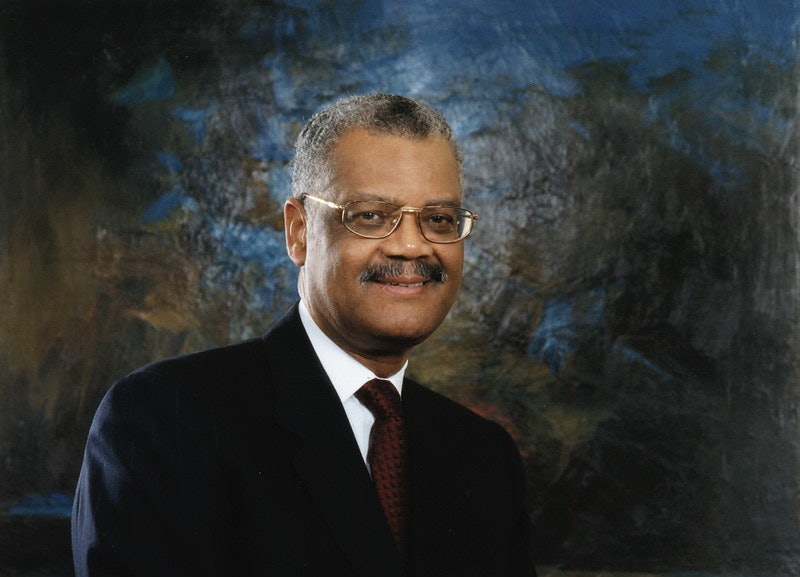
    Dr. Earl S. Richardson, the visionary leader who transformed Morgan State University during a remarkable 25-year presidency and spearheaded a groundbreaking legal victory that secured hundreds of millions in funding for historically Black colleges and universities, died Saturday. He was 81.

    Dr. Earl S. RichardsonRichardson’s death was announced by Morgan State University, where he served as the institution’s ninth president from 1984 to 2010. Under his stewardship, the Baltimore university experienced what became known as “Morgan’s Renaissance”—a period of unprecedented growth that saw enrollment double, the campus expand with new buildings, and the institution elevated to doctoral research university status.

    But Richardson’s most enduring legacy may be his role as the architect of a historic 15-year legal battle that resulted in one of the largest settlements ever secured for HBCUs. The lawsuit, filed in 2006 and settled in 2021, compelled the state of Maryland to provide $577 million in supplemental funding over 10 years to four historically Black institutions, addressing decades of systematic underfunding.

    The case drew comparisons to Brown v. Board of Education for its challenge to educational disparities, though it focused on higher education rather than K-12 schools. During the trial, state attorneys even attempted to have Richardson removed from the courtroom, though he remained as an expert witness, providing crucial historical testimony.

    Richardson’s leadership style combined the tactical wisdom of a seasoned administrator with the moral clarity of a civil rights activist. In 1990, when students occupied Morgan’s administration building for six days to protest deteriorating facilities—leaking roofs, outdated science labs, and dilapidated dorms—Richardson subtly guided their anger toward the real source of the problem: insufficient state funding.

    When Richardson arrived at Morgan State in November 1984, he found a struggling institution with 3,000 students housed in aging buildings. By the time he stepped down in 2010, enrollment had grown to more than 7,000 students, and the university had received approximately $500 million for new construction and renovations.

    Major projects completed during his tenure included a $54 million school of architecture, a $40 million fine arts building, new engineering facilities, a student union, and stadium expansions. Richardson also oversaw the addition of new academic schools, including programs in architecture and social work, while elevating Morgan’s research profile.

    “Our vision has been to transform Morgan from a liberal arts institution to a doctoral research university,” Richardson told Diverse in 2009. “We lead the state in graduating African-Americans.”

    His impact extended far beyond physical infrastructure. Richardson strengthened faculty excellence, raised admission standards, and championed the unique mission of HBCUs in educating both the most talented Black students and those who might not otherwise consider higher education accessible.

    Richardson’s advocacy extended beyond Morgan State to become a national voice for historically Black colleges and universities. In a 2008 testimony before the U.S. House of Representatives, he articulated the dual mission of HBCUs: serving high-achieving students while also reaching those who faced barriers to higher education access.

    “We can make them the scientists and the engineers and the teachers and the professors—all of those things,” he told lawmakers. “But only if we can have our institutions develop to a level of comparability and parity so that we are as competitive as other institutions.”

    His legal victory in Maryland put a national spotlight on funding disparities that have long plagued HBCUs, which are more likely than other institutions to rely on government funding and receive smaller portions of their revenue from private donations and grants.

    An Air Force veteran, Richardson brought military discipline and strategic thinking to his educational leadership. He often spoke of participating in civil rights demonstrations during his own student years, experiences that shaped his understanding of both the power of organized protest and the importance of strategic action in pursuing justice.

    Current Morgan State President Dr. David K. Wilson, who followed Richardson in the presidency, credited his predecessor with building the foundation for continued success.

    “The foundation he built allowed us to continue Morgan’s upward trajectory, and much of what we have achieved in recent years is possible because of the strong platform he left behind,” Wilson said in announcing Richardson’s death.

     

    Source link

  • Is England really the world champion in overqualification?

    Is England really the world champion in overqualification?

    By Golo Henseke (LinkedIn) Associate Professor in Education, Practice and Society at the Institute of Education (IoE), UCL’s Faculty of Education and Society, and Francis Green, Professor of Work and Education Economics, also at the IOE.

    A recent report by the Organisation of Economically Developed Countries (OECD) claims that nearly four in ten employees in England are overqualified for their jobs, the highest rate among OECD countries. If accurate, this statistic seems to reflect a substantial waste of human capital and raises questions about the state of the UK labour market and education system. However, closer scrutiny suggests that the figure may be misleading, stemming from methodological quirks specific to the English data rather than an alarming surge in overqualification.

    Dubious Comparisons

    The OECD findings are based on a once-in-a-decade survey of adult skills, an ambitious international undertaking aiming for comparability across countries and economies. Yet, qualifications are inherently tricky to standardise internationally. For example, how does an English GCSE compare to a US high school diploma? The nuances of national education systems can render such comparisons tenuous.

    England’s reported 37% overqualification rate, up from under 30% a decade earlier, is at odds with other data. Our surveys of the British workforce, which employ similar methodologies, show a modest drop in overqualification rates between 2006 and 2017, from 30% to 26%.  If the reported OECD figures are to be believed, the rise would imply an extraordinary shift since 2017: approximately 2.5 million additional workers would have been relegated to roles beneath their qualifications within just a few years. This appears implausible. It is also at odds with a decline in graduate overqualification from 34% in 2012 to 30% in 2023, as our independent analysis of OECD’s data shows.

    A more likely explanation lies in changes to the OECD’s survey design for England. In 2012, UK respondents were presented with a comprehensive list of nearly 60 qualifications when reporting job requirements and personal attainment. In 2023, this was reduced to just 19 options, with significant alterations to how response options were presented. The switch to a simplified classification may have skewed the responses, particularly below degree level, contributing to the measured overqualification rates.

    This issue is not confined to England. A similar methodological shift occurred in France, where the reported overqualification rate fell from 30% to 19%. Conversely, in the US, where questionnaires remained broadly consistent, the reported increase was a more credible five percentage points.

    A Structural Issue, Not a Graduate Problem

    Apart from this problem of potentially inconsistent measurement over time, the rush to attribute England’s supposed peculiar problem of overqualification to an oversupply of graduates is misplaced. Our re-examination of OECD’s survey data shows that, in England, graduates face lower risks of overqualification than non-graduates: the overqualification rate among non-graduates is 17 percentage points higher than among those with a degree. This gap between graduates and non-graduates broadly aligns with our own data from the British Skills and Employment Surveys.

    The Director for Education and Skills at the OECD, Andreas Schleicher, has been quoted saying that the UK’s higher education sector is “overextending” itself, with universities offering credentials that lack substantive value. However, with this oversimplified reaction, he is surely aiming at the wrong part of our education system.

    A Misguided Narrative

    In addition, he is almost certainly targeting the wrong side of the labour market. Overqualification in the UK is likely driven, not so much by an oversupply of graduates as by a failure to create enough middle-skill jobs and robust vocational pathways outside universities.

    Overqualification is indeed a pressing issue. Even at a rate nearer 3 in 10, overqualification in England is higher than in most other advanced economies in the OECD. Overqualification depresses wages, diminishes job satisfaction, and undermines long-term productivity as underutilised skills atrophy. But this knee-jerk pinning of blame just on education, particularly on higher education, misses the mark, and forgets about the external benefits that education brings for society and the economy. Instead, England’s policymakers must address the structural deficiencies in the labour market, particularly the lack of opportunities for those with intermediate qualifications.

    Simplistic diagnoses risk distracting from the real challenges. England’s education system is not producing “too many” graduates. Instead, its economy and further education system fail to provide sufficient opportunities to harness the potential of those not bound for higher education. To strengthen qualification pathways outside universities, a targeted strategy to foster middle-skill employment (while addressing skill shortages) is urgently needed. Without some recognition of these complexities, public discourse about overqualification will continue to generate more heat than light as university fees are set to surpass £10,000.

    Source link