
Tag: Chance

  • WEEKEND READING: LSST gave me a second chance: policy should protect, not penalise institutions like it

    WEEKEND READING: LSST gave me a second chance: policy should protect, not penalise institutions like it

    This blog was kindly authored by Ahmed Al-Athwari, PGCert Student and Academic Support Tutor employed at the London School of Science and Technology (LSST).

    My name is Ahmed Al-Athwari. I was born in Yemen and raised amid hardship, eventually graduating from Sana’a University with a degree in Oceanography and Environmental Science.

    My life changed dramatically in December 1999 when I was forced to flee Yemen. I found myself in a refugee camp in the Netherlands, starting from scratch in a new country, with a new culture and language. Rebuilding my life was not easy, but I succeeded, securing a job with the city council in Heerlen.

    In 2012, family reasons brought me to the UK, and once more, I had to adapt to a different culture and environment, starting over.

    While living in the Netherlands in 2006, I tried to enrol in an MSc programme. My application to the University was rejected due to limited experience in environmental issues and language requirements. I was advised to start with a BSc, but this application also failed because, at the time, the system didn’t allow students over 30 to access government loans. My dream of higher education, to fulfil the promise I made to myself and make my family in Yemen, and later my children, proud, never left me.

    After moving to the UK, I continued my quest. In 2013, I visited Birmingham City University and contacted several higher education providers to explore MSc opportunities in Environmental Sustainability Engineering. In 2016, I finally received an offer. However, at the first meeting, my application was rejected again, citing the long gap since I completed my BSc in Yemen. That was the moment I almost gave up, truly believing the obstacles were insurmountable. It was a moment of certainty that the train had truly passed, and any hope that I would get a second chance to correct the course of my life, which circumstances beyond my control had diverted, vanished.

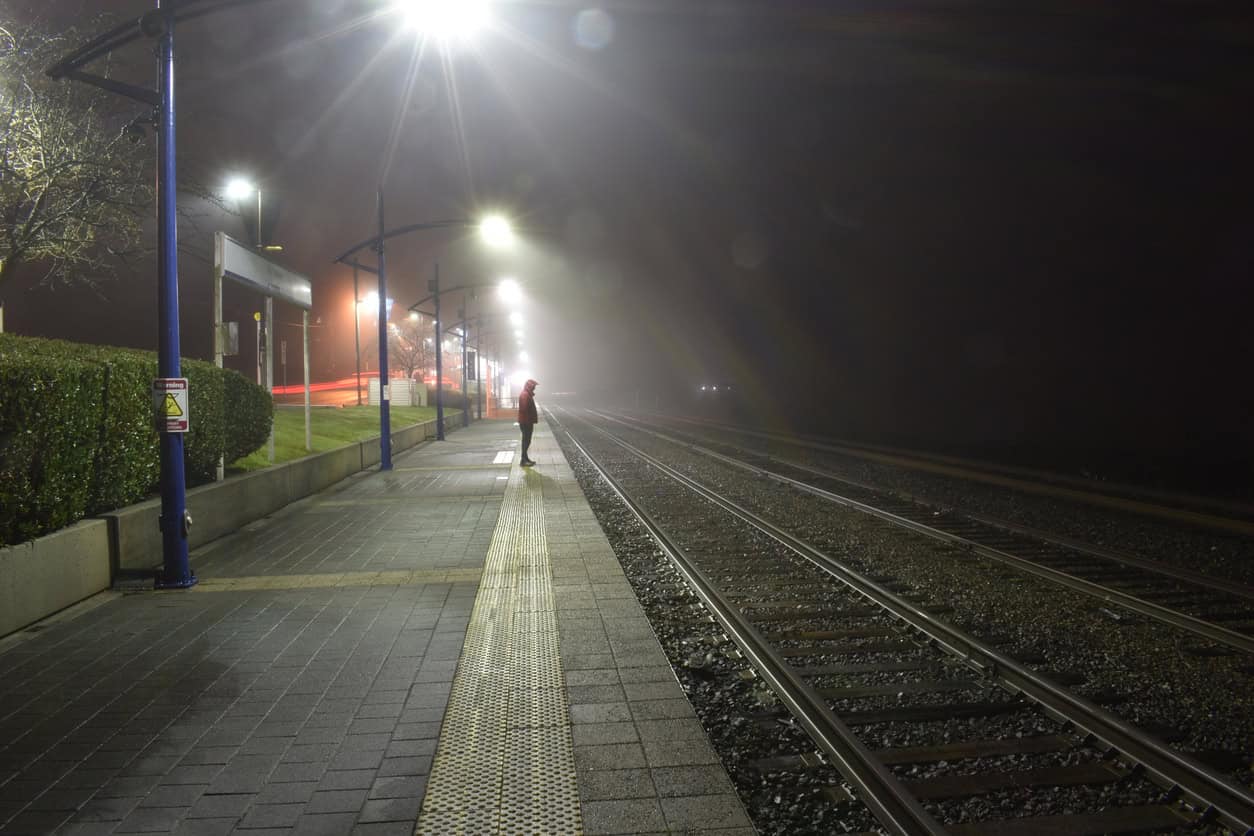
    I still remember September 2019 vividly; I felt as if I were standing on a platform at dusk as the last train approached. My English was uncertain. I was an older student, grey-haired and full of doubt, wondering if it was too late to begin again.

    Then, the London School of Science and Technology (LSST) opened the door. What changed everything was the opportunity to study through a franchised programme: Buckinghamshire New University (BNU) offered its degree through a partnership, with BNU as the lead provider and LSST as the local delivery partner. Had recent proposals to restrict franchising been in place, that pathway might not have existed. This highlights why policy matters. Franchised provision is often portrayed as a risk; however, my experience suggests the opposite. When a university designs a rigorous curriculum and assures academic quality, and a dedicated local partner delivers responsive support, the model can widen participation and deliver strong outcomes.

    From the very first week, I felt seen. Study-skills sessions were strategic, showing me that progress is a process, not a miracle. I learned to draft summaries, write in focused bursts, and seek feedback early. By my second year, I could argue a point, speak without freezing, and write with purpose.

    Returning to education later in life is not the same as going straight from school to university. It means entering a classroom after years away, carrying not just books but a whole life, work, bills, family, and responsibilities that don’t pause for a 9am seminar. I studied on buses, revised in corridors, and wrote essays between school drop-offs. Some weeks were woven from early mornings and late nights, as sleep was traded for progress.

    Back in Yemen, the conflict that began in 1994 has only worsened. Family emergencies don’t wait for exam schedules. Calls come at difficult hours. News from home can drain your focus in an instant. In that context, studying is not just an academic pursuit; it is an act of hope.

    I chose LSST because it offered access with ambition. The message was clear: if you are willing to work, we are eager to help. I was not looking for easy; I was looking for possible.

    I was not seeking the prestige or amenities of a traditional campus. I needed a campus culture that understood mature students, commuters, and migrants, one that offered affordability, flexibility, and personalised support. Had regulation squeezed out providers like LSST, many students, especially those returning to education, would face far fewer choices.

    The support at LSST was practical and visible, comprising one-to-one academic advice, workshops on academic skills, access to librarians and digital resources, quiet study spaces, and well-being support when life outside the classroom became overwhelming. Encouragement was not sentimental; it was momentum. Gradually, the platform’s feeling faded. I was no longer chasing the train; I was on it.

    Through this route, I completed a BA (Hons) in Business Management with BNU via LSST, then progressed to an MSc in International Business Management at the University of West London. I am now completing a PGCert while preparing for my PhD. The habits I developed outlining, redrafting, critical reading, referencing did more than help me pass assignments; they sharpened my voice. The clarity that earned praise reflects a more profound truth: well-governed franchise partnerships can combine access with quality. The HEPI report “What Is Wrong with Franchise Provision?” explores perceived risks and argues for robust oversight, reporting, and governance to ensure these benefits are realised.

    In 2023 I won first prize for an essay on the Metaverse, which was praised by the Tony Blair Institute for Global Change and CNN for its clarity and narrative flow. The essay competition was organised by LSST.

    I often wonder what my journey would have looked like without LSST. Honestly, I might still be on that platform, promising myself “next term,” studying alone after long days, writing without a reader, working without a mentor. I would have continued caring and staying busy, but I missed the compound effect of structure, feedback, community, and belief. Franchised provision is not a loophole; it is a lifeline.

    Later, I became a Student Ambassador and then a Students’ Union Coordinator, roles that helped new cohorts feel they belonged and allowed me to work with staff to improve the student experience. As an Academic Support, I help students turn feedback into meaningful change.

    This pathway, from hesitant mature entrant to aspiring lecturer, was made possible by a policy environment that allowed universities to franchise degrees through trusted partners. Recent regulatory proposals risk painting those partnerships as inherently problematic. However, my experience suggests something different: the right approach is not to strangle the model, but to strengthen it, ensuring quality while maintaining open access.

    If you are coming from a non-traditional route, returning after years away, balancing work or caring responsibilities, or studying across borders, know this: you do not need a perfect start. You need the right place, steady habits, and people who will back you.

    Higher education policy should also consider this. If regulation makes it harder for providers like LSST to operate, the students who lose out will be those who most need a second chance. The focus should be on transparent quality assurance, risk-based oversight, and supportive partnerships between lead and delivery partners, not on discouraging the model altogether.

    Studying at LSST not only gave me degrees; it gave me resilience, confidence, and the belief that nothing is easy, but everything is possible. With the encouragement of my former professors, now my colleagues, I am currently preparing to submit a doctoral proposal.

    I began all this on a platform at dusk, afraid the last train would leave without me. It did not. I got on, learned the rhythm, and kept moving. Policy should keep that train running for others.


    Source link

  • Why every middle school student deserves a second chance to learn to read

    Why every middle school student deserves a second chance to learn to read

    Key points:

    Between kindergarten and second grade, much of the school day is dedicated to helping our youngest students master phonics, syllabication, and letter-sound correspondence–the essential building blocks to lifelong learning.

    Unfortunately, this foundational reading instruction has been stamped with an arbitrary expiration date. Students who miss that critical learning window, including our English Language Learners (ELL), children with learning disabilities, and those who find reading comprehension challenging, are pushed forward through middle and high school without the tools they need. In the race to catch up to classmates, they struggle academically, emotionally, and in extreme cases, eventually disengage or drop out.

    Thirteen-year-old Alma, for instance, was still learning the English language during those first three years of school. She grappled with literacy for years, watching her peers breeze through assignments while she stumbled over basic decoding. However, by participating in a phonetics-first foundational literacy program in sixth grade, she is now reading at grade level.

    “I am more comfortable when I read,” she shared. “And can I speak more fluently.”

    Alma’s words represent a transformation that American education typically says is impossible after second grade–that every child can become a successful reader if given a second chance.

    Lifting up the learners left behind 

    At Southwestern Jefferson County Consolidated School in Hanover, Ind., I teach middle-school students like Alma who are learning English as their second language. Many spent their formative school years building oral language proficiency and, as a result, lost out on systematic instruction grounded in English phonics patterns. 

    These bright and ambitious students lack basic foundational skills, but are expected to keep up with their classmates. To help ELL students access the same rigorous content as their peers while simultaneously building the decoding skills they missed, we had to give them a do-over without dragging them a step back. 

    Last year, we introduced our students to Readable English, a research-backed phonetic system that makes English decoding visible and teachable at any age. The platform embeds foundational language instruction into grade-level content, including the textbooks, novels, and worksheets all students are using, but with phonetic scaffolding that makes decoding explicit and systematic.

    To help my students unlock the code behind complicated English language rules, we centered our classroom intervention on three core components:

    • Rhyming: The ability to rhyme, typically mastered by age five, is a key early literacy indicator. However, almost every ELL student in my class was missing this vital skill. Changing even one letter can alter the sound of a word, and homographic words like “tear” have completely different sounds and meanings. By embedding a pronunciation guide into classroom content, glyphs–or visual diacritical marks–indicate irregular sounds in common words and provide key information about the sound a particular letter makes.
    • Syllabication patterns: Because our ELL students were busy learning conversational English during the critical K-2 years, systematic syllable division, an essential decoding strategy, was never practiced. Through the platform, visual syllable breaks organize words into simple, readable chunks that make patterns explicit and teachable.
    • Silent letter patterns: With our new phonics platform, students can quickly “hear” different sounds. Unmarked letters make their usual sound while grayed-out letters indicate those with a silent sound. For students frustrated with pronunciation, pulling back the curtain on language rules provided them with that “a-ha” moment.

    The impact on our students’ reading proficiency has been immediate and measurable, creating a cognitive energy shift from decoding to comprehension. Eleven-year-old Rodrigo, who has been in the U.S. for only two years, reports he’s “better at my other classes now” and is seeing boosts in his science, social studies, and math grades.

    Taking a new step on a nationwide level

    The middle-school reading crisis in the U.S. is devastating for our students. One-third of eighth-graders failed to hit the National Assessment of Educational Progress (NAEP) benchmark in reading, the largest percentage ever. In addition, students who fail to build literacy skills exhibit lower levels of achievement and are more likely to drop out of school. 

    The state of Indiana has recognized the crisis and, this fall, launched a new reading initiative for middle-school students. While this effort is a celebrated first step, every school needs the right tools to make intervention a success, especially for our ELL students. 

    Educators can no longer expect students to access grade-level content without giving them grade-level decoding skills. Middle-school students need foundational literacy instruction that respects their age, cognitive development, and dignity. Revisiting primary-grade phonics curriculum isn’t the right answer–educators must empower kids with phonetic scaffolding embedded in the same content their classmates are learning. 

    To help all students excel and embrace a love of reading, it’s time to reject the idea that literacy instruction expires in second grade. Instead, all of us can provide every child, at any age, the chance to become a successful lifelong reader who finds joy in the written word.

    Latest posts by eSchool Media Contributors (see all)

    Source link

  • A Chance for Constructive Engagement (opinion)

    A Chance for Constructive Engagement (opinion)

    Earlier this spring, I was one of hundreds of college, university and scholarly society leaders to sign “A Call for Constructive Engagement” published by the American Association of Colleges and Universities. The statement speaks out against “the unprecedented government overreach and political interference now endangering American higher education.” It calls for the freedom to determine, on academic grounds, whom to admit and what is taught, how and by whom, while engaging in constructive reform and openness to legitimate government oversight.

    Deciding whether to make such a public statement merits careful consideration. This is because by making the statement, a higher education leader will likely not be reflecting the viewpoints of all of their institution’s constituents.

    An email from an alum from the 1970s reminded me of this. The alum chastised me for signing the statement, for overreaching and speaking for some members of our university community such as him, and for banding together with other higher learning institutions that have become “liberal cesspools of propaganda and misinformation … [that] openly permit anti-Israeli protests led by anti-Semitic educators … [and] become another left-wing terrorist organization supporting the likes of Hamas.”

    The alum asked me to remove my signature from the AAC&U statement on account of the concerns that he had raised. One higher education leader has so far done so, likely because of receiving input such as that provided by our alum.

    I opted to reply to our alum, thereby putting to practice the constructive engagement preached by the AAC&U statement. My reply asked the alum how long it had been since he had last visited campus and whether he knew that, thanks to the philanthropic generosity of some fellow graduates, we renovated our campus’s Hillel House last summer.

    I asked the alum whether he had heard of the Common Ground program Alfred instituted in 2018 through the philanthropic support of our trustees. It is a required course for all of our new undergraduate students and consists of small-group dialogue facilitated by a faculty or staff member with two key objectives: 1) to better appreciate the different backgrounds (including geographies, ethnicities and religions), aspirations and interests that our new students bring to Alfred (artists think differently than engineers, liberal arts students think differently than business students), and 2) to arrive at some shared values that our new students will commit to living by as citizens of the Alfred community—such as commitment to constructive dialogue.

    By fostering constructive engagement, our Common Ground program likely helped prevent the strife that occurred on many other college campuses in the wake of the Oct. 7 Hamas terrorist attack on Israel and the ensuing war in the Middle East. When members of campus communities have built meaningful relationships with one another, they are less likely to retreat to their ideological corners when a potential conflict arises. Instead, they talk as friends.

    I closed my email by asking the alum whether he had any impactful mentors as a student.

    To my pleasant surprise, the alum replied by recounting a particularly impactful faculty mentor in the field of astronomy who had given him many applied learning opportunities and inspired a lifelong interest in stargazing, which he continues to do to this day from his home. He also noted how well his college education had positioned him for the professional success that he has enjoyed.

    We have since spoken by phone. While there are certain matters upon which we still disagree, we have found some common ground.

    We agree that institutions of higher learning are potent engines for promoting the success of graduates as well as the prosperity of our nation and the health and well-being of our broader population. There are nearly 4,000 institutions of higher learning across our nation—spanning public and private and including community colleges, technical training institutions, arts schools, religious institutions and HBCUs. This constellation, in which anyone can find a place, provides powerful opportunities for professional and personal advancement, social mobility, entrepreneurial innovation, access to health care, national defense, social services and cultural offerings.

    We agree that the core focus of institutions of higher learning should be on providing an education of enduring value through fostering knowledge and curiosity.

    We also agree that universities, like individuals and nations, do not always uniformly arc toward wisdom. They can stumble and thus benefit from constructive reform. Our field of higher education can and should be better listeners to our public, more concerned about the cost of college and more focused on student success and less on prestige.

    Notwithstanding the stumbles, however, institutions of higher learning, as noted by Israeli historian Yuval Hariri in his recent book Nexus, have some powerful self-correcting mechanisms such as peer review. Authoritarian regimes, by contrast, lack such self-correcting mechanisms when they suppress inquiry and criticism.

    Consider Katalin Karikó, who emigrated from her native Hungary to the United States with $1,200 cash sewn into her daughter’s teddy bear to do research on mRNA. While at the University of Pennsylvania, her hypothesis regarding the potency of mRNA research was derided by most fellow researchers around the globe. She was denied a tenure-track position and demoted. Yet, the research that she kept pursuing was pivotal to the development of COVID vaccines and earned her a Nobel Prize in 2023.

    And while our alum and I still disagree on whether my signature should be affixed to the AAC&U statement, we have ended up agreeing both on the value of constructive engagement and the criticality of promoting it as a central value in higher education.

    Mark Zupan is president of Alfred University.

    Source link