Timely college completion has benefits for both the student and the institution. Learners who graduate on time—within two or four years, depending on the degree program—hold less debt and have greater earnings potential because they’re able to enter the workforce sooner.
National data reveals that only 17 percent of students at public two-year colleges complete a degree in two years, and 40 percent of students at public four-year institutions graduate on time. While a variety of personal challenges can limit students’ timely completion, institutional processes can also have an impact. According to the course scheduling software provider Ad Astra’s 2024 Benchmark Report, which included data from 1.3 million students, 26 percent of program requirement courses were not offered during the terms indicated in pathway guidance, leaving students without a clear road map to completion.
A new resource from Ad Astra and Complete College America identifies ways institutions can reconsider class scheduling to maximize opportunities for student completion.
What’s the need: Students report a need for additional support in scheduling and charting academic pathways; a 2024 Student Voice survey by Inside Higher Ed and Generation Lab found that 26 percent of respondents want their college to create or clarify academic program pathways. An additional 28 percent want their institution to introduce online platforms to help them plan out degree progress.
Nontraditional students, including adult learners, parenting students and working students, are more likely to face scheduling challenges that can also impede their progress. A 2024 survey of online learners (who are primarily older, working and caregiving students) found that 68 percent of respondents considered time to degree completion a top factor in selecting their program and institution.
But making the switch to a better system isn’t exactly a cakewalk for higher ed institutions, and establishing strong top-down policies can create its own hurdles. “Because leadership changes in organizations and institutions, because we get more and more students enrolling and registering, we still have to continue to reiterate this message about how important academic scheduling is,” said Complete College America president Yolanda Watson Spiva. “But we’re happy to do it because it still remains one of the best levers for helping students to persist and complete college.”
Becoming a student-centered institution with predictable and flexible scheduling also benefits the institution because it means continuous enrollment, Watson Spiva said
“Whether it’s Uber or Amazon, all these things are meant to make life easier, and yet for some reason, in higher ed, we haven’t caught up to that, that convenience is a major factor” in improving student enrollment and retention, Watson Spiva said. “Until we change our mindset in terms of embracing students as agents of change and having agency in and of themselves, I think we’re going to continue to grapple with this pervasive issue.”
The new report is a playbook of sorts to help institutions prepare to make change, said Ad Astra’s president, Sarah Collins. “This is one of the next big things that institutions really need to get their arms around, I think, because it’s so culturally difficult and very big, very hairy and scary,” Collins said.
How to make change: For institutions that want to do better and overhaul current practices, Ad Astra’s report provides starting points that administrators can consider, including:
Assessing the institution’s readiness for change, including current scheduling practices, faculty concerns and priorities, as well as the institution’s context, such as previous efforts and resource constraints. Administrators should identify existing inefficiencies, as well as resources and staff capacity, to implement and sustain change.
Being aware that making adjustments requires more than technical training; it also demands capabilities to engage in change leadership practices and sustained support to ensure changes are embedded into the institutional culture.
Celebrating and recognizing positive changes. Data and storytelling can measure impact as well as affirm how practices make a difference in student success.
Evaluating the organizational structure of the institution is one key piece, Collins said, because colleges tend to be designed around a strategy rather than a student. Institutions should also prioritize data collection and distribution, because that’s a frequent sticking point in change-management practices.
“Making sure that the data tells a story, convincing people to believe the data, making sure that the things you’re trying to measure are the things that actually matter and they actually map to the bigger thing you’re trying to accomplish,” Collins explained.
Additionally, prioritizing the student voice in conversations about course scheduling can ensure that the institution is centered on learners’ needs. “It should not just be the traditional-age student,” Watson Spiva said. “It should also include post-traditional students—working learners, parenting learners—because their scheduling needs are going to be very, very diverse.”
A new report has found that clerical and administrative workers, telemarketers, salespeople, receptionists and programmers are the most likely to face work changes caused by generative artificial intelligence (gen AI).
Please login below to view content or subscribe now.
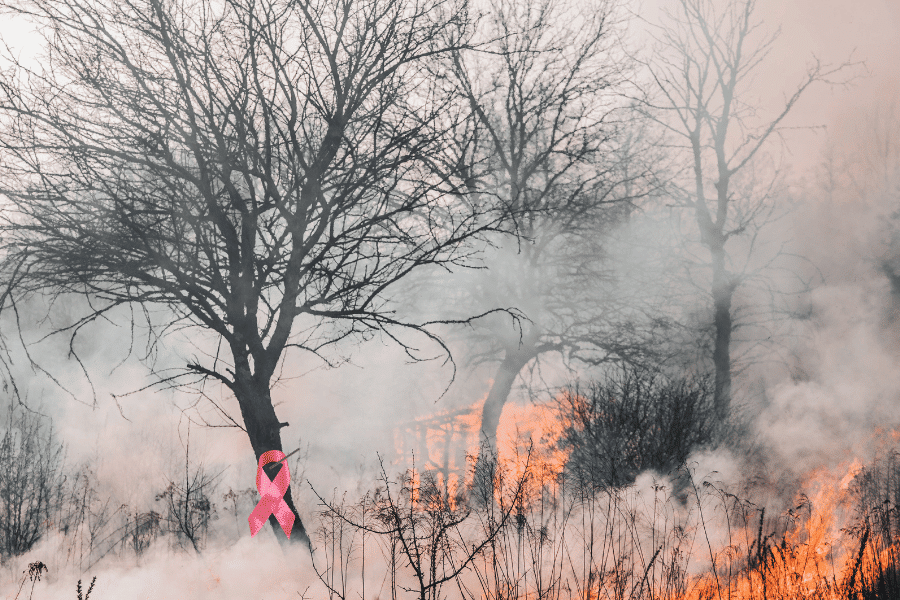
A study in California this year found that cancer patients were much more likely to die from the disease if they breathed in air pollution from wildfires a year after their diagnosis.
In 2020, flooding in Spain caused by Storm Gloria forced 118 cancer patients to cancel their radiotherapy treatment. And in 2019, researchers from the University of Michigan found a higher death rate among adult cancer patients who were affected by Hurricane Katrina.
It turns out that in many ways, climate change affects our health. We can see this directly when looking at cancer — something that affects one in five people around the world directly, and just about everyone else connected to those people indirectly.
I know this first hand. Four years ago a close family member was diagnosed with cancer. It made me wonder: What could we have done to prevent it? Was it something they ate? Their amount of exercise?
At the time, we were living in South Korea, a country notorious for its heavy air pollution days, and I couldn’t help but wonder if that might have had an impact on the diagnosis.
Then, as I watched them go through multiple recurrences of cancer, the question gradually evolved into this: How can you ensure successful cancer treatment? And subsequently, how can you ensure that everyone has access to safe cancer treatment?
Supply chain disruptions
It turns out that air pollution isn’t the only problem. Extreme weather events caused by climate change can disrupt supply chains which results in shortages of critical medical supplies.
In 2017, an intravenous fluid manufacturing company in Puerto Rico, for example, was destroyed by Hurricane Maria. The company was a major supplier of IV fluids for hospitals in the United States and the destruction led to a shortage in essential IV fluids.
In an attempt to investigate further, I contacted Dr. Kishan Gupta, a specialist in comprehensive ophthalmology, cornea and external diseases, at the Kaiser Downey Medical Center in California. Over a WhatsApp chat, he told me that Hurricane Maria not only led to major disruptions in eye drop manufacturing but also in IV saline for surgery and intraoperative anesthetics at his hospital.
Dr. David Kim, an orthopedic surgeon at the Worcester Medical Center in the U.S. state of Massachusetts, then told me that when IV supplies are disrupted, all surgeries that require such fluids are delayed — anything from hand and hip replacement surgeries to the removal of cancer tumors.
IV saline and intraoperative anesthetics are crucial for cancer patients, especially IV saline, which helps to dilute toxic fluids and dehydration as a result of chemotherapy.
Medical needs not met
Crucially, climate change-induced extreme weather events damage infrastructure, preventing important medical equipment and supplies from reaching destined locations at an appropriate time.
On the note of promptness, one of cancer’s most threatening characteristics is its fast, uncontrolled growth. In the field of medicine, this means that cancer treatment must be administered at the correct time, with the correct steps.
After Hurricane Maria in Puerto Rico, a 70% cancel rate was observed for brachytherapy, a form of radiation therapy. In Mexico after the 2017 earthquake, cancer surgeries were canceled with a median delay of 22.5 days.
During natural disasters, transportation networks and electrical systems break down. This means that people are unable to get to their hospital for treatment, and additionally, treatments like radiation which depend on electricity, can’t be administered.
The COVID-19 pandemic, while not a climate change-induced event, showed what happens when supply chains break down. Needed supplies of everything from towels to anti-septic solutions became unavailable and as a result, people died.
Lack of blood donors
Of course, cancer isn’t the only health concern related to climate change. Rising temperatures and more frequent natural disasters can create favorable conditions for insects such as ticks and mosquitoes that transmit harmful pathogens.
Hurricanes, tornados and other extreme weather events also discourage people from traveling and that can cause a consequent lack in blood donations at hospitals, according to Dr. Sung Eun Yang at the Kaiser Panorama City Medical Center in California. “Blood and blood products are a limited precious resource,” Dr Yang said. “Donor turn out may be dependent on the weather. I recall in Boston we had a terrible winter storm with no donor turn out and experienced significant shortages in blood products.”
Furthermore, it turns out that severe heat and humidity can affect medications — how they operate or their very properties. A number of common cancer medications are highly heat-sensitive. This means that as the Earth’ s climate warms, cancer patients who live in hot places will have a more difficult time storing and accessing safe medication, particularly in economically poor areas that can’t invest in energy-consuming storage. But even those in wealthier, cooler countries will be affected if they import products from those regions.
Finally, because of climate change, we are also seeing an increase in wildfires due to extreme and sustained drought conditions and wildfires too, ultimately leading to increases in cancer.
For instance, cancer is the number one cause of death in the fire fighting industry, accounting for 70% of all deaths.
Where there’s smoke, there’s cancer?
Harvard University researcher Mary Johnson told the publication E&E News this year that potentially harmful chemicals are released every time a structure burns.
“Plumbing has copper and lead in it,” she stated. “Paint has toxic chemicals. Electronics, plastics have really nasty stuff in them. All these chemicals we don’t think of occurring in a wildland fire are now part of the smoke.”
So what can we do?
In preparation for all potential disasters, hospitals could have a disaster plan to help ensure that patients receive any and all important data during a future disaster. For example, the United States Department of Health and Human services has released a study on the efficacy of electronic health records during disasters. If a storm is forecasted in a region, an electronic emergency chart could be made for each patient. This plan could also come in the form of new infrastructure or mechanisms meant to keep the hospital safe from floods or fires.
Patients should also be provided with alternate ways to access healthcare information in order to connect with local healthcare teams, and the American Association of Colleges of Nursing recently added climate change education to the list of required skills for nursing education programs.
Finally, past cancer survivors of disasters have suggested that countries like Puerto Rico can be more prepared and adaptable in terms of exploring alternatives like renewable energy, that aren’t as susceptible to power outages from storms.
As the climate deteriorates, our responsibility in pushing back against the climate crisis will expand in multiple ways.
Our health and the health of the people we love will depend on the health of our planet. That means that it is our responsibility to protect ourselves, our loved ones and all of those currently battling cancer from climate change.
Questions to consider:
1. What connection is there between climate change and cancer rates?
2. What can be done to keep people from dying of climate-change related cancer?
3. What, if anything, can you do to help cool down our planet?
This HEPI guest blog was kindly authored by Ali Adnan Mohammed, Executive Assistant to the Dean of College of Arts & Sciences at the American University of Iraq in Baghdad.
Rarely does a graduation ceremony mark a turning point in a country’s cultural trajectory. But this was the case for a handful of graduates at the American University of Iraq in Baghdad (AUIB). AUIB is a private university that was founded in February 2021 and began with only three colleges: the College of Business, the College of International Studies, and the College of Arts & Sciences.
The university has grown to nine colleges hosting approximately 1,600 students. Among its first graduation cohort, six were students from Iraq’s first College of Arts & Sciences, an academic innovation in a country where the education system is built on the separation of arts & sciences from high school education onwards. This college marks a new chapter in the story of rebuilding Iraq’s education and reclaiming its historic regional educational prominence.
Once they join high school, Iraqi students around the age of 15 must choose one of two academic tracks: arts or sciences. This choice, along with their percentage score in the national exam at the end of high school would determine their college majors. Unlike the UK system, students have little space for personal choice and preferences as their score and high school track are the sole determinants of major choice.
At Iraqi colleges, there are no core liberal arts courses. That is, courses outside the field that can allow students to explore a broad range of disciplines outside their major, allowing space for intellectual exploration. Rather, students must go through a strict year-by-year schedule of confined major courses with few standard courses outside their specialisations, such as computer science and human rights. For example, students majoring in biology are not able to take elective courses in psychology or archaeology. This would limit their intellectual experience in campus life and turn the college experience more towards an obligation that has to be fulfilled.
In 2021, AUIB disrupted the traditional model with its liberal arts education model through its College of Arts & Sciences. Here, students can pick their core liberal arts courses from a diverse list regardless of their major. Science students can pick up three courses in communication, five courses in humanities, and two courses in social sciences. These courses will not only enhance their intellectual mentality but will also enlighten their lives with purpose and meaning.
Their education experience has gone beyond sole preparation for the job market. It has sparked a deeper sense of belonging and responsibility for the future of their country. As some shared with me, computer science graduates look forward to contributing their AI experience to enhancing Iraqi institutions & country-rebuilding initiatives.
As an executive assistant to the college dean, I have witnessed firsthand the contributions of this innovative model to the graduates and how it has broadened their intellectual mindset beyond their specialisations and paved the way to a connection that the traditional system never allowed. When I congratulated Muqtada, a graduate student of computer science, he told me that he would like to contribute his knowledge of computer science to rebuilding the country, and this is why he joined a legal firm as a junior program manager.
‘I just do not feel like working in tech companies, I want to contribute my AI skills into something else, and this legal firm gave me a good chance to try.‘
This sentence struck me as a sign that the innovative model of AUIB is successful. AI was not the sole purpose; it was a tool Muqtada wanted to purposefully utilise. Isn’t that where arts & sciences meet?
I started talking to the graduates about their purposes or journeys to find one. This was the untold story of the first cohort of the first-ever college of Arts & Sciences in Iraq. I can only wait and witness what further contributions the rest of the cohorts will bring to my country.
The Ministry of Higher Education in Iraq has been working on the implementation of the Bologna Process, the European model, in Iraqi universities. This effort of reformation has been going back and forth. Aside from the essential differences between the Bologna Process and the Liberal Arts, both will give a chance to Iraqi students to have a university life that promotes freedom and choice early on into students’ college life. The first cohort of AUIB, specifically the College of Arts & Sciences, might be a further push towards a faster track to reform Iraqi universities.
Greetings from a northeastern Virginia where the heat has been brutal. For several weeks we lived under temperatures reaching 100 ° F, while humidity sopped everything badly enough that the “feels like” reading hit 110. (And the Trump administration decided to federalize and militarize DC – that’s for another post.)
North of us, epic wildfires burned swathes of Canada. “‘It’s the size of New Brunswick, to put it into context,’ Mike Flannigan, a professor of wildland fire at Thompson Rivers University, told CBC News.” This is apparently the second worst fire year on record. Climate change has not only increased temperatures in that nation but dried out regions, making them tinder.
Parts of Europe are also suffering under horrendous heat waves. As a result the region is experiencing upticks in fires, heat exhaustion, and deaths. Temperatures are hitting the 30s and even 40s (centigrade; for Americans, this means upper 90s and over 100 F).
I’d like to explain about how these are predictable outcomes of the worsening climate crisis, how global warming is doing precisely what we thought it would do, but I’d also like to get in the habit of issuing shorter blog posts. Besides, I suspect my readers either get the point or have turned away by now.
What I wanted to focus on today was a recent connection made between Europe’s fierce summar, the climate crisis… and digital technology. Britain is suffering under drought conditions exacerbated by global warming, a drought so harsh that the government has assembled a National Drought Group to organize responses. (One of my shorthand expressions for thinking of climate change is that regions with too much water will receive more, while those with less, less. A kind of climate Matthew Effect. The UK drought is an exception for now.)
Yesterday the drought team issued a report on the crisis, summing up steps various local authorities are taking along with series of recommendations for Britons wanting to take actions against the drought. I’d like to draw your attention to one of them:
Fiery red box not in the original.
“Delete old emails and pictures as data centres require vast amounts of water to cool their systems.”
There’s much we can say or ask about that single line. Just how much of an impact does cloud computing hosting have on British water use? If this is aimed at residents, are businesses or the government taking similar measures? Should one use cloud services not colocated in drought-stricken areas?
At a broader level I wonder about the possibility that the growing anti-digital movement, which some call the techlash, might finally become focused on climate implications. Do we decide that advanced computing (think generative AI or bitcoin mining) has too large a footprint and must be curtailed? Or do we instead assess its climate benefits – crunching vast arrays of data, running simulations, generating new research – as outweighing these costs?
For years I’ve been asking audiences about the climate-digital connection. I’ve asked people to imagine individual and group choices they might have to make in the future as the crisis worsens and electricity becomes more fragile, more restricted. These are provocative, clarifying questions. Think of choosing between WiFi and air conditioning, or cloud computing versus refrigeration. And now we have a first glimpse of that future with the British government requesting Britons to cut back their digital memories. We can imagine new questions in that light. How would you choose between streaming video and potable water, or Zoom versus crop irrigation?
The Higher Education Inquirer reminds us of the higher education implications.
For colleges and universities, the connection between digital behavior and resource conservation is an opportunity to model sustainability. Digital housekeeping campaigns could encourage staff and students to purge outdated files, trim redundant email chains, and archive with intent. Institutions can audit cloud storage use, revisit data retention policies, and prioritize providers that invest in energy- and water-efficient infrastructure. These choices can be paired with curriculum initiatives that make students aware of the climate–digital nexus, grounding sustainability not just in labs and gardens, but in inboxes and servers.
Indeed. These actions are available to us, should we choose to take them.
Yet this is a difficult conversation to have now, at least in the United States, as the Trump administration attacks climate science even to the point of hurling a satellite out of Earth orbit. Businesses are walking back climate commitments. Journalists don’t mention the crisis very often. Democrats are falling silent. Yet, strangely enough, climate change continues, ratcheting up steadily. We must think and act in response. That means, among other things, rethinking our digital infrastructure and practices.
This audio is auto-generated. Please let us know if you have feedback.
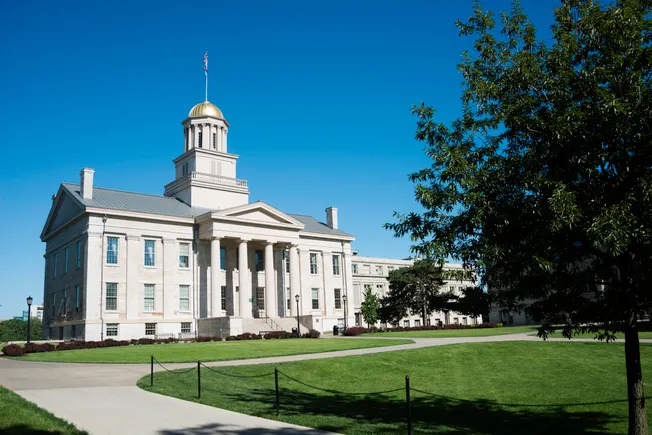
The Iowa Board of Regents on Tuesdayapproved a policy changethat requires public university faculty to “present coursework in a way that reflects the range of scholarly views and ongoing debate in the field.”
Under the change, effective immediately, the board will also audit the three universities it oversees —the University of Iowa, Iowa State University and the University of Northern Iowa — at least every two years for compliance with the new directive.
The policy change significantly revises the original proposal’s language, which included references to diversity, equity and inclusion and critical race theory. Tuesday’s 7-1 vote came after public pushback over that proposal and two postponements by the board to approve the policy.
The initial version of the proposal would have barred Iowa university academic programs from requiring courses containing “substantial content that conveys DEI or CRT.”As examples of DEI, it lists systemic oppression, anti-racism, social justice, and unconscious or implicit bias.Universities would have been able to apply to regents for exemptions.
The wide-reaching language prompted criticism from academic groups, studentsand those who argued it would undermine free speech.
In one example, five state educator groups launched a joint petitionurging “the Iowa Board of Regents to firmly reject efforts to restrict what students can learn.” The petition, which does not address the updated policy, noted that the original language would have affected at least a dozen academic programs.
“Students in certain fields — such as social work and nursing — would have been at a special disadvantage, since those professions’ standards require graduates to show competency in various topics banned under the policy,” it said.
Board President Sherry Bates said the regents delayed the vote at their July meeting so they could review the policy. The board then set a special August meeting for the vote.
In the intervening weeks, the board released a new version of the proposal. The updated language — which ultimately passed Tuesday — states that “faculty may teach controversial subjects” when relevant to course content, but they must present such topics from multiple and opposing viewpoints.
“University teachers shall be entitled to academic freedom in the classroom in discussing the teachers’ course subject, but shall not introduce into the teaching controversial matters that have no relation to the subject,” the updated version says.
It also states that students’ grades should reflect their “mastery of course content and skills,” not their “agreement or disagreement with particular viewpoints expressed during instruction or in their work.”
‘What exactly is controversial, and who will decide?’
The new policy addresses how topics are taught rather than what is taught, Regent Robert Cramer argued.
“Personally, I don’t want any of the DEI/CRT woke left stuff being taught in our classes,” he said. “But this policy is not my personal beliefs.
But Regent Nancy Dunkel, the sole member of the board to vote against the policy, raised concern about the ambiguity of the policy’s language.
“What exactly is controversial, and who will decide? Can anyone declare something as controversial?” she asked. She also noted that the policy change in and of itself has become controversial among Iowa constituents.
Dunkel further raised questions about the requirement for faculty to present a range of viewpoints.
“If a professor has to present both sides to an issue, does that mean a marketing professor must also include anti-capitalist arguments to students?” she asked. “Do anti-evolution arguments have to be presented in biology classes? How do we present both sides of the Holocaust?”
The board voted immediately after Dunkel’s comments.
‘I will not be passive’
The regents also made clear to Iowa’s three universities — the leaders of which joined Tuesday’s meeting — that they have been put on notice regarding DEI efforts.
Two of Iowa’s public universities have become a talking point among conservative media outlets. In recent weeks, conservative outlets and anti-DEI watchdog groups published a series of videos — the most recent of which was released Sunday — that appear to show two officials at the University of Iowa and one at Iowa State discussing how they could work around state DEI restrictions.
In 2024, Iowa Gov. Kim Reynolds signed a law prohibiting its public universities from maintaining or funding DEI offices or from officially weighing in on a wide array of issues, such as systemic oppression, social justice, racial privilege or “any related formulation” of the listed topics.
At least two of the employees in the videos have been put on leave, and the state attorney general is now investigating the incidents.
Regent Christine Hensley voiced concerns over Iowa university employees looking to subvert the ban.
“There is an underground current of people within the various universities — a small minority, but they’re the ones that are getting the attention — that are trying to go around the laws that have been passed,” she said.
Bates said the board would audit an institution if it hears of “any instances of not following these policies.”
“I will not be passive in addressing the problem,” she said, adding that she would establish a task force of board members “to correct the situation and ensure compliance with the policy.”
But some have defended the university employees.
The union representing the University of Iowa’s graduate workers lambasted their suspensions and investigations opened by administrators.
“They demonstrate a total capitulation to Governor Reynolds and the Trump administration at the expense of the quality and integrity of the education offered by the University of Iowa,” the union said in an Aug. 6 statement. “This compliance with right-wing efforts to suppress civil rights and academic freedom, and deny basic principles of equal access to education, is a betrayal of our campus community and the values we hold as Iowa’s oldest and largest public university.”
This story about children with disabilities was produced by The Hechinger Report, a nonprofit, independent news organization focused on inequality and innovation in education. Sign up for the Hechinger newsletter.
COLUMBUS, Ohio — When Selina Likely became director of the Edwards Creative Learning Center six years ago, she knew there was one longstanding practice that she wanted to change. For as long as she had taught at the thriving child care center, it had turned away many children with disabilities such as autism and Down syndrome. The practice was even encoded in the center’s handbook as policy.
Likely, the parent of a child with a disability, wanted to stop telling families no, but she knew that to do that she and her staff would need more support. “I said, ‘Let’s start getting training and see what we can do.’”
Not too long after, her effort received a big boost from a state-funded initiative in Ohio to strengthen child care teachers’ knowledge and confidence in working with young kids with disabilities and developmental delays. That program, Ohio PROMISE, offers free online training for child care workers in everything from the benefits of kids of all abilities learning and playing together to the kinds of classroom materials most helpful to have on hand. It also offers as-needed mentorship and support from trained coaches across the state.
Related: Young children have unique needs, and providing the right care can be a challenge. Our free early childhood education newsletter tracks the issues.
Child care providers across the country — including large, established centers and tiny home-based programs — struggle to meet the needs of children with disabilities, according to a 2024 report from the U.S. Government Accountability Office. More than a quarter of parents of children with disabilities said they had a lot of difficulty finding appropriate care for their kids. And even those who do find a spot regularly encounter challenges, like having their children excluded from extracurricular activities such as field trips and even academic instruction.
“It’s really hard to find child care for this population, we heard that loud and clear,” said Elizabeth Curda, a director on the GAO’s Education, Workforce and Income Security team and a coauthor of the report. Even the most well-resourced centers report that they struggle to meet the needs of children with disabilities, according to Curda.
There’s a lot of desire at the grassroots level to change that. Ohio PROMISE and a few other recent initiatives provide models for how to expand the capacity — and the will — of child care centers to serve the more than 2 million U.S. children age 5 or below who have a disability or developmental delay.
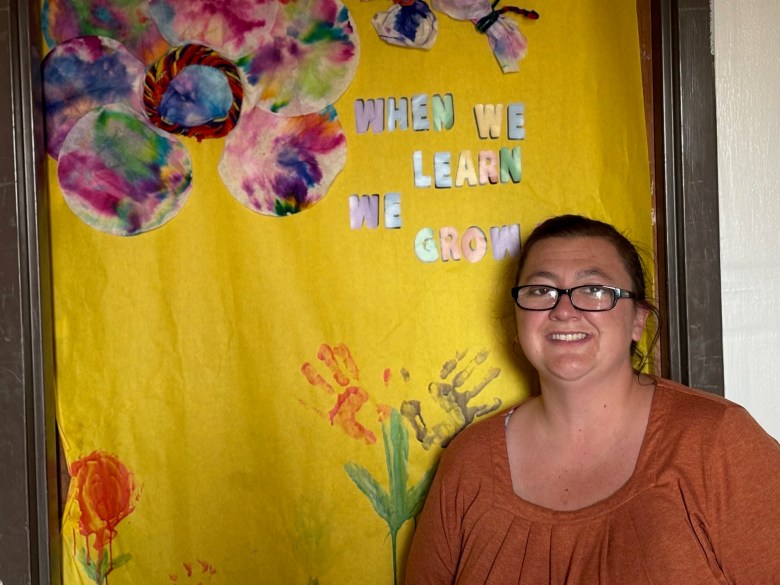
Cards on the walls at Edwards Creative Learning Center display the signs for different letters so students — whether nonverbal or not — can all learn sign language. Credit: Sarah Carr/The Hechinger Report
In Vermont, for instance, officials hope to soon unveil a free, on-demand training program aimed at helping child care teachers have more inclusive classrooms. And officials in Ohio’s Summit County, home to Akron, report growing interest from other counties in creating programs based on Summit’s more than decade-old model that provides in-person training for child care operators in inclusion of children with disabilities.
“We’re helping to create child care centers that feel they can handle whatever comes their way, especially when it comes to significant behavior concerns,” said Yolanda Mahoney, the early childhood center support supervisor for Summit County’s disabilities board.
The federal government until recently encouraged the creation of such models. In 2023, the federal Department of Education and Department of Health and Human Services issued a joint statement urging states to take steps to support inclusion in early childhood settings, including strengthening training and accountability.
Under the current president, federal momentum on the issue has largely stalled. While the administration of President Donald Trump hasn’t directly attacked inclusion in the context of special education, the president has criticized the term more broadly — especially when it comes to diversity, equity and inclusion. That can create uncertainty and a chilling effect on advocates of inclusion efforts of all kinds.
Funding for some inclusion efforts is also in jeopardy. States rely on Medicaid, which faces nearly $1 trillion in cuts over the next decade, to pay for early intervention programs for children birth to age 3 with developmental delays and disabilities. Trump has also proposed eliminating Preschool Development Grants, which states such as Vermont and Illinois have used to expand support of young children with disabilities.
That means over the next few years, progress on inclusion in child care settings could hinge largely on state and local investment. It helps that there’s a “real desire” among providers to enroll more children with disabilities, said Kristen Jones, an assistant director on the GAO’s education, workforce and income security team, who also worked on the report. “But there’s also a concern that currently they can’t do that in a safe way” because of a lack of training and resources.
In Ohio, the idea for Ohio PROMISE came after an appeal in 2022 from Republican Gov. Mike DeWine. He reported that families were coming to him saying they couldn’t find child care for their kids with disabilities.
“He said, ‘Come to me with ideas to solve that problem,’” recalled Wendy Grove, a senior adviser in the Ohio Department of Children and Youth who spearheaded development of the program.
Grove and her colleagues had already been working on a related effort. In 2020, Ohio won a federal grant that included help exploring how well — or not — children with disabilities were being included in child care and early education settings. DeWine liked the idea Grove’s team presented of morphing that work into a state-led effort to strengthen training and support for child care teachers. They also proposed more direct support to families, including the extension of child care vouchers to families with incomes above the poverty level, with a higher reimbursement rate for children with disabilities.
The training, which debuted about two years ago, is provided in three levels. Jada Cutchall, a preschool teacher at Imaginative Beginnings, an early learning center just outside of Toledo, recently completed the third tier, which for her included customized coaching. Cutchall’s coach helped her create communication tools for a largely nonverbal student, she said, including a board with pictures children can point to if, for example, they want to go to the bathroom or try a different playground activity.
As a result, Cutchall said, she has watched kids with disabilities, including those with speech impairments and autism, engage much more directly with their classmates. “They have the courage to ask their peers to play with them — or at least not distance themselves as much as they usually would,” she said. All of the children in the classroom have benefited, she added, noting that kids without disabilities have taken an interest in learning sign language, strengthening their own communication skills and fostering empathy.
Child care programs where one teacher and one administrator have completed some of the training earn a special designation from the state, which may eventually be tied to the opportunity to get extra funding to serve children with disabilities. In Ohio PROMISE’s first year, 1,001 child care centers — about 10 percent of the total number in Ohio — earned that designation, according to Grove.
For the last six years, Selina Likely has overseen the Edwards Creative Learning Center, where she’s steadily tried to enroll more children with disabilities and developmental delays. Credit: Sarah Carr/The Hechinger Report
The effort costs a little over $1 million in state dollars each year, with most of that paying for several regional support personnel who work directly with centers as mentors and advisers. Over the last two years, Ohio has seen a 38 percent increase in the number of children in publicly funded centers who qualify for the higher voucher reimbursement rate for children with disabilities, which can be double the size of the standard voucher.
Grove hopes that ultimately the effort plays a role in narrowing a critical and stubborn gap in the state: about 27 percent of children without disabilities show readiness on state standards for kindergarten; only 14 percent of children with disabilities do. Since so few disabilities exhibited at that age are related to intellectual or cognitive functioning, “we shouldn’t see that gap,” said Grove. “There’s no real reason.”
One goal of the new efforts is to reduce the number of young children with disabilities who are expelled from or pushed out of care. Those children are frequently asked to leave for behaviors related to their disability, the GAO report found.
Several years ago, a child care center in Columbus expelled Meagan Severance’s 18-month-old son for biting a staff member. The boy has several special needs, including some related to attention deficit hyperactivity disorder. Severance brought him to Edwards Creative Learning Center, where not too long after Selina Likely shifted into the role of director. The boy also bit a staff member there — not uncommon behavior for toddlers, especially those with sensory sensitivities and communication challenges.
Likely was determined to work with the child, not expel him. “They put in time and effort,” said Severance. “The response wasn’t, ‘He bit someone, he’s gone.’”
Likely empathized. Decades earlier, her own daughter had been expelled from a child care center in her hometown of Mansfield, Ohio, for biting.
“I was so angry and mad at the time — how are you going to kick out a 1-year-old?” she said. The center director didn’t think at all about how to help her child, Likely recalled, instead asking Likely what might be happening at home to make the child want to bite. She said she got no notice or grace period to find a new placement. “That left me in a disheartened place,” she said. “I was like, ‘I still have to go to work.”
Seventeen years old at the time, she was inspired by the injustice of the situation to quit her job in a factory and apply to be an assistant in a child care program. She’s been in the industry ever since, gradually trying to make more space for children like her daughter, who was later diagnosed with autism.
Meagan Severance, a parent and teacher at the Edwards center, has worked in recent years to make her classroom more inclusive for children with all different abilities. Credit: Sarah Carr/The Hechinger Report
As director, Likely displays the nameplate “chaos coordinator” on her desk. And she’s taken the stance that the center should at least try to work with every kid. She and some of her teachers have completed the first two tiers of the Ohio PROMISE training, as well as some related sessions available from the state. Likely estimates that about 10 percent of the children in her center have a diagnosed disability or developmental delay.
Liasun Meadows, whose son has Down syndrome, chose Edwards several years ago for her then 1-year-old over another program better known for its work with children with disabilities. She has not been disappointed.
Parents of kids with disabilities watch their children like a hawk, she said. “There are certain things you notice that you don’t expect others to notice, but they do at Edwards. They’ve been growing and learning alongside him.”
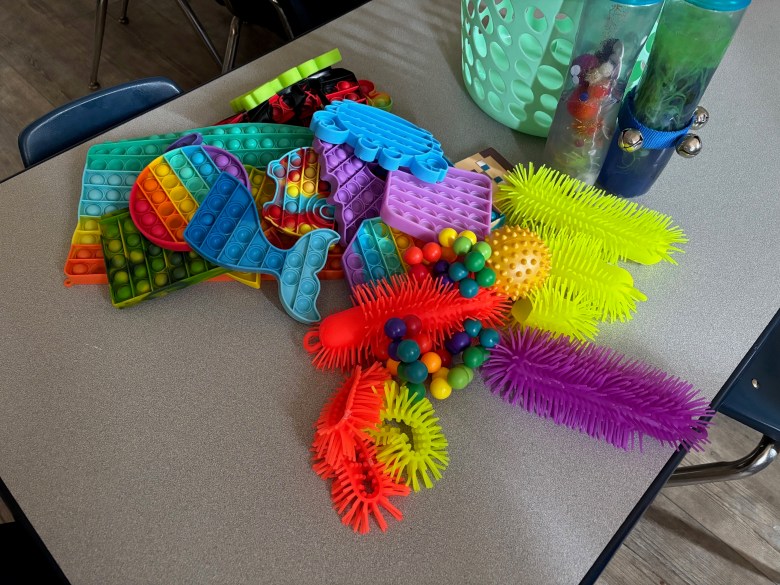
Severance, whose son is now 8, works at the center these days, leading the 3-year-old room, which includes two children who are largely nonverbal. She’s made the classroom more inclusive, adding fidget toys for children with sensory issues, rearranging the classroom to create calming areas, providing communication books to nonverbal children so they can more easily express needs and wants, and teaching everyone some sign language.
“For a while there was segregation in the classroom” between the kids with disabilities and those without, Severance said. But that’s lessened with the changes. “Inclusion has been good for the kids who are verbal — and nonverbal,” she said.
As in Ohio, state officials in Vermont turned to online training to help ensure young children with disabilities aren’t denied quality care. The state should soon debut the first parts of a new training program, focusing on outreach to child care administrators and support for neurodivergent children. The state wanted to focus on center leaders first because “directors that are comfortable with inclusion lead programs that are comfortable with inclusion,” said Dawn Rouse, the director of statewide systems in Vermont’s Child Development Division.
One tool for supporting and calming children with sensory issues is keeping a healthy supply of fidget toys and Pop-Its on hand. Credit: Sarah Carr/The Hechinger Report
Vermont also pumped millions of dollars into a separate program, known as the Special Accommodations Grant, that supports young children with disabilities. Since 2009 the state has set aside $300,000 a year that child care centers can tap to provide services for individual children with disabilities. It might help buy specialized equipment for a child with cerebral palsy, for instance, or be used to hire a full- or part-time aide.
The $300,000 has been maxed out every year, Rouse said. And after the pandemic, the need — and the number of applications — surged.
As a result, the state allocated some federal American Rescue Plan and Preschool Development Grant dollars to increase spending on the program by about sevenfold — to between $2 million and $2.5 million annually — an amount Rouse still describes as a “Band-Aid.” Without access to the grants, “we see a lot of children being asked to leave programs,” Rouse said. “That’s not good for any child, but for children with specialized developmental needs it’s particularly bad.”
Over time, Likely hopes, her Ohio center can play a small role in reducing that instability, although the center hasn’t yet been able to work with all such children it wants to. Likely recalls one toddler with a severe disability who climbed up anything he could. There wasn’t enough money to pay for what the child really needed: a full-time aide. “It’s hard when you know you’ve tried but still have to say no,” she said. “That breaks my heart more than anything.”
On one June morning, the center’s teachers acknowledged and celebrated several milestones in its work on inclusion, big and small. One child in the 3-year-old classroom with fine and gross motor challenges was drinking independently from a bottle. The preschool classroom held its first graduation ceremony, translated partly into sign language. All of the kids, no matter their challenges, were set to go on field trips to Dairy Queen and the zoo.
Likely dreams of someday running a center where about half of the children have a disability or delay. It may be years off, she said, but as with the milestones she sees scores of children at the center reach every day, “There’s a way — if there’s a will.”
Sarah Carr is a fellow at New America, focused on reporting on early childhood issues.
The Hechinger Report provides in-depth, fact-based, unbiased reporting on education that is free to all readers. But that doesn’t mean it’s free to produce. Our work keeps educators and the public informed about pressing issues at schools and on campuses throughout the country. We tell the whole story, even when the details are inconvenient. Help us keep doing that.
Heraclitus once said, “The only certainty in life is change.” I don’t often quote ancient philosophers, but that line feels especially true in the context of higher education.”
We hear a lot about change and change management in higher ed, but we don’t hear enough about how to successfully navigate it and use it as a springboard to propel institutions forward. But change in our industry is no longer episodic; it’s constant. From evolving student expectations to emerging technologies and shifting funding models, institutions are facing wave after wave of disruption. The sheer volume of change within higher education makes effective change management not just important, but essential to success.
Too often, change management in higher education is treated like a checklist: a one-and-done plan that lives and dies with the project at hand. A new technology platform. A revised advising model. A restructured academic department. Each initiative gets a task force, a timeline, maybe a town hall or two. Then it ends.
This reactive, fragmented approach may get things over the finish line, but it can also lead to burnout, resistance, and a lack of long-term adoption. Change fatigue is real, and without a strategic change management plan, it can lead to staff turnover and a revolving door of changes that fail to realize their full potential. Institutions get stuck in a perpetual loop of short-term fixes and long-term frustration.
We can’t continue to treat change management in higher education as a one-time initiative but need to start thinking of it as a core leadership discipline.
Higher ed change management deserves a seat at the table
Higher ed leaders are navigating an environment where agility is essential. Budgets are tighter. Competition is fiercer. Student needs are more complex. And digital transformation is an ongoing reality that will drive constant change.
But too often, higher education views change management as a reactive function, kicking in when something is already in motion, such as implementing a new CRM, redesigning an advising model, or centralizing key functions and departments. The focus is often on damage control: How do we minimize pushback, smooth over disruptions, and reach the finish line without too much friction?
Start by elevating change management to the strategic level, not only giving it a seat at the leadership table, but also providing it with the same structure, dedicated resources, and strategic oversight as any other core function. Schools that do this are better equipped to:
Improve cross-campus alignment
Reduce resistance and increase buy-in
Accelerate the adoption of new systems or models
Minimize disruption to students and staff
Deliver better outcomes, faster
The bottom line? In this climate, the ability to manage change effectively is a competitive advantage. If you want your institution to be resilient, you need to be deliberate about how you manage change.
Build the muscle: 3 strategies for better change management in higher ed
To help get you started, here are three practical ways you can help your institution build confidence, strengthen its change management muscle, and create a culture that’s ready to adapt.
1. Create a change management playbook and use it
Successful change management cannot be ad hoc or reactive. A change management playbook brings clarity and consistency. It outlines the steps, tools, and best practices for managing change from start to finish. When creating your playbook, consider:
Stakeholder mapping: Who are the executive sponsors? Who is affected? Who are the influencers? Who needs to be consulted early and often?
Communication protocols: What do different audiences need to know and when? How will you keep them informed and engaged? How will the messages be delivered? How will we gather feedback?
Training and support: What tools, resources, or guidance will people need to succeed in the new environment?
Having a playbook doesn’t mean every change looks the same. It means every change follows a thoughtful, proactive approach, building institutional memory and contributing to a proven, repeatable model. It also sends a clear signal to your campus community: We take change seriously, and we’re investing in doing it well.
Don’t silo your playbook. Make it a shared resource across IT, academic affairs, student services, and marketing. The more aligned your teams are, the more cohesive your change efforts will be.
2. Appoint change champions across the institution
Change doesn’t stick because a VP says so. It sticks because people at every level understand it, own it, and advocate for it.
That’s why identifying change champions is essential. Change champions are individuals with influence in their peer groups who understand the value of the change and are willing to help others navigate the transition. They can be faculty, staff, or student leaders. When building your network, identify advocates across departments and at all levels.
Empower these individuals with context, talking points, and direct lines of communication to leadership. Let them surface concerns early and share success stories along the way. Peer advocacy goes a long way in building trust, momentum, and reinforcing key messages.
The result? Change doesn’t feel imposed. It feels supported, even co-owned.
3. Make Communication your top priority
Communication is the lifeblood of effective change management in higher education. But too often, it’s treated as an afterthought. You can’t lead change in silence, and exceptional leaders should communicate early and often
Your institution should approach communication with intention and discipline:
Start with the “why” behind the change. People are more likely to support change when they understand its purpose.
Tailor messages to each audience. Faculty care about different things than students or staff. Don’t send one-size-fits-all emails and expect engagement.
Use multiple channels. Email, intranet, in-person forums, social media, video — different people absorb information in different ways.
Be transparent, even when things aren’t going according to plan. Share what you know, when you know it. When things change, explain why.
Clear, frequent communication is one of the most powerful tools you for building trust and reducing resistance. And remember: Communication is a two-way street. Build feedback channels into your plan. Listen actively. Adapt as needed.
Change management as a strategic function
So, what does it look like when an institution treats change management as a true leadership discipline? It looks like this:
A standing change management office or role, reporting into strategy or operations.
A centralized playbook that guides every major initiative.
Regular training and coaching for leaders on how to lead through change.
KPIs and feedback loops that track engagement, adoption, and outcomes.
An inclusive culture where stakeholders are part of the process, not just recipients of it.
In this model, change is no longer a disruption. It’s a capability. Something your institution can do reliably, thoughtfully, and at scale.
Lead like change is the constant
If you take one thing away from this, let it be that change management isn’t a project, it’s a leadership discipline. It deserves the same strategic attention as budgeting, enrollment planning, or accreditation. Because, when done right, it unlocks the potential of your people, your technology, and your mission.
Change will keep coming, and by making change management a core part of how your institution operates every day, you can take control of it and effectively drive your desired outcomes.
Innovation Starts Here
Higher ed is evolving — don’t get left behind. Explore how Collegis can help your institution thrive.
Nearly five years after the 2020 Universities UK report on racial harassment, the experiences of careers services staff, who shoulder the heavy lifting of employability and inclusion from Graduate Outcomes to Access and Participation and other core metrics, remain unaddressed. Leena Dattani-Demirci, Head of Student Success & Professional Development at De Montfort University, and Claire Toogood, Research and Strategic Projects Manager at AGCAS, share reflections on recent and ongoing research and resources that can help to inform change, leading to action and impact.
It is clear that existing inequity can inhibit engagement with higher education careers support, creating a vicious cycle where the students with the greatest need for these services may not take up valuable opportunities. Given the wider lack of diversity in professional services leadership and staffing, there is also a risk that higher education policy and practice will continue failing to incorporate the lived experience and diverse voices that can help to drive change.
Leena Dattani-Demirci’s current doctoral studies explore the experiences of ethnically minoritised staff within university career services, an area comparatively underexplored despite extensive research on inequalities experienced by academic staff. Her research aims to address that gap, giving voice to the lived realities of those working to support students’ career aspirations. Claire is the author of What Happens Next?, the latest report in a long-running series from AGCAS that identifies and explores disabled graduates’ employment outcomes.
Barriers and burnout
Early findings from Leena’s research highlight persistent challenges faced by ethnically minoritised staff. Drawing on 37 hours of interviews over eight months, this study explored the experiences of 21 ethnically minoritised career professionals in UK higher education. Participants worked in a wide variety of institutions, and most came from working-class backgrounds, with diverse ethnicities, faiths, and, in some cases, experiences of disability. These research participants reported exhaustion, career bottlenecks, and felt forced to leave their institutions to progress. The emotional labour of supporting minoritised students disproportionately fell on minoritised staff. Many staff felt immense pressure, particularly where the diversity of careers teams did not reflect the diversity of the student body. Career professionals described feelings of guilt for not being able to meet the demand for support from minoritised students.
Microaggressions remain commonplace: Participants described mocking of accents dismissed as “jokes” and being labelled “too sensitive” when raising concerns. “People say things and don’t think about the impact on those of us from BAME families; it stays with us,” one participant noted. Others described ill-equipped managers, promoted through time served, resulting in poor trust and under-reporting of inappropriate comments.
Performative inclusion is common: initial support for Black Lives Matter faded, and universities responded swiftly to Ukraine but remained silent on Gaza, revealing that, for many, inclusion feels conditional. One research participant highlighted how inclusion and diversity are part of the conversation around students, but not staff, “We’ve had team days where diversity and recruitment have come up for students, but if the topic moves onto our teams, it’s always shut down. People get defensive.”
Addressing oversights and inequity within careers services requires accurate data on staff demographics. Gathering the data on who works inside HE careers services is a crucial first step towards meaningful change. AGCAS recently came together with other higher education sector membership bodies to highlight why professional services staff should be included in the HESA staff record; this would support better understanding at a sector level, and lead the way for institutions.
Intersectional identity
The AGCAS “What Happens Next?” report underscores the complexity of student identities and outcomes, revealing how intersectional disadvantage can further compound employment challenges for many individuals. This year, the report included outcome evaluations incorporating ethnic background and gender alongside disability status and type. The report showed that while disabled graduates have lower rates of full-time employment than graduates with no known disability across all ethnic backgrounds, White disabled graduates are more likely to be in full-time employment than disabled graduates from any other ethnic background.
The need for joined-up approaches to careers and employability delivered by a diverse staff team is clear. We need to recognise that each individual’s identity is complex and multi-faceted, and to model equity and inclusion for students.
Looking forward
AGCAS has been working with careers professionals in their Equality, Diversity and Inclusion Working Party, Disability Task Group, and Social Mobility, Widening Participation and Regional Inequality Working Party to develop provision that supports genuine sector-wide action in this space. A recent positive action toolkit for members offers clear insights into relevant legislation across the UK and Ireland, including practical examples of how universities and careers services can apply positive action principles. Upcoming drop-in networking sessions support AGCAS members who identify as having Black, Asian and Ethnic heritage to build contacts and develop their network. AGCAS are keen to encourage members and wider higher education stakeholders to be part of our work towards much-needed change, whilst also championing and supporting individual projects like Leena’s that move the conversation forward.
It’s been a year since publication of the Behan review and six months since OfS promised to “transform” their approach to quality assessment in response. But it’s still far from clear what this looks like, or if the change is what the sector really needs.
In proposals for a new strategy published back in December OfS suggested a refocus of regulatory activity to concentrate on three strategic priorities of quality, the wider student experience and financial resilience. But while much of the mooted activity within experience and resilience themes felt familiar, when it came to quality, more radical change was clearly on the agenda.
The plans are heavily influenced by findings of last summer’s independent review (the Behan review). This critiqued what it saw as minimal interaction between assessment relating to baseline compliance and excellence, and recommended bringing these strands together to focus on general improvement of quality throughout the sector. In response OfS pledged to ‘transform’ quality assessment, retaining TEF at the core of an integrated approach and developing more routine and widespread activity.
Current concerns
Unfortunately, these bare bones proposals raised more questions about the new integrated approach than they answered and if OfS ‘recent blog update was a welcome attempt to do more in the way of delivering timely and transparent information to providers, it disappointed on detail. OfS have been discussing key issues such as the extent of integration, scope for a new TEF framework, and methods of assessment. But while a full set of proposals will be out for consultation in the autumn, in the meantime, there’s little to learn other than to expect a very different TEF which will probably operate on a rolling cycle (assessing all institutions over a four to five year period).
The inability to cement preparations for the next TEF will cause some frustration for providers. However, if as the tone of communications suggests, OfS is aiming for more disruptive integration above an expansion of the TEF proposals may present some bigger concerns for the sector.
A fundamental concern is whether an integrated approach aimed at driving overall improvement is the most effective way to tackle the sector’s current challenges around quality. Behan’s review warns against an overemphasis on baseline regulation, but below standard provision from a significant minority of providers is where the most acute risks to students, taxpayers and sector reputation lie (as opposed to failure to improve quality for the majority performing above the baseline). Regulation should support improvement across the board too of course.
However, it’s not clear how shifting focus away from the former, let alone moving it within a framework designed to assess excellence periodically, will usefully help OfS tackle stubborn pockets of poor provision and emerging threats within a dynamic sector.
There is also an obvious tension inherent in any attempt to bring baseline regulation within a rolling cycle which is manifest as soon as OfS find serious concerns about provider quality mid cycle. Here we should expect OfS to intervene with investigation and enforcement where appropriate to protect the student and wider stakeholder interest. But doing so would essentially involve regulating on minimum standards on top of a system that’s aiming to do that already as part of an integrated approach. Moreover, if whistle blowing and lead indictors which OfS seem keen to develop to alert them to issues operate effectively, and if OfS start looking seriously at franchise and potentially TNE provision, it’s easy to imagine this duplication becoming widespread.
There is also the issue of burden for both regulator and providers which should be recognised within any significant shift in approach. For OfS there’s a question of the extent to which developing and delivering an integrated approach is hindering ongoing quality assessment. Meanwhile, getting to grips with new regulatory processes, and aligning internal approaches to quality assurance and reporting will inevitably absorb significant provider resource. At a time when pressures are profound, this is likely to be particularly unwelcome and could detract significantly from the focus on delivery and students. Ironically it’s hard to see how transformative change might not hamper the improvements in quality across the board that Behan advocates and prove somewhat counter-productive to the pursuit of OfS’ other strategic goals.
The challenge
It’s crucial that OfS take time to consider how best to progress with any revised approach and sector consultation throughout the process is welcome. Nevertheless, development appears to be progressing slowly and somewhat at odds with OfS’ positioning as an agile and confident regulator operating in a dynamic landscape. Maybe this should tell us something about the difficulties inherent in developing an integrated approach.
There’s much to admire about the Behan review and OfS’ responsiveness to the recommendations is laudable. But while Behan looks to the longer term, I’m not convinced that in the current climate there’s much wrong with the idea of maintaining the incumbent framework.
Let’s not forget that this was established by OfS only three years ago following significant development and consultation to ensure a judicious approach.
I wonder if the real problem here is that, in contrast to a generally well received TEF (and as Behan highlights), OfS’ work on baseline quality regulation simply hasn’t progressed with the speed, clarity and bite that was anticipated and necessary to drive positive change above the minimum were needed. And I wonder if a better solution to pressing quality concerns would be for OfS to concentrate resources on improving operation of the current framework. There certainly feels room to deliver more, more responsive, more transparent and more impactful baseline investigations without radical change. At the same time, the feat of maintaining a successful and much expanded TEF seems much more achievable without bringing a significant amount of assurance activity within its scope.
We may yet see a less intrusive approach to integration proposed by OfS. I think this could be a better way forward – less burdensome and more suited to the sector’s current challenges. As the regulator reflects on their approach over the summer with a new chair at the helm who’s closer to the provider perspective and more distanced from the independent review, perhaps this is one which they will lean towards.