Tag: changed

  • How Charlie Kirk Changed Gen Z’s Politics – The 74

    How Charlie Kirk Changed Gen Z’s Politics – The 74


    Get stories like this delivered straight to your inbox. Sign up for The 74 Newsletter

    This analysis originally appeared at The Up and Up, a newsletter focused on youth culture and politics. 

    There’s been a massive effort to understand why Gen Z shifted right in the 2024 election. Part of that movement was thanks to Charlie Kirk and his work to engage young people — on and offline.

    Whether it was his college tours or the campus debate videos he brought to the forefront of social media, he changed the way young people think about, consume and engage in political discourse.

    Over the past few years, as I’ve conducted Gen Z listening sessions across the country, I’ve watched as freedom of speech has become a priority issue for young people, particularly on the right. The emphasis on that issue alone helped President Donald Trump make inroads with young voters in 2024, with Kirk as its biggest cheerleader. Just a few years ago, being a conservative was not welcomed on many liberal college campuses. That has changed.

    Even on campuses he never visited, Kirk, via his massive social media profile and the resonance of his videos online, was at the center of bringing MAGA to the mainstream. Scroll TikTok or Instagram with a right-leaning college student for five minutes, and you’re likely to see one of those debate-style videos pop into their feed. Since the news broke of the attack on his life last week, I’ve heard from many young leaders — both liberal and conservative — who are distraught and shook up. The reality is that Kirk changed the game for Gen Z political involvement. Even for those who disagreed with his politics, his focus on young voters inevitably shifted how young people were considered and included in the conversation.

    Like many of you, I’ve followed Kirk for years. Whether you aligned with his policy viewpoints or not, his influence on the conversation is undeniable. And, for young people, he was the face of the next generation for leadership in the conservative party.

    Kirk’s assassination was the latest in a string of political violence, including the political assassination in Minnesota that took the life of former House Speaker Melissa Hortman and her husband, and left state Sen. John Hoffman wounded. One of the most common fears I hear from young people across the country and the political spectrum is that political division has gone too far. Last week’s shooting also coincided with a tragic school shooting in Colorado. The grave irony of all these forces coinciding — gun violence, political violence and campus violence — cannot be ignored.

    In all my conversations with young people, one thing is clear: they are scared.

    Gen Z perspectives 

    After Wednesday’s tragedy, I reached out to students and young people I’ve met through listening sessions with The Up and Up, as well as leaders of youth organizations that veer right of center. Others reached out via social media to comment. Here’s some of what they shared.

    California college student Lucy Cox: “He was the leader of the Republican Party and the conservative movement right now especially for young people. He’s probably more famous than Trump for college students. He had divisive politics, but he never went about it in a divisive way. He’s been a part of my college experience for as long as I’ve been here. He felt like somebody I knew. His personality was so pervasive. It feels very odd that I’m never going to watch a new Charlie Kirk video again.”

    Jesse Wilson, a 30-year-old in Missouri: “From the first time I saw him, it was on the ‘Whatever’ podcast, I’ve watched that for a long long long time. Just immediately, the way he carried himself and respected the people he was talking to regardless of who they were, their walk of life, how they treated him. Immediately I just thought, ‘Man, there’s just something different about him.’ He was willing to engage. It was the care, he didn’t want to just shut somebody down. He was like, ‘These are my points, and this is what I’m about,’ and it seemed like there was a willingness to engage and meet people where they’re at. I found it really heartwarming. And we need it. That’s what’s going to make a difference.”

    Ebo Entsuah, a 31-year-old from Florida: “Charlie had a reach most political influencers couldn’t even imagine. I didn’t agree with him on a number of things, but there’s no mistaking that he held the ear of an entire generation. When someone like that is taken from the world, the impact multiplies.”

    Danielle Butcher Franz, CEO of The American Conservation Coalition: “Charlie changed my life. The first time I ever went to D.C. was because of him. He invited me to join TPUSA at CPAC so I bought a flight and skipped class. When we finally met in person he grinned and said, ‘Are you Republican Sass?’ (My Twitter at the time) and gave me a big thumbs-up. I owe so much of my career to him. Most of my closest friends came into my life through him or at his events. Because of Charlie, I met my husband. We worked with him back when TPUSA was still run out of a garage. Charlie’s early support helped ACC grow when no one else took us seriously. He welcomed me with open arms to speak at one of his conferences to 300+ young people when ACC was barely weeks old. I keep looking around me and thinking about how none of it would be here if I hadn’t met Charlie.”

    A 26-year-old woman who asked to remain anonymous: “I would be naive to not admit that my career trajectory and path would not have been possible without Charlie Kirk. He forged a path in making a career with steadfast opinions, engaging with a generation that had never been so open-minded and free, slanting their politics the exact opposite of his own. He made politics accessible. He made conservatism accessible. But damn, he made CIVICS accessible. He dared us to engage. To take the bait. To react. He was controversial because he was good at what he was doing. Good at articulating his beliefs with such conviction to dare the other side to express. He died engaging with the other side. In good or bad faith is one’s own to decide, but he was engaging. In a time where the polarization is never more clear. So I will continue to dare to engage with those I agree and those I disagree with. But it’s heartbreaking. It feels like we’ve lost any common belonging. There has not been an event in modern political history that has impacted me this much. Maybe it hits too close to home.”

    Disillusioned by a divided America 

    Over the summer, I wrote about Gen Z’s sinking American pride. Of all generations, according to Gallup data, Gen Z’s American pride is the lowest, at just 41%. At the time, I wrote that this is not just about the constant chaos which has become so normalized for our generation. It’s more than that. It’s a complete disillusionment with U.S. politics for a generation that has grown up amid hyperpolarization and a scathing political climate. What happened last week adds a whole layer.

    Beyond the shooting, there is the way in which this unfolded online. There’s a legitimate conversation to be had about people’s reactions to Kirk’s death and an unwillingness to condemn violence.

    As a 19-year-old college student told me: “This reveals a big problem that I see with a lot of members in Gen Z — that they tend to see things in black and white and fail to realize that several things can be true at once.”

    There’s also the need for a discussion about the speed at which the incredibly graphic video of violence circulated — and the fact that it is now seared into the minds of the many, many young people who watched it.

    We live in a country where gun violence is pervasive. When we zoom out and look toward the future, there are inevitable consequences of this carnage.

    Since The Up and Up started holding listening sessions in fall 2022, young people have shared that civil discourse and political violence are two of their primary concerns. One of the most telling trends are the responses to two of our most frequently asked questions: “What is your biggest fear for the country, and what is your biggest hope for the country?” 

    Consistently, the fear has something to do with violence and division, while the hope is unity.

    I think we all could learn from the shared statement issued by the Young Democrats and Young Republicans of Connecticut before Trump announced Kirk’s death, in which they came together to “reject all forms of political violence” in a way we rarely, if ever, see elected officials do.


    Get stories like these delivered straight to your inbox. Sign up for The 74 Newsletter
    Source link

  • How a Rhode Island Teen’s $1M Changed the State’s 6th Largest City – The 74

    How a Rhode Island Teen’s $1M Changed the State’s 6th Largest City – The 74


    Get stories like this delivered straight to your inbox. Sign up for The 74 Newsletter
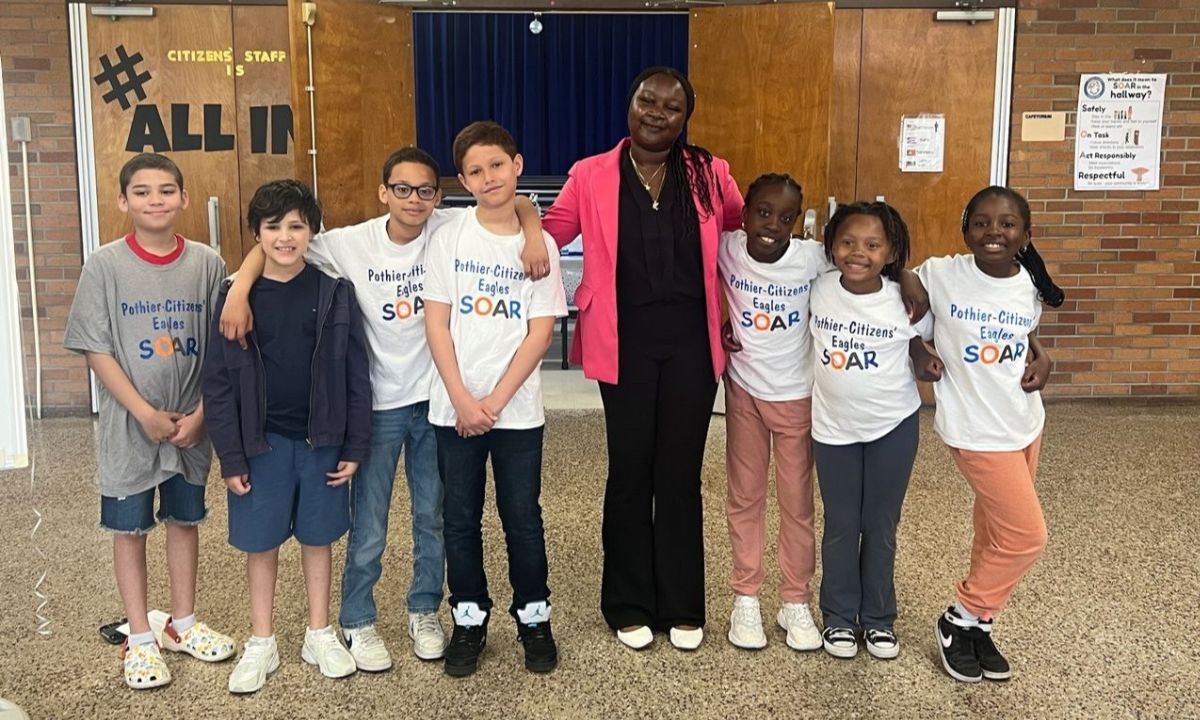
    When then-16-year old Mariam Kaba won $1 million through the Transform Rhode Island scholarship three years ago, she saw it as her opportunity to create the change she wanted to see in her nearly 45,000-person community of Woonsocket. 

    “I don’t see much positive representation from our community all the time,” Kaba said. “I was thinking ‘my scholarship won’t get picked.’ But it did … and I was able to bring something so big to my community, a community that already doesn’t have the most funding in the world.” 

    The scholarship, funded by the Papitto Opportunity Connection Foundation, asks students to answer, “if you had $1 million how would you target the lives of those in Rhode Island and how would you create change?”

    Kaba’s investments resulted in a number of youth-centered spaces and opportunities popping up across the city, including 120 calm corners in elementary classrooms to support students’ sensory functions, new physical education equipment for all Woonsocket elementary schools, job fairs, hundreds of donated books, and field trips to local colleges & universities, among others.

    Kaba, who is now a rising sophomore at Northeastern University, describes the experience of winning the scholarship as surreal.

    “It didn’t occur to me that I was the last person standing and I won $1 million,” Kaba said. “But when I won, the first thing I thought was, ‘OK, let’s get to work. I’m given this opportunity to help improve my community. What steps can I take? And when does the groundwork start happening?’”

    When a teen leads, adults follow

    Bringing Kaba’s vision to life meant working alongside adults with experience in project management and community engagement while keeping up with her student life at Woonsocket High School.

    “In high school, I managed both classwork and extracurriculars like student council, being a peer mentor and participating in Future Business Leaders of America,” Kaba said. “Balancing those things with my work with the scholarship came easy to me.”

    Kaba partnered with community organizations across the state like nonprofit Leadership Rhode Island. This collaboration helped lay out a roadmap for Kaba’s proposal, manage the scholarship funds and coordinate meetings with community leaders. 

    The winning student also sits on the board of the Papitto Opportunity Connection Foundation for a year. This provides an opportunity for them to build their network and connect with leaders in Rhode Island. 

    High schoolers can make a difference through spaces and support like this, Kaba said, and also advises teens interested in engaging with their community to “not be afraid to start off small.”

    This “small” gesture, Kaba added, can be as simple as gathering a group of friends to organize a community cleanup or starting a school club or Instagram to advocate for something they’re passionate about.

    “Starting off small is going to give you those steps to leading these big impactful projects,” Kaba said.

    The feedback Kaba received on her community investments, primarily from peers, community members and teachers in Woonsocket, was overwhelmingly positive.

    “People told me, ‘I was able to go to this job fair and I got connected to this job,’ or, ‘I’m going to the Harbour Youth Center to get items from the food pantry you created and it’s been helping my family a lot,’” Kaba said. “Community organizations reached out to me to let me know they would love to find a way to work together and do their part to take action too.”


    Get stories like these delivered straight to your inbox. Sign up for The 74 Newsletter
    Source link

  • How no-strings cash changed the lives of teens

    How no-strings cash changed the lives of teens

    NEW ORLEANS — Kapri Clark used the $50 to help pay for her braces. Lyrik Grant saved half of it, and used the rest for dance classes. Kevin Jackson said he squandered the cash on wings, ride shares for dates and some DJ equipment he later tossed.

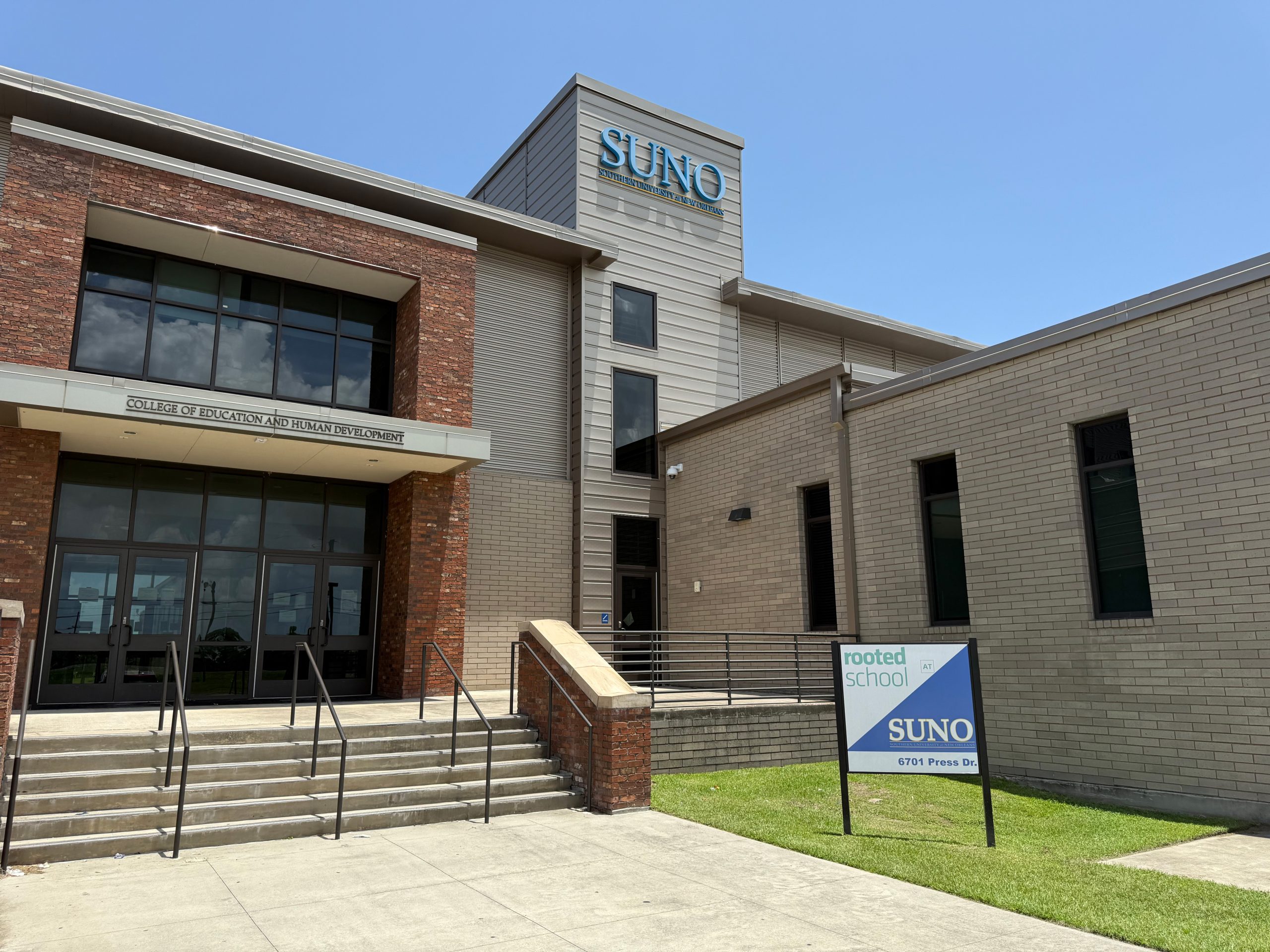
    For the past five years, Clark, Grant, Jackson and hundreds of high schoolers in New Orleans have shopped — or saved — as part of a project to explore what happens if you give cash directly to young people, no strings attached.

    “That was the most helpful thing ever,” said Clark, now a student at the University of Louisiana at Lafayette, who said she could still use that extra cash.

    “The $50 study,” as it’s known, began at Rooted School, a local charter school, as an experiment to increase attendance. The study has since grown to eight other high schools in the city, as well as Rooted’s sister campus in Indianapolis, with students randomly selected to receive $50 every week for 40 weeks, or $2,000 total. By comparing their spending and savings habits to a larger control group, researchers wanted to figure out whether the money improved a teen’s financial capability and perception of themselves. They also wanted to know: Could the cash boost their grade-point averages and reading scores?

    Now, as the experiment expands to Washington, D.C., and perhaps Texas, a final report of the $50 study suggests a little bit of spending cash can make a difference in young people’s lives.

    The report, released Tuesday, shows students who received the cash payments were slightly more likely to attend school than those who didn’t. Academic performance did not differ between the groups. But financially, the extra cash helped students acquire stronger long-term planning skills and familiarity with savings accounts and other financial products. They ended the study, on average, with $300 saved away — a 15 percent savings rate, triple the national average for American adults.

    “When young people are given the opportunity to manage money in low-stakes environments, they build the habits that shape long-term financial health,” said Stacia West, an associate professor at the University of Tennessee, Knoxville and co-founder of the Center for Guaranteed Income Research, which partnered with the Rooted School Foundation to run the study. “The short-term habits we’re seeing are laying the foundation for lifelong financial capability.”

    Related: A lot goes on in classrooms from kindergarten to high school. Keep up with our free weekly newsletter on K-12 education.

    Across the United States and the globe, hundreds of communities have tinkered with some form of universal basic income, or UBI, a social welfare program that provides people with regular cash payments to meet their needs. Direct cash transfer programs like the $50 study or the child tax credit for families are similar, but they often provide smaller amounts and target specific populations to boost a person’s income. Many studies have linked UBI to financial stability and better employment and health outcomes.

    In the U.S. and Canada, researchers have found links between cash transfer pilots that focus on low-income families and better test scores and graduation rates for their kids. So far, though, few experiments have targeted young people or examined how the programs influence their lives specifically.

    Talia Livneh, senior director of programs at the Rooted School in New Orleans, poses for a portrait on the school grounds. Credit: Daniella Zalcman for The Hechinger Report

    “There’s a deep, deep distrust that we adults have of young people,” said Jonathan Johnson, CEO of the Rooted School Foundation, which operates the network’s four charter schools. “That distrust is to their detriment.”

    In New Orleans, roughly 4 in 5 of Rooted students come from economically disadvantaged families, and during the pandemic, many struggled to prioritize school. Some students skipped class to provide child care for their working parents, or because they needed to work themselves, according to Johnson. With some seed funding from a local education nonprofit, Rooted started a “micropilot” to test whether cash could help students make ends meet and get themselves to school.

    The original cohort included 20 students, half of whom received the $50 payment. In that micropilot, those receiving the cash saw their material wellbeing improve, meaning their family could more easily afford rent or utilities, and they gained skills around setting financial goals.  Rooted added students from its Indianapolis campus and another high school in New Orleans, G.W. Carver. And for their final report released this week, researchers sifted through the spending and survey data from 170 students who received the cash payments and 210 students who did not.

    The two-year report found students in the treatment group attended 1.23 more days of school, and  spent close to half their funds on essentials like food and groceries. The report also noted that 70 percent of all students at the participating schools qualify for subsidized meals, suggesting “this spending may reflect efforts to meet immediate nutritional needs.” One 12th grader in a survey mentioned using the money to feed their siblings.

    Kapri Clark recalled waiting every Wednesday morning for the $50 deposit to appear in her banking app. And every Wednesday afternoon, during her senior year at Carver High School, she put that money toward her $200 bill for braces she covered out of pocket.

    She braided hair to cover the rest, and still books clients when she has time in between her studies to become a nurse at the Lafayette campus. Even in college, Clark can see the need for some supplemental income for herself and her peers.

    “I make enough to take care of myself, but I watch every dollar,” said Clark. “There’s a lot of people struggling in life to eat, to live. Think if they got kids.”

    Read Irvin, chief of staff for Collegiate Academies in New Orleans, a network of five charter high schools that includes Carver High, said the $2,000 had provided the extra incentive a few students needed to stick it out until graduation. “That’s incredibly impactful for their life trajectories,” she said.

    Related: How to help young kids: Give their parents cash

    In January 2024, the city of New Orleans invested $1 million to bankroll another extension of the study, as part of an economic mobility initiative that tapped federal Covid relief funding. During the pandemic, a skyrocketing murder rate and spike in overall crime had convinced the city to help more residents, especially young people, find stability.

    “Research shows that people who are economically stable are less likely to commit crime,” said Courtney Wong, the city’s deputy director of economic development.

    The city funding not only expanded the $50 study to nine high schools, it also set a longer timeline for the research: About 800 seniors who participate will have their data tracked for 18 months after their graduation.

    A former high school teacher and administrator, Wong said $50 could have made a difference in the lives of many of her former students.

    “This targets young people in that perfect moment,” she said. “They’re in the right spot where even a little amount of help could have big, positive impacts before issues of crime or unemployment or things like that even come up.”

    Researchers also found students who received the $50 reported greater agency. They felt more control over their finances and more confidence about making long-term financial decisions. Students, according to the report, aligned their spending to future goals such as college prep classes and getting a driver’s license.

    Lyrik Grant, a rising junior at Carver High School, is the second-youngest of six kids with two working parents. She could ask them for help, but the $50 allowed Grant to afford the tights and tops she needed for dance class on her own. The money helped cover a college entrance exam, which she aced, and Grant wants to learn how to drive soon.

    “My first thought was: What am I going to do with all this money?” Grant said, adding that the cash helped some of her classmates find financial stability. “Children don’t always want to spend their parent’s money, and some parents don’t always have money to give them.”

    Still, for some students, the money wasn’t exactly life-changing. Irvin of Collegiate Academies said many used the cash to “just be teenagers.”

    That was true for Kevin Jackson, a rising junior at Rooted School New Orleans.

    “It’s cool to get free money,” he said. “I was spending it on the TikTok shop: posters, keyboards, lights — stuff I liked, not stuff I actually needed.”

    Related: All-charter no more: New Orleans opens its first traditional school in nearly two decades

    Despite the studies that show a positive impact from UBI, many Americans appear skeptical of the idea of a federal program that gives unconditional financial support to people. Aditi Vasan, a pediatrician and researcher at PolicyLab at the Children’s Hospital of Philadelphia, said skeptics often worry about recipients using public dollars for drug use or other illicit behavior, even though the data does not support that.

    Still, that fear will likely keep any large-scale cash transfer program from being adopted in the United States any time soon, she said.

    “That concern exists certainly for cash transfers in general but might be particularly magnified for teens,” Vasan said. “We’ve not seen that play out in the evidence from the quality studies that have been done.”

    Next year, in Washington, D.C., the nonprofit Education Forward will fund a pilot of the $50 study with 40 high schoolers. The Rooted school network resumed talks, meanwhile, to take the study to neighboring Texas, after state lawmakers earlier this year failed to pass legislation that threatened to ban local governments from adopting guaranteed income programs.

    Talia Livneh, senior director of programs for the Rooted School Foundation, said the politics may need to catch up to the research.

    “I don’t think what we’re doing is so radical. I believe this just works,” she said. “Kids don’t lack character. They lack cash,” Livneh added. “They deserve deep, deep trust that students and people know what’s best for them.”

    It’s been four years since Vernell Cheneau III received the $50 for 40 weeks while a student at Rooted in New Orleans, and his economic life isn’t easy. He struggled for months to find part-time work in his hometown. But on a recent summer morning, the same day he finally received a job offer, Cheneau recalled what he learned from the study.

    Vernell Cheneau III (left) with two other students who participated in the cash transfer program at Rooted School, in New Orleans.
    Credit: Courtesy of Rooted School

    “You learn that money goes fast, especially if it’s free,” said Cheneau, 22.

    As a student, he tried to use the money to build some credit history. Since then, he’s learned the full cost of being an adult in America: health care, fuel and maintenance for his car, getting your hair done before a new job. Cheneau has also spent that time trying to convince friends and family to support UBI.

    Most oppose giving “free” money to people, he said. “How much does it cost to feed children? Get to work? We can’t just allow people to drown.”

    “Everything costs something,” Cheneau added. “If you’re stuck in a rut, it’s expensive to restart. In this country, it’s expensive to be poor.”

    Contact staff writer Neal Morton at 212-678-8247, on Signal at nealmorton.99, or via email at [email protected].

    This story about cash transfer programs was produced by The Hechinger Report, a nonprofit, independent news organization focused on inequality and innovation in education. Sign up for the Hechinger newsletter.

    The Hechinger Report provides in-depth, fact-based, unbiased reporting on education that is free to all readers. But that doesn’t mean it’s free to produce. Our work keeps educators and the public informed about pressing issues at schools and on campuses throughout the country. We tell the whole story, even when the details are inconvenient. Help us keep doing that.

    Join us today.

    Source link

  • College Marketing: 7 Ways It Has Changed and How to Stay Ahead

    College Marketing: 7 Ways It Has Changed and How to Stay Ahead

    …and What You Need to Do to Stay Ahead

    The higher education enrollment landscape is undergoing a significant transformation, driven by shifting demographics, technological advancements, and economic uncertainty. To remain relevant and competitive, colleges and universities must adapt to these changes and develop strategies to succeed in a challenging environment. But before you can adapt, one must first look at some of the major innovations that have disrupted how consumers engage with brands.

    Are you engaging students the way they engage with other brands?
    1. Short form video content: Platforms like TikTok, Instagram Reels, and YouTube Shorts have dominated, offering snackable content that informs, entertains, and inspires within seconds. Influencers (see #5) use this medium to tell stories, drive trends, and engage consumers on behalf of sponsored brands. Students use the medium to assess campus life and inform college choices.
    2. Voice and visual search optimization: The rise of “smart assistants”and digital assistants have changed the way we engage with brands, discover products, and complete research, transactions, and more. A good digital assistant is becoming as essential as a solid logo design in marketing.
    3. AI personalization: Artificial intelligence has revolutionized marketing by enabling hyper-personalized experiences, analyzing real-time data, and predicting consumer behavior to deliver tailored content. For cash strapped institutions, it has the added benefit of allowing you to zero in on your highest potential return prospects and curate content.
    4. Augmented reality (AR) experiences: AR is transforming how consumers shop, learn, and engage with brands, creating immersive experiences that drive both engagement and sales. George Mason University developed a successful AR campus tour for transfer students, and I expect to see prospective students and their families wandering campus with branded AR glasses on campuses everywhere before long.
    5. Influencer marketing: The focus has shifted from big-name endorsements to micro- and nano-influencers, offering niche expertise and deeper connections with audiences. Universities are leveraging student influencers on campus for enrollment and advancement opportunities.
    6. Data privacy regulations and ethical marketing trends: With increasing concerns about data breaches, consumers demand transparency and ethical practices in data handling and marketing. Layer an ever changing and tightening regulatory environment and you will need solid governance and procedural guidance to ensure compliance without limiting effectiveness.
    7. Omnichannel integration: Marketers now focus on providing a seamless experience across all touchpoints, ensuring brand consistency and cohesive customer interactions. The same experience is paramount during the college search process to stand out, stay top of mind, and draw students to your engaging (AR powered?) on campus events.

    5 keys to optimizing your college marketing strategy to address these changes

    That is the how, but what about the what. A great tech stack is one thing, but the meat of your strategy and message must center around what is central to your mission, your goals, and your prospective student audience.

    1. Gear your strategy to your prospective students

    As the student population becomes increasingly diverse, institutions must develop targeted recruitment and communication strategies to engage with underrepresented groups, including Hispanic, African American, and first-generation students. According to RNL’s most recent study of undergraduate marketing and recruitment practices, 51% of four-year private, 42% of two-year public, and 37% of four-year public institutions have specific strategies for recruiting Hispanic students. The vast majority of institutions also do not have materials and communications available in Spanish. Depending on your locality, these populations may be your best bet for stable growth, but without a specific marketing strategy, you will miss the opportunity.

    2. Assess the suite of marketing tools, vehicles and assets at your fingertips

    How cohesive, consistent and connected are they? Students use a variety of resources to learn about colleges and universities, from websites and social media to videos and printed brochures. Institutions must adopt a balanced, omnichannel approach to marketing, leveraging multiple channels to reach students at various stages of their decision-making process.

    3. Plug the leak

    As the demographic cliff approaches, institutions must prioritize student success and retention strategies. A recent study found that public colleges and universities use market research and print/electronic campaigns to impact student yield and summer melt, but there is room for improvement in collecting data to inform retention policies. (Our report on retention practices provides very helpful benchmarks and ideas for student success strategies.)

    4. Improve the experience and reduce the stress

    The college search process can be a significant source of stress and anxiety for students. Institutions can help mitigate this by providing resources and support services, such as mental health counseling and academic advising, to help students manage their emotions and stay on track.

    5. Embrace change

    To succeed in a rapidly changing environment, institutions must be willing to adapt and innovate. This includes investing in technology, such as AI-powered enrollment management systems, and exploring new revenue streams, such as online and graduate programs.

    College marketing is evolving at an unprecedented pace. How can you keep up?

    To remain competitive, colleges and universities must embrace strategies that prioritize personalization, authenticity, and innovation. From leveraging short-form video content and AI-powered tools to integrating augmented reality experiences and omnichannel approaches, institutions have a wealth of opportunities to connect with prospective students in meaningful ways.

    However, success will require more than technology; it demands a deep understanding of the diverse needs and aspirations of the modern student population. By aligning marketing efforts with institutional goals, fostering inclusivity, and enhancing the overall student experience, higher education institutions can not only navigate these changes but thrive in a rapidly shifting environment. Now is the time to adapt, innovate, and future-proof strategies to ensure sustainable growth and relevance in the years ahead. Reach out and we can connect on your marketing strategies. We will find a time to talk about your opportunities to make sure your marketing efforts resonate with students and reach them in the channels they use.

    Talk with our marketing and recruitment experts

    RNL works with colleges and universities across the country to ensure their marketing and recruitment efforts are optimized and aligned with how student search for colleges.  Reach out today for a complimentary consultation to discuss:

    • Student search strategies
    • Omnichannel communication campaigns
    • Personalization and engagement at scale

    Request now

    Source link

  • You may not know this example of translation research, but it will have changed your life . . .

    You may not know this example of translation research, but it will have changed your life . . .

    Arguably, the most recognisable example of translational research in recent years was the swift development and rollout of the COVID-19 mRNA vaccine. The world was waiting for this research to meet its real-world ambition. Many members of the public would recognise that some of this research was undertaken at Oxford University and, with some exceptions, would also recognise the beneficial impact of the vaccine for both individuals and society. Following the rollout, there was even a public discussion that touched upon the idea of interdisciplinarity. How could the benefits of the COVID-19 vaccine be communicated to communities who felt reluctant to have the jab or distrustful of medical science?

    However, there was another piece of research that was translated into real-world effect with serendipitous timing.

    In 2013, Professor Andrew Ellis was working at the Aston Institute of Photonic Technologies. Ellis had previously worked at BT, where his observations and experience suggested that the ‘capacity’ needed in the telephone infrastructure had and would increase consistently over time and was consistently underestimated. Ellis recalls an ongoing refrain of ‘surely we have enough capacity already’. This continued to be true once the copper phone lines were used to deliver data for home internet usage.

    At this point, most residential properties were on ADSL (Asymmetric Digital Subscriber Line) internet connections. That is where copper wires are used to deliver broadband internet. Homes were typically working at speeds of around 8 megabits per second (Mbps).

    The Government had developed a strategy setting out that the majority of residential properties should be able to work at speeds of ‘at least 2 Mbps per second and 95% of the UK receiving far greater speeds (at least 24 Mbps) by 2017’. Fibre broadband was beginning to be rolled out, which used fibre optic cables to transmit data much more quickly. However, these fibre optic cables were generally only used to reach the street cabinet, with copper wires connecting the street cabinets to individual homes, restricting the broadband speed that could be achieved.

    From his previous work, Ellis could see that this ambition was neither competitive internationally nor of sufficient use long-term when demand for emerging applications was taken into account. He demonstrated that capacity was falling well below the predicted need and that the UK was slipping down the league table for connectivity in economically developed countries. Estonia, Poland, Korea and Norway were all streaking ahead.

    Ellis contacted MPs working on this strategy via the Industry and Parliament Trust. Two breakfast meetings and a dinner meeting were held to discuss the lack of ambition in the strategy. However, only the fortuitous attendance of a senior civil servant at the dinner meeting led to a policy breakthrough. Further momentum and publicity were generated by a meeting organised by the Royal Society to discuss ‘Communication networks beyond the capacity crunch’, including a presentation by Dr Andrew Lord.

    Ellis was lobbying for an increase in ambition. There was resistance to this as there was no additional money to spend on improving infrastructure outside of the spending review cycle. Ellis convinced the Government that no additional spending was needed to change the ambition. Changing a number in a policy document wouldn’t (on this occasion) cost the government any more money. (The terms ‘pure-fibre’ and ‘full-fibre’ were also coined at these meetings, meaning using fibre optics cables to the street cabinet and from the cabinet to individual homes.)

    With the Government changing their ambition, providers such as Clear Fibre, Gigaclear and BT Openreach would need to improve the infrastructure to deliver faster broadband to our homes.

    It was estimated that upgrading the whole UK to full fibre would cost £40-60 billion as part of the EU-funded Discus project. Research by the AiPT team showed that it would be closer to £8-10 billion if the network was reconfigured according to their research proposals, a one-for-one replacement of network equipment from copper to fibre-based ones. Further, research demonstrated that fibre is also more energy efficient.

    Optical networks were using about 2% of the electricity in the developing world. (Ellis explained that BT objected to this figure, stating that it was, in fact, 1.96%!) Not only was a full-fibre network faster, it was also more energy efficient. (This now pales in significance to the energy consumption that will increasingly be needed to power AI data centres.)

    BT began rolling out full-fibre broadband to 80% of the UK. In 2019, BT hired heavily for this work, much of which was completed in the first few months of 2020. The increased activity and presence of BT vans helped fuel the 5G coronavirus conspiracy!

    In a moment of serendipity, this meant that by the 23rd of March 2020, when the then Prime Minister, Boris Johnson, announced the first lockdown, there was enough access capacity for many of us to begin working at home. As we got used to Zoom and Teams, multiple people were using video calls in one household for work and homeschooling. Not only did this allow for a relatively smooth transition to remote working, but it allowed our children to continue accessing their education and for us to keep in touch with friends and family (Zoom quiz, anyone?) The societal shift to remote working, prompted by lockdowns but enabled by full-fibre, remains both contested in terms of productivity and profound in terms of impact.

    I asked Andrew what challenges he faced when trying to inform industry and policy of his research. He noted three key barriers:

    1. To impact Government policy, one needs to know the right person to talk to. There must be barriers to prevent a free-for-all lobbying system of civil servants. However, policy institutes, research impact centres and organisations such as the IPT should be able to facilitate connections when this is helpful to both parties.
    2. The second – is the structure of academic contracts. New ideas often come from, and are certainly implemented by, PhD students and Research Assistants. However, given that most research assistants are on two- or three-year contracts, their eyes are firmly on improving their CV to land the next contract. This often leads them to focus almost entirely on publications. To build good links with industry and engage in long-term strategy, longer-term job contracts are needed.
    3. Similarly, he feels a strong tension between metrics, such as 4* papers, required for REF and rapid publication of results in outlets read or attended by decision-makers in industry, where solutions are often required in months rather than years

    Whilst the success of the COVID vaccine development may have made global headlines, the work of the AiPT’s team (Andrew believes that others lobbied on the same topic, including Professor Dimitra Simeonidou at the University of Bristol, Professor Polina Bayvel CBE at University College London and Professor Sir David Payne at Southampton University) quietly allowed many of us to continue working and to be connected to our colleagues, friends, and family throughout the pandemic. Further, as Professor Sarah Gilbert, Professor of Vaccinology at the Jenner Institute and lead scientist on the vaccine project, explains, the ability to work remotely with trial volunteers (giving them information via video instead of in-person presentations) and collaborating with colleagues across the globe was vital in the vaccine production itself.

    Source link

  • Law professor challenges university after campus ‘shooting’ hypothetical changed in lesson plan

    Law professor challenges university after campus ‘shooting’ hypothetical changed in lesson plan

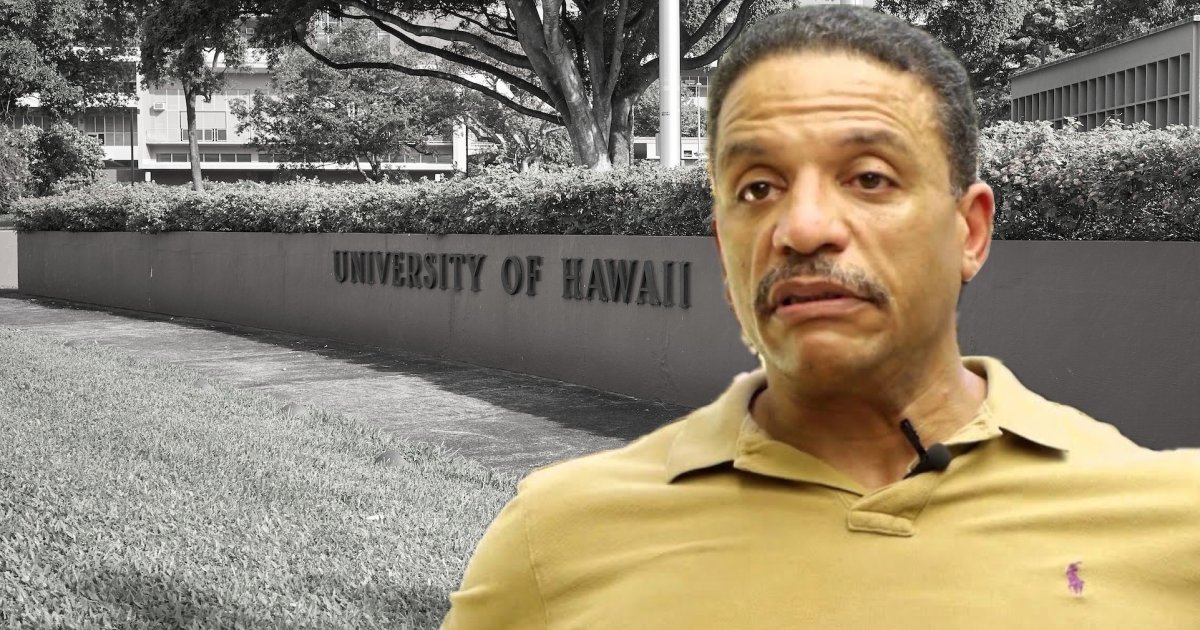
    Those concerned that law schools are shying away from teaching some areas of law to avoid controversy just got more reasons to worry, this time courtesy of the University of Hawai’i at Manoa and its absurd treatment of law professor Kenneth Lawson.

    Lawson, an accomplished faculty member at UH, used a simple hypothetical to teach the idea of “transferred intent,” a legal concept invoked when a defendant intends to harm one person, but ends up harming a second person instead. As is common in law school, Lawson offered a hypothetical to convey this idea: Imagine if a dean at his institution tried to shoot another dean, missed, and hit Lawson instead.

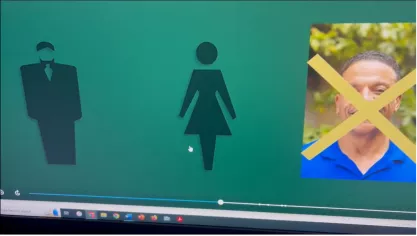
    Here’s a screenshot from part of his lesson:

    Those who have been to law school will understand that using campus figures to illustrate hypotheticals is not at all unusual, and is intended to add a bit of levity and grounding to what can be pretty esoteric topics.

    But when an anonymous student filed a complaint, calling the hypothetical “extremely disturbing” and citing the context of some shootings near the university’s campus, administrators summoned Lawson to a meeting near the end of last semester. Though they acknowledged he had not violated any university policy, they nevertheless mandated that he remove the thought experiment from a posted video of the class — or they would change it for him

    The ability of administrators to forcibly alter course materials is positively ripe for abuse.

    Lawson hadn’t thought twice about including the example, and had been using the example for years, not simply because it wasn’t unusual but because the protections of academic freedom give faculty wide latitude in determining how to approach controversial or potentially difficult material. When Lawson refused to alter the video of his presentation, given that he had not violated any policy, and using the hypothetical was well within his academic freedom rights, administrators just went on the school’s online curriculum system, where faculty submit presentations, to make the changes themselves.

    Remember: these changes were being made because, supposedly, some found a hypothetical of campus figures being shot to be disturbing. So this is what the administration came up with.

    Slide with an image of law professor Ken Lawson alongside generic man/woman icons

    You will note that there is still a campus figure on that slide, and it’s the person who was (hypothetically) shot: Professor Lawson. Only the deans have been removed. It seems that at UH, some hypothetical victims are more equal than others.

    There’s no denying that this is silly, and many will be tempted to chalk it up as just more campus craziness. But there’s a disturbing wrinkle here, which is that the ability of administrators to forcibly alter course materials is positively ripe for abuse. The university’s administrators have granted themselves unilateral authority to interfere with faculty teaching decisions, despite the fact that UH is a public institution bound by the First Amendment, which views academic freedom, which protects that right, as a “special concern.” If administrators can “memory hole” bits and pieces of curricula they don’t like, even when it violates no rule, where does it stop?

    UH still has an opportunity to do the right thing. It’s easy, too — all it has to do is step back and let faculty teach, and save the video editing for film class.

    FIRE wrote the university on Dec. 13, urging it to reverse course and restore Lawson’s original hypothetical. The university responded in early January, declining to substantively engage with our concerns or detail specific issues with our argument. Lawson, and all UH students, deserve better. As our second letter states: 

    FIRE’s concerns are only amplified by the fact that this alleged capitulation to sensitivity is occurring in a law school. To receive a proper education in the law, students will inevitably encounter difficult topics like sexual assault, homicide, physical assault, domestic violence, and may be faced in school and in their careers with descriptions of personal injuries far more graphic than those in Lawson’s hypothetical. Where do UH administrators draw the line regarding their interference in faculty instruction if they feel free to operate under a nebulous standard of protecting students from “disturbing and harmful” material? 

    Lawson has submitted a grievance about the situation, so UH still has an opportunity to do the right thing. It’s easy, too — all it has to do is step back and let faculty teach, and save the video editing for film class.

    Source link