Tag: Chaos

  • Universities Are Curators of Knowledge, Not Chaos (opinion)

    Universities Are Curators of Knowledge, Not Chaos (opinion)

    In a year already defined by polarization and violence, the assassination of Charlie Kirk at Utah Valley University plunged higher education into crisis. The killing of one of the nation’s most prominent conservative activists on a college campus has been weaponized by political factions, prompting administrative crackdowns and faculty firings. What were once familiar battles in the campus culture wars have escalated into something more dangerous: a struggle over the very conditions of inquiry, where violence, scandal and political pressure converge to erode academic freedom. And now, a proposed “compact” with higher education institutions would seek to condition federal funding on requirements that colleges ensure a “broad spectrum of viewpoints” in each academic department and that they abolish “institutional units that purposefully punish, belittle, and even spark violence against conservative ideas.”

    At the center of this struggle lies a persistent illusion: that the university should provide a platform for “every perspective.” Critics claim campuses suppress conservative voices or silence dissenting students, arguing institutions should resemble open marketplaces where all viewpoints compete for attention. Enticing as this rhetoric may be, the expectation is both unworkable and misguided. No university can present every possible outlook in equal measure, nor should it. The mission of higher education is more demanding: to cultivate, critique and transmit knowledge while attending to perspectives that have shaped history and public life. The contrast between an endless marketplace of opinion and the rigorous pursuit of knowledge is crucial to understanding what universities are for.

    Karl Mannheim once distinguished between ideology and knowledge, cautioning against their uncritical conflation. That warning remains essential. Universities are not platforms for unchecked ideology but institutions dedicated to showing how knowledge emerges through observation, interpretation, critique and debate. Perspectives matter, but exposure alone is insufficient; they must be contextualized and weighed against evidence. Free speech and academic freedom overlap but are not the same. Free speech protects individuals from state repression in public life. Academic freedom protects scholars in their pursuit of inquiry and ensures students gain the tools to test claims critically. The distinction is central: The university has an obligation not to amplify all voices equally, but to cultivate discernment.

    This does not mean shielding students from offensive or discredited ideas. On the contrary, a serious education requires grappling with perspectives that once commanded influence, however abhorrent they may now appear. Students of American history must study the intellectual justifications once advanced for slavery—not because they deserve validation, but because they shaped institutions and legacies that continue to structure society. Students of religious history should encounter theological controversies that once divided communities, whether or not they resonate today, because they explain enduring traditions and conflicts. To include such perspectives is not to offer them equal standing with contemporary knowledge, but to illuminate their historical weight and consequences.

    Confusing exposure with endorsement—or opinion with knowledge—risks leaving students adrift in noise. Universities are not megaphones for any thesis but arenas where students learn how to evaluate sources, test claims and trace the consequences of ideas over time. Academic freedom does not mean a free-for-all. Instead, it allows scholars to curate, critique and contextualize knowledge—including ideas that are controversial, even offensive or (as in the study of slavery or fascism) historically consequential. Education that multiplies opinions without cultivating methods of judgment undermines critical capacity; education that fosters discernment equips students to enter public debates wisely and responsibly.

    Recent events in higher education reveal how fragile these principles have become. Violence itself intimidates expression, but administrative and political overreaction magnifies the threat. Faculty have been disciplined for social media posts. In Texas, a lecturer was dismissed for teaching about gender identity. In California, University of California, Berkeley administrators released to federal authorities the identities of more than a hundred students and faculty whose names appeared (as accused, accuser or affected party) in complaints about antisemitism. Faculty watch colleagues punished unjustly, while students—especially international and marginalized ones—face surveillance and potential charges. Across the country, dissent is mistaken for hate, controversial speech treated as threat and scandal avoidance prioritized over defending expressive rights.

    Academic freedom has long enjoyed special constitutional protection, granting professors wide latitude in teaching and research. But this protection depends on public trust: the sense that higher education fosters critical inquiry rather than partisan indoctrination. When professors behave as ideologues or exercise poor judgment in public, that trust erodes. Yet the greater danger comes not from individual missteps but from capitulating to the demand that every perspective deserves equal standing—or from letting violence and political pressure set the boundaries of what may be said. Higher education should not resemble a bazaar of endless opinion but a community dedicated to the disciplined creation, transmission and critique of knowledge. By training students not to hear every voice equally but to weigh evidence and evaluate claims, universities preserve both their scholarly mission and their democratic role. Institutions that cave to intimidation, or that mistake neutrality for abdication, abandon their responsibility to defend inquiry.

    Equally important, universities serve as legitimating institutions. To place a perspective within their walls signals that it merits serious study, that it has crossed the threshold from private belief to public knowledge. This conferral of legitimacy makes curatorial responsibility critical. Treating perspectives as interchangeable voices distorts the university’s purpose, but so does admitting or excluding them solely under political pressure. Both compromises undermine credibility. External actors understand this and exploit universities’ legitimating authority, pressing institutions to provide platforms that elevate discredited or dangerous views into claims of scholarly validation. The responsibility of the university is not to magnify every claim in equal volume but to steward the line between ideas worth engaging and those demanding correction or refusal. Only in this way can institutions preserve their academic mission and their democratic contribution.

    The way forward is neither unbounded opinion nor fearful silence. It is the principled defense of creating, critiquing and reimagining knowledge through inquiry guided by evidence and protected from violence and censorship. To retreat from this responsibility is to weaken not only higher education but democracy itself.

    Gerardo Martí is the William R. Kenan Jr. Professor of Sociology at Davidson College.

    Source link

  • Bringing C.H.A.O.S to Chaos: Syllabi with an AI Usage Policy – Faculty Focus

    Bringing C.H.A.O.S to Chaos: Syllabi with an AI Usage Policy – Faculty Focus

    Source link

  • Bringing C.H.A.O.S to Chaos: Syllabi with an AI Usage Policy – Faculty Focus

    Bringing C.H.A.O.S to Chaos: Syllabi with an AI Usage Policy – Faculty Focus

    Source link

  • School districts grapple with ‘budgetary chaos’ in wake of federal funding freeze

    School districts grapple with ‘budgetary chaos’ in wake of federal funding freeze

    This audio is auto-generated. Please let us know if you have feedback.

    The U.S. Department of Education’s withholding of $6.2 billion in federal K-12 grants has local and state school systems scrambling to figure out how to make up for the budget shortages. It has also caused a swell of advocacy from families, lawmakers, educators and others across the nation.

    The withheld funds for fiscal year 2025 were expected to be released by the Education Department July 1. Programs at risk due to the funding hold include English learner services, academic supports, after-school programming and professional development. 

    The frozen funds represent at least 10% or more of states’ overall K-12 federal revenues if the money is not distributed, according to the nonpartisan Learning Policy Institute.

    At the local level, superintendents and principals are voicing concern about how the funding freeze will impact their school services, particularly those that serve English learners, homeless students and students from low-income families. 

    Chase Christensen, principal and superintendent of the 80-student Sheridan County School District #3 in rural Clearmont, Wyoming, said his district was expecting $30,000 in Title II and IV funding that is being withheld. 

    The district had nearly finalized its roughly $4 million budget for the upcoming school year when it learned of the federal funding freeze. It then adjusted the budget to remove those federal funds and is making up the difference by leaving a staffing position vacant.

    Although the budget adjustment means student services under those title programs can continue, Christensen said “every dollar of federal funding for education is impactful” at the individual student level.

    “When these funds are pulled, especially this late in the game for budget planning and everything else, students are going to be the ones that lose out,” Christensen said.

    Nationally, bigger districts have the largest funding gaps, according to a New America analysis of data from 46 states that had available funding figures. Those districts include Los Angeles Unified School District ($82 million), Florida’s Dade County School District ($38 million), and Nevada’s Clark County School District ($22 million).

    Advocacy groups and policymakers are calling on the Trump administration to restore the funds. The Boys and Girls Clubs of America, a nonprofit that supports afterschool programs, said the impact of the blocked funds will be “swift and devastating,” in a statement from President and CEO Jim Clark. 

    Clark said 926 Boys and Girls Clubs across the country could close, and 5,900 jobs would be lost if the funding is not released. “Afterschool and summer learning programs are cornerstones of academic success, public safety, and family stability for millions of young people — but right now, we stand at a dangerous tipping point,” Clark said. 

    The National English Learner Roundtable, a coalition of more than a dozen national and state-based organizations supportive of English learner services, said in a Thursday statement, “This unprecedented move by the Department has blindsided schools that have always been able to rely on these funds to support the start of the school year, and has created budgetary chaos for nearly every K-12 school district.” 

    On Thursday, 150 Democratic House lawmakers sent a letter to U.S. Education Secretary Linda McMahon and White House Office of Management and Budget Director Russell Vought demanding the title funds be released.

    This late-breaking decision, which provided no timeline for which states can expect a final decision, is leaving states financially vulnerable and forcing many to make last minute decisions about how to proceed with K12 education in this upcoming school year,” the letter said.

    The funding hold has already led to staff layoffs, program delays and cancellations of services, the House members said.

    Spending under review

    The withheld funds were appropriated by Congress and approved by President Donald Trump earlier this year. States expected to gain access to the monies starting July 1, as routine. But the day before, on June 30, the Education Department told grantees not to expect the funds while it conducts a review and referred questions to OMB.

    The specific grant funding being withheld includes:

    • Title II-A for professional development: $2.2 billion.
    • Title IV-A for student support and academic enrichment: $1.4 billion.
    • Title IV-B for 21st Century Community Learning Centers: $1.3 billion.
    • Title III-A for English-learner services: $890 million.
    • Title I-C for migrant education: $375 million.

    On Thursday, in a statement to K-12 Dive, OMB said no funding decisions have been made and that it is conducting a “programmatic review of education funding.”

    The office also said, “initial findings show that many of these grant programs have been grossly misused to subsidize a radical leftwing agenda.”

    OMB and the Education Department have not indicated a timeframe for the review of the frozen federal funds.

    Source link

  • Having trouble keeping up with the chaos of the student loan system? (Student Borrower Protection Center)

    Having trouble keeping up with the chaos of the student loan system? (Student Borrower Protection Center)

    Are you having trouble keeping up with the chaos of the student loan system? Don’t worry; we got you. There’s a lot going on right now and we’re here to break it all down. Here are some of the most pressing things that happened this week.

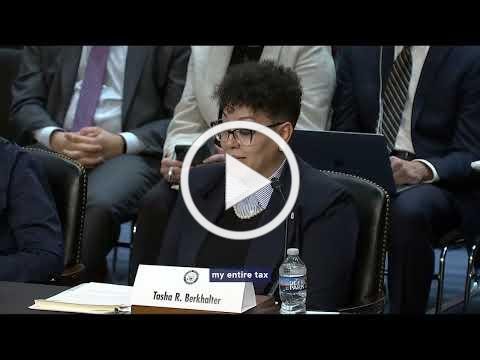
    On Tuesday, Senator Patty Murray (D-WA), the Ranking Member of the U.S. Senate Appropriations Committee and senior member of the Senate Health, Education, Labor and Pensions (HELP) Committee chaired an education forum to spotlight the Trump Administration’s radical effort to dismantle the U.S. Department of Education (ED). Tasha Berkhalter, a U.S. Army veteran and student loan borrower who had her debt discharged by the Biden Administration after being defrauded by a predatory for-profit college, gave powerful testimony at the hearing.

    Source link

  • How Leaders Can Chart a Path Through the Chaos (opinion)

    How Leaders Can Chart a Path Through the Chaos (opinion)

    The pressures on higher education leaders and their institutions have intensified with the new U.S. presidential administration’s agenda. We all became familiar with uncertainty as a result of the pandemic, but this new series of policy mandates and legal challenges creates an even more ambiguous environment. Higher education’s basic foundations, operating systems, cultures, values and structures are being challenged, which implies systemic change may be required.

    Leading systemic change is difficult enough in a less demanding environment. In this one, higher ed leaders will need tools and resources that can help them strategically chart a path through the chaos. They will need advice about how to adapt and continue important work that may be challenged by current executive orders, as well as advice about how to navigate the sheer volume of those orders.

    Leaders can be more successful adapting and strategizing if they do so in ways that honor their unique contexts. Context variously creates opportunities or presents barriers that influence the actions leaders may take. Therefore, it is important for leaders to step back for a few moments and “get on the balcony,” as Ronald A. Heifetz, Marty Linsky and Alexander Grashow put it.

    While many leaders may not think they have the time to do this, it is critically important they take the time to understand the complexities of the current situation so as not to overreact, react too quickly or react incorrectly. For example, a leader responding to a recent executive order may move quickly to announce program and office closures, but without time to consider options and understand context, this quick action may have a greater negative impact than some other, more strategic approach, one that does not compromise institutional integrity.

    Leaders may also find they have levers available to them that are important to identify and use strategically. For example, partnerships with donors or grant opportunities are great levers to not only achieve strategic priorities but also provide relief for shortfalls that may result from the current political climate.

    One way leaders can “get on the balcony” is to dive into their context and ask key questions with their leadership teams. This analysis will illuminate aspects of the leadership landscape that perhaps weren’t fully realized, highlight opportunities and fill in the details of challenges they are facing. Important categories of context to analyze are institutional mission; campus culture; politics, leadership and governance; human capital and capacity; physical, financial and technological resources; and externalities.

    The final category of externalities may be of particular relevance right now. This category refers to anything happening outside the university, from local community issues to state and federal policies. It goes beyond state appropriations and budgets to include social, political and economic factors. As leaders consider their external environment, here are some questions they can use to help them identify opportunities for and barriers to change, as well as levers they can use to inform the actions they can take:

    1. Are there state or federal policies or programs that are related to the change you are trying to achieve?
    2. What initiatives, organizations or businesses in your community might have a stake in this change?
    3. If your campus is public or part of a state system, are there messages, policies and priorities that can be drawn on to support changes?
    4. Is your campus a member of a national association that has initiatives you might participate in that will help you advance your change or gain momentum and support?
    5. Are there state, federal or philanthropic organizations that have grant programs aligned with your change goals? Do you have any major donors that can be engaged in your change project to support your goals?

    Let’s see how this exploration might help leaders chart a strategic path forward through the current climate of chaos and uncertainty. Leaders might identify some challenges with respect to their state or federal policy environment that present barriers. For example, in states that have defunded diversity efforts, universities have less funding to accomplish their goals of creating more inclusive environments to serve all students. However, they may find an opportunity to participate in a national project sponsored by an association that provides them the time and space to reconfigure their structures and programs in ways that would still allow them to reach their goals.

    By thinking through the philanthropic landscape, institutional leaders might find that there are donors who share a passion for inclusivity and thus can be cultivated as supporters of programmatic initiatives. Leaders might also undergo a search to identify possible grants or foundation funders that align with campus goals. These types of funding mechanisms are useful levers for creating a change agenda that allows for continuation of the mission despite the initial challenges.

    Identifying the opportunities and barriers is the first step towards strategic action. Let’s dive into the next step by looking closely at leader “moves.” If we focus on the opportunity of participation in a national project aimed at inclusion, that will involve several moves to ensure success.

    For example, the selection of a team charged with taking on this task is critically important, and getting the right set of individuals may involve thinking differently than usual. Given the current environment, it might make sense to ensure there is legal expertise on the team. It may also be especially important to assure those who are asked to lead that they will have the support of institutional leaders. Sense making and learning is another important area for action: giving people information and helping them know what is possible in the current environment is an essential leadership move at the moment.

    There are likely advocacy and political moves that also need to be made to set the stage on campus or within the state to garner additional support or prepare for potential backlash. Finally, for the team’s work to be sustained in the long term, leaders might think ahead to how they can sustain or scale the programmatic, cultural and/or structural outcomes that are achieved during the initiative at a time when national leaders question the nature of the work. In the current environment, staff and faculty may also have fears that need to be addressed before they commit to this work over the long term.

    More information and examples can be found in our recently published “The Change Leadership Toolkit for Advancing Systemic Change.” Whatever leaders do, they must keep moving forward even though the headwinds might be strong. Delaying action may only create larger problems that are even more intractable or insolvable. Responding too quickly may also result in irreparable and unnecessary damage that may be difficult to recover from down the road. Systemic change takes time and process and most of all requires a thoughtful, strategic and focused approach tailored to the goals and environment in which leaders are operating.

    The process and example provided above just skim the surface of the deliberate kind of work higher education leaders have to do in today’s climate as they assess their contexts, take advantage of levers and opportunities, and identify key moves they will need to make to ensure successful adaptation. We hope that this essay introduces leaders to a process they can use to inform their actions so they can keep calm and carry on.

    Susan Elrod is the former chancellor and professor emeritus of Indiana University South Bend. She studies higher education systemic change and is actively engaged in helping campus leaders build capacity to create more strategic, scalable and sustainable change.

    Adrianna Kezar is the Dean’s Professor of Leadership, Wilbur-Kieffer Professor of Higher Education and director of the Pullias Center for Higher Education at the University of Southern California.

    Source link