Tag: Charlie

  • Charlie Kirk’s Push for Martial Law in U.S. Cities

    Charlie Kirk’s Push for Martial Law in U.S. Cities

    Conservative commentator Charlie Kirk recently made headlines by calling for a full military occupation of American cities following what he terms the “liberation” of Washington, D.C. Speaking on a national platform, Kirk advocated deploying U.S. military forces to urban centers such as Chicago, New York, Boston, Philadelphia, Portland, and San Francisco to restore order amid rising crime and social unrest. He emphasized that a sustained military presence was necessary until these cities were “safe,” drawing comparisons to the low-crime, tightly controlled environments of Tokyo and Singapore.

    Kirk’s call is not merely rhetorical; it reflects a growing faction within right-wing politics that endorses the federalization of local law enforcement issues, invoking military force as a tool for domestic order. He also proposed federalizing Washington, D.C., with military oversight — a step he deems essential to restoring law and order in the nation’s capital.

    This stance has sparked significant debate over the balance between public safety and civil liberties. Critics warn that deploying military forces in civilian settings risks authoritarian overreach and undermines democratic norms. Supporters, meanwhile, argue that urgent and decisive action is needed in cities they see as suffering from governance failures. The implications of such a military occupation extend beyond crime statistics to the very fabric of American democracy, raising concerns about militarization, racial justice, and the erosion of local governance.

    Background on Charlie Kirk and Turning Point USA

    Charlie Kirk is the founder and president of Turning Point USA (TPUSA), a conservative nonprofit organization established in 2012. Founded when Kirk was just 18, TPUSA has grown into a powerful network dedicated to promoting free markets, limited government, and conservative values among youth. Financially backed by donors including the late Foster Friess and Home Depot co-founder Bernie Marcus, TPUSA reported revenues exceeding $55 million in 2022.

    The organization’s stated mission is to “identify, educate, train, and organize students to promote freedom.” However, its campus activities have drawn criticism for compiling “watchlists” targeting left-leaning faculty and spreading misinformation. The Higher Education Inquirer has closely documented TPUSA’s growth, spotlighting its alliances with conservative student chapters, the appearances of controversial figures on its platforms, and its alignment with Trump administration policies. Beyond campuses, TPUSA has expanded through initiatives like TPUSA Faith, TPUSA Live, and the AmericaFest conference series, which have featured speakers such as Donald Trump Jr., Candace Owens, Tucker Carlson, and Marjorie Taylor Greene.

    Fox News and the Epstein Fallout: Kirk’s Rising Media Profile

    Amid Fox News’ ongoing tensions with Rupert Murdoch’s Wall Street Journal over the Jeffrey Epstein investigative files, Charlie Kirk has been tapped to guest host Fox & Friends Weekend. His upcoming appearances on July 27–28, 2025, alongside Rachel Campos-Duffy and Charlie Hurt, signal a strategic move by Fox News to bolster its conservative youth appeal and MAGA alignment amid internal pressures.

    This development follows the Wall Street Journal’s July 2025 investigative report detailing Donald Trump’s past ties with Jeffrey Epstein, including allegations about a hand-drawn birthday card sent to Epstein. Trump has vehemently denied the claims and sued the Journal and Rupert Murdoch for $10 billion, labeling the report defamatory. Fox News, however, has noticeably limited its coverage of the Epstein files and the lawsuit, unlike other right-leaning outlets such as Newsmax and Real America’s Voice.

    Kirk has vocally attacked the Journal’s reporting, calling it “fake” and “a hit job” on Trump. He praised Trump’s lawsuit on his podcast and social media platforms, framing the allegations as baseless attempts to tarnish the former president’s reputation. Despite initial criticism of Attorney General Pam Bondi over a DOJ memo regarding the Epstein investigation, Kirk later shifted his position, urging trust in government officials — a reversal that drew attention to the strategic recalibrations within MAGA circles.

    Institutional Expansion and Political Influence

    TPUSA’s influence extends well beyond college campuses. Through Turning Point Academy, it reaches high schools, while TPUSA Faith engages religious communities. Its political arm, Turning Point Action, spent over $7 million in the 2022 midterms, reflecting significant investment in electoral politics. TPUSA’s 2023 annual report highlights its presence in more than 2,500 schools and training of over 12,000 student activists.

    Kirk’s upcoming role on Fox News underscores the merging of youth-oriented conservative political branding with legacy cable television platforms. This integration comes as Fox News attempts to balance the demands of its MAGA base against legal and reputational challenges linked to its corporate ownership. Kirk’s rising profile represents the normalization and institutionalization of organizations like TPUSA within mainstream conservative media.

    Charlie Kirk’s calls for military occupation of American cities, coupled with his increasing prominence within conservative media, highlight the evolving landscape of political influence, youth activism, and media power in the United States. As debates intensify over public safety, civil liberties, and the militarization of law enforcement, it is crucial to scrutinize the intersection of political ideology and institutional authority. The implications extend far beyond partisan disputes — touching the core of democratic governance and social cohesion in a deeply divided nation.


    Sources:

    Axios (July 2025): “Charlie Kirk to co-host Fox & Friends Weekend”

    Wall Street Journal (July 2025): “Trump’s Epstein Birthday Card”

    IRS Form 990 Filings (TPUSA 2021–2023)

    Media Matters: “Fox News Epstein Coverage Analysis”

    FEC.gov: Turning Point Action Political Expenditures

    Rolling Stone, Puck News (July 2025): Trump’s calls to allies over Epstein story

    TPUSA 2023 Annual Report

    Higher Education Inquirer Archive (2016–2025): Reports on TPUSA campus activity

    Original Article on Charlie Kirk’s Military Occupation Call
    Source link

  • Fox News Taps Charlie Kirk Amid Epstein Fallout and Murdoch Tensions

    Fox News Taps Charlie Kirk Amid Epstein Fallout and Murdoch Tensions

    Fox News has selected Charlie Kirk, founder of Turning Point USA (TPUSA), to guest host Fox & Friends Weekend for the first time. A Fox spokesperson confirmed the decision, originally reported by Axios, noting that Kirk will appear alongside co-hosts Rachel Campos-Duffy and Charlie Hurt on July 27–28, 2025.

    The move comes as the network faces growing pressure from Trump-aligned media personalities over its coverage of the Jeffrey Epstein files and its relationship with the Wall Street Journal, another Rupert Murdoch-owned outlet. Kirk, who has hosted The Charlie Kirk Show, a podcast and syndicated radio program, is also a close ally of former President Donald Trump and a vocal critic of legacy media organizations, including the Journal.

    A Decade of Coverage: TPUSA’s Rise

    Kirk founded Turning Point USA in 2012 at age 18 with financial backing from donors such as the late Foster Friess and Home Depot co-founder Bernie Marcus. The group is registered as a 501(c)(3) nonprofit and reported over $55 million in revenue in 2022, according to public IRS filings.

    TPUSA’s stated mission is to “identify, educate, train, and organize students to promote freedom.” However, its campus organizing efforts have drawn criticism from academics and student groups for compiling watchlists of left-leaning faculty and amplifying misinformation. The Higher Education Inquirer has documented TPUSA’s partnerships with conservative student chapters, appearances by controversial figures, and consistent alignment with Trump administration policies.

    In recent years, TPUSA has expanded its media and political operations through spinoffs like TPUSA Faith, TPUSA Live, and the AmericaFest conference series. These initiatives have featured speakers including Donald Trump Jr., Candace Owens, Tucker Carlson, and Marjorie Taylor Greene.

    Epstein Files and the Trump Lawsuit

    In early July 2025, The Wall Street Journal published an investigative piece detailing Donald Trump’s past relationship with Jeffrey Epstein. The story cited sources claiming Trump once sent Epstein a birthday card with a hand-drawn image of a naked woman. Trump denied the report and sued the Journal and Rupert Murdoch for $10 billion, calling the article defamatory.

    The report was based on internal communications, FBI notes, and interviews with individuals familiar with Epstein’s social network. While the Journal stands by its reporting, coverage of the lawsuit has been limited on Fox News, which has mentioned it only a few times on air, according to media monitoring data from Media Matters.

    Kirk responded aggressively to the story, calling it “fake” and “a hit job” on his podcast and social media. He praised Trump’s lawsuit and claimed the article was an attempt to connect the Epstein investigation to the former president without evidence. “Now I quickly, and we quickly, came to the president’s defense,” he said on The Charlie Kirk Show.

    Strategic Silence and MAGA Realignment

    Fox News, typically quick to echo Trump’s media attacks, has not publicly defended the Journal. The network also reduced its coverage of the Epstein documents released this summer, in contrast to CNN, MSNBC, and other right-leaning outlets like Newsmax and Real America’s Voice, which have continued to highlight the Epstein files.

    Trump has reportedly instructed close allies and supporters to downplay the Epstein revelations. According to Rolling Stone and Puck News, Trump personally called Kirk and other surrogates, asking them to redirect attention away from Attorney General Pam Bondi, who had faced MAGA criticism for a DOJ memo stating there was no actionable Epstein “client list.”

    Kirk initially supported criticism of Bondi but later reversed course, stating on his podcast that he would “trust [his] friends in the government.” After announcing he would stop discussing Epstein, he backtracked the following day, claiming his comments were taken out of context.

    TPUSA’s Institutional Influence

    Turning Point USA has expanded into high schools (via Turning Point Academy), churches (TPUSA Faith), and electoral politics (Turning Point Action). According to the group’s 2023 annual report, it has reached over 2,500 schools and trained more than 12,000 student activists. TPUSA Action spent at least $7 million on political activities in the 2022 midterms, per FEC data.

    Kirk’s access to Fox News’s audience, especially during a prime weekend slot, signals further normalization of TPUSA within conservative media infrastructure. It also reflects the ongoing merger between youth-oriented political branding and legacy cable television, especially at a time when Fox News is balancing its MAGA base against legal and reputational risks tied to its parent company.

    Sources

    • Axios (July 2025): “Charlie Kirk to co-host Fox & Friends Weekend”

    • Wall Street Journal (July 2025): “Trump’s Epstein Birthday Card”

    • IRS Form 990 filings (TPUSA 2021–2023)

    • Media Matters: “Fox News Epstein Coverage Analysis”

    • FEC.gov: Turning Point Action Political Expenditures

    • Rolling Stone, Puck News (July 2025): Trump’s calls to allies over Epstein story

    • TPUSA 2023 Annual Report

    • Higher Education Inquirer Archive (2016–2025): Reports on TPUSA campus activity


    This article is part of the Higher Education Inquirer’s long-term investigation into political influence in the credential economy, campus organizing, and the intersection of media, youth movements, and power.

    Source link

  • A Critical Look at Charlie Kirk’s Hypothesis on Male Happiness

    A Critical Look at Charlie Kirk’s Hypothesis on Male Happiness

    Conservative commentator Charlie Kirk has repeatedly asserted that men are most fulfilled when they marry and have children. This idea, rooted in a traditionalist worldview, has gained traction among some segments of the population, particularly those seeking a return to what they perceive as the moral and social stability of the past. But does the scientific evidence support this claim? A closer look at research from sociology, psychology, and economics suggests a more complex and less ideologically convenient reality.

    Marriage and Happiness: The Nuanced Evidence

    It is true that some studies show a correlation between marriage and higher reported levels of happiness and well-being. For example, a 2002 study published in the Journal of Marriage and Family found that married individuals reported higher happiness levels than their unmarried counterparts. However, the effect size was relatively modest, and subsequent research has nuanced these findings.

    A 2012 meta-analysis by Lucas and Dyrenforth in Personality and Social Psychology Bulletin suggested that the happiness boost associated with marriage is temporary. On average, individuals experience a honeymoon period after marriage, followed by a return to baseline happiness levels within a few years. This phenomenon, known as hedonic adaptation, undermines the idea that marriage itself produces sustained happiness.

    Moreover, the benefits of marriage appear to be highly contingent on the quality of the relationship. A study published in Journal of Family Psychology (Carr et al., 2014) found that people in high-conflict marriages reported significantly lower well-being than unmarried individuals. Men in unhappy marriages often experience increased psychological distress, which may lead to health problems, substance abuse, and even premature death (Whisman et al., 2006).

    Children and Male Well-being: A Complicated Relationship

    Kirk’s view also hinges on the assumption that fatherhood enhances male happiness. While parenthood is often meaningful and rewarding, the scientific literature offers mixed findings regarding its impact on overall well-being.

    A major study by Nelson et al. (2014) in Psychological Bulletin found that the association between parenthood and well-being is neither universally positive nor negative. The effects depend heavily on contextual factors like marital status, socioeconomic resources, and the age of the children. Fathers in stable, supportive relationships often report satisfaction from parenting, but those facing financial stress, lack of social support, or conflict with a co-parent frequently experience declines in mental health.

    Another longitudinal study by Herbst and Ifcher (2016) found that fathers experience both gains and losses in subjective well-being. While they may report a greater sense of purpose and life meaning, they also experience declines in leisure time, sleep quality, and perceived freedom—all factors associated with lower happiness levels. Notably, single fathers and those in contentious co-parenting arrangements report lower life satisfaction than child-free men.

    The Importance of Autonomy and Purpose

    Perhaps most revealing are studies showing that autonomy and life purpose are stronger predictors of long-term happiness than marital or parental status alone. Deci and Ryan’s Self-Determination Theory, which has been widely validated across cultures, suggests that autonomy, competence, and relatedness are the key psychological needs for well-being. Marriage and children can contribute to these needs, but they can also undermine them, especially if the roles are imposed or filled with conflict.

    Research from the Pew Research Center and Gallup also shows that life satisfaction is more closely tied to financial security, meaningful work, physical health, and strong social networks than to marital or parental status alone. Men who are engaged in purposeful careers, maintain close friendships, and have control over their time report higher levels of happiness—even if they are single or child-free.

    The Rise of Alternative Lifestyles

    Recent demographic trends reflect changing attitudes about what constitutes a fulfilling life. Census data show that marriage rates among men have declined steadily over the past 50 years. Meanwhile, increasing numbers of men are choosing to remain child-free or delay fatherhood. A 2021 Pew Research Center report found that 44% of men under 50 without children expected to remain child-free, a marked increase from previous decades.

    While some conservatives view these changes as signs of cultural decline, others interpret them as evidence that men are exercising greater personal agency in crafting their lives outside traditional expectations. Men who reject marriage and fatherhood are not necessarily unhappy or aimless. For many, this path allows greater freedom to travel, pursue creative or intellectual goals, contribute to their communities, or engage in activism and caregiving in non-familial forms.

    What About Mental Health?

    Importantly, mental health outcomes among men do not uniformly improve with marriage and children. According to the National Institute of Mental Health, men in high-conflict or financially strained marriages report elevated rates of depression, anxiety, and substance abuse. Fatherhood under conditions of instability or poverty can exacerbate stress levels. Conversely, single men who cultivate strong support systems and engage in regular exercise, therapy, or meaningful social activities often show comparable or better mental health outcomes than married peers.

    Beyond Simplistic Narratives

    Charlie Kirk’s assertion that men are “happiest” when married with children oversimplifies a set of deeply personal and variable life experiences. While marriage and fatherhood can be sources of joy, meaning, and fulfillment, they are not universal prescriptions for happiness. The scientific consensus indicates that well-being is shaped by a complex interplay of autonomy, relationship quality, health, socioeconomic status, and personal values.

    Higher education—particularly in the social sciences—has a role to play in challenging ideological assumptions with empirical research. In a pluralistic society, young men deserve the freedom to critically examine diverse paths to meaning and well-being, without being pressured into a one-size-fits-all model of masculinity. If anything, the data reveal that the happiest men are not necessarily husbands and fathers, but those who are allowed to define their own lives on their own terms.

    Sources:

    • Lucas, R. E., & Dyrenforth, P. S. (2012). Does the honeymoon last? Personality and Social Psychology Bulletin.

    • Carr, D., Freedman, V. A., Cornman, J. C., & Schwarz, N. (2014). Happy marriage, happy life? Journal of Family Psychology.

    • Nelson, S. K., Kushlev, K., & Lyubomirsky, S. (2014). Is parenthood associated with well-being? Psychological Bulletin.

    • Whisman, M. A., Uebelacker, L. A., & Weinstock, L. M. (2006). Marital distress and mental health. Journal of Consulting and Clinical Psychology.

    • Deci, E. L., & Ryan, R. M. (2000). The “what” and “why” of goal pursuits: Human needs and the self-determination of behavior. Psychological Inquiry.

    • Pew Research Center. (2021). More Americans say they are unlikely to have children.

    • Herbst, C. M., & Ifcher, J. (2016). The increasing happiness of U.S. parents. Review of Economics of the Household.

    • National Institute of Mental Health. (2023). Mental Health and Marriage.

    • Gallup (2022). Global Emotions Report.

    Source link

  • A decade after ‘Charlie Hebdo’ killings, we are still failing blasphemers

    A decade after ‘Charlie Hebdo’ killings, we are still failing blasphemers

    One decade ago this week, two gunmen entered the offices of satirical French magazine Charlie Hebdo and opened fire, killing cartoonists, journalists, and security personnel as part of coordinated terror attacks that would ultimately claim 17 lives. The attack on the magazine — which is now commemorating the 10th anniversary with a God cartoon contest — was likely due to its cartoons of the Prophet Muhammad.

    In the immediate aftermath, proverbial battle lines were drawn around the contentious magazine and the legal and social rules around what we can, without punishment or retribution, say about religious symbols, holy figures, and their believers. 

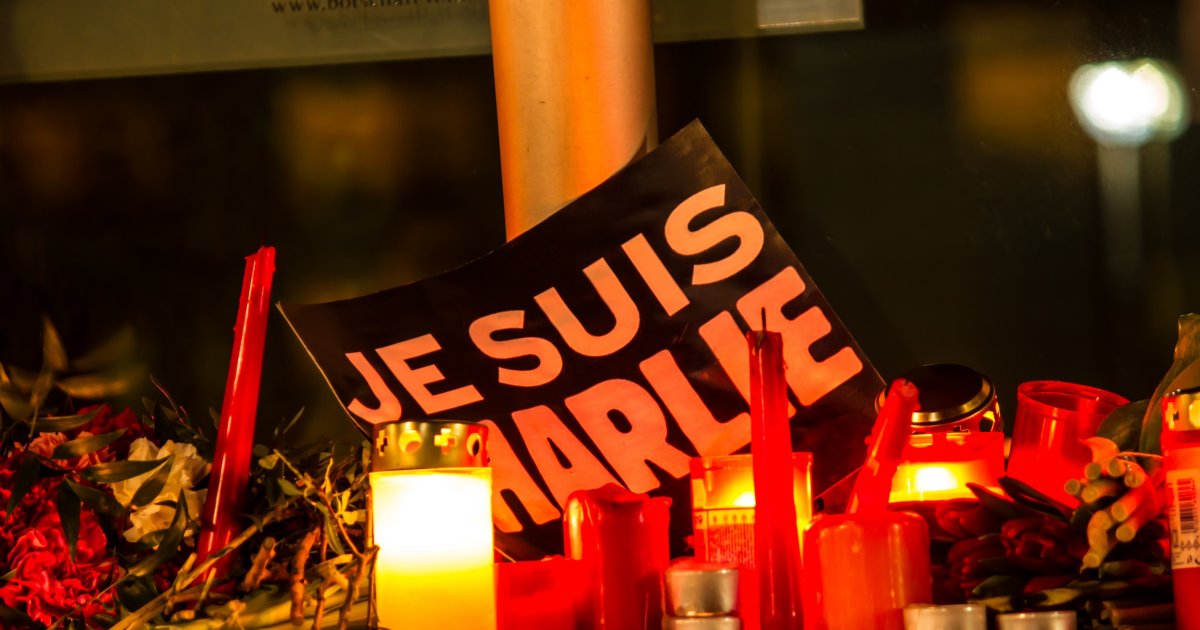
    Some quickly marched under the banner of “Je suis Charlie,” while others staked out more censorial ground, arguing that Charlie Hebdo’s staff shared some of the blame for the tragedy they suffered. Mocking people’s most deeply held beliefs rarely comes without a cost, the argument went, and there is a balancing act between preserving the right to speak and protecting the feelings of religious believers. 

    This is a deeply dangerous and misguided attitude but, amidst the shifting legal and moral boundaries since 2015, the advocates of limiting our right to religious dissent are gaining ground. As the months and years have passed since the killings, countries around the world have veered perilously closer to torching hard fought victories for the freedom of conscience and the right to criticize, even harshly or crudely, the religious powers who preside over our prayers and, sometimes, our politics.


    WATCH VIDEO: Don’t bring a knife to a word fight!

    Dozens of countries, from Poland to Italy to Saudi Arabia to Bangladesh, maintain blasphemy laws, and six of them still threaten accused blasphemers with the death penalty. Even if the state is not willing to kill, its subjects may be. In places like Pakistan or Nigeria, an accusation alone can inspire deadly mob violence. Police in Pakistan sometimes even assign themselves the role of executioner without waiting for a judge or jury. 

    While the situation remains grim in nations that have long enforced these laws, it’s also worsened in countries and institutions that generally promise better protections for free expression. 

    Some responsibility rests at the feet of the United Nations Human Rights Council, which took a distinctly anti-human rights position in 2023 in response to a series of controversial Quran burnings earlier that year. In a 28-12 vote, the council passed a resolution encouraging nations to “address, prevent and prosecute acts and advocacy of religious hatred” (emphasis added). The 57-nation Organization of Islamic Cooperation followed that with a resolution urging punishment of online speech lambasting religious “institutions, holy books and religious symbols” and “the immediate cessation, and criminalization” of Quran desecrations. 

    If the higher powers wish to punish their mortal critics and needlers, so be it. The powers-that-be here on earth don’t need to carry out the sentence for them.

    Months after these resolutions, blasphemy law supporters notched a surprising victory: Denmark’s parliament, weary of the controversy caused by Quran burnings in the region, passed a law criminalizing the public desecration of “a writing with significant religious significance for a religious community or an object that appears as such.” And just weeks ago, UK Member of Parliament Tahir Ali pressed Prime Minister Keir Starmer to introduce “measures to prohibit the desecration of all religious texts and the prophets of the Abrahamic religions.” 

    These initiatives are usually cloaked with flowery language about the need to protect feelings, minimize harm, and better society, but make no mistake: These are blasphemy laws that allow governments to set the terms of how politely and civilly their citizens are allowed to express disagreement with beliefs that carry immense philosophical and often direct political power.

    Even here in the United States, with our strong protections for the right to believe or not, we are still plagued by these challenges. A handful of states still keep blasphemy laws on the books, even if they go unenforced. Michigan’s criminal code, for example, warns that people who “blaspheme the holy name of God, by cursing or contumeliously reproaching God, shall be guilty of a misdemeanor.” The Satanic Temple regularly faces efforts by local officials to censor their displays. And when they do manage to obtain permission to express themselves alongside other groups’ religious symbols, their displays are vandalized

    We’ve seen these questions bloom on American college campuses, too. Within months after the almost-deadly attack on Salman Rushdie, Minnesota’s Hamline College rid itself of an instructor who respectfully, and with advance warning, displayed a medieval portrait of the Prophet Muhammad in class. Then at nearby Macalester College, administrators covered up an Iranian-American artist’s feminist art exhibition about gender, politics, and religion “to prevent unintentional or non-consensual viewing.”

    From Denmark to the United Nations to the UK, we are forgetting the lessons from the Charlie Hebdo attacks — if we ever really learned them at all.

    Police killings worsen crisis of mob violence against Pakistan’s blasphemers

    Blog

    Plenty of free speech news out of Europe, the sedition crackdown in Hong Kong, efforts to control discussion of foreign governments in Canada and the U.S.


    Read More

    It is not the role of the government to set civility rules for the way we express our opinions about the major faiths that, in some parts of the world, are as much political powers as religious ones. 

    You cannot act against the holy book burner or the impertinent cartoonist without also targeting vocal victims of abuse in the Catholic Church, protesters against forced hijab laws, or critics of the secretive Church of Scientology. But in our eagerness to expediently paper over discomfort, anger, and occasional high-profile controversies provoked by blasphemous expression, we’re sacrificing the rights of dissenters around the world who speak out against very real religious and political oppression. 

    The feelings of religious believers cannot be used as a shield to protect religious and political authorities from their dissenters. If the higher powers wish to punish their mortal critics and needlers, so be it. The powers-that-be here on earth don’t need to carry out the sentence for them.

    Source link