Tag: Charter Schools

  • One Approach High-Performing Public and Charter Schools Share – And How to Do It – The 74

    One Approach High-Performing Public and Charter Schools Share – And How to Do It – The 74


    Get stories like this delivered straight to your inbox. Sign up for The 74 Newsletter

    US News & World Report released its latest ranking of public elementary schools. The results exposed the key component to student success, even if the topmost schools approached it in vastly different ways.

    For New York City, Lower Lab, an Upper East Side Gifted & Talented school was ranked number one by US News. Also in the top 10 were four citywide G&T programs. Each school exclusively accepts students who have been designated as “gifted.”

    Rounding out the top 10, however, are Success Academy – Bushwick and Success Academy – Bensonhurst, public charter schools that accept students by lottery, while also prioritizing English Language Learners (ELL).

    On the surface, these schools couldn’t be more different. Number one, Lower Lab, has only 13% of students qualifying for Free or Reduced Price Lunch (FRL), and 1% ELLs. Number 10, Success Academy Charter School – Bensonhurst, conversely,  has 65% of its students qualifying for free or reduced price lunch, and 26% who are English language learners. 

    But the selective G&T schools and the unscreened charter schools have one characteristic in common: An expectation that their students can succeed.

    The book, “Science of Learning: 99 Studies That Every Teacher Needs to Know,” describes an experiment where “researchers falsely told teachers some of their students had been identified as potential high achievers. The students were in fact chosen at random.”

    At the end of the year, the “students that were chosen were more likely to make larger gains in their academic performance,” with those “7-8 years old gaining an average of 10 verbal IQ points.”

    This study concluded that “when teachers expected certain children would show greater intellectual development, those children did show greater intellectual development.”

    At the G&T schools, teachers have every reason to believe their students are capable of performing at the highest levels.

    Parents have seen this firsthand.

    “I strongly believe that when teachers are told their students are gifted, they begin to treat them as gifted — and this changes everything,” asserts mom Natalya Tseytlin. “In a gifted classroom, if a student struggles, teachers don’t assume it’s because of laziness or inability; they respond with patience and extra attention. In a regular class, that student might not receive the same support or challenge, because the teacher sees the child as average. 

    Tseytlin said her son started his first grade gifted and talented program with limited English skills. But because his teacher offered consistent support and believed in him, he excelled. 

    “Today he is performing at the same level as his peers,” she said.

    “I don’t think the expectations at (my child’s) G&T school are so high that only gifted kids can meet them,” another parent, who only asked to be identified as M.K. opined. “Regular schools don’t ‘push’ kids enough to reach their potential. Those G&T schools that do push, get results because most kids are capable of this level of learning without being ‘gifted.’ If teachers treat students as capable, students will indeed meet expectations.”

    The belief that all students can perform at a “gifted” level is sacrosanct at Success Academy.

    “Success Academy is Gifted for All,” CEO Eva Moskowitz affirms. “When adult expectations are high, our scholars — mostly low-income, Black and Hispanic — can meet the highest academic standards.”

    The same is true at Harlem Academy, a kindergarten through 8th grade private school for students whose potential might otherwise go unrealized. 

    “It’s tough to decouple the influence of high-quality programming from high expectations,” concedes Head of School Vinny Dotoli, “but authentically challenging students is central to the ethos of our school. When great teachers set ambitious goals and provide the structure and support to reach them, it almost always makes a lasting difference in student achievement.”

    Parents with children in schools where high expectations aren’t the norm would love to see changes. 

    “I have a daughter in a dual language program in East Harlem,” Maria McCune relates. “A neighbor who used to attend our school changed his daughter to a G&T program at another school in East Harlem. He immediately noticed a difference in the quality of instruction and in his daughter’s performance (MUCH improved). I participate in my daughter’s School Leadership Team and I have seen the apathy teachers there exhibit. It is concerning. When I tried to provide feedback about improving the educational experience, teachers/staff often became defensive. It is this that leads me to want to pursue G&T for my daughter.”

    For Tiffany Ma, the solution is obvious. “Our second grader that transferred into G&T writes much neater and does her homework much more happily since she’s in an environment where academics and homework is valued by other classmates and parents. We should expand G&T programs. It’s regular programming that shouldn’t exist.”

    Yet New York City seems headed in the opposite direction. Mayor-Elect Zohran Mamdani has vowed to get rid of elementary school G&T programs  that begin in kindergarten. He would wait until students enter third grade, even though the research referenced above specifically mentioned children 7 and 8 years of age( i.e. second graders), as being the biggest beneficiaries of high expectations. He is against charter schools, as well. 

    This move would lower the academic standards and expectations of all schools, which deeply concerns parents like McCune. She fears “Children like my daughter may be left as collateral damage of an educational experience that falls short of setting them up for significant academic success.”

    The top schools in NYC have repeatedly demonstrated that high expectations are key to helping all students reach their full potential.

    We need more such schools, be they public G&T, charter, or private. And more teachers who believe in all our kids.


    Did you use this article in your work?

    We’d love to hear how The 74’s reporting is helping educators, researchers, and policymakers. Tell us how

    Source link

  • New Jersey Weighs Biggest Update of Charter School Rules in 30 Years – The 74

    New Jersey Weighs Biggest Update of Charter School Rules in 30 Years – The 74


    Get stories like this delivered straight to your inbox. Sign up for The 74 Newsletter

    Senate lawmakers on Monday advanced legislation that would launch the most comprehensive overhaul of New Jersey’s regulation of charter schools in 30 years.

    The bill advanced by the Senate Education Committee on Monday would outright ban for-profit charter schools, require them to post a range of documents online, and impose residency requirements for some charter school trustees.

    “We have not looked at charter schools as a whole legislatively in this committee since the 1990s, so this is an opportunity where we’re trying to do that,” said Sen. Vin Gopal (D-Monmouth), the panel’s chair and the bill’s prime sponsor.

    The bill comes as New Jersey charter schools have faced scrutiny after reporting revealed top officials were paid far more than their counterparts at traditional public schools, including, among others, a Newark charter school CEO who was paid nearly $800,000 in 2024.

    The proposal, which Gopal said was the product of a year of negotiations, would require charter schools to post user-friendly budgets that include the compensation paid to charter school leaders and school business administrators. They must also post existing contracts.

    Charters would be required to post meeting notices, annual reports, board members’ identities, and facility locations online. Some critics have charged that charter schools routinely fail to provide notice of their public meetings.

    The legislation would also require the state to create a dedicated charter school transparency website to host plain language budgets, 990 disclosure forms filed with the IRS, contracts with charter management organizations, and a list of charter schools on probation, among other things.

    It would also ban fully virtual charter schools.

    “We support the bills as a step forward in holding all public schools in our state accountable for fiscal and transparency requirements that will ultimately best serve our students,” said Debbie Bradley, director of government relations for the New Jersey Principals and Supervisors Association.

    The two sides remained at odds over the membership of charter school boards.

    Charter critics argued residency for those positions — which, unlike traditional public school boards, are largely appointed rather than elected — should mirror those imposed on regular public schools.

    In New Jersey, school board members must live in the district they serve. That’s not the case for charter schools, whose trustees face no residency or qualification limits under existing law.

    The bill would only impose a residency requirement on one-third of a charter school’s trustees, and rather than forcing them to live in the district, the bill would require charter trustees to live in the school’s county or within 30 miles of the school.

    That language was criticized by statewide teachers union the New Jersey Education Association, which has called existing law governing charter schools outdated and flawed.

    “School board representation should remain primarily local, and when we mean local, we don’t mean within a 30-mile radius. A 30-mile radius of Newark could include Maplewood, South Orange, communities that don’t necessarily represent what Newark looks like as a community,” said Deb Cornavaca, the union’s director of government relations.

    Charter school supporters said their boards need flexibility because their leadership has broader responsibilities than counterparts in traditional public schools.

    “Running a charter is a little different than running a traditional district. You need experience in school finance. You need to fundraise a bunch of money on the front end because you’re not getting paid on the front end,” said New Jersey Charter School Association President Harry Lee, adding they also needed familiarity with real estate and community experience.

    Amendments removed provisions that would have required charter school board members to be approved by the state commissioner of education, though the commissioner retains sole power over whether to allow the formation of a new charter, a power that gives the commissioner some veto power over a charter’s board.

    Gopal acknowledged the 30-mile residency rule was a sticking point and said legislators would discuss it before the measure comes before the Senate Budget Committee. Earlier, he warned the bill was likely to see more changes as it moved through the Legislature.

    Some argued enrollment in charter schools should be more limited by geography, arguing that out-of-district enrollments that are common at New Jersey charters could place financial strain on the students’ former district.

    Most per-pupil state and local funding follows students who enroll in charter schools, even if their departure does not actually decrease the original district’s expenses because, for example, those schools still require the same number of teachers and administrators.

    Charter operators said that would make New Jersey a national outlier and argued that a separate provision that would bar new charter schools when there are empty seats in existing area charters should come out of the bill.

    “It could be read as a moratorium on charters, so we want to revisit that provision,” Lee said.

    Such vacancies could exist for various reasons, they argued, including student age distributions.

    Alongside that measure, the panel approved separate legislation that would bar charter schools from setting criteria to enroll students, ban them from imposing other requirements on a student randomly selected to attend, and place new limits on how such schools can enroll children from outside their district.

    That bill would also bar charter schools from encouraging students to break with the district. Some opponents have charged that charter schools push out low-performing students to boost their metrics.

    The committee approved the bills in unanimous votes, though Sens. Owen Henry (R-Ocean) and Kristin Corrado (R-Passaic) abstained from votes on both bills, saying they are broadly supportive but need more time to review amendments.

    New Jersey Monitor is part of States Newsroom, a nonprofit news network supported by grants and a coalition of donors as a 501c(3) public charity. New Jersey Monitor maintains editorial independence. Contact Editor Terrence T. McDonald for questions: [email protected].


    Did you use this article in your work?

    We’d love to hear how The 74’s reporting is helping educators, researchers, and policymakers. Tell us how

    Source link

  • Digital learning in a new age

    Digital learning in a new age

    Key points:

    Digital learning–in the form of online, hybrid, and blended schools and courses–is growing steadily in U.S. schools. These learning options can transform education because they allow for learning, teaching, and student engagement outside the confines of traditional physical schools.

    Students no longer have to show up at a school building every morning, and millions of students and families are demonstrating their preference for more flexible learning options by choosing their district’s online schools, charter schools, and private schools.

    Digital learning meets the needs of today’s students, who are seeking flexibility in their scheduling. Many high school students want to pursue sports, arts, and career interests in the form os jobs, internships, and other program. Others simply crave the control an innovative school gives them over the time, place, and pace at which they learn. Digital learning also meets the needs of teachers, who, just like knowledge workers around the world, are interested in employment that allows them to choose their schedules.

    Online and hybrid learning is becoming easier to implement as technology grows and improves. Unlike just a few years ago, when teachers were concerned about using multiple technology tools, much-improved integration and interoperability between platforms is making adoption of multiple tools far easier.

    While relatively few students and families prefer their education to be 100 percent online, many students are selecting hybrid options that combine online and face-to-face interactions. Much like young knowledge workers who are increasingly blending home offices with corporate headquarters, digital learning is showing up in unexpected places as well. Let’s take a closer look at two examples: career and technical education (CTE) and physical education (PE).

    CTE is often perceived as being “hands on” in ways that casual observers might expect would not align well with digital learning–but the truth is exactly the opposite.

    Digital learning is broadening the world of CTE for students. Online and hybrid schools provide CTE programs by offering a combination of online career courses and by partnering with businesses, state and regional training centers, and other
    organizations to combine online learning with on-the-ground, real-world jobs, internships, and learning opportunities.

    Hybrid schools and programs, including those run by mainstream districts, provide academic scheduling flexibility to students who seek to prioritize their time in jobs, internships, or career training. No longer do these students have to fit in their career interests after regular school hours or on weekends–when many companies and high-value jobs are not open or available.

    For example, a student interested in a veterinary career can work at a vet’s office during the regular week and school hours, completing some of their online coursework after normal work hours.

    Virtual Arkansas, a state-supported course provider supporting districts across Arkansas, has made digital CTE a central element of its offerings.

    “CTE is a key part of our value to students and schools across Arkansas. Students, teachers, counselors, and the business community, all appreciate that we are providing flexible options for students to gain real-world expertise and experience via our online and hybrid programs,” said John Ashworth, the programs’ executive director.

    Perhaps even more surprising than CTE shifting to digital is the idea that next generation physical education is based on online tools, adept teachers, and student voice and choice.

    Today’s students are accustomed to going into a coffee shop and ordering their drink with a dozen customized features. And yet, in traditional PE classes, we expect students to all want to learn the same sport, activity, or exercise, at the same time and pace. That’s how too many traditional gym classes operate–based on the factory model of education in which all students do the same thing at the same time.

    There’s a better way, which is being embraced by online schools, hybrid schools, and traditional districts. Online and hybrid PE classes shift exercise, activity, and wellness to match student interests and timing. A student chooses from hundreds of detailed instructional videos in dozens of categories, from aquatics to basketball to yoga, trains using the videos combined with instruction provided by a teacher, and tracks her progress.

    This doesn’t sound like a traditional gym class; instead, it mimics the ways that young adults are active in gyms, yoga studios, and sports leagues all around the country. Consider fitness clubs from the local YMCA to the most high-end club–they are all offering a wide variety of classes, on varied schedules to fit busy lifestyles, and at different levels of expertise. No school can match this, of course, by the traditional approach to gym class. But Joe Titus, founder and CEO of Hiveclass, which offers online physical education courses, points out that student agency to
    choose from a wide variety of PE options is possible–when schools are ready to make the leap.

    Online schools and district programs are already doing so, with fantastic outcomes as students lean into their choices and options. As futurist William Gibson said decades ago, “the future is here, it’s just not evenly distributed.”

    Online and hybrid CTE, physical education, and other options prove the point. The next step is to make these options widely available to all the students who are seeking a better alternative.

    Latest posts by eSchool Media Contributors (see all)

    Source link

  • Supreme Court Must Not Undermine Public Education in Religious Charter Case – The 74

    Supreme Court Must Not Undermine Public Education in Religious Charter Case – The 74


    Get stories like this delivered straight to your inbox. Sign up for The 74 Newsletter

    Last week, the Supreme Court held oral arguments in a case that could undermine public education across America. The question the court is looking to answer is whether a religious institution may run a publicly funded charter school — a move that would threaten not only the separation of church and state, but the right of every student to access free, high-quality learning.

    In 2023, Oklahoma’s Statewide Virtual Charter School Board approved St. Isidore of Seville Catholic Virtual School, an action that would make it the nation’s first-ever religious charter school. It would be governed by Catholic religious doctrine in its syllabus, operations and employment practices. It would use taxpayer dollars to pay for religious instruction. And it could turn away students and staff if their faith or identity conflict with Catholic beliefs. 

    Here’s the issue: Charter schools were created to be public schools. They are open to all students, from every background, tradition and faith community. They are publicly funded and tuition-free. And they are secular. 

    That’s not an arbitrary distinction – it’s a constitutional one, grounded in the law and embedded in charter schools’ very design. The First Amendment’s Establishment Clause bars the government from promoting or endorsing any religion through public spaces or institutions. This foundational rule has ensured that students of all backgrounds can access public schools. It does not stifle religious expression — the Constitution fully protects this freedom, and religious education is available in other venues. Personally, I was, in fact, educated at Jesuit Catholic schools for my entire academic career. 

    Parochial education has long been an accepted and important part of the education ecosystem, serving a variety of students and often filling an important need. Religiously affiliated schools have a long history of educating and caring for children who are new to this country and underserved, and supporting families who are overlooked. But promoting the exclusive teachings of a specific religion with public funds in a public school violates a clear constitutional principle. 

    The issue isn’t only a legal matter; it’s about the character of public education itself. Muddying the boundary between public and religious institutions would undercut a fundamental commitment made by the nation’s public charter schools: that they are accessible to every student. It would undermine legal protections that keep public services available to the public. 

    Rather than creating more opportunities for America’s students, it would constrict opportunities for a high-quality education, especially in states that are hostile toward charters or alternative public school models. Legislative bodies could seek to eliminate funding for all unique school types if the court decision forced them to fund religious schools operating with public dollars. This would curtail or dismantle strong independent schools, 30-year-old public charter schools and schools with unique programs designed for special populations.

    As executive director of the DC Charter School Alliance, and a long-time public charter school advocate, I’ve seen the importance of public charter schools firsthand. Here in the District of Columbia, charter schools serve nearly half of the public school students in the city. Outstanding educators from all walks of life teach a wide range of subjects with enthusiasm and expertise to prepare young people for success. Our students bring to the classroom an incredible range of experiences, including faith traditions. And every student, family and faculty member is welcome. D.C.’s charter schools reflect a core American value: the promise of a high-quality public education for all. 

    The justices of the Supreme Court face a clear and critical choice: They can bolster that promise, or they can tear it down. If the court allows a religious school to operate with public funds, there is no doubt that it will open the floodgates to other proposals across the country. Taxpayers could be forced to foot the bill for countless new and converted schools, draining resources from an already financially strapped education system. True public charter schools — the ones committed to high standards, positive results and opportunity for all — could bear the cost. And the students who rely on them could suffer. 

    Public education is one of America’s most vital institutions. It offers all children, no matter their background or beliefs, access to free, high-quality learning. Charter schools play an essential role in making that promise real. But allowing a religious school to operate with public funds turns public education into something much more restrictive, dismantling its very foundation.

    The court must reaffirm this indisputable truth: Public schools should remain public — and open to all. 


    Get stories like these delivered straight to your inbox. Sign up for The 74 Newsletter

    Source link

  • Equipping the Future – New Mexico Education

    Equipping the Future – New Mexico Education

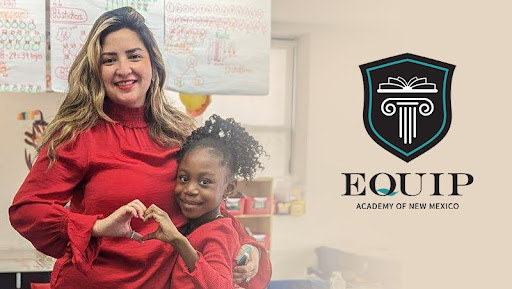
    In the heart of Albuquerque’s west side, a new beacon of hope for elementary education is set to rise: Equip Academy of New Mexico.

    Spearheaded by Mercy Herrera, a Yale graduate with deep New Mexico roots, the school is designed to empower Kindergarten through 5th grade students through a unique blend of high academic expectations and culturally responsive teaching. With a personal history marked by overcoming educational challenges, Herrera is bringing her passion and vision to Equip Academy, aiming to equip every child with the tools to live out their greatness.

    On August 21 Equip Academy received unanimous approval to open as a charter school from the Public Education Commission.

    The school is set to open on Albuquerque’s west side in August 2025, with a focus to help improve student achievement and support the academic success of all students. This comes out of experience, as Herrera’s own academic journey was anything but straightforward.

    Raised in a family that moved frequently due to financial instability and personal challenges, Herrera attended multiple elementary schools, making it difficult to establish a strong academic foundation. “College seemed super out-of-reach,” she recalled, but her determination led her to Central New Mexico College (CNM), where she began to rebuild her academic confidence.

    After transferring to the University of New Mexico (UNM) and excelling in a Sign Language Interpreting Program, Herrera’s educational path took her to Harvard, where she presented research on translating scriptural metaphors from English to American Sign Language (ASL). This experience eventually led her to Yale University, where she earned her master’s degree in Disability Studies and Biblical Literature.

    In applying for Yale, Herrera didn’t tell a soul. She almost didn’t believe that someone like her, who struggled in school, could elevate to such a college. And yet, Herrera got in.

    Despite her achievements, Herrera never forgot her New Mexico roots or the struggles she faced growing up.

    Reflecting on the 2018 Yazzie-Martinez decision, which highlighted the state’s failure to provide an adequate education to many of its students, Herrera acknowledged that she would have been classified as a Yazzie-Martinez student.

    “My story isn’t unique,” Herrera said, “it’s common.”

    With support from mentors who believed in her, Herrera found the importance of quality education in shifting the narrative for students from backgrounds like hers. With the support, she made it to CNM, graduated UNM, attended an Ivy League, and earned a second masters in the Science of Teaching from New York City’s Pace University. It is this experience, and the belief that New Mexico’s students deserve to succeed, that drives the vision and mission of Equip Academy.

    “Every child has the opportunity to live out their greatness, and our commitment is to equip them to do so,” Herrera said, quoting the school’s vision.

    Equip Academy aims to provide a joyful and engaging environment with high expectations that prioritizes measurable academic learning while celebrating student curiosity and community, regardless of that student’s background.

    A key aspect of Equip Academy’s approach is its commitment to culturally responsive education. Understanding the diverse cultural landscape of New Mexico, Herrera has integrated culturally respectful education efforts into the school’s curriculum. “New Mexico has so much richness and beauty, and I think it took me leaving to understand that,” she said.

    To ensure the school is responsive to students across all walks of life, Herrera is working closely with the Hispanic Cultural Center, National Institute of Flamenco, Indian Pueblo Cultural Center and utilizing resources from the Native American Community Academy (NACA) to ensure that the school’s curriculum respects and reflects the cultural heritage of its students.

    To support students academically, Equip Academy will implement a two-teacher model for kindergarten and first grade, allowing for more individualized attention. As part of her background, Herrera has worked as a teacher instructional coach and has made teacher support a key for the school’s success.

    The school will also use cross-grade, flexible guided reading groups to ensure that students receive instruction at their individual “just right” level, helping them progress academically. Herrera emphasizes the importance of data-driven instruction and teacher excellence, which will be central to the school’s success.

    Herrera’s return to New Mexico came after years of working in high-performing charter schools in New York City and driven by a desire to bring the same level of educational excellence to her home state. The experience shaped her vision for Equip Academy, prompting her to say, “I don’t know how, and I don’t know when, but I want to start a charter school in New Mexico.”

    Now, that vision is becoming a reality.

    Equip Academy plans to open with two kindergarten classes and one first-grade class, eventually growing to serve 450 students from kindergarten through fifth grade. The school will operate on a slow-growth model, adding one grade level each year to ensure that students receive a consistent and high-quality education throughout their elementary years.

    As Herrera prepares for Equip Academy’s opening, she remains focused on the bigger picture: equipping students with the knowledge and skills they need to dream audaciously, engage deeply, and pursue lives of purpose. Her journey from a struggling student to an educational leader is proof that, with the right support and opportunities, New Mexico’s students can achieve greatness.

    Herrera’s words and hope for Equip Academy’s incoming students, “Believe in yourself, know what you want to do, and pursue it with everything you’ve got. With the right support, anything is possible.”

    Equip Academy is now accepting interest forms for future teachers and students. For more information, visit the Equip Academy LinkedIn page.

    Source link