Minister Burke addressed the National Press Club on Thursday. Picture: Martin Ollman
The federal government will crack down on actors using international students that come to Australia as a means to fund child exploitation, human trafficking and drug trade efforts.
Please login below to view content or subscribe now.
Hello! This is Christina Samuels, the early education editor here at Hechinger.
By now, I hope you’ve had a chance to read my colleague Jackie Mader’s story about the important role that Head Start plays in rural communities. While Jackie set her story in western Ohio, she also interviewed Head Start parents and leaders in other parts of the country and collected their views for a follow-up article.
In a fortunate bit of timing, the advocacy group First Five Years Fund published the results of a survey it commissioned on rural Americans and their feelings on child care access and affordability. Like the people Jackie interviewed, the survey respondents, more than half of whom identified as supporters of President Donald Trump, said they had very positive views of Head Start. The federally funded free child care program received positive marks from 71 percent of rural Republicans, 73 percent of rural independents and 92 percent of rural Democrats.
The survey also found that 4 out of 5 respondents felt that finding quality child care is a major or critical problem in their part of the country. Two-thirds of those surveyed felt that spending on child care and early education programs is a good use of taxpayer dollars, and a little more than half said they’d like to see more federal dollars going to such programs.
First Five Years Fund was particularly interested in getting respondents to share their thoughts on Head Start, said Sarah Rubinfield, the managing director of government affairs for First Five Years Fund. The program has been buffeted by regional office closures and cuts driven by the administration’s Department of Government Efficiency.
“We recognize that these are communities that often have few options for early learning and care,” Rubinfield said.
In the survey, rural residents said they strongly supported not just the child care offered by Head Start, but the wraparound services such as healthy meals and snacks and the program’s support for children with developmental disabilities. Though Head Start programs are federally funded, community organizations are the ones in charge of spending priorities.
“Rural voters want action. They support funding for Head Start and for child care. They want Congress to do more,” Rubinfield said. Though the “big beautiful bill” signed into law in July expands the child care tax credit for low-income families, survey respondents “recognized that things were not solved,” she added.
The First Five Years Fund survey was released just a few days before a congressional standoff led to a government shutdown. The shutdown is not expected to touch Head Start immediately, said Tommy Sheridan, the deputy director of the National Head Start Association, in an interview with The New York Times. The 1,600 Head Start programs across the country receive money at different points throughout the calendar year; eight programs serving about 7,500 children were slated to receive their federal funding on Oct. 1, Sheridan told the Times. All should be able to continue operating, as long as the shutdown doesn’t last more than a few weeks, he said.
“We’re watching with careful concern but trying not to panic,” Rubinfield said. “We know the impacts may not be immediate, but the longer this goes on, the harder the impacts may be for families and programs.”
This story about rural Americans was produced by The Hechinger Report, a nonprofit, independent news organization focused on inequality and innovation in education. Sign up for the Hechinger newsletter.
The Hechinger Report provides in-depth, fact-based, unbiased reporting on education that is free to all readers. But that doesn’t mean it’s free to produce. Our work keeps educators and the public informed about pressing issues at schools and on campuses throughout the country. We tell the whole story, even when the details are inconvenient. Help us keep doing that.
Join our zero2eight Substack community for more discussion about the latest news in early care and education. Sign up now.
From her home-based day care in Washington, D.C., Alma peers out the door and down the sidewalks. If they’re clear and there are no ICE agents out, she’ll give her coworker a call letting her know it’s safe to head in for work.
They have to be careful with the kids, too. Typically, she took the five children she cares for to the library on Wednesdays and out to parks throughout the week, but Alma — who, like her coworker, does not have permanent legal status — had to stop doing that in August, when President Donald Trump declared a “crime emergency” in the district. Now, two of the kids she cares for are being pulled out of the day care. The parents said it was because they weren’t going outside.
Trump has deployed the National Guard and a wave of U.S. Immigration and Customs Enforcement (ICE) agents into the district. ICE arrests there have increased tenfold. The situation has thrust the Latinas who hold up the nation’s child care sector into a perpetual state of panic. Nationwide, about 1 in 5 child care workers are immigrants, but in D.C. it’s closer to 40 percent; about 7 percent nationally lack permanent legal status. Nearly all are women.
Many are missing work, and others are risking it because they simply can’t afford to lose pay, providers told The 19th. All are afraid they’ll be next.
“What kind of life is this?” said Alma, whose name The 19th has changed to protect her identity. “We are not delinquents, we are not bad people, we are here to work to support our family.”
Alma has been running a home-based day care for the past decade. She’s been in the United States for 22 years, working in child care that entire time. With two kids being pulled, she will have to reduce her staffer’s hours as she tries to find children to fill those spots.
Her four school-age children also depend on her. This month, she had to write out a signed document detailing what should happen to her kids if she were to be detained. Her wish is that they be brought to detention with her.
“I can’t imagine my kids here without me,” she said.
She said she understands the president’s approach of expelling immigrants with criminal convictions from the country, but teachers who are working with kids? Who haven’t committed any crime?
By targeting them, she said, the administration is “destroying entire families.”
The Multicultural Spanish Speaking Providers Association in D.C., which works with Latina child care providers, has seen this panic first hand for the past couple of weeks as more and more Latinas in child care have stopped coming into work. The center also helps workers obtain their associate’s degree in early childhood education, and since the semester started in mid-August, many teachers have asked for classes to be offered virtually so they don’t have to show up to campus at night.
Latinas have flocked to the child care industry for multiple reasons: Families seeking care value access to language education, and Latinas have a lower language barrier to entry, said Blanca Huezo, the program coordinator at the Multicultural Spanish Speaking Providers Association.
“In general, this industry offers them an opportunity for a fresh start professionally in their own language and without leaving behind their culture,” Huezo said.
The changes, coupled with increased enforcement, has fostered fear among Latinx people regardless of immigration status. That fear among workers is deepening a staffing crisis in an industry that already couldn’t afford additional losses, Huezo said.
“There is a shortage — and now even more,” she said. “There are many centers where nearly 99 percent of teachers are of Hispanic origin.”
Washington, D.C., has been a sanctuary city since 2020, where law enforcement cooperation with immigration officials was broadly prohibited. Earlier this year, however, Mayor Muriel Bowser proposed repealing that law and, in mid-August, Washington’s Metropolitan Police Department Police Chief Pamela Smith gave officers leeway to share information with ICE about individuals they arrested or stopped.
“There was some peace that living in D.C. brought more security,” Huezo said. Now, “people don’t feel that freedom to walk through the streets.”
Several child care workers are afraid to go to work in DC, now that President Trump has removed restrictions on ICE conducting enforcement at schools and daycares. (Getty Images)
Child care centers are also no longer off limits for ICE raids. The centers were previously protected under a “sensitive locations” directive that advised ICE to not conduct enforcement in places like schools and day cares. But Trump removed that protection on his first day in office. While reports have not yet surfaced of raids in day cares, ICE presence near child care care centers, including in D.C., has been reported.
A similar story of fear and surveillance has already played out in Los Angeles, where ICE conducted widespread raids earlier in the summer. Huezo said her organization has been in touch with child care providers in L.A. to learn about how they managed those months.
In the meantime, the best the organization can do, she said, is connect workers with as many resources as possible, including legal clinics, but the ones that help immigrants are at their maximum caseload. The group has put child care workers who are not leaving their homes in touch with an organization called Food Justice DMV that is delivering meals to their doorsteps. Prior to last month, people who needed food could fill out a form and get it that same week. Now, the wait time is two to three weeks, Huezo said. For those in Maryland and Virginia, it’s closer to a month.
Thalia, a teacher at a day care, said her coworkers have stopped coming to work. It’s all the staff talks about during their lunchtime conversations. When she rides the Metro into work, she looks over her shoulder for the ICE agents, their faces covered, who are often at the exits.
“They are hunting us,” she said.
Thalia, whose name has been changed because she does not have permanent legal status, has been living in the United States for nine years and working in child care that entire time. Like her, many of the Latina teachers she works with have earned certifications and degrees in early childhood education.
“We are working, we are cooperating, paying taxes,” she said. “We are there all day so other families can benefit from the child care.”
As a single mother, Thalia has also had to consider what would happen to her three children if she was detained. This past month, she retained a lawyer who could help them with their case in case anything were to happen. Her school-age kids know: Call the lawyer if mom is detained and get tickets to Guatemala to meet her there.
This is what she lives with every day now: “The fear of leaving your family and letting them know, ‘If I don’t return, it’s not because I am abandoning you.’ ”
Join our zero2eight Substack community for more discussion about the latest news in early care and education. Sign up now.
The U.S. military faced a new threat to national security toward the end of the 20th century. This threat affected the recruitment and retention of our nation’s armed forces, reducing their capacity to defend the denizens of the United States and our interests overseas.
The threat wasn’t the Cold War; it wasn’t tension in the Middle East; and it wasn’t international or domestic terrorism.
The threat was a lack of affordable, accessible, high-quality child care.
The makeup of the armed forces changed following the shift from a national draft to an all-volunteer military after the war in Vietnam. More service members had families in the late 1970s and 1980s — many of them with young children. And many more of those families included two working parents than in previous decades.
The child care crisis faced by the military 40 to 50 years ago was similar to the one civilians face today. More families with working parents increased the demand for child care. Thousands of children languished on waitlists, forcing families to consider forms of supervision that lacked consistent standards for safety, teacher training, student/teacher ratios, and curricula. Teachers were poorly compensated, and turnover was high.
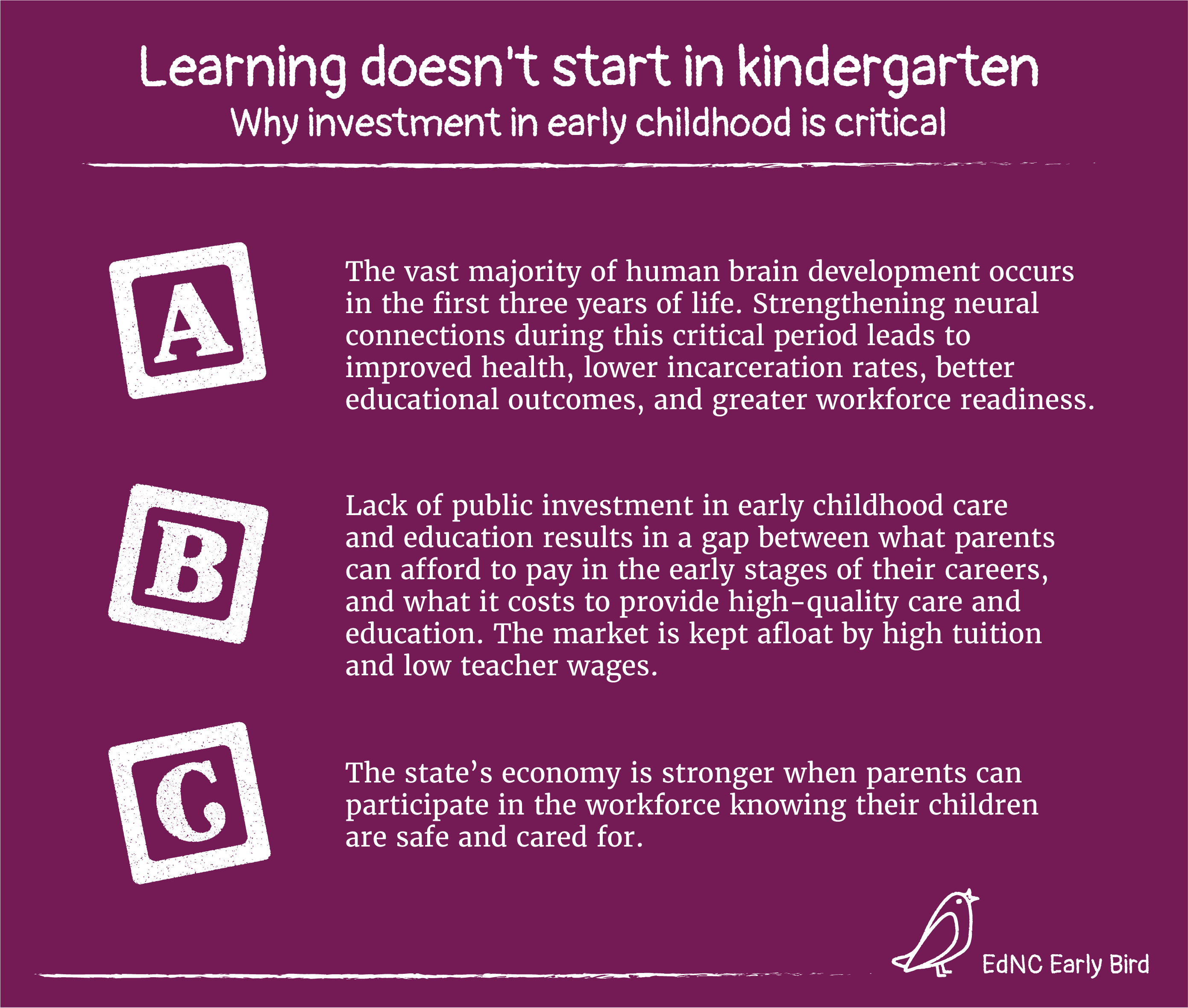
Back then, as now, parents couldn’t afford the fees necessary to cover the costs of addressing these challenges, and limited public investment wasn’t enough to fill the gap.
Graphic by Lanie Sorrow
Because the child care crisis was seen as a threat to the collective future of Americans, elected officials took action. Congress passed the Military Child Care Act of 1989, which put a priority on affordability, accessibility, and quality in child care for service members.
With the end of child care stabilization efforts that were undertaken during the pandemic, North Carolinians now face a similar threat to our own collective future. The military’s approach offers lessons for where we can go from here, in our communities and across our state.
An experiment in universal child care
The Military Child Care Act wasn’t the first time the military had taken the lead on child care. During World War II, women entered the workforce in massive numbers, filling the roles of men who were drafted to serve in the military. This raised the question of who would care for children when both parents were working outside the home to defend American interests.
Congress responded with the Lanham Act of 1940, creating a nationwide, universal child care system to support working families with children through age 12. Federal grants were issued to communities that demonstrated their need for child care related to parents working in the defense industry.
The program distributed $1.4 billion (in 2025 dollars) between 1943 and 1946 to more than 600 communities in 47 states. The grants could be used to build and maintain child care facilities, train and compensate teachers, and provide meals to students.
In his 2017 analysis of the Lanham Act’s outcomes for mothers and children, Chris M. Herbst, of Arizona State University’s School of Public Affairs, found that “the Lanham Act increased maternal employment several years after the program was dismantled.”
An image of Rosie the Riveter from a 1943 issue of the magazine Hygeia (published by the American Medical Association) demonstrating the need for child care.
Herbst also found that “children exposed to the program were more likely to be employed, to have higher earnings, and to be less likely to receive cash assistance as adults.”
One lesson Herbst took from his research was that the Lanham Act was successful because of the broad support it received from parents, advocates for education and women, and employers. He noted: “Each group was committed to its success because something larger was at stake.”
Today’s military-operated child care model
While the Lanham Act was a short-lived national experiment that hasn’t received much study, the military’s child care program since adoption of the Military Child Care Act of 1989 has become a widely acclaimed model for publicly subsidized early care and learning, serving about 200,000 children each year.
Four categories of child care are available through military-operated child care programs: Child Development Centers (CDCs), Family Child Care (FCC), 24/7 Centers, and School Aged Care (SAC). The official military child care website describes each program type:
Child Development Centers (CDCs) — CDCs provide child care services for infants, pretoddlers, toddlers, and preschoolers. They operate Monday through Friday during standard work hours, and depending on the location offer full-day, part-day, and hourly care.
Family Child Care (FCC) — Family child care is provided by qualified child care professionals in their homes. Designed for infants through school agers, each FCC provider determines what care they offer, which may include full-day, part-day, school year, summer camp, 24/7, and extended care.
24/7 Centers — 24/7 Centers provide child care for infants through school age children in a home-like setting during both traditional and non-traditional hours on a regular basis. The program is designed to support watch standers or shift workers who work rotating or non-traditional schedules (i.e., evenings, overnights, and weekends).
School Aged Care (SAC) — School age care is facility-based care for children from the start of kindergarten through the end of the summer after seventh grade. This program type operates Monday through Friday during standard work hours. SAC programs provide both School Year Care and Summer Camp.
Requirements for military-operated child care programs are typically more stringent than state requirements. For one thing, they must be accredited by one of the following: National Association for the Education of Young Children (NAEYC), National Early Childhood Program Accreditation (NECPA), the Council on Accreditation (COA), or the National Accreditation Commission (NAC).
For context, the requirements for licensed child care in North Carolina are relatively stringent compared with other states, but still fall below the requirements for NAEYC accreditation, which is widely recognized as the national standard. Only 110 programs in our state are NAEYC-accredited — many of which are Head Start or military-operated programs — out of about 5,300 total state-licensed programs.
Military-operated child care programs offer families hourly, part-day, full-day, extended, or overnight care, plus afterschool and summer programs.
The maximum rate is on par with the national average for civilian child care in 2023, meaning that almost every family using military-operated child care programs is paying less than the national average for typically higher-quality early care and learning.
The Department of Defense budgeted about $1.8 billion for child care in 2024 — about 0.2% of its $841.4 billion total budget.
Military child care in North Carolina
In addition to military-operated child care programs, service members may be eligible for Military Child Care in Your Neighborhood (MCCYN), a fee assistance program for families who can’t access military-operated child care. MCCYN pays a portion of the cost of enrolling children in early care and learning programs that meet the military’s high-quality standards in their community.
North Carolina is one of 19 locations where military families may be eligible for MCCYN-PLUS, which expands the MCCYN program to child care programs that participate in state or local Quality Rating and Improvement Systems (QRIS) in places where nationally accredited care is not available.
Both programs rely on the availability of high-quality child care in civilian communities. That’s a challenge in North Carolina, which was already facing a child care shortage before the pandemic. Our state has lost almost 6% of licensed child care programs since February 2020, with more expected to close because stabilization grants have ended.
According to the NC Military Affairs Commission, there are 12 military bases and more than 130,000 active-duty military members in North Carolina, giving us the fourth-largest active-duty military population in the nation.
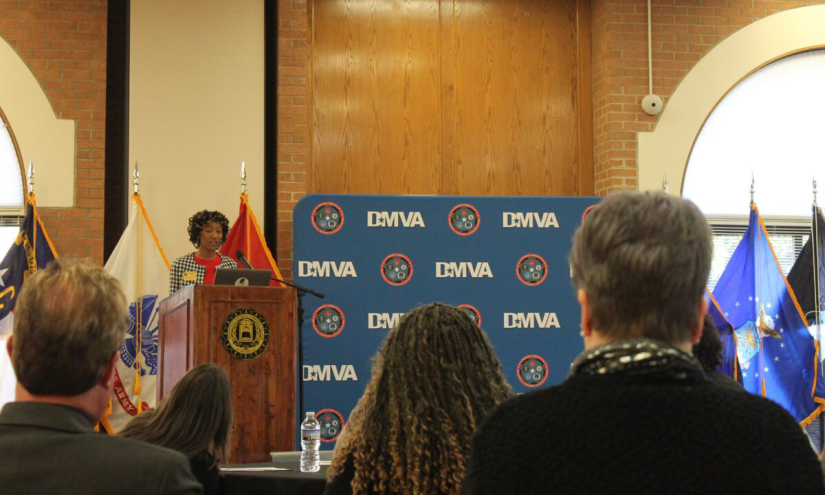
In January 2025, Fayetteville Technical Community College hosted the state’s first N.C. Military Community Childcare Summit, organized by the North Carolina Department of Military and Veteran Affairs (NCDMVA) to discuss the problem that military communities are having with access to community-based child care.
The first N.C. Military Community Childcare Summit in January 2025.( Katie Dukes/EdNC)
The summit culminated in a screening of Take Care, a documentary about North Carolina’s child care crisis produced by the state Department of Health and Human Services and featuring EdNC’s early childhood reporter, Liz Bell.
The issues of spouse resilience and child care are inextricably linked for Angie Mullennix, who works for The Honor Foundation at Fort Bragg, helping members of the U.S. Special Operations Forces (SOF) transition to careers in the private sector after their military service.
Mullennix served in the U.S. Army for four years after high school and has previously worked for the Department of Public Instruction as the state military liaison. Her husband recently retired from the SOF himself. They have two teenage children.
“If you look at the number of military spouses in North Carolina who have degrees and credentials and could be in the workforce, from nurses to lawyers, lots of them are staying at home,” Mullennix said.
“A big reason why about 40% of (military) spouses do not work is because of child care not being available to them,” Mullennix said, noting that lack of child care is also a barrier to workforce participation among the civilian population.
When Mullennix’s children were under the age of 5, she used hourly child care on base, which was available at no cost when her husband was away on assignment.
“You ask any parent in the world, I don’t care who they are, there’s nothing more important than their child’s safety — then their education,” Mullennix said. “And yet, the two things we think are the most important, we put (their providers) at the lowest pay and ask them to do quality care.”
That’s what sets military child care apart from civilian early care and learning for Mullennix: high quality standards and higher pay for early childhood educators, including benefits. She sees lessons in this for North Carolina.
“You gotta pay them to keep them, there’s no secret behind that,” Mullennix said. “If you pay them high, you can also set the standards really high.”
And because workforce participation — and military readiness — is directly tied to the accessibility and affordability of high-quality child care, not investing in it threatens our collective future.
“North Carolina, or any state that doesn’t offer child care, is shooting itself in the foot,” Mullennix said.
Lessons from military child care
Policymakers at every level who are seeking to end the child care crisis can learn much from the military child care model. One report on the topic offers these lessons:
Do not be daunted by the task. It is possible to take a woefully inadequate child care system and dramatically improve it.
Recognize and acknowledge the seriousness of the child care problem and the consequences of inaction.
Improve quality by establishing and enforcing comprehensive standards, assisting providers in becoming accredited, and enhancing provider compensation and training.
Keep parent fees affordable through subsidies.
Expand the availability of all kinds of care by continually assessing unmet need and taking concrete action steps to address it.
Commit the resources necessary to get the job done.
Both agreed these are the right takeaways for policymakers across North Carolina to consider.
Lesson 1: Do not be daunted by the task
Gale Perry said the top lesson for her is: “Start where you are, know that change is possible, and have a goal post in mind.”
She pointed out that the military’s goal wasn’t a fully publicly funded child care system. It was a system that acknowledged Americans’ values around the role of parents in raising young children — and paying for their care and education. But also that their employers and the government “have a role in offsetting that cost, so that we can ensure that child care is quality, and it is stable, and that the families can actually afford it.”
Smith said there was no “silver bullet” when she and her colleagues were tasked with solving the military’s child care crisis in the 1990s — and there isn’t one for the civilian child care crisis today.
We had to redo the standards, we had to look at the workforce, we had to look at the health and safety issues, we had to look at the fees and how we could bring those fees down. We had to look at the infrastructure of all of it. We’ve got to start thinking about the interconnectedness of all of these things if we’re going to be successful in this country.
Smith said people think that because she worked for the secretary of defense, “I could just tell all the bases what to do, and that would magically happen, which is so not true. It wasn’t just like we could give an order and everybody jumped.”
She said you just have to start where you are, and move up.
Lesson 2: Acknowledge the seriousness of the problem and the consequences of inaction
“The military understood very early the link between people getting to work and child care,” Smith said.
As the military shifted away from relying on conscription and became a more welcoming workplace for women, the need for child care became evident. Smith described working on a base where children were routinely left in cars when their parents were unexpectedly called into work.
“So (military leaders) really got the connection to their guys going to work very quickly, and I think that we still haven’t all understood that in this country,” Smith said, though she notes businesses have started making that connection since the pandemic.
“The other thing the military understood was that a pilot is every bit as important as the mechanic who works on the plane, and so they invest in all of their people,” Smith said.
She and her team had to design a program that worked for everyone, or it wouldn’t work for anyone.
Lesson 3: Improve quality
Smith said quality was of critical importance when she was designing the military’s child care system in the 1990s, especially after child abuse and neglect scandals that came to light in the 1980s.
She and her team studied the child care standards of all 50 states and created a set of military standards that fell squarely in the middle. Then they set about training the 22,000 early childhood educators they already had — most of whom were military spouses — to meet those standards.
That was a six-month training program. Then there was an 18-month training to get them to move beyond those standards toward national accreditation. They hired highly qualified trainers to work with educators at each site.
“And if you didn’t do it, guess what? You’re fired!” Smith said.
There was an incentive to participate in the training, beyond keeping their jobs — higher compensation.
“Maybe some were grumpy about it, but we didn’t have to fire people,” Smith said.
North Carolina already has some tools in place to help educators advance their education and improve their compensation, specifically through the WAGE$ and TEACH programs — both of which were highlighted in the report that identified these lessons.
“(The military) realized they had to get serious about quality and quality standards. And I would say that’s a lesson for us now, particularly in a climate that is deregulatory,” Gale Perry said. “And while I’m for sensible regulatory reform, I think we have to be really thoughtful about not wanting stacks of child deaths in child care sitting on a desk waiting to be investigated.”
Lesson 4: Keep parent fees affordable through subsidies
Smith said that while designing the military’s child care program, she and her team figured out that there was no way parents could afford the actual cost of high-quality child care. So they set up a subsidized system that would provide a 50% match — on average — to parents’ fees, paid directly to child care programs.
“We had to, on average, match parent fees dollar-for-dollar, with the higher-income people paying more and the lower-income paying less,” Smith said. “So a major, for example, would pay two-thirds of the cost, and a private would pay one-third, but the average was 50/50.”
Smith pointed out that we’re already subsidizing child care in ways that are hidden — through the public benefits and social programs that early childhood educators often rely on because of low compensation, and through lack of workforce participation.
Lesson 5: Expand the availability of all kinds of care
Gale Perry said the military’s model really stands out to her for its ability to assess unmet needs and take action to improve.
“In the early 2000s when there were the wars in Iraq and Afghanistan, there were a lot of deployments of National Guard and Reserve who did not live on post and did not have access to on-post child care,” Gale Perry said. “That is really when the military got in the business of thinking about, how do we help build capacity and make child care accessible for military families off post?”
That’s when the MCCYN came about, subsidizing high-quality early care and learning in a broader array of settings in the communities where service members live.
Smith said that the Military Child Care Act was originally targeted toward child care centers, but she recalls briefing the assistant secretary of defense on the potential effects of that strategy when they were designing the system:
I remember saying we need to apply all of this to family child care, to school-aged care, to part-day preschools, because if we don’t, all the parents are going to have a demand on these centers that we can’t meet, right? Because if you lower the cost in the centers and you improve the quality, why would somebody go to another place when they get it cheaper and better over here?
She made the case for educators in every setting getting the same access to training and the same level of compensation, because that’s what would work best for everyone.
“Everything applies to everybody,” Smith said. “And I think that was one of the smartest policy decisions we made.”
Lesson 6: Commit the resources necessary to get the job done
“There was this perception that we just had a lot of money and we threw it at” child care, Smith said. But that wasn’t the case.
“When they passed the Military Child Care Act, it didn’t come with an appropriation,” Gale Perry said. “So they had to fight equally hard for the funding, and a lot of the funding actually ended up coming from local base commanders making the decision to invest in child care.”
Now the military submits a budget request to Congress each year, and depends on those appropriations.
For state and local policymakers seeking to solve the civilian child care crisis without public investment, the woman credited with solving the military’s own child care crisis 35 years ago has a message.
“It’s gonna cost. There’s no way it doesn’t cost,” Smith said.
Despite having some of the most resources and economic support, a recent national study ranked Indiana’s early education system 42nd in the country — and second-to-last when it came to accessibility.
The WalletHub story, shared earlier this week, is simply the latest confirmation for Hoosier parents that Indiana’s child care market is struggling. Experts, business leaders and politicians agree that Indiana needs more child care, but can’t seem to agree on the best way to meet the moment.
Facing budgetary pressures and depressed revenue forecasts, state leaders opted to trim funding and narrow eligibility for early learning and child care resources earlier this year. Seats for state-funded preschool, known as On My Way Pre-K, have been halved while vouchers for subsidized child care have more 21,000 children on a waitlist.
One federal program, Head Start Indiana, hopes to help close the gap left by vanishing state funding, but faces its own challenges with flat federal funding.
“We are the quietest, most successful 60-year old program in the federal government’s history,” boasted Rhett Cecil, the organization’s executive director. “… (our programs) are going to support their families and children. They’re allowing families to work or get job training or further education. And our services — that child care and early education — are free for those families.”
Just under 13,000 families in all 92 counties utilize the program, which receives roughly $181 million in federal funding annually. That budget line was briefly threatened by the Trump administration, which walked back proposed cuts in favor of flat funding — which does mean services will be lost as inflation and other costs eat into the bottom line.
The second-term president also eliminated the federal Head Start office covering Indiana back in April — though the federal Administration for Children and Families announced it would dedicate one-time funding to Head Start locations earlier this week explicitly for nutrition, but not for other programming costs.
Additional federal support could allow it to expand to meet the need following state cuts, leaders hope, and continue employing almost 4,000 Hoosiers.
“Let’s say, hypothetically, we get $100 million more dollars. How many more teachers and classrooms could be opened?” Cecil mused. “How many kids could we serve off that waitlist?”
In Indiana, the shortage of child care options costs the state an estimated $4.2 billion annually, over a quarter of which is linked to annual tax revenue lost.
The 2024 study from the Indiana Chamber of Commerce emphasized the need to free up parents, mostly women, who’ve left the workforce “as a direct result of childcare-related issues.”
“There’s some data out there that one in four Hoosier parents leave their job over child care gaps, and it really impacts talent and workforce,” said David Ober, the chamber’s vice president of taxation and public finance. “It’s hindering economic momentum in the state and so it is a huge deal for us.”
For the last few years, tackling the state’s child care crisis has been a top legislative priority for the organization, which represents the interests of thousands of Hoosier employers. Ober said the chamber is working to plan a child care summit later this year to identify potential solutions.
According to Brighter Futures Indiana, average full-time weekly care costs families $181 per week — with even higher prices for infants and toddlers. That doesn’t factor in type of care or quality, and prices vary by community.
Families can spend more on their young children’s care than on a college education — if it’s even available in their communities. Rather than pay the price, many Hoosier parents simply drop out of the workforce at the same time that employers are scrambling to hire talent.
Ober highlighted recent legislative efforts to expand child care, including one that expanded a tax credit for employers directly providing their employees with child care resources. Other bills have tweaked staffing ratios and created a pilot program for so-called microcenters.
But workforce remains a challenge, even for Head Start centers, earning its own legislative study carveout. Over 20% of Indiana’s child care workers left the field during the pandemic — a shock that “has not really fully healed,” Ober said.
“If you ask any provider in the state, workforce is the hardest problem,” Ober said. “… How do you get educators and keep them? There’s so much more work to be done there and it’s challenging.”
Traditional market forces struggle to balance affordability for parents against costs for child care, a gap sometimes covered by government subsidies.
But Ober insisted that “child care is infrastructure,” especially for the businesses reliant upon employees who are parents. Changing funding is “going to just exacerbate underlying problems,” he added.
“Those numbers are pretty stark,” Ober said. “And then when you add in changes at the state and the federal level, it creates new problems that we all have to come together and work on,” he concluded.
Indiana Capital Chronicle is part of States Newsroom, a nonprofit news network supported by grants and a coalition of donors as a 501c(3) public charity. Indiana Capital Chronicle maintains editorial independence. Contact Editor Niki Kelly for questions: [email protected].
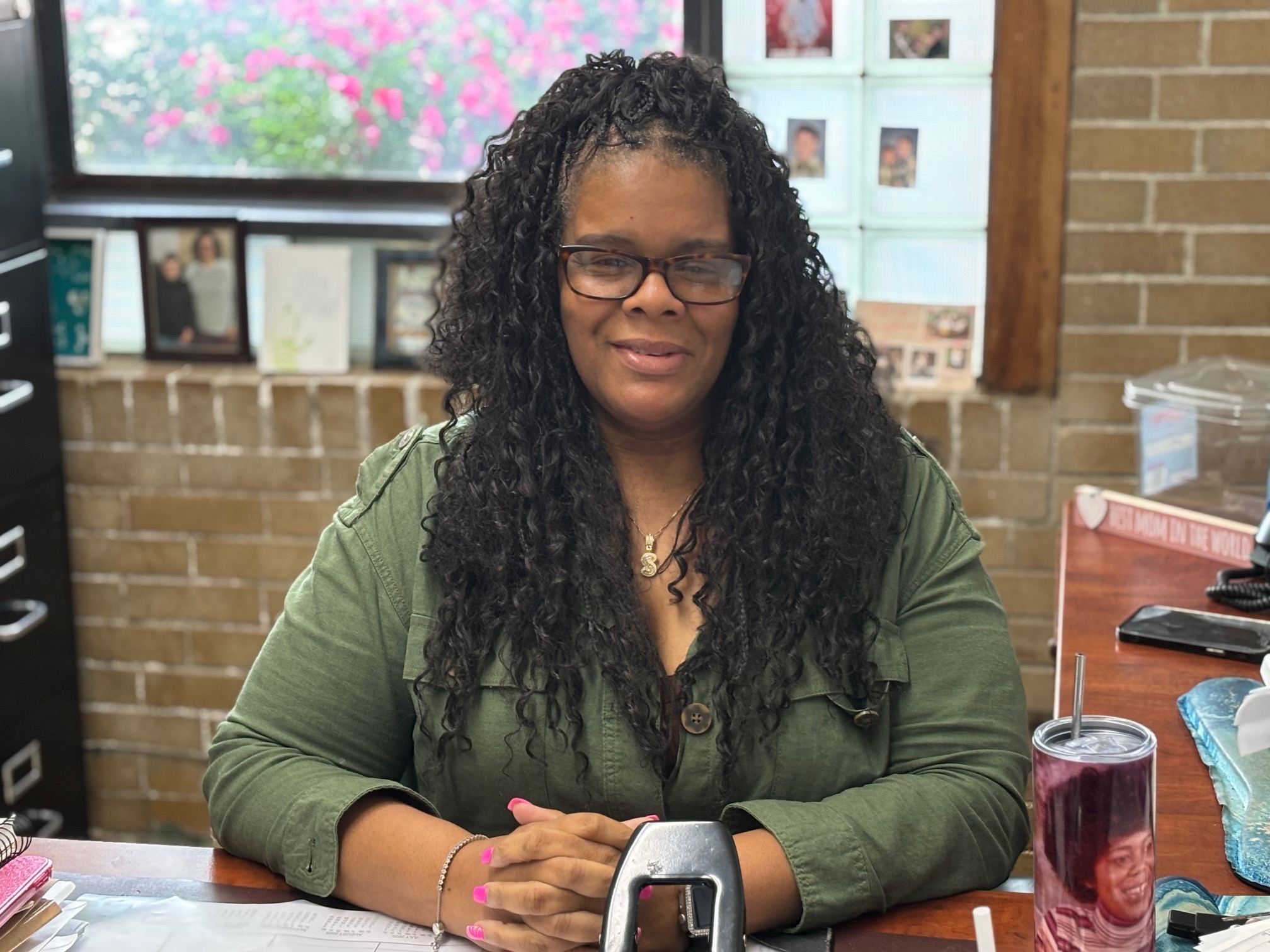
Selina Likely, a child care director in Columbus, Ohio, understands the desperation that parents feel when they can’t find a good placement for their children with disabilities. When Likely’s daughter was a child, the little girl was abruptly kicked out of her daycare center for biting, leaving her mother with little recourse.
“I was so angry and mad at the time,” said Likely, whose daughter is now an adult. “How are you going to kick out a 1-year-old?”
Thanks to a new state initiative, Likely and other child care providers like her can now receive additional training on how to support children with disabilities, who are far more likely than other children to be expelled from child care programs. Some states have similar programs, with the ultimate goal of creating more child care slots where young children with disabilities and delays can thrive.
How Hechinger inspired a bill
Earlier this year, my colleague Sarah Carr published a piece revealing that in Illinois and other states many families of premature babies are leaving the hospital with no information or guidance on critical therapies they are entitled to. In June, the Illinois Legislature passed a bill that would require hospitals to distribute detailed information on early intervention — those required therapies for babies and toddlers with disabilities and developmental delays — to most families with severely premature infants. The new law was proposed by state Rep. Janet Yang Rohr after Sarah’s story was published.
The bill, which awaits action by the governor, would also require the state’s early childhood systems to prioritize, in a public awareness campaign, the early identification of infants who automatically qualify for the therapies because of their low birth weight.
This story about children with disabilities was produced by The Hechinger Report, a nonprofit, independent news organization focused on inequality and innovation in education. Sign up for the Hechinger newsletter.
The Hechinger Report provides in-depth, fact-based, unbiased reporting on education that is free to all readers. But that doesn’t mean it’s free to produce. Our work keeps educators and the public informed about pressing issues at schools and on campuses throughout the country. We tell the whole story, even when the details are inconvenient. Help us keep doing that.
This story about children with disabilities was produced by The Hechinger Report, a nonprofit, independent news organization focused on inequality and innovation in education. Sign up for the Hechinger newsletter.
COLUMBUS, Ohio — When Selina Likely became director of the Edwards Creative Learning Center six years ago, she knew there was one longstanding practice that she wanted to change. For as long as she had taught at the thriving child care center, it had turned away many children with disabilities such as autism and Down syndrome. The practice was even encoded in the center’s handbook as policy.
Likely, the parent of a child with a disability, wanted to stop telling families no, but she knew that to do that she and her staff would need more support. “I said, ‘Let’s start getting training and see what we can do.’”
Not too long after, her effort received a big boost from a state-funded initiative in Ohio to strengthen child care teachers’ knowledge and confidence in working with young kids with disabilities and developmental delays. That program, Ohio PROMISE, offers free online training for child care workers in everything from the benefits of kids of all abilities learning and playing together to the kinds of classroom materials most helpful to have on hand. It also offers as-needed mentorship and support from trained coaches across the state.
Related: Young children have unique needs, and providing the right care can be a challenge. Our free early childhood education newsletter tracks the issues.
Child care providers across the country — including large, established centers and tiny home-based programs — struggle to meet the needs of children with disabilities, according to a 2024 report from the U.S. Government Accountability Office. More than a quarter of parents of children with disabilities said they had a lot of difficulty finding appropriate care for their kids. And even those who do find a spot regularly encounter challenges, like having their children excluded from extracurricular activities such as field trips and even academic instruction.
“It’s really hard to find child care for this population, we heard that loud and clear,” said Elizabeth Curda, a director on the GAO’s Education, Workforce and Income Security team and a coauthor of the report. Even the most well-resourced centers report that they struggle to meet the needs of children with disabilities, according to Curda.
There’s a lot of desire at the grassroots level to change that. Ohio PROMISE and a few other recent initiatives provide models for how to expand the capacity — and the will — of child care centers to serve the more than 2 million U.S. children age 5 or below who have a disability or developmental delay.
Cards on the walls at Edwards Creative Learning Center display the signs for different letters so students — whether nonverbal or not — can all learn sign language. Credit: Sarah Carr/The Hechinger Report
In Vermont, for instance, officials hope to soon unveil a free, on-demand training program aimed at helping child care teachers have more inclusive classrooms. And officials in Ohio’s Summit County, home to Akron, report growing interest from other counties in creating programs based on Summit’s more than decade-old model that provides in-person training for child care operators in inclusion of children with disabilities.
“We’re helping to create child care centers that feel they can handle whatever comes their way, especially when it comes to significant behavior concerns,” said Yolanda Mahoney, the early childhood center support supervisor for Summit County’s disabilities board.
The federal government until recently encouraged the creation of such models. In 2023, the federal Department of Education and Department of Health and Human Services issued a joint statement urging states to take steps to support inclusion in early childhood settings, including strengthening training and accountability.
Under the current president, federal momentum on the issue has largely stalled. While the administration of President Donald Trump hasn’t directly attacked inclusion in the context of special education, the president has criticized the term more broadly — especially when it comes to diversity, equity and inclusion. That can create uncertainty and a chilling effect on advocates of inclusion efforts of all kinds.
Funding for some inclusion efforts is also in jeopardy. States rely on Medicaid, which faces nearly $1 trillion in cuts over the next decade, to pay for early intervention programs for children birth to age 3 with developmental delays and disabilities. Trump has also proposed eliminating Preschool Development Grants, which states such as Vermont and Illinois have used to expand support of young children with disabilities.
That means over the next few years, progress on inclusion in child care settings could hinge largely on state and local investment. It helps that there’s a “real desire” among providers to enroll more children with disabilities, said Kristen Jones, an assistant director on the GAO’s education, workforce and income security team, who also worked on the report. “But there’s also a concern that currently they can’t do that in a safe way” because of a lack of training and resources.
In Ohio, the idea for Ohio PROMISE came after an appeal in 2022 from Republican Gov. Mike DeWine. He reported that families were coming to him saying they couldn’t find child care for their kids with disabilities.
“He said, ‘Come to me with ideas to solve that problem,’” recalled Wendy Grove, a senior adviser in the Ohio Department of Children and Youth who spearheaded development of the program.
Grove and her colleagues had already been working on a related effort. In 2020, Ohio won a federal grant that included help exploring how well — or not — children with disabilities were being included in child care and early education settings. DeWine liked the idea Grove’s team presented of morphing that work into a state-led effort to strengthen training and support for child care teachers. They also proposed more direct support to families, including the extension of child care vouchers to families with incomes above the poverty level, with a higher reimbursement rate for children with disabilities.
The training, which debuted about two years ago, is provided in three levels. Jada Cutchall, a preschool teacher at Imaginative Beginnings, an early learning center just outside of Toledo, recently completed the third tier, which for her included customized coaching. Cutchall’s coach helped her create communication tools for a largely nonverbal student, she said, including a board with pictures children can point to if, for example, they want to go to the bathroom or try a different playground activity.
As a result, Cutchall said, she has watched kids with disabilities, including those with speech impairments and autism, engage much more directly with their classmates. “They have the courage to ask their peers to play with them — or at least not distance themselves as much as they usually would,” she said. All of the children in the classroom have benefited, she added, noting that kids without disabilities have taken an interest in learning sign language, strengthening their own communication skills and fostering empathy.
Child care programs where one teacher and one administrator have completed some of the training earn a special designation from the state, which may eventually be tied to the opportunity to get extra funding to serve children with disabilities. In Ohio PROMISE’s first year, 1,001 child care centers — about 10 percent of the total number in Ohio — earned that designation, according to Grove.
For the last six years, Selina Likely has overseen the Edwards Creative Learning Center, where she’s steadily tried to enroll more children with disabilities and developmental delays. Credit: Sarah Carr/The Hechinger Report
The effort costs a little over $1 million in state dollars each year, with most of that paying for several regional support personnel who work directly with centers as mentors and advisers. Over the last two years, Ohio has seen a 38 percent increase in the number of children in publicly funded centers who qualify for the higher voucher reimbursement rate for children with disabilities, which can be double the size of the standard voucher.
Grove hopes that ultimately the effort plays a role in narrowing a critical and stubborn gap in the state: about 27 percent of children without disabilities show readiness on state standards for kindergarten; only 14 percent of children with disabilities do. Since so few disabilities exhibited at that age are related to intellectual or cognitive functioning, “we shouldn’t see that gap,” said Grove. “There’s no real reason.”
One goal of the new efforts is to reduce the number of young children with disabilities who are expelled from or pushed out of care. Those children are frequently asked to leave for behaviors related to their disability, the GAO report found.
Several years ago, a child care center in Columbus expelled Meagan Severance’s 18-month-old son for biting a staff member. The boy has several special needs, including some related to attention deficit hyperactivity disorder. Severance brought him to Edwards Creative Learning Center, where not too long after Selina Likely shifted into the role of director. The boy also bit a staff member there — not uncommon behavior for toddlers, especially those with sensory sensitivities and communication challenges.
Likely was determined to work with the child, not expel him. “They put in time and effort,” said Severance. “The response wasn’t, ‘He bit someone, he’s gone.’”
Likely empathized. Decades earlier, her own daughter had been expelled from a child care center in her hometown of Mansfield, Ohio, for biting.
“I was so angry and mad at the time — how are you going to kick out a 1-year-old?” she said. The center director didn’t think at all about how to help her child, Likely recalled, instead asking Likely what might be happening at home to make the child want to bite. She said she got no notice or grace period to find a new placement. “That left me in a disheartened place,” she said. “I was like, ‘I still have to go to work.”
Seventeen years old at the time, she was inspired by the injustice of the situation to quit her job in a factory and apply to be an assistant in a child care program. She’s been in the industry ever since, gradually trying to make more space for children like her daughter, who was later diagnosed with autism.
Meagan Severance, a parent and teacher at the Edwards center, has worked in recent years to make her classroom more inclusive for children with all different abilities. Credit: Sarah Carr/The Hechinger Report
As director, Likely displays the nameplate “chaos coordinator” on her desk. And she’s taken the stance that the center should at least try to work with every kid. She and some of her teachers have completed the first two tiers of the Ohio PROMISE training, as well as some related sessions available from the state. Likely estimates that about 10 percent of the children in her center have a diagnosed disability or developmental delay.
Liasun Meadows, whose son has Down syndrome, chose Edwards several years ago for her then 1-year-old over another program better known for its work with children with disabilities. She has not been disappointed.
Parents of kids with disabilities watch their children like a hawk, she said. “There are certain things you notice that you don’t expect others to notice, but they do at Edwards. They’ve been growing and learning alongside him.”
Severance, whose son is now 8, works at the center these days, leading the 3-year-old room, which includes two children who are largely nonverbal. She’s made the classroom more inclusive, adding fidget toys for children with sensory issues, rearranging the classroom to create calming areas, providing communication books to nonverbal children so they can more easily express needs and wants, and teaching everyone some sign language.
“For a while there was segregation in the classroom” between the kids with disabilities and those without, Severance said. But that’s lessened with the changes. “Inclusion has been good for the kids who are verbal — and nonverbal,” she said.
As in Ohio, state officials in Vermont turned to online training to help ensure young children with disabilities aren’t denied quality care. The state should soon debut the first parts of a new training program, focusing on outreach to child care administrators and support for neurodivergent children. The state wanted to focus on center leaders first because “directors that are comfortable with inclusion lead programs that are comfortable with inclusion,” said Dawn Rouse, the director of statewide systems in Vermont’s Child Development Division.
One tool for supporting and calming children with sensory issues is keeping a healthy supply of fidget toys and Pop-Its on hand. Credit: Sarah Carr/The Hechinger Report
Vermont also pumped millions of dollars into a separate program, known as the Special Accommodations Grant, that supports young children with disabilities. Since 2009 the state has set aside $300,000 a year that child care centers can tap to provide services for individual children with disabilities. It might help buy specialized equipment for a child with cerebral palsy, for instance, or be used to hire a full- or part-time aide.
The $300,000 has been maxed out every year, Rouse said. And after the pandemic, the need — and the number of applications — surged.
As a result, the state allocated some federal American Rescue Plan and Preschool Development Grant dollars to increase spending on the program by about sevenfold — to between $2 million and $2.5 million annually — an amount Rouse still describes as a “Band-Aid.” Without access to the grants, “we see a lot of children being asked to leave programs,” Rouse said. “That’s not good for any child, but for children with specialized developmental needs it’s particularly bad.”
Over time, Likely hopes, her Ohio center can play a small role in reducing that instability, although the center hasn’t yet been able to work with all such children it wants to. Likely recalls one toddler with a severe disability who climbed up anything he could. There wasn’t enough money to pay for what the child really needed: a full-time aide. “It’s hard when you know you’ve tried but still have to say no,” she said. “That breaks my heart more than anything.”
On one June morning, the center’s teachers acknowledged and celebrated several milestones in its work on inclusion, big and small. One child in the 3-year-old classroom with fine and gross motor challenges was drinking independently from a bottle. The preschool classroom held its first graduation ceremony, translated partly into sign language. All of the kids, no matter their challenges, were set to go on field trips to Dairy Queen and the zoo.
Likely dreams of someday running a center where about half of the children have a disability or delay. It may be years off, she said, but as with the milestones she sees scores of children at the center reach every day, “There’s a way — if there’s a will.”
Sarah Carr is a fellow at New America, focused on reporting on early childhood issues.
The Hechinger Report provides in-depth, fact-based, unbiased reporting on education that is free to all readers. But that doesn’t mean it’s free to produce. Our work keeps educators and the public informed about pressing issues at schools and on campuses throughout the country. We tell the whole story, even when the details are inconvenient. Help us keep doing that.
Child care worries have been made worse this summer by federal cuts and depleting pandemic funds, and they aren’t expected to ease by the first day of school. While their kids might have gotten a rest, parents reported longer commutes and newfound stress.
A dozen parents from across the state told Mississippi Today about summer child care plans for their toddlers and elementary school-aged children. They shared a mix of anxiety about finding care and frustration with existing options.
Parents have had more reasons to be anxious about those options this summer than in previous ones. A loss of federally funded summer programming for youth, added fees for day care tuition and the loss of vouchers to subsidize tuition costs have changed the landscape of child care.
Shequite Johnson poses with newborn Noah on a work trip in Jackson, Miss., on Feb. 12, 2025. (Shequite Johnson)
For Shequite Johnson, a professor at Mississippi Valley State University, it has meant driving 45 minutes in the opposite direction of her job for day care.
“I’ve had to leave my 13-year-old with my 4-year-old,” she said. “And you’re put in a situation where you have to make these decisions. Some are even leaving their babies at home by themselves for five hours and checking on them during lunch hour.”
She had to pull her 4-year-old boy from a day care in her hometown because of excessive fees. She was charged a $20 late fee at pickup, a $100 registration fee for each of her two boys, and a $150 supplies fee that was announced in June on top of the $135 weekly fee.
The Mississippi Department of Human Services recently announced a cutback on vouchers that subsidize child care costs. Without Johnson’s child care voucher, her nearby options were limited to a city-run program in an unsafe neighborhood and three programs in aging facilities.
Delta Health Alliance runs free and reduced summer programming for elementary-aged children. But Johnson makes more than the income cut-off.
“It’s a crisis right now in Mississippi,” said Carol Burnett, executive director of Mississippi Low-Income Child Care Initiative. “The lack of affordable child care prevents employers from keeping their workforce. And yet the state of Mississippi wants people to go back to work.”
“Parents are having to make choices. And none of them are good,” she added.
The Child Care Initiative operates a program that connects single moms with higher-paying jobs and covers the costs of child care during the transition. The organization is also advocating for the Mississippi Department of Human Services to spend some of the $156 million in unspent Temporary Assistance for Needy Families on Mississippi’s Child Care Payment Program.
The Child Care Development Fund, which nationally supports these voucher state programs, relied on pandemic-era funding that ran out in September. The Department of Human Services asked the Legislature for $40 million to continue serving the same number of families – but received $15 million.
In April, the department put a hold on renewals for child care vouchers except for deployed military parents, parents who are TANF recipients, foster children guardians, teen parents, parents of special needs children and homeless parents. As a result, 9,000 parents lost child care assistance.
The department will keep the hold until the number of enrollees drops to 27,000 or its budget goes below $12 million in monthly costs. As of Friday, it had no further update but said it will have an announcement in the next couple of weeks.
Using TANF funds unspent from past years regardless of whether they were allocated for child care assistance is prohibited, according to federal guidance. However, the TANF state office can use the leftover funds to form a direct payment program. Ohio and Texas enacted this policy.
U.S. Department of Health and Human Services regional manager Eric Blanchette shared this idea with Mississippi Department of Human Services Early Childhood Director Chad Allgood, according to an email obtained as part of a records request filed by Mississippi Today into communication regarding TANF funds. As of Friday, there were no plans to enact a similar policy in Mississippi.
A second rent
Monica Ford pays nearly $1,600 in monthly child care costs for three kids. She works as a Shipt delivery driver in addition to her day job as a Magnolia Guaranty Life Insurance Co. auditor. She, her husband and their children recently had to move in with his parents.
Monica Ford poses with children Tahir, 7, Kian, 4, Nuri, 1, at Freedom Ridge Park in Ridgeland, Miss., July 19, 2025. (Monica Ford)
“It’s more than I’ve paid in rent,” she said. “It’s why I live with my family now.”
She uses a Jackson day care that charges $10 per minute for late pickup. The fees must be paid by the next morning.
Nearly all of the single mothers interviewed said they take on extra work to cover the rising costs of child care in their area. It’s extra work that sees them spending less time with their children.
Ashley Wilson’s child care voucher wasn’t renewed in the spring. She works 55 hours a week at a bingo hall and at Sonic Drive-In.
“We don’t get help. That’s what I don’t understand,” said Wilson, an Indianola parent.
Her preferred day care option in Indianola charged $185 per week and $20 late fees, which Wilson could not afford. Her sister was able to afford monthly costs because of an arrangement with an Angel – a benefactor who helps local families with tuition at day care providers.
Wilson tried other day cares in town. Several were in dangerous neighborhoods with staff that left milk bottles to spoil. Her toddler came home wet some afternoons and with cuts another. She gets help from family when she can.
Whitney Harper lost her child care voucher in April. She is lucky when a relative is willing to watch her 2-year old. Lately, she has considered hiring a sitter off care.com, a website that connects parents with local babysitters. In Jackson, where she lives, the hourly rate is $14 per hour.
Most of the day cares in the Jackson metro area charge between $150 and $250 per week, which is more than she can afford as a sales associate at Home Depot.
“It has been harder this year. They won’t work around my schedule, but I need the job,” she said of her employer.
‘This is the worst I have seen it’
Day care centers are left on the brink when families lose child care vouchers. Making up the lost revenue has meant higher tuition and fees for some centers and reaching out to private donors for others.
“These are small businesses,” Burnette said. “The big story in child care is how much it costs to run it. It requires adequate public investment.”
Level-Up Learning Center leadership team poses in front of their Greenville, Miss., location on July 26, 2024. Left to right are Chief Operating Officer Adrienne Walker, CEO Kaysie Burton and COO/Athletic Director Kwame Malik Barnes. (Level Up Learning Center)
This week, Level Up Learning Center owner and CEO Kaysie Burton visited Greenville’s Walmart, seeking to persuade the manager to sponsor his employees’ child care tuition. She submitted two grant applications and is working on at least three others. Burton’s business survived flooding and relocation. But the latest voucher cutback could shut her banner-adorned doors to the community
At Level Up Learning Center, 75% of parents rely on child care vouchers. In the last three months, 20 Learning Center parents have lost their child care vouchers yet most have stayed. Burton has a policy of not turning parents away if they are willing to contribute a portion of the weekly rate. She has not increased her tuition or instituted punishing fees.
But making up the lost revenue can be a challenge. Since the cutback, she has let seven teachers go, or roughly a third of her staff.
“We’re down to skin and bones right now,” Burton said. “I am willing to take anybody that is willing to come partner with us and help us help parents so that their kids can keep coming in.”
When Burton started her business during the COVID-19 pandemic, she saw the need in the Mississippi Delta for affordable, quality child care. She remains committed to helping prepare a future generation of Greenville leadership.
“We’re in the thick of it with our parents,” Burton said. “And we all just need help and we need prayer.”
SunShine Daycare owner Barbara Thompson has greeted each parent at the door since she started babysitting neighbors’ kids in her living room. The former banker has long had a passion for raising neighborhood children regardless of their parents’ status or income. She raised her seven siblings when her mother died when Thompson was 12.
But for the first time in 30 years of running a business in Greenville, Thompson is losing families by the dozen as well as longtime staff. She has leaned heavily on prayer and has reached out to state representatives for help. She fears more departures and the downsizing of her business.
In the last two months, 12 parents pulled their kids from SunShine. She will have to let three teachers go as a result.
“We won’t have any children if this continues,” Thompson said.
She regularly informs parents of the child care voucher waitlist and of the process for renewals. Besides caring for children, Thompson advises many young parents in her community. She noticed that state agencies communicate primarily through email, which a lot of her parents don’t check regularly.
Children who leave her stoop festooned with cartoon characters can face hours alone without parental supervision. Some children will sit and watch television with their grandparents. For Thompson, child care is about raising children to be “productive citizens.” The youngest years are some of the most important, she stressed.
“They didn’t take it from us,” Thompson said. “They took from the children. That’s the world’s future.”
Waitlisted
Vennesha Price is waitlisted at nearly every day care in Cleveland, where she lives. She’s been on some of the lists for eight months.
“If you haven’t been a resident for five years and you haven’t navigated the waiting list for five years, it’s harder to find a spot,” she said.
She found it difficult to both have a productive work day and watch her elementary-aged children. Eventually, she found a day care that was 40 minutes away. She wakes up an hour earlier to make the commute in time before work.
“I’m a single mother so it’s very difficult,” Price said. “After my grandmother went on to the Lord, it became a struggle trying to get to the day care in time.”
She started factoring late fees into her monthly budget. She’s also including the gas money needed for the extra legs of her commute. Her child care costs doubled for June and July.
“It’s almost like private school tuition now,” she said.
The other day, I came across an article about child care that felt so familiar I let out an exasperated sigh. Child care, the article announced, is now more expensive than college tuition and rent in most states. Many of us had just read another version of the article in March. And before that, in November 2024. Then there’s the one that dates back a little further — to 2013.
Many of these stories, which seem to come out on an annual basis, fail to mention that this is a problem that spans decades. The real news is that it hasn’t gotten any better, and many American lawmakers don’t seem to care enough to take action.
I asked Elliot Haspel his thoughts on this a few weeks ago when I interviewed him about his new book, “Raising a Nation,” which will be available Aug. 11. In the book, he presents 10 arguments — some of them well known and others less intuitive — for why child care needs to be a more supported part of American society. His book starts with an anecdote that echoes my observation on the dispiriting lack of momentum around the issue: In 1998, President William Jefferson Clinton stood in the Rose Garden and declared in an address that child care was essential to the nation’s economy. President Barack Obama made the same argument in 2015. President Donald Trump did the same in 2019. Yet as the years go by, little changes.
“We have been having many of the same child care battles for a long time, for decades and decades and decades,” Haspel told me.
Haspel’s arguments in “Raising a Nation” include “The Economic Case,” where he digs into how child care affects business productivity and the labor force; and the “The Patriotic Case,” where he presents parenthood as patriotic and argues child care is important for American democracy.
He cites numerous worrisome examples of the consequences of insufficient policy and investment. In making “The Community Case,” for instance, he tells a jarring story from Montrose, Colorado, where the lack of child care has led to difficulties recruiting and retaining police officers. That, in turn, negatively affects the city’s crime rate and response time to emergency calls. And in arguing “The Antipoverty Case,” he highlights extensive research on how a lack of child care is a key theme for families who are unable to move out of poverty.
“Care is, in fact, just as important to our social infrastructure as having a public education system, having public libraries, having public parks,” he told me.
As he writes, it’s clear why we haven’t made much progress as a nation, and why we remain behind nearly every other wealthy country in investing in child care: “We have never established that good child care belongs among the pantheon of American values.”
While Haspel’s book focuses more on why we need more robust child care policy than howwe get there, he provides a few ideas for the latter: giving child care educators a wage that could support their own families, investing in stay-at-home parents and informal caregivers along with licensed care, and including before- and after-school care and summer care in the system. While those seem like lofty goals, Haspel argues it is indeed fully “American” to embrace such policies. Access to high-quality child care, he argues, is not an “individual family obligation but rather a societal imperative.”
This story about child care was produced by The Hechinger Report, a nonprofit, independent news organization focused on inequality and innovation in education. Sign up for the Hechinger newsletter.
The Hechinger Report provides in-depth, fact-based, unbiased reporting on education that is free to all readers. But that doesn’t mean it’s free to produce. Our work keeps educators and the public informed about pressing issues at schools and on campuses throughout the country. We tell the whole story, even when the details are inconvenient. Help us keep doing that.
Join our zero2eight Substack community for more discussion about the latest news in early care and education. Sign up now.
Content warning: This story includes details of an infant’s death.
After Democrats passed the American Rescue Plan in 2021, states were flush with federal funding to help prop the child care sector up. But that money is now all gone, and as Republicans in Congress threaten to pass spending cuts that could further shrink state budgets, lawmakers are trying to find solutions to the child care crisis that don’t cost money.
Many have proposed changing the mandated ratios that require a certain number of early educators to care for young kids. Nearly a dozen states have considered rolling back child care regulations, including those governing staff-to-child ratios.
But while these deregulatory bills are common, it’s not a foregone conclusion that they will pass. Advocates in three states have been able to beat back these efforts in the legislative sessions that just wrapped up by mobilizing a wide variety of people to speak up against these proposals and deploying research-backed arguments about child safety and child care supply.
Eliminating Ratios Entirely
Idaho advocates faced down the most extreme bill. In its original form, HB243 would have eliminated all requirements that limit the number of young children an early educator can care for, leaving it up to individual providers. It would have been the first state in the country to take such a step.
Advocates had very little time to fight back. The bill got fast tracked; there was less than 24 hours’ notice before the first public hearing on it in the House. “You can’t get child care providers and parents there in that amount of time,” said Christine Tiddens, executive director of Idaho Voices for Children, a nonprofit that advocates for child-focused policies, noting that it requires moving work schedules and getting people to cover shifts. The bill sailed through the House.
Eventually, Tiddens said, they were able to put parents and providers in front of lawmakers to warn of the negative consequences. One of those parents was Idaho resident Kelly Emry. On June 10, 2024, she got a panicked call from the home-based child care provider where she had just started sending her 11-week-old son Logan. She dashed to the provider’s home and was told he was dead. The coroner’s report later confirmed he died from asphyxiation. According to Emry, the coroner said the provider put him down for a nap between a rolled up blanket and a pillow and left him there for hours. The provider was caring for 11 kids by herself that day, putting her out of compliance with state regulations that, at the time, required at least two staff members.
“It was completely preventable, and that’s what’s so hard for me to come to terms with,” Emry said in a podcast interview in January.
Emry wasn’t the only one who spoke up. Once the bill got to the Senate, advocates packed the hearing and overflow rooms with several hundred people. Among the 40 people who signed up to testify, 38 opposed the bill. Baby Logan’s uncle spoke, as did pediatricians, fire marshals, nurses, the state police, child welfare experts, child care providers and parents. Lawmakers were flooded with thousands of calls and emails from the opposition. Tiddens made sure every senator was sent the podcast interview with Emry.
The bill passed the Senate committee by a single vote. Advocates decided to try to stop the worst elements, knowing that the bill was likely to pass in some form. They asked a senator who opposed it to “throw a Hail Mary,” Tiddens said. When the bill came to the Senate floor, he asked for unanimous support to pull it and move it into the amending process. He got it. The original elimination of staff-to-child ratios was stripped out; instead, the bill preserved ratios, albeit higher ones than before. Under previous law, Idaho ranked at No. 41 among all states for how high its ratios were; now it has dropped even further to No. 45.
The victory is “bittersweet,” Tiddens said. She attributes it almost solely to one thing: putting parents, not just businesses and child care providers, in front of lawmakers, which led to the moving account of Logan’s family, still in the midst of raw grief. “How could you listen and not have your heart changed?” Tiddens asked.
Doubling Family Child Care Ratios
Advocates in Maryland have fought back against legislation to loosen staff-to-child ratios twice now. Last year, lawmakers introduced a bill to raise the ratios in family child care settings, but it died thanks to “a lot of advocacy,” said Beth Morrow, director of public policy at the Maryland Family Network, a nonprofit focused on child care. As in Idaho, the American Academy of Pediatrics and fire marshals warned about what would happen in the case of emergencies. Children under 2 years old are “not capable of self-preservation,” Morrow pointed out; they might hide when a fire alarm goes off and can’t evacuate on their own. “If there is an emergency you have to be able to get these kids out,” she said.
The idea returned this year in House Bill 477, this time coupled with looser ratios for center-based care. Family providers are currently allowed to care for eight children but no more than two under the age of 2; the legislation would have doubled that, allowing providers to watch as many as four children under the age of 1. That was a “nonstarter,” Morrow said. It would also have been the first time that these rules were dictated by lawmakers rather than by the Maryland State Department of Education, which would have been barred from changing them in the future.
So advocates marshalled research, with the help of national groups including the National Association for the Education of Young Children and Center for Law and Social Policy. They highlighted that there has been no evidence that stricter child care regulations lead to reduced supply. Lawmakers seemed moved by the argument that lower ratios support better health and safety for children.
During the markup session, the chief sponsor amended the bill by striking the language about higher ratios; instead, the version that passed requires the Department of Education to study child care regulations with an eye toward alleviating barriers for providers.
Ratio Increases by Another Name
In Minnesota, lawmakers took a different approach to proposing changes to the number of staff required to care for young children this session. Their legislation avoided mentioning the term “ratios” at all. Instead, the issue was presented as an exemption for in-home child care providers caring for their own children as well. The legislation originally would have exempted as many as three of the providers’ own children from the number they are licensed to watch. “That’s a direct ratio increase, no way around that,” said Clare Sanford, vice president of government and community relations at New Horizon Academy, a child care and preschool provider. “You still have the same number of adults but you’re increasing the number of children that adult is responsible for.”
In later drafts, the number of children who could be exempted kept being reduced. In the end the legislation didn’t get a standalone vote and the language was left out of the final state budget. The argument that Sanford thinks worked the best was that increasing ratios wouldn’t actually increase child care supply. That’s because, as a brief by NAEYC argues, they will lead to more burnout among providers, which will push them to leave and, in the end, reduce available child care spots.
The fight is far from over. Advocates in all three states expect lawmakers to try to loosen staff-to-child ratios again next session. Tiddens fears that, although Idaho didn’t eliminate ratios, the idea could spread. “Idaho has often been a frontrunner for harmful legislation,” she said. On the whole, more of these laws have been signed than stopped, said Diane Girouard, state policy senior analyst at ChildCare Aware of America. Ratio deregulation bills pop up “in some states every single year,” she said. “This isn’t just unique to red, conservative states. It has happened in blue states, it has happened in purple states.”
Advocates who oppose raising these ratios are formulating responses to the child care crisis that preserve safety standards without requiring state funding. In Maryland, for example, Morrow’s organization helped pass a bill that removes legal barriers to opening and operating family child care programs. The hope is that with more solutions on the table to increase child care supply, states won’t look to options that erode safety standards, such as increasing ratios.
Tiddens has vowed to fight back. “We’re not going away, and we’re going to show up next session with our own proposal,” she said. Her coalition plans to formulate a bill for next year that “prioritizes child safety at the same time as dealing with the child care shortage,” she said.