The clear-cutting across the federal government under President Donald Trump has been dramatic, with mass terminations, the suspension of decades-old programs and the neutering of entire agencies. But this spectacle has obscured a series of moves by the administration that could profoundly harm some of the most vulnerable people in the U.S.: children.
Consider: The staff of a program that helps millions of poor families keep the electricity on, in part so that babies don’t die from extreme heat or cold, have all been fired. The federal office that oversees the enforcement of child support payments has been hollowed out. Head Start preschools, which teach toddlers their ABCs and feed them healthy meals, will likely be forced to shut down en masse, some as soon as May 1. And funding for investigating child sexual abuse and internet crimes against children; responding to reports of missing children; and preventing youth violence has been withdrawn indefinitely.
The administration has laid off thousands of workers from coast to coast who had supervised education, child care, child support and child protective services systems, and it has blocked or delayed billions of dollars in funding for things like school meals and school safety.
These stark reductions have been centered in little-known children’s services offices housed within behemoth agencies such as the Department of Health and Human Services and the Department of Justice, offices with names like the Children’s Bureau, the Office of Family Assistance and the Office of Juvenile Justice and Delinquency Prevention. In part because of their obscurity, the slashing has gone relatively overlooked.
“Everyone’s been talking about what the Trump administration and DOGE have been doing, but no one seems to be talking about how, in a lot of ways, it’s been an assault on kids,” said Bruce Lesley, president of advocacy group First Focus on Children. He added that “the one cabinet agency that they’re fully decimating is the kid one,” referring to Trump’s goal of shuttering the Department of Education. Already, some 2,000 staffers there have lost or left their jobs.
The impact of these cuts will be felt far beyond Washington, rippling out to thousands of state and local agencies serving children nationwide.
The Department of Education, for instance, has rescinded as much as $3 billionin pandemic-recovery funding for schools, which would have been used for everything from tutoring services for Maryland students who’ve fallen behind to making the air safer to breathe and the water safer to drink for students in Flint, Michigan. The Department of Agriculture, meanwhile, has canceled $660 million in promised grants to farm-to-school programs, which had been providing fresh meat and produce to school cafeterias while supporting small farmers.
At the Department of Health and Human Services, Robert F. Kennedy Jr., the agency’s secretary, has dismissed all of the staff that had distributed $1.7 billion annually in Social Services Block Grant money, which many states have long depended on to be able to run their child welfare, foster care and adoption systems, including birth family visitation, caseworker training and more. The grants also fund day care, counseling and disability services for kids. (It is unclear whether anyone remains at HHS who would know how to get all of that funding out the door or whether it will now be administered by White House appointees.)
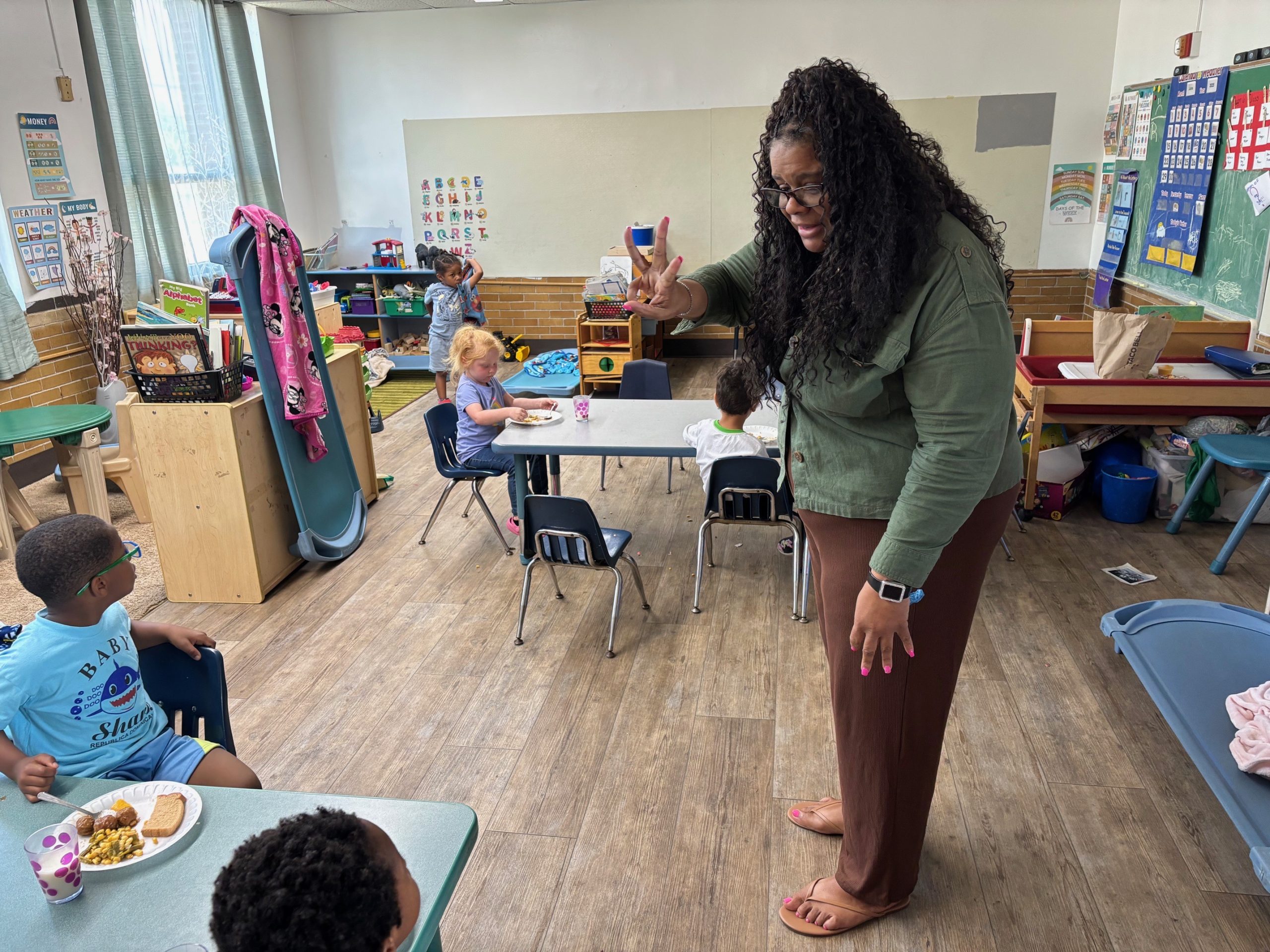
Head Start will be especially affected in the wake of Kennedy’s mass firings of Office of Head Start regional staff and news that the president’s draft budget proposes eliminating funding for the program altogether. That would leave one million working-class parents who rely on Head Start not only for pre-K education but also for child care, particularly in rural areas, with nowhere to send their kids during the day.
Some local Head Start programs are already having to close their doors, and many program directors are encountering impediments to spending their current budgets. When they seek reimbursement after paying their teachers or purchasing school supplies, they’re being directed to a new “Defend the Spend” DOGE website asking them to “justify” each item, even though the spending has already been appropriated by Congress and audited by nonpartisan civil servants.
Next on the chopping block, it appears, is Medicaid, which serves children in greater numbers than any other age group. If Republicans in Congress go through with the cuts they’ve been discussing, and Trump signs those cuts into law, kids from lower- and middle-class families across the U.S. will lose access to health care at their schools, in foster care, for their disabilities or for cancer treatment.
The Trump administration has touted the president’s record of “protecting America’s children,” asserting in a recent post that Trump will “never stop fighting for their right to a healthy, productive upbringing.” The statement listed five examples of that commitment. Four were related to transgender issues (including making it U.S. government policy that there are only two sexes and keeping trans athletes out of women’s sports); the other was a ban on COVID-19 vaccine mandates at schools that receive federal funding.
The White House, and multiple agencies, declined to respond to most of ProPublica’s questions. Madi Biedermann, a Department of Education spokesperson, addressed the elimination of pandemic recovery funding, saying that “COVID is over”; that the Biden administration established an “irresponsible precedent” by extending the deadline to spend these funds (and exceeding their original purpose); and that the department will consider extensions if individual projects show a clear connection between COVID and student learning.
An HHS spokesperson, in response to ProPublica’s questions about cuts to children’s programs across that agency, sent a short statement saying that the department, guided by Trump, is restructuring with a focus on cutting wasteful bureaucracy. The offices serving children, the statement said, will be merged into a newly established “Administration for Healthy America.”
Programs that serve kids havehistorically fared the worst when those in power are looking for ways to cut the budget. That’s in part because kids can’t vote, and they typically don’t belong to political organizations. International aid groups, another constituency devastated by Trump’s policy agenda, also can’t say that they represent many U.S. voters.
This dynamic may be part of why cuts on the health side of the Department of Health and Human Services — layoffs of doctors, medical researchers and the like — have received more political and press attention than those on the human services side, where the Administration for Children and Families is located. That’s where you can find the Office of Child Support Services, the Office of Head Start, the Office of Child Care (which promotes minimum health and safety standards for child care programs nationally and helps states reduce the cost of child care for families), the Office of Family Assistance (which helps states administer direct aid to lower-income parents and kids), the Children’s Bureau (which oversees child protective services, foster care and adoption) and the Family and Youth Services Bureau (which aids runaway and homeless teens, among others).
All told, these programs have seen their staffs cut from roughly 2,400 employees as of January to 1,500 now, according to a shared Google document that is being regularly updated by former HHS officials. (Neither the White House nor agency leadership have released the exact numbers of cuts.)
Those losses have been most acutely felt in the agency’s regional offices, five out of 10 of which — covering over 20 states — have been closed by the Trump administration. They were dissolved this month without notice to their own employees or to the local providers they worked with. It was these outposts that had monitored Head Start programs to make sure that they had fences around their playgrounds, gates at the top of their stairs and enough staffing to keep an eye on even the most energetic little ones. It was also the regional staff who had helped state child support programs modernize their computer systems and navigate federal law. That allowed them, among other things, to be able to “pass through” more money to families instead of depositing it in state coffers to reimburse themselves for costs.
And it was the regional staff who’d had the relationships with tribal officials that allowed them to routinely work together to address child support, child care and child welfare challenges faced by Native families. Together, they had worked to overcome sometimes deep distrust of the federal government among tribal leaders, who may now have no one to ask for help with their children’s programs other than political appointees in D.C.
In the wake of the regional office cuts, local child services program directors have no idea who in the federal government to call when they have urgent concerns, many told ProPublica. “No one knows anything,” said one state child support director, asking not to be named in order to speak candidly about the administration’s actions. “We have no idea who will be auditing us.”
“We’re trying to be reassuring to our families,” the official said, “but if the national system goes down, so does ours.”
That national system includes the complex web of databases and technical support maintained and provided by the Office of Child Support Services at HHS, which helps states locate parents who owe child support in order to withhold part of their paychecks or otherwise obtain the money they owe, which is then sent to the parent who has custody of the child. Without this federal data and assistance, child support orders would have little way of being enforced across state lines.
For that reason, the Trump administration is making a risky gamble by slashing staffing at the federal child support office, said Vicki Turetsky, who headed that office under the Obama administration. She worries that the layoffs create a danger of system outages that would cause child support payments to be missed or delayed. (“That’s a family’s rent,” she said.) The instability is compounded, she said, by DOGE’s recent unexplained move to access a highly confidential national child support database.
But even if the worst doesn’t come to pass, there will still be concrete consequences for the delivery of child support to families, Turetsky said. The staff members who’ve been pushed out include those who’d helped manage complicated, outdated IT systems; without updates, these programs might over- or undershoot the amount of child support that a parent owes, misdirect the money or fail to give notice to the dad or mom about a change in the case.
When Liz Ryan departed as administrator of the Department of Justice’s juvenile division in January, its website was flush with opportunities for state and local law enforcement as well as nonprofits to apply for federal funding for a myriad of initiatives that help children. There were funds for local police task forces that investigate child exploitation on the internet; for programs where abused children are interviewed by police and mental health professionals; and for court-appointed advocates for victimized kids. Grants were also available for mentoring programs like Big Brothers Big Sisters and the Boys & Girls Clubs of America.
But the Trump administration removed those grant applications, which total over $400 million in a typical year. And Ryan said there still hasn’t been any communication, including in what used to be regular emails with grant recipients, many of whom she remains in touch with, about whether this congressionally approved money even still exists or whether some of it might eventually be made available again.
A spokesperson for the Office of Justice Programs within the DOJ said the agency is reviewing programs, policies and materials and “taking action as appropriate” in accordance with Trump’s executive orders and guidance. When that review has been completed, local agencies and programs seeking grants will be notified.
Multiple nonprofits serving exploited children declined to speak on the record to ProPublica, fearing that doing so might undermine what chance they still had of getting potential grants.
“Look at what happened to the law firms,” one official said, adding that time is running out to fund his program’s services for victims of child abuse for the upcoming fiscal year.
“I never anticipated that programs and services and opportunities for young people wouldn’t be funded at all by the federal government,” Ryan said, adding that local children’s organizations likely can’t go to states, whose budgets are already underwater, to make up the funding gap. “When you look at this alongside what they’re doing at HHS and the Department of Education and to Medicaid, it’s undercutting every single effort that we have to serve kids.”