Tag: chill

  • How ‘anti-woke’ laws and cancel culture combine to chill classroom speech

    How ‘anti-woke’ laws and cancel culture combine to chill classroom speech

    Over the past several years, some politicians have tried to ban or limit discussion of controversial ideas in higher education, particularly those related to critical race theory, gender identity, and diversity, equity, and inclusion. 

    FIRE has been on the front lines of this fight, opposing bills that target classroom speech and challenging those that become law. We’ve warned legislators that attempts to ban ideas from the college classroom are unconstitutional. As the Supreme Court explained, the First Amendment “does not tolerate laws that cast a pall of orthodoxy over the classroom.”

    Many legislatures now write their bills to avoid crossing this constitutional line. When they do not, courts often step in. Florida’s “Stop WOKE Act,” for example — part of which FIRE has challenged in court — currently faces a preliminary injunction blocking the enforcement of its classroom provisions.

    LAWSUIT: FIRE challenges Stop WOKE Act’s limits on how Florida professors can teach about race, sex

    First Amendment doesn’t allow Florida law to declare which concepts are too challenging for students and faculty to discuss in a college classroom.


    Read More

    Perhaps in part because of this roadblock, some actors have taken a more indirect approach to removing disfavored ideas from the classroom: a mix of “anti-woke” laws and cancel culture designed to intimidate schools into doing what the state cannot do directly.

    This process involves some or all of the following steps: a politician passes an “anti-woke” law, someone misinterprets the law and claims a professor violated it, outrage erupts and people demand the school take action, school administrators cave to the pressure and punish the teacher, the school announces reviews of curricula, and then other schools follow suit.

    Here’s how that cycle works in detail — and why it’s chilling classroom speech.

    Step 1: “Anti-woke” laws set the stage

    Texas A&M senior lecturer Melissa McCoul began the summer semester teaching ENGL 360: Literature for Children, a course she had taught 12 times that focused on “representative writers, genres, texts and movements.” During the third week of class, they were reading Jude Saves the World, a novel about a 12-year-old who identifies as nonbinary. As part of their discussion, McCoul displayed an image of the “gender unicorn,” a graphic device used to educate children about gender identity, expression, and sexuality. 

    Whatever one’s personal views, it should not be a surprise that a children’s literature course would focus on how contemporary children’s authors approach the major social issues of the day, such as gender ideology. Faculty at public colleges also have a First Amendment right to share their views, and to invite students who disagree to challenge them. In fact, McCoul acknowledged in the course syllabus that some of the class materials would spark “differing opinions” and that students were “not required to agree.”

    This was a chance for open dialogue, until it wasn’t.

    A student in McCoul’s class raised her hand and asserted that President Trump’s executive order on gender identity somehow made the discussion illegal. The student subsequently reached out to school President Mark Welsh, who defended the inclusion of LGBT content in professional-track courses. He explained to her that students “want to understand the issues” that affect the people they will work with.

    Nevertheless, the school canceled the class for the summer, citing “the emotions” generated by this controversy. That’s no reason to cancel a class, but the school did not punish McCoul or cancel her class for the fall semester. Instead, they agreed that her course would be taken out of the core curriculum and more clearly marked as a special topics class.

    But then, on Sept. 8, Texas State Representative Brian Harrison posted video of the student’s exchange with McCoul on X and wrote a letter to the Trump administration calling for an “investigation into discriminatory DEI practices.” The assistant attorney general for the Justice Department’s Civil Rights Division, Harmeet K. Dhillon, called the incident “deeply concerning” and said her division would “look into this.” Gov. Greg Abbott said McCoul acted “contrary to Texas law” without actually citing any specific laws (though Abbott directed state agencies earlier this year to align their practices and policies to recognize only two sexes).

    Crucially, neither Abbott’s directive nor Trump’s order bans discussion of gender identity in college classrooms. Doing so, after all, would be unconstitutional. Instead, they largely instruct Texas and federal agencies to recognize only two sexes in official government work, not to police classroom speech.

    Step 2: An outrage campaign demands punishment

    Harrison’s Sept. 8 post kicked off a cascade of calls to discipline McCoul. It was also only the first in a long thread of posts that set off a social media firestorm. Before long, other high profile government figures like Abbott and Dhillon were chiming in. Others with large social media followings picked up the story. A routine classroom discussion had been reframed to the public as a legal violation requiring immediate sanction.

    Step 3: The school caves to pressure

    Soon after, Texas A&M fired McCoul. The school also demoted College of Arts and Sciences’ Dean Mark Zoran and the English Department head Emily Johansen. 

    President Welsh justified these moves by alleging McCoul taught “content that was inconsistent with the published course description.” The apparent basis for this assertion was that McCoul’s course was renumbered as ENGL 394, rather than a 400-level number that would supposedly mark it as a special-topics class. But McCoul and Johansen dispute this, noting that 394 places the course outside the core curriculum and qualifies it as a special-topic class. Other faculty agreed that there is little difference between these designations. 

    Whatever the case, the public pressure only continued to build. Harrison demanded that Texas A&M terminate Welsh. Texas’s lieutenant governor, Dan Patrick, echoed the call, saying that Welsh’s “ambivalence on the issue and his dismissal of the student’s concerns by immediately taking the side of the professor is unacceptable.” Barely a week later, Welsh announced his resignation, following McCoul out the door.

    Step 4: Administrators announce curricular reviews

    If this story ended only with a professor being fired for her protected speech, that would be bad enough. And driving out a university president is even more alarming, because it shows how these campaigns scare people into silence or submission. But Texas A&M System Chancellor Glenn Hegar then announced that he and the board of regents would audit all courses across all 12 schools in the A&M System. 

    Neither Hegar nor the board explained how it would carry out the course review, leaving faculty members guessing as to what materials would be under their microscope. But in a campaign like this one, a chilling vagueness is part of the point. In the aftermath of seeing a fellow professor fired for her classroom speech, one has to imagine that many will choose to avoid addressing sensitive topics in the future. And this will only serve to rob Texas A&M students of the opportunity to engage with challenging and topical issues.

    Step 5: Other schools get the message

    Although this controversy started with one class taught by one professor at one Texas A&M campus, the ripple effects rapidly reached campuses across the state. According to reporting at the time, multiple school systems launched reviews:

    • Texas Tech told faculty that teaching must comply with “current state and federal law recogniz[ing] only two human sexes.”
    • The University of North Texas system ordered an expedited review of courses and programs, including syllabi, for compliance with “all current applicable state and federal laws, executive orders, and court orders.”
    • A University of Texas system spokesperson said they were reviewing “gender identity” courses for legal compliance.
    • The Texas State University System told each campus to review academic programming “in light of recent inquiries.”
    • Texas Woman’s University System said it was reviewing academic courses and programs for compliance.

    And that, in a nutshell, is how vague laws and online outrage came together in a toxic cocktail that resulted in a fired professor, a removed dean and department head, and a university president’s resignation, not to mention several systemwide university audits of entire course catalogues — all starting with a single student’s complaint that discussing a children’s book was “illegal.”

    A growing problem

    This practice of overreading laws and executive orders in order to target protected speech is, unfortunately, not just limited to Texas. In July, at the University of North Carolina at Chapel Hill, the Oversight Project reportedly filed a records request for syllabi and materials from roughly 70 courses containing terms such as: “Diversity, Equity, Inclusion, and Belonging,” “gender identity,” “intersectionality,” “white privilege,” “cultural humility,” “racial equity,” “implicit bias,” “microaggressions,” “queer,” and “sexuality.” 

    The stated purpose of this request is to evaluate and publicize “compliance with current Executive Orders issued by the President of the United States.” But again, Trump’s executive orders have no bearing on whether these words can be used in class materials. Suggesting otherwise and going on a fishing expedition for controversial class materials only further chills protected speech.

    Sometimes the pressure is quieter, but no less chilling. At the University of Alabama, Dana Patton, director of the Witt Fellows Program, says she was told by university officials that a “very powerful person” in the state capital believed her program violated state law. This person reportedly asserted, among other things, that “divisive concepts (were) embedded” in the program. Patton responded by removing course content, including three documentaries, from one of her classes because they can prompt a “visceral reaction” and “feelings of guilt and anger” in students. This is self-censorship driven by fear of political blowback, not educational judgment.

    How not to reform higher ed

    As government officials increasingly look for ways to reform higher education, they must remember that efforts to ban controversial ideas from academia are not merely unconstitutional, they’re harmful regardless of their legal legitimacy. Such efforts frustrate an essential purpose of university life: young Americans should be able to explore and grapple with a wide variety of ideas, even those that many find offensive.

    Amy Wax is academic freedom’s canary in the coal mine

    Penn’s chilling decision to punish the controversial professor calls tenure protections at private universities into question


    Read More

    The debates in this country around gender and sexuality will not subside because of censorship in Texas. Indeed, classroom debates on this topic have the potential to leave both conservative and liberal students with a richer understanding of the issue. But some young Texans will now be robbed of this opportunity. Many others will be left with impoverished versions of those conversations, stripped of anything controversial that would draw the ire of government officials.

    We should expect college students to be fearless when faced with ideas they dislike, regardless of the partisan valence of those ideas. As FIRE said when critics on the left came after conservative University of Pennsylvania professor Amy Wax, “Any university that would attempt to shield its community from offense would soon see the death of intellectual vitality, and the waning of its influence in society.”

    If lawmakers want to reform higher education or bolster viewpoint diversity, they should do so by passing laws that protect the speech rights of all students and faculty — like FIRE’s model legislation — and they should focus on bringing more ideas onto public campuses, not removing those they dislike through vague assertions of illegality and targeted pressure campaigns.

    Source link

  • Trump’s push for ‘patriotic’ education could further chill history instruction

    Trump’s push for ‘patriotic’ education could further chill history instruction

    High school history teacher Antoine Stroman says he wants his students to ask “the hard questions” — about slavery, Jim Crow, the murder of George Floyd and other painful episodes that have shaped the United States. 

    Now, Stroman worries that President Donald Trump’s push for “patriotic education” could complicate the direct, factual way he teaches such events. Last month, the president announced a plan to present American history that emphasizes “a unifying and uplifting portrayal of the nation’s founding ideals,” and inspires “a love of country.” 

    Stroman does not believe students at the magnet high school where he teaches in Philadelphia will buy this version, nor do many of the teachers I’ve spoken with. They say they are committed to honest accounts of the shameful events and painful eras that mark our nation’s history.

    “As a teacher, you have to have some conversations about teaching slavery. It is hard,” Stroman told me. “Teaching the Holocaust is hard. I can’t not teach something because it is hurtful. My students will come in and ask questions, and you really have to make up your mind to say, ‘I can’t rain dance around this.’” 

    Related: Become a lifelong learner. Subscribe to our free weekly newsletter featuring the most important stories in education. 

    These are tense times for educators: In recent weeks, dozens of teachers and college professors have been fired or placed under investigation for social media posts about their views of slain 31-year-old conservative activist Charlie Kirk, ushering in a slew of lawsuits and legal challenges

    In Indiana, a portal called Eyes on Education encourages parents of school children, students and educators to submit “real examples” of objectionable curricula, policies or programs. And nearly 250 state, federal and local entities have introduced bills and other policies that restrict the content of teaching and trainings related to race and sex in public school. Supporters of these laws say discussion of such topics can leave students feeling inferior or superior based on race, gender or ethnicity; they believe parents, not schools, should teach students about political doctrine.

    “It has become very difficult to navigate,” said Jacob Maddaus, who teaches high school and college history in Maine and regularly participates in workshops on civics and the Constitution, including programs funded by the Sandra Day O’Connor Institute. Almost 80 percent of teachers surveyed recently by the institute say they have “self-censored” in class due to fear of pushback or controversy. They also reported feeling underprepared, unsupported and increasingly afraid to teach vital material.

    After Kirk’s death Trump launched a new “civics education coalition,” aimed at “renewing patriotism, strengthening civic knowledge, and advancing a shared understanding of America’s founding principles in schools across the nation.” The coalition is made up made up almost entirely of conservative groups, including Kirk’s Turning Point USA, whose chief education officer, Hutz Hertzberg, said in a statement announcing the effort that he “is more resolved than ever to advance God-centered, virtuous education for students.” 

    So far, no specific guidelines have emerged: Emails to the Department of Education — sent after the government shut down — were not returned. 

    Related: Teaching social studies in a polarized world 

    Some students, concerned about the shifting historical narratives, have taken steps to help preserve and expand their peers’ access to civics instruction. Among them is Mariya Tinch, an 18-year-old high school senior from rural North Carolina. “Trump’s goal of teaching ‘patriotic’ education is actually what made me start developing my app, called Revolve Justice, to help young students who didn’t have access to proper civic education get access to policies and form their own political opinions instead of having them decided for them,” she told me. 

    Growing up in a predominantly white area, Tinch said, “caused civic education to be more polarized in my life than I would like as a young Black girl. A lot of my knowledge in regard to civic education came from outside research after teachers were unable to fully answer my questions about the depth of the issues that we are taught to ignore.”

    Mariya Tinch, a high school senior in North Carolina, at the 2025 Ready, Set, App! competition (second from left). She developed an app to help students get access to policies and form their own political opinions. Credit: Courtesy of Mariya Tinch

    Other students are upset about federal cuts to history education programs, including National History Day, a 50-year-old nonprofit that runs a history competition for some 500,000 students who engage in original historic research and provides teachers with resources and training. Youth groups are now forming as well, including Voters of Tomorrow, which has a goal of building youth political power by “engaging, educating, and empowering our peers.” 

    Related: What National Endowment for the Humanities cuts mean for high schoolers like me

    There will surely be more attention focused on the founders’ original ideals for America as we approach the 250th anniversary of the signing of the Declaration of Independence this July. Some teachers and groups that support civics teachers are creating resources, including the nonprofit iCivics, with its “We can teach hard things — and we should” guidelines.

    How all of these different messages resonate with students remains to be seen. In the meantime, Jessica Ellison, executive director of the nonprofit National Council for History Education is fielding a lot of questions from history teachers and giving them specific advice.

    “They might be anxious about any teaching that could get them on social media or reported by a student or parent,” Ellison told me, noting the strategy she shares with teachers is to focus on “the three S’s –— sources, state standards and student questions.” 

    Ellison also encourages teachers to “lean into the work of historians. Read the original sources, the primary sources, the secession documents from Mississippi and put them in front of students. If it is direct from the source you cannot argue with it.”

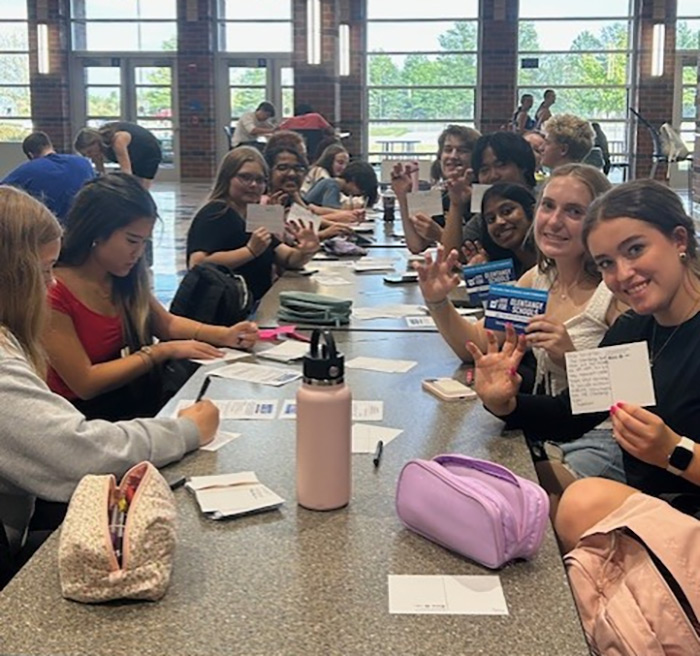
    In September, students at Berlin High School in Delaware, Ohio, participated in a sign creation and postcard campaign for a levy on the ballot. Credit: Courtesy Michael LaFlamme

    Michael LaFlamme has his own methods: He teaches Advanced Placement government and U.S. history at Olentangy Berlin High School outside of Columbus, Ohio, where many of his students work the polls during elections to see up close how voting works. They learn about civics via a participatory political science project that asks students to write a letter to an elected official. He also encourages students to watch debates or political or Sunday morning news shows with a parent or grandparent, and attend a school board meeting.

    “There is so much good learning to be done around current events,” LaFlamme told me, noting that “it becomes more about community and experience. We are looking at all of it as political scientists.”

    For Maddaus, the teacher in Maine, there is yet another obstacle: How his students consume news reinforces the enormous obstacles he and other teachers face to keep them informed and thinking critically. Earlier this fall, he heard some of his students talking about a rumor they’d heard over the weekend. 

    “Mr. Maddaus, is it true? Is President Donald Trump dead?” they asked. 

    Maddaus immediately wanted to know how they got this false news. 

    “We saw it on TikTok,” one of the students replied — not a surprising answer, perhaps, given that 4 out of 10 young adults get their news from the platform.

    Maddaus says he shook his head, corrected the record and then went back to his regularly scheduled history lesson. 

    Contact editor in chief Liz Willen at [email protected].

    This column about patriotism in education was produced by The Hechinger Report, a nonprofit, independent news organization focused on inequality and innovation in education. Sign up for the Hechinger newsletter.

    The Hechinger Report provides in-depth, fact-based, unbiased reporting on education that is free to all readers. But that doesn’t mean it’s free to produce. Our work keeps educators and the public informed about pressing issues at schools and on campuses throughout the country. We tell the whole story, even when the details are inconvenient. Help us keep doing that.

    Join us today.

    Source link

  • University of Michigan has ended private surveillance contracts but the chill on free speech remains

    University of Michigan has ended private surveillance contracts but the chill on free speech remains

    Clare Rigney is a rising second-year student at American University Washington College of Law and a FIRE summer intern.


    After a news story last week that the University of Michigan was paying private investigators to spy on pro-Palestinian student protesters, the school quickly ended its contracts with the surveillance firm.

    In case anyone is unaware, the year is 2025. Not 1984.

    Now the university says this Orwellian practice has ended, but the chill on student speech will likely remain for some time.

    On June 6, The Guardian reported on the story, citing multiple videos and student accounts of investigators cursing at students and threatening them. Between June 2023 and September 2024, U-M reportedly paid about $800,000 to the Detroit-based security company City Shield to carry out this surveillance instead of using the funds to increase the size of the campus police force. 

    Several of the targeted students were members of Students Allied for Freedom and Equality, the local chapter of the Students for Justice in Palestine, causing critics to accuse the school of targeting pro-Palestinian speech.

    One student, Josiah Walker, said he counted 30 people following him at different times on and off-campus. (As a precaution, he started parking his car off-campus.) On one occasion, Walker believed a man at a campus protest was following him. The man seemed to have a speech impairment, so Walker felt bad about that assumption. However, he later saw the same man speaking in a completely normal manner. When Walker confronted him, the man pretended Walker was trying to rob him.

    The whole incident was caught on camera.

    On the recording, Walker said, “The degree to which all these entities are willing to go to target me is amazing. Guys, this doesn’t make sense. What are you doing? Leave me alone.”

    To serve their proper function, universities must facilitate an open and collaborative learning environment as a marketplace of ideas. U-M ostensibly knows this, saying it values “an environment where all can participate, are invited to contribute, and have a sense of belonging.” 

    Surveillance and intimidation do not cultivate such an environment. U-M’s surveillance will make students want to look over their shoulders before seeking to use their right to free speech.

    The Supreme Court’s ruling in Healy v. James requires universities to uphold their students’ First Amendment rights. This extends even to students whose speech the university deems offensive or “antithetical” to the school’s goals. 

    In Healy, the Court emphasized the danger of an institution targeting a group of students as particularly dangerous based on their viewpoint, noting, “the precedents of this Court leave no room for the view that, because of the acknowledged need for order, First Amendment protections should apply with less force on college campuses than in the community at large.”

    Indeed, an important function of college is to allow students to broaden their horizons and meet different kinds of  people. And freedom of association allows them to seek out individuals whose beliefs align with theirs so that they can work toward a common goal. 

    Unfortunately, universities have used these chilling tactics against student political protestors for years. 

    Amid protests demanding sick pay for frontline workers, the University of Miami in 2020 used facial recognition technology to identify protestors. The university then hauled these students into meetings where they were forced to review Miami’s events policies.

    “The take-home message that we got was basically, We’re watching you,” Esteban Wood, one of the student protesters, later said. 

    When colleges and universities surveil students, they chill speech and promote distrust between student activists and the police meant to protect them.

    In 2018, Campus Safety Magazine revealed that the University of Virginia had contracted with a private service called Social Sentinel. This service used an algorithm to monitor students’ social media posts and, if it deemed it necessary, report them to the police.

    That same year, FIRE reported on a similar situation at the University of North Carolina. During protests over a confederate statue, a UNC campus police officer masqueraded as an approachable civilian named “Victor” in order to gain information from protesters and track their movements. Later, when students confronted “Victor” in a police uniform, he revealed himself as Officer Hector Bridges, explaining he had pretended to be sympathetic to their cause as a part of his “work.” 

    “I”m representing the university right now,” Bridges admitted on video.

    The UNC Police Department later released a statement saying the university had a practice of sending “plain clothes” officers to patrol the statue to purportedly “maintain student and public safety.”

    Chilling student speech in the name of undisclosed and unspecified safety is nothing new. But if it is serious about change, it couldn’t hurt for U-M to start with reviewing its own policies. According to its Division of Public Safety and Security, its role is to foster “a safe and secure environment” where students learn to “challenge the present.” Furthermore, U-M’s Standard Practice Guide section on freedom of speech states that when any non-university security forces are needed, they should know and follow these policies. 

    While it’s possible to imagine a circumstance where student surveillance might be necessary, colleges should keep in mind that courts have generally disfavored such efforts. For example, in White v. Davis, the Supreme Court of California rebuked the Los Angeles Police Department’s unconstitutional surveillance of UCLA students:

    The censorship of totalitarian regimes that so often condemns developments in art, science and politics is but a step removed from the inchoate surveillance of free discussion in the university; such intrusion stifles creativity and to a large degree shackles democracy.

    When colleges and universities surveil students, they chill speech and promote distrust between student activists and the police meant to protect them. That can be dangerous for both the students and the officers. Police investigations will be more difficult if the student body does not trust them enough to cooperate when needed. Students may be less likely to contact the police for legitimate violations. 

    Colleges and universities should empower their students to boldly state their beliefs. That’s simply not possible if they are also hiring outside agencies to spy on them. While we are glad the University of Michigan ended the practice, this case should serve as a reminder that such heavy-handed surveillance tactics have no place at American universities. 

    Source link

  • The big chill for academic medical centers (opinion)

    The big chill for academic medical centers (opinion)

    Recent executive actions by President Trump, most notably a blanket freeze of federal grants and loans, sent chills through higher education. Even though the full funding stoppage was quickly rescinded and subjected to legal challenges, universities probably will continue to face partial pauses on federal funding, as well as questions over the impact of other recent executive actions, like ones aimed at DEI.

    While consequential for all of higher education, pending and potential moves by the Trump administration that implicate funding could especially affect what has become an increasingly dominant aspect of multiple universities in terms of budgets and focus—academic medical centers (AMCs). AMCs are major funding recipients from the National Institutes of Health, the National Science Foundation and other federal agencies. AMCs and their health enterprises also are deeply connected to patient care programs like Medicare and Medicaid.

    For some higher education institutions, AMCs have come to play a central role in campus life and identity, especially as more AMCs have expanded to become full-fledged health systems. While some raise concerns and others celebrate this trend, the fact remains that some research universities are increasingly shaped by their AMCs. Using our own institution, the University of Kentucky, as one example, its health-care enterprises now account for around $5 billion of an $8.4 billion budget.

    Media outlets covered the “confusion and chaos” that beset university presidents, medical center vice presidents, deans and researchers after the initial federal funding freeze. Now that the freeze has been temporarily rescinded, leaders of academic medical centers should move beyond confusion and chaos to focus on public presentations that emphasize their competence, compliance and cooperation with federal reviews. Now is an opportune time to pick up on President Trump’s recent emphasis on “merit” as the key to gaining federal support. University academic medical centers are well positioned to demonstrate and document their case.

    To showcase “merit,” for example, a university academic medical center could cite ratings and commentaries about its successful NIH grant proposals, illustrating the talent and competitive advantages of its principal investigators and research teams. And they should emphasize that the NIH-funded research projects are not isolated: They are inseparable from a cooperative network within university health centers and hospitals. Evaluating these complex applied research alliances helps answer external questions about efficiency, effectiveness and significance of projects. The same kinds of questions are continually monitored in analysis of existing and new university degree programs for the education of medical doctors, nurses, physician assistants, pharmacists, medical technicians and health-care administrators. In addition to evaluating the training and preparation of researchers and health-care practitioners, an AMC pays systematic attention to accountability and responsibility for patient care and treatment as part of its daily and annual operations. These stories need to be told.

    There are other sources that can be used to document AMC merit and performance. One can look at accreditation reports, specialized degree program reviews and financial balance sheets for the mosaic of health services and programs that are housed under the umbrella of an academic medical center. Institutional data can show that an academic medical center that aligns colleges of medicine and health care with such disciplines as biochemistry, physiology, bioengineering and statistics has evolved into a dynamic institution in which practice and advanced research are intertwined with providing professional services within a community.

    A few summary statistics indicate this presence. The top 20 university AMCs each brought in more than $400 million in NIH research grants in fiscal year 2023. Within this group, Johns Hopkins University is first, with $843 million, followed by the University of California, San Francisco, with $789 million, and in third place, the University of Pennsylvania with $703 million. These are the peak of a cluster of 220 university medical centers in which academic programs such as the college of medicine partner with university medical foundations.

    The fusion represents a new academic model in which the medical and health programs typically constitute about 60 percent or more of the total university budget. At universities with this structure, the AMC typically is home to a majority of the university faculty positions and student enrollments. The AMC also becomes a major economic force and employer in metropolitan areas and regional communities.

    The academic health and medical complexes are economic engines. They often are the largest employer in the metropolitan area or even in the state, such as is the case for the University of Alabama at Birmingham and its health system. Universities in this category are the major provider of health services to large constituencies of patients. This academic health organization includes partnerships with Medicare, Medicaid and private insurance companies. Federal grants for research and service to the university often stimulate state financial support in terms of program grants and capital funding from state legislatures and governors and major gifts from foundations and private donors.

    The message for “merit” is that these universities represent a new type of American organization—what might be termed the academic health business model. An abundance of quantitative and qualitative data makes external evaluation and detailed analysis of accountability possible. Sound policy evaluation from several constituencies—the executive branch, Congress, federal and state agencies, university leaders, and patient advocacy groups—calls for thoughtful, informed analysis to review and perhaps renew what has evolved as a distinctive academic enterprise.

    A lively dialogue about the promises and benefits of AMCs that includes consideration of recent executive actions and potential future decisions, such as funding levels for Medicaid, is timely. The events of the last two weeks provide a much-needed moment for academic constituencies to reflect on what the expansion of AMCs means for individual research universities and higher education broadly in the future. If a funding freeze causes a chill for AMCs and their health enterprises, does the rest of the campus catch a cold, or even worse?

    Recent presidential actions from Washington, D.C., have highlighted how much the budgets and identities of some research universities are more and more defined by their AMCs. In addition to helping AMCs continue to sustain and enhance their vital missions, all higher education groups need to contemplate the implications for universities whose mission and purposes are increasingly characterized and shaped by their academic medical centers.

    John R. Thelin is University Research Professor Emeritus at the University of Kentucky. He is the author of several books on the history of higher education.

    Neal H. Hutchens is a professor in the Department of Educational Policy Studies and Evaluation at the University of Kentucky. His research focuses on the intersection of higher education law, policy and practice.

    Source link

  • Analysis: Harvard’s settlement adopting IHRA anti-Semitism definition a prescription to chill campus speech

    Analysis: Harvard’s settlement adopting IHRA anti-Semitism definition a prescription to chill campus speech

    Just one day after President Trump took office, Harvard agreed to settle two lawsuits brought against it by Jewish students that alleged the university ignored “severe and pervasive anti-Semitism on campus” and created “an unbearable educational environment” in the wake of the October 7, 2023, Hamas attack on Israel and the ongoing war in Gaza. 

    While the settlement language itself does not appear to be public, a press release filed on the official docket of The Louis D. Brandeis Center for Human Rights Under Law v. President and Fellows of Harvard College included some details. Most notably, Harvard agreed to adopt the International Holocaust Remembrance Alliance’s (IHRA’s) definition of anti-Semitism. FIRE’s worry, shared by many others — including the definition’s primary author — is that, when added to policies used to punish discriminatory harassment on American campuses, the definition is too likely to be used to punish speech that is critical of Israel or its government but that is not motivated in animus against Jews or Israelis. 

    FIRE has repeatedly proposed steps to address anti-Semitic discrimination on campus that would safeguard students from harassment while protecting freedom of speech, most recently in our inauguration-day letter to President Trump. Getting this right is important; any proposal that chills or censors protected speech on campus won’t pass constitutional muster at public universities, won’t square with free speech promises at private universities (like Harvard), and won’t effectively address anti-Semitism.

    Nevertheless, attempts to codify the IHRA definition of anti-Semitism into laws or regulations are nothing new. FIRE posted a roundup of the widespread civil libertarian opposition to its codification last year, when Congress considered adopting it as federal law. Among those opponents is the definition’s primary author, Kenneth Stern, who spoke at length with FIRE’s Nico Perrino on our So to Speak podcast about why it’s not the right tool for the job of regulating speech. As Stern wrote back in 2016 for The New York Times: “The definition was intended for data collectors writing reports about anti-Semitism in Europe. It was never supposed to curtail speech on campus … And Jewish students are protected under the law as it now stands.” (Perhaps “as it is now written” would have been more precise; whether colleges follow the law is a different issue.) As Stern predicted in that piece:

    If this bill becomes law it is easy to imagine calls for university administrators to stop pro-Palestinian speech. Even if lawsuits alleging Title VI violations fail, students and faculty members will be scared into silence, and administrators will err on the side of suppressing or censuring speech.

    Stern’s prediction is about to receive ground testing at Harvard, and likely at other universities that may follow its lead.

    Anti-Semitism Awareness Act continues to threaten free speech on campus

    News

    However well-intentioned the Anti-Semitism Awareness Act may be, it remains deeply flawed and a threat to the First Amendment.


    Read More

    At public universities, which are bound by the First Amendment, it’s possible that the test will not last that long. In a case over the definition’s adoption by Texas public institutions by gubernatorial executive order, a federal judge ruled last October that Students for Justice in Palestine was likely to succeed in its claim that policies using the IHRA definition “impose impermissible viewpoint discrimination that chills speech in violation of the First Amendment.” The policies are still in place until the trial, which is scheduled for January of 2026.

    But even if use of the IHRA definition is struck down at public universities, that would not prevent its use at Harvard or hundreds of other private institutions. FIRE’s opposition to the use of the IHRA definition for the purpose of regulating speech is not because we do not believe anti-Semitic harassment is not happening. Obviously, it is. Nor is it because we believe anti-Semitic harassment is not worth attention or not prohibited by civil rights law. Again, it is. Our concern is with the IHRA definition itself and the way campuses across the country are likely to misapply it to further chill speech — and use it as an entering wedge to do the same with speech on every other topic under the sun. If the underlying issue were bigotry against any other group, our concerns would be the same. (And if you are aware of such efforts, please bring them to our attention.)

    The IHRA definition and anti-discrimination law

    At the outset, the adoption of the IHRA definition to define anti-Semitism is itself novel in that laws and rules in the United States generally do not define what acts specifically are racist, sexist, religiously bigoted, or anti-Semitic. They are written from the perspective of prohibiting discrimination against a class of people protected by that law. In the case of Title VI of the Civil Rights Act of 1964, for example, that includes race, color, and national origin. But the law does not go on to say “and here is what is racist” followed by a list of examples or a definition. That is left to judges and fact-finders to determine, taking into account the facts and context of a given case.

    Detailed definitions and examples are much less novel on college campuses, though they have long been problematic. Back in 2007, FIRE took issue with the University of Delaware for a mandatory freshman orientation that (among a massive number of its problems) defined “a racist” as “all white people (i.e., people of European descent) living in the United States, regardless of class, gender, religion, culture, or sexuality.” Sexual harassment is often (too broadly) defined simply as “unwelcome conduct of a sexual nature,” which is unhelpful and overbroad, and then further runs aground on examples like Cal State-Channel Islands’ (our July 2019 Speech Code of the Month) “derogatory posters, cartoons, drawings, symbols, or gestures.” 

    The IHRA definition combines a couple of these problems. Its website explains

    On 26 May 2016, the Plenary in Bucharest decided to:

    Adopt the following non-legally binding working definition of antisemitism:

    “Antisemitism is a certain perception of Jews, which may be expressed as hatred toward Jews. Rhetorical and physical manifestations of antisemitism are directed toward Jewish or non-Jewish individuals and/or their property, toward Jewish community institutions and religious facilities.”

    Let’s look at this with an eye towards enforcement. Did a person accused of discriminatory harassment do so based on having “a certain perception of Jews?” What perception is that? Hatred? Not exactly, as it “may be expressed as hatred towards Jews.” But if it “may be expressed as hatred towards Jews,” it may also not be expressed as hatred towards Jews. That leaves open the possibility that anti-Semitism can be expressed by anything. The definition then moves on to say that it can be directed toward “Jewish or non-Jewish individuals and/or their property.” The group of “Jewish and non-Jewish individuals” includes literally everyone. It is more specific about community institutions and religious facilities, excluding those that are not Jewish.

    The IHRA definition’s flexibility and reach introduce serious problems when the definition is being used as a speech code that can result in the discipline of individuals or the silencing of their speech. 

    Most of the definitional work, then, is left to be done by analogy to the examples, which IHRA makes clear, saying, “To guide IHRA in its work, the following examples may serve as illustrations.” Some of those examples include hard-to-argue-with propositions like “Calling for, aiding, or justifying the killing or harming of Jews in the name of a radical ideology or an extremist view of religion,” or “Accusing Jews as a people of being responsible for real or imagined wrongdoing committed by a single Jewish person or group, or even for acts committed by non-Jews.” But other examples have a much greater potential overlap with political critiques, such as “Drawing comparisons of contemporary Israeli policy to that of the Nazis,” and “Denying the Jewish people their right to self-determination, e.g., by claiming that the existence of a State of Israel is a racist endeavor,” both of which were cited by the judge in the Texas lawsuit mentioned above. Still others are somewhere in between, like “Applying double standards by requiring of it a behavior not expected or demanded of any other democratic nation.”

    To combat anti-Semitism, House bill chips away at free speech

    News

    An amendment before the U.S. House impermissibly threatens the expressive rights of students and faculty across the country.


    Read More

    For the IHRA definition’s intended purpose — to identify anti-Semitism in Europe so that the IHRA may catalog and identify it — the breadth of the examples isn’t too much of a problem. It is common, at FIRE and everywhere else, to ask someone to look for examples of a certain kind of incident by telling them “look for things that look like this.” The sweep of the examples is likely helpful for the IHRA’s intended aim, in that they may capture “edge cases” that don’t strictly fall into the definition but nevertheless seem like part of what it was intended to cover.

    Yet the IHRA definition’s flexibility and reach introduce serious problems when the definition is being used as a speech code that can result in the discipline of individuals or the silencing of their speech. The definition is simply not constructed in a manner that makes for fair and predictable application by different individuals, even if all of those individuals are trying their level best. That’s likely why the IHRA went out of its way to label it both a “non-legally binding” and “working” definition, building into the definition’s very text the recognition that it was neither intended to be used as a regulation nor the final word.

    Having said that, IHRA goes on to couch things even further. Preceding the examples, it writes:

    Manifestations might include the targeting of the state of Israel, conceived as a Jewish collectivity. However, criticism of Israel similar to that leveled against any other country cannot be regarded as antisemitic. Antisemitism frequently charges Jews with conspiring to harm humanity, and it is often used to blame Jews for “why things go wrong.” It is expressed in speech, writing, visual forms and action, and employs sinister stereotypes and negative character traits.

    Contemporary examples of antisemitism in public life, the media, schools, the workplace, and in the religious sphere could, taking into account the overall context, include, but are not limited to: […]

    The bolded phrases are all qualifiers that leave more openings for interpretation — a situation that courts recognize as a problem in the area of free speech because it makes the rule too vague to follow or fairly administer. In Grayned v. City of Rockford, a landmark 1972 case, the Supreme Court explained that a law (or regulation) is unconstitutionally vague when it does not “give a person of ordinary intelligence a reasonable opportunity to know what is prohibited, so that he may act accordingly.” And vagueness is a particular problem when the rule concerns free speech: “[W]here a vague statute abut[s] upon sensitive areas of basic First Amendment freedoms, it operates to inhibit the exercise of [those] freedoms. Uncertain meanings inevitably lead citizens to steer far wider of the unlawful zone … than if the boundaries of the forbidden areas were clearly marked.”

    Harvard is private, so the First Amendment doesn’t directly apply on its campus, but the underlying problem for any institution that claims to be committed to free speech is the same.

    Applying the IHRA definition in practice

    Let’s walk through one example to see how this can play out.

    Accusations that Israel is an “apartheid state” are common on campuses (including at Harvard). Are they anti-Semitic? Many would say yes; the ADL calls labeling Israel as an apartheid state “inaccurate [and] offensive,” and notes it is “often used to delegitimize and denigrate Israel as a whole.” A large majority of Americans may find it unconvincing — only 13% in this April 2023 poll agreed that Israel was “a state with segregation similar to apartheid.” Yet saying that Israel’s Jews are oppressing Palestinians by running an apartheid regime is most certainly criticism “similar to that leveled against” countries like the United StatesIndiaMalaysia, and course the former regime of South Africa (the country from which the term originates), along with many others, past and present. If applying the actual words of the IHRA definition, then, this seems to mean that accusations of Israeli apartheid “cannot be regarded as antisemitic.”

    On the other hand, Israeli apartheid accusations do sound similar to several of the IHRA examples. Is the apartheid accusation “[d]enying the Jewish people their right to self-determination, e.g., by claiming that the existence of a State of Israel is a racist endeavor?” That’s close, but not exactly right; you may think that Israel should exist, but with different policies. Is it “[a]pplying double standards by requiring of it a behavior not expected or demanded of any other democratic nation?” This depends on whose expectations or demands are being considered. And is making the claim while mostly around American Jews rather than Israeli Jews a form of “[h]olding Jews collectively responsible for actions of the state of Israel,” since most of your Jewish listeners are likely to be American, with little influence on what Israel does?

    None of these are easy questions. Regardless of your personal view, you will find reasonable people who disagree on the answers. And that’s exactly why the IHRA’s examples, when used as part of a speech regulation, threaten protected speech.

    Nobody asked the IHRA to come up with a law or rule to define anti-Semitism for purposes of determining what might be discriminatory harassment on American campuses. It’s not the IHRA’s fault that the definition is not right for that purpose.

    Ask yourself: What would you do if put in the position of the fact-finder tasked with using the IHRA definition to determine whether a person had engaged in prohibited discriminatory harassment by constantly banging the drum about “Israeli apartheid?” First, you would look to see if the accused said or did something else that would make the prohibited discriminatory intent — that the real reason for their activity was prejudice, not political disagreement — more obvious. If so, problem solved: you can either ignore the apartheid accusation or feel fairly safe assuming that this particular person did mean it to be anti-Semitic.

    But if there’s no other helpful evidence, you have to make a decision: Do I believe the IHRA definition actually means what it says about how “criticism of Israel similar to that leveled against any other country cannot be regarded as antisemitic?” The rules of grammar and logic dictate one answer. But, you think, “that can’t actually be what the rule means, can it?” You look at the examples and can’t figure it out, so you just pick one meaning and go with it. This isn’t an application of the rule based on the facts before you. It’s essentially a coin-flip, and replacing it with an actual coin-flip would produce an equally accurate outcome.

    More likely, though, you’re on the disciplinary panel because you care about the college community and are determined to try to do what’s best for it. You ask yourself: “Is anyone really that angry about political discrimination in a far-off land, or is it really hostility towards Jews? Might they escalate to physical violence if I let them ‘get away’ with it? Maybe it’s better safe than sorry; after all, this person sounds unpleasant to be around.”

    Either way, you don’t have the information you need to know whether the person is guilty or innocent, because you don’t know what the rule actually forbids. You can speculate about what it means, and you have incentives to find a certain way. But the main thing you have to fall back on is the one thing for which you don’t need any process or information at all: prejudice. Imagine the most likely result with a white student named Stacy. Then a Latino student named Reuben. Then a black student named Denise. Then an Arab student named Mohammed. Are all these cases equally likely to come out the same way? The obvious answer is no.

    That’s the cost of punishing people for breaking rules that are too vague to understand, or too confusing to follow, or that reasonable people can read entirely differently from one another. 

    This is bad practice with any rule, but it’s particularly bad with rules that can affect expression. Vague and incomprehensible rules about income taxes are certainly bad, but people are still likely to work and pay (most of) their taxes. Vague rules about speech means people silence themselves, at least in public, which only encourages resentment and radicalization. 

    Nobody asked the IHRA to come up with a law or rule to define anti-Semitism for purposes of determining what might be discriminatory harassment on American campuses. It’s not the IHRA’s fault that the definition is not right for that purpose. It will be the fault of a school who adopts it when the inevitable injustice results, and quite possibly turns a persuadable political opponent into someone with a racial or religious ax to grind.

    Harvard compounds the problem through hypocrisy

    Harvard’s FAQ attempting to explain how this applies only makes the situation worse.

    A few days after announcing the settlement, Harvard also released a Frequently Asked Questions document about its updated policy. It’s more than 3,500 words long, and refers students to the IHRA definition as well as Harvard’s own (also long) Non-Discrimination and Anti-Bullying Policy. It states that “[d]iscrimination on the basis of the following protected categories, or any other legally protected basis, is unlawful and is prohibited,” with those categories being 

    According to the press release, Harvard agreed to include discrimination against Zionists as a form of punishable discriminatory harassment, apparently independent of whether those Zionists are or are perceived to also be Jewish. The FAQ confirms this, but with a twist — it covers anti-Zionists, too:

    Does conduct that would violate the Non-Discrimination Policy if targeted at Jewish or Israeli individuals also violate the policy if targeted at Zionists?

    Yes, provided that the conduct meets the requirements for discriminatory disparate treatment or discriminatory harassment. The Non-Discrimination Policy includes among its protected categories religion, national origin, shared ancestry or ethnic characteristics, and political beliefs. For many Jewish people, Zionism is a part of their Jewish identity. Conduct that would violate the Non-Discrimination Policy if targeting Jewish or Israeli people can also violate the policy if directed toward Zionists. Examples of such conduct include excluding Zionists from an open event, calling for the death of Zionists, applying a “no Zionist” litmus test for participation in any Harvard activity, using or disseminating tropes, stereotypes, and conspiracies about Zionists (e.g., “Zionists control the media”), or demanding a person who is or is perceived to be Jewish or Israeli to state a position on Israel or Zionism to harass or discriminate.

    Such conduct would need to meet the standards expressed in the Non-Discrimination Policy for discriminatory disparate treatment or discriminatory harassment, as described above.

    Zionists, anti-Zionists, and non-Zionists are all protected against discriminatory disparate treatment and harassment under the policy.

    Does conduct that would violate the Non-Discrimination Policy if targeted at Muslim, Arab, Palestinian individuals also violate the policy if targeted at individuals who support Palestinian rights?

    Yes, parallel to the question and answer above, provided that the conduct meets the requirements for discriminatory disparate treatment or discriminatory harassment. The Non-Discrimination Policy includes among its protected categories religion, national origin, shared ancestry or ethnic characteristics, and political beliefs such as support of Palestinian rights.

    On one hand, this can be seen as solving the problem of appearing to carve out special protections for those with a particular religious or political belief (Zionism is at least one of those and sometimes both) by according the same level of protection to those with the opposing belief. Perhaps this will end up being a net benefit for Jewish or Zionist students who are discriminatorily harassed — if one assumes that Harvard administrators did not already know that Zionism was, if not a religious belief, certainly a political belief. (That seems hard to swallow, but it’s possible.) What Harvard appears to do with this FAQ is simply subsume the settlement into its pre-existing protections against discrimination against people based on their political beliefs.

    And that’s where this all breaks down, because it’s quite possible that there is not a single person on this planet who sincerely believes that Harvard does not engage in disparate treatment of people based on their political beliefs. (Start here and keep on scrolling.)

    It is no exaggeration to say that FIRE would not exist if Harvard didn’t play favorites with regard to politics. Its decades of doing so were a major factor in leading FIRE co-founder Harvey Silverglate (a graduate of Harvard Law who to this day resides in Cambridge, and who often represented Harvard students at its disciplinary hearings) to realize that something had gone terribly wrong on our nation’s college campuses. He would eventually join FIRE’s other co-founder, Alan Charles Kors, to publish The Shadow University back in 1998, and to found what began as the Foundation for Individual Rights in Education the following year. Harvard’s written prohibition against political discrimination was already in place when then-president Claudine Gay stepped on a metaphorical rake regarding anti-Semitism in front of Congress in 2023, starting a chain of events that led to her resignation.

    Simply put, if Harvard was serious about preventing discrimination against Jewish or Zionist students, it already had the ability to do so. Whether based on status or belief, they were certainly protected under Harvard’s existing policies. Harvard just didn’t feel like enforcing those rules for the benefit of those students.

    Nor did Harvard feel like using the correct standard for discriminatory harassment in the educational context — the Davis standard that behavior must be “severe, pervasive, and objectively offensive” (as well as fulfill several other factors) to be punishable discriminatory harassment. FIRE has written exhaustively about the importance of the Davis standard (here’s a primer in two parts on it), and why the constant attempts of schools to water it down by pretending “and” is the same as “or” are dangerous for free expression.

    Groups across ideological spectrum unite in opposing Antisemitism Awareness Act

    News

    The bill, which seeks to codify the IHRA definition of anti-Semitism into law, faces widespread criticism.


    Read More

    Harvard has done exactly that, watering down the Davis standard to require only that to be punishable, offensive behavior merely be severe or pervasive, not both. Here’s the thing: a great deal of activism is meant to be pervasive. Ongoing protests, social media campaigns, distribution of literature, the display of flags and signs, and many other forms of expression can all go on for days, weeks, or months. The messages may well be offensive, even objectively offensive. Requiring that the communication of these messages also reach the level of severity is a fundamental guardrail preventing the use of discriminatory harassment policies to silence protected speech — and Harvard has gone ahead and pulled that guardrail right out.

    Presumably, the plaintiffs are hoping that this settlement will at least focus Harvard’s attention on discrimination against Jewish and Zionist students. This is likely to be true, at least until the heat is off. Given the past couple of years, it’s hard to blame anyone involved in the Israeli-Palestinian controversy for being upset about how campuses have treated them. But the permanent effect of broadening the reach of discriminatory harassment policies so that virtually every cultural, political, or religious disagreement becomes a potential matter for investigation will inevitably be to chill speech on any topic that might be controversial.

    Harvard is likely just fine with that chilling effect, and even more content to know that the more overbroad, vague, and complicated it can make its harassment policies, the more discretion its administrators have to simply do whatever they want. Not only does the vagueness guarantee this outcome, but the FAQ contains plenty of “savings clause” language that gives Harvard the ability to apply the policy arbitrarily. How about this gem:

    Ordinarily, it will not violate the NDAB Policies for members of the Harvard community to make controversial statements in the course of academic work or in scholarship; express disagreement with another person’s political views; or criticize a government’s policy or the political leaders of a country.

    “Ordinarily” it won’t — which means sometimes it will. Can you determine when that might be by reading the policies? No. The answer, then, is “when we say it will.”

    This is not a win for free speech or for anti-discrimination. This is a license for Harvard to go right on doing whatever it wants.

    The double standards are the real problem

    The words “Equal Justice Under Law” are carved on the front of the Supreme Court for a reason. 

    There is little that is more corrosive to a society or community than rules that allow the authorities to treat offenses differently depending on who the alleged victims or offenders might be. This is a common thread in many FIRE cases, but it’s impossible not to notice how clearly it takes front and center in complaints by Jewish or pro-Israel students that they are subjected to treatment that no campus would accept were it aimed at other minority groups.

    The complaint in the Brandeis Center v. Harvard case at issue is just one among many examples. It’s literally the first thing they bring up in the complaint. While Harvard promises to prohibit “[b]ullying, hostile and abusive behavior,” the plaintiffs write:

    [A]s to Harvard’s Jewish and Israeli students, these promises are empty. In recent years, and especially in the last few months, Jewish and Israeli students have been subjected to cruel antisemitic bullying, harassment, and discrimination. And when Harvard is presented with incontrovertible evidence of antisemitic conduct, it ignores and tolerates it. Harvard’s permissive posture towards antisemitism is the opposite of its aggressive enforcement of the same anti-bullying and anti-discrimination policies to protect other minorities.

    FIRE has spoken to enough students at Harvard and other institutions to give us no reason to doubt this is true. While a perennial problem with regard to many issues, the transparent application of double standards has been particularly central to the complaints of Jewish and pro-Israeli students.

    The extent to which this is acutely felt by Jewish and pro-Israeli students is further compounded by the fact that the application of double standards to Jews and/or Israel is widely considered to be a central characteristic of specifically anti-Semitic bigotry. After all, the words “double standards” literally appear in one of the IHRA examples of potential anti-Semitism: “Applying double standards by requiring of [Israel] a behavior not expected or demanded of any other democratic nation.”

    Consider this allegation, taken from the Brandeis Center’s complaint:

    On October 18, 2023, another member of JAFE and the Brandeis Center, Member #4, an Israeli Jew and a student at the Harvard Business School (“HBS”), was walking through campus when he encountered an outdoor anti-Israel protest and decided to video the event, as others were doing. When protestors saw him and identified him as Jewish and/or Israeli, they accosted him. A mob surrounded him, engulfed him with keffiyehs, and chanted “Shame! Shame! Shame!” in his face. The assailants grabbed him, and one hit him in the neck with his forearm, before forcing Member #4 out of Harvard’s quad…. The video of the assault is shocking. But more remarkable perhaps is that Harvard has not taken any action to date to redress both the physical assault and the clear violations of its Anti-Bullying and Anti-Discrimination Policies.

    Assuming this account is anywhere near the truth, it is impossible to imagine this being Harvard’s reaction to, say, a group of white students doing this to an African-American student. Nor is any change to policy required to handle this situation. You don’t even need a discrimination policy to prevent people from shoving others around. If Harvard truly sat on its hands here, that’s because it wanted to.

    The solution to this problem will not come from making people at Harvard more aware of what represents anti-Semitic discrimination, expanding the number of protected classes, or broadening their interpretation in a way that cannot help but scare people away from speaking. It can only be solved when the people in charge are either no longer willing or no longer able to apply noxious double standards in order to advance their own political, religious, or cultural agendas.

    Adopting the IHRA definition of anti-Semitism will chill campus speech. We can hope that it will also help at least a few Harvard students whose episodes of discriminatory harassment might otherwise be ignored, assuming the Harvard administration feels the need to make a show of things. It won’t address the root problem. But it will set Harvard up for plenty of new ones.


    Source link