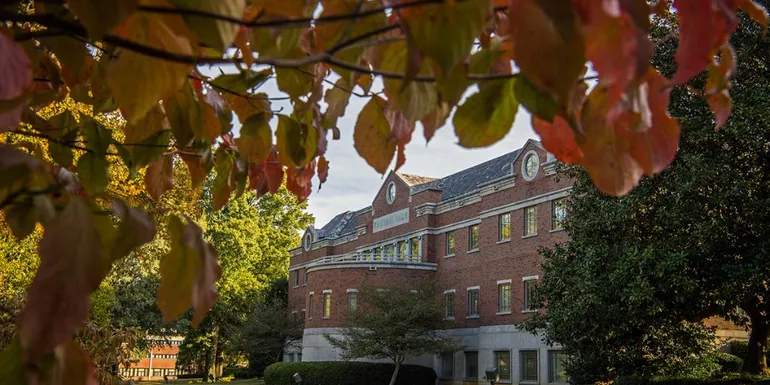
Tag: Christian

  • Week in review: Trinity Christian closes as other colleges make cuts

    Week in review: Trinity Christian closes as other colleges make cuts

    Most clicked story of the week: 

    Billionaire philanthropist MacKenzie Scott has donated $387 million in unrestricted funds to eight historically Black colleges and universities in recent weeks. Each institution described their donation as one of the biggest, if not the biggest, in their history. Scott, who is largely out of the public eye, does not announce donation values unless the recipients do.

    Number of the week: 900+

    The number of layoff notices the University of Southern California has issued since July. The private institution’s leadership said last week that it is “on track” to eliminate its longstanding deficit by the end of the fiscal year, following the significant cost-cutting measures.

    Cuts and Closures

    • Trinity Christian College, in Illinois, announced it will shutter at the end of the 2025-2026 academic year, citing ongoing financial issues such as persistent budget deficits and falling enrollment. In addition to establishing teach-out and transfer pathways, the private liberal arts college is allowing students to go over course load maximums with the goal of graduating as many as possible before closing.
    • Another religious college in Illinois, the University of St. Francis, is taking steps to address budgetary issues. The university has laid off 18 staff and administrators following a $9 million deficit in fiscal 2024. It also notified “a number of faculty” that it was not renewing their contracts, which Joliet Patch reported as affecting another 18 employees.
    • The University of Nebraska-Lincoln is facing pushback against its chancellor’s proposal to eliminate six academic programs. An internal advisory group voted to oppose ending four of the programs and raised concerns with the methods and pace UNL’s leadership used to decide which degrees should be on the chopping block.

    Guidance for college leaders

    • Colleges undergoing significant restructuring must be prepared to “craft a positive narrative about it and their involvement, according to the latest edition of the regular opinion series Merger Watch. Throughout mergers, acquisitions and even closures, college leaders need to own these narratives — or others will craft them instead, writes Ricardo Azziz, a consolidation expert who pens the series.
    • A federal judge on Thursday ruled the Trump administration must fully fund the Supplemental Nutrition Assistance Program during the government shutdown — a decision the government has already appealed. Given the legal back-and-forth, it’s unclear when SNAP recipients will get their benefits, warned The Hope Center for Student Basic Needs, a resource and policy center at Temple University. The center is offering administrators and campus leaders a toolkit to help support food-insecure students during this “period of uncertainty.”

    Quote of the Week:


    This is the end of an era. Even if things settle out, the damage has already been done.

    Michael Lubell

    Physics professor at City College of New York


    Under an August presidential order, Trump administration political appointees at federal agencies now have the power to ensure grant awards align with the federal government’s “priorities and the national interest” and don’t promote undefined “anti-American values.”

    Academics and researchers like Lubell are raising alarms that the change — yet another significant departure from scientific funding norms — will erode U.S. research.

    Source link

  • Trinity Christian College to close at the end of the academic year

    Trinity Christian College to close at the end of the academic year

    This audio is auto-generated. Please let us know if you have feedback.

    Dive Brief:

    • Trinity Christian College plans to close after the 2025-2026 academic year amid mounting financial issues, the private liberal arts institution said Tuesday. 
    • “The board has worked faithfully and tirelessly to consider every possible option in the face of significant and rapidly evolving financial challenges,” Acting President Jeanine Mozie said in a video message. 
    • In explaining why it was closing, Trinity, based near Chicago, cited persistent deficits, falling enrollment, shifts in charitable giving and financial challenges since the pandemic.

    Dive Insight:

    Trinity said it worked with advisers on possible solutions to its financial struggles, including “significant programmatic changes” and strategic partnerships with other institutions. 

    “However, there is no sustainable path forward for our beloved institution,” Mozie said in the video message, in which she appeared with board chair Ken Dryfhout. 

    Between fiscal years 2020 and 2024, the college’s total assets fell by nearly 14% to $72.3 million. Much of that decline came in its cash holdings, which fell by nearly $8 million during that period, to $5 million. Trinity also reported operating deficits every year during that time. 

    In June, Trinity reported that it could fail to meet bond requirements for cash on hand and a metric measuring its ability to pay its debt obligations. The college said at the time that it was soliciting donors to help it meet the covenants. 

    Many of Trinity’s financial woes stem from its shrinking student body and the pressures on small liberal arts institutions. Already small, the college’s fall enrollment dropped to 883 students in fall 2023, a nearly 22% decline from five years prior, according to the latest federal data. 

    Enrollment declines hurt Trinity’s revenue. In fiscal 2024, net tuition and fee revenue stood at $12.1 million, roughly 14% less than 2020 levels. 

    The revenue drop also came after a period of steep inflation in higher education and the broader economy. At Trinity, total expenses rose at nearly the same rate as revenue declined between fiscal 2020 and fiscal 2024, reaching $32.9 million.

    Mozie was appointed acting president, replacing Aaron Kuecker, just two months before she announced the college’s closure. Prior to that, she was Trinity’s chief operating officer. 

    Founded with a nondenominational Christian mission, Trinity elected its first board of trustees in 1959. It soon opened a two-year college with just five faculty members and roughly three dozen students on a former golf course, using a renovated clubhouse and pro shop. By 1971, the institution was issuing four-year degrees, and it added graduate programs in 2012.

    Trinity plans to hold its last commencement next year for the class of 2026. It is allowing students to take above the max course load per semester to graduate as many as possible, with the rest offered teach-out and transfer options. 

    The college has teach-out agreements in place for most undergraduate programs with regional neighbors Saint Xavier, Calvin and Olivet Nazarene universities. It is working on agreements for many of its remaining programs. 

    Trinity said it plans to sell its property after closing to repay its debt. As of fiscal 2024, Trinity owned property and equipment valued at $44.2 million and owed $14.8 million in bonds.

    Source link

  • Trinity Christian College Announces Closure

    Trinity Christian College Announces Closure

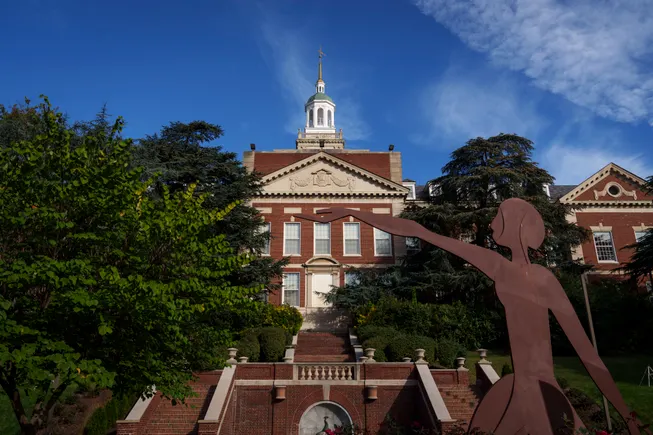
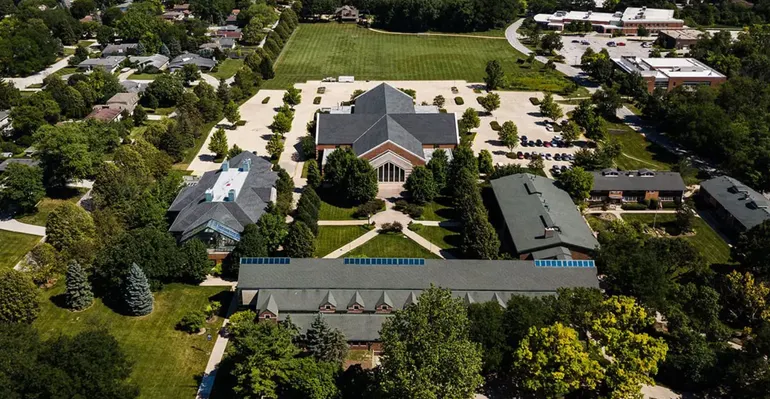
    Trinity Christian College outside Chicago will close at the end of the current 2025–26 academic year due to insurmountable financial pressures.

    The college announced the move Tuesday, citing a litany of challenges, which include “post-Covid financial losses; persistent operating deficits; a decline in college enrollment and increased competition for students; and a shift in donor giving and financial circumstances,” according to a statement from officials posted on a frequently asked questions webpage.

    Acting President Jeanine Mozie said in a video message that the Board of Trustees considered multiple options to address “significant and rapidly evolving financial challenges,” but ultimately, there was “no sustainable path forward for our beloved institution.”

    The FAQ page noted that the Board of Trustees considered “significant programmatic changes, strategic partnerships, and the like” but “determined that these and other alternatives were insufficient to overcome the college’s deficit” and sustain Trinity’s mission over the long term.

    The closure announcement follows a recent leadership change at the college. Former president Aaron Kuecker resigned in August after less than two years in the top job but nearly 14 at Trinity altogether. Multiple staff members were also reportedly laid off in August.

    A review of the college’s finances shows that Trinity operated at a loss in eight of the last 10 fiscal years and relied significantly on a small pool of donors. An estimated 76 percent of all financial contributions came from just three donors in 2024, according to Trinity’s latest audit.

    Trinity also had less and less cash on hand. According to the audit, “cash and cash equivalents” fell from nearly $7.2 million in fiscal year 2023 to just under $5 million—a drop of nearly 31 percent. Trinity also had a meager endowment, valued at $11 million at the end of the 2024 fiscal year. (A recent study found the median endowment across the sector is $243 million.)

    Bondholders warned the college in June that Trinity was at risk of violating its financial covenants because of its limited liquidity, according to publicly available documents.

    Both faculty numbers and student head count had dropped in recent years, bond documents show. Both of those numbers have been in decline in recent years with total faculty falling from 145 to 126 and enrollment dropping from a total head count of 1,068 in fall 2019 to 872 last year, despite a recent tuition reset to attract students. Trinity aimed to hit 1,081 students by the 2027–28 academic year, financial documents show.

    Trinity was founded by Chicago businessmen in 1959 and is located on a 56-acre campus in Palos Heights, Ill., outside Chicago, which was recently estimated to be worth $25 million.

    College officials announced teach-out and transfer agreements with Calvin University in Michigan as well as Olivet Nazarene University and Saint Xavier University, both of which are in Illinois.

    Trinity follows several other small, cash-strapped Christian colleges that have announced closures this year, some of which have shut down abruptly, such as Limestone University and St. Andrews University. Siena Heights University, a Roman Catholic institution, also announced plans to close. On the secular side, Northland College in Wisconsin closed earlier this year, and Pennsylvania State University announced plans to shut down seven rural campuses by 2027 after years of shrinking enrollment.

    Source link

  • How a Christian Nationalist Group is Getting the Ten Commandments into Classrooms – The 74

    How a Christian Nationalist Group is Getting the Ten Commandments into Classrooms – The 74

    School (in)Security is our biweekly briefing on the latest school safety news, vetted by Mark KeierleberSubscribe here.

    As far-right political operative David Barton leads a Christian nationalist crusade, he’s traveled to state capitols across the country this year to support dozens of bills requiring Ten Commandments displays in classrooms. 

    My latest story digs into a well-coordinated and deep-pocketed campaign to inject Protestant Christianity into public schools that could carry broader implications for students’ First Amendment rights. Through a data analysis of 28 bills that have cropped up across 18 states this year, I show how Barton’s role runs far deeper than just being their primary pitchman.

    The analysis reveals how the language, structure and requirements of these bills nationwide are inherently identical. Time and again, state legislation took language verbatim from a Barton-led lobbying blitz to reshape the nation’s laws around claims — routinely debunked — about Christianity’s role in the country’s founding and its early public education system. 

    Three new state laws in Louisiana, Arkansas and Texas mandating Ten Commandments posters in public schools are designed to challenge a 1980 Supreme Court ruling against such government-required displays in classrooms. GOP state lawmakers embracing these laws have expressed support for eradicating the separation of church and state — a pursuit critics fear will coerce students and take away their own religious freedom.


    In the news

    Updates to Trump’s immigration crackdown: Immigration and Customs Enforcement has released from custody a 6-year-old boy with leukemia more than a month after he and his family were sent to a rural Texas detention center. | Slate

    • As the Department of Homeland Security conducts what it calls wellness checks on unaccompanied minors, the young people who migrated to the U.S. without their parents “are just terrified.” | Bloomberg
    • ‘It looks barbaric’: Video footage purportedly shows some two dozen children in federal immigration custody handcuffed and shackled in a Los Angeles parking garage. | Santa Cruz Sentinel
    • The Department of Homeland Security is investigating surveillance camera footage purportedly showing federal immigration officers urinating on the grounds of a Pico Rivera, California, high school in broad daylight. | CBS News
    • California sued the Trump administration after it withheld some $121 million in education funds for a program designed to help the children of migrant farmworkers catch up academically. | EdSource
    • Undocumented children will be banned from enrolling in federally funded Head Start preschools, the Trump administration announced. | The Washington Post
      • Legal pushback: Parents, Head Start providers challenge new rule barring undocumented families. | The 74
    Getty Images

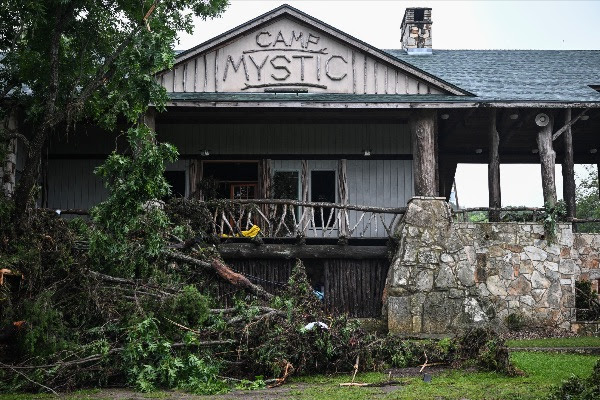
    The executive director of Camp Mystic in Texas didn’t begin evacuations for more than an hour after he received a severe flood warning from the National Weather Service. The ensuing tragedy killed 27 counselors and campers. | The Washington Post

    The day after the Supreme Court allowed the Education Department’s dismantling, Secretary Linda McMahon went ahead with plans to move key programs. | The 74 

    • Now, with fewer staff, the Office for Civil Rights is pursuing a smaller caseload. During a three-month period between March and June, the agency dismissed 3,424 civil rights complaints. | Politico
    Sign-up for the School (in)Security newsletter.

    Get the most critical news and information about students’ rights, safety and well-being delivered straight to your inbox.

    Massachusetts legislation seeks to ban anyone under the age of 18 from working in the state’s seafood processing facilities after an investigation exposed the factories routinely employed migrant youth in unsafe conditions. | The Public’s Radio

    An end to a deadly trend: School shootings decreased 22% during the 2024-25 school year compared to a year earlier after reaching all-time highs for three years in a row. | K-12 Dive

    Florida is the first state to require all high school student athletes to undergo electrocardiograms in a bid to detect heart conditions. | WUSF 

    The Senate dropped rules from Trump’s “big, beautiful” tax-and-spending bill that would have prevented states from regulating artificial intelligence tools, including those used in schools. | The Verge

    • Food stamps are another matter: The federal SNAP program will be cut by about a fifth over the next decade, taking away at least some nutrition benefits from at least 800,000 low-income children. | The 74

    ICYMI @The74

    Getty Images

    Supreme Court to Address Legality of Barring Trans Athletes From School Sports

    Medicaid Cuts in Trump Tax Bill Spark Fears for Child Health, School Services

    Heinous, heartbreaking — and expensive. California schools face avalanche of sex abuse claims


    Emotional Support

    74 editor Nicole Ridgway’s dog Mika is cooler than your dog.


    Get stories like these delivered straight to your inbox. Sign up for The 74 Newsletter

    Source link