Tag: Chronic Absenteeism

  • How D.C. Public Schools Are Reimagining What’s Possible for Every Student – The 74

    How D.C. Public Schools Are Reimagining What’s Possible for Every Student – The 74


    Get stories like this delivered straight to your inbox. Sign up for The 74 Newsletter

    Every morning in the District of Columbia, nearly 100,000 students step into 251 public schools with hopes and ambitions for their future. After years of pandemic disruption, recent results show clear signs of progress in how students are recovering and advancing.

    In our roles as deputy mayor for education and state superintendent, we see something remarkable taking shape — a citywide education system leading the nation in how to reimagine what’s possible for every child.

    This year’s statewide assessment results tell a clear story of momentum. On the D.C. Comprehensive Assessment of Progress in Education, students made the largest gains in English Language Arts and math proficiency since the pandemic. Forty percent of schools raised proficiency by at least 5 points in one of these subjects, and more than 60% showed measurable progress in both. Across the city, 137 of 223 tested schools boosted English scores, while 141 schools improved in math.

    ELA proficiency has now surpassed pre-COVID levels, increasing from 37.5% in 2019 to 37.6% in 2025. Math proficiency reached a record high since COVID, rising from 19.4% in 2022 to 26.4% this year. This is evidence that students are not only recovering, but moving forward at a faster pace than before the pandemic.

    National data confirms this progress. The Harvard Center for Education Policy and Research’s 2024 Education Recovery Scorecard ranked D.C. first in the nation for learning recovery in both math and reading for grades 3 to 8 between 2022 and 2024. In that two-year period, D.C. students gained back the equivalent of half a grade level in math and a quarter of a grade level in reading. Just a few years ago, D.C. ranked 32nd in math recovery since 2019; today, it leads the country.

    Federal relief dollars helped make this possible. D.C. received more than $600 million in K-12 pandemic recovery funds, about $6,800 per student — nearly double the national average of $3,700. Research shows that targeting these dollars toward tutoring, summer learning and other evidence-based strategies contributed directly to the rebound.

    Together, these results demonstrate what families and educators across the city already feel in classrooms: Students are making meaningful, historic gains in learning.

    Several factors are driving this progress. Since 2015, local per-student funding has increased from $16,032 to $28,040 — a 75% rise — with more money provided for serving students with the greatest needs.

    D.C.’s early education stands above national enrollment levels, with 95% of 4-year-olds and 82% of 3-year-olds citywide enrolled in pre-K. At the high school level, more students are graduating in four years than in 2010-11, with nearly a 20- point increase since 2010-11, growing from 58.6% to 76.1%. These students now graduate with college credits, industry certifications and real-world experience in high-demand fields through career and technical Education programs, dual enrollment and our growing network of citywide Advanced Technical Centers, preparing them for success in their next chapter.

    The Education Through Employment Pathways initiative enables the Office of the Deputy Mayor for Education to connect data from pre-K-12 with postsecondary outcomes to better identify which programs propel students forward in college and careers, helping D.C. make future investments accordingly.

    Teachers are a cornerstone of this progress. Thanks to big investments in recent years, D.C. Public School educators now earn an average salary of $109,000, among the highest in the nation, with comparable pay in charter schools. Investments in professional development, coaching, structured literacy training, high-quality instructional materials in literacy and math and high-impact tutoring have also helped to strengthen classroom instruction, so students feel challenged, supported and inspired. At the same time, D.C. is tackling barriers outside the classroom, securing school-based mental health supports, providing safe passage to schools and expanding the District’s Out of School Time programming. As a result, chronic absenteeism overall has declined 18.3% between 2021-22 and 2023-24, while profound chronic absenteeism — a student missing 30% or more of school days — is down 34.2% over the same time period. 

    The vast majority of families receive one of their top choices of district and charter schools through a universal enrollment lottery, helping drive D.C.’s national leadership in parent satisfaction. This system, combined with investments in quality and variety, has helped drive the city’s sustained enrollment growth since the 2008-09 school year and added more than 5,000 students after COVID. This is at a time when many large districts across the country experienced declines.

    D.C.’s education success isn’t just about test scores. It’s about the child who now walks into class with confidence because tutoring makes reading click. It’s about the high schooler graduating with a resume that includes a paid internship and college credits already earned. It’s about showing the nation that D.C. students — no matter their background or income — can succeed at the highest levels.

    D.C.’s experience shows how large urban education systems can rebound and thrive when funding is deep and sustained, resources meet student needs, teachers are well supported and compensated, and learning starts early.

    While challenges remain, the data show encouraging momentum that is worth studying nationally. D.C.’s educational vision invariably focuses on ensuring every child is prepared for higher education and a family-sustaining career, while making certain that the city continues to be the nation’s talent capital.

    D.C.’s public education leaders can keep proving to the nation what happens when a city dreams big for every student, invests strategically and stays the course: Students and schools will surpass expectations.

    Paul Kihn is deputy mayor for education in the District of Columbia. Dr. Antoinette Mitchell is state superintendent of education for the District of Columbia.


    Get stories like these delivered straight to your inbox. Sign up for The 74 Newsletter
    Source link

  • K-12 Chronic Absenteeism Rates Down From Peak, But Remain Persistently High – The 74

    K-12 Chronic Absenteeism Rates Down From Peak, But Remain Persistently High – The 74


    Get stories like this delivered straight to your inbox. Sign up for The 74 Newsletter
    Since hitting a record high in 2022, national chronic absenteeism rates have dropped modestly — by about five percentage points — according to the most recent available data, but still remain persistently higher than pre-pandemic levels. 

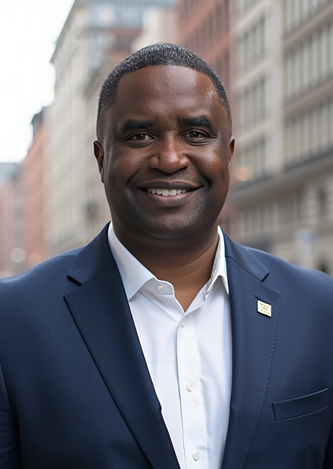
    States that joined a national pledge led by three high-profile education advocacy and research groups to cut chronic absenteeism in half over five years fared better. The 16 states and Washington, D.C. posted results “substantially above the average rate” of decline, though exact numbers are not yet available, said Nat Malkus, deputy director of education policy studies at the American Enterprise Institute, one of the trio.

    The national chronic absenteeism average dropped from 28.5% in 2022 to 25.4% in 2023, and fell an additional two points to 23.5% in 2024. Virginia, which is among the 16 participating states, cut its chronic absenteeism by 4.4 percentage points, year over year, to 15.7%, as of spring 2024.

    Speaking of the states collectively, Malkus told The 74, “That’s good but it’s not as good as we need it to be. I think it points to the need for sustained pressure and a sustained campaign to bring absence rates down and to bring more students back to consistent attendance.”

    Last July, AEI and EdTrust, right-and left-leaning think tanks, respectively, and the national nonprofit Attendance Works joined forces to launch The 50% Challenge. This week, the organizations hosted an event in Washington, D.C., to report on their progress, re-up the call to action and hear insights from state, district and community partners on how they are improving student attendance and engagement.

    With California and Georgia recently joining, the 16 states and D.C. who signed on to the pledge account for more than a third of all students nationally. While Malkus doesn’t necessarily attribute their better results to the pledge itself, he noted that their participation shows a willingness to commit to the cause and be publicly accountable for their results. 

    “I will hold their feet to the fire on this goal,” he added during his opening remarks in D.C.

    While felt most acutely by students of color and those in poorer districts, the spike in chronic absenteeism — students missing more than 10% of school days a year — cut across districts regardless of size, racial breakdown or income. Chronic absenteeism surged from 13.4% in 2017 to 28.5% in 2022 before beginning to drop in 2023.

    Only about one-third of students nationally are in districts that are on pace to cut 2022 absenteeism in half by 2027, according to an AEI report, and rates improved more slowly in 2024 than they did in 2023, “raising the very real possibility that absenteeism rates might never return to pre-pandemic levels.

    AEI

    Research has shown that students with high rates of absenteeism are more likely to fall behind academically and are at a greater risk of dropping out of school. About 8% of all learning loss from the pandemic is attributed just to chronic absenteeism, according to soon-to-be-released AEI research.

    The continued disproportionate impacts of chronic absenteeism were confirmed by recent RAND research, which found that in roughly half of urban school districts, more than 30% of students were chronically absent — a far higher share of students than in rural or suburban school districts.

    RAND also found that the most commonly reported reason for missing school was sickness and one-quarter of kids did not think that being chronically absent was a problem.

    SchoolStatus, a private company that works with districts to reduce chronic absenteeism, also released new numbers this week for some 1.3 million K-12 students across 172 districts in nine states. Districts using proactive interventions, the company reports, drove down chronic absenteeism rates from 21.9% in 2023–24 to 20.9% in 2024–25.

    At this week’s event, numerous experts across two panels emphasized the importance of a tiered approach to confronting the issue, which has resisted various remedies. Schools must build enough trust and buy-in with kids and their families that they are willing to share why they are absent in the first place. Once those root causes are identified, it is up to school, district and state leaders to work to remove the barriers.

    And while data monitoring must play a significant role, it should be done in a way that is inclusive of families.

    “We need to analyze data with families, not at them,” said Augustus Mays, EdTrust’s vice president of partnerships and engagement.

    Augustus Mays is the vice president of partnerships and engagement at EdTrust. (EdTrust)

    It’s imperative to understand the individual child beyond the number they represent and to design attendance plans and strategies with families so they feel supported rather than chastised.

    “It’s around choosing belonging over punitive punishment,” Mays added.

    One major and common mistake schools make is “accountability without relationships,” said Sonja Brookins Santelises, the superintendent of Baltimore City Public Schools.

    “You can’t ‘pull people up’ if you don’t have enough knowledge of what they’re really going through,” she said.

    Panelists were transparent that all this would require immense funding, staff and community partnerships.

    Virginia achieved its noteworthy drop in chronic absenteeism after launching a $418 million education initiative in the fall of 2023, in part after seeing their attendance data sink, with about 1 in 5 students chronically missing school. At least 10% of those funds are earmarked to prioritize attendance solutions in particular, according to panelist Emily Anne Gullickson, the superintendent of public instruction for the Virginia Department of Education. 

    These strategies are far-reaching, she noted: Because parents had been told throughout the pandemic to keep their kids home at the slightest sign of illness, schools partnered with pediatricians and school nurses to help counter the no-longer-necessary “stay home” narrative.

    Hedy Chang is the founder and executive director of Attendance Works. (Attendance Works)

    Gullickson said she also broke down bureaucratic silos, connecting transportation directors and attendance directors, after realizing the role that transit played in chronic absenteeism. The state now has second chance buses as well as walking and biking “buses,” led by parents or teachers along a fixed route, who pick up students along the way.

    And they are “on a mission to move away from seat time and really deliver more flexibility on where, when and how kids are learning,” she said. 

    “This isn’t one strategy. It’s a set of strategies,” said Attendance Works founder and executive director Hedy Chang, who moderated the panel.

    In Connecticut, state leaders have launched the Learning Engagement and Attendance Program, a research-based model that sends trained support staff to families’ homes to build relationships and better understand why their kids are missing school. 

    Charlene Russell-Tucker is the commissioner of the Connecticut State Department of Education. (Connecticut State Department of Education)

    A recent study confirmed that six months after the program’s first home visits, attendance rates improved by approximately 10 percentage points for K-8 students, and nearly 16 percentage points for high schoolers, said Charlene Russell-Tucker, the commissioner of the Connecticut State Department of Education.

    Schools must also work to motivate kids to want to show up in the first place, panelists said, making it a meaningful place that students believe will support and help them in the long run. The only way to do this is to start with student and family feedback, said Brookins, the Baltimore schools chief.

    During the pandemic many parents saw up-close for the first time what their kids’ classrooms and teacher interactions looked like, “and I don’t think a lot of folks liked what they saw for a variety of different reasons,” Brookins said.

    “I think it opened up boxes of questions that we — as the education establishment — were unprepared to answer,” she added. But chronic absenteeism cannot be successfully fought without engaging in those uncomfortable conversations.

    Disclosure: The Bill & Melinda Gates Foundation provides financial support to EdTrust and The 74.


    Get stories like these delivered straight to your inbox. Sign up for The 74 Newsletter

    Source link

  • Punishing Parents for Chronic Absenteeism – The 74

    Punishing Parents for Chronic Absenteeism – The 74


    Get stories like this delivered straight to your inbox. Sign up for The 74 Newsletter

    School (in)Security is our biweekly briefing on the latest school safety news, vetted by Mark KeierleberSubscribe here.

    As educators nationwide grapple with stubbornly high levels of student absences since the pandemic drove schools into disarray five years ago, Oklahoma prosecutor Erik Johnson says he has the solution. 

    Throw parents in jail.

    This week, I offer a look at chronic absenteeism’s persistence long after COVID shuttered classrooms, plunged families into poverty and led to the deaths of more than 1 million Americans. Lawmakers nationwide have proposed dozens of bills this year designed to curtail student absences — with radically different approaches.

    While a proposal in Hawaii would reward kids’ good attendance with ice cream, new laws in Indiana, West Virginia and Iowa impose fines and jail time for parents who can’t compel their children to attend class regularly. In Oklahoma, where Johnson has ushered in a new era of truancy crackdowns, state lawmakers say parents — not principals and teachers — should be held accountable for students’ repeat absences.

    “We prosecute everything from murders to rape to financial crimes, but in my view, the ones that cause the most societal harm is when people do harm to children, either child neglect, child physical abuse, child sexual abuse, domestic violence in homes, and then you can add truancy to the list,” Johnson told me this week. 

    “It’s not as bad, in my opinion, as beating a child, but it’s on the spectrum because you’re not putting that child in a position to be successful,” continued Johnson, who has dubbed 2025 the “Year of the Child.”


    In the news

    Books are not a crime — yet: Under proposed Texas legislation, teachers could soon face jail sentences for teaching classic literary works with sexual content, including The Catcher in the Rye and (unironically?) Brave New World. | Mother Jones

    Mass layoffs at the U.S. Department of Health and Human Services this week could have devastating consequences for the health and well-being of low-income children. | The Associated Press

    Ten days or else: The Education Department demanded Thursday that states certify in writing within the next 10 days that K-12 schools are complying with its interpretation of civil rights laws, namely eliminating any diversity, equity and inclusion programs, or else risk losing their federal funding. | The New York Times

    A Texas teen was kneed in the face by a school cop: Now, with steep cuts to the Education Department’s Office for Civil Rights, her case is one of thousands that have been left to languish. | The 74

    Students’ right to privacy versus parents’ right to know: The Trump administration has opened an investigation into a California law designed to protect transgender students from being outed to their parents, alleging violations of the federal student privacy law. | The New York Times

    • A similar investigation has been opened against officials in Maine, where the feds claim district policies to protect students’ privacy come at the expense of parents’ right to information. | Maine Morning Star
    • “Parents are the most natural protectors of their children,” Education Secretary Linda McMahon said in a statement after a similar federal investigation was launched against Virginia educators. “Yet many states and school districts have enacted policies that imply students need protection from their parents.” | Virginia Mercury
    • A little context: In a recent survey, more than 92% of parents said they were supportive of their child’s transgender identity. | Human Rights Campaign
    Sign-up for the School (in)Security newsletter.

    Get the most critical news and information about students’ rights, safety and well-being delivered straight to your inbox.

    The Student Press Law Center joined a coalition of free speech and journalism organizations in denouncing the recent ICE detention of Tufts University international student Rumeysa Ozturk over opinions she expressed in an op-ed in the student newspaper. 

    • “Such a basis for her detention would represent a blatant disregard for the principles of free speech and free press within the First Amendment,” the groups wrote in their letter. | Student Press Law Center
    • The Turkish doctoral candidate is one of several students who’ve been rounded up by immigration officials in recent weeks based on pro-Palestinian comments. | The New York Times

    Florida lawmakers have a plan to fill the jobs of undocumented workers who are deported: Put kids on the overnight shift. | The Guardian

    Minority report: Following bipartisan opposition, Georgia lawmakers have given up on efforts to create a statewide student-tracking database designed to identify youth who could commit future acts of violence. | WABE

    A majority of school district programs focused on protecting student data are led by administrators with little training in privacy issues, a new report finds. | StateScoop

    Washington students’ sensitive data was exposed. The culprit? A student surveillance tool. | The Seattle Times


    ICYMI @The74


    Emotional Support

    Annie, who lives with The 74 social media guru Christian Skotte, is the cutest regular at Brooklyn’s Prospect Park. You won’t convince me otherwise. 


    Get stories like these delivered straight to your inbox. Sign up for The 74 Newsletter
    Source link