Tag: Civil

  • Trump Gutted ED’s Civil Rights Office. Could States Step Up?

    Trump Gutted ED’s Civil Rights Office. Could States Step Up?

    The Education Department’s Office for Civil Rights, which is supposed to protect students from discrimination based on race, ethnicity, sex, age and disability status, isn’t what it once was.

    The Trump administration laid off nearly half the staff in March, shuttered seven of its 12 regional offices, shifted the hollowed-out agency’s focus to new priorities (including keeping transgender women out of women’s sports) and then reportedly terminated more employees amid the ongoing shutdown.

    Philadelphia was among the cities that lost its OCR regional office in the first round of layoffs. Lindsey Williams, a Pennsylvania state senator who serves as minority chair of the Senate Education Committee, said the region’s cases now go to Atlanta, “where they may or may not be heard.”

    To fill this void, Williams, a Democrat, announced she will file legislation to establish an Office of Civil Rights within the Pennsylvania Department of Education. The bill has yet to be written, but Williams said she wants to “create new authorities for the Pennsylvania Department of Education to investigate and enforce federal civil rights violations.” She noted, “There may be opportunity as well to strengthen our state laws in this regard.”

    “We’re looking at all of it to see what we can do,” she said, “because we haven’t been here before.”

    Students facing discrimination across the country now have far fewer staff in the federal Education Department OCR who can respond to their complaints. The agency had a large backlog of cases even before President Trump retook office, and then it dismissed thousands of complaints in the spring. Some advocates have expressed particular concern about OCR’s current capacity to process complaints of disability discrimination.

    And those left at OCR appear to be applying a conservative interpretation of civil rights law that doesn’t recognize transgender students’ gender identity. The Trump-era OCR has actively targeted institutions for allowing trans women in women’s sports. It’s also focused on ending programs and practices that specifically benefit minorities, to the exclusion of whites.

    Civil rights advocates are calling for states to step up.

    “We cannot stop what is happening at the federal level,” Williams said. “There’s plenty of lawsuits that are trying … but, in the meantime, what do we as a state do?”

    One of those ongoing suits, filed by the Victim Rights Law Center and two parents in April, alleges that shrinking OCR harms students from protected classes. It argues that the federal OCR cuts left “a hollowed-out organization incapable of performing its statutorily mandated functions,” adding that “without judicial intervention, the system will exist in name only.” But that intervention may not work in students’ favor—judges have issued preliminary injunctions, but the Supreme Court has, so far, allowed the Education Department layoffs to continue.

    Shelby Chestnut, executive director of the Transgender Law Center and a Pennsylvania resident, said, “States need to be picking up some of the slack.”

    “If more states with Democratic leaders started to propose such offices or legislation or money, it would likely create a bigger conversation,” Chestnut said.

    He noted that during the Obama administration, the federal government sued North Carolina over its controversial law banning trans people from using bathrooms matching their gender identity. But that’s not something the Trump administration would do. Chestnut said some states are now saying—and more should be saying—“OK, you won’t do your job, so we’ll do your job for you.”

    Beth Gellman-Beer, who was director of the Philadelphia regional office of the federal OCR before the Trump administration laid her off, said she doesn’t know of other states creating a new state-level agency like the one that’s been proposed in Pennsylvania. Even there, Republicans control the state Senate, and the legislation isn’t certain to pass. She said other state legislatures “should be really thinking about this and taking immediate steps to build out some kind of civil rights unit to help students in their state.”

    Some states already have their own agencies that protect civil rights in higher ed, Gellman-Beer said, including the existing Pennsylvania Human Relations Commission. But she said these entities “are traditionally severely understaffed and don’t have the resources and relied heavily on OCR.”

    Chad Dion Lassiter, executive director of the Pennsylvania Human Relations Commission, agreed with Gellman-Beer’s assessment of commissions like his. Lassiter said he feels “sheer exuberance” over the proposed legislation—which he said would be even greater if the new Office of Civil Rights were created in his agency.

    “Give us 20 additional staff and we’ll do the work,” Lassiter said. Ideally, 15 would be investigators in his agency’s education division and five would be attorneys, he said.

    “Each state that has a human relations commission should have an educational component,” he said. “Fund these commissions.”

    Gellman-Beer said the only true fix is to restore a federal OCR—because even if some states do step up, students’ rights will be contingent on where they live.

    “It used to be, under the model prior to this administration, that the promise for equal educational opportunity was across the board,” she said.

    Unequal Rights Across States

    For a student going before a state-level OCR in a state that doesn’t recognize their identity, the process could be as fruitless as seeking help from the Trump-era federal OCR. The Movement Advancement Project, which advocates for LGBTQ+ rights, says 27 states have laws banning trans students from participating in sports matching their gender identity. Such laws don’t all affect postsecondary students, but they often do, the organization said.

    Nicholas Hite, a senior attorney at Lambda Legal, which advocates for LGBTQ+ people in court, said the federal OCR was supposed to provide a single, consistent application of federal legal protections. Now, he said, “that just isn’t happening—they’re just refusing to do it.”

    “If we’re relying on states to be the enforcement mechanism, we’ve created this patchwork where each state is going to take their own approach,” Hite said.

    Universities in states with laws recognizing trans students’ rights have to decide whether to comply with those laws or with the Trump administration’s approach. The administration, using massive cuts to federal research funding, forced concessions from the University of Pennsylvania for allowing a trans woman to compete in women’s sports. But Scott Lewis—a co-founder of the Association of Title IX Administrators and managing partner of TNG Consulting, which advises higher ed institutions on civil rights issues—said so far he’s seen blue-state universities handling discrimination complaints like they did before Trump retook office.

    Lassiter, of the Pennsylvania Human Relations Commission, said, “It’s important for people to know you still have protections under the state.” But protections for trans students can be unclear.

    His agency enforces state laws protecting students against discrimination based on gender identity, but wouldn’t directly answer whether that means it would order a university to allow a trans woman to play on a woman’s sports team. Lassiter said his agency avoids “cultural wars.”

    Students facing discrimination of all sorts can still sue under federal civil rights law in lieu of seeking help from the federal OCR or any state version of that agency. But personal lawsuits can be expensive.

    Williams, the Pennsylvania state senator, noted that lawsuits may also not wrap up by the time a student graduates. Gellman-Beer, the former federal OCR employee, said they also often lead to individual remedies for a victim, rather than “systemic interventions to make sure that the problem doesn’t occur again for other students.” That was the kind of broad solution the federal OCR could achieve, she said.

    Hite welcomed people whose rights are being infringed, or who are concerned about others’ rights, to reach out to Lambda Legal. He noted the federal OCR did much of its work through negotiating with universities to fix issues, rather than pursuing litigation. If the federal OCR is no longer doing these negotiations, the burden is placed on students and parents to sue to uphold their own rights—while an added cost of litigation is also placed on universities, he said.

    Lewis said that if the Trump administration continues its trajectory, people who don’t feel they’re being served at the federal level will go to the state level.

    “If the federal government won’t do it,” he said, “the states are going to be left to do it.”

    Source link

  • Senate OKs Richey to Lead ED Civil Rights Office

    Senate OKs Richey to Lead ED Civil Rights Office

    Senate Health, Education, Labor and Pensions Committee

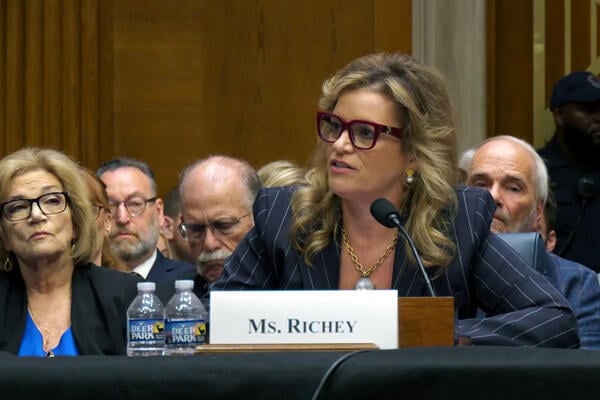
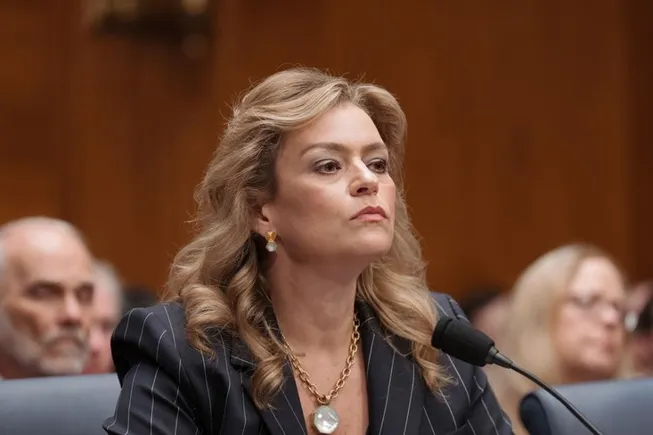
    The Senate voted this week to confirm Kimberly Richey as the Education Department’s assistant secretary for civil rights—returning her to a role she held in an acting capacity from August 2020 until November 2021, spanning the end of President Trump’s first term and the start of President Biden’s. Richey also worked in the department during the George W. Bush administration.

    The vote was 51 to 47 along party lines, with Democrats and Independents all voting nay.

    Over the past few years, Richey worked in state positions as a senior chancellor in the Florida Department of Education and a deputy superintendent in the Virginia Department of Education. She now returns to the federal government to lead a greatly diminished Office for Civil Rights—the Trump administration laid off nearly half the OCR staff in March—with a significant case backlog.

    The administration is using what’s left of the office as an arm of its campaign against transgender rights, programs aimed at helping minorities and allegations of antisemitism. The OCR has been investigating both K–12 school districts and universities over these issues. Richey told senators during her June confirmation hearing that she’s committed to pursuing cases related to antisemitism and trans women playing on women’s sports teams.

    According to a résumé published by government watchdog American Oversight, Richey has also worked with conservative organizations to draft education legislation and policies. Those policy proposals mostly centered on K–12 and included promoting school choice and banning critical race theory (although the topic is not taught in K–12 schools). A 2022 receipt American Oversight uncovered indicated that Richey’s consultancy, RealignEd LLC, was paid $10,000 to “provide subject matter expertise, review and evaluation, and policy advice related to inherently divisive topics and other provisions” shortly after Virginia governor Glenn Youngkin signed an executive order prohibiting “the use of inherently divisive concepts, including critical race theory,” in schools.

    Craig Trainor, the principal deputy assistant secretary for civil rights, has led the office as acting secretary since Trump took office earlier this year. In that post, he sent out controversial guidance banning race-based programming and activities, which was later blocked by the courts. He’s now moving to Department of Housing and Urban Development, where he’ll be the assistant secretary for fair housing and equal opportunity.

    Source link

  • Richey confirmed to lead Education Department’s Office for Civil Rights

    Richey confirmed to lead Education Department’s Office for Civil Rights

    This audio is auto-generated. Please let us know if you have feedback.

    The Senate confirmed Kimberly Richey as the next assistant secretary for civil rights at the U.S. Department of Education in a 51-47 vote along party lines late Tuesday afternoon. The approval came as part of a resolution allowing senators to consider for confirmation Richey and over 100 other federal nominees at once. 

    Richey served as acting assistant secretary at the Education Department under the first Trump administration — first for the Office of Special Education and Rehabilitative Services and then for the Office for Civil Rights — and also worked at OCR under the George W. Bush administration. 

    Her approval had been nothing short of expected, considering the slight Republican majority in the Senate and President Donald Trump’s nomination in February to head the Education Department’s civil rights arm.

    As assistant secretary of OCR, Richey will be responsible for overseeing investigations into alleged civil rights complaints, protecting all students’ civil rights, and drafting and implementing civil rights regulations, including but not limited to Title IX, Title VI and Section 504. 

    She was confirmed to steer a ship that is functioning at half of its previous capacity, with OCR down to five out of 12 of its offices. She faces a backlog of over 12,000 open investigations and more than 25,000 complaints, and a pared down staff as a result of Trump and U.S. Education Secretary Linda McMahon’s efforts to wind down the department. 

    She’s also entering the office as the Education Department is embroiled in a lawsuit that, until recently, required OCR be restored to its previous capacity by returning laid off workers to their jobs. Just as the Education Department began returning OCR staffers back to the job in waves, the federal district court order requiring its restoration was overturned in September by the 1st U.S. Circuit Court of Appeals.

    The Education Department, most of whose staff is furloughed as part of the government shutdown, has not responded to K-12 Dive’s requests about what that means for the over 80 staffers who had already returned to their old posts.

    Before the Senate’s Health, Education Labor and Pensions Committee confirmed Richey’s nomination in June, Sen. Patty Murray, D-Wash., shared that attorneys at OCR are juggling on average 115 cases, more than double the previously reported caseload of 42 cases per person. 

    Richey said she would “always advocate for OCR to have the resources to do its job.” However, she dodged questions about whether OCR, under Trump’s first administration, had enough resources to do its job.  

    “I’m going to have to be really strategic if I’m confirmed, stepping into this role, helping come up with a plan where we can address these challenges,” she said about OCR’s reduced resources under the current administration. 

    Among her first steps, Richey said, would be to evaluate the current caseload and determine where complaints stand in their investigative timelines. She would also examine the staff distribution and organizational structure of OCR, she said. 

    Richey said that rather than put certain investigations on pause, as has been the case under the second Trump administration, she would prioritize all complaints that fall at OCR’s footsteps.

    After the mass layoffs at the agency that left OCR gutted along with other department offices, the Education Department told K-12 Dive in March that OCR was undergoing organizational changes and said it would deliver on its statutory responsibilities. 

    Source link

  • Charlie Kirk: Hero of ‘Civil Discourse’ or Fount of Division?

    Charlie Kirk: Hero of ‘Civil Discourse’ or Fount of Division?

    Charlie Kirk: Hero of ‘Civil Discourse’ or Fount of Division?

    Ryan Quinn

    Mon, 09/29/2025 – 03:00 AM

    Pointing to the slain activist’s inflammatory statements about minority groups, some are pushing back—at their own peril—against the right’s framing of him as an emblem of quality discourse.

    Byline(s)

    Source link

  • HHS Civil Rights Arm Joins in Trump’s Higher Ed Crackdown

    HHS Civil Rights Arm Joins in Trump’s Higher Ed Crackdown

    In June, in an escalation of the Trump administration’s pressure on Harvard University to bow to its demands, a federal Office for Civil Rights announced that the institution was violating federal law.

    The office released a nearly 60-page report accusing Harvard of “deliberate indifference” to ongoing discrimination against Jewish and Israeli students, which is illegal under Title VI of the Civil Rights Act of 1964. “OCR’s findings document that a hostile environment existed, and continues to exist, at Harvard,” the office said in an accompanying news release.

    But this wasn’t the Education Department’s Office for Civil Rights. It was an office of the same name within the Health and Human Services Department that’s been playing a more public role as part of Trump’s crackdown on higher ed. Officials who served in previous administrations said agencies used to generally defer to the Education Department when it came to civil rights issues in higher ed. But since Trump retook office, colleges and universities are facing increased pressure from probes by HHS and other agencies enforcing the new administration’s right-wing interpretation of civil rights.

    HHS OCR said it began its Harvard investigation in February by looking into the university’s medical school, after alleged antisemitism during the May 2024 graduation ceremony. But, in April, it widened its probe to “include Harvard University as a whole and to extend the timeframe of review to include events and information from October 7, 2023, through the present.” (The HHS OCR has jurisdiction over institutions that accept HHS funding, including National Institutes of Health research grants and Medicaid dollars.)

    And this wasn’t the HHS OCR’s only investigation into parts of Harvard that didn’t appear related to health or medicine. The news release noted the “findings released today do not address OCR’s ongoing investigation under Title VI into suspected race-based discrimination permeating the operations of the Harvard Law Review journal.” And Harvard is just one of several universities that this non–Education Department OCR has targeted since Trump retook the White House in January.

    Civil rights advocates say the HHS OCR has become just one more pawn in Trump’s strategy to target universities and end protections and programs that aid minority groups. For universities, Trump’s HHS OCR represents a new threat to their funding if they’re accused of promoting diversity, equity and inclusion; fostering antisemitism; or letting transgender women play on women’s sports teams.

    It’s unnecessary to do what the administration is doing now, unless one is operating like a mob boss.”

    —Catherine Lhamon, former head of OCR at the Education Department

    The office’s investigations and public denunciations add to the work of the ED OCR, which the Trump administration has also shifted to focus on the same issues. The two OCRs announced a joint finding of violations against Columbia University, but they’ve also trumpeted independent probes into other institutions.

    “As we feared, the Trump administration is abusing civil rights tools to advance a radical and divisive agenda that aggressively hoards access to education, living wage jobs, and so much more,” the NAACP Legal Defense Fund said in a statement. “Unfortunately, HHS and many other federal agencies are being used as one of the vehicles to carry out that agenda.”

    The Legal Defense Fund said, “Colleges and universities are being targeted precisely because of the critical role they play in opening the doors of opportunity and preparing the next generation to lead our multi-racial democracy. By attacking institutions that help level the playing field for Black students and other students of color, the Trump administration is ultimately weakening our democracy and our economy as a whole.”

    Former officials at the Justice Department, to which HHS OCR can forward cases if the targets of investigations don’t comply, told Inside Higher Ed that HHS OCR historically deferred probes into universities to the Education Department.

    Catherine Lhamon, former director of the Education Department’s OCR under Presidents Biden and Obama, said, “There are 13 federal agencies with external civil rights enforcement, of which HHS is one, and it’s relatively large.” She said they’re pieces of Trump’s broader strategy.

    “The administration has used every agency in a contemporaneous, simultaneous assault on universities,” Lhamon said, multiplying the amount of federal funding it can threaten.

    The HHS OCR’s announced investigations under Trump show it’s investigating similar issues to the Education Department OCR—or what’s left of that office after the administration’s cuts. Lhamon said the practice for decades has been for the agency with principal expertise over an area to investigate that area—hence why universities were mostly investigated by the Education Department OCR.

    “It’s unnecessary to do what the administration is doing now, unless one is operating like a mob boss,” Lhamon said.

    An HHS spokesperson said, “We’re leading implementation of the president’s bold civil rights agenda,” which includes four focuses: upholding religious conscience rights, fighting antisemitism, ending race-based discrimination embedded in DEI programs and “defending biological truth” in sex-discrimination enforcement. She also said that fighting antisemitism, for instance, is a priority across the whole administration, “so our office is going to be a part of that and going to participate to the fullest extent that we can.”

    It remains unclear how much of the HHS OCR’s daily workload is now devoted to Trump’s targeting of higher ed. HHS OCR did investigate higher ed institutions even before Trump took office, the HHS spokesperson said.

    “We may be being more public about it now,” the spokesperson said, “particularly because that’s where the issue areas with respect to this administration are.”

    She said the office also continues to investigate non–higher ed–related medical providers and non–civil rights issues that it has responsibility for despite the office’s name—such as information privacy under the Health Insurance Portability and Accountability Act.

    The spokesperson said the HHS OCR news releases don’t tell the full story of what the office is currently investigating because—out of the roughly more than 40,000 complaints it receives annually—it doesn’t normally disclose which complaints lead to probes “to protect the integrity of the investigation.” The office also launches some investigations without receiving complaints, she said.

    “In the past we’ve not announced through press releases that we’ve opened major investigations,” she said.

    She didn’t provide Inside Higher Ed a list of the office’s current investigations. She also didn’t say how many employees HHS OCR has. HHS’s fiscal year 2026 budget request said that “in FY 2010, there were 111 investigators onboard, and in FY 2022, this number fell to 60, while simultaneously HHS received the highest number of complaints in its history (51,788).” (For comparison, the ED OCR, in a FY 2024 report, said it had received its highest-ever volume of complaints, but the number was only 22,687.)

    Since taking power, the Trump administration has been slashing the federal workforce—the administration laid off nearly half of the Education Department’s OCR staff in March. It’s unclear how much HHS OCR has been cut. The FY 2026 budget request said the HHS OCR “has faced a continually growing number of cases in their backlog, rising to 6,532 cases by the end of FY 2024.” And that was before the office launched these new probes based on Trump’s priorities.

    The HHS OCR receives roughly more than 40,000 complaints annually, a spokesperson said.

    Kayla Bartkowski/Getty Images

    A String of Investigations

    Since Trump’s Jan. 20 inauguration, HHS OCR has announced a spate of higher ed investigations, mostly without naming the institutions. The spokesperson said most are ongoing.

    In early February, it announced investigations of four unnamed medical schools, also citing reports of antisemitism during their 2024 commencements. (That was the same month the Harvard investigation began, HHS OCR later said, so Harvard was likely among the four.)

    On Feb. 21, Trump told Maine governor Janet Mills during a televised White House event that her state must bar transgender women from women’s sports or lose federal funding, to which Mills replied, “See you in court.” In response to this, the HHS OCR issued a news release that same day announcing an investigation into “the Maine Department of Education, including the University of Maine System,” due to reports that the “state will continue to allow biological males to compete in women’s sports.” (The HHS spokesperson said the investigation eventually found that the most relevant issues were unrelated to higher ed.)

    In March, the office announced investigations into four unnamed “medical schools and hospitals” over “allegations and information” concerning medical education or scholarships “that discriminate on the basis of race, color, national origin, or sex.” The news release didn’t have much further detail but referenced a Trump executive order targeting “illegal” diversity, equity and inclusion programs. Later that month—again citing the anti-DEI order—it announced it was investigating “a major medical school in California” over whether it “gives unlawful preference to applicants based on their race, color, or national origin.”

    In April, it announced it was investigating an “HHS-funded organization” over whether it excludes “certain races” from a “health services research scholarship program.” Later in April, it launched an “online portal where whistleblowers can submit a tip or complaint regarding the chemical and surgical mutilation of children”—the Trump administration’s phrase for gender-affirming care. Simultaneously, it announced it’s investigating “a major pediatric teaching hospital” for allegedly firing a whistleblower nurse who “requested a religious accommodation to avoid administering puberty blockers and cross-sex hormones to children.” (The HHS spokesperson said the first Trump administration brought a focus on religious conscience rights to the office that disappeared under Biden but has now returned.)

    Also in April, it announced a second Harvard probe: a joint investigation with the Education Department’s OCR into both Harvard and the Harvard Law Review “based on reports of race-based discrimination permeating the operations of the journal.” The HHS OCR news release said an editor of the law journal “reportedly wrote that it was ‘concerning’ that ‘[f]our of the five people’ who wanted to reply to an article about police reform ‘are white men.’” The office also raised concern about another editor allegedly suggesting expedited review for an article because the author was a minority.

    In May, the HHS OCR announced it’s investigating a “prestigious Midwest university” over alleged discrimination against Jewish students. Later that month came its announcement of its joint finding with the Education Department OCR that Columbia University violated Title VI through “deliberate indifference towards student-on-student harassment of Jewish students.” (This was part of the administration’s pressure campaign on Columbia that culminated with a controversial July settlement.)

    In June came the HHS OCR’s Title VI finding against Harvard in the investigation of alleged antisemitism. Then, in July, HHS OCR said it was investigating “allegations of systemic racial discrimination permeating the operations of Duke University School of Medicine and other components of Duke Health,” which includes “other Duke health professions schools” and “health research programs across Duke University.” In a statement alongside that announcement, HHS secretary Robert F. Kennedy Jr. said, “Federal funding must support excellence—not race—in medical education, research, and training.”

    And last week, after months of silence on new higher ed–related investigations, the HHS OCR announced an investigation into the legal scholarship of an HHS-funded “national organization,” over allegations that it “preferences applicants of certain races and national origin groups.”

    Lhamon, the former Education Department OCR head, said what the administration has called civil rights investigations into Harvard, Columbia and other universities aren’t really investigations. She noted the administration has used a “mob theory” by going ahead and pulling HHS and other funding from multiple institutions before the investigations are over.

    Instead, she said, this is “an assault on universities, which is a very different thing from ensuring compliance with the civil rights laws as Congress has enacted them.”

    Source link

  • AAUP Accuses Trump of Weaponizing Civil Rights Law

    AAUP Accuses Trump of Weaponizing Civil Rights Law

    Photo illustration by Justin Morrison/Inside Higher Ed | Etienne Laurent/AFP/Getty Images | Scott Olson/Getty Images

    A new report released Monday by the American Association of University Professors and its Committee A on Academic Freedom and Tenure argues that the Trump administration has weaponized federal civil rights laws with a goal of discrediting colleges and compromising their academic freedom and institutional autonomy.

    The report focuses in part on a surge of investigations that have been launched by the Department of Education since Oct. 7, 2023, especially those that involve national origin and religion. Based on an analysis of those cases, AAUP argues that in many instances the Trump administration has targeted types of speech or programming that do not actually qualify as legally actionable discrimination. Rather, the association says, the Trump administration has used this surge to sidestep historical procedures and enforce its own interpretation of the law.

    Both the Biden and Trump administrations stepped up their enforcement of Title VI of the Civil Rights Act of 1964, which prohibits discrimination based on race, color, religion, sex or national origin, after the Hamas attack on Israel prompted a number of protests on college campuses and an increase in reports of antisemitism. Their approaches, however, have been quite different.

    Biden civil rights officials took issue with how colleges responded to reports of antisemitic harassment and found several colleges in violation of that law.

    However, the Trump administration has moved aggressively to cut off funds and to demand sweeping changes at institutions—all in the name of combating antisemitism. More recently, the administration has used Title VI as a way to restrict and investigate race-based practices and programs as well as admissions decisions.

    “In a perverse reading of DEI, the administration makes it an instance of racial discrimination rather than an attempt to dismantle the structures of discrimination based on race,” the report notes.

    Over all, the AAUP argues that the Trump administration is attempting to “unmake” and “hijack” Title VI.

    The Trump administration is “unmooring the Civil Rights Act from its foundational commitments to addressing structures of discrimination that prevent educational access,” the report stated. And doing so “is nothing less than an attempt to rewrite the history of the nation.”

    Source link

  • Dr. Earl S. Richardson, Transformative HBCU Leader and Civil Rights Champion, Dies at 81

    Dr. Earl S. Richardson, Transformative HBCU Leader and Civil Rights Champion, Dies at 81

    Dr. Earl S. Richardson, the visionary leader who transformed Morgan State University during a remarkable 25-year presidency and spearheaded a groundbreaking legal victory that secured hundreds of millions in funding for historically Black colleges and universities, died Saturday. He was 81.

    Dr. Earl S. RichardsonRichardson’s death was announced by Morgan State University, where he served as the institution’s ninth president from 1984 to 2010. Under his stewardship, the Baltimore university experienced what became known as “Morgan’s Renaissance”—a period of unprecedented growth that saw enrollment double, the campus expand with new buildings, and the institution elevated to doctoral research university status.

    But Richardson’s most enduring legacy may be his role as the architect of a historic 15-year legal battle that resulted in one of the largest settlements ever secured for HBCUs. The lawsuit, filed in 2006 and settled in 2021, compelled the state of Maryland to provide $577 million in supplemental funding over 10 years to four historically Black institutions, addressing decades of systematic underfunding.

    The case drew comparisons to Brown v. Board of Education for its challenge to educational disparities, though it focused on higher education rather than K-12 schools. During the trial, state attorneys even attempted to have Richardson removed from the courtroom, though he remained as an expert witness, providing crucial historical testimony.

    Richardson’s leadership style combined the tactical wisdom of a seasoned administrator with the moral clarity of a civil rights activist. In 1990, when students occupied Morgan’s administration building for six days to protest deteriorating facilities—leaking roofs, outdated science labs, and dilapidated dorms—Richardson subtly guided their anger toward the real source of the problem: insufficient state funding.

    When Richardson arrived at Morgan State in November 1984, he found a struggling institution with 3,000 students housed in aging buildings. By the time he stepped down in 2010, enrollment had grown to more than 7,000 students, and the university had received approximately $500 million for new construction and renovations.

    Major projects completed during his tenure included a $54 million school of architecture, a $40 million fine arts building, new engineering facilities, a student union, and stadium expansions. Richardson also oversaw the addition of new academic schools, including programs in architecture and social work, while elevating Morgan’s research profile.

    “Our vision has been to transform Morgan from a liberal arts institution to a doctoral research university,” Richardson told Diverse in 2009. “We lead the state in graduating African-Americans.”

    His impact extended far beyond physical infrastructure. Richardson strengthened faculty excellence, raised admission standards, and championed the unique mission of HBCUs in educating both the most talented Black students and those who might not otherwise consider higher education accessible.

    Richardson’s advocacy extended beyond Morgan State to become a national voice for historically Black colleges and universities. In a 2008 testimony before the U.S. House of Representatives, he articulated the dual mission of HBCUs: serving high-achieving students while also reaching those who faced barriers to higher education access.

    “We can make them the scientists and the engineers and the teachers and the professors—all of those things,” he told lawmakers. “But only if we can have our institutions develop to a level of comparability and parity so that we are as competitive as other institutions.”

    His legal victory in Maryland put a national spotlight on funding disparities that have long plagued HBCUs, which are more likely than other institutions to rely on government funding and receive smaller portions of their revenue from private donations and grants.

    An Air Force veteran, Richardson brought military discipline and strategic thinking to his educational leadership. He often spoke of participating in civil rights demonstrations during his own student years, experiences that shaped his understanding of both the power of organized protest and the importance of strategic action in pursuing justice.

    Current Morgan State President Dr. David K. Wilson, who followed Richardson in the presidency, credited his predecessor with building the foundation for continued success.

    “The foundation he built allowed us to continue Morgan’s upward trajectory, and much of what we have achieved in recent years is possible because of the strong platform he left behind,” Wilson said in announcing Richardson’s death.


    Source link

  • Civil rights, hate speech, and the First Amendment

    Civil rights, hate speech, and the First Amendment

    We know the First Amendment protects hate speech. But has it always done so? And how have civil rights groups responded when their members are the target of hate speech?

    University of Iowa Law Professor Samantha Barbas is the author of a new law review article, “How American Civil Rights Groups Defeated Hate Speech Laws.”

    Timestamps:

    00:00 Intro

    04:04 “The Birth of a Nation” movie controversy

    12:44 Henry Ford’s anti-Semitic “Dearborn Independent”

    22:41 American Jewish Committee’s “quarantining” solution

    28:41 ACLU’s Eleanor Holmes Norton defending a racist in court

    33:42 Racist Senate candidate J.B. Stoner

    37:28 Neo-Nazis and Skokie

    47:20 Why are college students afraid of saying “the wrong thing?”

    52:31 Barbas’ favorite free speech literature

    53:15 Barbas’ free speech hero

    Read the transcript here: https://www.thefire.org/research-learn/so-speak-podcast-transcript-civil-rights-hate-speech-and-first-amendment.

    Enjoy listening to the podcast? Donate to FIRE today and get exclusive content like member webinars, special episodes, and more. If you became a FIRE Member through a donation to FIRE at thefire.org and would like access to Substack’s paid subscriber podcast feed, please email [email protected].

    Show notes:


    Source link

  • George Mason University violated civil rights law, Education Department alleges

    George Mason University violated civil rights law, Education Department alleges

    This audio is auto-generated. Please let us know if you have feedback.

    Dive Brief: 

    • The U.S. Department of Education’s Office for Civil Rights alleged Friday that Virginia’s George Mason University has violated civil rights law by illegally using race and other protected characteristics in its hiring and promotion practices. 
    • Craig Trainor, the office’s acting assistant secretary for civil rights, accused George Mason President Gregory Washington of waging a “university-wide campaign to implement unlawful DEI policies that intentionally discriminate on the basis of race.”
    • Under the Trump administration, Trainor and other officials have set their sights on diversity, equity and inclusion programs and other policies that were designed to help historically disadvantaged groups. 

    Dive Insight: 

    George Mason has faced a torrent of investigations in recent weeks from the Trump administration, including probes into whether the university is practicing discriminatory hiring and admissions and adequately responding to antisemitism on campus. 

    The most recent allegations from the Education Department, announced just six weeks after it opened the probe, said the agency determined that the university violated Title VI. The civil rights law bars federally funded institutions from discriminating based on race, color or national origin. 

    The agency gave George Mason, which is located near Washington, D.C., 10 days to agree with the Trump administration’s proposal to voluntarily resolve the alleged violations. 

    Under the proposed agreement, Washington would have to release a statement saying the university’s hiring and promotion practices will comply with Title VI and explaining the steps for submitting a discrimination complaint. 

    The university would also have to review its employment policies, conduct annual training for all employees involved in hiring and promotion decisions, and maintain and share records with the federal government upon request to prove compliance. 

    The agreement would also require Washington to apologize to the university community “for promoting unlawful discriminatory practices in hiring, promotion, and tenure processes,” the Education Department said. 

    In a Friday statement, George Mason’s governing board said the Education Department notified it of the violation, and it will review the proposed resolution and fully respond to government inquiries.

    “Our sole focus is our fiduciary duty to serve the best interests of the University and the people of the Commonwealth of Virginia,” the board said. 

    The Education Department said it opened the investigation following a complaint from multiple George Mason professors who alleged that university leadership has implemented policies that give preferential treatment to underrepresented groups since 2020. 

    The agency pointed to a 2021 statement from Washington as evidence of “support for racial preferencing.”

    In it, Washington said that leaders wanted staff and faculty to reflect the diversity of the student population. “This is not code for establishing a quota system,” he added. “It is a recognition of the reality that our society’s future lies in multicultural inclusion.” 

    He noted that a majority of George Mason’s students weren’t White, yet only 30% of the university’s faculty were part of a ethnic minority group, were multi-ethnic or came from international communities. To achieve the university’s vision, officials should focus on both professional credentials and lived experiences when recruiting employees, he said. 

    “If you have two candidates who are both ‘above the bar’ in terms of requirements for a position, but one adds to your diversity and the other does not, then why couldn’t that candidate be better, even if that candidate may not have better credentials than the other candidate?” Washington said at the time. 

    On Friday, the Education Department also cited several George Mason policies it said violated Title VI, including one it said appeared on the university’s website in 2024. The policy said officials could forgo a competitive search process for faculty members when “there is an opportunity to hire a candidate who strategically advances the institutional commitment to diversity and inclusion,” the agency said.

    Washington, George Mason’s first Black president, pushed back on the Education Department’s allegations when it first opened the investigation. In a July 16 statement, he said that the university’s promotion and tenure policies don’t give preferential treatment based on race or other protected characteristics. 

    He also pointed to a “profound shift in how Title VI is being applied.” 

    “Longstanding efforts to address inequality — such as mentoring programs, inclusive hiring practices, and support for historically underrepresented groups — are in many cases being reinterpreted as presumptively unlawful,” he said. 

    The U.S. Department of Justice has also opened several investigations into George Mason, including one over its hiring and promotion practices

    Another DOJ probe is looking into the university’s Faculty Senate after its members approved a resolution supporting Washington and the diversity initiatives following the federal investigations, according to The New York Times. The agency has demanded internal communications from the Faculty Senate as part of its investigation.

    Todd Wolfson, president of the American Association of University Professors slammed the probe shortly after it was announced. 

    “Let’s call this what it is: a gross misuse of federal power to chill speech, silence faculty members, and undermine shared governance,” he said in a July statement. “It is an attack on academic freedom, plain and simple.”

    Source link

  • Ed Dept. Says George Mason Violated Civil Rights Law

    Ed Dept. Says George Mason Violated Civil Rights Law

    John M. Chase/iStock Unreleased/Getty Images

    Gregory Washington, president of Virginia’s George Mason University, must apologize to the university community for “promoting unlawful discriminatory practices” in order to resolve allegations that the institution violated civil rights law, the Department of Education announced Friday.

    The department claims that the university has illegally factored race and “other immutable characteristics” into hiring, promotion and tenure practices since at least 2020.

    Acting Assistant Secretary for Civil Rights Craig Trainor said the unlawful practices began shortly after the murder of George Floyd, when Washington called on faculty and administrators to expunge campus of “racist vestiges” by “intentionally discriminat[ing] on the basis of race.” 

    “You can’t make this up,” Trainor said in the statement. “Despite this unfortunate chapter in Mason’s history, the university now has the opportunity to come into compliance with federal civil rights laws by entering into a Resolution Agreement with the Office for Civil Rights.”

    The Education Department first announced in early July that it would investigate GMU for potentially violating Title VI of the Civil Rights Act, which bars discrimination based on race and national origin. Later that month, the Department of Justice announced it would investigate the institution’s Faculty Senate after the panel passed a resolution in support of Washington, who had been quick to push back on the Trump administration and defend the university’s commitment to addressing social injustice. Many conservatives called for Washington—the institution’s first Black president—to be fired. But the university’s Board of Visitors spared him at a meeting Aug. 1, at least for now, and gave him a raise.

    Trainor said in the statement that “the Trump-McMahon Department of Education will not allow racially exclusionary practices—which violate the Civil Rights Act, the Equal Protection Clause, and Supreme Court precedent—to continue corrupting our nation’s educational institutions.”

    In addition to an apology, the Education Department is demanding that GMU post that statement “prominently” to the university’s website, remove any contrary statements from the past and revise campus policies to prevent future race-based programming. It also wants the institution to begin an annual training session for all individuals involved in recruitment, hiring, promotion or tenure decisions to emphasize the ban on racial consideration and provide records documenting compliance whenever they are requested moving forward.

    George Mason officials have 10 days to respond to the department’s proposed resolution agreement.

    Source link