In a pointed letter to the George Mason University community Wednesday, President Gregory Washington defended his institution against the Trump administration, which launched an investigation last week into the university’s alleged violations of Title VI.
In his letter, Washington vowed to “cooperate fully” with the Office for Civil Rights.
“I can assure you that George Mason has always operated with a commitment to equality under the law, ever since our inception,” he wrote. ”It is simply the Mason way, and in my experience, it has not discriminated based on race, color, national origin, or otherwise. Our diversity efforts are designed to expand opportunity and build inclusive excellence—not to exclude or advantage any group unlawfully.”
He offered a brief history of Title VI—which prohibits discrimination on the basis of race, color and national origin in federally funded programs—and the rest of the Civil Rights Act of 1964. Then, without naming any names, he essentially accused the Trump administration of willfully misinterpreting the law.
“Today, we are seeing a profound shift in how Title VI is being applied,” he wrote. “Longstanding efforts to address inequality—such as mentoring programs, inclusive hiring practices, and support for historically underrepresented groups—are in many cases being reinterpreted as presumptively unlawful. Broad terms like ‘illegal DEI’ are now used without definition, allowing virtually any initiative that touches on identity or inclusion to be painted as discriminatory.
“This shift represents a stark departure from the spirit in which civil rights law was written: not to erase difference, but to protect individuals from exclusion and to enable equal opportunity for all.”
He noted that GMU—which enrolls roughly 40,000 students—admits 90 percent of applicants and has more Pell-eligible students than any other institution in Virginia.
The university’s mission “includes the belief that diversity includes thought, background, and circumstance and any attempt to artificially redefine our diversity, as one of race-based exclusivity, is doomed to fail no matter who ends up being excluded,” he wrote.
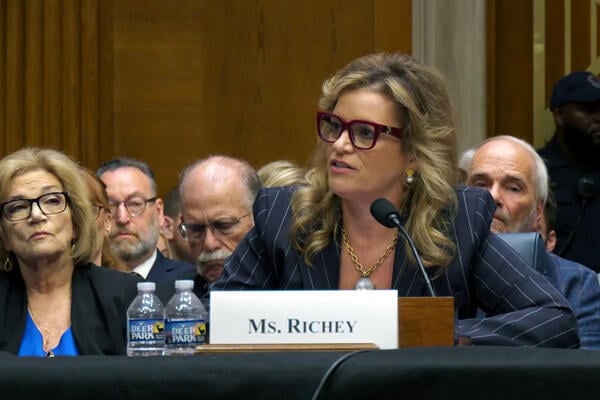
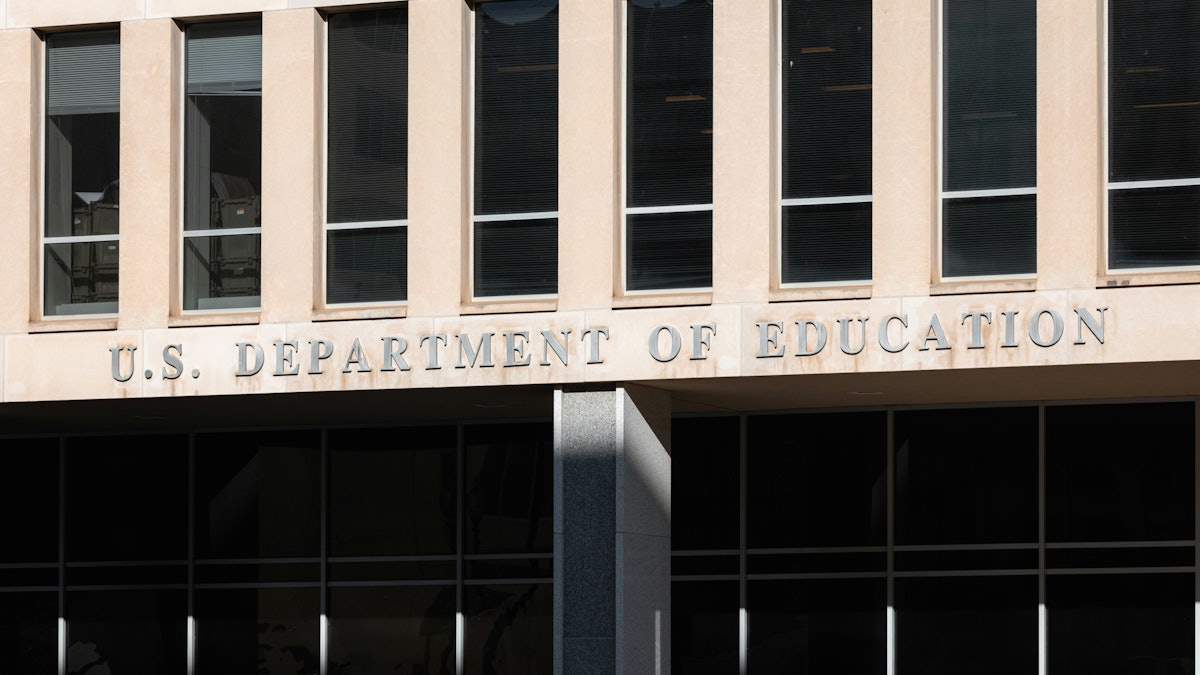
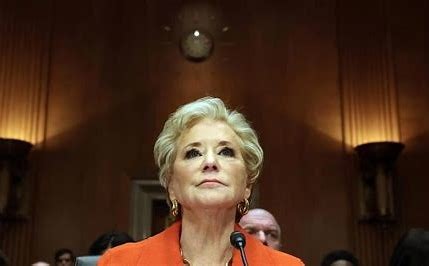
Kimberly Richey, a Florida education official, made her case Thursday about why she should lead the Education Department’s Office for Civil Rights, pledging “unwavering” support of the administration’s priorities such as protecting Jewish students.
“Should I be confirmed as assistant secretary for civil rights, I will proudly be joining an administration that will not allow students to be intimidated, harassed, assaulted or excluded from their institutions,” she said in her opening remarks.
But repeatedly throughout the hearing, Democratic senators interrogated her on how she plans to address a massive backlog in complaints—which one senator said has more than doubled since Trump took office, to 25,000—with a reduced staff.
“This administration has fired more than half of the staff at OCR, and President Trump is now asking, in his budget, to slash that by $49 million next year, so explain to me how those firings and that funding cut will help reduce that backlog? I want to understand how you’re going to square that circle,” Sen. Patty Murray, a Democrat from Washington, asked early on in the hearing.
Richey mostly avoided answering the questions, arguing that she had not yet assumed the role of assistant secretary and, therefore, had no say in the recent changes to OCR.
“As a nominee, I do not have access to information with regard to the decisions that are being made at the department,” Richey responded. “I’m not in communication with OCR leadership or the secretary. One of the reasons why this role is so important to me is because I am always going to advocate for OCR to have the resources it needs to do its job. I think that what it means is I’m going to have to be really strategic, if I’m confirmed, stepping into this role, helping come up with a plan where we can address these challenges.”
Several others doubled down on Murray’s line of questioning, including Sen. Andy Kim, a New Jersey Democrat, who asked Richey if antisemitism was getting worse in America. When she said it was, he questioned how cutting OCR staff is conducive to fighting antisemitism on college campuses. She reiterated her answer to Murray’s question, saying, “I can’t explain or provide information on decisions I wasn’t involved in.”
Richey was one of four people who testified Thursday before the Senate Health, Education, Labor and Pensions Committee. She and the nominee for deputy secretary of education, Penny Schwinn, fielded the bulk of the committee’s questions as lawmakers pressed for answers about the OCR’s operations and priorities, proposed budget cuts, and the president’s plans to dismantle the Education Department. The senators didn’t vote on whether to advance the nominations to the Senate floor; that step will likely occur at a later meeting.
Richey is currently senior chancellor for the Florida Department of Education and has twice served in OCR before, including a brief stint as acting secretary of civil rights at the end of Trump’s first term and the beginning of Biden’s presidency. Her confirmation hearing comes months after the Trump administration slashed more than half of OCR’s staff, including shuttering seven of the 12 regional offices dedicated to investigating complaints. The office has also reportedly begun prioritizing opening cases regarding trans women athletes and antisemitism since Trump’s second term began, letting other cases pile up and go unaddressed, according to multiplenews reports.
In the confirmation hearing, Richey expressed strong support for those causes, stressing that she led OCR when it investigated one of the federal government’s earliest cases against a school for allowing a trans woman to play on a women’s sports team.
“I’m certainly committed to vigorously enforcing it and continuing to pursue these cases,” she said.
In response to a different question, though, she did say that OCR would investigate certain complaints of discrimination related to gender identity and sexual orientation—an answer that appeared to incense Republican senator Josh Hawley of Missouri.
“I want to be crystal clear on this—I think it’s a very dangerous thing to start allowing this into Title IX, which, as you know, it is a landmark statute, it is vitally important, and it has been under attack for four long years,” he said, asking her to confirm that OCR will “go after” colleges and universities that allow trans women to play women’s sports.
He also warned Richey that she should “rethink” her position that OCR can investigate discrimination based on gender identity.
Sen. Angela Alsobrooks, a Democrat from Maryland, pressed Richey on whether she would continue OCR’s new system of prioritizing cases regarding antisemitism and trans athletes, asking if all forms of discrimination should be treated with equal importance.
Richey told Alsobrooks she does believe “it’s important to vigorously enforce all of the federal laws that OCR is responsible for enforcing.” Later in the hearing, she noted that Education Secretary Linda McMahon is “prioritizing” removing trans women from women’s athletics, and she plans to do the same if confirmed.
Schwinn, who was formerly Tennessee’s commissioner of education, received most of the panel’s questions about the Trump administration’s efforts to dismantle the education department. In response a question from Sen. Jim Banks, an Indiana Republican, about what steps would be required to dismantle the department, she stated that she “would certainly work, if confirmed, with the secretary and with Congress on any actions related to the role of the department” and that she believes in equipping states with legislation and funding that will help them improve their own educational systems.
“A department or an agency in the federal government is not going to change the outcomes of students—the teacher in the classroom is going to teach the standards that are approved by that state. The parent is the parent of that child. What we need to do is ensure we’ve created a system that is going to drive outcomes,” she said. “That is not going to happen from the federal government, whether there is a Department of Education or not.”
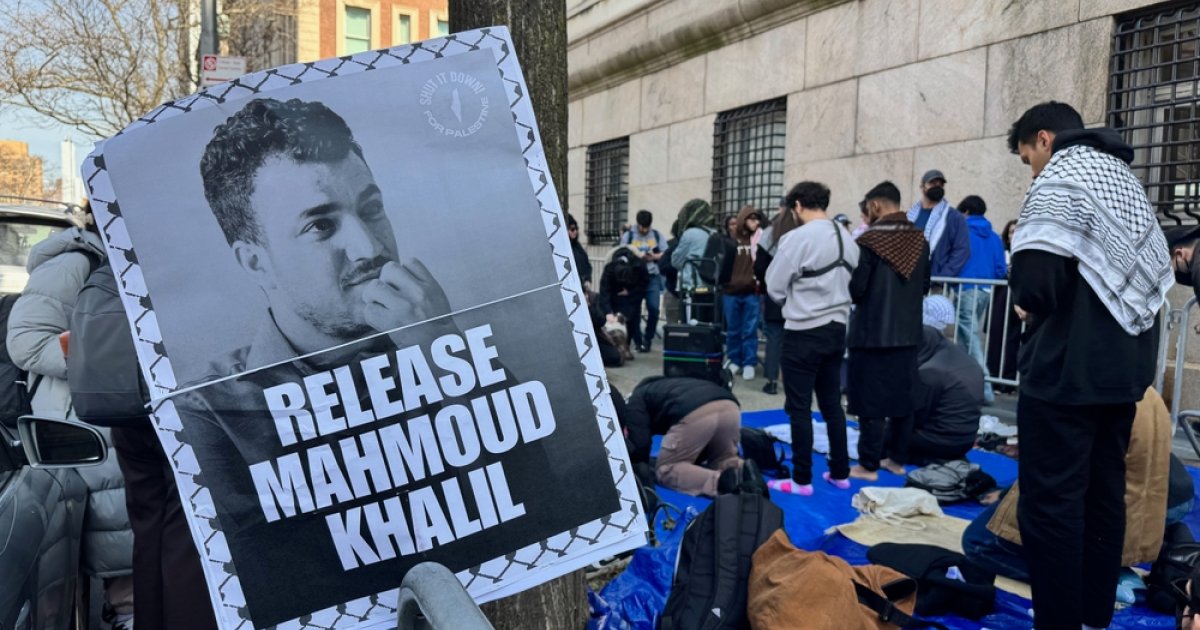
FIRE along with the National Coalition Against Censorship, The Rutherford Institute, PEN America, and First Amendment Lawyers Association today filed a “friend of the court” brief arguing that the jailing of Mahmoud Khalil violates the First Amendment. What follows is the brief’s summary of argument.
America’s founding principle, core to who and what we are as a Nation, is that liberty comes not from the benevolent hand of a king, but is an inherent right of every man, woman, and child. That includes “the opportunity for free political discussion” as “a basic tenet of our constitutional democracy.” (Cox v. Louisiana). And “a function of free speech under our system of government is to invite dispute. It may indeed best serve its high purpose when it induces a condition of unrest, creates dissatisfaction with conditions as they are, or even stirs people to anger.” (Terminiello v. City of Chicago). For these reasons, along with all citizens, “freedom of speech and of press is accorded aliens residing in this country.” (Bridges v. Wixon).
Secretary of State Marco Rubio, however, is attempting to deport a permanent resident, Mahmoud Khalil, not because the government claims he committed a crime or other deportable offense, but for the seemingly sole reason that his expression stirred the Trump administration to anger. The Secretary claims he can deport Mr. Khalil under a Cold War–era statute giving the secretary of state the power to deport anyone he “personally determines” is contrary to America’s “foreign policy interest.” And he argues this power extends even to deporting permanent residents for protected speech. It does not.
The First Amendment’s protection for free speech trumps a federal statute. (United States v. Robel). Accepting Secretary Rubio’s position would irreparably damage free expression in the United States, particularly on college campuses. Foreign students would (with good reason) fear criticizing the American government during classroom debates, in term papers, and on social media, lest they risk deportation. That result is utterly incompatible with the longstanding recognition that “[t]he essentiality of freedom in the community of American universities is almost self-evident,” and that “students must always remain free to inquire, to study and to evaluate, to gain new maturity and understanding.” (Sweezy v. New Hampshire).
Secretary Rubio claims (as do all censors) that this time is different, that the supposed repulsiveness of Mr. Khalil’s pro-Palestine (and, as Secretary Rubio alleges, pro-Hamas) views cannot be tolerated. But “if there is a bedrock principle underlying the First Amendment, it is that the government may not prohibit the expression of an idea simply because society finds the idea itself offensive.” (Texas v. Johnson) (holding the First Amendment protects burning the American flag in protest); see also (Snyder v. Phelps) (holding the First Amendment protects displaying “God Hates Fags” and “Thank God for Dead Soldiers” posters outside a military funeral).
Allowing the Secretary of State to deport any non-citizen whose views, in his subjective judgment, are against America’s foreign policy interests places free expression in mortal peril. China’s Constitution, for example, provides that “when exercising their freedoms and rights, citizens . . . shall not undermine the interests of the state.” As China’s experience shows, allowing the government to step in as censor when it believes speech threatens the government’s interests is a loophole with infinite diameter. It has no place in America’s tradition of individual liberty.
The only court to address the deportation provision Secretary Rubio relies upon to deport Mr. Khalil reached a similar conclusion, holding the law unconstitutional. As that court explained, “If the Constitution was adopted to protect individuals against anything, it was the abuses made possible through just this type of unbounded executive authority.” (Massieu v. Reno).
The “First Amendment does not speak equivocally. It prohibits any law ‘abridging the freedom of speech, or of the press.’ It must be taken as a command of the broadest scope that explicit language, read in the context of a liberty-loving society, will allow.” (Bridges v. California) (invalidating criminal convictions, including of a non-citizen, based on protected speech). Our “liberty-loving society” does not permit deportation as a punishment solely based on expression the government disfavors. The Court should grant Mr. Khalil’s motion.
Several future posts are in the works, as well as a Resources Page, so stay tuned. – rklc
Professor Timothy Zick
Presidents and suppressive campaigns: Today’s unprecedented practices
Executive Watch is an effort to record and analyze the many First Amendment-related conflicts and concerns arising during the second administration of President Donald Trump. One of the challenges in assessing the administration’s approach to the press and critics is to identify and explain what is distinct or unique about it. After all, the policies and actions of every administration have raised First Amendment issues and concerns. John Adams had reporters jailed under the Sedition Act, Richard Nixon had his “enemies list,” President Obama’s Department of Justice was criticized for prosecuting reporters in national security cases, and President Biden’s administration was accused of pressuring social media platforms to censor disfavored speech.
However, as I explained in my introductory post for Executive Watch, what is distinct about the current president and administration is the depth and breadth of the campaign they are waging against critics, both inside and outside government.
The current situation represents an unprecedented and coordinated effort to use courts, governmental agencies, and even private individuals to engage in retribution, intimidate media and non-media critics, impose official orthodoxies, and punish dissent.
Civil lawsuits as engines of leverage and intimidation
“I spent a couple of bucks on legal fees, and they spent a whole lot more. I did it to make his life miserable, which I’m happy about.” — Donald J. Trump
One aspect of the broader current agenda involves the filing of civil defamation, consumer fraud, and other lawsuits against the press and others who publish disfavored information or opinions critical of Trump or his administration.
Like any other citizen, a political candidate, president, or ex-president has the right to file lawsuits and seek redress for reputational or other harms. Indeed, prior to Trump, at least one ex-president did so. However, the extent to which Trump has relied, and continues to rely, on defamation and other civil lawsuits against media and non-media defendants is a unique aspect of a broader campaign against political critics. No other political candidate or president has wielded the civil lawsuit as a political sword quite as Trump has.
When it comes to civil litigation, Trump is in a league of his own. By one account, Trump has been involved in more than 4,000 civil lawsuits over the years, ranging from business disputes to defamation and other actions. Even for someone like Trump, who has been involved in a variety of complex business ventures, that is a remarkable number of civil actions.
One lesson Trump likely learned from his litigation experience is that lawsuits can be an effective form of leverage in business and other dealings. Indeed, even if a claim has no or little legal merit, it can be useful in terms of exhausting, intimidating, and silencing opponents.
For a long time, many of Trump’s civil lawsuits were business-related. However, since he became a political candidate, Trump’s filing of defamation actions has significantly spiked. As a political candidate and officeholder, he has pursued several defamation lawsuits against media and non-media defendants.
Trump has sued CNN, The Washington Post, and The New York Times, as well as local media outlets, for critical coverage of his campaign and first term as president. For example, he brought a $475 million defamation lawsuit against CNN over the network’s use of the term “the Big Lie” to describe his false claims that he won the 2020 election. That claim was dismissed. More recently, Trump brought a $20 billion civil action against “60 Minutes” and CBS for allegedly editing an interview with Kamala Harris in ways that obscured or improved her answers to questions.
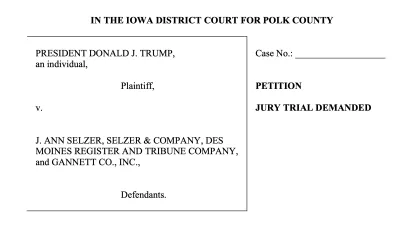
Trump also sued ABC News and George Stephanopoulos for stating that he had been found liable for “rape” in a civil case. Finally, Trump sued The Des Moines Register and its parent company, Gannett, for publishing a flawed poll showing Trump trailing Harris in the 2024 presidential election in Iowa. He also filed suit against the pollster herself, J. Ann Selzer. All of this despite Trump ultimately winning Iowa handily, raising questions about what damages he allegedly suffered.
Trump has also filed civil lawsuits against non-media defendants. For example, he has sued the Pulitzer Board for recognizing The New York Times for its reporting on the Russia investigation. (That suit has been allowed to proceed, at least for now.)
Trump and his lawyers have also been expanding their civil suit repertoire. He sued CBS and the defendants in the Iowa case for consumer fraud and election interference. His lawsuit against CBS also contains a claim under the Lanham Act, which provides civil damages for false advertising. These suspect allegations target core press functions and political speech.
Additionally, Trump has vowed to file many more civil lawsuits against those who publish unflattering opinions or disfavored information. He has claimed such legal action is necessary to “straighten out the press” and punish those he accuses of fraud and election interference.
Poor litigation track record
For all his litigation experience, Trump has a very poor track record in civil lawsuits, particularly those claiming defamation. In fact, he nearly always loses — sometimes very badly. Trump has even been ordered to pay media defendants substantial damages for filing harassing and frivolous defamation lawsuits. Some states have laws that impose liability on plaintiffs for bringing so-called SLAPPs (Strategic Lawsuit Against Public Participation) — essentially, defamation actions intended to silence or intimidate critics. Trump has been found liable for damages under such laws.
This is one context in which Trump may not mind being a loser or even paying damages. Weaponizing civil lawsuits and courts is not about restoring Trump’s damaged reputation, recovering damages, protecting consumers, ensuring the integrity of elections, or any other legitimate private or public interest. Rather, they are a means of punishing critics and chilling, through expensive and often frivolous litigation, the publication of unfavorable or unflattering information and opinion.
Civil lawsuits as political weapons
“Donald Trump is abusing the legal system to punish speech he dislikes. If you have to pay lawyers and spend time in court to defend your free speech, then you don’t have free speech.” — Adam Steinbaugh
Like many other aspects of the Trump administration’s agenda, civil lawsuits serve important political purposes. They are part of the campaign to suppress dissent, undermine the press, and entrench executive power.
Decades of litigation have likely convinced Trump that the prospect of defending against frivolous and strategically harassing claims will either convince defendants to settle, trim their critical reporting, or both. In that sense, civil lawsuits are an effective means of intimidating, leveraging, and silencing opponents.
The civil lawsuits communicate political narratives about the press as an institution, hoping to further weaken its public standing. Many of Trump’s civil complaints present hyperbolic and unsupported claims concerning Trump, the press, or both. They also highlight longstanding grievances against the media and other critics. Regardless of their outcome, Trump will be applauded by political supporters for waging war against the press, which Trump continues to describe as “the enemy of the American people.”
In a broader sense, civil lawsuits are part of a campaign to entrench executive power by undermining or eliminating institutions — including the press, agencies, lawyers, and universities — that can check the administration’s political and other narratives. Destroying the credibility of media and non-media fact-checkers and harassing them in civil suits, often through exorbitant demands for damages, serves these larger goals.
Regardless of their merit, Trump’s lawsuits force defendants to consider whether it is worth publishing truthful information or opinions that reflect poorly on him or his administration. The ordinary demands and pressures of civil litigation are even more pronounced when the plaintiff is the president of the United States. Judges may be reluctant to dismiss frivolous claims as a result of Trump’s status, and juries in some jurisdictions may be inclined to side with the president against his critics.
Past as prelude: The Sullivan story and its current importance
Using civil lawsuits as a cudgel against the media and other critics is an abusive practice that threatens to chill communication of opinions and facts. Although unprecedented for a presidential candidate or president, weaponizing defamation and other civil lawsuits to suppress criticism and chill reporting is not a new tactic.
During the Civil Rights Era, local southern officials relied on pro-plaintiff standards to censor and intimidate both media outlets and civil rights activists. Through frequent lawsuits, local and state officials sought to control the narrative about racial segregation.
Recognizing the chilling effect of this litigation tactic, in its 1964 decision New York Times Co. v. Sullivan the Supreme Court adopted a demanding standard of proof applicable to public officials who sued for allegedly defamatory statements about the conduct of their official duties. Under that precedent, public officials must show the statements were made with “actual malice,” i.e., that the defendant knew they were false when published or published them with reckless disregard for their truth. The Court later extended the actual malice standard to suits brought by public figures, including those like Trump who have gained extensive public notoriety.
Sullivan was a direct response to early SLAPPs, which were filed to censor local and national reporting about the extent and effects of racial segregation. As the Court recognized, because no double jeopardy limit applied in the civil context, defamation lawsuits could be even more chilling to a free press than the threat of criminal prosecution.
Anthony Lewis
Indeed, as Anthony Lewis observed in his book about the Sullivan case, by 1964, southern officials had brought $300 million in libel claims against the press for truthfully reporting on civil rights abuses. Sullivan’s protective standard — which the president favors eliminating — has been an effective shield for defendants sued by Trump. Without it, media and non-media defendants may face sizable damage awards for publishing even truthful criticism of Trump or the administration.
To be sure, the press does not always act responsibly. Media outlets and reporters can be held liable for knowingly or recklessly publishing false statements about public officials or figures. At the same time, as anti-SLAPP legislation shows, expensive lawsuits and the threat of civil damages can undermine the ability of the press and others to share vitally important information with the public. Trump and his lawyers have upped the ante with consumer fraud and other claims, which must still be rebutted even if frivolous.
In the hands of political officials, including presidents, abusive civil lawsuits can significantly undermine efforts to check power and educate the public.
Troubling successes — and possible responses
Trump has had some recent success in his civil lawsuits. For example, ABC News settled a defamation lawsuit, agreeing to donate $15 million to Trump’s presidential library and issue an apology for George Stephanopolous’s comments about the civil sexual assault verdict (which the trial judge held was “substantially true” in another Trump defamation lawsuit). CBS and “60 Minutes” are reportedly also considering a settlement, even though legal experts agree the lawsuit is based on a frivolous theory that a news network can be held liable for how it edits interviews.
Meanwhile, Trump has already extracted (if that is the right word) hefty settlements from Meta and X, for seemingly defensible decisions they made to de-platform or restrict Trump based on violations of their terms of service. A judge had dismissed Trump’s action against Twitter (now X), which was based on the First Amendment.
Of course, as law students in my classes know, the First Amendment constrains state action, not the private actions of social media platforms.
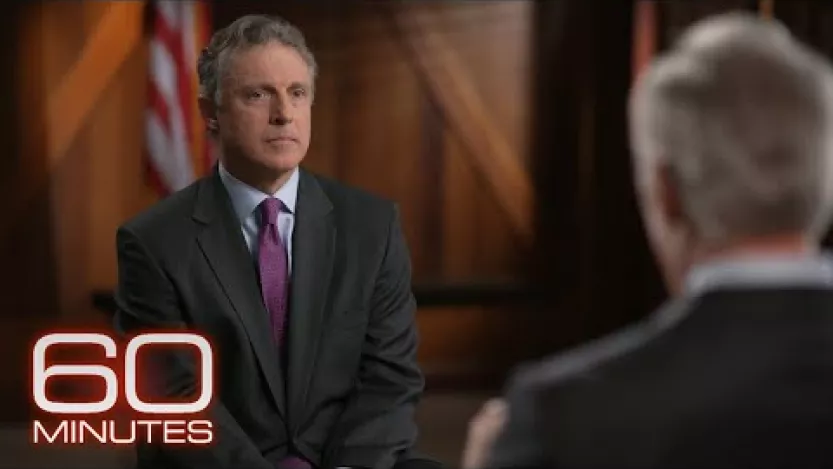
WATCH VIDEO: Firing the Watchdogs | 60 Minutes Full Episodes
There are many reasons a defendant might want to settle a civil lawsuit. One reason being to avoid a protracted and costly court proceeding, to avoid discovery, or to avoid the risk of a jury verdict. However, settlement of SLAPPs raise concerns about press obeisance and lack of independence. Rather than defend core First Amendment press prerogatives and functions, large media corporations with regulatory or other business before the Trump administration may be making balance sheet decisions.
As some commentators have suggested, social and media legacy companies may be settling meritless cases to grease the regulatory skids for pending mergers and other potential benefits from the Trump administration. Some have even suggested that some of these settlements may constitute a novel form of political corruption. Thus, one commentator referred to settling frivolous civil lawsuits brought by Trump as “a novel pathway to engage in political bribery.” (Of course, even if the practice fits that description, the administration can simply refuse to enforce political corruption laws against settling defendants.)
There are several means of combatting the weaponization of civil lawsuits. The most direct and obvious is to defend against these lawsuits and offer a robust First Amendment defense. As history shows, weaponizing civil lawsuits has dangerous implications for the freedoms of the press and speech. Trump’s aggressive resort to defamation and other civil lawsuits also highlights the importance of retaining Sullivan’s press-protective standard. Defendants ought to put up substantial and sustained resistance to lawsuit weaponization.
Anti-SLAPP statutes can also provide a deterrent. A federal anti-SLAPP law would make this important protection more widely available. Thus far, Trump has not been much deterred by anti-SLAPP liability. However, making such protections available regardless of jurisdiction would provide all defendants an opportunity to dismiss harassing defamation claims.
There are also actions judges can take to punish and deter abusive civil lawsuits. Judges have the power to dismiss baseless or frivolous claims on their own, and to sanction lawyers who file them. Some commentators have urged judges to refuse to approve media settlements of frivolous claims brought by Trump, on the grounds that they are the product of duress or fraud, or are otherwise against public policy.
Like agency employees, private employers, lawyers, universities, and others who have been subject to executive actions meant to punish or chill expression, media and non-media defendants currently face a critical choice: capitulate or fight.
For the sake of the First Amendment, let us hope the targets of strategic civil lawsuits defend them vigorously.
2024-2025 SCOTUS term: Free expression and related cases
Cases decided
Villarreal v. Alaniz(Petition granted. Judgment vacated and case remanded for further consideration in light of Gonzalez v. Trevino, 602 U. S. ___ (2024) (per curiam))
Murphy v. Schmitt (“The petition for a writ of certiorari is granted. The judgment is vacated, and the case is remanded to the United States Court of Appeals for the Eighth Circuit for further consideration in light of Gonzalez v. Trevino, 602 U. S. ___ (2024) (per curiam).”)
TikTok Inc. and ByteDance Ltd v. Garland (The challenged provisions of the Protecting Americans from Foreign Adversary Controlled Applications Act do not violate petitioners’ First Amendment rights.)
This article is part of First Amendment News, an editorially independent publication edited by Ronald K. L. Collins and hosted by FIRE as part of our mission to educate the public about First Amendment issues. The opinions expressed are those of the article’s author(s) and may not reflect the opinions of FIRE or Mr. Collins.
On March 14, the U.S. Department of Education’s (ED) Office for Civil Rights (OCR) announced that it had opened Title VI investigations into 45 universities. In a news release, ED noted that these investigations follow a Feb. 14 Dear Colleague Letter (DCL) signed by Craig Trainor, acting assistant secretary for civil rights. According to the ED release, the DCL — sent to all educational institutions that receive federal funding — reiterated that schools were obligated “to end the use of racial preferences and stereotypes in education programs and activities.”
Among the universities being investigated are both public and private institutions that include Clemson University, Cornell University, Duke University, the Massachusetts Institute of Technology, the University of Arkansas-Fayetteville, the University of California-Berkeley and the University of Kentucky.
An article from the Courier Journal reported that University of Kentucky spokesperson Lindsey Piercy said, “We have not received any official notification of this review. However, the university complies with both the constitution and Title VI. Our graduate programs are open to all qualified applicants. We will continue to monitor and review this issue, cooperate with any official inquiries and, as always, comply with the law.”
Montana State University-Bozeman (MSU) is also among the 45 institutions under investigation. MSU vice president for communications Tracy Ellig released a statement which reads in part: “MSU strictly adheres to all federal and state laws in the hiring of its faculty and staff. … Montana State University strictly adheres to all applicable laws with regard to its students. MSU has well-established processes and procedures in place to investigate any claim of discrimination by students, faculty, staff or the public.”
The ED press release noted that the investigations were prompted by these institutions having partnered with The PhD Project, an organization founded in 1994 with the goal of creating more role models leading business classrooms. It endeavors to improve diversity in the business world by encouraging people from underrepresented backgrounds to attain doctoral degrees in business. ED asserted that The PhD Project “limits eligibility based on the race of participants.”
The PhD Project issued the following statement: “For the last 30 years, The PhD Project has worked to expand the pool of workplace talent by developing business school faculty who inspire, mentor, and support tomorrow’s leaders. Our vision is to create a broader talent pipeline of current and future business leaders who are committed to excellence and to each other, through networking, mentorship, and unique events. This year, we have opened our membership application to anyone who shares that vision. The PhD Project was founded with the goal of providing more role models in the front of business classrooms, which remains our goal today.”
OCR is also investigating six universities that have allegedly awarded race-based scholarships, which it asserts is not allowed, and one university that allegedly administers a program that “segregates students on the basis of race.” Among those schools are Grand Valley State University, Ithaca College and the University of Tulsa School of Medicine.
“The Department is working to reorient civil rights enforcement to ensure all students are protected from illegal discrimination,” noted U.S. Secretary of Education Linda McMahon. “Students must be assessed according to merit and accomplishment, not prejudiced by the color of their skin.”
Kelly Benjamin, media and communications strategist for the American Association of University Professors (AAUP), noted that AAUP was a plaintiff in a case for which the U.S. District Court for the District of Maryland has granted a preliminary nationwide injunction on parts of two executive orders issued by President Donald J. Trump that sought to end diversity, equity and inclusion policies and programs among federal government grantees and contractors, which includes most colleges and universities.
“Unfortunately, the Office of Civil Rights within the Education Department has…intensified the clamp down on speech and expression related to race and identity, and they’ve moved beyond censorship into a true weaponization of federal civil rights law,” said Benjamin. “It’s fundamentally at odds with what the mission of higher education should be, which is the search for knowledge that serves the common good.
“They’re trying to remake higher education into their own agenda, where they can control not only who has access to higher education but what is taught in the classroom, what can be researched, what can be written about,” he added. “It’s an assault on the very core mission of higher education.”
The defendants, which include President Trump and ED, filed for a stay of the injunction pending appeal, which the United States Court of Appeals for the Fourth Circuit granted. “Having reviewed the record, the district court’s opinion, and the parties’ briefing, we agree with the government that it has satisfied the factors for a stay under Nken v. Holder, 556 U.S. 418, 426 (2009).” Entered at the direction of Chief Judge Albert Diaz, with the concurrence of Judge Pamela Harris and Judge Allison Rushing.
EdTrust issued a statement from Augustus Mays, vice president of partnerships and engagement, condemning the investigations. He noted: “By using federal investigations as a weapon to intimidate institutions committed to racial equity, the Trump administration is not only undermining the fundamental mission of higher education but is also jeopardizing student success. These attacks are grounded in a false narrative that DEI initiatives are about exclusion. The reality is the opposite: these programs are designed to expand access, increase opportunity, and strengthen institutions by ensuring that all students, particularly underserved students, can thrive.”
This audio is auto-generated. Please let us know if you have feedback.
Millions in cuts to federal funding. Letters from the highest education official in the country expressing disappointment. Enforcement directives to immediately address a “backlog” of antisemitism complaints.
The U.S. Department of Education’s Office for Civil Rights has taken sudden and unprecedented actions in the past month highlighting its desire to protect Jewish students from discrimination. At the same time, no such imperative has been evident in investigations into or statements on Islamophobia on school or campus grounds.
“This administration appears to be focused solely on responses to antisemitic incidents on campus,” said Jackie Gharapour Wernz, an education civil rights attorney who worked at OCR under the Obama and the first Trump administrations. “But schools need to be focused on both.”
‘Lip service’ to protecting all as Muslim students are targeted
The same civil rights law that protects Jewish students from antisemitism — Title VI of the Civil Rights Act — also protects Muslim students from Islamophobia.
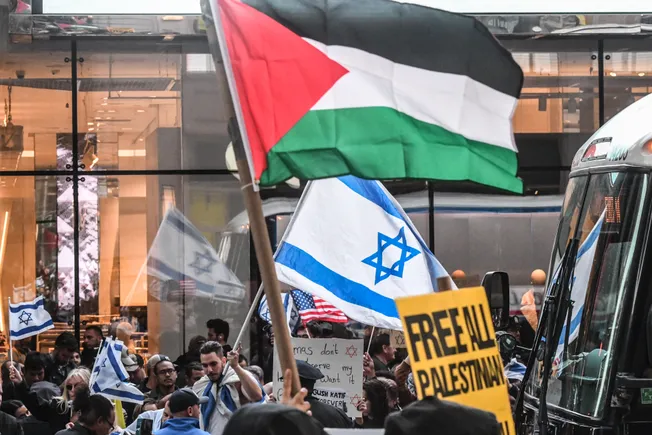
Under the Biden administration, and especially in light of the Israel-Hamas war protests after Oct. 7, 2023, the Education Department repeatedly expressed to schools that they must protect Jewish, Muslim, Palestinian and Israeli students equally.
“Jewish students, Israeli students, Muslim students, Arab students, Palestinian students, and all other students who reside within our school communities have the right to learn in our nation’s schools free from discrimination,” Catherine Lhamon, assistant secretary for civil rights for the Education Department under the Biden administration, warned in a Dear Colleague letter in November 2023.
The Biden administration issued the letter amid what it called an “alarming rise” in both antisemitic and Islamophobic incidents at schools.
Conversely, the Trump Education Department has made at least five announcements related to ending antisemitism in schools — none of which also expressed protections for students of Muslim, Arab or Palestinian backgrounds.
“They are centering Jewish students or others who are experiencing antisemitic behaviors, and they’re very clearly going after Palestinian and or Muslim students, as in the example at Columbia [University],” said Brett Sokolow, a Title VI and Title IX education civil rights expert who often works with school district administrators seeking to comply with federal regulations. “So while there’s some lip service to protecting all, I think the [Title VI] enforcement tool is going to be used primarily to the benefit of those who are experiencing antisemitism.”
Last week, the Trump administration cut $400 million in funding to Columbia University over what it called “inaction” in harassment of Jewish students, and warned of more cancellations to follow. Referring to anti-Israel protests that erupted on campuses over the Israel-Hamas war, the Education Department said “any college or university that allows illegal protests and repeatedly fails to protect students from anti-Semitic harassment on campus will be subject to the loss of federal funding.”
“This is only the beginning,” said Leo Terrell, senior counsel to the assistant attorney general for civil rights and head of the federal Joint Task Force to Combat Anti-Semitism, in a joint March 7 statement with the Education Department.
Just a few days later, Trump vehemently supported Immigration and Customs Enforcement’s arrest of prominent Palestinian activist Mahmoud Khalil, saying the move was the first of “many to come.” Khalil, a legal permanent resident of the United States and recent Columbia graduate, helped lead campus protests opposing the war in Gaza.
Addressing a ‘backlog’ of antisemitism complaints
Israel-Hamas war protests erupted on higher education and K-12 campuses under the Biden administration.
As part of its broader effort to crack down on Title VI after Oct. 7, 2023, the Education Department’s OCR opened civil rights investigations into complaints of both Islamophobia and antisemitism. Its caseload had gotten so unwieldy that Lhamon and then-Education Secretary Miguel Cardona pleaded at the time with Congress for more funding to support investigative staff and address the high number of complaints.
In one high-profile example in 2023, the department opened an investigation into New York City Public Schools, the nation’s largest school system, for allegedly failing to protect students from a hostile environment resulting from both antisemitism and Islamophobia.
Toward the tail end of Biden’s presidency, the administration had begun resolving the influx of Title VI complaints raised after the latest Israel-Hamas war.
But the Trump administration, in a March 7 statement, has referred to this OCR’s Title VI caseload as a “backlog of Biden Administration-era complaints alleging antisemitism” and said the resolution agreements under Biden were “toothless” and continue to provide “little to no remedy for Jewish students.”
While curtailing awareness around Islamophobia and Muslim students’ protections, the new administration has also reopened Title VI investigations into many of the same institutions that had already reached settlement agreements over alleged antisemitism with OCR under Biden, said Harold Jordan, nationwide education equity coordinator at the American Civil Liberties Union of Pennsylvania.
However, quantifying the Education Department’s efforts to resolve both Islamophobia and antisemitism cases under the Trump administration is difficult. Although the administration has been publicly lighting a fire under schools for their handling of alleged antisemitism incidents, it has not updated its website to reflect any pending civil rights investigations since Jan. 14, 2025 — the Tuesday before Trump’s Jan. 20 inauguration. Prior to the inauguration, OCR updated its pending and settled investigations every Tuesday for the sake of public transparency.
“The Office for Civil Rights should not be picking and choosing whose rights are important,” said Lhamon, who cracked down on Title VI violations following Oct. 7 while at OCR. “So you know, it’s very disturbing to me to hear only about some kinds of harm in the press releases and the public announcements of the department now.”
The Education Department did not respond to K-12 Dive’s multiple requests for comment on whether it intends to protect Muslim students and students from Muslim-majority countries as it is protecting Jewish and Israeli students, or on the status of complaints involving alleged Islamophobia especially in light of increased incidents following Oct. 7.
Backdrop of rising Islamophobia
As the Trump administration is seemingly sidelining Muslim and Arab students, incidents of Islamophobia on school grounds rise.
In 2024, education discrimination was among the most common types of complaints filed with the Council on American-Islamic Relations, the nation’s largest Muslim civil rights advocacy organization, according to the group’s annual report released March 11. That’s in addition to complaints of bullying of Muslim students, the CAIR report said.
CAIR is expecting Muslim students’ Title VI civil rights complaints to only increase under the current administration and is urging the Trump administration to oppose both antisemitism and Islamophobia, along with all forms of bigotry.
The ACLU agrees. “We want every allegation of discrimination that falls within the purview of that department — you know, race, gender, national origin, etc. — to be taken seriously,” said Jordan.
“That includes students who have complained that they are being mistreated because they are Muslim. And that does not appear to be happening in the current administration at this moment.”
Clarification: This article has been updated to clarify Harold Jordan’s affiliation.
After pausing most civil rights investigations, the Education Department’s Office for Civil Rights is resuming some inquiries, but only those related to disability-based discrimination, according to a memo obtained by ProPublica.
Those involving race or gender will remain on hold, the nonprofit news organization reported.
The investigation freeze, which had been in place for a month, forbade OCR staffers from pursuing discrimination complaints that had been submitted by thousands of students at schools and colleges across the country. In fiscal year 2024, the office received 22,687 complaints—37 percent of which alleged discrimination based on disability.
“I am lifting the pause on the processing of complaints alleging discrimination on the basis of disability. Effective immediately, please process complaints that allege only disability-based discrimination,” Craig Trainor, the office’s acting director, wrote the internal memo that was sent to employees, most of whom are attorneys.
A spokesperson for the department declined to respond to ProPublica’s request for comment.
In a Senate confirmation hearing that has sent ripples through the higher education community, Education Secretary nominee Linda McMahon acknowledgedLinda McMahon President Trump’s directive to potentially dissolve the Department of Education, while facing pointed questions about diversity initiatives and civil rights protections in education.
During last Thursday’s hearing before the Senate Committee on Health, Education, Labor and Pensions (HELP), McMahon addressed concerns about the administration’s stance on diversity, equity, and inclusion (DEI) programs in educational institutions. When pressed by Sen. Chris Murphy (D-Conn.) about Trump’s executive order banning DEI programs, McMahon stopped short of providing clear guidance on the future of student cultural organizations and ethnicity-based clubs on campuses.
The hearing revealed mounting concerns about student data privacy and program funding. Sen. Patty Murray (D-Wash.) highlighted that the Department of Government Efficiency (DOGE) has already gained access to “highly sensitive student data” and has begun withholding congressionally approved funding meant to support schools and students.
Democratic senators expressed particular concern about the potential dismantling of the Education Department and its impact on civil rights enforcement and disability services in higher education. When questioned about relocating the Individuals with Disabilities Education Act (IDEA) to the Department of Health and Human Services, McMahon defended the potential move by citing declining performance scores despite nearly a trillion dollars in spending since the department’s establishment in 1980.
McMahon did make several commitments during the hearing, including a pledge to maintain the Pell Grant program, which provides crucial financial aid to millions of college students. She also addressed the issue of antisemitism on college campuses, though specific plans for addressing this concern were not detailed.
The hearing, which was interrupted multiple times by protesters advocating for public schools and trans students’ rights, highlighted the complex challenges facing the department. McMahon acknowledged that any significant changes to the department’s structure would require congressional approval, despite the president’s stated desire to eliminate it through executive action.
While McMahon is expected to be confirmed by the GOP-controlled Senate, her hearing has raised significant questions about the future of federal oversight of higher education, particularly regarding civil rights enforcement and diversity initiatives. The HELP panel is scheduled to vote on advancing her nomination to the full Senate floor next Thursday.
“It’s always difficult to downsize, it’s always difficult to restructure and reorganize in any department,” McMahon said during the hearing, addressing concerns about recent administrative leaves and firings at the department. “I think people should always be treated with respect.”
For the higher education community, the hearing left several crucial questions unanswered, particularly regarding the future of diversity programs and civil rights protections. Sen. Murphy’s exchange about student cultural organizations highlighted the uncertainty facing many campus groups: “That’s pretty chilling. I think schools all around the country are going to hear that,” he noted after McMahon’s noncommittal response about the permissibility of ethnicity-based student clubs under the new DEI restrictions.
The U.S. Department of Education laid off some civil servants on Wednesday, Politico reported, citing multiple people familiar with the matter.
It’s not yet clear how many employees were affected, but they worked for a range of offices within the department, from civil rights to federal student aid. Earlier that day, a federal judge approved the Trump administration’s plan to offer buyouts to vast swaths of the federal workforce.
The move is the latest personnel disruption at the agency. Earlier this month, dozens of employees were put on administrative leave after attending a diversity, equity and inclusion training during the first Trump administration.
Many of the terminated department employees were still in their probationary period, according to Politico, meaning they’d been on the job for less than a year and lacked full civil service protections, though nonprobationary employees were also affected. On Thursday, the Associated Press reported that the Trump administration had ordered all federal agencies to terminate their probationary employees, part of a broader effort to reduce the federal workforce.
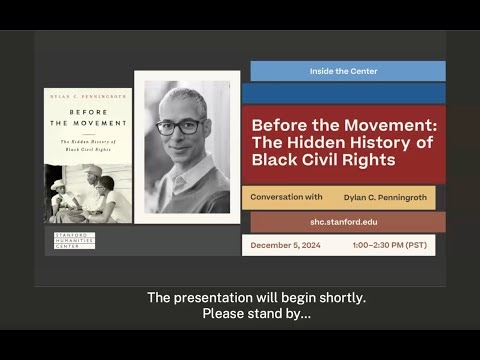
As part of our online Inside the Center series, Dylan C. Penningroth, a 2013–14 SHC fellow, discusses his latest book, “Before the Movement: The Hidden History of Black Civil Rights.” Joining him in conversation is historian and Stanford professor James T. Campbell. Through an empirically rich historical investigation into the changing meaning of civil rights, “Before the Movement” seeks to change the way we think about Black history itself. Weaving together a variety of sources—from state and federal appellate courts to long-forgotten documents found in county courthouse basements, from family interviews to church records—the book tries to reveal how African Americans thought about, talked about, and used the law long before the marches of the 1960s. In a world that denied their constitutional rights, Black people built lives for themselves through common law “rights of everyday use.”