Tag: Class

  • Chat Bot Passes College Engineering Class With Minimal Effort

    Chat Bot Passes College Engineering Class With Minimal Effort

    Since the release of ChatGPT in 2022, instructors have worried about how students might circumvent learning by utilizing the chat bot to complete homework and other assignments. Over the years, the large language model has enabled AI to expand its database and its ability to answer more complex questions, but can it replace a student’s efforts entirely?

    Graduate students at the University of Illinois at Urbana-Champaign’s college of engineering integrated a large language model into an undergraduate aerospace engineering course to evaluate its performance compared to the average student’s work.

    The researchers, Gokul Puthumanaillam and Melkior Ornik, found that ChatGPT earned a passing grade in the course without much prompt engineering, but the chat bot didn’t demonstrate understanding or comprehension of high-level concepts. Their work illustrating its capabilities and limitations was published on the open-access platform arXiv, operated by Cornell Tech.

    The background: LLMs can tackle a variety of tasks, including creative writing and technical analysis, prompting concerns over students’ academic integrity in higher education.

    A significant number of students admit to using generative artificial intelligence to complete their course assignments (and professors admit to using generative AI to give feedback, create course materials and grade academic work). According to a 2024 survey from Wiley, most students say it’s become easier to cheat, thanks to AI.

    Researchers sought to understand how a student investing minimal effort would perform in a course by offloading work to ChatGPT.

    The evaluated class, Aerospace Control Systems, which was offered in fall 2024, is a required junior-level course for aerospace engineering students. During the term, students submit approximately 115 deliverables, including homework problems, two midterm exams and three programming projects.

    “The course structure emphasizes progressive complexity in both theoretical understanding and practical application,” the research authors wrote in their paper.

    They copied and pasted questions or uploaded screenshots of questions into a free version of the chat bot without additional guidance, mimicking a student who is investing minimal time in their coursework.

    The results: At the end of the term, ChatGPT achieved a B grade (82.2 percent), slightly below the class average of 85 percent. But it didn’t excel at all assignment types.

    On practice problems, the LLM earned a 90.4 percent average (compared to the class average of 91.4 percent), performing the best on multiple-choice questions. ChatGPT received a higher exam average (89.7 percent) compared to the class (84.8 percent), but it faltered much more on the written sections than on the autograded components.

    ChatGPT demonstrated its worst performance in programming projects. While it had sound mathematical reasoning to theoretical questions, the model’s explanation was rigid and template-like, not adapting to the specific nuances of the problem, researchers wrote. It also created inefficient or overly complex solutions to programming, lacking “the optimization and robustness of considerations that characterize high-quality student submissions,” according to the article.

    The findings demonstrate that AI is capable of passing a rigorous undergraduate course, but that LLM systems can only accomplish pattern recognition rather than deep understanding. The results also indicated to researchers that well-designed coursework can evaluate students’ capabilities in engineering.

    So what? Based on their findings, researchers recommend faculty members integrate project work and open-ended design challenges to evaluate students’ understanding and technical capabilities, particularly in synthesizing information and making practical judgements.

    In the same vein, they suggested that faculty should design questions that evaluate human expertise by requiring students to explain their rationale or justify their response, rather than just arrive at the correct answer.

    ChatGPT was also unable to grasp system integration, robustness and optimization over basic implementation, so focusing on these requirements would provide better evaluation metrics.

    Researchers also noted that because ChatGPT is capable of answering practice problems, instruction should focus less on routine technical work and more on higher-level engineering concepts and problem-solving skills. “The challenge ahead lies not in preventing AI use, but in developing educational approaches that leverage these tools while continuing to cultivate genuine engineering expertise,” researchers wrote.

    Source link

  • San Jose Middle School Offers College Class to 13-Year-Olds – The 74

    San Jose Middle School Offers College Class to 13-Year-Olds – The 74


    Get stories like this delivered straight to your inbox. Sign up for The 74 Newsletter

    This story was originally published by CalMatters. Sign up for their newsletters.

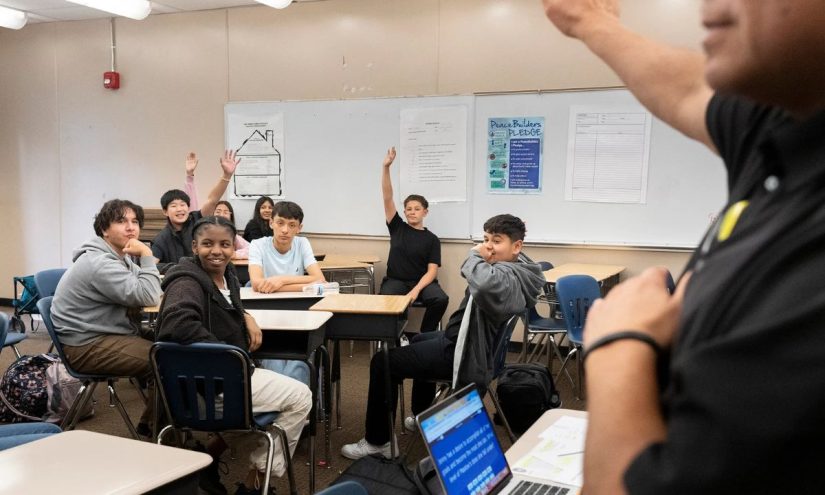
    By 2:45 p.m. the regular school day at August Boeger Middle School had already ended, but one class is about to start. More than 20 eighth graders drop their backpacks and settle into desks — not for extra credit but for college credit.

    These 13- and 14-year-old students in East San Jose are taking their first college course, an entry-level class on career planning. This middle school is one of the first in the state to offer a college-level course. In the coming years, the San Jose Evergreen Community College District wants all middle school students in this school district to be able to complete three college courses before they start high school, and soon, the district plans to offer other courses, such as sociology and ethnic studies, said Beatriz Chaidez, the chancellor for the community college district.

    Middle schoolers have long been eligible to enroll in college classes in California, though only a few, high-achieving students actually do it. By offering a college class at a middle school — especially one in a high-poverty area — the community college district is looking to make that enrollment easier. The class is taught by a middle school staff member, and it’s reserved exclusively for middle school students.

    But with so few programs, there is little research about whether students are benefitting, and the local faculty union is worried middle school students might not be ready.

    Chaidez disagrees. “Navigating (college) as early as middle school is unheard of in their community,” she said. “So when they experience success, it really motivates them to continue.”

    California is increasingly pushing high schools to offer community college classes directly to students during the regular school day, a set-up known as “dual enrollment.” Unlike AP classes, which include expensive exams and are limited to certain subjects and high-performing students, these community college classes cover a range of topics and are open to all students. By 2030, California Community Colleges Chancellor Sonya Chiristian wants all high school students to graduate with at least four college courses completed.

    Chaidez wants to go further. She wants every local high school student to be able to complete about 20 college courses by the time they graduate — enough to earn an associate’s degree.

    CalMatters reached out to the college district’s faculty union, which was surprised to learn the district is offering classes at a middle school.

    “This opens up some problems,” said Jessica Breheny, an English professor and the union’s vice president. “I’m sure there are 12-year-olds that are college-ready, but there are just less of them and it’s less likely. Developmentally, they have other things going on.”

    Research shows that high schoolers who take college classes are more likely to attend college and graduate, but there’s little research on how middle school students fare, said John Fink, a senior researcher at Columbia University’s Community College Research Center. “Nationally, and in most states, this is very, very rare, and in many states this is not allowed.” Instead, he said the focus is typically on enrolling more 10th, 11th and 12th graders in college courses.

    A college-level course, with a few middle school games

    About 10% of California’s high school students took a community college class in the 2021-22 school year, according to an analysis by professors at UC Davis using the most recent data. California’s community college system doesn’t track how many middle school students take college courses.

    So far, the Mount Pleasant Elementary School District, which includes August Boeger Middle School, offers only one college course, called “Career Planning,” and it’s almost indistinguishable from any other class on its campus. The college course is taught in a regular middle school classroom, and the professor, Oscar Lamas, already works at the middle school, where he’s a counselor. Perhaps the only noticeable difference is the timing: The middle school day ends at 2:30 p.m. and Lamas’ course starts at 2:45. He’s paid separately by the community college to teach the course.

    Career Planning helps students learn about career paths, practice resume-writing and learn psychological theories related to professional success. A governing board of college district professors, known as the Academic Senate, sets the objectives for each college course, but Lamas has broad discretion in teaching it. The Academic Senate responsible for setting the parameters of Lamas’ course did not respond to multiple requests for comment.

    The dean of the community college’s counseling department, Victor Garza, refused an interview request from CalMatters but issued a written statement. Garza said the middle school class is akin to other dual enrollment courses, which maintain the college’s “academic rigor.”

    “Some adjustments might be needed to cater to the unique needs and experiences” of students, he added.

    On a Thursday before spring break, Lamas tries to make his class more fun by breaking the students into five teams to play a Jeopardy-style quiz game on the topic of the day, Maslow’s Hierarchy of Needs.

    Natalie Mendoza, 14, becomes the default spokesperson of her team, named the “Tacos R Us Club,” but she answers the first question wrong, putting her team back 300 points and prompting her classmates to burst into chatter and analyze their mistakes.

    As part of the class, she has to study a career, write a short essay about it and present it at a career fair. She picked intellectual property law. “A lot of people say I’m assertive,” she said. “I think that’s a really good trait for a lawyer, and I think it’d be fun to fight for people who have created stuff.”

    Natalie said she’d be the first in her family to attend college but she’s already planning to go and has a few schools in mind, including UC Berkeley and San Jose State. If she does attend one of those schools, her grade in this counseling class would be part of her official college transcript.

    Breheny, with the union, said she’s concerned about the quality of the classes, especially once the college district begins teaching other subjects, such as ethnic studies.

    “Faculty designed their courses for adult learners,” Breheny said. An ethnic studies class may cover topics such as sexual violence and genocide, she added — topics that may be difficult to convey to a middle schooler. “Some of the material assumes a certain knowledge about the world, about politics, which you may not have at 11, 12, 13 years old.”

    High schools offer few dual enrollment classes

    August Boeger Middle School sits at the base of the Diablo Range mountains, tucked between the ranch-style homes and strip malls that color East San Jose. Teachers and staff greet each other with mucho gusto instead of hello. All around the open-air campus, murals tell the story of the region’s multi-cultural heritage, especially its Mexican and Chicano roots.

    That celebration of culture is a direct response to a history of adversity, Lamas said. “East San Jose has always been a marginalized, disadvantaged environment.” As a result, schools in the community contend with education disparities, he said, such as a high dropout rate and a high teen pregnancy rate.

    Offering a college class to these middle school students allows them to “see a possibility for their future that doesn’t exist within these walls here” and can inspire them to reach for a higher goal, said Marisa Peña, a school advisor.

    Male students, Black and Latino students and students from rural areas are underrepresented in the community college courses offered at California’s school districts. California lawmakers have signed numerous bills in the hopes of expanding access but certain regions in the state, such as Los Angeles, enroll a higher percentage of students.

    Natalie said she hopes to continue taking college courses when she starts at Mount Pleasant High School this fall, which is just around the corner from her middle school. But her options are limited.

    Mount Pleasant High School offers just three community college courses, which serve about 10% of the school’s roughly 1,000 students, said Kyle Kleckner, the school district’s director of instructional services. All of the classes are in “multimedia” studies, he said, which teaches students how to create their own podcasts or YouTube channels, along with other digital marketing skills. 

    Although Mount Pleasant High School’s dual enrollment is about on par with the state average, it trails other districts in the region. Less than 20 miles away, at high schools in the Milpitas Unified School District, roughly 25% of students enrolled in a community college class in 2021-22, according to the UC Davis analysis.

    Finding professors to teach middle school

    Part of the dual enrollment challenge is finding qualified college professors who are willing and able to work at a high school or middle school. Existing middle and high school teachers are allowed to teach college courses but they have to meet the qualifications, which usually include a master’s degree in the area of instruction. Most of California’s high school and middle school instructors lack a master’s degree, according to a study by the Public Policy Institute of California.

    “We have graduation requirements that students have to accomplish,” Kleckner said. “The trick is finding that community college course that also fulfills those requirements and also finding a teacher who can teach it.” He said Mount Pleasant High School is committed to expanding the number of college courses but noted that it’s smaller and therefore has fewer teachers who meet the requirements to teach a college course.

    In turn, many college professors lack experience teaching children, said Breheny, who teaches at San Jose City College. “We have had some problems already with dual enrollment where faculty have gone to different (high schools) to teach and have dealt with classroom management issues that they wouldn’t have in a college course.” In one case, she said a college faculty member saw bullying in a high school classroom but didn’t feel equipped to respond.

    Lamas has a master’s degree, which is required for most school counselors. He’s gentle with the middle school students in his class, occasionally awarding points in the Jeopardy game even when the answer isn’t perfect. Lamas had two quiz games planned that day, each one covering a different topic, but the first game took up almost all of the class time.

    He ends class by taking questions about the upcoming final project. Although spring break is minutes away, the students sit still through the final minutes, except for the occasional joke and bursts of laughter. Not a single phone was in sight.

    Once class ends, however, chatter ensues, the students pull out their phones, and staff escort them to the parking lot. While they may be taking a college course, they still must wait for their parents to pick them up.

    This article was originally published on CalMatters and was republished under the Creative Commons Attribution-NonCommercial-NoDerivatives license.


    Get stories like these delivered straight to your inbox. Sign up for The 74 Newsletter

    Source link

  • Class of 2025 grads are experiencing disconnect between job expectations and reality, study finds

    Class of 2025 grads are experiencing disconnect between job expectations and reality, study finds

    This audio is auto-generated. Please let us know if you have feedback.

    Class of 2025 graduates’ expectations seem to be clashing with reality during their job search, especially when it comes to pay, job preferences and beliefs about the job market, according to an April report from ZipRecruiter. 

    For instance, some graduates have found that the job search is taking longer than they expected. About 82% of those about to graduate expect to start work within three months of graduation, but only 77% of recent graduates accomplished that, and 5% said they’re still searching for a job.

    “Navigating the transition from campus to career can be a challenge for new grads, especially given the unpredictable market this class is stepping into,” Ian Siegel, co-founder and CEO of ZipRecruiter, said in a statement.

    In a survey, additional disconnects surfaced. About 42% of recent graduates reported they didn’t secure the pay they wanted. Although soon-to-be graduates said they expected to make six figures — $101,500 on average — the average starting salary for recent graduates was $68,400.

    Those about to graduate also said they want flexibility, but recent graduates said that’s harder to achieve than they hoped. About 90% of recent graduates said schedule flexibility is important to them, yet only 29% said they had flexible jobs.

    Amid shifting job market conditions, college graduates feel both confident yet cautious about their job prospects and the economy, according to a Monster report. Employers that offer flexibility, purpose and growth opportunities will attract and retain the next generation of top talent, a CareerBuilder + Monster executive said.

    Compensation conversations could remain a challenge in 2025, especially as pay transparency feels contentious, according to a report from Payscale. To combat this, employers can listen to employees and lead with fairness through pay transparency, a Payscale executive said. 

    Despite the challenges, job seekers entered 2025 with optimism, according to an Indeed report. Job seekers’ interest will likely remain steady but face more competition since job availability has remained stagnant in recent months, an Indeed economist said.

    Source link

  • Class of 2025 may face tight competition for fewer jobs

    Class of 2025 may face tight competition for fewer jobs

    This audio is auto-generated. Please let us know if you have feedback.

    Dive Brief:

    • Three-quarters of graduating college students responding to a recent survey said they are ready to show up for work prepared and on time. Of the more than 2,800 college seniors responding, however, 56% expressed pessimism about starting their careers in the current economy, according to Handshake’s “Class of 2025 State of the Graduate” report. 
    • More than a quarter of computer science majors said they’re “very pessimistic,” while the sentiment may be declining slightly among physical sciences, business and health field majors, Handshake reported.
    • Graduating seniors are also more concerned about how generative AI tools will affect their careers, an increase to 62% this year from 44% in 2023. Computer science majors are the most likely to be “very concerned,” possibly due to the speculation around how AI will impact entry-level programming roles, the Gen Z career platform noted.

    Dive Insight:

    It’s certainly not news that graduating seniors are entering a vastly different work environment than preceding generations: They applied to college in the early years of the pandemic, witnessed waves of layoffs and job market shifts and experienced the rapid rise of generative AI.

    Now, they face tight competition for fewer entry-level jobs, with Handshake reporting that job postings on its site have decreased by 15%, while applications per job have increased by 30%.

    As early career hires, college grads will likely have to make fundamental adjustments after they’re hired. For instance, although 66% of graduating seniors feel fully ready to communicate through email or messaging at work, slightly less (59%) are fully prepared to communicate in person, the Handshake survey found.

    The survey highlighted other insecurities as well: Only 35% of graduating seniors said they feel fully prepared to participate effectively in meetings, and 44% said they’ll need guidance on giving feedback to managers and leaders.

    HR professionals can help, experts recently told HR Dive. One way is to ensure early career hires are properly onboarded, they said.

    This means not rushing through the process, but instead giving new hires a 12- to 18-month comprehensive and structured experience that can include shadowing workers before doing the job on their own and being taught how to develop soft and hard skills, the experts explained.

    HR can also create and manage cohorts of newcomers as they join an organization and undergo training, according to research in the Journal of General Management. Nurturing these connections and supporting these hires helps them better fit in and improves retention, the researchers said.

    Graduating seniors do bring critical skills to the workplace, however; 98% say they’re familiar with generative AI tools, such as ChatGPT, compared to 61% two years ago, Handshake found.

    Also, while college seniors are concerned about how generative AI tools will affect their career, they are enthusiastic about upskilling, learning technology company D2L reported last year.

    In a survey of 3,000 full- and part-time U.S. employees, younger workers were more likely to say they plan to take multiple professional development courses during the next year, D2L said.

    There’s also positive news for employers favoring in-person work. According to the Handshake survey, that’s what 81% of seniors say they’d prefer for their first job after graduation.

    Source link

  • Out of Touch with Social Class Realities

    Out of Touch with Social Class Realities

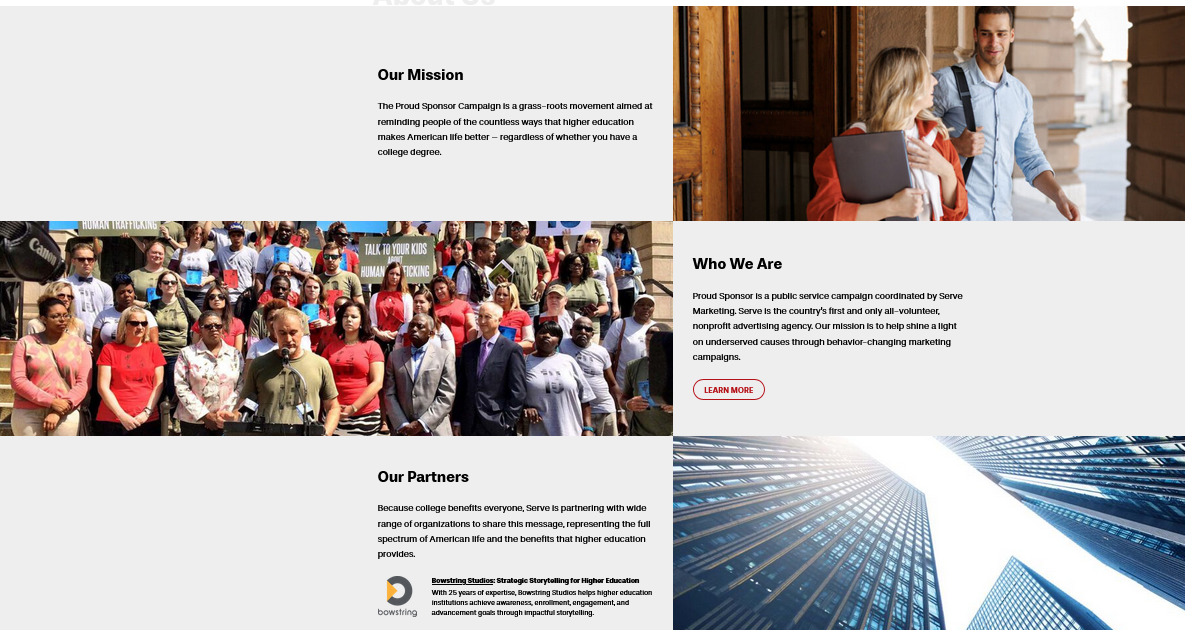
    Serve Marketing’s Why College Matters
    media campaign stacks the deck in favor of higher education and
    expects consumers to believe the story they tell. The problem with this campaign, and its anonymous funders, is that for many folks, college (and life after college) is problematic at best and oppressive at worst. 


    The Higher Education Disconnect: What Survey Results Miss About Americans’ Real Concerns

    The Why College Matters campaign presents data suggesting Americans’ perceptions of higher education can be positively influenced through messaging. However, when
    compared with broader research on Americans’
    attitudes toward higher education, significant disconnects emerge. This
    analysis examines the gaps between the campaign’s focus and the
    well-documented concerns Americans have about today’s college
    experience.

    The Financial Reality Gap: Debt and Affordability Concerns

    The Why College Matters campaign notably avoids addressing one of the most
    pressing issues facing Americans considering higher education: the
    financial burden. This omission creates a fundamental disconnect with
    public sentiment.

    Student Debt as a Life-Altering Burden

    Recent research shows that 70% of middle-income Americans believe
    student loans are impacting their ability to achieve financial
    prosperity5. The
    psychological burden is equally significant, with 54% of student
    borrowers experiencing mental health challenges directly attributed to
    their debt load, including anxiety (56%) and depression (approximately
    33%)8.
    The campaign’s focus on abstract benefits like “growing America’s
    economic prosperity” fails to acknowledge that for many individuals, the
    immediate economic reality is far less promising. Student borrowers
    report delaying major life milestones including starting
    families, purchasing homes, and pursuing careers they’re passionate
    about due to debt constraints8.

    The Middle-Class Squeeze

    While the campaign targets adults without college degrees as a key
    demographic, it misses that middle-class families face particularly
    acute challenges. These families often find themselves in a precarious
    position – too wealthy to qualify for significant need-based
    aid but not wealthy enough to comfortably afford college expenses13. This
    “middle-class squeeze” represents a significant disconnect between survey messaging and lived experience.

    The Employment Reality Disconnect

    Perhaps the most striking omission in the campaign’s framing is the
    reality of post-graduation employment outcomes, which directly
    contradicts the economic benefit messaging.

    Widespread Underemployment

    Research from the Burning Glass Institute reveals a sobering statistic:
    52% of recent four-year college graduates are underemployed a year after
    graduation, holding jobs that don’t require a bachelor’s degree14. Even
    more concerning, 45% still don’t hold college-level jobs a decade after graduation14. This
    creates a fundamental disconnect when the campaign emphasizes workforce development without acknowledging this reality.

    The “First Job Trap”

    The survey frames higher education as broadly beneficial for workforce
    development but fails to address what researchers call the “first job
    trap.” Data shows that 73% of graduates who start their careers in
    below-college-level jobs remain underemployed a decade
    after graduation14. This
    presents a significantly different picture than the campaign’s simplified message about maintaining a skilled workforce.

    Credential Inflation: The Devaluing Degree

    The campaign messaging presumes that increased educational attainment
    inherently produces positive outcomes, without addressing the phenomenon
    of credential inflation that undermines this assumption.

    Degrees as Diminishing Returns

    Credential inflation refers to the declining value of educational
    credentials over time, creating a scenario where jobs that once required
    a high school diploma now demand bachelor’s degrees, and positions that
    required bachelor’s degrees now require master’s
    or doctorates11. This
    creates a paradoxical
    situation where more education is simultaneously more necessary yet
    less valuable – a nuance entirely absent from the campaign narrative.

    Opportunity Costs Unacknowledged

    The campaign frames college primarily through its benefits, without
    acknowledging significant opportunity costs identified in research.
    These include delayed savings, fewer years in the workforce,
    postponement of family formation, and accumulation of debt11. This
    one-sided framing creates a disconnect with the lived experience of many Americans weighing these very real tradeoffs.

    The Growing Generational Divide

    The campaign’s focus on adults aged 35-64 misses a critical demographic:
    younger generations who express the most skepticism about higher
    education’s value.

    Gen Z’s Value Perception Crisis

    Only 39% of Gen Z respondents in one study said advancing their
    education is important to them, and 46% don’t believe college is worth
    the cost15. This
    represents a fundamental shift in attitude that the campaign’s
    methodology doesn’t capture, creating another disconnect between
    messaging and emerging social reality.

    The Civic Disconnection Context

    Research on youth disconnection shows broader trends of civic
    disengagement, with young Americans becoming less connected to community
    institutions generally19. The
    campaign’s framing of higher education as building community connection
    happens against this backdrop of declining civic participation –
    context that provides important nuance missing from the survey design.

    Mental Health Concerns: The Hidden Cost

    Perhaps the most significant omission in the campaign’s messaging is the
    documented mental health impact of the higher education experience,
    particularly related to financial strain.

    Student Debt as Mental Health Crisis

    Research demonstrates clear links between student loan debt and mental
    health challenges. Beyond anxiety and depression, the financial burden
    of education impacts overall wellbeing in ways unacknowledged by the
    campaign messaging816.

    Postponed Lives and Dreams

    The psychological impact of delayed life milestones due to educational
    debt creates stress that extends far beyond graduation. Student
    borrowers report putting their lives on hold – a reality that
    contradicts the campaign’s emphasis on “keeping alive the American
    dream”8.

    Ideological and Cultural Concerns

    The campaign notably avoids addressing concerns about campus culture and
    ideological homogeneity that research shows are significant factors in
    changing attitudes toward higher education.

    Faculty Ideological Imbalance

    Research from Harvard University reveals striking ideological
    homogeneity among faculty, with 37% identifying as “very liberal” and
    just 1% as “conservative”12. This
    imbalance contributes to perceptions of higher education as
    disconnected from the values of many Americans – particularly explaining
    why the campaign struggled to persuade conservative Americans that
    “higher education plays a critical role in maintaining a
    healthy democracy.”

    Conclusion: Bridging the Perception Gap

    The Why College Matters campaign demonstrates that positive messaging can
    improve abstract perceptions of higher education’s value. However, for
    these improved perceptions to translate into meaningful change in
    Americans’ relationship with higher education, campaigns
    must address the substantive concerns documented in research.

    The disconnects identified here – regarding debt, employment outcomes,
    credential inflation, generational attitudes, mental health impacts, and
    ideological concerns – represent real issues that significantly impact
    Americans’ decisions about higher education.
    Any campaign seeking to genuinely improve perceptions of higher
    education’s value must engage with these realities rather than focusing
    solely on abstract benefits.

    Simply improving “feelings” about higher education without addressing
    concrete problems risks further widening the gap between institutional
    messaging and public experience – potentially eroding rather than
    building trust in higher education as an institution.

    Citations:

    1. https://www.americansurveycenter.org/research/disconnected-places-and-spaces/
    2. https://scholarworks.wm.edu/cgi/viewcontent.cgi?article=1876&context=aspubs
    3. https://stevenschwartz.substack.com/p/degree-inflation-undermining-the
    4. https://eab.com/about/newsroom/press/2024-first-year-experience-survey/
    5. https://www.newsweek.com/student-loans-hindering-american-prosperity-survey-1839337
    6. https://www.burningglassinstitute.org/research/underemployment
    7. https://www.insidehighered.com/opinion/blogs/higher-ed-gamma/2024/06/03/colleges-and-universities-new-mandate-rebuild-public-trust
    8. https://thehill.com/changing-america/enrichment/education/3658639-majority-of-student-loan-borrowers-link-mental-health-issues-to-their-debt/
    9. https://measureofamerica.org/youth-disconnection-2024/
    10. https://scholarworks.gsu.edu/cgi/viewcontent.cgi?article=1037&context=aysps_dissertations
    11. https://en.wikipedia.org/wiki/Educational_inflation
    12. https://fee.org/articles/harvard-faculty-survey-reveals-striking-ideological-bias-but-more-balanced-higher-education-options-are-emerging/
    13. https://www.aaup.org/article/college-financing-and-plight-middle-class
    14. https://www.insidehighered.com/news/students/academics/2024/02/22/more-half-recent-four-year-college-grads-underemployed
    15. https://www.businessinsider.com/gen-z-value-of-college-higher-education-student-debt-tuition-2023-12
    16. https://lbcurrent.com/opinions/2024/09/04/debts-dilemma-student-loans-and-its-effects-on-mental-health/
    17. https://www.cssny.org/news/entry/national-poll-economic-hardships-american-middle-class-true-cost-of-living-press-release
    18. https://www.acenet.edu/Documents/Anatomy-of-College-Tuition.pdf
    19. https://www.cis.org.au/publication/degree-inflation-undermining-the-value-of-higher-education/
    20. https://www.insidehighered.com/news/quick-takes/2024/05/14/third-first-year-students-experience-bias-targeting
    21. https://www.rwjf.org/en/about-rwjf/newsroom/2023/10/survey-reveals-areas-of-fragmentation-and-common-ground-in-a-complicated-america.html
    22. https://www.hamiltonproject.org/publication/post/regardless-of-the-cost-college-still-matters/
    23. https://www.richardchambers.com/education-inflation-bad-for-education-bad-for-business/
    24. https://www.aaup.org/article/data-snapshot-whom-does-campus-reform-target-and-what-are-effects
    25. https://www.minneapolisfed.org/article/2007/has-middle-america-stagnated
    26. https://www.reddit.com/r/StudentLoans/comments/lmijoy/why_cant_they_just_lower_tuition/
    27. https://www.reddit.com/r/highereducation/comments/177qjtk/degree_inflation_is_a_huge_problem/
    28. https://www.insidehighered.com/news/institutions/2025/03/06/survey-presidents-point-drivers-declining-public-trust
    29. https://www.pewresearch.org/short-reads/2024/09/18/facts-about-student-loans/
    30. https://stradaeducation.org/wp-content/uploads/2024/02/Talent-Disrupted.pdf
    31. https://thehill.com/opinion/education/4375280-its-clear-colleges-today-lack-moral-clarity/
    32. https://www.apa.org/gradpsych/2013/01/debt
    33. https://center-forward.org/wp-content/uploads/2023/05/39370-Center-Forward-Student-Loans-Survey-Analysis-F04.11.23.pdf
    34. https://www.highereddive.com/news/half-of-graduates-end-up-underemployed-what-does-that-mean-for-colleges/710836/
    35. https://jamesgmartin.center/2019/07/exposing-the-moral-flaws-in-our-higher-education-system/
    36. https://www.freedomdebtrelief.com/learn/loans/how-student-loans-affect-mental-health/
    37. https://educationdata.org/student-loan-debt-by-income-level
    38. https://www.insidehighered.com/news/students/careers/2024/07/01/how-concerning-underemployment-graduates
    39. https://www.thefire.org/facultyreport
    40. https://www.ellucian.com/news/national-survey-reveals-59-college-students-considered-dropping-out-due-financial-stress

    Source link

  • Wellesley Non-Tenure-Track Strike May Impact Class Credits

    Wellesley Non-Tenure-Track Strike May Impact Class Credits

    Hours after Wellesley College’s non-tenure-track faculty went on strike last Thursday, students received word that they might receive only half credit for courses taught by the professors on strike.

    The college attributed the decision to federal regulations on how much instruction students must receive per credit hour, noting that if the strike ends quickly, students will be able to return to their classes and get full credit. In the meantime, they were told they could sign up for other classes, taught by tenure-track faculty, for the last four weeks of the semester. That would allow them to continue to earn full credit hours, which is especially important for students who need to maintain full-time status for financial aid, athletics or visa-related reasons.

    According to college spokesperson Stacey Schmeidel, only about a third of non-tenure-track faculty members’ classes could be affected by this change; the remaining two-thirds met frequently enough during the first 10 weeks of the semester that they had already reached the required minimum number of instructional hours. Over all, she said, about 30 students out of the 2,350 enrolled at the women’s college are currently at risk of dropping below full-time status, though hundreds opted to switch into new classes to ensure they receive the number of credits they planned on for this semester.

    But students and faculty union members have questioned the college’s solution, noting that students may struggle to find replacement courses that fit their schedule or that they have the necessary prerequisites for.

    “Imagine being a student entering into a class that only has four weeks left,” said Jacquelin Woodford, a chemistry lecturer and organizing committee member for the faculty union, Wellesley Organized Academic Workers. “It’s such a weird plan that could all be avoided if the college just bargained with us and settled the contract.” Woodford also noted that striking faculty members had not been informed before Thursday about this plan and still haven’t received formal communication from the institution about what is happening with their classes.

    Non-tenure-track faculty at Wellesley began unionizing almost a year ago in an attempt to obtain higher wages and better job security. Union organizers say the institution has come back with only bare-bones offers.

    On March 25, administrators offered non-tenure-track faculty 2.75 percent annual raises for the duration of the contract and proposed adding an additional course to their teaching loads, for which they would be paid an additional $10,000. But union members argue that $10,000 is equivalent to what they are already paid for teaching an extra course.

    “The College’s proposal makes working overtime the new, required norm,” wrote Erin Battat, senior lecturer in the writing program and a member of the bargaining committee, in an email to The Wellesley News, the college’s student paper. “We had hoped that Wellesley was serious about their claims to care about averting a strike, but their actions at the bargaining prove otherwise.”

    WOAW’s latest proposal, meanwhile, includes a revised salary scale that would see some NTT faculty with more than 18 years at Wellesley earn over $170,000 a year—25 percent more than full professors with the same amount of experience. Wellesley has countered that the proposed pay scale, which would afford faculty raises of 54 percent in the contract’s first year, is untenable.

    The union voted in February to authorize a strike.

    “We called for a strike authorization vote to encourage Wellesley to make substantial progress towards our key priorities. Our goal is to negotiate a fair contract that will be ratified by our members,” said one bargaining committee member, Christa Skow, senior instructor in biological sciences, in an update on WOAW’s website at the time.

    Pizza and Ponchos

    Students have been supportive of the strike despite its impact on their courses, said Woodford, noting that they have joined the picket lines at the motor and pedestrian entrances to campus over the past several days.

    “They’ll come and go between their courses. They’re so kind; they’ve been sending us food and pizza and they brought us ponchos today for the rain,” she said, noting that tenured colleagues, alumnae and Massachusetts state politicians have also come out to support them.

    The next bargaining session will take place on Tuesday, and union organizers questioned why the institution was unwilling to bargain any earlier than five days into the strike. In an email, Schmeidel said the college and the union had, prior to the strike, mutually agreed to a session on April 3; after the strike began, Wellesley offered to move the session to today, April 1.

    She also said that the union had rejected the college’s proposal to work with a mediator.

    “The College feels that the union’s refusal to go to mediation and to instead call for a strike is arbitrary and premature,” she wrote.

    For some students, it’s unclear what the next few weeks will bring. Jeanne, a freshman who asked to have her last name withheld, is currently taking a writing course impacted by the strike. She said she received an email from the dean of first-year students saying that those in the course would receive full credit, but students should nevertheless attempt to keep up with the syllabus as much as possible. She doubts she’ll be able to, though, as the materials she needs for the next paper haven’t been posted for students to access online yet.

    Still, she said she is in favor of the strike, noting that WOAW has been transparent with the students about what the stoppage will entail since much earlier in the semester.

    “[WOAW] had been speaking about negotiations with the college since I arrived on the campus last semester,” she said. “They’ve been very clear with the students that they believe their treatment is unfair and they’ve been working with the college for a while now to get the situation fixed.”

    In an FAQ about how Wellesley will handle the strike, the institution said it is still figuring out how grading will be impacted by the half-credit courses and noted that it may be necessary to include a transcript note for anyone impacted. It said the same about making up any content students may lose out on as a result of the strike.

    “Department chairs and faculty are thinking seriously about any course content that may not have been covered and how to make up for this in a future semester,” the FAQ says.

    Source link

  • Searching for the Optimal Class Design to Maximize Learning – Faculty Focus

    Searching for the Optimal Class Design to Maximize Learning – Faculty Focus

    Source link

  • Searching for the Optimal Class Design to Maximize Learning – Faculty Focus

    Searching for the Optimal Class Design to Maximize Learning – Faculty Focus

    Source link

  • Students Explore STEM with Engineers

    Students Explore STEM with Engineers

    Middletown, PA – Phoenix Contact engineers head back into the classroom this week to teach sixth-grade science class at Middletown Area Middle School in Middletown, Pa. The classes are part of Phoenix Contact’s National Engineers Week celebration.

    Phoenix Contact has worked with the school every February since 2007. The engineers lead hands-on lessons that make science fun. The goal is to inspire young people to consider careers in science, technology, engineering, and math (STEM).

    The lessons include:

    • Building catapults
    • Racing cookie tins down ramps
    • Building an electric motor
    • Learning about static electricity with the Van de Graaff generator

    “Our engineering team created this outreach program many years ago, and the partnership with Middletown Area School District has stood the test of time,” said Patty Marrero, interim vice president of human relations at Phoenix Contact. “National Engineers Week is a special time for them to share their passion for technology with students. It’s also our chance to thank our engineers for the creativity and innovations that drive our company forward.”

    About Phoenix Contact

    Phoenix Contact is a global market leader based in Germany. Since 1923, Phoenix Contact has created products to connect, distribute, and control power and data flows. Our products are found in nearly all industrial settings, but we have a strong focus on the energy, infrastructure, process, factory automation, and e-mobility markets. Sustainability and responsibility guide every action we take, and we’re proud to work with our customers to empower a smart and sustainable world for future generations. Our global network includes 22,000 employees in 100+ countries. Phoenix Contact USA has headquarters near Harrisburg, Pa., and employs more than 1,100 people across the U.S.

    For more information about Phoenix Contact or its products, visit www.phoenixcontact.com, call technical service at 800-322-3225, or email [email protected].

    eSchool News Staff
    Latest posts by eSchool News Staff (see all)

    Source link

  • Following Trump EOs, Naval Academy prohibits class materials

    Following Trump EOs, Naval Academy prohibits class materials

    The U.S. Naval Academy’s provost told faculty last week not to use course readings “or other materials that promote” critical race theory, “gender ideology” and other topics targeted by the Trump administration, The Baltimore Banner reported.

    The institution pointed to Trump’s multiple executive orders, which include one specifically restricting the curricula of military academies.

    Provost Samara Firebaugh told faculty in the email to search materials for “diversity,” “minority” and other words and forbade them from using “materials that can be interpreted to assign blame to generalized groups for enduring social conditions, particularly discrimination or inequality,” the Banner reported. The Naval Academy confirmed the email to Inside Higher Ed but declined to provide a copy, saying it doesn’t share internal emails.

    “That was a leak,” a representative from the institution’s public affairs office said.

    In an email to Inside Higher Ed, the Naval Academy’s media relations arm said the provost’s message “provided more detailed guidance and clarity to ensure course materials and assignments are in alignment with all executive orders.” Commander Ashley Hockycko, public affairs officer at the Naval Academy, said the provost’s letter wasn’t meant to further restrict curriculum and coursework beyond the presidential executive orders—it’s just meant to provide “amplifying guidance and clarification.”

    A Jan. 27 executive order titled “Restoring America’s Fighting Force” said educational institutions operated or controlled by the Defense Department and military “are prohibited from promoting, advancing or otherwise inculcating the following un-American, divisive, discriminatory, radical, extremist and irrational theories.” It then went on to list “gender ideology,” “divisive concepts,” “race or sex stereotyping,” “race or sex scapegoating” and the idea “that America’s founding documents are racist or sexist.”

    On Jan. 29, Defense Secretary Pete Hegseth sent a memo saying, “No element within DoD will provide instruction on critical race theory, DEI or gender ideology as part of a curriculum or for purposes of workforce training“ and that military academies “shall teach that America and its founding documents remain the most powerful force for good in human history.”

    The U.S. Air Force Academy and the U.S. Military Academy at West Point didn’t respond to requests for comment Tuesday about whether they’ve released similar guidance.

    Source link