Tag: Classroom

  • How to combat misinformation and disinformation in the classroom

    How to combat misinformation and disinformation in the classroom

    This audio is auto-generated. Please let us know if you have feedback.

    Dive Brief:

    • As students spend more time on digital media, and as misinformation — and disinformation — continues to infiltrate those platforms, how should educators react? Experts say they should take a meta approach that educates students in digital literacy and gently but persistently questions conspiracies rather than arguing. 
    • Media literacy needs to be infused throughout the curriculum because students are consuming media related to every subject, said Eisha Buch, head of teaching and learning at Common Sense Media. 
    • While facts and information debunk those theories, students who believe them shouldn’t be put on the defensive. “Give students the tools to reflect as much as they can, with open-ended, non-judgmental questions,” said Noah Rauch, senior vice president of education and public programs for the 9/11 Memorial & Museum. “Get students to think about their own thinking.”

    Dive Insight:

    Media literacy is as critical as teaching students to read, write and do math, said Buch. The urgency for the subject comes with the rise of artificial intelligence and the ongoing circulation of conspiracy theories about everything from 9/11 to the COVID-19 pandemic. 

    “Debunking conspiracy theories is part of media literacy,” but it’s not the place to start, said Buch. “It’s about understanding the media ecosystem that allows such content to flourish.”

    Many museums offer resources for educators, including the 9/11 Memorial & Museum, which has a variety of programs and resources for schools and teachers to talk about the tragedy. These include physical and virtual field trips, as well as professional development opportunities for educators at the museum, online and at conferences around the country, Rauch said.

    Some of this programming focuses both on debunking particular conspiracy theories and on critical thinking, often starting with the Occam’s razor principle. “The simplest explanation is often the correct one,” Rauch said, adding, “If you belittle an idea, it’s going to force people into a corner.”

    Such techniques are certainly not limited to combating misinformation and disinformation about 9/11, Rauch said. 

    Educators should ask students, “What’s the goal of the conspiracy? How many people would need to be involved?” he said. “Is there any piece of evidence we can give you that might change your mind?” 

    For educators to succeed in these meta-strategies, they first need to understand the attention economy — in which companies compete for individuals’ attention as a commodity — and how it works, and then instill that understanding in students, Buch said.

    This would include asking who profits off of the content, why the content exists, and who it serves. Then, educators should ask students to decide whether they want to engage with a given post or news story, or decide to ignore it, Buch said. If a student decides to engage, they should think critically and stay curious, Buch said.

    Especially in an AI-fueled world, students should not “go super-deep on one particular post — go wide, on different sources,” she said. “This is, admittedly, the hardest piece, especially with AI: You can find multiple sources that still give you the wrong information.”

    Students should also be urged to check their emotional responses, Buch said. 

    “If something makes you furious or excited, it’s worthwhile to pause and think,” she said. “Strong emotions work against your ability to think critically. Disinformation is trying to bypass the rational frame.” 

    Educators should continuously practice these measures in class — even, Buch said.  with reliable sources of information. 

    “Everything you see online is tied to an incentive model in some way,” Buch added. “You’re not trying to teach kids to be cynical, but you do want them to think critically.”

    Source link

  • 21 Interactive Classroom Activities for College Students

    21 Interactive Classroom Activities for College Students

    How interactive are your classroom activities? Do you have less energy for class than you used to? Do you find student grades declining? And are the teaching methods you’ve always relied on not working as well as they once did? We spoke to two college instructors, Chris Merlo (Professor of Computer Science at Nassau Community College) and Monika Semma (who holds a Master’s Degree in Cultural Studies and Critical Theory from McMaster University). Their strategies for interactive classroom activities will energize your class and get the discussion moving again.

    Table of contents

    1. Why are interactive activities important?
    2. Assessment and evaluation
    3. 6 community-building activities
    4. 6 communication activities for college students
    5. Improve interactive learning with a flipped classroom
    6. 3 motivational activities for college students
    7. Project-based learning
    8. 6 team-building classroom activities for college students
    9. Interactive learning tools
    10. Interactive classroom activities, in short
    11. Frequently asked questions

    Why are interactive classroom activities important?

    Merlo, a computer science teacher, says that interactive classroom activities are not new to students, and one main reason why teachers have trouble connecting is that they fail to adapt to their students’ perspectives. Interactive classroom activities are now widely used across different school settings, helping to engage students at all educational levels.

    “My six-year-old son doesn’t find iPads amazing; to him, they’ve always just existed. Similarly, to a lot of students today, experiences like team exercises and flipped classrooms, while foreign to many instructors are not new.

    “If we care about reaching today’s students, who seem to have a different idea of student responsibilities than we had, perhaps we have to reach them on their terms. Adapting teaching methods to include interactive teaching strategies can foster greater student engagement, participation, and long-term retention.

    “In my thirties, I could still find a lot of similarities with my twenty-something students. But now, in my forties? Not so much. What I’ve started to realize is that it isn’t just the little things, like whether they’ve seen Ghostbusters. They haven’t. It’s the big things, like how they learn.”

    Semma, a former humanities Teaching Assistant, found that the chalk-and-talk approach failed on her first day in front of a class. “It was a lot like parallel parking in front of 20 people,” she said. “I looked more like a classmate. I dropped the eraser on my face whilst trying to write my name on the board. One of my students called me ‘mom.’”

    “I chalked it up to first day jitters, but that same quietness crept its way back into my classroom for the next tutorial, and the next tutorial and the next. While nearly silent in class, my students were rather vocal in the endless stream of emails that flooded my inbox. That way I knew they wanted to learn. I also knew that I had to find a way to make tutorials more engaging, such as using interactive activities to gauge the class’s knowledge and understanding.”From these experiences, Merlo and Semma now share some interactive classroom activities for students and for teachers that can turn a quiet classroom full of people unwilling to speak up to a hive of debate, making the student learning experience more collaborative for everyone. Many of these activities have been created to engage students in a fun way, and can be tailored to the specific content area or connected to today’s lesson. For example, case studies require students to analyze real-world scenarios to apply classroom concepts and foster critical thinking. Formative assessments, such as exit slips, encourage students to reflect on what they have learned today.

    Energize your college classroom and get discussions flowing. Download The Best Classroom Activities for College Courses to engage and motivate students.

    Assessment and evaluation

    Assessment and evaluation are essential parts of the interactive classroom, helping teachers understand where students are in the learning process and how lesson plans might need to be adjusted. Instead of relying solely on traditional tests, teachers can use interactive classroom activities to assess student understanding in a fun and engaging way. For example, incorporating games, quizzes, or group discussions allows students to demonstrate their knowledge while staying actively involved in the lesson.

    Teachers can also invite students to create their own assessments, such as writing practice test questions or designing a mini-quiz for their peers. This not only helps students review material but also gives them a sense of ownership over their learning. When students are involved in creating and evaluating content, they become more engaged and invested in the classroom experience. Interactive assessment methods, like peer review or collaborative games, make the learning process more dynamic and enjoyable for everyone. By weaving assessment and evaluation into interactive activities, teachers can create a classroom environment where students are motivated to participate and succeed.

    6 community-building activities

    1. Open-ended questions

    Chris Merlo: Open-ended questions don’t take any planning. All they take is a class with at least one student who isn’t too shy. I remember a class a few semesters ago that started with nine students. Due to a couple of medical conditions and a job opportunity, three of the students had to drop the semester. The problem was that these three students were the ones I counted on to ask questions and keep the class lively! Once I was left with six introverted people, conversations during class seemed to stop.

    By luck, I stumbled on something that got the students talking again. I said, “What has been the most difficult thing about [the project that was due soon]?” This opened the floodgates—students love to complain, especially about us and our demands. This one simple question led to twenty minutes of discussion involving all six students. Students share their thoughts and students discuss their perspectives with the entire class, making the activity engaging for everyone. I wasn’t even sure what a couple of these students’ voices sounded like, but once I gave them an open-ended opportunity to complain about an assignment, they were off to the races. A truly successful classroom activity.

    2. What’s wrong with this example?

    Chris Merlo: Students also love to find a professor’s mistakes—like me, I’m sure you’ve found this out the hard way. When I teach computer science, I will make up a program that, for instance, performs the wrong arithmetic, and have students find the bug. In a particularly quiet or disengaged class, you can incentivize students with five points on the next exam, or something similar. You can also reward the first student to find the correct answer, which encourages participation and adds a competitive element to the activity.

    If you teach history, you might use flawed examples that change a key person’s name, such as “King Henry VIII (instead of King John) signed the Magna Carta in 1215,” or match a person to an incorrect event: “Gavrilo Princip is considered to have fired the first shot in the Spanish Civil War (instead of World War I).” Beam these examples on the whiteboard, and let the students’ competitiveness drive them to get the correct answer before their classmates.

    3. Let students critique each other

    Chris Merlo: This can go badly if you don’t set some ground rules for civility, but done well, classroom activities like this really help open up collaborative learning. One of my colleagues devised a great exercise: First, give students about half of their class time to write instructions that an imaginary robot can understand to draw a recognizable picture, like a corporate logo, without telling students what will happen later. Then assign each student’s instructions to a randomly chosen classmate, and have the classmate pretend to be the robot, attempting to follow the instructions and draw the same logo. In this fun activity, students act as robots, physically following the written instructions created by their peers.

    After a few minutes, introduce a specific student who can share their results with the class, then ask their partner to share the initial instructions. This method gives students a chance to communicate with each other (“That’s not what I meant!”) and laugh and bond, while learning an important lesson.

    This exercise teaches computer science students the difficulty and importance of writing clear instructions. I have seen this exercise not only teach pairs of such students meaningful lessons but encourage friendships that extended beyond my classroom.

    Get students participating with these 45 classroom activities

    4. Pass the “mic”

    Monika Semma: As an instructor, it’s amazing how much information you can gather from a student-centered review session. Specifically, if you leave the review in the hands of your students, you can get an easy and thorough assessment of what is being absorbed, and what is being left by the wayside. The more you encourage participation, the more you’ll see where your class is struggling and the more comfortable students will become with course material. Interactive activities encourage students to communicate and share their conclusions, leading to better retention of information. During these sessions, students share their knowledge and insights with the entire class, making the review more engaging and collaborative. Here’s how to transform a standard review into one of your more popular classroom activities:

    • A week before the review, ask students to email you two to five key terms or theories that they feel they need to brush up on. Take all that data and compress it until you have a solid working list of what students want to review most.
    • In class, provide students with visual access to the list (I found writing all the terms on a chalkboard to be most effective). Instruct the class to have their notes out in front of them, with a pad of paper or blank Word document at their fingertips, and encourage them to take notes as the review is in progress.
    • A trinket of sorts (I highly recommend a plush ball), used as a “microphone,” helps to give students equal opportunity to direct the review without putting individuals on the spot too aggressively. The rules are simple: she or he who holds the “mic” can pick one term from the list and using their notes, can offer up what they already know about the term or concept, what they are unsure of, or what they need more elaboration on.
    • Actively listen to the speaker and give them some positive cues if they seem unsure; it’s okay to help them along the way, but important to step back and let this review remain student-centered. Once the speaker has said their piece, open the floor to the rest of the class for questions or additional comments. If you find that the discussion has taken a departure from the right direction, re-center the class and provide further elaboration if need be.
    • Erase each term discussed from the list as you go, and have the speaker pass (or throw) on the “mic” to a fellow classmate, and keep tossing the ball around after each concept/term is discussed.

    Students will have a tendency to pick the terms that they are most comfortable speaking about and those left consistently untouched will give you a clear assessment of the subjects in which your class is struggling, and where comprehension is lacking. Once your class has narrowed down the list to just a few terms, you can switch gears into a more classic review session. Bringing a bit of interaction and fun into a review can help loosen things up during exam time, when students and teachers alike are really starting to feel the pressure.

    5. Use YouTube for classroom activities

    Monika Semma: Do you remember the pure and utter joy you felt upon seeing your professor wheel in the giant VHS machine into class? Technology has certainly changed—but the awesome powers of visual media have not. Making your students smile can be a difficult task, but by channeling your inner Bill Nye the Science Guy you can make university learning fun again.

    A large part of meaningful learning is finding interactive classroom activities that are relevant to daily life—and I can think of no technology more relevant to current students than YouTube.

    A crafty YouTube search can yield a video relevant to almost anything in your curriculum and paired with an essay or academic journal, a slightly silly video can go a long way in helping your students contextualize what they are learning. For example, using videos featuring famous people can be a fun way to engage students and spark their interest in the lesson.

    Even if your comedic attempts plunge into failure, at the very least, a short clip will get the class discussion ball rolling. Watch the video as a class and then break up into smaller groups to discuss it. Get your students thinking about how the clip they are shown pairs with the primary sources they’ve already read.

    6. Close reading

    Monika Semma: In the humanities, we all know the benefits of close reading activities—they get classroom discussion rolling and students engaging with the material and open up the floor for social and combination learners to shine. “Close reading” is a learning technique in which students are asked to conduct a detailed analysis or interpretation of a small piece of text. It is particularly effective in getting students to move away from the general and engage more with specific details or ideas. As part of close reading, you can have students identify and analyze a key vocabulary word from the text, encouraging them to focus on its meaning and usage within the written passage.

    If you’re introducing new and complex material to your class, or if you feel as though your students are struggling with an equation, theory, or concept; giving them the opportunity to break it down into smaller and more concrete parts for further evaluation will help to enhance their understanding of the material as a whole.

    And while this technique is often employed in the humanities, classroom activities like this can be easily transferred to any discipline. A physics student will benefit from having an opportunity to break down a complicated equation in the same way that a biology student can better understand a cell by looking at it through a microscope.In any case, evaluating what kinds of textbooks, lesson plans and pedagogy we are asking our students to connect with is always a good idea.

    6 communication activities for college students

    Brainwriting

    Group size: 10 students (minimum)

    Course type: Online (synchronous), in-person

    This activity helps build rapport and respect in your classroom. After you tackle a complex lecture topic, give students time to individually reflect on their learnings. Have students write their responses to the guided prompts or open-ended questions before sharing them. Once students have gathered their thoughts, encourage them to share their views either through an online discussion thread or a conversation with peers during class time. Using exit tickets at the end of class helps teachers understand students’ learning and adjust plans accordingly.

    Concept mapping

    Group size: 10 students (minimum)

    Course type: Online (synchronous), in-person

    Collaborative concept mapping is the process of visually organizing concepts and ideas and understanding how they relate to each other. This exercise is a great way for students to look outside of their individual experiences and perspectives. Groups can use this tactic to review previous work or to help them map ideas for projects and assignments. You can also have students use concept mapping to organize key terms and concepts from a specific content area, reinforcing subject-specific vocabulary and understanding. For in-person classes, you can ask students to cover classroom walls with sticky notes and chart paper. For online classes, there are many online tools that make it simple to map out connections between ideas, like Google Docs or the digital whiteboard feature in Zoom.

    Debate

    Group size: Groups of 5–10 students 

    Course type: Online (synchronous), in-person

    Propose a topic or issue to your class. Group students together (or in breakout rooms if you’re teaching remotely) according to the position they take on the specific issue. Ask the groups of students to come up with a few arguments or examples to support their position. Write each group’s statements on the virtual whiteboard and use these as a starting point for discussion. For the debate, have the students line up so each student can take turns presenting their arguments, ensuring everyone has an equal opportunity to participate. A natural next step is to debate the strengths and weaknesses of each argument, to help students improve their critical thinking and analysis skills.

    Make learning active with these 45 interactive classroom activities

    Compare and contrast

    Group size: Groups of 5–10 students

    Course type: Online (synchronous), in-person

    Ask your students to focus on a specific chapter in your textbook. Then, place them in groups and ask them to make connections and identify differences between ideas that can be found in course readings and other articles and videos they may find. After the group discussions, have students share their findings with the rest of the group to encourage engagement and peer learning. This way, they can compare their ideas in small groups and learn from one another’s perspectives. In online real-time classes, instructors can use Zoom breakout rooms to put students in small groups.

    Assess/diagnose/act

    Group size: Groups of 5–10 students 

    Course type: Online (synchronous), in-person

    This activity will improve students’ problem-solving skills and can help engage them in more dynamic discussions. Start by proposing a topic or controversial statement. Then follow these steps to get conversations going. In online classes, students can either raise their hands virtually or use an online discussion forum to engage with their peers. 

    • Assessment: What is the issue or problem at hand?
    • Diagnosis: What is the root cause of this issue or problem?
    • Action: How can we solve the issue?

    Entry tickets

    Entry tickets are a simple yet powerful way to engage students right from the beginning of class. To use entry tickets, teachers write a question or prompt related to the day’s lesson on the board as students enter the classroom. Each student writes their response on an index card, which serves as their “ticket” to participate in the lesson. This interactive learning strategy encourages students to start thinking critically about the material before the lesson even begins.

    After collecting the entry tickets, teachers can invite students to share their answers with a partner, in small groups, or with the whole class. This sparks discussion, helps students connect prior knowledge to new concepts, and sets a collaborative tone for the rest of the lesson. Entry tickets can be used to review previous content, introduce new ideas, or quickly assess student understanding. By making entry tickets a regular part of your lesson plans, you create an interactive classroom environment where every student is engaged and ready to learn from the very start.

    Improve interactive learning with a flipped classroom

    The flipped classroom model transforms the traditional approach to teaching by having students learn foundational concepts at home and use class time for interactive activities. In this model, students watch videos, read articles, or review other materials before coming to class. Then, during class, teachers can focus on engaging students in hands-on projects, group discussions, and problem-solving exercises.

    This approach allows students to learn at their own pace outside of class and come prepared to participate in more meaningful, interactive learning experiences. Teachers can organize students into small groups to discuss topics, work through challenging problems, or collaborate on projects. The flipped classroom encourages students to take an active role in their learning, promotes deeper thinking, and makes class time more engaging for everyone. By shifting the focus from passive listening to active participation, teachers can create a classroom environment where students are excited to learn and work together.

    3 motivational activities for college students

    Moral dilemmas

    Group size: Groups of 3–7 students 

    Course type: Online (synchronous), in-person

    Provide students with a moral or ethical dilemma, using a hypothetical situation or a real-world situation. Have students act out the moral dilemmas to explore different perspectives and deepen their understanding. Then ask them to explore potential solutions as a group. This activity encourages students to think outside the box to develop creative solutions to the problem. In online learning environments, students can use discussion threads or Zoom breakout rooms.

    Conversation stations

    Group size: Groups of 4–6 students 

    Course type: In-person

    This activity exposes students’ ideas in a controlled way, prompting discussions that flow naturally. To start, share a list of discussion questions pertaining to a course reading, video or case study. Put students into groups and give them five-to-ten minutes to discuss, then have two students rotate to another group. The students who have just joined a group have an opportunity to share findings from their last discussion, before answering the second question with their new group. After another five-to-ten minutes, the students who haven’t rotated yet will join a new group, and the next student will participate in the ongoing discussion with their peers.

    This or that

    Group size: Groups of 5–10 students

    Course type: Online (synchronous or asynchronous), in-person

    This activity allows students to see where their peers stand on a variety of different topics and issues. Instructors should distribute a list of provocative statements before class, allowing students to read ahead. Then, they can ask students to indicate whether they agree, disagree or are neutral on the topic in advance, using an online discussion thread or Google Doc. In this activity, students choose their stance on each topic, which encourages active participation and ownership of their opinions. In class, use another discussion thread or live chat to have students of differing opinions share their views. After a few minutes, encourage one or two members in each group to defend their position amongst a new group of students. Ask students to repeat this process for several rounds to help familiarize themselves with a variety of standpoints.

    Project-based learning

    Project-based learning is a dynamic approach that puts students at the center of the learning process. In this model, students work in groups to tackle real-world projects that require them to research, problem-solve, and create something meaningful. Teachers design projects that align with learning objectives, allowing students to explore topics in depth and apply what they’ve learned in practical ways.

    Throughout the project, students are engaged in interactive learning as they collaborate, share ideas, and think critically about the subject matter. Teachers act as facilitators, guiding students and providing support as needed. By the end of the project, students present their findings or products, demonstrating their understanding and creativity. Project-based learning not only helps students develop important skills like teamwork and communication, but also makes the learning process more engaging and relevant. When students are actively involved in creating and presenting their work, they become more invested in their own learning journey.

    6 team-building classroom activities for college students

    Snowball discussions  

    Group size: 2–4 students per group

    Course type: Online (synchronous), in-person

    Assign students a case study or worksheet to discuss with a partner, then have them share their thoughts with the larger group. Use breakout rooms in Zoom and randomly assign students in pairs with a discussion question. After a few minutes, combine rooms to form groups of four. After another five minutes, combine groups of four to become a larger group of eight—and so on until the whole class is back together again. This process ensures that the activity eventually involves the entire class, promoting participation and collaboration among all students.

    Make it personal

    Group size: Groups of 2–8 students

    Course type: Online (synchronous), in-person

    Provide students with a moral or ethical dilemma, using a hypothetical situation or a real-world situation. Then ask them to explore potential solutions as a group. This activity encourages students to think outside the box to develop creative solutions to the problem. In online learning environments, students can use discussion threads or Zoom breakout rooms. Mystery Box encourages students to guess contents based on tactile clues, fostering critical thinking and observation skills, which can be a fun and engaging addition to such activities.

    After you’ve covered a topic or concept in your lecture, divide students into small discussion groups (or breakout rooms online). Using a fun way, such as having students share stories or create visual scenes, can encourage them to reflect on their personal connections to the material. Ask the groups questions like “How did this impact your prior knowledge of the topic?” or “What was your initial reaction to this source/article/fact?” to encourage students to reflect on their personal connections to the course concepts they are learning.

    Philosophical chairs

    Group size: 20–25 students (maximum)

    Course type: In-person

    A statement that has two possible responses—agree or disagree—is read out loud. Depending on whether they agree or disagree with this statement, students move to one side of the room or the other. This activity is similar to the Four Corners activity, where students move to different corners of the room based on their opinions, encouraging movement and discussion. After everyone has chosen a side, ask one or two students on each side to take turns defending their positions. This allows students to visualize where their peers’ opinions come from, relative to their own.

    Get more interactive classroom activities here

    Affinity mapping

    Group size: Groups of 3–8 students 

    Course type: Online (synchronous)

    Place students in small groups (or virtual breakout rooms) and pose a broad question or problem to them that is likely to result in lots of different ideas, such as “What was the greatest innovation of the 21st century?” or “How would society be different if  _*__* never occurred?” Ask students to generate responses by writing ideas on pieces of paper (one idea per page), on index cards for easy sorting and organization, or in a discussion thread (if you’re teaching online). Once lots of ideas have been generated, have students begin grouping their ideas into similar categories, then label the categories and discuss why the ideas fit within them, how the categories relate to one another and so on. Jigsaw problem solving activities allow students to work in groups to solve complex problems collaboratively. This allows students to engage in higher-level thinking by analyzing ideas and organizing them in relation to one another.

    Socratic seminar

    Group size: 20 students (minimum)

    Course type: In-person

    Ask students to prepare for a discussion by reviewing a course reading or group of texts and coming up with a few higher-order discussion questions about the text. As part of their preparation, have students create written questions to bring to the seminar. In class, pose an introductory, open-ended question. From there, students continue the conversation, prompting one another to support their claims with evidence from previous course concepts or texts. There doesn’t need to be a particular order to how students speak, but they are encouraged to respectfully share the floor with their peers.

    Concentric circles

    Group size: 20 students (maximum)

    Course type: In-person

    Students sit in two circles: an inner circle and an outer circle. Each student on the inside is paired with a student on the outside; they sit facing each other. Pose a question to the whole group and have pairs discuss their responses with each other. After three-to-five minutes, have students on the outside circle move one space to the right so they are standing in front of a new person. Pose a new question, and the process is repeated, exposing students to the different perspectives of their peers.

    Interactive learning tools

    Interactive learning tools are a game-changer for both teachers and students, making lessons more engaging and accessible. These tools include educational software, apps, games, and online resources that support interactive learning in the classroom. Teachers can use these tools to create fun and interactive lessons, quizzes, and activities that cater to different learning styles and abilities.

    For example, teachers might use online platforms to set up interactive whiteboards, host virtual labs, or facilitate discussion forums where students can share ideas and ask questions. Students can also use interactive tools to create their own content, such as videos, podcasts, or digital presentations, to show what they’ve learned. Incorporating interactive learning tools into your lesson plans not only makes learning more fun, but also encourages students to take an active role in their education. By embracing these tools, teachers can create a classroom environment where every student is engaged, motivated, and excited to learn.

    Interactive classroom activities, in short

    Final thoughts

    Making your classes more interactive should help your students want to come to class and take part in it. Giving them a more active role will give them a sense of ownership, and this can lead to students taking more pride in their work and responsibility for their grades. Project-based learning, where students work on a project over an extended period, can cultivate critical thinking and collaboration, further enhancing their engagement.

    Use these 45 classroom activities in your course to keep students engaged

    The flipped classroom model, where students watch lectures or read content at home, can also free up class time for interactive activities, making learning more engaging and participatory.

    A more interactive class can also make things easier for you—the more work students do in class, the less you have to do. Even two minutes of not talking can re-energize you for the rest of the class. Live polls and quizzes can also be used for instant feedback to keep students engaged during lessons. Additionally, interactive assessments, such as Top Hat’s interactive polls and quizzes, make learning fun and competitive, further enhancing student engagement.

    Plus, these six methods outlined above don’t require any large-scale changes to your class prep. Set up a couple of activities in advance here and there, to support what you’ve been doing, and plan which portion of your class will feature them.

    The reality remains that sometimes, students do have to be taught subject matter that is anything but exciting. That doesn’t mean that we can’t make it more enjoyable to teach or learn. Experiments and simulations, for example, provide hands-on activities that create immersive learning experiences and develop higher-order thinking skills. Hands-on projects can include activities like building models, conducting experiments, or creating art that illustrate key concepts. Improv activities help students engage in the learning process by encouraging thinking on their feet and collaboration. It may not be possible to incorporate classroom activities into every lecture, but finding some room for these approaches can go a long way in facilitating a positive learning environment.

    And let’s not forget, sometimes even an educator needs a brief departure from the everyday-ordinary-sit-and-listen-to-me-lecture regimen.

    Energize your college classroom and get discussions flowing. Download The Best Classroom Activities for College Courses to engage and motivate students.

    Frequently asked questions

    1. What are some effective interactive classroom activities for college students?
    Interactive classroom activities such as think-pair-share, live polling, and group problem-solving encourage students to engage deeply with course material. These activities also promote class discussion and help instructors pose meaningful class discussion questions to spark critical thinking.


    2. How do interactive classroom activities improve class discussion?
    Interactive classroom activities create opportunities for students to share diverse perspectives and collaborate on ideas. When students participate actively, class discussion becomes more dynamic, and instructors can build on these moments with targeted class discussion questions to deepen understanding.


    3. How can instructors use class discussion questions in interactive classroom activities?
    Instructors can integrate class discussion questions into interactive classroom activities like debates, case studies, and peer reviews. This approach encourages participation, strengthens communication skills, and ensures every student contributes meaningfully to the class discussion.

    Source link

  • Preparing for a new era of teaching and learning

    Preparing for a new era of teaching and learning

    Key points:

    When I first started experimenting with AI in my classroom, I saw the same thing repeatedly from students. They treated it like Google. Ask a question, get an answer, move on. It didn’t take long to realize that if my students only engage with AI this way, they miss the bigger opportunity to use AI as a partner in thinking. AI isn’t a magic answer machine. It’s a tool for creativity and problem-solving. The challenge for us as educators is to rethink how we prepare students for the world they’re entering and to use AI with curiosity and fidelity.

    Moving from curiosity to fluency

    In my district, I wear two hats: history teacher and instructional coach. That combination gives me the space to test ideas in the classroom and support colleagues as they try new tools. What I’ve learned is that AI fluency requires far more than knowing how to log into a platform. Students need to learn how to question outputs, verify information and use results as a springboard for deeper inquiry.

    I often remind them, “You never trust your source. You always verify and compare.” If students accept every AI response at face value, they’re not building the critical habits they’ll need in college or in the workforce.

    To make this concrete, I teach my students the RISEN framework: Role, Instructions, Steps, Examples, Narrowing. It helps them craft better prompts and think about the kind of response they want. Instead of typing “explain photosynthesis,” they might ask, “Act as a biologist explaining photosynthesis to a tenth grader. Use three steps with an analogy, then provide a short quiz at the end.” Suddenly, the interaction becomes purposeful, structured and reflective of real learning.

    AI as a catalyst for equity and personalization

    Growing up, I was lucky. My mom was college educated and sat with me to go over almost every paper I wrote. She gave me feedback that helped to sharpen my writing and build my confidence. Many of my students don’t have that luxury. For these learners, AI can be the academic coach they might not otherwise have.

    That doesn’t mean AI replaces human connection. Nothing can. But it can provide feedback, ask guiding questions, and provide examples that give students a sounding board and thought partner. It’s one more way to move closer to providing personalized support for learners based on need.

    Of course, equity cuts both ways. If only some students have access to AI or if we use it without considering its bias, we risk widening the very gaps we hope to close. That’s why it’s our job as educators to model ethical and critical use, not just the mechanics.

    Shifting how we assess learning

    One of the biggest shifts I’ve made is rethinking how I assess students. If I only grade the final product, I’m essentially inviting them to use AI as a shortcut. Instead, I focus on the process: How did they engage with the tool? How did they verify and cross-reference results? How did they revise their work based on what they learned? What framework guided their inquiry? In this way, AI becomes part of their learning journey rather than just an endpoint.

    I’ve asked students to run the same question through multiple AI platforms and then compare the outputs. What were the differences? Which response feels most accurate or useful? What assumptions might be at play? These conversations push students to defend their thinking and use AI critically, not passively.

    Navigating privacy and policy

    Another responsibility we carry as educators is protecting our students. Data privacy is a serious concern. In my school, we use a “walled garden” version of AI so that student data doesn’t get used for training. Even with those safeguards in place, I remind colleagues never to enter identifiable student information into a tool.

    Policies will continue to evolve, but for day-to-day activities and planning, teachers need to model caution and responsibility. Students are taking our lead.

    Professional growth for a changing profession

    The truth of the matter is most of us have not been professionally trained to do this. My teacher preparation program certainly did not include modules on prompt engineering or data ethics. That means professional development in this space is a must.

    I’ve grown the most in my AI fluency by working alongside other educators who are experimenting, sharing stories, and comparing notes. AI is moving fast. No one has all the answers. But we can build confidence together by trying, reflecting, and adjusting through shared experience and lessons learned. That’s exactly what we’re doing in the Lead for Learners network. It’s a space where educators from across the country connect, learn and support one another in navigating change.

    For educators who feel hesitant, I’d say this: You don’t need to be an expert to start. Pick one tool, test it in one lesson, and talk openly with your students about what you’re learning. They’ll respect your honesty and join you in the process.

    Preparing students for what’s next

    AI is not going away. Whether we’re ready or not, it’s going to shape how our students live and work. That gives us a responsibility not just to keep pace with technology but to prepare young people for what’s ahead. The latest futures forecast reminds us that imagining possibilities is just as important as responding to immediate shifts.

    We need to understand both how AI is already reshaping education delivery and how new waves of change will remain on the horizon as tools grow more sophisticated and widespread.

    I want my students to leave my classroom with the ability to question, create, and collaborate using AI. I want them to see it not as a shortcut but as a tool for thinking more deeply and expressing themselves more fully. And I want them to watch me modeling those same habits: curiosity, caution, creativity, and ethical decision-making. Because if we don’t show them what responsible use looks like, who will?

    The future of education won’t be defined by whether we allow AI into our classrooms. It will be defined by how we teach with it, how we teach about it, and how we prepare our students to thrive in a world where it’s everywhere.

    Latest posts by eSchool Media Contributors (see all)

    Source link

  • How CTE inspires long and fulfilling careers

    How CTE inspires long and fulfilling careers

    This post originally published on iCEV’s blog, and is republished here with permission.

    A career-centered education built on real experience

    One of the most transformative aspects of Career and Technical Education is how it connects learning to real life. When students understand that what they’re learning is preparing them for long and fulfilling careers, they engage more deeply. They build confidence, competence, and the practical skills employers seek in today’s competitive economy.

    I’ve seen that transformation firsthand, both as a teacher and someone who spent two decades outside the classroom as a financial analyst working with entrepreneurs. I began teaching Agricultural Science in 1987, but stepped away for 20 years to gain real-world experience in banking and finance. When I returned to teaching, I brought those experiences with me, and they changed the way I taught.

    Financial literacy in my Ag classes was not just another chapter in the curriculum–it became a bridge between the classroom and the real world. Students were not just completing assignments; they were developing skills that would serve them for life. And they were thriving. At Rio Rico High School in Arizona, we embed financial education directly into our Ag III and Ag IV courses. Students not only gain technical knowledge but also earn the Arizona Department of Education’s Personal Finance Diploma seal. I set a clear goal: students must complete their certifications by March of their senior year. Last year, 22 students achieved a 100% pass rate.

    Those aren’t just numbers. They’re students walking into the world with credentials, confidence, and direction. That’s the kind of outcome only CTE can deliver at scale.

    This is where curriculum systems designed around authentic, career-focused content make all the difference. With the right structure and tools, educators can consistently deliver high-impact instruction that leads to meaningful, measurable outcomes.

    CTE tools that work

    Like many teachers, I had to adapt quickly when the COVID-19 pandemic hit. I transitioned to remote instruction with document cameras, media screens, and Google Classroom. That’s when I found iCEV. I started with a 30-day free trial, and thanks to the support of their team, I was up and running fast. 

    iCEV became the adjustable wrench in my toolbox: versatile, reliable, and used every single day. It gave me structure without sacrificing flexibility. Students could access content independently, track their progress, and clearly see how their learning connected to real-world careers.

    But the most powerful lesson I have learned in CTE has nothing to do with tech or platforms. It is about trust. My advice to any educator getting started with CTE? Don’t start small. Set the bar high. Trust your students. They will rise. And when they do, you’ll see how capable they truly are.

    From classroom to career: The CTE trajectory

    CTE offers something few other educational pathways can match: a direct, skills-based progression from classroom learning to career readiness. The bridge is built through internships, industry partnerships, and work-based learning: components that do more than check a box. They shape students into adaptable, resilient professionals.

    In my program, students leave with more than knowledge. They leave with confidence, credentials, and a clear vision for their future. That’s what makes CTE different. We’re not preparing students for the next test. We’re preparing them for the next chapter of their lives.

    These opportunities give students a competitive edge. They introduce them to workplace dynamics, reinforce classroom instruction, and open doors to mentorship and advancement. They make learning feel relevant and empowering.

    As explored in the broader discussion on why the world needs CTE, the long-term impact of CTE extends far beyond individual outcomes. It supports economic mobility, fills critical workforce gaps, and ensures that learners are equipped not only for their first job, but for the evolution of work across their lifetimes.

    CTE educators as champions of opportunity

    Behind every successful student story is an educator or counselor who believed in their potential and provided the right support at the right time. As CTE educators, we’re not just instructors; we are workforce architects, building pipelines from education to employment with skill and heart.

    We guide students through certifications, licenses, career clusters, and postsecondary options. We introduce students to nontraditional career opportunities that might otherwise go unnoticed, and we ensure each learner is on a path that fits their strengths and aspirations.

    To sustain this level of mentorship and innovation, educators need access to tools that align with both classroom needs and evolving industry trends. High-quality guides provide frameworks for instruction, career planning, and student engagement, allowing us to focus on what matters most: helping every student achieve their full potential.

    Local roots, national impact

    When we talk about long and fulfilling careers, we’re also talking about the bigger picture:  stronger local economies, thriving communities, and a workforce that’s built to last.

    CTE plays a vital role at every level. It prepares students for in-demand careers that support their families, power small businesses, and fill national workforce gaps. States that invest in high-quality CTE programs consistently see the return: lower dropout rates, higher postsecondary enrollment, and greater job placement success.

    But the impact goes beyond metrics. When one student earns a certification, that success ripples outward—it lifts families, grows businesses, and builds stronger communities.

    CTE isn’t just about preparing students for jobs. It’s about giving them purpose. And when we invest in that purpose, we invest in long-term progress.

    Empowering the next generation with the right tools

    Access matters. The best ideas and strategies won’t create impact unless they are available, affordable, and actionable for the educators who need them. That’s why it’s essential for schools to explore resources that can strengthen their existing programs and help them grow.

    A free trial offers schools a way to explore these solutions without risk—experiencing firsthand how career-centered education can fit into their unique context. For those seeking deeper insights, a live demo can walk teams through the full potential of a platform built to support student success from day one.

    When programs are equipped with the right tools, they can exceed minimum standards. They can transform the educational experience into a launchpad for lifelong achievement.

    CTE is more than a pathway. It is a movement driven by student passion, educator commitment, and a collective belief in the value of hard work and practical knowledge. Every certification earned, every skill mastered, and every student empowered brings us closer to a future built on long and fulfilling careers for everyone.

    For more news on career readiness, visit eSN’s Innovative Teaching hub.

    Latest posts by eSchool Media Contributors (see all)

    Source link

  • Texas A&M board to vote on sweeping classroom censorship proposal

    Texas A&M board to vote on sweeping classroom censorship proposal

    This Wednesday, the Texas A&M System Board of Regents will vote on whether to give university presidents sweeping veto power over what professors can teach. Hiring professors with PhDs is meaningless if administrators are the ones deciding what gets taught.

    Under the proposal, any course material or discussion related to “race or gender ideology” or “sexual orientation or gender identity” would need approval from the institution’s president. Faculty would need permission to teach students about not just modern controversies, but also civil rights, the Civil War, or even ancient Greek comedies.

    This is not just bad policy. It invites unlawful censorship, chills academic freedom, and undermines the core purpose of a university. Faculty will start asking not “Is this accurate?” but “Will this get me in trouble?”

    That’s not education, it’s risk management. 

    FIRE urges the board to reject this proposal. And we will be there to defend any professor punished for doing what scholars are hired to do: pursue the truth wherever it leads.

    Source link

  • From the Classroom to the Career Office: Why Career Readiness Belongs in Every Discipline – Faculty Focus

    From the Classroom to the Career Office: Why Career Readiness Belongs in Every Discipline – Faculty Focus

    Source link

  • From the Classroom to the Career Office: Why Career Readiness Belongs in Every Discipline – Faculty Focus

    From the Classroom to the Career Office: Why Career Readiness Belongs in Every Discipline – Faculty Focus

    Source link

  • Creating a classroom built for success

    Creating a classroom built for success

    Key points:

    For decades, curriculum, pedagogy, and technology have evolved to meet the changing needs of students. But in many schools, the classroom environment itself hasn’t kept pace. Classic layouts that typically feature rows of desks, limited flexibility, and a single focal point can often make it harder for educators to support the dynamic ways students learn today.

    Classrooms are more than places to sit–when curated intentionally, they can become powerful tools for learning. These spaces can either constrain or amplify great teaching. By reimagining how classrooms are designed and used, schools can create environments that foster engagement, reduce stress, and help both teachers and students thrive.

    Designing a classroom for student learning outcomes and well-being

    Many educators naturally draw on their own school experiences when shaping classroom environments, often carrying forward familiar setups that reflect how they once learned. Over time, these classic arrangements have become the norm, even as today’s students benefit from more flexible, adaptable spaces that align with modern teaching and learning needs.

    The challenge is that classic classroom setups don’t always align with the ways students learn and interact today. With technology woven into nearly every aspect of their lives, students are used to engaging in environments that are more dynamic, collaborative, and responsive. Classrooms designed with flexibility in mind can better mirror these experiences, supporting teaching and learning in meaningful ways, even without using technology.

    To truly engage students, the classroom must become an active participant in the learning process. Educational psychologist Loris Malaguzzi famously described the classroom as the “third teacher,” claiming it has just as much influence in a child’s development as parents or educators. With that in mind, teachers should be able to lean on this “teacher” to help keep students engaged and attentive, rather than doing all the heavy lifting themselves.

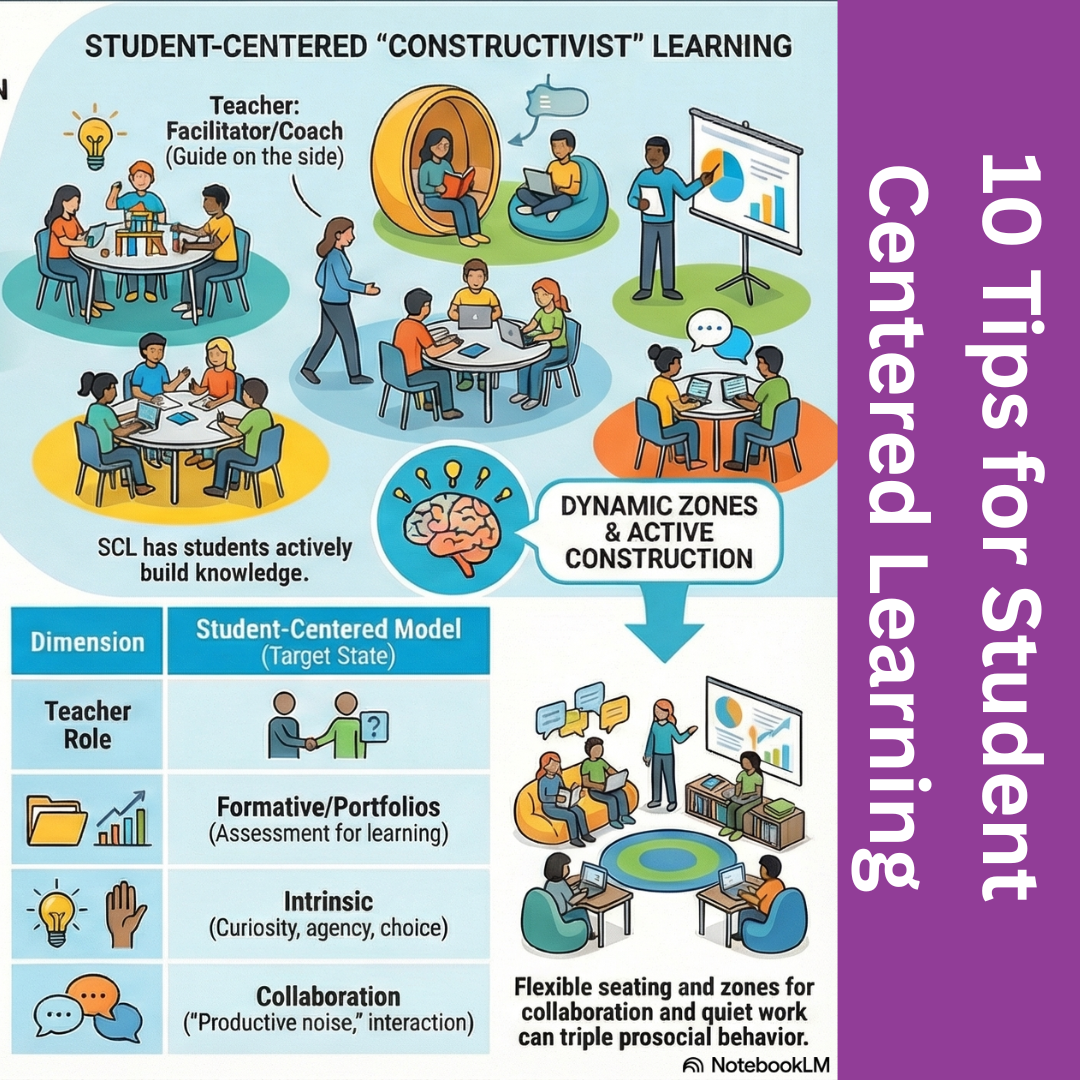
    For example, rows of desks often limit interaction and activity, forcing a singular, passive learning style. Flexible seating, on the other hand, encourages active participation and peer-to-peer learning, allowing students to easily move and reconfigure their learning spaces for group work or individual work time.

    I saw this firsthand when I was a teacher. When I moved into one of my third-grade classrooms, I was met with tables that quickly proved insufficient for the needs of my students. I requested a change, integrating alternative seating options and giving students the freedom to choose where they felt most comfortable learning. The results exceeded my expectations. My students were noticeably more engaged, collaborative, and invested in class discussions and activities. That experience showed me that even the simplest changes to the physical learning environment can have a profound impact on student motivation and learning outcomes.

    Allowing students to select their preferred spot for a given activity or day gives them agency over their learning experience. Students with this choice are more likely to engage in discussions, share ideas, and develop a sense of community. A comfortable and deliberately designed environment can also reduce anxiety and improve focus. This means teachers experience fewer disruptions and less need for intervention, directly alleviating a major source of stress by decreasing the disciplinary actions educators must make to resolve classroom misbehavior. With less disruption, teachers can focus on instruction.

    Supporting teachers’ well-being

    Just as classroom design can directly benefit student outcomes, it can also contribute to teacher well-being. Creating spaces that support collaboration among staff, provide opportunities to reset, and reduce the demands of the job is a tangible first step towards developing a more sustainable environment for educators and can be one factor in reducing turnover.

    Intentional classroom design should balance consistency with teacher voice. Schools don’t need a one-size-fits-all model for every room, but they can establish adaptable design standards for each type of space, such as science labs, elementary classrooms, or collaboration areas. Within those frameworks, teachers should be active partners in shaping how the space works best for their instruction. This approach honors teacher expertise while ensuring that learning environments across the school are both flexible and cohesive.

    Supporting teacher voice and expertise also encourages “early adopters” to try new things. While some teachers may jump at the opportunity to redesign their space, others might be more hesitant. For those teachers, school leaders can help ease these concerns by reinforcing that meaningful change doesn’t require a full-scale overhaul. Even small steps, like rearranging existing furniture or introducing one or two new pieces, can make a space feel refreshed and more responsive to both teaching and learning needs. To support this process, schools can also collaborate with learning environment specialists to help educators identify practical starting points and design solutions tailored to their goals.

    Designing a brighter future for education

    Investing in thoughtfully designed school environments that prioritize teacher well-being isn’t just about creating a more pleasant workplace; it’s a strategic move to build a stronger, more sustainable educational system. By providing teachers with flexible, adaptable, and future-ready classrooms, schools can address issues like stress, burnout, and student disengagement. When educators feel valued and empowered in their spaces, they create a better work environment for themselves and a better learning experience for their students. Ultimately, a supportive, well-designed classroom is an environment that sets both educators and students up for success.

    Latest posts by eSchool Media Contributors (see all)

    Source link

  • The triple Rs of scholastic esports

    The triple Rs of scholastic esports

    Key points:

    I know what it feels like to stand in front of a classroom that does not have enough. Not enough computers. Not enough up-to-date software and technical tools. Not enough resources to give every student the experience they deserve. When students notice these gaps, they notice more than the missing tools. They begin to question whether their education and, by extension, their potential really matters. That doubt can quietly drain their confidence.

    This is why dependable resources are not simply a bonus in education. They are a lifeline. In my role leading the Scholastic Esports Academy in the Five Carat Choice Program at Palm Beach Lakes High School, I have watched how access to quality equipment and meaningful project-based learning transforms students from the inside out. It is not only about what they learn but about how they begin to see themselves.

    I have been fortunate to develop partnerships with organizations like Cleverlike Studios, changing the game for my students by bringing advanced technology and creativity directly into the classroom. For example, they learned how to create new characters for Minecraft and designed custom esports jerseys for their Minecraft characters. Students were engaged while learning in games they know and love. These experiences allow them to express their creativity and see their ideas come to life while building complex skills such as coding, digital media, and game design.  

    When students make the leap from simple play to design, careers in technology and digital media suddenly seem accessible, even if they have never seen themselves in these fields before. Scholastic esports is an avenue within the educational landscape that merges the captivating realm of the video game industry with project based learning and educational objectives. It capitalizes on students’ existing interests for STEM subjects, including gamification, digital media, robotics, and financial literacy, directing them towards a structured and educational setting.

    In just five years, the Palm Beach Lakes Scholastic Esports Academy has grown from a small club of ten students to more than five hundred, becoming a full CTE academy that operates both during the school day and after school. Through this experience, students are earning four to five industry certifications along their four year pathway. Their success demonstrates what happens when resources are reliable, relatable, and creativity is encouraged. Students are now able to see themselves in real time through 3D models and their own digital designs, creating new characters for Minecraft and customizing their own esports jerseys.

    Recognizing this success, the Pew Foundation invested nearly $500,000 to expand our infrastructure and transform the program from an after school club into a full daytime classroom experience, creating even greater opportunities for growth and student success. Now, when our students walk into the Esports classroom, they enter a space built around their passions. They see powerful gaming computers, professional streaming equipment, and projects that speak their language. Suddenly, the skills they once thought were only for others become reachable. They begin to realize that their love for video games, robotics, and digital media can open doors to real world careers and college opportunities.

    The results speak for themselves:

    • In FY23 Palm Beach Lakes High School used a Pew Grant to launch the esports course and compared outcomes with a matched group of students.
    • Students who participated in esports had significantly lower rates of in-school or out-of-school suspension, with about half as many incidents as their non-esports peers.
    • Absenteeism among esports students was also slightly lower.
    • While GPA and certification pass rates were similar, the behavioral improvements were clear and meaningful.

    These numbers match what I see every day. Students who once struggled to stay engaged now show up early to practice. They stay late to collaborate. They treat each other with a level of respect and teamwork that carries over into their other classes.

    None of this would be possible without reliable and relatable resources that connect directly to students’ interests and experiences. In a Title I school, these tools make learning meaningful by turning abstract ideas into hands-on projects that students can see, touch, and create. Expanding their minds through hands-on learning and project based materials from companies like Cleverlike Studios, our students gain access to educational tools that connect classroom lessons to real world applications. Coding challenges, game design projects, and digital media activities inspire creativity, critical thinking, and collaboration. Most importantly, this work helps students see that their ideas and talents have value and that their creativity can open doors to future opportunities. 

    For many of my students’ resources have always been scarce. But in the Scholastic Esports Academy they find more than equipment. They find opportunity. They discover that their skills have value beyond the game and that their voices and ideas matter. They begin to picture themselves as leaders in technology, media, and STEM fields.

    Student Alyssa Chavez said, “Last year, we completed an assignment to design a jersey for our esports teams to wear on Minecraft. The Esports Jersey assignment was very helpful and even inspiring to me because it helped me learn to adapt and appeal to the suggestions and requirements that a client or partner would want me to apply to a project.   The use of the Blockbench program helped me to understand the importance of knowing how to navigate and use a program to do my best work for certain projects. When making the jersey, I took the elements and colors of our ‘Retro Rams’ branding and applied them to the jersey to create a design that represents unity and teamwork, showcasing the unity of our esports team.”

    This is why I believe scholastic esports is not just about gaming. It is about creating a bridge between curiosity and opportunity. It is about giving students in under-resourced communities the confidence to dream bigger and the tools to make those dreams real.

    The ongoing success of our academy is proof that when education is supported with vision, dedication, and the right resources, students will rise. We have created a space where learning feels real, where creativity thrives, and where confidence is built through experience. Partners like Cleverlike Studios have played a part in this progress by providing educational tools that enhance what we do every day. Together, we are demonstrating that reliable and relatable learning environments not only inspire achievement but also prepare students to succeed beyond the classroom.

    Latest posts by eSchool Media Contributors (see all)

    Source link

  • How ‘anti-woke’ laws and cancel culture combine to chill classroom speech

    How ‘anti-woke’ laws and cancel culture combine to chill classroom speech

    Over the past several years, some politicians have tried to ban or limit discussion of controversial ideas in higher education, particularly those related to critical race theory, gender identity, and diversity, equity, and inclusion. 

    FIRE has been on the front lines of this fight, opposing bills that target classroom speech and challenging those that become law. We’ve warned legislators that attempts to ban ideas from the college classroom are unconstitutional. As the Supreme Court explained, the First Amendment “does not tolerate laws that cast a pall of orthodoxy over the classroom.”

    Many legislatures now write their bills to avoid crossing this constitutional line. When they do not, courts often step in. Florida’s “Stop WOKE Act,” for example — part of which FIRE has challenged in court — currently faces a preliminary injunction blocking the enforcement of its classroom provisions.

    LAWSUIT: FIRE challenges Stop WOKE Act’s limits on how Florida professors can teach about race, sex

    First Amendment doesn’t allow Florida law to declare which concepts are too challenging for students and faculty to discuss in a college classroom.


    Read More

    Perhaps in part because of this roadblock, some actors have taken a more indirect approach to removing disfavored ideas from the classroom: a mix of “anti-woke” laws and cancel culture designed to intimidate schools into doing what the state cannot do directly.

    This process involves some or all of the following steps: a politician passes an “anti-woke” law, someone misinterprets the law and claims a professor violated it, outrage erupts and people demand the school take action, school administrators cave to the pressure and punish the teacher, the school announces reviews of curricula, and then other schools follow suit.

    Here’s how that cycle works in detail — and why it’s chilling classroom speech.

    Step 1: “Anti-woke” laws set the stage

    Texas A&M senior lecturer Melissa McCoul began the summer semester teaching ENGL 360: Literature for Children, a course she had taught 12 times that focused on “representative writers, genres, texts and movements.” During the third week of class, they were reading Jude Saves the World, a novel about a 12-year-old who identifies as nonbinary. As part of their discussion, McCoul displayed an image of the “gender unicorn,” a graphic device used to educate children about gender identity, expression, and sexuality. 

    Whatever one’s personal views, it should not be a surprise that a children’s literature course would focus on how contemporary children’s authors approach the major social issues of the day, such as gender ideology. Faculty at public colleges also have a First Amendment right to share their views, and to invite students who disagree to challenge them. In fact, McCoul acknowledged in the course syllabus that some of the class materials would spark “differing opinions” and that students were “not required to agree.”

    This was a chance for open dialogue, until it wasn’t.

    A student in McCoul’s class raised her hand and asserted that President Trump’s executive order on gender identity somehow made the discussion illegal. The student subsequently reached out to school President Mark Welsh, who defended the inclusion of LGBT content in professional-track courses. He explained to her that students “want to understand the issues” that affect the people they will work with.

    Nevertheless, the school canceled the class for the summer, citing “the emotions” generated by this controversy. That’s no reason to cancel a class, but the school did not punish McCoul or cancel her class for the fall semester. Instead, they agreed that her course would be taken out of the core curriculum and more clearly marked as a special topics class.

    But then, on Sept. 8, Texas State Representative Brian Harrison posted video of the student’s exchange with McCoul on X and wrote a letter to the Trump administration calling for an “investigation into discriminatory DEI practices.” The assistant attorney general for the Justice Department’s Civil Rights Division, Harmeet K. Dhillon, called the incident “deeply concerning” and said her division would “look into this.” Gov. Greg Abbott said McCoul acted “contrary to Texas law” without actually citing any specific laws (though Abbott directed state agencies earlier this year to align their practices and policies to recognize only two sexes).

    Crucially, neither Abbott’s directive nor Trump’s order bans discussion of gender identity in college classrooms. Doing so, after all, would be unconstitutional. Instead, they largely instruct Texas and federal agencies to recognize only two sexes in official government work, not to police classroom speech.

    Step 2: An outrage campaign demands punishment

    Harrison’s Sept. 8 post kicked off a cascade of calls to discipline McCoul. It was also only the first in a long thread of posts that set off a social media firestorm. Before long, other high profile government figures like Abbott and Dhillon were chiming in. Others with large social media followings picked up the story. A routine classroom discussion had been reframed to the public as a legal violation requiring immediate sanction.

    Step 3: The school caves to pressure

    Soon after, Texas A&M fired McCoul. The school also demoted College of Arts and Sciences’ Dean Mark Zoran and the English Department head Emily Johansen. 

    President Welsh justified these moves by alleging McCoul taught “content that was inconsistent with the published course description.” The apparent basis for this assertion was that McCoul’s course was renumbered as ENGL 394, rather than a 400-level number that would supposedly mark it as a special-topics class. But McCoul and Johansen dispute this, noting that 394 places the course outside the core curriculum and qualifies it as a special-topic class. Other faculty agreed that there is little difference between these designations. 

    Whatever the case, the public pressure only continued to build. Harrison demanded that Texas A&M terminate Welsh. Texas’s lieutenant governor, Dan Patrick, echoed the call, saying that Welsh’s “ambivalence on the issue and his dismissal of the student’s concerns by immediately taking the side of the professor is unacceptable.” Barely a week later, Welsh announced his resignation, following McCoul out the door.

    Step 4: Administrators announce curricular reviews

    If this story ended only with a professor being fired for her protected speech, that would be bad enough. And driving out a university president is even more alarming, because it shows how these campaigns scare people into silence or submission. But Texas A&M System Chancellor Glenn Hegar then announced that he and the board of regents would audit all courses across all 12 schools in the A&M System. 

    Neither Hegar nor the board explained how it would carry out the course review, leaving faculty members guessing as to what materials would be under their microscope. But in a campaign like this one, a chilling vagueness is part of the point. In the aftermath of seeing a fellow professor fired for her classroom speech, one has to imagine that many will choose to avoid addressing sensitive topics in the future. And this will only serve to rob Texas A&M students of the opportunity to engage with challenging and topical issues.

    Step 5: Other schools get the message

    Although this controversy started with one class taught by one professor at one Texas A&M campus, the ripple effects rapidly reached campuses across the state. According to reporting at the time, multiple school systems launched reviews:

    • Texas Tech told faculty that teaching must comply with “current state and federal law recogniz[ing] only two human sexes.”
    • The University of North Texas system ordered an expedited review of courses and programs, including syllabi, for compliance with “all current applicable state and federal laws, executive orders, and court orders.”
    • A University of Texas system spokesperson said they were reviewing “gender identity” courses for legal compliance.
    • The Texas State University System told each campus to review academic programming “in light of recent inquiries.”
    • Texas Woman’s University System said it was reviewing academic courses and programs for compliance.

    And that, in a nutshell, is how vague laws and online outrage came together in a toxic cocktail that resulted in a fired professor, a removed dean and department head, and a university president’s resignation, not to mention several systemwide university audits of entire course catalogues — all starting with a single student’s complaint that discussing a children’s book was “illegal.”

    A growing problem

    This practice of overreading laws and executive orders in order to target protected speech is, unfortunately, not just limited to Texas. In July, at the University of North Carolina at Chapel Hill, the Oversight Project reportedly filed a records request for syllabi and materials from roughly 70 courses containing terms such as: “Diversity, Equity, Inclusion, and Belonging,” “gender identity,” “intersectionality,” “white privilege,” “cultural humility,” “racial equity,” “implicit bias,” “microaggressions,” “queer,” and “sexuality.” 

    The stated purpose of this request is to evaluate and publicize “compliance with current Executive Orders issued by the President of the United States.” But again, Trump’s executive orders have no bearing on whether these words can be used in class materials. Suggesting otherwise and going on a fishing expedition for controversial class materials only further chills protected speech.

    Sometimes the pressure is quieter, but no less chilling. At the University of Alabama, Dana Patton, director of the Witt Fellows Program, says she was told by university officials that a “very powerful person” in the state capital believed her program violated state law. This person reportedly asserted, among other things, that “divisive concepts (were) embedded” in the program. Patton responded by removing course content, including three documentaries, from one of her classes because they can prompt a “visceral reaction” and “feelings of guilt and anger” in students. This is self-censorship driven by fear of political blowback, not educational judgment.

    How not to reform higher ed

    As government officials increasingly look for ways to reform higher education, they must remember that efforts to ban controversial ideas from academia are not merely unconstitutional, they’re harmful regardless of their legal legitimacy. Such efforts frustrate an essential purpose of university life: young Americans should be able to explore and grapple with a wide variety of ideas, even those that many find offensive.

    Amy Wax is academic freedom’s canary in the coal mine

    Penn’s chilling decision to punish the controversial professor calls tenure protections at private universities into question


    Read More

    The debates in this country around gender and sexuality will not subside because of censorship in Texas. Indeed, classroom debates on this topic have the potential to leave both conservative and liberal students with a richer understanding of the issue. But some young Texans will now be robbed of this opportunity. Many others will be left with impoverished versions of those conversations, stripped of anything controversial that would draw the ire of government officials.

    We should expect college students to be fearless when faced with ideas they dislike, regardless of the partisan valence of those ideas. As FIRE said when critics on the left came after conservative University of Pennsylvania professor Amy Wax, “Any university that would attempt to shield its community from offense would soon see the death of intellectual vitality, and the waning of its influence in society.”

    If lawmakers want to reform higher education or bolster viewpoint diversity, they should do so by passing laws that protect the speech rights of all students and faculty — like FIRE’s model legislation — and they should focus on bringing more ideas onto public campuses, not removing those they dislike through vague assertions of illegality and targeted pressure campaigns.

    Source link