Tag: Classroom

  • Elementari: Where Creativity and Coding Meet in Your Classroom

    Elementari: Where Creativity and Coding Meet in Your Classroom

    Introduction

    Ever stumble upon a tool that makes you think, “Where has this been all my teaching life?” That’s Elementari  —a platform where creativity, literacy, and coding come together to spark your students’ imaginations. From crafting interactive stories to designing apps and games, Elementari helps students bring their ideas to life while keeping things aligned with Common Core, ISTE, and other key standards.

    It’s the kind of tool that makes teaching feel a little more fun—and learning a lot more exciting.

    What Makes Elementari Shine

    Elementari isn’t just another edtech tool—it’s a creative playground designed to help students write, code, and share their big ideas. Here’s what sets it apart:

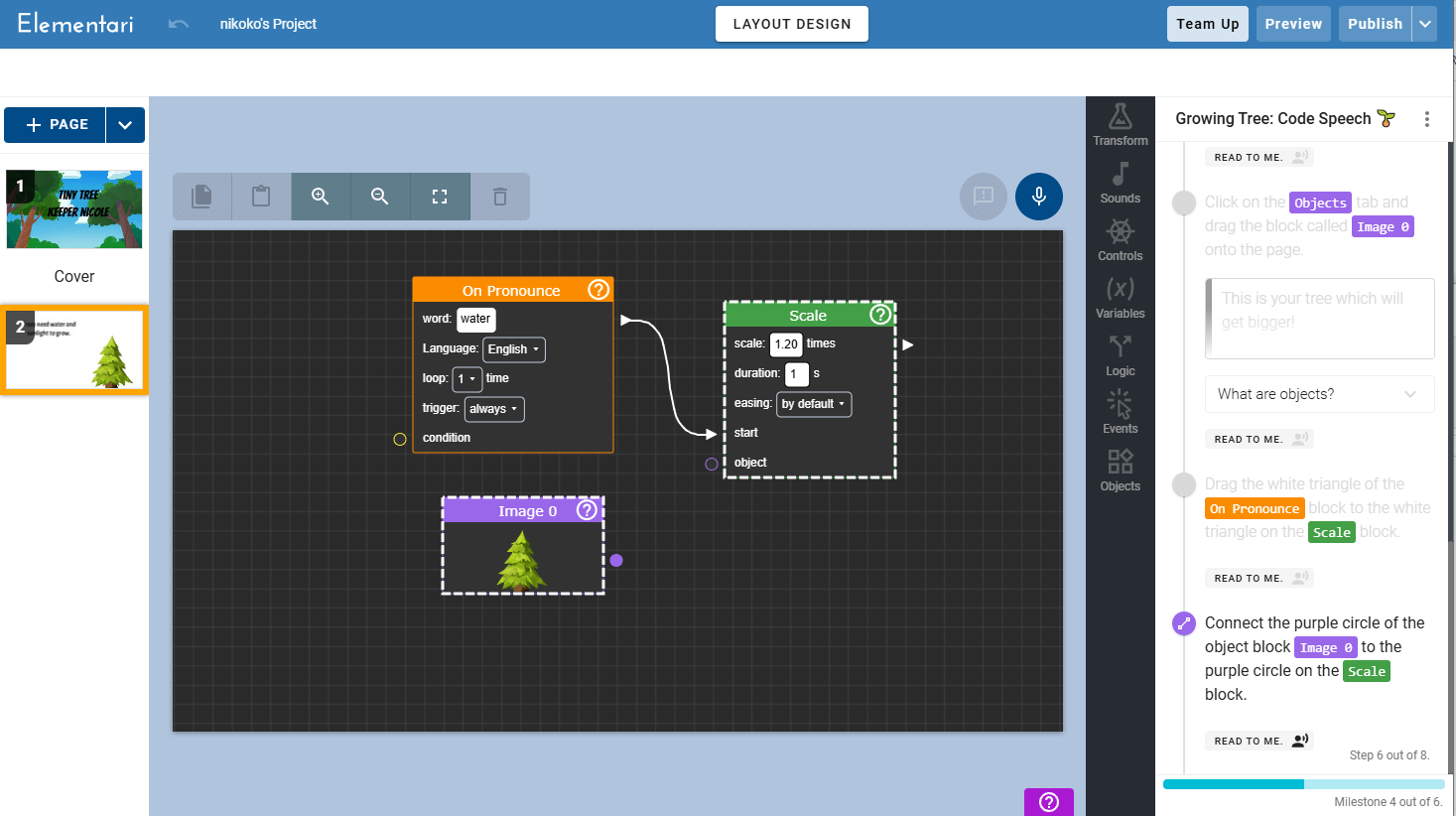
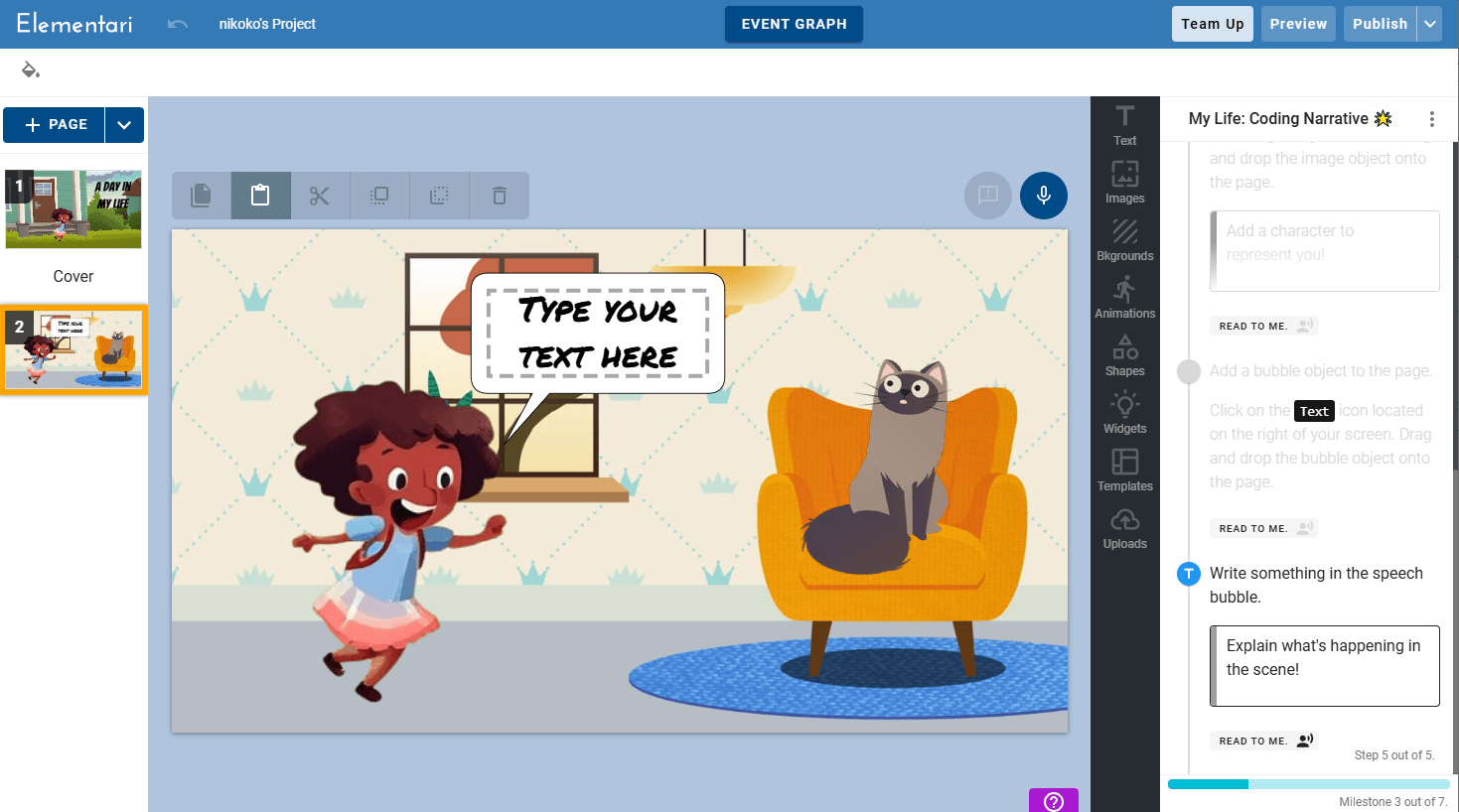
    • Step-by-Step Support: Writing and coding can feel intimidating, but Elementari guides students every step of the way with visual organizers, clear prompts, and auto-validating steps that build their confidence.
    • Drag-and-Drop Magic: Forget complicated coding syntax—students can animate, add voiceovers, and create interactions with a simple drag-and-drop interface inspired by professional platforms like Unreal Engine.
    • Professional-Quality Media Library: With thousands of illustrations and sound effects (or the option to upload their own), students can bring their stories to life. Bonus: every project automatically credits media assets.
    • Collaboration in Real Time: Whether it’s a group graphic novel or a team-built escape room game, Elementari’s collaboration tools make working together a breeze.

    With features like these, Elementari takes creativity to the next level while keeping it accessible for every student.

    Where Creativity Meets Every Curriculum

    Elementari isn’t just for ELA classrooms—it’s a versatile platform that fits into any subject with ease:

    • English Language Arts: Students can dive into storytelling by creating branching narratives, graphic novels, or even choose-your-own-adventure stories. It’s a fresh way to develop writing and revision skills.
    • Science: Bring STEM to life with projects like a water cycle story, complete with animations and voiceovers to illustrate key concepts.
    • Social Studies: Build interactive timelines or design a Climate Justice Activism App to encourage research, critical thinking, and problem-solving.
    • Research Across Subjects: Let students upload their own images, weave in research findings, and present their work as interactive stories or apps.

    No matter the subject, Elementari turns standard assignments into interactive, student-driven projects that spark engagement and deeper learning.

    Try It for Free (Really!)

    Elementari’s Forever Free Plan isn’t just a quick trial—it’s a full-fledged way to bring creativity and coding into your classroom without spending a dime. Here’s what’s included:

    • One Classroom, Up to 35 Students: Perfect for single-class use, this plan lets students dive into interactive storytelling, app design, and game creation.
    • Media Library Access: Students can choose from thousands of professional illustrations and sounds to make their projects shine.
    • Guided Lessons and Tools: With step-by-step guidance and drag-and-drop coding, students can build confidence while creating something truly their own.
    • Publishing and Sharing: Even with the free plan, students can publish their work responsibly, complete with automatic media credits to teach ethical creativity.

    Need a little more? Elementari’s paid plans offer additional features:

    • Teacher Plans: Support up to 150 student accounts, unlock custom image uploads, and access premium tools like detailed feedback options and exclusive illustrations.
    • School Plans: Starting at just $2 per student, these plans are scalable for schools and districts, offering bulk discounts to fit your budget.

    No matter the plan, Elementari makes creativity accessible, engaging, and affordable for every classroom.

    Empowering Educators, Inspiring Students

    Elementari isn’t just for students—it’s designed to make teachers’ lives easier while ensuring every student can thrive.

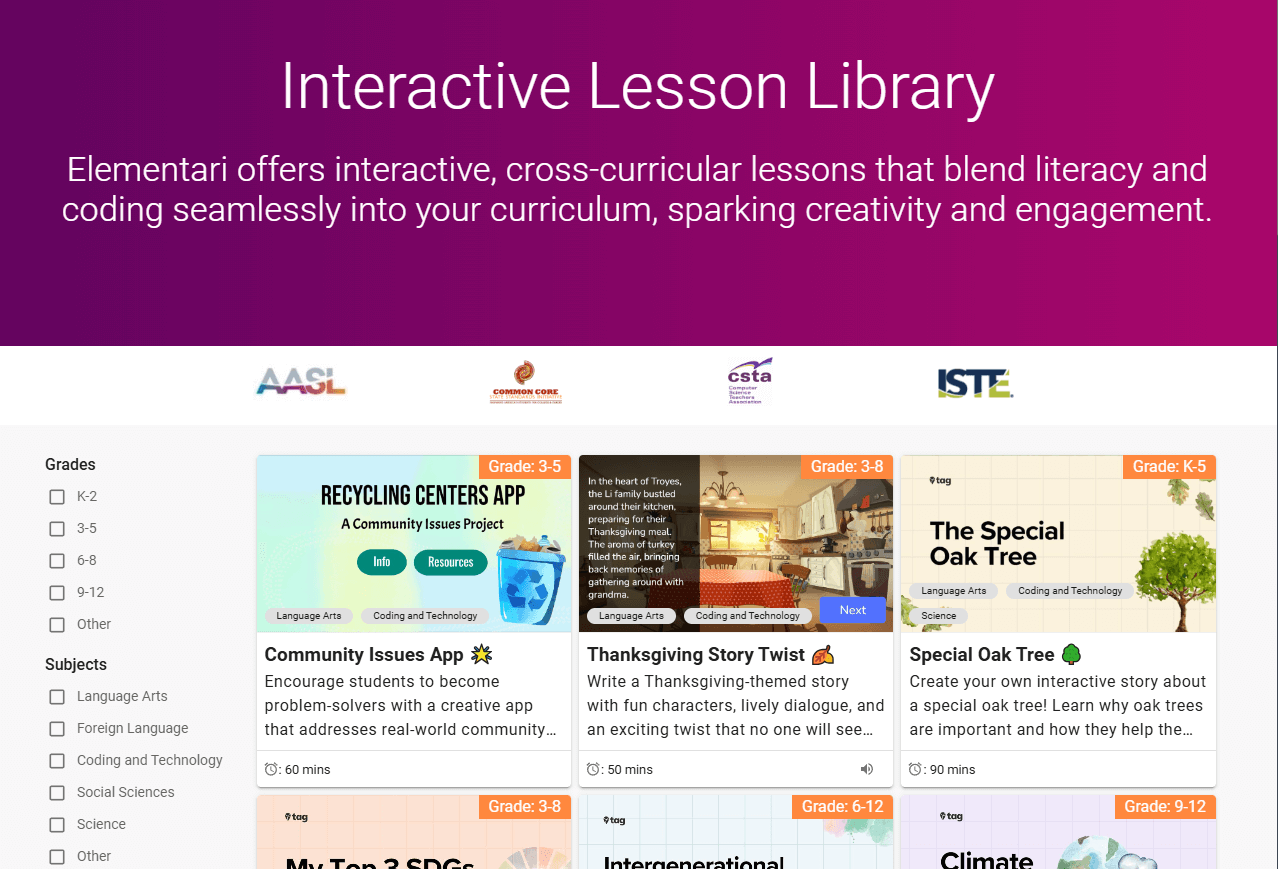
    • Standards-Aligned Lessons: Elementari’s library is packed with scaffolded lessons that meet Common Core, ISTE, and other key standards. Whether you’re teaching ELA, science, or social studies, you’ll find ready-made activities that save time without sacrificing quality.
    • Teacher-Friendly Features: From drag-and-drop tools to detailed feedback options, Elementari empowers teachers to guide students through creative projects, even without prior coding experience.
    • Seamless Integration: The platform works with Google Classroom, Clever, and Classlink, making setup quick and painless.

    Inclusivity is at the heart of Elementari’s mission, ensuring that all learners can succeed:

    • Accessible for All: With features like visual cues, multimedia options, and “read-to-me” functionality, Elementari supports neurodiverse learners,  ELL students, and those of varying abilities.
    • Projects for Every Age: Younger students can craft picture books or graphic novels, while older ones tackle advanced challenges like interactive apps or escape room games.
    • Collaboration and Creativity: Students can work together in real time, building teamwork skills while sharing ideas and learning from one another.

    Elementari’s thoughtful design ensures that no matter the classroom, every student and teacher has the tools they need to succeed.

    Time to Level Up Your Classroom

    If you’re ready to take creativity and learning to new heights, Elementari is your go-to platform. Whether your students are crafting their first graphic novel or building interactive timelines, Elementari brings coding, literacy, and storytelling together in a way that’s both fun and educational.

    Classwork.com  (formerly Classwork) is another fantastic tool to enhance your teaching. With its Content Assistant, you can easily create auto-graded assignments that align with your students’ Elementari projects, giving them a cohesive and interactive learning experience.

    Why wait? Explore Elementari’s Forever Free Plan today and see how it can ignite a passion for creativity and critical thinking in your classroom.

    Source link

  • How to incorporate real-world connections into any subject area

    How to incorporate real-world connections into any subject area

    Key points:

    In my classroom, I frequently encounter students expressing their opinions: “How is this relevant to the real world?” or “Why should I care? I will never use this.” This highlights the need for educators to emphasize real-world applications across all subjects.

    As an educator, I consistently strive to illustrate the practical applications of geography beyond the classroom walls. By incorporating real-world experiences and addressing problems, I aim to engage students and encourage them to devise solutions to these challenges. For instance, when discussing natural resources in geography, I pose a thought-provoking question: “What is something you cannot live without?” As students investigate everyday items, I emphasize that most of these products originate from nature at some point, prompting a discussion on the “true cost” of these goods.

    Throughout the unit, I invite a guest speaker who shares insights about their job duties and provides information related to environmental issues. This interaction helps students connect the dots, understanding that the products they use have origins in distant places, such as the Amazon rainforest. Despite it being thousands of miles away, I challenge students to consider why they should care.

    As students engage in a simulation of the rainforest, they begin to comprehend the alarming reality of its destruction, driven by the increasing demand for precious resources such as medicines, fruits, and beef. By the conclusion of the unit, students will participate in a debate, utilizing their research skills to argue for or against deforestation, exploring its implications for resources and products in relation to their daily lives. This approach not only enhances their understanding of geography but also creates a real-world connection that fosters a sense of responsibility toward the environment.

    Creating a foundation to build upon

    Engaging in academic discussions and navigating through academic content is essential for fostering a critical thinking mentality among students. However, it is often observed that this learning does not progress to deeper levels of thought. Establishing a solid foundation is crucial before advancing toward more meaningful and complex ideas.

    For instance, in our geography unit on urban sprawl, we start by understanding the various components related to urban sprawl. As we delve into the topic, I emphasize the importance of connecting our lessons to the local community. I pose the question: How can we identify an issue within the town of Lexington and address it while ensuring we do not contribute to urban sprawl?  Without a comprehensive foundation, students struggle to elevate their thinking to more sophisticated levels. Therefore, it is imperative to build this groundwork to enable students to engage in higher-order thinking effectively.

    Interdisciplinary approaches

    Incorporating an interdisciplinary approach can significantly enrich the learning process for students. When students recognize the connections between different subjects, they gain a deeper appreciation for the relevance of their education. According to Moser et. al (2019), “Integrative teaching benefits middle-level learners as it potentially increases student engagement, motivation, and achievement. It provides learners with the opportunity to synthesize knowledge by exploring topics and ideas through multiple lenses.” This method emphasizes the importance of making meaningful connections that deepen students’ comprehension. As they engage with the content from different perspectives, students will apply their learning in real-world contexts.

    For instance, principles from science can be linked to literature they are studying in English class. Similarly, concepts from physics can be applied to understand advancements in medical studies. By fostering these connections, students are encouraged to think critically and appreciate the interrelated nature of knowledge.

    Incorporating technology within classrooms

    In today’s digital world, where technology is readily accessible, it is crucial for classroom learning to align with current technological trends and innovations. Educators who do not incorporate technology into their teaching practices are missing an opportunity to enhance student learning experiences. In my class, I have students explore their designated area using Google Earth, which we previously outlined. Each student selected a specific region to concentrate on during their analysis. This process involves identifying areas that require improvement and discussing how it can benefit the community. Additionally, we examine how these changes can help limit urban sprawl and reduce traffic congestion.

    We have moved beyond the era of relying solely on paper copies and worksheets; the focus now is on adapting to change and providing the best opportunities for students to express themselves and expand their knowledge. As Levin & Wadmany (2014) observe, “some teachers find that technology encourages greater student-centeredness, greater openness toward multiple perspectives on problems, and greater willingness to experiment in their teaching.” This highlights the necessity for teachers to evolve into facilitators of learning, acting as guides who support students taking ownership of their learning.

    Strategies for implementation

    1. Start with the “why”: Teachers should critically consider the significance of their instructional approaches: Why is this method or content essential for students’ learning? Having a clear vision of the desired learning outcomes enables educators plan effectively and what instructional strategies to use. This intentionality is crucial.

    2. Use authentic materials: Incorporating meaningful text that involves real-world concepts can significantly enhance students’ engagement. For instance, in social studies class discussing renewable energy can lead to academic discussion or projects where students research about local initiatives in their community.

    3. Promote critical thinking: Encourage students to engage in critical thinking by asking open-ended questions, creating opportunities for debates to challenge their ideas, and urging them to articulate and defend their viewpoints.

    4. Encourage collaboration: Students excel in collaborative learning environment, such as group projects and peer reviews where they can engage with their classmates. These activities allow them to learn from each other and view different perspectives.

    5. Provide ongoing feedback: Providing constructive feedback is essential for helping students identify their strengths and areas for improvements. By having planned check-ins, teachers can tailor their instruction to ensure that they are meeting the academic needs of individual students.

    References

    Levin, T., & Wadmany, R. (2006). Teachers’ Beliefs and Practices in Technology-based Classrooms: A Developmental View. Journal of Research on Technology in Education, 39(2), 157–181. https://doi.org/10.1080/15391523.2006.10782478

    Moser, K. M., Ivy, J., & Hopper, P. F. (2019). Rethinking content teaching at the middle level: An interdisciplinary approach. Middle School Journal, 50(2), 17–27. https://doi.org/10.1080/00940771.2019.1576579

    Latest posts by eSchool Media Contributors (see all)

    Source link

  • EXCLUSIVE: WSU vice-chancellor is back in the classroom this year

    EXCLUSIVE: WSU vice-chancellor is back in the classroom this year

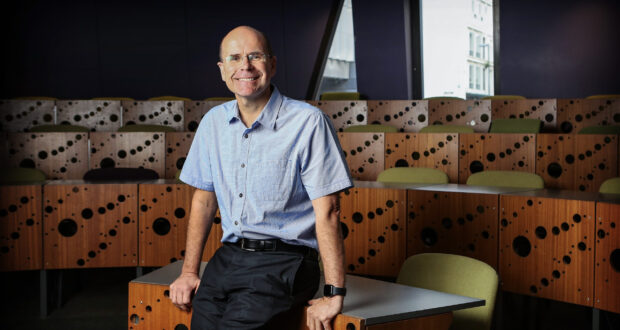
    Professor George Williams started as VC in July, 2024. Picture: Hollie Adams

    Western Sydney University (WSU) vice chancellor George Williams’s love for teaching didn’t disappear when he became vice-chancellor of his university.

    Please login below to view content or subscribe now.

    Membership Login

    Source link

  • Top Challenges Inside the Classroom for Drama Teachers

    Top Challenges Inside the Classroom for Drama Teachers

    Investing in Arts Education

    Often a department of one, drama teachers must work proactively to find support networks and community resources that enable them to provide the best education possible.

    In late spring, 2006, I was faced with a quandary: How do you teach drama? I had just been assigned my first drama classes at North Hollywood High School, where I’d been teaching for two years, and although I had many thoughts about shows I might direct that would be a good fit for our student population, I had no idea what to include in day-to-day classroom curriculum. 

    This conundrum was unfortunately not new to me. I had just earned my teacher certification in the state of California as an English teacher through LAUSD’s District Intern Program. Never mind that I had never taken an English class in college — I passed the state exam for English language arts and that was sufficient for entry to the program. As a result, I leaned heavily on the expertise of teachers in the English department at North Hollywood for guidance on what to teach. I asked those colleagues what they were teaching to get insight into what materials and activities were successful with our students. However, when it came to drama, I’d be on my own. Although elements of drama pedagogy were incorporated into various graduate courses I’d taken while a student in NYU Steinhardt’s Program in Educational Theatre, I lacked a scaffolded approach to learning how to create a curriculum and no set community of drama teachers to turn to for support. 

    Just as I had experienced in the English department at North Hollywood, most teachers have the luxury of working with colleagues who teach the same content. Consider the math department, the social studies department, or the science department. But how many schools have a drama department? Some lucky few might find themselves within an arts department, but how similar are visual art teaching, music teaching, dance teaching, and drama teaching? Consequently, it is incumbent upon drama teachers to get out of the isolation of being a department-of-one and find a support network of trusted peers to whom they can turn when faced with the all-too-common question: “What now?” 

    Community support for drama and theater teachers

    Professional organizations like the American Alliance for Theatre and Education (AATE) and the Educational Theatre Association (EDTA) host annual conferences that provide theater educators with needed professional development and networking which are necessary resources for supporting classroom teachers. However, membership in these organizations is not free, and registration and travel to attend these annual conferences requires investment from school and district leadership to support teachers in their professional development.  

    The support drama teachers get from these organizations is essential at this political moment. In the press, a lot of attention is given to book banning across the country, but less so to censorship and restrictions in the arts. For the last five years, Qui Nguyen’s play “She Kills Monsters” regularly appears in EDTA’s annual survey of the top ten plays performed in schools, and yet the work has been met with calls for censorship and cancellation due to the play’s content. Other popular plays have faced a similar fate — be it Lorraine Hansberry’s “A Raisin in the Sun,” Moisés Kaufman and members of Tectonic Theatre Project’s “The Laramie Project,” Bert V. Royal’s “Dog Sees God: Confessions of a Teenage Blockhead,” or even works by William Shakespeare. 

    Through partnership with organizations like AATE and EDTA, teachers learn about initiatives to actively oppose efforts to restrict the arts, such as the No Book Bans Coalition, which advocates against theater bans; Dramatists Guild Legal Defense Fund, which has published “Dramatic Changes: A Toolkit for Producing Stage Works on College Campuses in Turbulent Times,” and provide legal support for producing scripted plays; and the National Coalition Against Censorship, who have published “The Show Must Go On: A Toolkit for Organizing Against Theatre Censorship in Public Schools.”

    Through participation in national organizations like AATE and EDTA, drama teachers are able to develop support networks across the country. In community and solidarity, drama teachers are able to develop skills to meet the needs of an ever-diversifying student population, improve classroom instruction, promote deeper arts learning, and respond to classroom and community challenges in turbulent times.

    Source link

  • Supporting Non-Major Biology Students: Making the Classroom YOUnique – Faculty Focus

    Supporting Non-Major Biology Students: Making the Classroom YOUnique – Faculty Focus

    Source link

  • AI Support for Teachers

    AI Support for Teachers

    Collaborative Classroom, a leading nonprofit publisher of K–12 instructional materials, announces the publication of SIPPS, a systematic decoding program. Now in a new fifth edition, this research-based program accelerates mastery of vital foundational reading skills for both new and striving readers.

    Twenty-Five Years of Transforming Literacy Outcomes

    “As educators, we know the ability to read proficiently is one of the strongest predictors of academic and life success,” said Kelly Stuart, President and CEO of Collaborative Classroom. “Third-party studies have proven the power of SIPPS. This program has a 25-year track record of transforming literacy outcomes for students of all ages, whether they are kindergarteners learning to read or high schoolers struggling with persistent gaps in their foundational skills.

    “By accelerating students’ mastery of foundational skills and empowering teachers with the tools and learning to deliver effective, evidence-aligned instruction, SIPPS makes a lasting impact.”

    What Makes SIPPS Effective?

    Aligned with the science of reading, SIPPS provides explicit, systematic instruction in phonological awareness, spelling-sound correspondences, and high-frequency words. 

    Through differentiated small-group instruction tailored to students’ specific needs, SIPPS ensures every student receives the necessary targeted support—making the most of every instructional minute—to achieve grade-level reading success.

    SIPPS is uniquely effective because it accelerates foundational skills through its mastery-based and small-group targeted instructional design,” said Linda Diamond, author of the Teaching Reading Sourcebook. “Grounded in the research on explicit instruction, SIPPS provides ample practice, active engagement, and frequent response opportunities, all validated as essential for initial learning and retention of learning.”

    Personalized, AI-Powered Teacher Support

    Educators using SIPPS Fifth Edition have access to a brand-new feature: immediate, personalized responses to their implementation questions with CC AI Assistant, a generative AI-powered chatbot.

    Exclusively trained on Collaborative Classroom’s intellectual content and proprietary program data, CC AI Assistant provides accurate, reliable information for educators.

    Other Key Features of SIPPS, Fifth Edition

    • Tailored Placement and Progress Assessments: A quick, 3–8 minute placement assessment ensures each student starts exactly at their point of instructional need. Ongoing assessments help monitor progress, adjust pacing, and support grouping decisions.
    • Differentiated Small-Group Instruction: SIPPS maximizes instructional time by focusing on small groups of students with similar needs, ensuring targeted, effective teaching.
    • Supportive of Multilingual Learners: Best practices in multilingual learner (ML) instruction and English language development strategies are integrated into the design of SIPPS.
    • Engaging and Effective for Older Readers: SIPPS Plus and SIPPS Challenge Level are specifically designed for students in grades 4–12, offering age-appropriate texts and instruction to close lingering foundational skill gaps.
    • Multimodal Supports: Integrated visual, auditory, and kinesthetic-tactile strategies help all learners, including multilingual students.
    • Flexible, Adaptable, and Easy to Teach: Highly supportive for teachers, tutors, and other adults working in classrooms and expanded learning settings, SIPPS is easy to implement well. A wraparound system of professional learning support ensures success for every implementer.

    Accelerating Reading Success for Students of All Ages

    In small-group settings, students actively engage in routines that reinforce phonics and decoding strategies, practice with aligned texts, and receive immediate feedback—all of which contribute to measurable gains.

    “With SIPPS, students get the tools needed to read, write, and understand text that’s tailored to their specific abilities,” said Desiree Torres, ENL teacher and 6th Grade Team Lead at Dr. Richard Izquierdo Health and Science Charter School in New York. “The boost to their self-esteem when we conference about their exam results is priceless. Each and every student improves with the SIPPS program.” 

    Kevin Hogan
    Latest posts by Kevin Hogan (see all)

    Source link

  • 6 recommendations for AI in classrooms

    6 recommendations for AI in classrooms

    Key points:

    As states move forward with efforts to adopt artificial intelligence, the nonprofit Southern Regional Education Board’s Commission on AI in Education has released its first six recommendations for schools and postsecondary institutions.

    Because of its broad membership, regional breadth, early creation and size, SREB President Stephen L. Pruitt said the commission is poised to produce critical recommendations that will inform not only Southern education decision makers but those throughout the nation.

    “AI is fundamentally changing the classroom and workplace,” Pruitt said. “With that in mind, this commission is working to ensure they make recommendations that are strategic, practical and thoughtful.”

    The commission is set to meet for another year and plans to release a second set of recommendations soon. Here are the first six:

    Policy recommendation #1: Establish state AI networks
    States should establish statewide artificial intelligence networks so people, groups and agencies can connect, communicate, collaborate and coordinate AI efforts across each state. These statewide networks could eventually form a regional group of statewide AI network representatives who could gather regularly to share challenges and successes.

    Policy recommendation #2: Develop targeted AI guidance
    States should develop and maintain targeted guidance for distinct groups using, integrating or supporting the use of AI in education. States should include, for example, elementary students, middle school students, high school students, postsecondary students, teachers, administrators, postsecondary faculty and administrators and parents.

    Policy recommendation #3: Provide high-quality professional development
    State K-12 and postsecondary agencies should provide leadership by working with local districts and institutions to develop plans to provide and incentivize high-quality professional development for AI. The plans should aim to enhance student learning.

    Policy recommendation #4: Integrate into standards & curricula
    States should integrate into statewide K-12 standards and curricula the AI knowledge and skills students need to prepare them for success in the workforce.

    Policy recommendation #5: Assess local capacity and needs
    States should develop and conduct AI needs assessments across their states to determine the capacity of local districts, schools and postsecondary institutions to integrate AI successfully. These should be designed to help states determine which institution, district or school needs state support, what type of support and at what level. 

    Policy recommendation #6: Develop resource allocation plans
    States should develop detailed resource allocation plans for AI implementation in schools, school districts and institutions of postsecondary education to ensure that the implementation of AI is successful and sustainable.
    These plans should inform state fiscal notes related to education and AI.

    The 60-plus member commission was established in February of 2024. Members include policymakers and education and business leaders throughout the 16-state SREB region.

    For more information about the commission please see the following links:

    Latest posts by eSchool Media Contributors (see all)

    Source link

  • College student’s classroom is the farm where he works (CBS Evening News)

    College student’s classroom is the farm where he works (CBS Evening News)

    At a time when college is unaffordable for many, some schools are re-imagining higher education, shifting their curricula from general knowledge to providing free training for specific jobs. Mark Strassmann reports from Merced, California.


    Source link

  • These teens can do incredible math in their heads but fail in a classroom

    These teens can do incredible math in their heads but fail in a classroom

    When I was 12, my family lived adjacent to a small farm. Though I was not old enough to work, the farm’s owner, Mr. Hall, hired me to man his roadside stand on weekends. Mr. Hall had one rule: no calculators. Technology wasn’t his vibe. 

    Math was my strong suit in school, but I struggled to tally the sums in my head. I weighed odd amounts of tomatoes, zucchini and peppers on a scale and frantically scribbled calculations on a notepad. When it got busy, customers lined up waiting for me to multiply and add. I’m sure I mischarged them.

    I was thinking about my old job as I read a quirky math study published this month in the journal Nature. Nobel Prize winning economists Abhijit Banerjee and Esther Duflo, a husband and wife research team at MIT, documented how teenage street sellers who were excellent at mental arithmetic weren’t good at rudimentary classroom math. Meanwhile, strong math students their same age couldn’t calculate nearly as well as impoverished street sellers.

    “When you spend a lot of time in India, what is striking is that these market kids seem to be able to count very well,” said Duflo, whose primary work in India involves alleviating poverty and raising the educational achievement of poor children.  “But they are really not able to go from street math to formal math and vice versa.”

    Related: Our free weekly newsletter alerts you to what research says about schools and classrooms.

    In a series of experiments, Duflo’s field staff in India pretended to be ordinary shoppers and purposely bought unusual quantities of items from more than 1,400 child street sellers in Delhi and Kolkata. A purchase might be 800 grams of potatoes at 20 rupees per kilogram and 1.4 kilograms of onions at 15 rupees per kilogram. Most of the child sellers quoted the correct price of 37 rupees and gave the correct change from a 200 rupee note without using a calculator or pencil and paper. The odd quantities were to make sure the children hadn’t simply memorized the price of common purchases. They were actually making calculations. 

    However, these same children, the majority of whom were 14 or 15 years old, struggled to solve much simpler school math problems, such as basic division. (After making the purchases, the undercover shoppers revealed their identities and asked the sellers to participate in the study and complete a set of abstract math exercises.)

    The market sellers had some formal education. Most were attending school part time, or had previously been in school for years.

    Duflo doesn’t know how the young street sellers learned to calculate so quickly in their heads. That would take a longer anthropological study to observe them over time. But Duflo was able to glean some of their strategies, such as rounding. For example, instead of multiplying 490 by 20, the street sellers might multiply 500 by 20 and then remove 10 of the 20s, or 200. Schoolchildren, by contrast, are prone to making lengthy pencil and paper calculations using an algorithm for multiplication. They often don’t see a more efficient way to solve a problem.

    Lessons from this research on the other side of the world might be relevant here in the United States. Some cognitive psychologists theorize that learning math in a real-world context can help children absorb abstract math and apply it in different situations. However, this Indian study shows that this type of knowledge transfer probably won’t happen automatically or easily for most students. Educators need to figure out how to better leverage the math skills that students already have, Duflo said. Easier said than done, I suspect.  

    Related: Do math drills help children learn?

    Duflo says her study is not an argument for either applied or abstract math.  “It would be a mistake to conclude that we should switch to doing only concrete problems because we also see that kids who are extremely good at concrete problems are unable to solve an abstract problem,” she said. “And in life, at least in school life, you’re going to need both.” Many of the market children ultimately drop out of school altogether.

    Back at my neighborhood farmstand, I remember how I magically got the hang of it and rarely needed pencil and paper after a few months. Sadly, the Hall farm is no longer there for the town’s children to practice mental math. It’s now been replaced by a suburban subdivision of fancy houses. 

    Contact staff writer Jill Barshay at 212-678-3595 or [email protected].

    This story about applied math was written by Jill Barshay and produced by The Hechinger Report, a nonprofit, independent news organization focused on inequality and innovation in education. Sign up for Proof Points and other Hechinger newsletters.

    The Hechinger Report provides in-depth, fact-based, unbiased reporting on education that is free to all readers. But that doesn’t mean it’s free to produce. Our work keeps educators and the public informed about pressing issues at schools and on campuses throughout the country. We tell the whole story, even when the details are inconvenient. Help us keep doing that.

    Join us today.

    Source link

  • Students Explore STEM with Engineers

    Students Explore STEM with Engineers

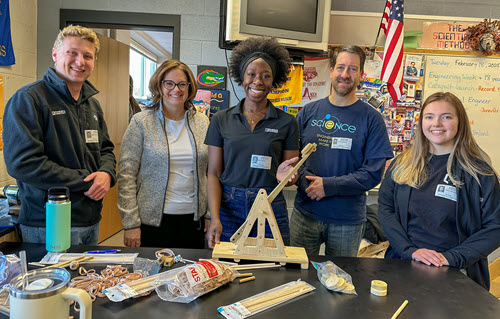
    Middletown, PA – Phoenix Contact engineers head back into the classroom this week to teach sixth-grade science class at Middletown Area Middle School in Middletown, Pa. The classes are part of Phoenix Contact’s National Engineers Week celebration.

    Phoenix Contact has worked with the school every February since 2007. The engineers lead hands-on lessons that make science fun. The goal is to inspire young people to consider careers in science, technology, engineering, and math (STEM).

    The lessons include:

    • Building catapults
    • Racing cookie tins down ramps
    • Building an electric motor
    • Learning about static electricity with the Van de Graaff generator

    “Our engineering team created this outreach program many years ago, and the partnership with Middletown Area School District has stood the test of time,” said Patty Marrero, interim vice president of human relations at Phoenix Contact. “National Engineers Week is a special time for them to share their passion for technology with students. It’s also our chance to thank our engineers for the creativity and innovations that drive our company forward.”

    About Phoenix Contact

    Phoenix Contact is a global market leader based in Germany. Since 1923, Phoenix Contact has created products to connect, distribute, and control power and data flows. Our products are found in nearly all industrial settings, but we have a strong focus on the energy, infrastructure, process, factory automation, and e-mobility markets. Sustainability and responsibility guide every action we take, and we’re proud to work with our customers to empower a smart and sustainable world for future generations. Our global network includes 22,000 employees in 100+ countries. Phoenix Contact USA has headquarters near Harrisburg, Pa., and employs more than 1,100 people across the U.S.

    For more information about Phoenix Contact or its products, visit www.phoenixcontact.com, call technical service at 800-322-3225, or email [email protected].

    eSchool News Staff
    Latest posts by eSchool News Staff (see all)

    Source link