Claremont McKenna takes the top spot, while Barnard College, Columbia University, and Indiana University come in last.
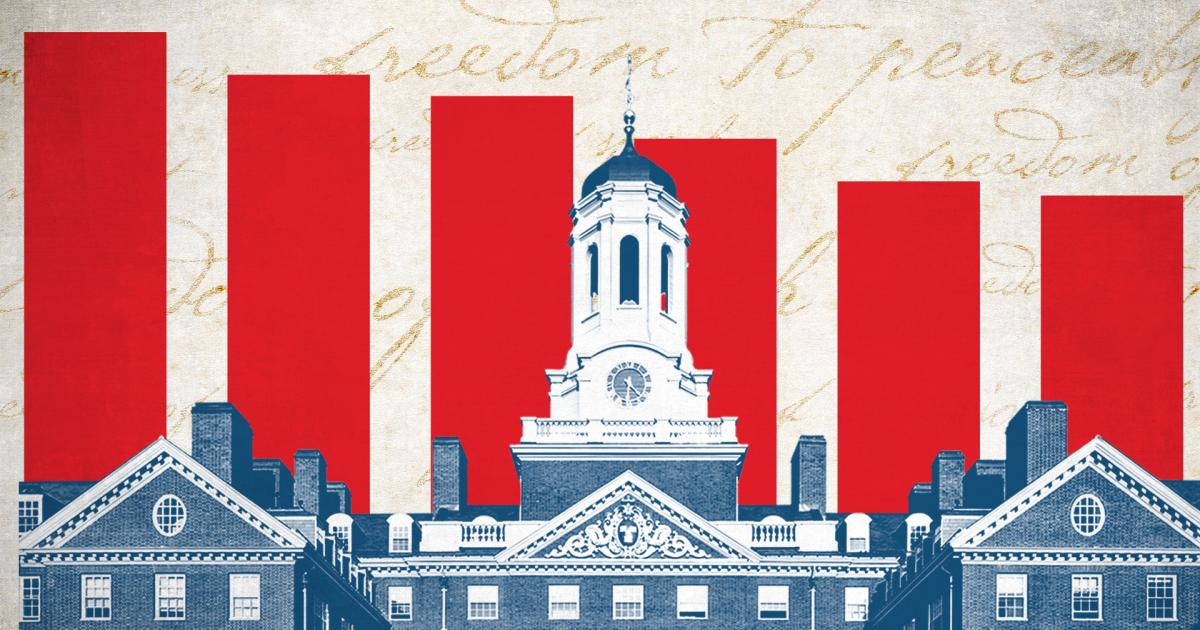
166 of the 257 schools surveyed got an F for their speech climate.
For the first time ever, a majority of students would prevent speakers from both the left and right who express controversial views, ranging from abortion to transgender issues, from stepping foot on campus.
WASHINGTON, D.C., Sept. 9, 2025– If America’s colleges could earn report cards for free speech friendliness, most would deserve an “F”— and conservative students are increasingly joining their liberal peers in supporting censorship.
The sixth annual College Free Speech Rankings, released today by the Foundation for Individual Rights and Expression and survey partner College Pulse, show a continued decline in support for free speech among all students, but particularly conservatives. Students of every political persuasion show a deep unwillingness to encounter controversial ideas. The survey, which is the most comprehensive look at campus expression in the country, ranked 257 schools based on 68,510 student responses to a wide array of free speech-related questions.
The rankings come at a notable moment for free speech on college campuses: clashes over the Israeli-Palestinian conflict, a vigorous and aggressive culture of student activism, and the Trump administration’s persistent scrutiny of higher education.
“This year, students largely opposed allowing any controversial campus speaker, no matter that speaker’s politics,” said FIRE President and CEO Greg Lukianoff. “Rather than hearing out and then responding to an ideological opponent, both liberal and conservative college students are retreating from the encounter entirely. This will only harm students’ ability to think critically and create rifts between them. We must champion free speech on campus as a remedy to our culture’s deep polarization.”
For the second time, Claremont McKenna has claimed the top spot in the rankings. Speech controversies at the highest-rated schools are rare, and their administrations are more likely to support free speech. The schools that improved their score the most, including Dartmouth College and Vanderbilt University, worked to reform their policies and recently implemented new programs that support free speech and encourage open discourse.
“Even one egregious anti-free speech incident can destroy students’ trust in their administration and cause a school to plummet in the rankings,” said FIRE Vice President of Research Angela C. Erickson. “If campus administrators, faculty, and students want to enjoy an atmosphere of trust on campus, they can start by protecting each other’s rights.”
Other key findings from the report include:
166 of the 257 schools surveyed got an F for their speech climate, while only 11 schools received a speech climate grade of C or higher.
Only 36% of students said that it was “extremely” or “very” clear that their administration protects free speech on campus.
A record 1 in 3 students now holds some level of acceptance – even if only “rarely” — for resorting to violence to stop a campus speech.
53% of students say that the Israeli-Palestinian conflict is a difficult topic to discuss openly on campus. On 21 of the campuses surveyed, at least 75% of students said this — including 90% of students at Barnard.
For the first time ever, a majority of students oppose their school allowing any of the six controversial speakers they were asked about onto campus — three controversial conservative speakers and three controversial liberal ones.
“More students than ever think violence and chaos are acceptable alternatives to peaceful protest,” said FIRE Chief Research Advisor Sean Stevens. “This finding cuts across partisan lines. It is not a liberal or conservative problem — it’s an American problem. Students see speech that they oppose as threatening, and their overblown response contributes to a volatile political climate.”
The Foundation for Individual Rights and Expression (FIRE) is a nonpartisan, nonprofit organization dedicated to defending and sustaining the individual rights of all Americans to free speech and free thought—the most essential qualities of liberty. FIRE recognizes that colleges and universities play a vital role in preserving free thought within a free society. To this end, we place a special emphasis on defending the individual rights of students and faculty members on our nation’s campuses, including freedom of speech, freedom of association, due process, legal equality, religious liberty, and sanctity of conscience.
A law firm representing anti–wind energy groups is demanding that Brown University researchers retract findings linking those groups to the fossil fuel industry, The New York Times reported Monday.
The move comes weeks after Brown reached an agreement with the Trump administration. The government restored $510 million in frozen federal research grants after the university agreed to certain demands, including adopting the Trump administration’s definitions of male and female and turning over admissions data.
The Trump administration has halted or canceled thousands of other research grants across the country, including many focused on climate change.
Marzulla Law LLC characterized the research published by Brown’s Climate and Development Lab as “false and injurious” in an Aug. 11 letter to Brown’s general counsel. It threatened to file complaints with Brown’s public and private funders, including the Energy Department, the National Science Foundation and the Mellon Foundation.
A university spokesperson did not comment specifically on the law firm’s demands but told the Times that it’s committed to maintaining academic freedom.
Brown researchers who authored a case study about Marzulla Law have written that the firm has “a history of advancing anti-environmental lawsuits and significant ties with the fossil fuel industry.” Researchers have also published findings accusing one of the firm’s clients—the nonprofit Green Oceans, which is trying to shut down the construction of a nearly complete $4 billion wind farm off the coast of Rhode Island—of being part of “a fossil-fuel-funded disinformation network.”
On Friday, the Trump administration, which opposes the wind energy industry, halted the wind farm project without citing specific reasons.
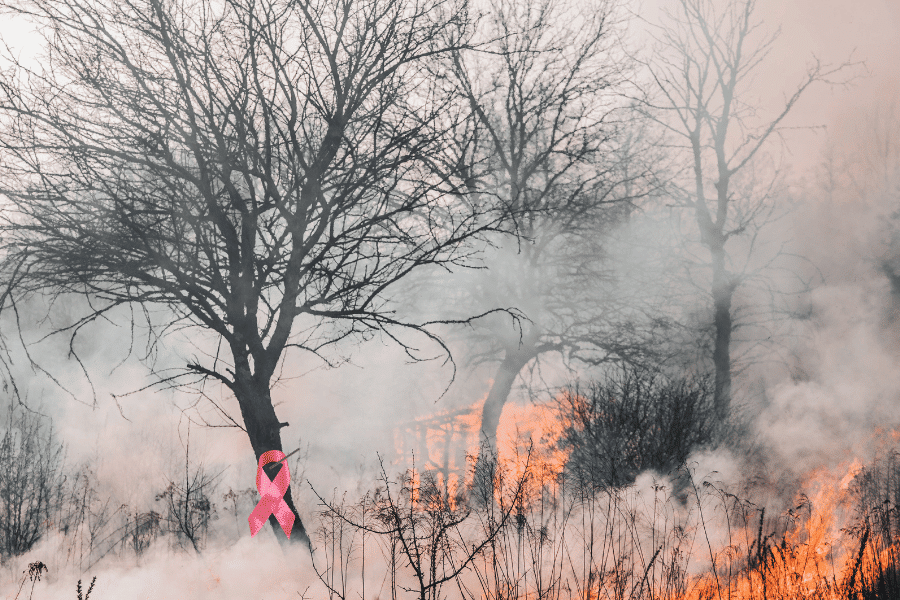
A study in California this year found that cancer patients were much more likely to die from the disease if they breathed in air pollution from wildfires a year after their diagnosis.
In 2020, flooding in Spain caused by Storm Gloria forced 118 cancer patients to cancel their radiotherapy treatment. And in 2019, researchers from the University of Michigan found a higher death rate among adult cancer patients who were affected by Hurricane Katrina.
It turns out that in many ways, climate change affects our health. We can see this directly when looking at cancer — something that affects one in five people around the world directly, and just about everyone else connected to those people indirectly.
I know this first hand. Four years ago a close family member was diagnosed with cancer. It made me wonder: What could we have done to prevent it? Was it something they ate? Their amount of exercise?
At the time, we were living in South Korea, a country notorious for its heavy air pollution days, and I couldn’t help but wonder if that might have had an impact on the diagnosis.
Then, as I watched them go through multiple recurrences of cancer, the question gradually evolved into this: How can you ensure successful cancer treatment? And subsequently, how can you ensure that everyone has access to safe cancer treatment?
Supply chain disruptions
It turns out that air pollution isn’t the only problem. Extreme weather events caused by climate change can disrupt supply chains which results in shortages of critical medical supplies.
In 2017, an intravenous fluid manufacturing company in Puerto Rico, for example, was destroyed by Hurricane Maria. The company was a major supplier of IV fluids for hospitals in the United States and the destruction led to a shortage in essential IV fluids.
In an attempt to investigate further, I contacted Dr. Kishan Gupta, a specialist in comprehensive ophthalmology, cornea and external diseases, at the Kaiser Downey Medical Center in California. Over a WhatsApp chat, he told me that Hurricane Maria not only led to major disruptions in eye drop manufacturing but also in IV saline for surgery and intraoperative anesthetics at his hospital.
Dr. David Kim, an orthopedic surgeon at the Worcester Medical Center in the U.S. state of Massachusetts, then told me that when IV supplies are disrupted, all surgeries that require such fluids are delayed — anything from hand and hip replacement surgeries to the removal of cancer tumors.
IV saline and intraoperative anesthetics are crucial for cancer patients, especially IV saline, which helps to dilute toxic fluids and dehydration as a result of chemotherapy.
Medical needs not met
Crucially, climate change-induced extreme weather events damage infrastructure, preventing important medical equipment and supplies from reaching destined locations at an appropriate time.
On the note of promptness, one of cancer’s most threatening characteristics is its fast, uncontrolled growth. In the field of medicine, this means that cancer treatment must be administered at the correct time, with the correct steps.
After Hurricane Maria in Puerto Rico, a 70% cancel rate was observed for brachytherapy, a form of radiation therapy. In Mexico after the 2017 earthquake, cancer surgeries were canceled with a median delay of 22.5 days.
During natural disasters, transportation networks and electrical systems break down. This means that people are unable to get to their hospital for treatment, and additionally, treatments like radiation which depend on electricity, can’t be administered.
The COVID-19 pandemic, while not a climate change-induced event, showed what happens when supply chains break down. Needed supplies of everything from towels to anti-septic solutions became unavailable and as a result, people died.
Lack of blood donors
Of course, cancer isn’t the only health concern related to climate change. Rising temperatures and more frequent natural disasters can create favorable conditions for insects such as ticks and mosquitoes that transmit harmful pathogens.
Hurricanes, tornados and other extreme weather events also discourage people from traveling and that can cause a consequent lack in blood donations at hospitals, according to Dr. Sung Eun Yang at the Kaiser Panorama City Medical Center in California. “Blood and blood products are a limited precious resource,” Dr Yang said. “Donor turn out may be dependent on the weather. I recall in Boston we had a terrible winter storm with no donor turn out and experienced significant shortages in blood products.”
Furthermore, it turns out that severe heat and humidity can affect medications — how they operate or their very properties. A number of common cancer medications are highly heat-sensitive. This means that as the Earth’ s climate warms, cancer patients who live in hot places will have a more difficult time storing and accessing safe medication, particularly in economically poor areas that can’t invest in energy-consuming storage. But even those in wealthier, cooler countries will be affected if they import products from those regions.
Finally, because of climate change, we are also seeing an increase in wildfires due to extreme and sustained drought conditions and wildfires too, ultimately leading to increases in cancer.
For instance, cancer is the number one cause of death in the fire fighting industry, accounting for 70% of all deaths.
Where there’s smoke, there’s cancer?
Harvard University researcher Mary Johnson told the publication E&E News this year that potentially harmful chemicals are released every time a structure burns.
“Plumbing has copper and lead in it,” she stated. “Paint has toxic chemicals. Electronics, plastics have really nasty stuff in them. All these chemicals we don’t think of occurring in a wildland fire are now part of the smoke.”
So what can we do?
In preparation for all potential disasters, hospitals could have a disaster plan to help ensure that patients receive any and all important data during a future disaster. For example, the United States Department of Health and Human services has released a study on the efficacy of electronic health records during disasters. If a storm is forecasted in a region, an electronic emergency chart could be made for each patient. This plan could also come in the form of new infrastructure or mechanisms meant to keep the hospital safe from floods or fires.
Patients should also be provided with alternate ways to access healthcare information in order to connect with local healthcare teams, and the American Association of Colleges of Nursing recently added climate change education to the list of required skills for nursing education programs.
Finally, past cancer survivors of disasters have suggested that countries like Puerto Rico can be more prepared and adaptable in terms of exploring alternatives like renewable energy, that aren’t as susceptible to power outages from storms.
As the climate deteriorates, our responsibility in pushing back against the climate crisis will expand in multiple ways.
Our health and the health of the people we love will depend on the health of our planet. That means that it is our responsibility to protect ourselves, our loved ones and all of those currently battling cancer from climate change.
Questions to consider:
1. What connection is there between climate change and cancer rates?
2. What can be done to keep people from dying of climate-change related cancer?
3. What, if anything, can you do to help cool down our planet?
Greetings from a northeastern Virginia where the heat has been brutal. For several weeks we lived under temperatures reaching 100 ° F, while humidity sopped everything badly enough that the “feels like” reading hit 110. (And the Trump administration decided to federalize and militarize DC – that’s for another post.)
North of us, epic wildfires burned swathes of Canada. “‘It’s the size of New Brunswick, to put it into context,’ Mike Flannigan, a professor of wildland fire at Thompson Rivers University, told CBC News.” This is apparently the second worst fire year on record. Climate change has not only increased temperatures in that nation but dried out regions, making them tinder.
Parts of Europe are also suffering under horrendous heat waves. As a result the region is experiencing upticks in fires, heat exhaustion, and deaths. Temperatures are hitting the 30s and even 40s (centigrade; for Americans, this means upper 90s and over 100 F).
I’d like to explain about how these are predictable outcomes of the worsening climate crisis, how global warming is doing precisely what we thought it would do, but I’d also like to get in the habit of issuing shorter blog posts. Besides, I suspect my readers either get the point or have turned away by now.
What I wanted to focus on today was a recent connection made between Europe’s fierce summar, the climate crisis… and digital technology. Britain is suffering under drought conditions exacerbated by global warming, a drought so harsh that the government has assembled a National Drought Group to organize responses. (One of my shorthand expressions for thinking of climate change is that regions with too much water will receive more, while those with less, less. A kind of climate Matthew Effect. The UK drought is an exception for now.)
Yesterday the drought team issued a report on the crisis, summing up steps various local authorities are taking along with series of recommendations for Britons wanting to take actions against the drought. I’d like to draw your attention to one of them:
Fiery red box not in the original.
“Delete old emails and pictures as data centres require vast amounts of water to cool their systems.”
There’s much we can say or ask about that single line. Just how much of an impact does cloud computing hosting have on British water use? If this is aimed at residents, are businesses or the government taking similar measures? Should one use cloud services not colocated in drought-stricken areas?
At a broader level I wonder about the possibility that the growing anti-digital movement, which some call the techlash, might finally become focused on climate implications. Do we decide that advanced computing (think generative AI or bitcoin mining) has too large a footprint and must be curtailed? Or do we instead assess its climate benefits – crunching vast arrays of data, running simulations, generating new research – as outweighing these costs?
For years I’ve been asking audiences about the climate-digital connection. I’ve asked people to imagine individual and group choices they might have to make in the future as the crisis worsens and electricity becomes more fragile, more restricted. These are provocative, clarifying questions. Think of choosing between WiFi and air conditioning, or cloud computing versus refrigeration. And now we have a first glimpse of that future with the British government requesting Britons to cut back their digital memories. We can imagine new questions in that light. How would you choose between streaming video and potable water, or Zoom versus crop irrigation?
The Higher Education Inquirer reminds us of the higher education implications.
For colleges and universities, the connection between digital behavior and resource conservation is an opportunity to model sustainability. Digital housekeeping campaigns could encourage staff and students to purge outdated files, trim redundant email chains, and archive with intent. Institutions can audit cloud storage use, revisit data retention policies, and prioritize providers that invest in energy- and water-efficient infrastructure. These choices can be paired with curriculum initiatives that make students aware of the climate–digital nexus, grounding sustainability not just in labs and gardens, but in inboxes and servers.
Indeed. These actions are available to us, should we choose to take them.
Yet this is a difficult conversation to have now, at least in the United States, as the Trump administration attacks climate science even to the point of hurling a satellite out of Earth orbit. Businesses are walking back climate commitments. Journalists don’t mention the crisis very often. Democrats are falling silent. Yet, strangely enough, climate change continues, ratcheting up steadily. We must think and act in response. That means, among other things, rethinking our digital infrastructure and practices.
For the last 15 years, science teacher Jeff Grant has used information on climate change from the federal website Climate.gov to create lesson plans, prepare students for Advanced Placement tests and educate fellow teachers. Now, Grant says, he is “grabbing what [he] can” from the site run by the National Oceanic and Atmospheric Administration’s Climate Program Office, amid concerns that the Trump administration is mothballing it as part of a broader effort to undermine climate science and education.
“It’s just one more thing stifling science education,” said Grant, who teaches at Downers Grove North High School in the Chicago suburbs.
Since early May, all 10 editorial contributors to Climate.gov have lost their jobs, and the organization that produces its education resources will soon run out of money. On June 24, the site’s homepage was redirected to NOAA.gov, a change NOAA said was made to comply with an earlier executive order on “restoring gold standard science.” Those steps follow many others the president has made to dismantle federal efforts to fight climate change, which his administration refers to as the “new green scam.”
Former employees of Climate.gov and other educators say they fear that the site, which will no longer produce new content, could be transformed into a platform for disinformation.
“It will make it harder for teachers to do a good job in educating their students about climate change,” said Glenn Branch, deputy director of the nonprofit National Center for Science Education. “Previously, they could rely on the federal government to provide free, up-to-date, accurate resources on climate change that were aimed at helping educators in particular, and they won’t be able to do so if some of these more dire predictions come to pass.”
Such concerns have some foundation. For example, Covid.gov, which during the Biden administration offered health information and access to Covid-19 tests, has been revamped to promote the controversial theory that the coronavirus was created in a lab. The administration has also moved aggressively to delete from government sites other terms that are currently out of favor, such as references to transgender people that were once on the National Park Service website of the Stonewall National Memorial, honoring a major milestone in the fight for LGBTQ+ rights.
Kim Doster, director of NOAA’s office of communications, declined to answer specific questions but shared a version of the statement posted on the NOAA website when Climate.gov was transferred. “In compliance with Executive Order 14303, Restoring Gold Standard Science, NOAA is relocating all research products from Climate.gov to NOAA.gov in an effort to centralize and consolidate resources,” it says.
Related: Want to read more about how climate change is shaping education? Subscribe to our free newsletter.
Climate.gov, founded in 2010 to support earth science instruction in schools, had become a go-to site for educators and the general public for news and information about temperature, sea level rise and other indicators of global warming.
For many educators, it has served a particularly key role. Because its resources are free, they are vital in schools that lack resources and funding, teachers and experts say.
Rebecca Lindsey, Climate.gov’s lead editor and writer, was one of several hundred NOAA probationary employees fired in February, then rehired and put on administrative leave, before being terminated again in March. The rest of the content production team — which included a meteorologist, a graphic artist and data visualizers — lost their jobs in mid-May. Only the site’s two web developers still have their jobs.
A screenshot of the Sea Level Rise Viewer, an interactive NOAA that’s listed as a resource on Climate.gov, a government climate website. Credit: NOAA Office for Coastal Management
Lindsey said she worries that the government “intended to keep the site up and use it to spread climate misinformation, because they were keeping the web developers and getting rid of the content team.”
In addition, the Climate Literacy and Energy Awareness Network, the official content provider for the education section of the site, has not received the latest installment of its three-year grant and expects its funds to run out in August.
“We won’t have funding to provide updates, fix hyperlinks and make sure that new resources are being added, or help teachers manage or address or use the resources,” said Anne Gold, CLEAN’s principal investigator. “It’s going to start deteriorating in quality.”
CLEAN, whose website is hosted by Carleton College, is now searching for other sources of money to continue its work, Gold said.
With the June 24 change redirecting visitors from Climate.gov to NOAA.gov/climate, the website for the first time falls under the purview of a political appointee: Doster. Its previous leader, David Herring, is a science writer and educator.
Melissa Lau, an AP environmental science teacher in Piedmont, Oklahoma, said the relocated site was “really difficult to navigate.”
As someone who lives in Tornado Alley, Lau said, she frequented CLEAN and NOAA sites to show her students localized, real-time data on storm seasons. She said she is concerned that teachers won’t have time to track down information that was shifted in the website’s move and, as a result, may opt not to teach climate change.
The executive order on “restoring gold standard science” that appears to have triggered the shift gives political appointees the authority to decide what science information needs to be modified to align with its tenets.
While the disclaimer posted to NOAA.gov seems to imply that Climate.gov did not meet this requirement, educators and researchers said that the site and its CLEAN education resources were the epitome of a gold standard.
“I want to stress that the reason why CLEAN is considered the gold standard is because we have such high standards for scientific accuracy, classroom readiness and maintenance,” Gold said. “We all know that knowledge is power, and power gives hope. … [Losing funding] is going to be a huge loss to classrooms and to students and the next generation.”
This is only the latest attack by the Trump administration on education around climate change. This month, the U.S. Global Change Research Program’s website, GlobalChange.gov, was shut down by the administration, after the program was defunded in April. The website once hosted an extensive climate literacy guide, along with all five iterations of the National Climate Assessment — a congressionally required report that informed the public about the effects and risks of climate change, along with local, actionable responses.
The Department of Commerce, which oversees NOAA, has cut other federal funding for climate research, including at Princeton University, arguing that these climate grant awards promoted “exaggerated and implausible climate threats, contributing to a phenomenon known as ‘climate anxiety,’ which has increased significantly among America’s youth.”
“The more you know [about climate change], the more it’s not a scary monster in the closet,” said Lauren Madden, professor of elementary science education at the College of New Jersey. “It’s a thing you can react to.” She added, “We’re going to have more storms, we’re going to have more fires, we’re going to have more droughts. There are things we can do to help slow this. … I think that quells anxiety, that doesn’t spark it.”
And climate education has broad public support — about 3 in 4 registered voters say schools should teach children about global warming, according to a 2024 report from the Yale Program on Climate Change Communication. Similarly, 77 percent of Americans regard it as very or somewhat important for elementary and secondary school students to learn about climate change, according to a 2019 study. And all but five states have adopted science standards that incorporate at least some instruction on climate change.
As a result, many science teachers rely on federal tools and embed them in their curriculum. They are worried that the information will no longer be relevant, or disappear entirely, according to Lori Henrickson, former climate integration specialist for Washington state’s education department. Henrickson, who lost her job this June as the result of state budget cuts, was in charge of integrating climate education across content areas in the state, from language arts to physical education.
The .gov top-level domain connotes credibility and accessibility, according to Branch: “It is also easier for teachers facing or fearing climate change denial backlash to cite a reliable, free source from the federal government.”
With Climate.gov’s future uncertain, educators are looking to other resources, like university websites and tools from other countries.
“I’m sure there will continue to be tools, and there will be enough people who will be willing to pay to access them,” Madden said. But, she added, “they probably won’t be as comprehensive, and it won’t feel like it’s a democratic process. It’ll feel like: If you or your employer are willing to chip in for it, then you’ll have access.”
“I feel like with all the federal websites, I’m constantly checking to see what’s still up and what’s not,” Madden said.
Bertha Vazquez, education director for the Center of Inquiry, an organization that works to preserve science and critical thinking, said she worried that the disappearance of climate information could leave U.S. students behind.
“The future of the American economy is not in oil, the future of the American economy is in solar and wind and geothermal. And if we’re going to keep up with the international economy, we need to go in that direction,” she said. But while the U.S. should be leading the way in scientific discovery, Vazquez said, such work will now be left to other countries.
Lau said she felt helpless and frustrated about Climate.gov’s shutdown and about the “attack on American science in general.”
“I don’t know what to do. I can contact my legislators, but my legislators from my state are not going to be really open to my concerns,” she said. “If students next year are asking me questions about [science research and funding], I have to tell them, ‘I do not know,’ and just have to leave it at that.”
Contact editor Caroline Preston at 212-870-8965, via Signal at CarolineP.83 or on email at [email protected].
The Hechinger Report provides in-depth, fact-based, unbiased reporting on education that is free to all readers. But that doesn’t mean it’s free to produce. Our work keeps educators and the public informed about pressing issues at schools and on campuses throughout the country. We tell the whole story, even when the details are inconvenient. Help us keep doing that.
As climate disasters become more frequent and severe, more institutions are investing in programs to address environmental changes and prepare students to engage in green careers.
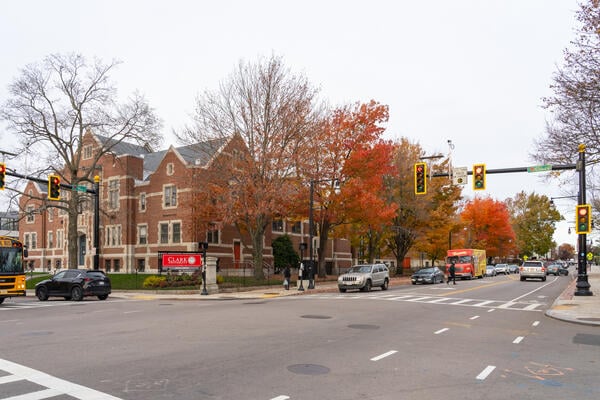
Clark University plans to launch its School of Climate, Environment and Society this fall, institutionalizing the university’s commitment to climate action and investing in interdisciplinary learning for students interested in the work of sustainability.
In this episode of Voices of Student Success, host Ashley Mowreader speaks with Lou Leonard, the inaugural dean of Clark’s School of Climate, Environment and Society, about the need for this new school and how such education can tackle climate anxiety in young people.
An edited version of the podcast transcript appears below.
Inside Higher Ed: Can you talk a little bit about the new school? How does it tie into institutional priorities?
Lou Leonard, Clark University’s inaugural D. J. A. Spencer Dean of the School of Climate, Environment and Society
Leo Leonard: The school officially launches next fall. We’ll have our first incoming cohorts for some new degree programs that are specifically linked to the starting of the school, and so we’ll have an undergraduate major in climate, environment [and] society, and a new professionally oriented master’s degree in climate, environment and society.
But the school really is coming together from a place of long-standing commitment and expertise within Clark on these topics. The school will include a core set of departments that have existed for a long time. In fact, one of them is the geography department at Clark, which has been around for over 100 years. And then a department called Sustainability and Social Justice, which is celebrating its 25th anniversary next year.
The Economics Department for the university will also be housed in the new school, which I think is exciting, because it’s one of these fields that is so significant and important for the way we think about, address, understand and really create climate solutions. But it’s a department that, in many universities, would say, “Oh, well, that can’t be in a school of climate, environment and society, because economics is bigger than that.” I think [Clark’s] decision is emblematic of a bigger decision by the university, which is to really go all in on climate action and on the issues that are under this umbrella of climate, environment and society, the way climate change and environmental degradation intersect with human society.
In that sense, it’s not just the launching of a new school. It’s the university saying, “This is one of the things that Clark already does really well. We want to do better, and we want to be known for it in the world.” I think having a school like this demonstrates that the university is making a real, serious commitment to these issues.
Q: I think sometimes sustainability or climate action can be seen as something new or trendy with young people, or a response to things that have happened in the past 20 years. But, as you allude to, some of these departments and majors have existed for 20-plus years. I wonder if you can speak to that element of, not everything within the school is new, but it’s a rehousing and reorganization of programs and majors that are already important to the university.
A: I think that your question applies to this school and the way higher education can think of its role in climate, but it actually also points at the larger question of climate change itself, right?
A lot of times, we think of climate change as something that’s a separate issue. But really what the climate crisis represents, and what issues related to climate impacts—the energy transition, biodiversity conservation—all of these topics existed since before there were humans on this planet, some of them, anyway.
What the layer of climate change brings to these things is often an acceleration of challenges or a way in which we need to think across traditional disciplines when we’re trying to figure out how to respond to some of the challenges that climate change presents for us. Climate is not a wholly new thing in the world or in higher education.
Q: I’m even thinking, like, food systems is something that we traditionally house in a school of agriculture, but there’s definitely climate implications when it comes to that. Or we talked about economics and how business and society functions are completely dependent on climate and the external circumstances that drive those factors.
I also really appreciate the fact that the school includes the “and society,” because there’s that human implication as well, where it’s not just “we’re trying to fix the planet,” but also “we’re trying to impact the world in a more positive way.”
A: That’s right. In some ways, the planet is going to be fine. The planet is a set of geophysical, geochemical processes. And the real question is whether the conditions for stable, predictable human life are going to continue in the same ways that have allowed humans to prosper and to be thinking about leading better and more fulfilling lives.
It’s those conditions that—we’ve been lucky—for the last 20,000 years have been pretty stable, and basically, we’re leaving that period. We’re leaving that period of Goldilocks, stable climate conditions that have allowed human society to focus on other things, including their own prosperity. Now we don’t have the luxury anymore; we have to understand the intersection between human society and what’s changing around us in order to maintain a future where we can prosper and we can live lives of purpose.
Q: Absolutely. That is very scary, though, especially for our young people, who are growing up in a world where this is the reality that they’re facing in their future.
I pulled a few stats. Inside Higher Ed did a survey in 2022 and we found that 81 percent of college students said they were at least somewhat worried about climate change. And then, more recently, Sacred Heart University found more than half of U.S. youth report eco-anxiety, and 74 percent said they agree with the statement “I’m personally worried about climate change.”
When we think about climate, higher education obviously has a role when it comes to resources and research, and helping people understand solutions and the implications of climate change, but also educating young people and helping them prepare for their future and understanding the world around them. I wonder if you can talk about that mission of the school as well as helping students engage in this sort of work.
A: I’m hearing two things here. One is the understandable—and it’s not just something that younger folks are experiencing, but a lot of folks are experiencing—sense of uncertainty, anxiety and fear about what it means to live in a world that’s not as stable in some fundamental ways as what we’re used to.
And the other is “How do we still find purpose, agency and careers that are meaningful for us in that kind of world?”
So if we take the first part of that, I think it is fundamental that we understand and provide students with the tools to address the kind of social, emotional dimensions of the climate crisis present to us. And if you’re going to have a school that focuses on these topics and brings an interdisciplinary perspective to it—which is what the school aspires to do—then that has to include ways for students to name, hold and manage the emotional sides of this.
I think Clark’s really lucky. Clark University is very well-known for its psychology program—Sigmund Freud gave his only lectures in the United States at Clark … Bringing that sort of perspective to the Clark education is something we’ve done forever, and I think a really important part of what the school does going forward is being intentional about that.
But I think the second part of your question is related to the first, which is, can we find a sense of purpose, a sense of agency, a sense of “I have a way to contribute to this”? You know, action metabolizes anxiety, and a sense of purpose allows us to have a ballast during times that are shaky around us—and, quite frankly, the world is shaky right now. So for those people that particularly—and you said, the number is pretty high—care about these issues, building a set of skills competencies, confidence that you can be part of the response going forward … I think that is critical to your emotional well-being in these changing times.
Q: I’ve been reading [Jonathan Haidt’s] The Anxious Generation, and it talks a lot about how social media can be a portal to too much information, where students are always seeing each other and always hearing from each other.
I think, in the same way, climate information can be really overwhelming, where it’s like, “Oh my gosh, the polar bears are dying; what am I supposed to do about it in my dorm room at Clark University?” But there’s also an element of “OK, now I know about it and I get to be equipped with that information.”
I think helping students understand the problems and contribute to solving them, but also like you said, making sure that they are mentally well and capable of handling what that looks like and having that sense of advocacy for themselves and the world around them—that’s a really tough tension for students to live between.
A: The difference between going on to the virtual world, whether it’s social media or the internet more broadly, it’s like you’re putting yourself in front of a fire hose or this waterfall that feels uncontrollable related to the information that’s flying at you.
Those places—social media, the internet in general—do not provide you a way to manage that information flow. But a good education, one that’s grounded in different ways to understand and make sense of the complexity of the world, that is the role a good education, particularly the role that an undergraduate education, has traditionally played. That’s what we do.
So if that’s true, and if the liberal arts education was always supposed to provide that equipment for students to then enter the world with more confidence in understanding it and therefore being able to navigate it in all of its complexity, then, in some ways, the degrees and the programs under the School of Climate, Environment and Society at Clark being interdisciplinary, being experiential, are a kind of a new liberal arts in a way.
It’s a specialized set of equipment that allows you to understand that torrent of information, particularly about climate, environment and its relationship to society. I think it’s in some ways the opposite of just going on social media. It’s being intentional about creating those filters, that equipment, that way to understand and see the world that you need to avoid feeling overwhelmed. It’s not that we’re never going to— We’re still going to feel overwhelmed at times, right? I’ve been in this work my entire life. I’m now in my 50s. I still feel overwhelmed by it at times. That part doesn’t go away. It’s not that it goes away; we just become more able to manage it while we’re contributing to the change that needs to happen.
Q: You’ve mentioned a few times now the interdisciplinary lens of the world. Can you talk about that and the experiential elements, both getting students that hands-on experience but also transcending the traditional majors and disciplines to help students be able to grapple with this issue from a lot of different angles?
A: I’m glad that you paired interdisciplinary with experiential, because those two things need to go together from a pedagogical standpoint, from a learning-how-we-do-the-learning standpoint.
Interdisciplinarity, or transdisciplinarity, says that the world is really complex, and, in fact, some of what has led to the slow and, at best, incomplete—and some would say, woefully inadequate—response to the climate crisis and the even longer biodiversity crisis and the related impacts to communities, environmental justice crisis, is because we haven’t adequately been able to look across those different ways in which to understand the world. Whether it’s economic, physical sciences … policy and governance, the role that the private sector plays, or technology and the issues there.
That’s why, five years ago now, the National Academies of Sciences did a review of education related to sustainability and said, “What is the right formula for pulling together programs that meet this complex need, give students equipment to deal with this complexity and to then contribute to new ways of developing solutions or working across these traditional aspects of society, so we can see new ways to unlock progress on climate change?”
That combination [of interdisciplinary and experiential] is important, because transdisciplinary or interdisciplinary work can be conceptual until you actually get into an applied setting, until you actually start doing projects. Either research projects that are especially designed to be cross- or interdisciplinary or transdisciplinary, or you get out into the working world through an internship, through a class project. At Clark we have something called the Global Learning Collaboratives, these places where students can go and engage in projects in other countries, where their work in the classroom starts to make sense, because they’re now doing it in an experiential way, in an applied way.
You need both, otherwise you get lost. It becomes very conceptual. Or if you’re just doing applied work, you don’t have any framework to see how these different aspects or the way the world gets in the way of some of these applied challenges, then you’re not able to do things differently. So you need both.
Q: Another really important facet of climate and society and understanding how sustainability impacts communities is doing community-based learning or service-based learning. How are you considering ways to put students out in the world and engage with communities that are being directly impacted by climate change?
A: There’s a lot that we already have at Clark that’s being brought together under the umbrella of the new school that’s related to this. I spoke a second ago about the Global Learning Collaboratives. This is something that emerged from one of the units that’s going to be part of the new school, and we’re going to build on it going forward. We have projects in Bangladesh and Ethiopia, in Mexico, but also in Worcester [Mass.], in our backyard, in the community that Clark has lived in for almost 150 years.
It is really important that that is what experiential and applied work is: It’s work in communities or with institutions or businesses or others. But I think the community part that you’re pointing out is important to talk about in its own special way, as well as being a part of a broader way to do experiential learning. Because I think, for too long, higher education has—there’s always been exceptions—but I think for too long, too much of the sort of, like, engagement or research that higher ed has done is seeing communities as a subject or a set of data or problems that we in higher education want to understand and bring back into our world and study.
For a long time, we’ve understood that that’s both ethically not appropriate and it doesn’t produce the richest form of learning. The richest form of learning, I think, is co-created. You co-create knowledge. You co-create understanding with communities. When students can be part of that, it actually provides a new way of understanding what it means to be in relationship with communities.
And hopefully that means that students take that forward when they go out into their work, because the same thing could [be applied there]. There’s a similar history within the way nonprofits and advocacy groups engage with communities, or businesses engage with communities. I think if we can model a better way of how to do that within higher ed, then that will have ripple effects into the way students, when they go out into the world, can bring that new approach to their jobs.
Q: I’m glad that you mentioned jobs, because in the same way that students who are interested in federal or research roles right now—which I know there’s an intersection between that and sustainability and climate work—they have a lot of anxiety around this current time and the recent policy changes that we’ve seen, or different priorities from this current administration.
I wonder if you can touch just briefly on how policy is reshaping climate [work] or how policy is reshaping the conversations around climate and the school and the work that you’re all doing helping students think about careers, given the fact that we are seeing a different set of priorities than we did under the previous administration.
A: I’ve been in the environmental sustainability field my whole career. So that’s over 30 years, and I’ve been really working on climate for almost 20. I think sometimes it’s like, “Oh, jeez, old guy,” but there is at least one benefit to being in this work for a long time: You see the peaks and valleys. You see the way these fundamental issues of society transform and change—which is happening no matter what.
The number of people who now say climate change is not happening is much lower than it was 20 years ago, 10 years ago. Politics affects that to some degree, on the margins, but if you look at the trend line, that is less and less the debate, and that was not the case 20 years ago, I’ll tell you that.
In that sense, we’re seeing kind of a positive trend line of understanding that stuff is happening, so society is going to transform, whether we like it or not, because the conditions around us are changing. The question is, how do we respond? I think again, the trend line is, if we step back and look—and I don’t think this is going to change going forward—the need to address this, and the understanding of the need to address this is only going to maintain a positive trend line. Even if, right now, it seems like certain aspects of the climate response have got caught up in the political maw or munching, kind of snarly, world of politics, we shouldn’t be confused and think that that means that these issues are going to go away.
They present a new set of challenges for us, which we should not ignore, either, which is why we need to really think hard about how to create spaces for learning and conversation around these topics that feels less politically charged—not because we want to agree or disagree with a certain political view on these issues, but so that we can bring more people into the conversation. So that we don’t lose time that we desperately need and can’t afford to lose to make progress on these issues.
It’s definitely a challenge for us. It does not, in my view, at all represent a long-term change in the trend. I think that’s why those who care about these issues, whether you’re at the stage of trying to choose an undergraduate program or a grad program, or you’re not in the market for higher ed at all, I would not be discouraged to the point where you change something that feels meaningful to you, that feels like part of your purpose, because we need to listen to that voice, and these issues are goingto have growing amounts of room for people to contribute going forward.
Get more content like this directly to your inbox. Subscribe here.
Consider that BP, one of the world’s biggest oil companies, popularised the term “carbon footprint”, which places the blame on individuals and their daily choices.
Anger also comes up a lot, Robinson said, particularly for young people.
“They’re angry this is happening,” she said. “They’re angry they have to deal with it. They’re angry that this is their world that they’re inheriting and that all totally makes sense. It’s not fair to burden young people with this. It’s really important that they have support and action by adults in all kinds of ways throughout society.”
Working through our feelings
Then there’s sadness and grief.
“We have of course loss of life in many climate disasters,” Robinson said. “That’s really significant. And loss of habitat, loss of biodiversity, loss even of traditions and ways of life for a lot of people, often in Indigenous cultures and others as well.”
One of the most simple and effective ways we can deal with climate distress is by talking about it, and by giving young people the opportunity and space to do so.
“One of the hardest things is that people often feel really isolated,” Robinson said. “And so talking about it with someone, whether that’s a therapist or whether that’s in groups … just anywhere you can find to talk about climate emotions with people who get it. Just talk about climate change and your feelings about it.”
Having a space to discuss climate change and their feelings associated with it can help a young person feel understood. Talking about feelings in general, known as “affect labelling”, can help reduce the activity of the amygdala — the part of the brain most associated with fear and emotions — in stressful times.
Unplug yourself.
Unlimited access to the internet does allow young people to connect with like-minded people and engage in pro-environmental efforts, but the amount of information being consumed can also be harmful.
Climate change is often framed in the media as an impending environmental catastrophe, which studies say may contribute to this sense of despair and helplessness, which can lead to young people feeling apathetic and being inactive.
Robinson said that while you don’t need to completely cut out reading the news and using social media, it is important to assess the role of media consumption in your life. She suggested setting a short period of time every day where you connect to the media, then try your best to refrain from scrolling and looking at your phone for the rest of the day.
“Instead, look outside at nature, at the world we’re actually a part of instead of what we’re getting filtered through the media,” she said.
For some people, looking at social media around climate is a way of connecting with a community that cares about climate, so it can still be a useful tool for many people.
“Our nervous systems can get really hijacked by anxiety,” Robinson said. “We know that when mindfulness is a trait for people, when it really becomes integrated into who they are, that it does help. It’s associated with less climate anxiety in general.”
Take in the nature around you.
Studies show that mindfulness can improve symptoms of anxiety and depression. Robinson says this is partly due to it allowing us to be present with whatever feelings come up, that it helps us to stay centred throughout the distress.
It can be as simple as taking a mindful walk in a nearby forest or green space. While of course forests are helpful in absorbing carbon and reducing emissions, they can also help us reduce stress. Some studies have shown that spending more than 20 minutes in a forest — noticing the smells, sights and sounds — can reduce the stress hormone cortisol.
Robinson said that one of the more powerful things you can do is to band together with others.
“Joining together with other people who care and who can have these conversations with you and then want to do something along with you is really powerful,” she said. “We’re social animals as humans, and we need other people and we really need each other now during all of this. And it’s so important to be building those relationships if we don’t have them.”
It is possible that climate anxiety can increase when young people learn about climate change and the information is just thrown out there, Robinson said, and the opportunity to talk about emotions should be incorporated into learning.
“It is different than learning math, or learning a language,” she said. “It’s loaded with all kinds of threat. Kids need to know what to do with that because there is going to be an emotional response.”
Teachers can then help students connect their feelings with actions, whether that be in encouraging their participation in green school projects or on a broader level in their communities.
“That action, it helps, it really gives people a sense of agency and they know that they are making a difference,” Robinson said.
We need to come together, she said, not just to help us feel better, but to find solutions. “I really think that our connection, our systemic issues that we have, are so profound and they really push us away from each other in so many ways.”
Our societies often favour consumption over connection, she said. “As human beings we developed in the context of nature, evolutionarily,” she said. “We were immersed. We were part of nature, and we are still, but we have increasingly grown apart from that relationship.”
That changed over time. Now people spend little time in nature even though it’s often all around them.
“From an eco-psychological sort of point of view, we’re embedded in that system, and we’re harming that system because of that separation that’s developed,” she said.
Questions to consider:
1. What is “climate anxiety”?
2. What is the connection between climate anxiety and education?
3. How do you handle the stresses that you are under?
That’s where fiction can come in. But most climate fiction presents gloomy scenarios: think the waterless world of Arrakis in Frank Herbert’s “Dune” series or our earth after a virus wiped out most of human life in Margaret Atwood’s “Oryx and Crake” trilogy.
In contrast, Baden’s story showed more positive solutions. Her own research found that 98% of her readers changed their attitudes. A month after reading the story 60% of readers actually adopted a green alternative.
She’s set to release “Murder in the Climate Assembly“, a fictional story about the ramifications of a murder that takes place in a citizens’ assembly on climate.
Some media organizations are now including climate change awareness initiatives that use fictional examples into their marketing campaigns.
Baden worked with BAFTA, the British Academy of Film and Television Arts, to create social media content that provided solutions with a tinge of humour. For example, they contrasted the carbon footprint of two popular characters from books and movies: James Bond who drives a gas guzzling sports car and has a walk-in wardrobe versus Jack Reacher who traveled by bus and shopped second-hand.
Making environmentalism fun
Pilot testing showed interesting results: “If we just presented the negative one like James Bond, some people laughed and thought it was funny, but a few people thought they were being a bit preached at and switched off,” Baden said. “Whereas when you kind of had both together with a bit of humor, that seemed to hit the right spot.”
Pike agreed: “Comedy too allows us to let our guard down. When we open our mouth to laugh, our mind is open to learn.”
When Pike was in Chile working on the PhD that led to her book she found that she loved the animated series “The Simpsons“. In 2008, one of the three TV channels played Simpsons episodes endlessly, she said. Simpsons creator Matt Groening intended his show to make people aware of environmental challenges and complications in ways that start conversations, she said.
Context makes a difference too. “I read ecoactivist discourse in South America and it seemed so darn white and privileged,” Pike said. “If you read “Burning Rage of a Dying Planet” in a comfortable U.S. suburb, it’s one thing. If you read the same book in Chile, it feels different, almost too precious, definitely not the tone I would take in talking about ecology in South American countries.”
The Center for Health Communication at Harvard University says that showing, not telling induces stronger emotional responses as visual imagery and helps our brains understand abstract and complex associations like those between climate and health.
Connecting emotion to change
Telling stories through books, plays or social media also help to create emotion, and change beliefs and behaviours. They may also reduce feelings of anxiety and depression that surface when bombarded with alarmist news about the climate crisis. Focusing on solutions is more effective.
Pike said the way to get through the barrage of media messages and talk about the climate crisis is with honesty, independence and humour. “Acknowledge the hypocrisy and move on toward solutions,” Pike said. “A solution offers me a choice, agency, a chance to put up a sail and navigate to a goal.”
Pike taught a class called “Environmental Reporting for a Hopeful Planet” in the spring 2024 semester. One assignment was “Forest Friday”: students were asked to read, watch or listen to examples of environmental storytelling.
One week, the students were assigned a video of Rebecca Solnit. She’s a writer, historian and activist who has been examining hope and the unpredictability of change for more than two decades. In 2023 she co-edited an anthology called “It’s Not Too Late”, a guide for finding hope even while climate change-induced disasters continue. This is what one student said after they watched that video:
“I felt reassured by her calmness and her endless lists of knowledge of times and places in which meaningful change has occurred. I think she makes many great points about the way that just because ideas don’t always get the opportunity to fully take shape they are still impactful on society as a whole.”
So, what’s the best way to write about the climate crisis?
“Read environmental writing and write,” Pike said. “Be so deeply curious about how ecology works, how nature and culture interact, how businesses and institutions works and their role in the climate crisis.”
Ways to write effectively
Having a community of people who also write about and care about the environment can also help. But most importantly, Pike said: “Work to tell a story well.”
This means reading the publications which interest you and seeing if your story would be a good fit. Try different mediums. Take Dr. Seuss’ “The Lorax”. It’s a children’s book written in 1971 about a character who speaks for the trees as a business tycoon destroys the environment. The story encourages activism and involvement in making the situation better. In it the Lorax tells us: “Unless someone like you cares a whole awful lot, nothing is going to get better. It’s not.”
More recently, there are films like “Flow“, which won an Academy Award for Best Animated Feature and was nominated for Best International Feature Film, and “The Wild Robot“, which was nominated for three Academy Awards including Best Animated Feature.
In both, climate change is a world-building element; one showed a submerged Golden Gate Bridge, the other showed a flood of biblical proportions. But they’re both animated films, with cute animals coming together to save the world, reaching a younger audience who will grow up with climate change and its impacts.
Creating a story that can make people think about our planet and how we can tackle climate change isn’t easy. Pike said it is worth persevering.
“If you get tired, don’t give up,” Pike said. “Rest and get back to it when you can. We all plant seeds and it’s hard to say which ones will take.”
Three questions to consider:
What makes you switch off the news when a story about climate change comes on?
What happens to our brain when we show, rather than tell, in our writing on climate change?
What might you learn in a course like “Environmental Reporting for a Hopeful Planet?”
This week I dug into how the Trump administration’s anti-climate blitz is hampering schools’ and colleges’ ability to green their operations, plus a new report on the California wildfires’ impact on students. Thank you for reading, and reply to this email to be in touch. — Caroline Preston
LeeAnn Kittle helps oversee the Denver public school district’s work to reduce carbon emissions by 90 percent by 2050.
In January, her job got a lot tougher.
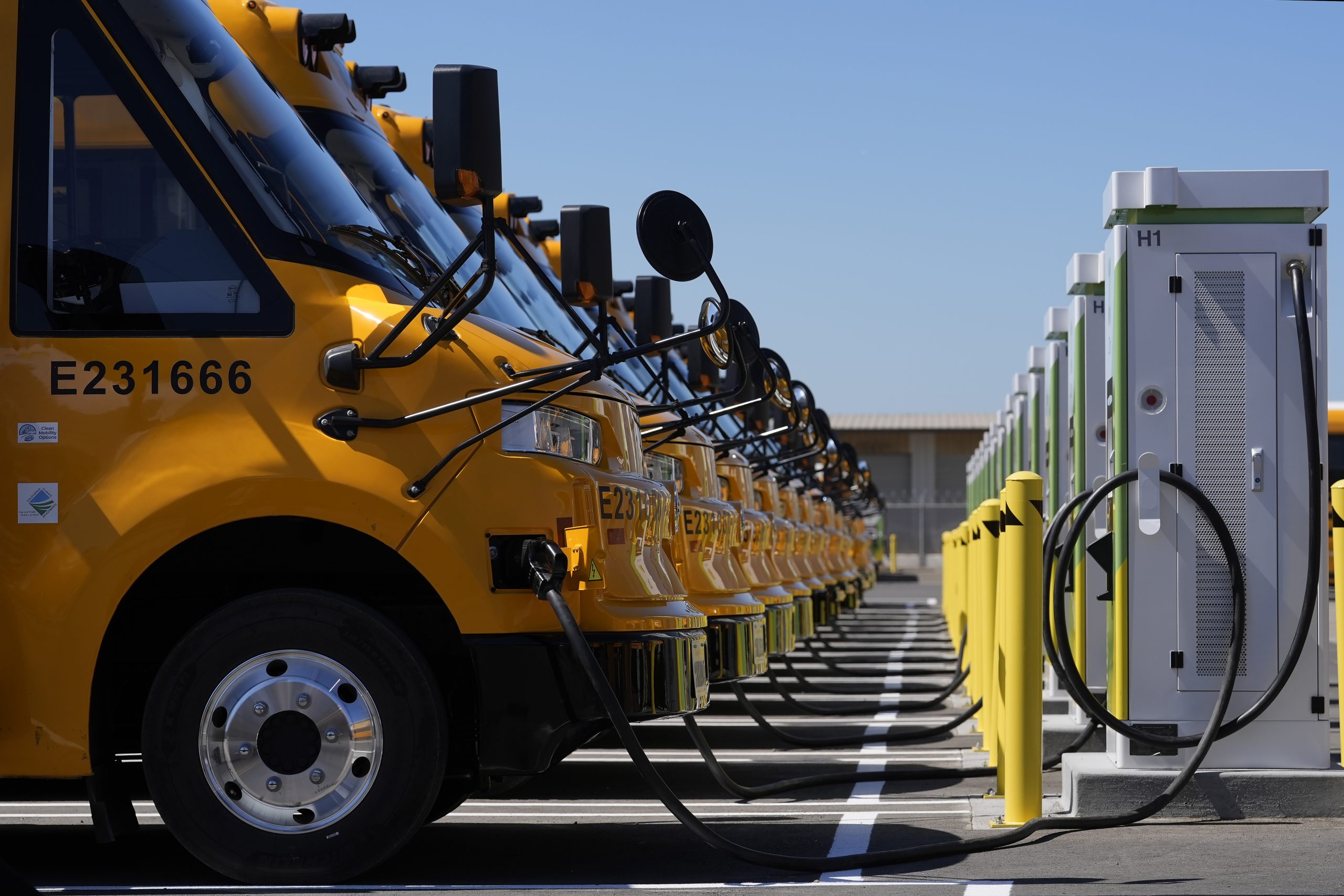
Denver expected to receive tax credits via the Inflation Reduction Act for an additional 25 electric school buses. President Donald Trump attempted to freeze clean energy funds through the IRA in his first days in office. Kittle, the district’s executive director of sustainability, also considered applying for tax credit-like payments for energy-efficient heat pumps for the district’s older buildings that lack air conditioning. And she’d intended to apply this spring for a nearly $12 million grant through Renew America’s Schools, a Department of Energy program to help schools become more energy efficient. Staff working on that program have left and its future is uncertain.
“I think we’re all in shock,” said Kittle. “It’s like someone put us in a snow globe and shook us up, and now we’re asked to stand straight. And it’s like I don’t know how to stand straight right now.”
Since January, the Trump administration has launched a broadside against efforts to reduce gases that cause climate change, including by freezing clean energy spending, slashing environmental staff and research, scrubbing the words “climate change” from websites, and rethinking decades of science showing the harms of global warming to human health and the planet. Experts and education leaders say those actions — some of which have been challenged in court — are disrupting, but not extinguishing, efforts by schools and colleges to curtail their emissions and reduce their toll on the planet.
Related: Want to read more about how climate change is shaping education? Subscribe to our free newsletter.
At the start of the year, the State University of New York was awarded $15 million to buy 350 electric vehicle charging stations. “We have yet to see the dollars,” said its chancellor, John B. King Jr. A webinar on the Department of Transportation grant program, which is funded by the bipartisan infrastructure act, was canceled. “It’s been radio silence,” said Carter Strickland, the SUNY chief sustainability officer.
The SUNY system, which owns a staggering 40 percent of New York State’s public buildings, had also planned to apply for IRA payments for a variety of projects to electrify campuses, reduce pollution and improve energy efficiency. In November, it applied for approximately $1.45 million for an Oneonta campus project that uses geothermal wells to provide heating and cooling. It still expects to get that money since the project is complete and the IRA remains law, but it can no longer count on payments for newer projects, King said.
“What the IRA did was turbocharged everything and gave many more players the ability to see themselves as part of a clean energy economy,” said Timothy Carter, president of Second Nature, a group that supports climate work in higher education. But the confusion that the Trump administration has sowed — even though the IRA has not been repealed — means both K-12 and higher education institutions are reconsidering clean energy projects.
There’s no count of how many colleges have sought funding through the IRA and bipartisan infrastructure act-funded programs, said Carter, but the work is spread across red and blue states, and some education systems have dozens of projects under construction. The University of California system, for example, filed applications for more than 70 projects, including a $1 billion project to replace UC Davis’s leaky and inefficient heating and cooling system and a project at UC Berkeley to phase out an old power plant and replace it with a microgrid.
“We remain hopeful that funding will be provided per the program provisions,” David Phillips, associate vice president for capital programs at the University of California, wrote in an email.
Sara Ross, co-founder of Undaunted K12, which helps school districts green their operations, said her group tells school leaders that for now, “energy tax credits are still the law of the land.”
But she expects those credits could be eliminated in the new tax bill that Congress is negotiating this year.
In the past, entities that begin construction on projects before any changes in a new law go into effect have been grandfathered in and still received that money, she said. “No promises,” Ross said, but historically that’s how such tax credit scenarios have worked. She said some school districts are speeding up projects to beat that possible deadline, while others are abandoning them.
There is some political movement to preserve clean energy tax credits. Roughly 85 percent of the private-sector dollars that have gone into clean energy projects are in GOP-led districts, according to a report last year. Some GOP lawmakers have advocated for maintaining that funding, which has contributed to a surge in renewable energy jobs.
Steven Bloom, assistant vice president of government relations with the American Council on Education, said that gives supporters of the IRA some hope. But he said that many higher education institutions are facing so much pain and uncertainty from other Trump administration actions, like the National Institutes of Health’s plan to slash overhead payments and investigations into alleged antisemitism, that unfortunately “climate investments may get pushed down the ladder of priorities in the near term.”
Another important vehicle for greening schools, the Renew America’s Schools grant program, was started in 2022 with $500 million for school districts. Many of the Department of Energy staff working on that effort have left, Ross said, and some school districts have not heard back about the status of funding for their projects.
In Massachusetts, the Lowell school district won a prize through the Renew America program that could unlock up to $15 million to help the district improve its aged facilities. The district’s facilities for the most part lack air conditioning and schools have been closed on occasion due to high temperatures.
Katherine Moses, the city of Lowell’s sustainability director, wrote in an email that the district had so far pocketed $300,000 that it is using for energy audits to identify inefficiencies and lay the groundwork for a larger investment. It’s unclear what could happen beyond that and if the district will receive more money. She said Lowell is proceeding according to the requirements of the grant “until we hear otherwise from DOE.”
More than 3,400 school districts have applied for money through programs created under the bipartisan infrastructure law and the IRA to electrify school buses. After a federal judge ruled against the administration’s freeze on clean energy spending, grants through those programs appear to have been unfrozen and districts have been able to access payments, said Sue Gander, director of the electric school bus initiative with the nonprofit World Resources Institute.
But rebates for electric buses are still stalled, she said. Districts are submitting forms to receive rebates, she said, “but there’s no communication coming back to them through the system about the status of their award or any indication that any payment that may have been requested is being provided.”
The Transportation and Energy departments and the Environmental Protection Agency, which runs the Clean School Bus Program, did not respond by deadline to requests for comment for this article.
King, of SUNY, noted that climate change is already negatively affecting young people and contributing to worsening disasters like floods and fires. For some faculty, staff and students, the backtracking from climate action at the federal level is stirring disappointment and fear, he said. “There is this very intense frustration that as a society we are stopping efforts to deal with what is truly an existential threat.”
Contact Caroline Preston at 212-870-8965, on Signal at CPreston.83 or via email at [email protected].
This story about clean energy was produced by The Hechinger Report, a nonprofit, independent news organization focused on inequality and innovation in education. Sign up for our climate and education newsletter.
What I’m reading:
My colleague Neal Morton traveled to northwest Colorado for a story on how phasing out coal-powered plants affects school budgets and career prospects for graduates. School districts haven’t done enough to plan for those changes or prepare students for alternate careers, he writes, and renewable energy projects are not popping up fast enough to smooth the financial pain.
Some 725,000 students at more than 1,000 schools faced school closures during the California wildfires in January, according to a new report from Undaunted K12 and EdTrust. The fire had a disproportionate impact on students living in poverty and from underrepresented backgrounds, the report says: Three-quarters of the affected students came from low-income households, and 66 percent were Hispanic.
The U.S. Coast Guard Academy removed the words “climate change” from its curriculum, reports Inside Climate News. The academy falls under the purview of the Department of Homeland Security, whose new director, Kristi Noem, issued a directive in February to “eliminate all climate change activities and the use of climate change terminology in DHS policies and programs.”
Schools with satisfactory heating systems reduce student absences by 3 percent and suspensions by 6 percent, and record a 5 percent increase in math scores, according to a study by researchers at the University at Albany, State University of New York. Schools with satisfactory cooling systems see an increase of 3 percent in reading scores.
Contact editor Caroline Preston at 212-870-8965, on Signal at CPreston.83 or via email at [email protected].
The Hechinger Report provides in-depth, fact-based, unbiased reporting on education that is free to all readers. But that doesn’t mean it’s free to produce. Our work keeps educators and the public informed about pressing issues at schools and on campuses throughout the country. We tell the whole story, even when the details are inconvenient. Help us keep doing that.
HOUSTON — When Jefferson Early Learning Center first opened on the corner of a busy intersection in the city’s west side in 2022, school officials started receiving calls from irritated residents.
Residents wanted to know, “‘Why aren’t you cutting the lawn?’ ‘Why aren’t you keeping the grounds?’” recalled Hilda Rodriguez, the assistant superintendent of support services for the Alief Independent School District, home to Jefferson and nearly 50 other schools west of Houston.
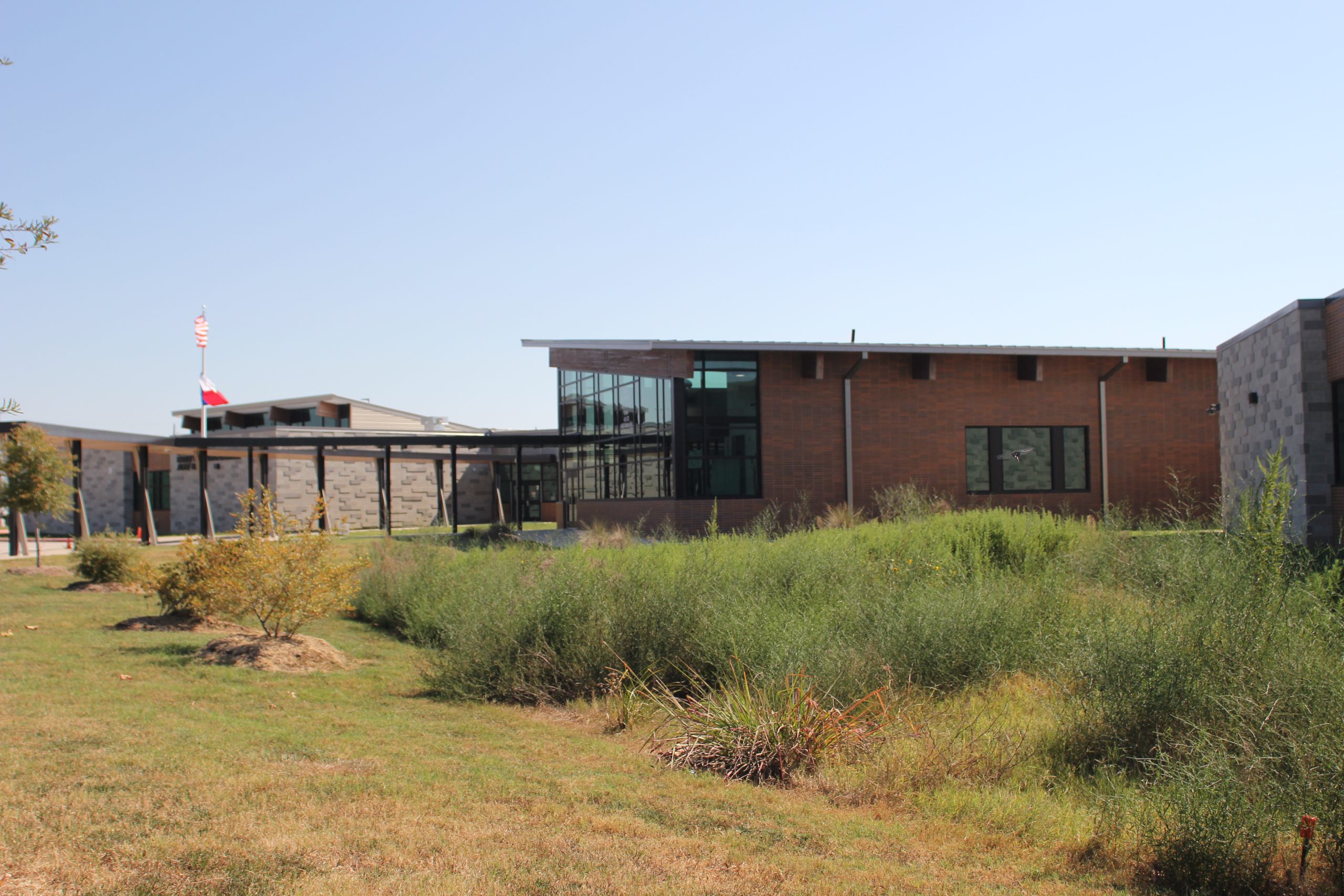
Although Jefferson’s neighbors didn’t know it, the tall grass surrounding the early learning center was part of a larger strategy to mitigate climate-related issues in a county where a major flood occurs nearly every two years and the number of days at or above 95 degrees has increased significantly over the past 25 years.
In addition to choosing durable, impact-resistant materials to help the school building withstand natural disasters, Jefferson’s designers focused on the surrounding land. They chose to restore much of the ground’s nearly 20 acres to native prairie lands and wetlands, creating a habitat for more than 200 plant and animal species.
A sign at the front of Jefferson Early Learning Center teaches children about the surrounding land, which was designed to withstand floods and heat. Credit: Jackie Mader/The Hechinger Report
That sort of habitat is especially beneficial in an area vulnerable to climate change events such as the torrential rains that regularly hit the city, said Melissa Turnbaugh, senior principal at PBK Architects, which designed Jefferson. “By putting in native prairies and grasses, we can now actually absorb three to four times as much water as if we had manicured grass,” she said.
Experts who study early learning and climate science say there is growing demand for solutions like these to address challenges related to climate change, such as floods, fires and hotter temperatures. Angie Garling, a senior vice president at the Low Income Investment Fund, which runs initiatives to help build and improve early learning facilities, said that when her organization solicited applications from child care programs needing facilities improvements, the vast majority had to do with climate.
“They were asking for things like HVAC systems, misting systems, air filtration systems, shade structures, turf … because they couldn’t maintain their lawn anymore because the cost of water was too high,” said Garling. Due to the extreme level of climate-related need, LIIF recently partnered with other organizations to launch a program to help fund renovations for child care providers in Harris County, where Houston is located.
Alief officials have already noticed benefits from the unconventional use of the school land. During the school year, students can walk on trails that weave through the prairie, learning about insects, plants and flowers. The native plants can withstand Houston’s infamous summers, when the average temperature sits above 90 degrees. That saves work, time and money for Alief’s maintenance team, which rarely needs to mow or water the land at Jefferson.
Over the next few years, Turnbaugh, the architect, hopes the presence of the prairies and grassland — rather than concrete or other surfaces that are known to reflect heat — will pay long-term dividends in “an overall heat-challenged area.”
“I think we’re going to see that we’re actually cooling the neighborhood,” she said. “I think there’s not only good carbon capture, but we’re actually being good neighbors.”
Over time, Jefferson’s neighbors have seemed to realize that, said Alief’s Rodriguez. The calls, for the most part, have stopped. “Once they understood, it became very clear to them that this was purposeful.”
This story about climate change solutions was produced by The Hechinger Report, a nonprofit, independent news organization focused on inequality and innovation in education. Sign up for the Hechinger newsletter.
The Hechinger Report provides in-depth, fact-based, unbiased reporting on education that is free to all readers. But that doesn’t mean it’s free to produce. Our work keeps educators and the public informed about pressing issues at schools and on campuses throughout the country. We tell the whole story, even when the details are inconvenient. Help us keep doing that.