Tag: Closer

  • All Eyes on Florida As State Gets One Step Closer to Nixing Vaccine Mandates – The 74

    All Eyes on Florida As State Gets One Step Closer to Nixing Vaccine Mandates – The 74


    Get stories like this delivered straight to your inbox. Sign up for The 74 Newsletter

    A week after Florida health officials brought the state one step closer to abolishing childhood vaccine mandates, pediatricians, parents and advocates are expressing alarm over the ramifications. 

    If such a change goes into effect, “pediatric hospitals will be overwhelmed with [childhood] infections that have virtually been non-existent for the last 40 years,” said Florida-based infectious disease specialist Frederick Southwick. Southwick attended a Dec. 12 public comment workshop on the issue hosted by the Florida Department of Health. 

    “We’re in trouble right now,” he added, pointing to falling vaccine rates and the likelihood that some diseases could become endemic. “We’re getting there, and this [ending the mandate] would just do-in little kids.”

    The session delved into the proposed language the department has drafted for a rule change that would do away with vaccine mandates for four key immunizations: varicella, more commonly known as chickenpox; hepatitis B, pneumococcal bacteria and Haemophilus influenzae type B, or HiB. Currently, children cannot attend school in Florida without proof of these four immunizations, among others, including the measles, mumps and rubella vaccine. 

    Although Florida is not considering removing the mandate for the MMR vaccine, health experts see the move it is contemplating as eroding childhood immunization generally. It comes when more than 300 people are being quarantined in South Carolina because of a burgeoning measles outbreak.

    Rana Alissa is the president of the Florida Chapter of the American Academy of Pediatrics. (American Academy of Pediatrics)

    Rana Alissa, president of the Florida Chapter of the American Academy of Pediatrics, was also in attendance to express her concerns. She told The 74 this week that thanks to the success of vaccines, she’s never had to treat some of these “horrible diseases,” including HiB, which can lead to meningitis.

    “Don’t make our kids — Florida’s kids — guinea pigs to teach me and my classmates and other pediatricians how to manage these diseases,” she implored.

    Tallahassee parent Cathy Mayfield lost her 18-year-old daughter, Lawson, to meningitis in 2009, a few months before she was supposed to leave for college and just before she was due for a booster shot. (At the time, the booster was not recommended until college, according to Mayfield.)

    “You just don’t realize until it happens to you,” she said.

    She hopes others will learn the importance of vaccinating their own kids from her family’s story. 

    Cathy Mayfield, and her daughter, Lawson, who died in 2009 from meningitis. (Cathy Mayfield)

    “All the information I learned through our tragedy about vaccinations made me very supportive of the safeguards [they] offer,” she said.

    “You’ve also got to realize,” Mayfield added, “that your decisions affect your community, and that’s something I think has gotten lost in … all this conversation and hesitancy about vaccinations.”

    Equating vaccine mandates to slavery

    The workshop, which was announced the day before Thanksgiving, was held in Panama City Beach, in the Florida Panhandle, far from the state’s main population centers. About 100 people showed up to the session, which was characterized by attendees as heated but civil. Northe Saunders, president of the pro-vaccine advocacy organization American Families for Vaccines and who was there, estimated that about 30 people spoke in favor of keeping the current vaccine mandates, while approximately 20 spoke in opposition.

    Some speakers opposed to vaccine mandates included conspiracy theories in their arguments, according to news reports and numerous people present at the workshop, echoing language heard from the federal government since Secretary Robert F. Kennedy Jr., a long-time vaccine skeptic, took over the Department of Health and Human Services.

    One attendee argued that giving children multiple jabs in a 30-day period “accounts to attempted murder,” according to NBC News. A number of others questioned if this year’s reported measles outbreaks, which resulted in the deaths of two school-age, unvaccinated children in Texas, had actually occurred.

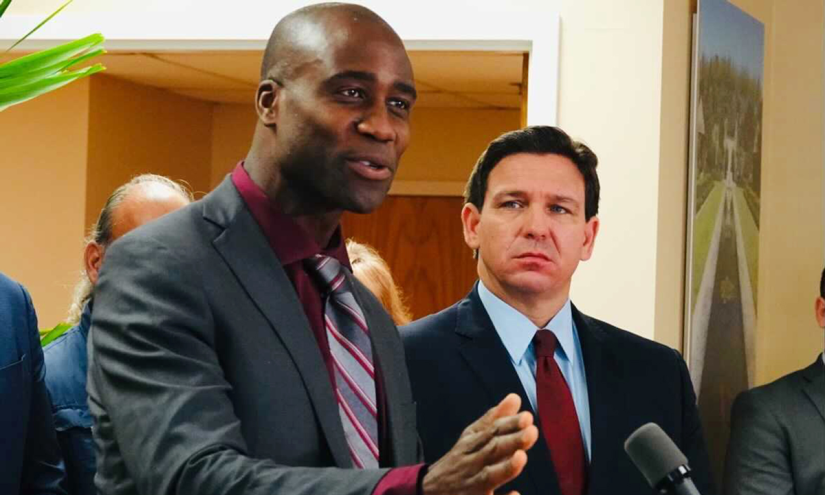
    Florida leaders’ desire to become the first state to end all vaccine mandates was announced in September by its surgeon general, Joseph A. Ladapo, standing beside Gov. Ron DeSantis in the gym of a private Christian high school. In sharing their plan, Ladapo claimed that “every last [mandate] is wrong and drips with disdain and slavery.” 

    Only four vaccines are mandated through a Department of Health rule and are therefore under Lapado’s purview. The remaining nine, which in addition to the MMR shot include polio, are part of state law and can only be changed through legislative action. 

    Experts told The 74 this is a much more difficult feat, one that state legislators — even conservative ones — don’t seem to have an appetite for. Richard Hughes, a George Washington University law professor and leading vaccine law expert, said such a legislative attempt would “warrant legal action.”

    ‘We really need to turn this around’ 

    The debate in Florida and other states over mandatory childhood immunization comes as the country teeters on the edge of losing its measles elimination status. This year alone has seen nearly 2,000 confirmed cases, the most since 2000, when measles was declared eliminated in the U.S. by the World Health Organization. Just over 10% of cases have led to hospitalization. The current South Carolina outbreak has infected at least 138 people, and among those forced to quarantine are students from nine schools. 

    Significant educational implications from the outbreaks emerged in a new study by the Annenberg Institute at Brown University, which found that absences increased 41% in a school district at the center of the West Texas outbreak, with larger effects among younger students.
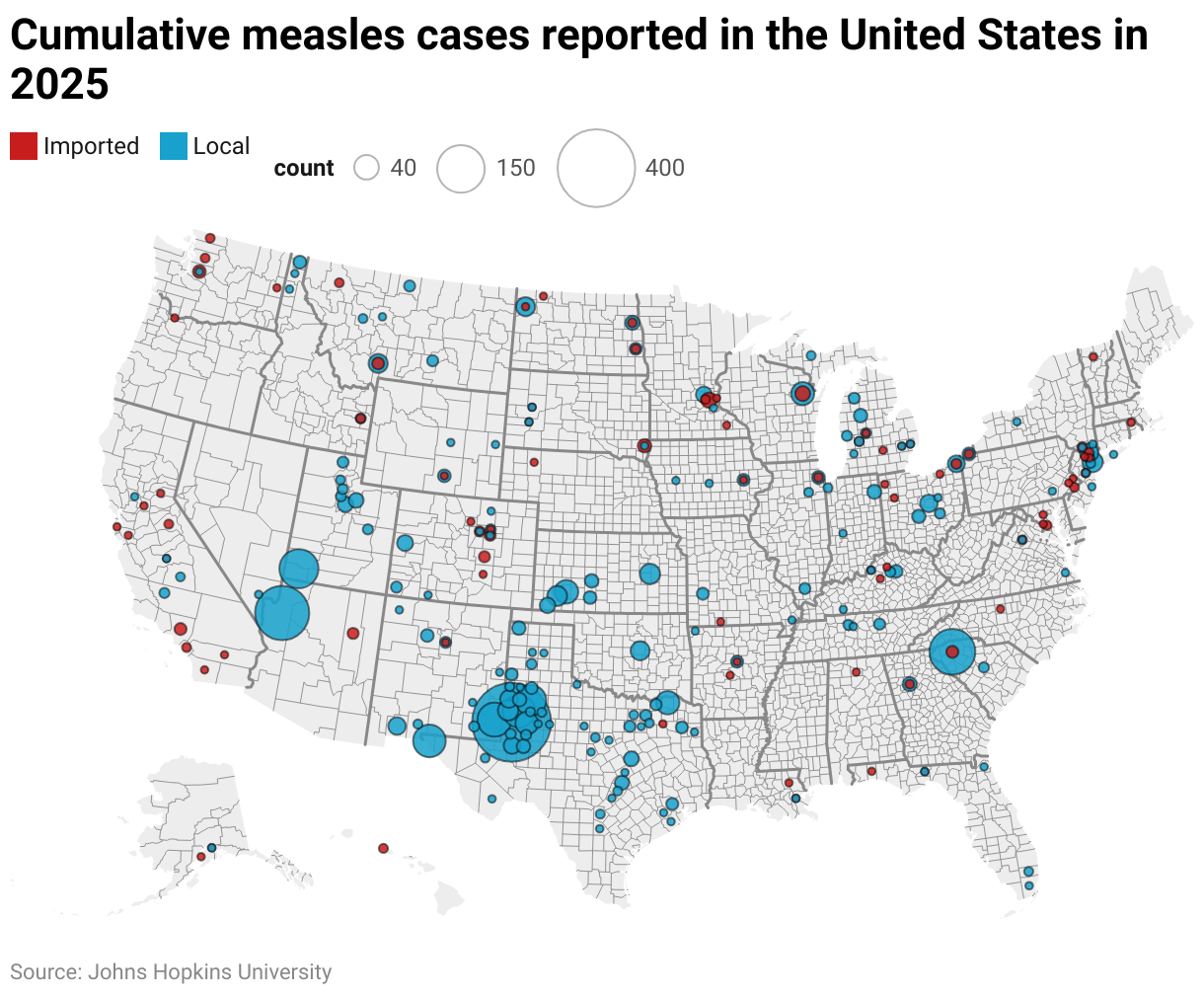
    The spread of measles is also a warning of the ramifications of dropping vaccine rates, according to William Moss, executive director at Johns Hopkins’ International Vaccine Access Center.

    “Measles often serves as what we [call] the canary in the coal mine,” he said. “It really identifies weaknesses in the immunization system and programs, because of its high contagiousness.”

    “Unfortunately, I see a perfect storm brewing for the resurgence of vaccine preventable diseases,” he added, “… We really need to turn this around.”

    Earlier this week, the Centers for Disease Control and Prevention got rid of a recommendation that all newborns receive the hepatitis B vaccine, and in the preceding months changed policies surrounding the measles, mumps, rubella and varicella (chickenpox) combination vaccine and this year’s COVID 19 booster — all based on recommendations from an advisory committee hand-picked by Kennedy. The universal birth dose of the hepatitis B vaccine, in place for decades, was credited with nearly eliminating the highly contagious and dangerous virus in infants.

    Lynn Nelson, the president of the National Association of School Nurses, fears that other, more conservative states will now look to Florida as an example.

    “We already have seen outbreaks all over, and they’re only going to escalate if you have an area of the country whose herd immunity levels slip down further than they already are, which I think will happen if those [anti-mandate rules] come into effect,” she said. “That, in combination with some of the other misinformation that’s coming out, people will feel validated in decisions not to immunize their children.”

    Florida’s Department of Health appears to be moving ahead to end requirements for the four vaccines it controls, despite a recent poll indicating nearly two-thirds of Floridians oppose the action. Proposed draft language presented at the Dec. 12 workshop would also allow parents to opt their kids out of the state’s immunization registry, Florida SHOTS, and expand exemptions. 

    Currently, all 50 states have vaccine requirements for children entering child care and schools. Parents across the country are able to apply for exemptions if their child is unable to get vaccinated for medical reasons and most states — including Florida — also have religious exemptions. Part of the proposed changes presented at the Dec. 12 meeting would add Florida to the 20 states that additionally have some form of personal belief exemptions, further widening parents’ ability to opt their kids out of routine vaccines. 

    The public comment period remains open through Dec. 22, after which the department will decide whether or not to move forward with the rule change. In the interim, advocates are pushing state health officials to conduct epidemiological research around the impact of removing the vaccine mandates and studies on the potential economic costs. Florida is heavily reliant on tourism and out-of-state visitors. 

    Without that information, pro-vaccine advocate Saunders said these critical public health care decisions will be made “at the whim of an appointed official.” 

    “The nation,” he added, “is looking at Florida.”


    Did you use this article in your work?

    We’d love to hear how The 74’s reporting is helping educators, researchers, and policymakers. Tell us how


    Source link

  • Labour takes steps to bring higher education and local skills closer together

    Labour takes steps to bring higher education and local skills closer together

    The post-16 white paper promised to strengthen statutory guidance on local skills improvement plans (LSIPs), including “clearer expectations on higher education providers to engage” and a move to make the plans cover skills all the way up to level 8.

    This greater roles for universities in LSIPs was gestured at in Skills England’s ministerial guidance, and even announced by Labour in opposition.

    Now, the revised guidance has been published – and the push for higher education providers to play a more central role has indeed materialised.

    This is a local shop

    LSIPs were introduced in the Skills and Post-16 Education Act under the last government as employer-owned priorities and actions around skills needs and the provision of technical education in a designated local area of England. Some 38 different plans were approved by the Secretary of State in summer 2023, with annual progress reports following – you can find them all on this page if you don’t mind navigating through some confusingly designed websites.

    That legislation also introduced mechanisms to assess how well education providers were contributing to the plans – for example, accountability agreements for further education colleges. For higher education institutions, the only mention of accountability in the old guidance was an enjoinder to make a note of activity related to LSIP priorities in strategic plans. The previous government framing around LSIPs was notably quiet on the role of higher education, as we’ve noted before – which is not to say that many HE institutions didn’t get involved, to greater or lesser extents (the progress reports linked above demonstrate this, though in a non-systematic way).

    LSIPs cover a three-year period, so a new round in summer 2026 is Labour’s big chance to reshape them in its preferred fashion. Today’s guidance is to be used for an LSIP draft submitted by the end of March, and – pending government approval – the new plans will be published in or around June next year.

    The areas covered by LSIPs, and the corresponding employer representative bodies (ERBs), have also been shifting – today we get the latest areas confirmed, now sensibly contiguous with local authority areas. An additional wrinkle that Labour announced in last year’s devolution white paper is for so-called strategic authorities (“mayoral and non-mayoral combined authorities, combined county authorities, and the Greater London Authority”) to take joint ownership of LSIPs, along with ERBs. Eventually everywhere will be in a strategic authority – one day – but today’s guidance is in many places split depending on whether the LSIP is or is not in a more devolved part of England.

    Best laid plans

    LSIPs are a complicated undertaking at the best of times – as the government puts it, they “unite employers, strategic authorities, higher education, further education and independent training providers and wider stakeholders in solving skills challenges together.” Their effectiveness in really driving change remains unproven but – in theory – they respond to calls for a skills system that is planned at a local rather than central government level (or one that is not planned at all).

    The new guidance confirms just quite how complex an endeavour putting a plan together has become. New LSIPs will need to join up with the industrial strategy and its sector plans, “as far as they relate to industries within the local area.” This will also create synergies (or cross-purposes) with the new local growth plans for mayoral authorities announced at the spending review, which focus on economic development, and the Local Get Britain Working Plans (GBWPs) which are supposed to be looking at “broader causes of economic inactivity.”

    The guidance references a need for a read-across to the clean energy jobs plan (the LSIPs legislation placed a requirement on the plans to consider the environment), but this presumably will equally apply all the other forthcoming workforce strategies – now renamed as jobs plans, keep up – that different sectors are being obliged to come up with for purposes of linking migration and skills.

    And in perhaps the most notable shift of all, the new Labour version of the LSIP is instructed to pay heed to the post-16 white paper, and specifically the new prime ministerial targets for participation in higher-level learning. This is even presented as the first bullet point in the list of what the Secretary of State will take into account in the approval process. Reading between the lines, it looks like the government will be wanting plans which are relatively bullish on the growth of provision, including – but not only – at levels 4 and 5.

    Skills England is tasked with monitoring and oversight, as well as providing copious data to inform the plans’ development.

    Get HE in

    As set out in the new guidance at least, each LSIP will function as a little microcosm of the more coherent and cooperative education and skills landscape that Labour is swinging for in its white paper vision. Whether the plans can really drive these reforms, or simply reflect their framing, is another question – but there’s similar language about asking both further and higher education providers to lean in and

    work together in support of the ambitions set out in their respective LSIP, creating a more coherent post-16 education system with better pathways and opportunities to progress from entry up to higher level skills, enabled by the Lifelong Learning Entitlement.

    As mentioned, LSIPs will now be required to run the full gamut of technical education from entry level up to level 8, having previously been limited to level 6 provision as a cut-off. Asking employers and local areas to think about postgraduate-level skills needs is a bit of a watershed moment, even if the government itself seems to have only limited appetite for much policy change, and it will be fascinating to see what comes of it.

    Perhaps it’s the paucity of much proper government support for the higher education sector in recent years which leads me to celebrate this, but the language in the guidance around higher education’s fit within local systems feels spot on, in terms of how the sector would like itself to be understood:

    Higher education providers (HEPs) are focal points for higher level technical skills, research and innovation. The differences in mission, specialisms and strategic objectives between different types of institutions mean that HEPs can add unique value to local skill systems in a variety of ways, including through industry partnerships, research-led innovation, and national and international development initiatives; as well as feeding in higher education specific intelligence, such as graduate outcomes or skills pipeline data, to complement and add to further education and employer data.

    What getting stuck in looks like

    Both HE and FE providers will be expected to play a role in LSIP governance. Core elements of the new plans will need to include details of how both types of providers have been engaged in shaping the priorities and actions, as well as identifying challenges, and set out how they will support implementation and review progress.

    The potential actions included within LSIPs are varied, but it’s anticipated that they will speak to both improving the local skills “offer” – including changes that higher and further education providers can make to better align provision with the skills needs of the area and to simplify access – and to raise awareness of existing provision, helping both employers and learners to better understand what’s available.

    On the latter, there’s a nice moment where the guidance makes a genuinely sensible suggestion:

    Where engagement between higher education providers and LSIPs has not previously taken place, ERBs (and Strategic Authorities) may find engaging with the heads of careers and employability (who tend to work on skills development and measuring skills impact) a useful starting point.

    Higher education institutions will be “expected” (more on that later) to help ERBs and local government structures help map higher technical skills needs, share information about what they currently offer, and reflect on how their provision can be more responsive. And help with evaluation, and use their subject expertise and industry links to help develop the technical skills of staff elsewhere. And employ their national and international reach to gather best practice. It’s almost as if universities are teeming hives of resource and capable people, rather than ivory towers intent on remaining aloof from their local areas.

    Plus there’s an expectation for collaboration with further education and with other higher education providers to, “where appropriate”,

    create a more strategically planned response to skills needs, leading to improved local and regional coverage and coordination.

    It all sounds very nice if it works – and it all helps to flesh out the how of the white paper’s grand but largely un-operationalised ideas.

    Who’s accountable then?

    In its promises to give universities a “seat at the table” in LSIPs, it sounded like there was the possibility of Labour introducing a degree of accountability for higher education institutions, in the same way that applies to further education colleges (both through accountability agreements with DfE, and in a growing emphasis on local skills in Ofsted inspections). Research from the Association of Colleges has previously highlighted universities’ lack of formal accountability within the LSIP system as a mild bone of contention among stakeholders.

    This hasn’t happened – as far as accountability applies to higher education institutions’ role in the plans, it will remain limited to an expectation that activity is recorded in strategic or business plans, as was previously the case. There is now also encouragement for HEIs to “publicly communicate their role in the LSIP in other ways.” What we do get much more of is an emphasis on those responsible for the plans to seek out and involve the higher education sector.

    We therefore run up against the same issues that dog Labour’s HE agenda elsewhere – there might be an attractive vision of collaboration and coherence, which all things being equal the sector would be well-disposed towards, but at a time of maximum turmoil and with incentives pointing in other directions, can it really gel? Otherwise put: is dedicating enormous resource, goodwill and strategic direction to local needs a prudent choice for institutions battling to survive, or would they be better off focusing on recruiting every single last international student they can get their hands on for the rest of the Parliament? To which we might also add that the retrenchment in higher education civic work that seems to be taking place in some areas has likely already damaged some of the required structures and led to the loss of needed expertise.

    It’s a similar story elsewhere in the system: local government structures have never been more stretched, devolution-related reforms are still in their infancy, and while employer groupings may be well-placed to say what skills they would like more of, are they really effective stewards of fiendishly complicated local projects involving multiple actors and spotty data?

    A set of 39 well thought through and carefully monitored LSIPs at the heart of a responsive ecosystem of employers, HE and FE, and local government – each with one eye on the industrial strategy, and another on an area’s own specific character – would do wonders for Labour’s education and skills agenda. But the conditions need to be in place for it to emerge, and right now it feels like quite the reach.

    Source link

  • The US is leading us closer to nuclear war (Jeffrey Sachs)

    The US is leading us closer to nuclear war (Jeffrey Sachs)

    Columbia University Professor Jeffrey Sachs says that the United States is steering the world toward disaster. Sachs served as the Director of the Earth Institute at Columbia University from 2002 to 2016 and is considered one of the world’s leading experts on
    economic development, global macroeconomics, and the fight against
    poverty.

    Source link

  • A Closer Look at This Growing Trend

    A Closer Look at This Growing Trend


    What Is A Charter School: A Closer Look at This Growing Trend


    Source link