Tag: Closing

  • Generative AI and the REF: closing the gap between policy and practice

    Generative AI and the REF: closing the gap between policy and practice

    This blog was kindly authored by Liam Earney, Managing Director, HE and Research, Jisc.

    The REF-AI report, which received funding from Research England and co-authored by Jisc and Centre for Higher Education Transformations (CHET), was designed to provide evidence to help the sector prepare for the next REF. Its findings show that Generative AI is already shaping the approaches that universities adopt. Some approaches are cautious and exploratory, some are inventive and innovative, and most of it is happening quietly in the background. GenAI in research practice is no longer theoretical; it is part of the day-to-day reality of research, and research assessment.

    For Jisc, some of the findings in the report are unsurprising. We see every day how digital capability is uneven across the sector, and how new tools arrive before governance has had a chance to catch up. The report highlights an important gap between emerging practice and policy – a gap that the sector can now work collaboratively to close. UKRI has already issued guidance on generative AI use in funding applications and assessment: emphasising honesty, rigour, transparency, and confidentiality. Yet the REF context still lacks equivalent clarity, leaving institutions to interpret best practice alone. This work was funded by Research England to inform future guidance and support, ensuring that the sector has the evidence it needs to navigate GenAI responsibly.

    The REF-AI report rightly places integrity at the heart of its recommendations. Recommendation 1 is critical to support transparency and avoid misunderstandings: every university should publish a clear policy on using Generative AI in research, and specifically in REF work. That policy should outline what is acceptable and require staff to disclose when AI has helped shape a submission.

    This is about trust and about laying the groundwork for a fair assessment system. At present, too much GenAI use is happening under the radar, without shared language or common expectations. Clarity and consistency will help maintain trust in an exercise that underpins the distribution of public research funding.

    Unpicking a patchwork of inconsistencies

    We now have insight into real practice across UK universities. Some are already using GenAI to trawl for impact evidence, to help shape narratives, and even to review or score outputs. Others are experimenting with bespoke tools or home-grown systems designed to streamline their internal processes.

    This kind of activity is usually driven by good intentions. Teams are trying to cope with rising workloads and the increased complexity that comes with each REF cycle. But when different institutions use different tools in different ways, the result is not greater clarity. It is a patchwork of inconsistent practices and a risk that those involved do not clearly understand the role GenAI has played.

    The report notes that most universities still lack formal guidance and that internal policy discussions are only just beginning. In fact, practice has moved so far ahead of governance that many colleagues are unaware of how much GenAI is already embedded in their own institution’s REF preparation, or for professional services, how much GenAI is already being used by their researchers.

    The sector digital divide

    This is where the sector can work together, with support from Jisc and others, to help narrow the divide that exists. The survey results tell us that many academics are deeply sceptical of GenAI in almost every part of the REF. Strong disagreement is common and, in some areas, reaches seventy per cent or more. Only a small minority sees value in GenAI for developing impact case studies.

    In contrast, interviews with senior leaders reveal a growing sense that institutions cannot afford to ignore this technology. Several Pro Vice Chancellors told us that GenAI is here to stay and that the sector has a responsibility to work out how to use it safely and responsibly.

    This tension is familiar to Jisc. GenAI literacy is uneven, as is confidence, and even general digital capability. Our role is to help universities navigate that unevenness. In learning and teaching, this need is well understood, with our AI literacy programme for teaching staff well established. The REF AI findings make clear that similar support will be needed for research staff.

    Why national action matters

    If we leave GenAI use entirely to local experimentation, we will widen the digital divide between those who can invest in bespoke tools and those who cannot. The extent to which institutions can benefit from GenAI is tightly bound to their resources and existing expertise. A national research assessment exercise cannot afford to leave that unaddressed.

    We also need to address research integrity, and that should be the foundation for anything we do next. If the sector wants a safe and fair path forward, then transparency must come first. That is why Recommendation 1 matters. The report suggests universities should consider steps such as:

    • define where GenAI can and cannot be used
    • require disclosure of GenAI involvement in REF related work
    • embed these decisions into their broader research integrity and ethics frameworks

    As the report notes that current thinking about GenAI rarely connects with responsible research assessment initiatives such as DORA or CoARA, that gap has to close.

    Creating the conditions for innovation

    These steps do not limit innovation; they make innovation possible in a responsible way. At Jisc we already hear from institutions looking for advice on secure, trustworthy GenAI environments. They want support that will enable experimentation without compromising data protection, confidentiality or research ethics. They want clarity on how to balance efficiency gains with academic oversight. And they want to avoid replicating the mistakes of early digital adoption, where local solutions grew faster than shared standards.

    The REF AI report gives the sector the evidence it needs to move from informal practice to a clear, managed approach.

    The next REF will arrive at a time of major financial strain and major technological change. GenAI can help reduce burden and improve consistency, but only if it is used transparently and with a shared commitment to integrity. With the right safeguards, GenAI could support fairness in the assessment of UK research.

    From Jisc’s perspective, this is the moment to work together. Universities need policies. Panels need guidance. And the sector will need shared infrastructure that levels the field rather than widening existing gaps.

    Source link

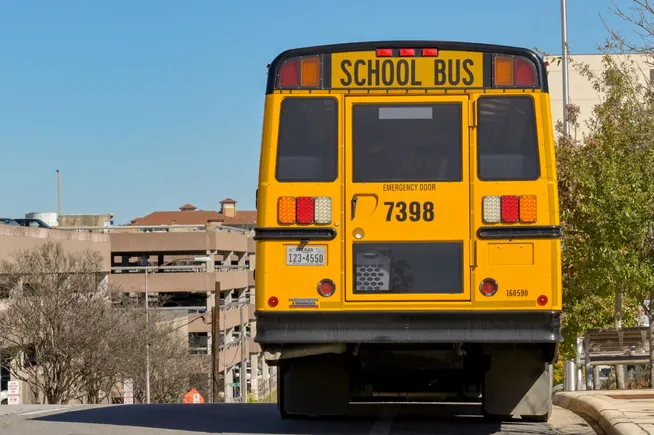
  • Austin ISD is closing 10 schools amid enrollment challenges

    Austin ISD is closing 10 schools amid enrollment challenges

    This audio is auto-generated. Please let us know if you have feedback.

    Dive Brief:

    • Austin Independent School District’s board of trustees approved a plan Thursday evening to close 10 schools in the Texas district by the 2026-27 school year in the midst of ongoing enrollment declines. 
    • The closures will impact nearly 3,800 students who will be reassigned to new schools in the district and the plan will cut 6,319 open seats, according to Austin ISD.
    • The move is expected to save the district $21.5 million, according to Austin ISD Superintendent Matias Segura during the Thursday board meeting. That amount more than covers the district’s budget deficit of $19.7 million this school year.  

    Dive Insight:

    Segura said during the board meeting that developing and carrying out this school closure plan has been “a very difficult process.” 

    Most of the schools impacted by closures are at the elementary level, according to the district.

    Segura also said he wished the district didn’t have to make this decision, “but the pressures are gargantuan.”

    Austin ISD instructed 72,700 students across 113 schools in 2024-25.

    When Austin ISD first announced it was considering school closures and consolidations earlier this year, Segura emphasized that the district lost over 10,000 students within the past decade, which led to a total of 21,000 empty seats.

    While the district’s preliminary fall enrollment data has yet to be released by the Texas Education Agency, Austin ISD has said it’s likely that the number of students attending its schools will continue to drop. 

    In recent months the district considered several factors before proposing which schools should close, including size, condition, student enrollment and operational costs.

    Elsewhere in Texas, Houston Independent School District laid off and reassigned hundreds of its teachers “to align” them “with student enrollment” as the district had previously projected a drop in enrollment by about 8,000 students this school year. 

    Houston ISD, which is under the leadership of the state, initially planned to announce a proposal this fall to close some schools during the 2026-27 school year. However, the district announced last week that Superintendent Mike Miles told principals he was no longer going to recommend any school consolidations to the board for 2026-27. There still may be a small number of consolidations needed in future years, the district said in a video update on Wednesday. 

    Texas’ districts student enrollment declines are part of a larger trend across states and districts nationwide, with the downward trajectory straining budgets tied to per pupil funding. Reasons for declining enrollment vary by state and district. An ongoing decline in birthrates has been a common factor while other education leaders have cited this year’s federal immigration crackdown and newer school choice policies for detracting students from attending their public schools. 

    As a result, plans for school closures similar to Austin ISD’s and teacher layoffs as seen in Houston are rippling across large and small school districts— from Arizona’s Kyrene School District to Atlanta Public Schools and Florida’s Broward County Public Schools to Oregon’s Corvallis School District.

    Source link

  • Gates Foundation to Spend $200B Before Closing in 2045

    Gates Foundation to Spend $200B Before Closing in 2045

    Bill Gates is planning to close his philanthropic foundation in 2045, but not before he ramps up spending on health research and other humanitarian efforts.   

    STAT News reported Thursday that the Gates Foundation, which launched in 2000, will spend $200 billion over the next two decades—double the $100 billion it spent on global health, development, gender equity and other work during its first 25 years. The announcement comes amid President Trump’s directives to cut billions of dollars in federal research funding to universities, effectively shutter the United States Agency for International Development and withdraw the United States from the World Health Organization. 

    In an interview with The New York Times, Gates said some of those decisions stunned him and predicted that unless there’s a big reversal of the Trump administration’s policies, “we’ll probably go from 5 million to 6 million” child deaths a year instead of earlier projection that child deaths would decrease by one million. 

    “The world’s richest man has been involved in the deaths of the world’s poorest children,” he said, referring to the unelected billionaire bureaucrat Elon Musk, who runs the Department of Government of Efficiency, which ordered the decimation of USAID. “He put it in the wood chipper because he didn’t go to a party that weekend.”

    Over the next 20 years, the Gates Foundation will focus its resources on achieving three goals: that “no mom, child or baby dies of a preventable cause”; that “the next generation grows up in a world without deadly infectious diseases”; and that “hundreds of millions of people break free from poverty, putting more countries on a path to prosperity.”

    “There are too many urgent problems to solve for me to hold onto resources that could be used to help people. That is why I have decided to give my money back to society much faster than I had originally planned,” Gates, co-founder of Microsoft, wrote in a blog post. “I will give away virtually all my wealth through the Gates Foundation over the next 20 years to the cause of saving and improving lives around the world.”

    Source link

  • Trump signs order closing Education Department to ‘maximum extent appropriate’

    Trump signs order closing Education Department to ‘maximum extent appropriate’

    This audio is auto-generated. Please let us know if you have feedback.

    President Donald Trump on Thursday afternoon ordered U.S. Secretary of Education Linda McMahon to “take all necessary steps to facilitate the closure of the Department of Education,” marking the boldest push from the president to shut down the agency since its establishment under the Carter administration over four decades ago. 

    Trump also said prior to the signing that he intends to disperse the department’s core functions — such as Pell Grants, Title I funding, and providing funding and resources for students with disabilities — to other parts of the government. 

    “They’re going to be preserved in full and redistributed to various other agencies and departments that will take very good care of them,” he said. “My administration will take all lawful steps to shut down the department. We’re going to shut it down and shut it down as quickly as possible.” 

    “It’s doing us no good,” he added. 

    The directive was originally expected to be released earlier this month. It comes less than two weeks after the Trump administration, under Education Secretary Linda McMahon’s leadership, abruptly cut the department’s workforce by half, shuttered over half of its civil rights enforcement offices, and fired all but a handful of National Center for Education Statistics employees. 

    The layoffs preceding the Thursday order impacted nearly 1,300 workers in addition to the nearly 600 employees who accepted “buyouts.”

    Trump has repeatedly and forcefully threatened to shut down the department since his first term in the White House, citing what he has called the agency’s “bloated budget” and a need to return education control to the states. His push to dismantle the department is in line with the 2024 Republican agenda, which included closing the department to “let the States run our educational system as it should be run.”

    In a Thursday speech, just prior to signing the order, Trump also cited low student test scores as reason to close the department. 

    “After 45 years, the United States spends more money in education by far than any other country, and spends, likewise, by far, more money per pupil than any country,” he said. “But yet we rank near the bottom of the list in terms of success. That’s where we are — like it or not — and we’ve been there for a long time.”

    Abolishing the 45-year-old agency altogether, however, requires a Senate supermajority of 60 votes. A similar proposal from conservatives in the House failed in 2023 when 60 House Republicans joined Democrats to defeat the measure.

    Given the current closely divided Congress, many have considered it a longshot that lawmakers would approve the department’s demise.  

    However, in his Thursday speech, Trump said he hopes Democrats would be onboard if the legislation to officially close the department eventually comes before Congressional lawmakers.

    What will be impacted?

    Although the administration technically needs Congressional action to close the department, the Thursday order tells McMahon to push its closures “to the maximum extent appropriate and permitted by law.”

    The agency is responsible for a slew of programs key to school and college operations, including conducting federal civil rights investigations, overseeing federal student financial aid, and enforcing regulations on Title IX and other education laws. It is in charge of large programs that schools depend on, like Title I, which sends aid to low-income school districts, and the Individuals with Disabilities Education Act that supports special education services.   

    Following the layoffs earlier this month, the department claimed its key functions, including overseeing COVID-19 pandemic relief, wouldn’t be impacted. 

    “Closing the Department does not mean cutting off funds from those who depend on them — we will continue to support K-12 students, students with special needs, college student borrowers, and others who rely on essential programs,” said McMahon in a statement praising the executive order on Thursday.

    Source link

  • Closing a college with dignity (part 3) (opinion)

    Closing a college with dignity (part 3) (opinion)

    After a year of many last events, Cabrini University celebrated its final commencement ceremonies last May and a “legacy” event to ceremonially close the institution and pass the legacy to Villanova University, which purchased the campus. As the emotions have tempered, and Cabrini’s president and academic leadership team have moved on to new career opportunities, we offer these lessons learned for financially struggling colleges that may be facing the possibility of closure, as well as insights for colleges in positions of financial strength on how they can help.

    If Your College Is Struggling Financially

    The quickest route to a chaotic close is running out of cash. Depending on how liquid an institution is—a combination of how much actual cash it holds with how many assets it has that can quickly be converted to cash—running out of cash can happen suddenly. A constant awareness of liquidity is imperative to avoid such a terrible outcome, and any potential partner will ask how long the cash will last as a preliminary decision criterion.

    This is the third part of a three-part series. Parts 1 and 2 can be found here and here.

    For many institutions, the most accessible cash resource is the unrestricted portion of the endowment. This can be both a blessing and a curse. Some institutions today are actively drawing more on their endowment than the historic 4 to 5 percent in support of annual operations in order to solve potentially existential challenges (the blessing)—but if the revitalization effort fails, then institutional resources may not be available to preclude closure (the curse). Without the Villanova partnership, Cabrini would have faced a significant cash crunch, which would have forced very difficult choices, especially related to supporting employees in the final stages of closing.

    Rating agencies have also called out the growing amount of deferred maintenance colleges are facing. This is an in-the-weeds problem that many institutions are not addressing, at their great peril. In Cabrini’s case, we had to close a residence hall due to a heating system failure, and a heavily used campus road was so frequently repaired that it was difficult to traverse. We also could not provide competitive equipment for students in one of our most popular majors.

    For institutions on the brink, deferred maintenance can be a real deterrent when considering deal terms with potential partners. Villanova has announced that it will spend $75 million to upgrade the Cabrini campus.

    Here are some additional factors financially struggling institutions should consider:

    • Your accreditor will not tell you to close until it is too late. Cabrini did not receive any warnings from its accreditor in the decade prior to closure. The institution remained accredited by the Middle States Commission on Higher Education through graduating its final class and even moved through the required accreditation self-study process in the final year of operation. Do not rely on your accrediting body to make decisions for you.
    • Be honest and transparent with your campus community about enrollment and the college’s financial reality.
    • Consider the cash reserves necessary to close with dignity. Your expenditures will be higher than normal during the wind-down period. You will need to secure an excellent legal team with expertise in closing colleges. There will also be costs associated with exiting long-term contracts and licenses as well as severance and retention costs. Anticipating these increased costs and decreased revenues in the final year is critical to the success of the closure.
    • Anticipate that alumni may want to “save the college.” If you do not have a history of alumni making large gifts, these efforts will be unlikely solutions. When entertaining such possibilities, consider the amount necessary to raise not just to keep the institution open for another year, but to sustain operations over time.
    • Plan for a closing timeline, even if you are not certain you will close. Choosing the right time in the academic calendar to announce a closing is an especially challenging task. Primary consideration must be given to future educational opportunities for students, followed by maximizing employment opportunities for faculty and staff. If it is possible to announce a closing after the end of an academic year for two years into the future, that affords the opportunity to graduate juniors and seniors while preparing sophomores and first-year students for teach-out, and gives faculty up to two academic recruiting cycles, which is especially helpful for tenure-stream faculty. Having sufficient funding on hand is key to offering a two-year closing time frame, given that fiscal and human resources start to deplete as soon as a closing announcement is made.
    • As you plan for a closing timeline, consider the ethical responsibility to deliver a robust student experience. In its final year, Cabrini prioritized using funds for student events and experiences and reduced or eliminated budgets for employee travel, professional memberships and other non-student-facing services.

    If Your College Is Preparing for a Closure Announcement

    If your institution has decided to close, consider the following steps before you announce:

    • Build a website with critical information so that all of your constituents—students, employees, alumni and donors—can receive information. Continue to add to FAQs as more information becomes available.
    • Keep the circle of people who know about the impending closure small to avoid leaks prior to having as much planned as possible. Using nondisclosure agreements is critical. While holding this news may be questioned as unethical, the decision to wait to announce until plans are in place provides the community with more clarity on partner/teach-out institutions, career counseling, mental health counseling, health care, plans for severance and retention agreements, etc.
    • Consider hiring a crisis management team to prepare you for the announcement.
    • Plan to host open forums (virtually and in person) for parents, students and faculty to support their transitions immediately after the closure announcement. Understand that the messaging may not be absorbed when people are upset. Post recordings or PowerPoint slides on your closing website.
    • Plan for mental health support for employees and students, with both in-person and virtual options.
    • Plan for the many human resources issues you will need to consider. Compliance with the federal WARN Act is crucial in order to not incur additional costs. If you provide a notice of a year or more, you will want to retain key faculty and staff. Simultaneously, you will want some melt of employees to align with the melt of students (and tuition income) that will occur. This means you will need to consider both retention and severance agreements, while complying with terms laid out in employee handbooks.
    • Remain in close communication with your accreditor(s) and continue to report on compliance with standards as well as the closure plan. They have processes and expectations that colleges need to honor in order to retain accreditation for the final graduating class. As noted earlier, Cabrini had to complete a regularly scheduled Middle States self-study process, including the site team visit, in the final year of operation, while also completing processes related to closure and the asset purchase agreement.
    • Anticipate that there will be additional administrative tasks to finish after students and faculty leave. In this regard, there will seem to be multiple dates that feel like an ending—the date when academics cease and degrees are no longer awarded, the date when accreditation ends, the date when a transaction occurs for the property, the date the endowment transfer process happens through the Orphan’s Court—a process specific to Pennsylvania—and more. Audits, financial aid close-out and reporting requirements, tasks related to tax compliance, discontinuation of vendor relationships, transition of student records, withdrawal from the federal international student program and other administrative tasks will need to occur after most campus employees have been terminated. Understanding these requirements and creating a checklist for closure will keep your leadership team on track.

    If Your College Has Announced Plans to Close

    • Request department chairs work collaboratively to identify students who can realistically graduate prior to closing, determine what courses these students need and schedule classes to meet these needs. Closing institutions need to be flexible but not sacrifice the quality of the education. Modifying degree requirements to the point where students do not have the skills and knowledge that is expected of the degree is unethical.
    • Adapt catalog policies to ensure due process for managing grievances, academic standing determinations, grade disputes/changes, hearing requests, etc., within the timeline for closure. Once closed, transcripts cannot be modified.
    • Establish a working group on record retention to determine what needs to shift to another institution or agency and what needs to be shredded.
    • Prepare faculty and staff on campus to assume many roles as their faculty and staff colleagues depart throughout the year.
    • Anticipate that alumni will suddenly be more engaged than they have been in recent years. Your focus must remain on taking care of your current employees and students, who deserve a robust experience.
    • Give yourself grace and extend that to everyone around you. Everyone is experiencing some level of grief, stress and trauma. Be flexible even while knowing that at times you will need to have firm deadlines to respect people’s bandwidth and complete processes. Understand that students and employees will react differently and move on different schedules.
    • Have hope. There are moments of your closure period that will be horrific. There is no other way to describe it. There will also be moments of solidarity and togetherness. Ultimately, a closure can be a period of forced growth for many people. Many Cabrini employees found a new job opportunity that advanced their careers.

    If Your College Isn’t Closing, but a College in Your Area Is

    • If a college or university in your area is closing or is rumored to be closing, talk with them to ask how you can best support them. Before posting information on your website or speaking with the media about welcoming the students from the closing college or university, ask the closing institution directly about how you can best support their students and employees for a smooth transition.
    • Working with institutions to establish memorandums of understanding for supportive transitioning of students is important, as is acting with transparency and honesty. Unfortunately, there were institutions that exhibited predatory behaviors toward Cabrini students with flashy, false promises that led vulnerable students to spend more time and money to complete their degrees. Don’t be that institution.
    • If a college provides a notice period, understand that actively recruiting their students or employees prior to closure might negatively impact the closing institution. If you would like to offer employment to someone at a closing institution who is in a key position such as director of financial aid or registrar, consider communicating with the closing institution to seek a solution that can provide a transition period, possibly splitting the employee’s time between the two institutions.

    Final Reflection

    In an ideal world of higher education, no institution would have to endure a sudden or planned closure. However, the current financial and enrollment pictures at many colleges and universities point to a harsher reality.

    For others working at institutions that are exploring mergers, acquisitions or closures, do not work in isolation. There are now many higher education professionals who have lived through this experience who can offer advice confidentially and understand the need for nondisclosure. Higher education will be stronger if we work together, not in competition, and recognize our shared mission to serve students and our communities.

    The final two years were a very difficult time for Cabrini University’s community. The institution’s leadership is forever grateful to the faculty and staff, all of whom rose to the occasion to embrace the many lasts. Their selfless work and sacrifice will serve as a legacy for Cabrini, as will the colleges where Cabrini students chose to continue their educations and the institutions where former Cabrini faculty and staff will continue their careers.

    Helen Drinan served as interim president of Cabrini University. Previously, she served as president of Simmons University.

    Michelle Filling-Brown is associate vice provost for integrated student experience and a teaching professor in the Department of English at Villanova University. She formerly served as chief academic officer/dean for academic affairs at Cabrini University, where she also served as a faculty member for 16 years.

    Richie Gebauer is dean of student success at Bryn Mawr College. He formerly served as assistant dean of retention and student success at Cabrini University.

    Erin McLaughlin is the interim dean of the College of Arts, Education and Humanities at DeSales University. She formerly served as associate dean for the School of Business, Education and Professional Studies at Cabrini University, where she also served as a faculty member for 16 years.

    Kimberly Boyd is assistant professor of biology and anatomy and physiology at Delaware County Community College. She formerly served as dean of retention and student success at Cabrini University, where she also served as a faculty member for 25 years.

    Missy Terlecki is dean of the School of Professional and Applied Psychology at Philadelphia College of Osteopathic Medicine. She formerly served as associate dean for the School of Arts and Sciences at Cabrini University, where she also served as a faculty member for 19 years.

    Lynda Buzzard is associate vice president and controller at Villanova University. Previously, she served as the vice president of finance and administration at Cabrini University in its final year.

    Source link

  • Closing a college with dignity, part 1 (opinion)

    Closing a college with dignity, part 1 (opinion)

    Founded in 1957, Cabrini University, a small, tuition-driven Roman Catholic liberal arts institution located outside of Philadelphia, closed last June after providing a year’s notice of its impending closure. One of at least 14 nonprofit four-year colleges that announced closures in 2023, Cabrini announced a memorandum of understanding with Villanova University in June 2023, signed a definitive agreement in November 2023 and closed the transaction in June 2024.

    Through this transaction, Cabrini was afforded a final year of operation prior to closure. Villanova acquired Cabrini’s assets, including a 112-acre property, and committed to preserving the legacy of Cabrini through commitments like naming its new campus Villanova University Cabrini Campus, providing Cabrini representatives two seats on the Villanova board for up to two successive five-year terms, stewarding the Mother Cabrini special collections and planning events for Cabrini alumni.

    In this three-part essay, we—Cabrini’s former interim president, Helen Drinan, and former members of the academic leadership team—describe our decision to seek a strategic partner, the planning that went into a dignified closure and the ways we supported employees and students through a mission-driven plan to help them transition in terms of their careers and academic studies.

    It was a dignified closing for an institution that began the 2022–23 academic year facing significant obstacles to its survival. As the university welcomed a new interim president, Cabrini’s profile reflected five metrics used to identify rising pressure on nonprofit higher education institutions with fewer than 5,000 students.

    • High acceptance rate: It increased from 72 percent in 2018 to 79 percent in 2022.
    • Low yield on offers of admission: It declined from 17 percent in 2018 to 11 percent in 2022.
    • Falling enrollment: 29.3 percent decline between 2018 (2,283) and 2022 (1,613).
    • Rising institutional aid: Institutional aid awards increased by about 38 percent from 2018 to 2022 ($10,595 per student in 2018 to $14,638 per student in 2022), outpacing small increases in tuition. In 2022–23, 39 percent of Cabrini’s undergraduate students were receiving Pell Grants and 99 percent received institutional grant or scholarship aid.
    • Persistent operating losses: Eight years of operating losses from 2015 to 2022, ranging between $1.9 million and $10 million, topped off by a fiscal year 2023 budget awaiting approval that included its highest-ever multimillion-dollar operating loss.

    Enrollment and financial operating data of course tell only part of the story of a troubled institution. Many leadership decisions made over time cumulatively result in these kinds of outcomes. At least three common practices have emerged as critical leadership traps in higher education: nonstrategic launches of initiatives intended to increase revenues or decrease costs, consistent drawdowns of the endowment to cover annual losses and accumulation of deferred maintenance. All three of these institution-threatening practices were occurring at Cabrini over the eight years leading to the summer of 2022, when we realized time was running out.

    The Road to Closure

    Sound strategic planning for a tuition-dependent, modestly endowed, indebted institution like Cabrini depends on choosing opportunities that expand on existing expertise, require minimal capital outlays and are tested for success within a three-year time frame. At Cabrini, too many new initiatives, well beyond historic areas of expertise, were launched in the eight years prior to closure, resulting in a laundry list of only loosely related activities: a targeted international student recruitment program, graduate online education, revived adult degree completion offerings, new doctoral programs, a new residence hall and parking garage, efforts to qualify as a Hispanic-serving institution, and the start-up of a new undergraduate nursing program. All this occurred while the university took on additional debt for construction activity and used federal pandemic relief funding to fill revenue gaps, pushing the institution to the point where it faced its largest-ever annual deficit and rapidly declining cash on hand going into fiscal year 2023.

    In summer 2022, Cabrini’s Board of Trustees approved a four-month budget delay, and the senior leadership team sought to identify $10 million in revenue and expense improvements. In September, the senior leadership team presented the board with two alternative paths: 1) a plan to operate for three-plus years to assess the financial feasibility of staying independent or 2) a plan to find the best possible partner to help support the institution financially. Past strategies such as voluntary separation programs, involuntary separations and the hiring of external consultants all yielded unsuccessful results and negatively impacted employee morale. The best opportunities for maintaining independence involved growing revenues, reducing costs (with the understanding that previous attempts to do so were insufficient), capitalizing on real estate and seeking nontraditional revenue streams.

    The Penultimate Year

    Prior to the decision to close, while institutional leaders remained focused on staying viable, senior leadership offered an exclusive interview to The Philadelphia Inquirer in the spirit of transparency, announcing very aggressive organizational changes and plans for new programs and publicly expressing an interest in partnerships. Such an approach, we realized, would raise further questions about the future of the institution: The truth is that once an institution acknowledges difficulties, questions will proliferate, and it is best to be transparent and open when responding.

    As fall 2022 moved into winter, our leadership team became aware of three negative trends: 1) efforts to recruit the new first-year class were falling short of enrollment targets, 2) new program launches took longer than expected, creating a lag in new revenue, attributable in large part to reduced marketing resources, and 3) partnership conversations yielded few opportunities serious enough to pursue. Two institutions were seriously considering partnering with us, allowing for academic and possibly athletic continuity. However, in both cases, potential partner boards determined they were “unable to buy Cabrini’s problems” because of its declining cash and indebtedness.

    Given the direction of these conversations, we concluded that the institution was not financially viable. We determined that the best opportunity to preserve Cabrini’s legacy and ensure students, faculty and staff would experience a full academic year prior to closure was to readily agree to the MOU with Villanova, the initial step toward an asset purchase agreement and a graceful closure.

    Villanova’s strategic direction proved key to the partnership decision. Villanova’s strength as an Augustinian institution in the Catholic tradition aligned beautifully with Cabrini’s heritage, and the missions of both institutions made for wonderful integration opportunities in such areas as immigration, leadership and services for marginalized populations. Cabrini’s real estate offered the expansion opportunities Villanova desired in close proximity to its beautifully built-out campus. And Villanova’s financial resources enabled Cabrini to deliver a robust final year to all its students, faculty and staff, the value of which is beyond measure.

    The university graduated a senior class in May 2024, offered placements to every student interested in continuing their education and supported its workforce with a combination of job-seeking resources, retention payments and severance, none of which would have been possible without Villanova’s remarkable engagement. (Part 2 of this series provides further detail about Cabrini’s final year and transition planning.)

    Part of why we think the partnership worked was because we, as the institutional leadership team, effectively checked our egos at the door. We knew our focus had to be on what was best for the institution, not our own personal outcomes, to credibly lead the university through closure. A key lesson for other institutions exploring acquisitions or mergers is that the future expectations of the sitting president as well as of board members in a new organization should be clarified early in partner conversations; otherwise, personal expectations could present an obstacle to the transaction’s success.

    Another lesson for any struggling institution is to think critically about the kinds of partner institutions that would find you attractive, how much leverage you might have and how much you can do to minimize your downsides. This is not typically work you can do as you face the threat of immediate closure. For institutions that may be financially stable but are experiencing some of the indicators of risk and stress mentioned at the start of this essay, the task of thoughtfully identifying potential partners could be an important activity for trustees and senior leadership teams to pursue.

    Editor’s note: The second and third installments of the series will be published on the next two Wednesdays.

    Helen Drinan served as interim president of Cabrini University. Previously, she served as president of Simmons University.

    Michelle Filling-Brown is associate vice provost for integrated student experience and a teaching professor in the Department of English at Villanova University. She formerly served as chief academic officer/dean for academic affairs at Cabrini University, where she also served as a faculty member for 16 years.

    Richie Gebauer is dean of student success at Bryn Mawr College. He formerly served as assistant dean of retention and student success at Cabrini University.

    Erin McLaughlin is the interim dean of the College of Arts, Education and Humanities at DeSales University. She formerly served as associate dean for the School of Business, Education and Professional Studies at Cabrini University, where she also served as a faculty member for 16 years.

    Kimberly Boyd is assistant professor of biology and anatomy and physiology at Delaware County Community College. She formerly served as dean of retention and student success at Cabrini University, where she also served as a faculty member for 25 years.

    Missy Terlecki is dean of the School of Professional and Applied Psychology at Philadelphia College of Osteopathic Medicine. She formerly served as associate dean for the School of Arts and Sciences at Cabrini University, where she also served as a faculty member for 19 years.

    Lynda Buzzard is associate vice president and controller at Villanova University. Previously, she served as the vice president of finance and administration at Cabrini University in its final year.

    Source link