Tag: Coaching

  • Academic coaching is data-driven support for students in the dark

    Academic coaching is data-driven support for students in the dark

    Universities offer a wide range of support to students – lecturers’ office hours, personal tutors, study skills advisors, peer-mentoring officers, mental health and wellbeing specialists, and more.

    But even with these services in place, some students still feel they are falling through the cracks.

    Why? One of the most common pieces of student feedback might offer a clue – “I wish I had known you and come to you earlier”.

    Within the existing system, most forms of support rely on students to take the first step – to reach out, refer themselves, or report a problem.

    But not all students can or will: some are unsure who to turn to, others worry about being judged, and many feel too overwhelmed to even begin. These are the students who often disappear from view – not because support does not exist, but because they cannot access it in time.

    Meanwhile, academics are stretched thin by competing research and teaching demands, and support teams – brilliant though they are – can only respond once a student enters this enquiry-response support system.

    Systematic support that requires courage

    As a result, students struggling silently often go unnoticed: for those “students in the dark”, there is often no obvious red flag for support services to act on until it is too late.

    NSS data in recent years reveal a clear pattern of student dissatisfaction with support around feedback and independent study, indicating a growing concern and demand for help outside the classroom.

    While the existing framework works well for those confident and proactive students, without more inclusive and personalised mechanisms in place, we risk missing the very group who would benefit most from early, student-centred support.

    This is where academic coaching comes in. One of its most distinctive features is that it uses data not as an outcome, but as a starting point. At Buckinghamshire New University, Academic Coaches work with an ecosystem of live data – attendance patterns, assessment outcomes, and engagement time with the VLE – collaborating closely with data intelligence and student experience teams to turn these signals into timely action.

    While our academic coaching model is still in its early phase, we have developed simulated student personae based on common disengagement patterns and feedback from colleagues. These hypothetical profiles help us shape our early intervention strategies and continuously polish our academic coaching model.

    For example, “Joseph”, a first-year undergraduate (level 4) commuter student, stops logging into the VLE midway through the term. Their engagement drops from above cohort average to zero and stays that way for a week. In the current system, this might pass unnoticed.

    But through live data monitoring, we can spot this shift and reach out – not to reprimand but to check in with empathy. Having been through the student years, many of us know, and even still remember, what it is like to feel overwhelmed, isolated, or simply lost in a new environment. The academic coaching model allows us to offer a gentle point of re-entry with either academic or pastoral support.

    One thing to clarify – data alone does not diagnose the problem – but it does help identify when something has changed. It flags patterns that suggest a student might be struggling silently, giving us the opportunity to intervene before there is a formal cause for concern. From there, we Academic Coaches reach out with an attentive touch: not with a warning, but with an invitation.

    This is what makes the model both scalable and targeted. Instead of waiting for students to self-refer or relying on word of mouth, we can direct time and support where it is likely to matter most – early, quietly, and personally.

    Most importantly, academic coaching does not reduce students to data points. It uses data to ask the right questions and to guide an appropriate response. Why has this student disengaged? Perhaps something in their life has changed.

    Our role is to notice this change and offer timely and empathetic support, or simply a listening ear, before the struggle becomes overwhelming. It is a model that recognises the earlier we notice and act, the greater the impact will be. Sometimes, the most effective student support begins not with a request, but with a well-timed email in the student’s inbox.

    Firefighting? Future-proofing

    The academic coaching model is not just about individual students – it is about rethinking how this sector approaches student support at a time of mounting pressure. As UK higher education institutions face financial constraints, rising demand, and increasing complexity in students’ needs, academic coaching offers a student-centred and cost-effective intervention.

    It does not replace personal tutors or other academic or wellbeing services – instead, it complements them by stepping in earlier and guiding students toward appropriate support before a crisis hits.

    This model also helps relieve pressure on overstretched academic staff by providing a clearly defined, short-term role focused on proactive engagement – shifting the approach from reactive firefighting to preventative care.

    Fundamentally, academic coaching addresses a structural gap: some students start their university life already at a disadvantage – unsure how to fit into this new learning environment or make use of available support services to become independent learners – and the current system often makes it harder for them to catch up.

    While the existing framework tends to favour confident and well-connected students, academic coaching helps rebalance the system by creating a more equitable pathway into support – one that is data-driven yet recognises and respects each student’s uniqueness. In a sector that urgently needs to do more with less, academic coaching is not just a compassionate gesture, but a future-facing venture.

    That said, academic coaching is not a silver bullet and it will not solve every problem or reach every student. From our discussions with colleagues and institutional counterparts, one of the biggest challenges identified – after using data to flag students – is actually getting them on board with the conversation.

    Like all interventions, academic coaching needs proper investment, training, interdepartmental cooperation, clear role boundaries, and a scalable framework for evaluating impact.

    But it is a timely, student-centred response to a gap that traditional structures often miss – a role designed to notice what is not being said, to act on early warning signs, and to offer students a safe place to re-engage.

    As resources tighten and expectations grow, university leadership must invest in smarter, more sensible forms of support. Academic coaching offers not just an added layer – it is a reimagining of how we gently guide students back on track before they drift too far from it.

    Source link

  • Transforming Classroom Discussions with Communication Practices from Health Coaching – Faculty Focus

    Transforming Classroom Discussions with Communication Practices from Health Coaching – Faculty Focus

    Source link

  • Transforming Classroom Discussions with Communication Practices from Health Coaching – Faculty Focus

    Transforming Classroom Discussions with Communication Practices from Health Coaching – Faculty Focus

    Source link

  • Student Success Coaching Success Stories

    Student Success Coaching Success Stories

    For Chianti Grantham, her vocation in life crystallized the moment she started teaching.

    “The first time I stepped foot in a classroom, I knew that that’s what I was supposed to do. I knew that was my happy place.”

    Grantham works as an academic success coach at Houston’s University of St. Thomas, in the Kolbe School of Innovation and Professional Studies, an associate degree–granting arm of the university that supports nontraditional learners. In her role, Grantham assists students who are facing challenges that are impeding their academic progress, including those who have fallen below a 2.0 GPA.

    In an interview with Inside Higher Ed, Grantham discusses how she does the work and effective strategies she’s used to support her students.

    Q: What experiences or training have helped you establish your student success philosophy?

    A: All of the experience that I’ve had over the years has taught me how to do what I do. I have a varied amount of experience from teaching, from being a tutor, and I think that it grew as I matured and grew as an educator. So did my skill level and paying attention to the needs of the students, and establishing those relationships with the students.

    One of my very first classes that I taught, I had a student disclose in a paper that he had HIV. I learned quickly, like, “OK, this is about more than just teaching these students how to write. I have to be a mother. I have to be a support system. I have to be that person that they can go to.” Because if he felt comfortable enough in disclosing something like that with me, then I have a lot of power, and I can use that power for good, or I can use that power for bad. I decided that I wanted to use that power for good, and I specifically wanted to serve the nontraditional, underserved population.

    I’ve been an academic success coach for going on four years at St. Thomas and then two years prior with Lone Star College. I have found that, once I reach out to a student and I’m like, “Hey, your instructor indicated that you have fallen behind. You haven’t turned in your assignments. Your assignments have been subpar. You’ve been unresponsive,” whatever the situation is—I always ask for very detailed information about what’s going on with the student—it’s like the floodgates open. Students are like, “Oh my gosh, somebody called me, somebody cares.” And that’s what I normally hear, like, “Yes, I’m sorry. I lost my job,” or “I’m overwhelmed with work,” or “I’m overwhelmed with life,” or “I’m depressed,” or “My husband and I have separated.” It’s generally an external factor that is impeding them from being successful in the classroom.

    What I tell our instructors is: We have to get to the root of the issue, but we have to get to the root of the issue early. Early intervention is the best and most viable way to help a student to be successful. If I don’t know until a week before classes end, I can’t help that student, right? But if I know week one, they haven’t submitted any assignments within that first week, I tell the instructors to contact me, give me their information, tell me what’s going on and I’m reaching out. In that instance, I can help a student to turn it around.

    Q: You recently started a program to support students on academic probation. Can you talk about where that idea came from and where you saw a need to improve processes for these students?

    A: What we’re trying to do is find as many ways to support the students in their success. So, specifically, when they’re on academic probation—meaning that they’ve fallen below a 2.0 grade point average—at that time, they go under my wing.

    They’re required to be in contact with me, either through phone call or meeting face-to-face or virtually, just to help them get back on track. We’re sitting down, we are creating a routine and a study schedule that also includes their personal lives.

    What I tell a student is “Let’s look at your personal as well as your professional life. Let’s put all of those responsibilities in a calendar.” So whether it be a paper calendar or on a cellphone—I’m an old-school person, so I actually do paper and I do my cellphone—I help them in that way.

    I also refer them to other resources. If they’re telling me they’re having some type of housing issue, I will contact our residence life department. I’ve also sought out shelters, other community resources. I have advocated for students to get scholarships so that they can pay their rent. It’s a gamut of things.

    I’m in the process now with one of my colleagues to write an academic probation course that the students must take for an entire semester, and it focuses on time management, organizational skills and some mental wellness tips. All of these things that I have either seen myself in interacting with students or in my conversations with faculty and adjuncts, things that they’ve seen. We’ll be launching that this semester.

    Q: How do you balance the complexity of student support work? Each student is going to need a different thing, so how do you keep yourself educated as to what those resources are and who’s going to help you and be a partner in this work?

    A: What I found early on in this role is that it’s super important, actually, that I build relationships with other departments around the campus.

    I have also learned that it’s super important that I build relationships within the community. So there have to be people within the community that I can have a conversation with about, like, “Hey, I have a student that is unhoused. Can you help me? They need food; they need somewhere to live. They need clothing.” Those relationships are key. If I didn’t have those relationships, I wouldn’t be able to support my students.

    Q: How have you built up relationships with instructors as well, letting them know that you’re here to help with students’ success?

    A: At the beginning of every semester and then midway through the semester, I always send an email to all of the instructors reminding them, “I’m here. These are the services that I offer. These are the hours that I’m available if the students are performing at a lower level, if they’ve inquired about additional resources, if they’re unresponsive, if they said, ‘Hey, I just need help.’” If faculty feel they can’t offer that, those are the kind of things that I tell the instructors that I am able to help the students with.

    Also, I advocate for the students. Because I know these students very well, I’m copied on all emails that are sent to students when there is an external factor that’s going on that’s impeding them from being successful. I’m able to just keep a pulse on what’s going on. But yeah, my relationships with the faculty are great. It has to be, because otherwise I wouldn’t be able to support my students.

    Q: Do you have any advice for other academic success coaches you’d like to share?

    A: The one thing that I would say is the relationships that you build are so key. If you have relationships, if you reach across the aisle, so to speak, and you keep an open mind, just because someone doesn’t look like you, just because someone doesn’t share the same interests and beliefs as you, doesn’t mean that you can’t have a relationship with them.

    Some of the most beneficial relationships that I’ve had with students have been with people that are not like me and don’t share similar interests as me, but we’ve been able to come together.

    A perfect example is I had a student come to campus. He is local, but he didn’t ever come on campus because our programs are fully online. He’s really shy, so when he came to campus, I made a point to introduce him to one of my colleagues over at the peer-mentor program so that he could become a peer mentor. I took him over to career services because he was interested in an internship program, so I put him in touch directly with the person that handles that. Then he was like, “Oh, well, I also want to get involved in this particular club.” Well, it just so happened that the person in career services is also over [at] that particular club.

    I didn’t just pass him off like he was a baton or a number. I took him to these specific people. We had a conversation. We determined what the need was. I already knew what the need was, but I also have to help students advocate for themselves, right? That is the biggest thing—those relationships have been key, because I’ve been able to go into spaces that I wouldn’t otherwise be able to, or maybe not effectively go into.

    If your student success program has a unique feature or twist, we’d like to know about it. Click here to submit.

    Source link

  • Coaching can be a strategic act of research culture

    Coaching can be a strategic act of research culture

    In higher education institutions, we often speak of “developing talent,” “building capacity,” or “supporting our people.” But what do those phrases really mean when you’re a researcher navigating uncertainty, precarity, or a system that too often assumes resilience, but offers limited resources?

    With the renewed focus of REF 2029 on people, culture and environment, and the momentum of the Concordat to Support the Career Development of Researchers, there’s a growing imperative to evidence not only what support is offered, but how it’s experienced.

    That’s where I believe that coaching comes in – as a strategic, systemic tool for transforming research culture from the inside out.

    At a time when UK higher education is facing significant financial pressures, widespread restructuring, and the real threat of job losses across institutions, it may seem counterintuitive to invest in individuals’ development. But it is precisely because of this instability that our commitment to people must be more visible and deliberate than ever. In moments of systemic strain, the values we choose to protect speak volumes. Coaching offers one way to show – through action, not just intention – that our researchers matter, that their growth is not optional, and that culture isn’t a casualty of crisis, but a lever for recovery.

    By coaching, I mean a structured, confidential, and non-directive process that empowers individuals to reflect, identify goals and navigate challenges. Unlike mentoring, which often involves sharing advice or experience, coaching creates a thinking space led by the individual, where the coach supports them to surface their own insights, unpick the unspoken dynamics of academia, build confidence in their agency, and cultivate their personal narrative of progress.

    Coaching is not just development – it’s disruption

    We tend to associate coaching with senior leadership, performance management, or executive transition. But over the last seven years, I’ve championed coaching for researchers – especially early career researchers – as a means of shifting the developmental paradigm from “this is what you need to know” to “what do you need, and how can we co-create that space?”

    When coaching is designed well – thoughtfully matched, intentionally scaffolded, and thoughtfully led – it becomes a quiet form of disruption. It gives researchers the confidence to think through difficult questions. And it models a research culture where vulnerability is not weakness but wisdom.

    This is especially powerful for those who feel marginalised in academic environments – whether due to career stage, background, identity or circumstance. One early career researcher recently told me that coaching “helped me stop asking whether I belonged in academia and start asking how I could shape it. For the first time, I felt like I didn’t have to shrink myself to fit in.” That’s the kind of feedback you won’t find in most institutional KPIs – but it says a lot about the culture we’re building.

    Why coaching belongs in your research strategy

    Coaching still suffers from being seen as peripheral – a nice-to-have, often under-resourced and siloed from mainstream provision. Worse, it’s sometimes positioned as remedial, offered only when things go wrong.

    As someone who assesses UK institutions for the European Commission-recognised HR Excellence in Research Award, I’ve seen first-hand how embedding coaching as a core element of researcher support isn’t just the right thing to do – it’s strategically smart. Coaching complements and strengthens the implementation of institutional actions for the Concordat to Support the Career Development of Researchers, by centring the individual researcher experience – not just a tick-box approach to the principles.

    What’s striking is how coaching aligns with the broader institutional goals we often hear in strategy documents: autonomy, impact, innovation, wellbeing, inclusion. These are not incidental outcomes; they’re the foundations of a healthy research pipeline, and coaching delivers on these – but only if we treat it as a central thread of our culture, not a side offer.

    Crucially, coaching is evidence of how we live our values. It offers a clear, intentional method for demonstrating how people and culture are not just statements but structures – designed, delivered, and experienced.

    In REF 2029 institutions will be asked to evidence the kind of environment where research happens. Coaching offers one of the most meaningful, tangible ways to demonstrate that such an environment exists through the lived experiences of the people working within it.

    Culture is personal – and coaching recognises that

    In higher education, we often talk about culture as though it’s something we can declare or design. But real culture – the kind that shapes whether researchers thrive or withdraw – is co-created, day by day, through dialogue, trust, and reflection.

    Culture lives in the everyday, unrecorded interactions: the invisible labour of masking uncertainty while trying to appear “resilient enough” to succeed; the internal negotiation before speaking up in a lab meeting; or the emotional weight carried by researchers who feel like they don’t belong.

    Coaching transforms those invisible moments into deliberate acts of empowerment. It creates intentional, reflective spaces where researchers – regardless of role or background – are supported to define their own path, voice their challenges, and recognise their value. It’s in these conversations that inclusion is no longer an aspiration but a lived reality where researchers explore their purpose, surface their barriers, and recognise their value.

    This is especially needed in environments where pressure to perform is high, and space to reflect is minimal. Coaching doesn’t remove the pressures of academia. But it builds capacity to navigate them with intention – and that’s culture work at its core.

    Embedding a coaching culture as part of researcher development shouldn’t be a fringe benefit or pilot project – it should be an institutional expectation. We need more trained internal coaches who understand the realities of academic life and more visibly supported coaching opportunities aligned with the Researcher Development Concordat. The latter encourages a minimum of ten days’ (pro rata) professional development for research staff per year. Coaching is one of the most impactful ways those days can be used – not just to develop researchers, but to transform the culture they inhabit.

    A call to embed – not bolt on

    If we’re serious about inclusive, people-centred research environments, then coaching should be treated as core business. It should not be underfunded, siloed, or left to goodwill. It must be valued, supported, and embedded – reflected in institutional KPIs, Researcher Development Concordat and Research Culture Action Plans, and REF narratives alike.

    And in a sector currently under intense financial pressure, we should double down on culture as a lived commitment to those we ask to do difficult, meaningful work during difficult, uncertain times. Coaching is a strategic lever for equity, integrity, and excellence.

    Source link

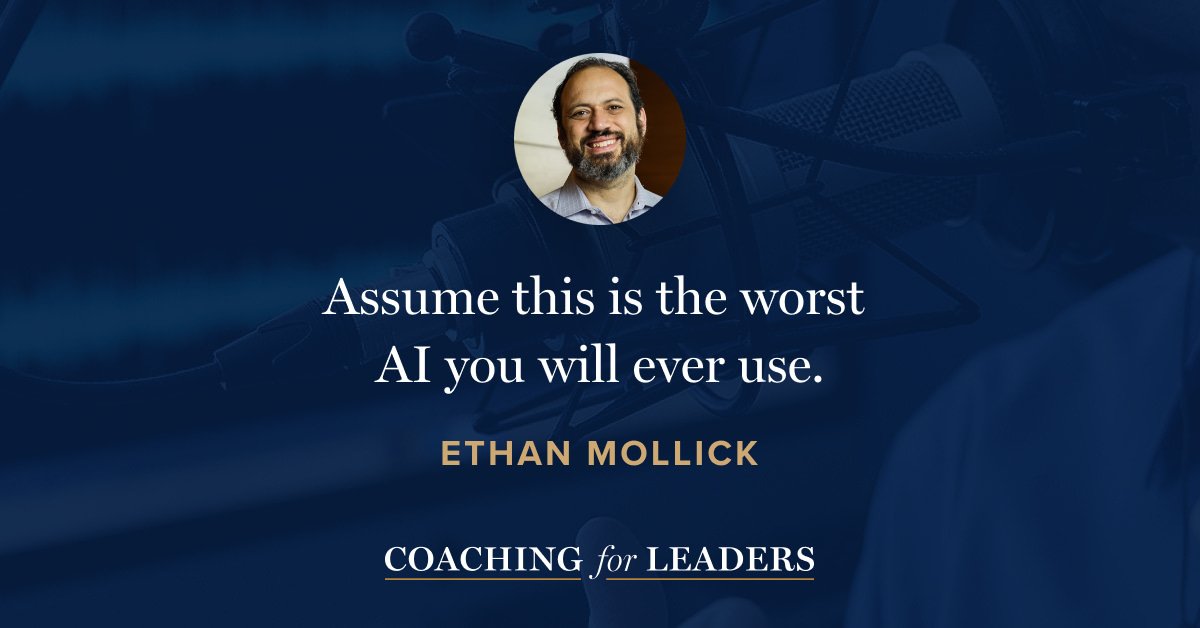
  • Ethan Mollick Shares Principles for Working with AI on Coaching for Leaders with Dave Stachowiak

    Ethan Mollick Shares Principles for Working with AI on Coaching for Leaders with Dave Stachowiak

    I enjoyed listening to Coaching for Leaders episode 674: Principles for working with AI with Ethan Mollick this morning. Dave is traveling this week, but it was almost like he was here, keeping me company, as I listened to the interview. 😂

    One key point from the conversation that really resonated with me was how quick and easy it is to assess the AI’s output, it if is doing something that you’re already good at. I have found many examples of that truth, in experimenting with various AI tools.

    We use the CastMagic.io service for the first pass at our podcast transcripts, for example. It can identify key quotes from the interviews and recommend discussion questions. For me (or someone on our team) to carve out the time to listen to the entire episode and try to figure out which quotes might be good to share just isn’t practical. Yet we can quickly look and discard what the tool identified as not particularly helpful in illuminating or amplifying the conversation.

    In a recent workshop with faculty, they were surprised to learn how easy it is to set up a form for students to make a request for a letter of recommendation or reference for a job or for grad school. Then, an AI can take the first pass at writing a draft, based on your writing style and preferences for length, tone, etc. How much easier is it to correct it for what it got wrong about a particular student’s recommendation vs starting from scratch?

    I’ve been using an AI app called Whisper Memos, which is on both my iPhone and on my Apple Watch. When I get an idea or something I want to share with someone, I just tap the complication on my watch face and start talking. The key differentiator for Whisper Memos for me is that it automatically puts in carriage returns, making it that much faster for me to make edits later on.

    Another thing I like is that I discovered my favorite “chicken scratch” notes app on my iPhone and Apple Watch, Drafts, has a special email address I can use to send text to it. So now I have Whisper Memos set up to send to my unique Drafts email address and all my thoughts wind up in one place, ready for me to process when I have time.

    I encourage you to listen to episode 674 with Ethan Mollick on Coaching for Leaders with Dave Stachowiak. When you’re done, check out the AI-related conversations that I’ve had for Teaching in Higher Ed.

    How are you using AI in your work these days?

    Source link

  • Why Executive Coaching Works in Higher Education – Edu Alliance Journal

    Why Executive Coaching Works in Higher Education – Edu Alliance Journal

    “When a leader gets better, everyone wins!”

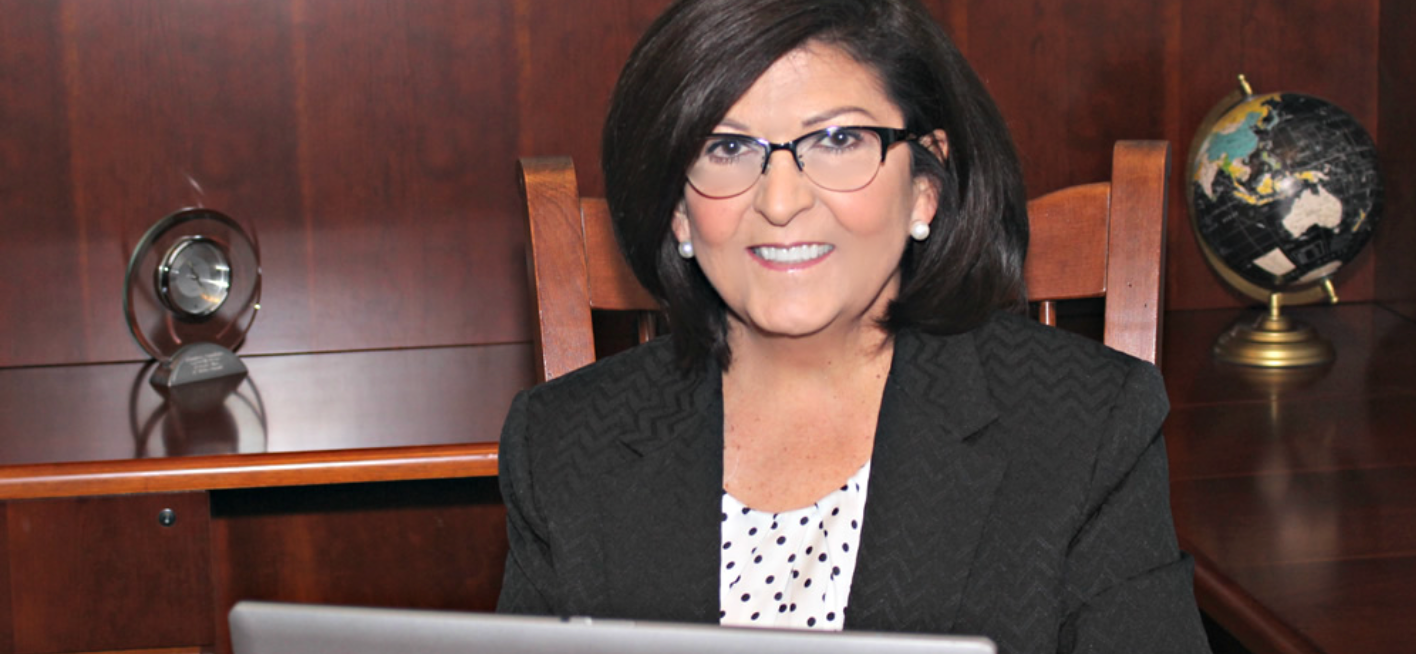
    July 5, 2022 by Dr. Candace Goodwin – Although every industry has undergone significant changes over the past several years, higher education has been impacted more profoundly. When the pandemic hit, traditional colleges and universities were abruptly forced to adapt their mindset and move toward thinking differently, scrambling to transform standard brick-and-mortar programs into online or hybrid delivery modalities. Colleges and universities that already had successful online programs could pivot quickly and sustain student enrollment. Universities unable to make these changes rapidly faced many challenges.

    High education leadership teams were confronted with workforce challenges they had not faced before. The changes in the economy, staffing shortages, healthcare concerns, loss of international students, diversity, equity, and inclusion were all simultaneously impacting higher education. College leadership focused on enrollment as their highest priority and lost sight of how the pandemic influenced staff and shaped their expectations and preferences. Employees were seeking out empathy, remote work, and flexible work hours and wanted to feel more connected than ever.

    As the environment of higher education leadership becomes more complicated by outside events and shifting employee motivations, the benefits of executive coaching only increase. High- quality executive coaching balances organizational priorities like enrollment with the leadership development and insight required to move those priorities forward. Executive coaching is an essential problem-solving tool for higher education executives seeking support balancing leadership challenges and understanding the higher education landscape from both the 30,000 ft elevation and the 100 ft elevation.

    1. Executive coaching activates and animates wisdom.

    Many executives and aspiring higher education leaders lean most heavily on their level of intelligence. Clayton (1982) defined intelligence as the ability to think logically, conceptualize, and abstract from reality. Intelligence focuses on how to do. It helps leaders accomplish and achieve.

    By contrast, Clayton defines wisdom as the ability to grasp human nature, which is paradoxical, contradictory, and subject to continual change. Wisdom provokes a person to consider the consequences of their actions on themselves and the effects on others.

    Wisdom helps people decide whether to pursue a course of action. Higher education executives work in concert with many others. It is incumbent on all higher education leaders to work with their wisdom.

    The difference between intelligence and wisdom can be described as knowing what vs. knowing how. According to Stenberg (2005), knowing how adds creativity and experience to our knowledge. While an executive has proven intelligence, the wisdom gained by learning from various experiences provides multiple points of view at their disposal to solve problems creatively.

    It is no longer sufficient to only have intelligence and management skills to make high- level and far-reaching leadership decisions. Wisdom is a crucial component of good leadership. Staudinger, Lopez, and Baltes (1997) found that individuals who discussed life problems with another person and reflected on the conversation before responding out-performed others. Executive coaching can make the difference in that kind of wisdom and more.

    An executive coach for higher education helps college and university executives activate and animate their wisdom. Executive coaches guide leaders to go beyond reporting metrics and learn ways to increase their wisdom through natural reciprocity, investing in their team, and developing new leadership traits. The result is a higher education leader able to make more creative and cultured decisions that are the best for university and college leadership, staff, and students.

    2. Executive coaching galvanizes conscious and intentional conversations.

    There are two conversations we have every day. One is with other people—and one is in our heads. Having conversations with other people can feel fraught in this increasingly complicated world. Higher education executives need to ensure their conversations are conscious and intentional. Executive coaching can help!

    Conscious conversations encourage connection and overcoming differences. The basis is hearing and understanding instead of judging as right or wrong. Participants in a conversation of this nature must be fully present, listen fully and respectfully, keep an open mind, and be patient. It is important to understand that conversations of this kind are a skill to be learned and built upon. There is always room to improve communication as a leader.

    Intentional conversations are purposeful and planned. Being intentional means being strategic in how to communicate, what to communicate, and to whom. Intentional conversations can make staff members feel valued and ensure that conversations are productive.

    With an executive coach, higher education executives can build confidence in their ability to have conscious and intentional conversations.

    3. Executive coaching stimulates creativity.

    With the landscape for higher education rapidly changing, a successful higher education executive needs to move beyond the same old, same old. It is time for creativity in all aspects of leadership. Nothing helps creativity like the collaboration that comes from partnering with an executive coach.

    Most executives could benefit from switching things up and taking their leadership off auto pilot. A significant outcome could be developing a flexible mindset and considering new ways to get things done. A lack of creativity could result in missing opportunities for innovation and growth. Working with an executive coach helps open the door to explore innovative ideas and getting excited by new, creative possibilities.

    4. Executive coaching creates “emotional safety.”

    Having emotional safety means feeling secure enough to be your most authentic self, and isn’t that the ideal for all employee-leader scenarios? Who wouldn’t want to bring their real selves to work? Well, that takes work. Emotional safety is an important aspect of having a satisfying connection. Connection is increasingly vital to today’s workforce. It is worth the investment.

    Higher education executive coaching cultivates emotional safety so executives can get the most out of their experience. Our brains constantly detect whether a situation is safe or dangerous. When people experience safety, they are better listeners, able to collaborate more, innovative, creative, and able to connect with others. Emotional safety has positive effects that flow to others.

    Emotional safety encourages freedom of expression and increased compassion. A skilled executive coach can help guide you to understanding and increasing emotional safety.

    Executives and leaders in higher education benefit from the investment in high-quality executive coaching. Coaching is transformative—helping leaders leverage their best selves. An executive coach empowers creativity, impact, connection, and influence. Great leaders have great coaches—everyone can use that kind of support! Especially leaders working in higher education.

    Aides, Kim. “Six Reasons to Hire an Executive Coach.” Frame of Mind Coaching, 16, Nov. 2021, https://www.frameofmindcoaching.com/blog/reasons-to-hire-an-executive-coach.

    Boeder, E. “Emotional Safety is Necessary for Emotional Connection” The Gottman Institute. https://www.gottman.com/blog/emotional-safety-is-necessary-for-emotional-connection/

    Clayton V. (1982). Wisdom and intelligence: the nature and function of knowledge in the later years.

    International journal of aging & human development, 15(4), 315–321. https://doi.org/10.2190/17tq-bw3y-p8j4-tg40 https://pubmed.ncbi.nlm.nih.gov/7183572/

    Drake, David and Webb, Peter (2018).” Coaching for Wisdom: Enabling Wise Decisions.” Research Gate, February 2018, https://www.researchgate.net/publication/323257694_Coaching_for_Wisdom_Enabling_Wise_D ecisions

    Levine, Arthur and Pelt, S. “The Future of Higher Education is Occurring at the Margins.” Inside Higher Education, 4, Oct. 2021, https://www.insidehighered.com/views/2021/10/04/higher-education- should-prepare-five-new-realities-opinion

    Staudinger, U.M., Lopez, D. F., and Baltes, P. B. (1997). The psychometric location of wisdom-related performance: Intelligence, personality and more. Personality and Social Psychology Bulletin, 23(11). 1200-1214,

    Sternberg, R. J. (2005). WICS: A model of leadership. The Psychologist- Manager Journal, 8(1), 20-43.

    Sternberg, R. J. (2005a). WICS: A model of leadership. The Psychologist-Manager Journal, 8(1), 20–43


    Dr. Candace Goodwin a member of the Edu Alliance Group Advisory Council is a culture strategist and the CEO of Organizational Leadership Partners, an organization that helps leaders achieve exceptional results through the alignment of organizational priorities and culture. Candace’s expertise in culture, employee engagement, emotional intelligence, and leadership development provides guidance to leaders who desire to create an environment where people can do their best work.

    Dr. Goodwin has a Doctorate in Organizational Leadership, an MBA in Human Resources, and a Bachelor’s degree in Finance.

    Edu Alliance Group, Inc. (EAG) is an education consulting firm located in Abu Dhabi, the United Arab Emirates, and Bloomington, Indiana, USA. We assist higher education institutions worldwide on a variety of mission-critical projects. Our consultants have accomplished university/college leaders who share the benefit of their experience to diagnose and solve challenges.

    EAG has provided consulting and successful solutions for higher education institutions in Australia, Egypt, Georgia, India, Kazakhstan, Morocco, Nigeria, Uganda,  United Arab Emirates, and the United States.

    Edu Alliance offers higher education institutions consulting services worldwide. If you like to know more about how Edu Alliance can best serve you, please contact Dean Hoke at [email protected] 

    Source link