Tag: Coalition

  • Trump’s new housing policies could push another 170,000 people into homelessness (National Low Income Housing Coalition)

    Trump’s new housing policies could push another 170,000 people into homelessness (National Low Income Housing Coalition)

    Why NLIHC is taking action:

    The Continuum of Care Program exists to house people experiencing homelessness using proven, evidence-based solutions and strong local leadership. Yet, this NOFO introduces structural restrictions that contradict its stated purpose — capping permanent housing resources, weakening local decision-making, and threatening the stability of community response systems nationwide.

    As many as 170,000 more people could be pushed into homelessness if these changes stand — not as an abstract number, but as real individuals, families, veterans, seniors, youth, and neighbors in every state who depend on CoC-funded housing and services to remain stably housed.

    What this lawsuit means for our field and partners:

    We are fighting to:

    • Prevent hundreds of thousands of people from losing their homes

    • Protect proven permanent housing interventions within CoC funding

    • Defend the ability of local communities to lead response strategies using data and evidence

    • Stand with municipalities and providers working to keep people housed, stabilized, and supported

    Source link

  • Mike Gavin Resigns to Lead DEI Defense Coalition

    Mike Gavin Resigns to Lead DEI Defense Coalition

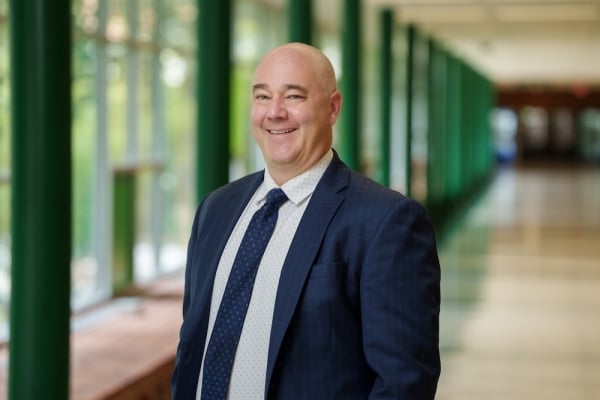
    Mike Gavin, the founder of Education for All, a grassroots group of community college administrators fighting legislative attacks on diversity, equity and inclusion, will step down as president of Delta College in January. He has been in the post since 2021. 

    Gavin informed the Delta College Board of Trustees last week that he would resign to lead a national coalition focused on defending equity in higher ed. 

    “My whole career has been focused on equity and how higher ed is situated in the democratic experiment, so when I was asked to do the next thing, I felt compelled to do it,” Gavin told Inside Higher Ed

    “I was not looking for a job. Delta has been amazing. The faculty and staff are some of the most insightful and student-centered I’ve ever seen,” he said. 

    More information about the coalition, including its priorities and funding model, will be released soon, he added. 

    Since the early days of the second Trump administration, Gavin has been a leading voice in defending DEI work in higher ed, especially at community colleges. Participation in Education for All surged at the beginning of the year as college leaders sought advice on protecting programs and navigating compliance with Trump administration mandates. 

    “My scholarship rests on the great thinkers of our past, from Benjamin Franklin to James Baldwin. It is also grounded in the belief that our country depends on a higher education sector that must be free from partisan interference, in order to democratize higher education for all,” Gavin wrote in a letter to the Delta College community.  

    Delta College trustees said they will begin the process of appointing Gavin’s successor in the coming weeks. 

    Source link

  • FIRE statement on coalition backing press freedom at Santa Fe arts school

    FIRE statement on coalition backing press freedom at Santa Fe arts school

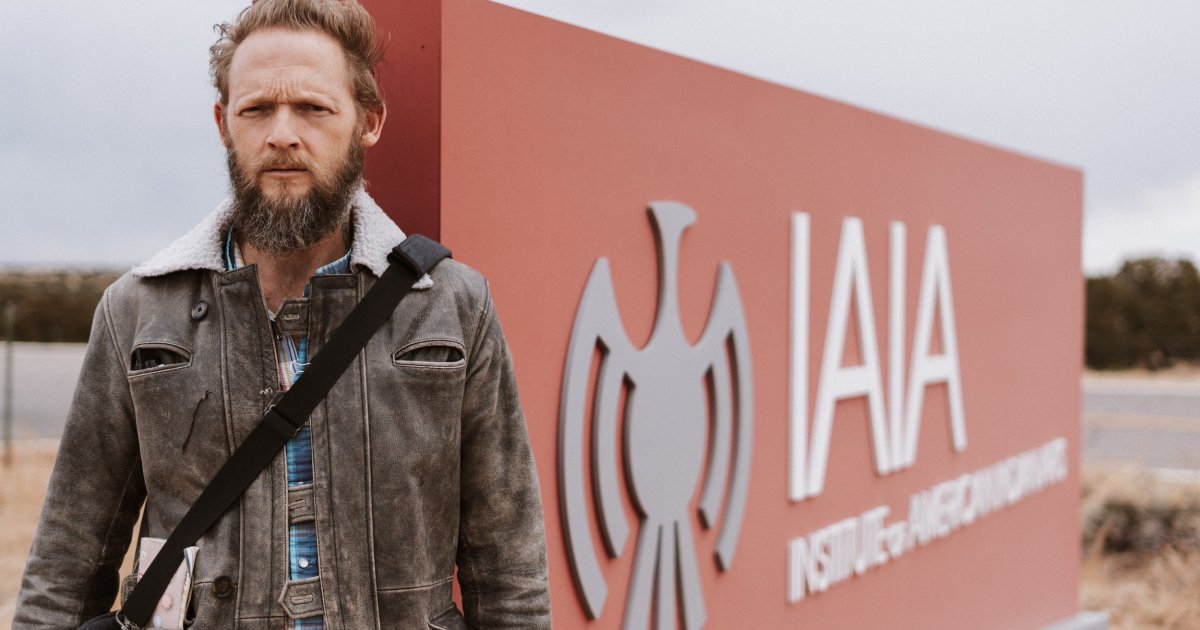
    Today, the Foundation for Individual Rights and Expression and three partner organizations demanded that the Institute for American Indian Arts and its new president Shelly Lowe drop all sanctions on student David McNicholas, who was punished for supposedly “bullying” IAIA administrators. The offense? Investigative journalism exposing an empty food pantry on a campus where many students live below the poverty line. Since then, McNicholas has faced over a year of retaliation from administrators. Most recently, IAIA said he couldn’t even put up posters soliciting student submissions for a new edition of his independent student magazine, since it is not a school-funded publication — despite the fact that school policies list no such requirement. 

    FIRE, the National Coalition Against Censorship, the Society of Professional Journalists, and the Student Press Law Center are urging Lowe to drop the sanctions on McNicholas and revise the school’s anti-bullying and posting policies to comply with the First Amendment. 

    The following statement is from FIRE Strategic Campaigns Specialist William Harris.


    Student journalist David McNicholas isn’t backing down after the Institute for American Indian Arts tried to silence him yet again. And now, he has four national nonprofits on his side. IAIA’s forbidding McNicholas from putting up posters seeking student submissions — ironically, for a new, free-speech-themed edition of The Young Warrior — is just the latest attack in its retribution campaign against investigative journalism that put McNicholas on probation, cost him work, and even left him homeless. 

    Coalition Letter to IAIA, September 25, 2025

    FIRE and other organizations urge the Institute of American Indian Arts to drop its sanctions against McNicholas and comply with the First Amendment. 


    Read More

    IAIA’s brand-new president, Shelly Lowe, should know better. A former chair of the National Endowment for the Humanities, an institution that has faced many attempts by politicians to police artistic expression over the years, she now leads a school whose attacks on press freedom and expression are straight out of the authoritarian playbook. 

    Such hostility towards the First Amendment is especially offensive at an arts school — the last place where free expression should be under attack. Strong speech policies protect the sort of expression that drives culture forward.

    Over 500 members of the public have signed on to our Take Action campaign demanding that IAIA reverse course. Lowe should heed the call.

    Stand with us and tell IAIA to end this censorial saga and restore free expression to campus.

    Source link

  • Wide-ranging coalition of ‘friends of the court’ continue to support citizen journalist Priscilla Villarreal in her return to the Supreme Court

    Wide-ranging coalition of ‘friends of the court’ continue to support citizen journalist Priscilla Villarreal in her return to the Supreme Court

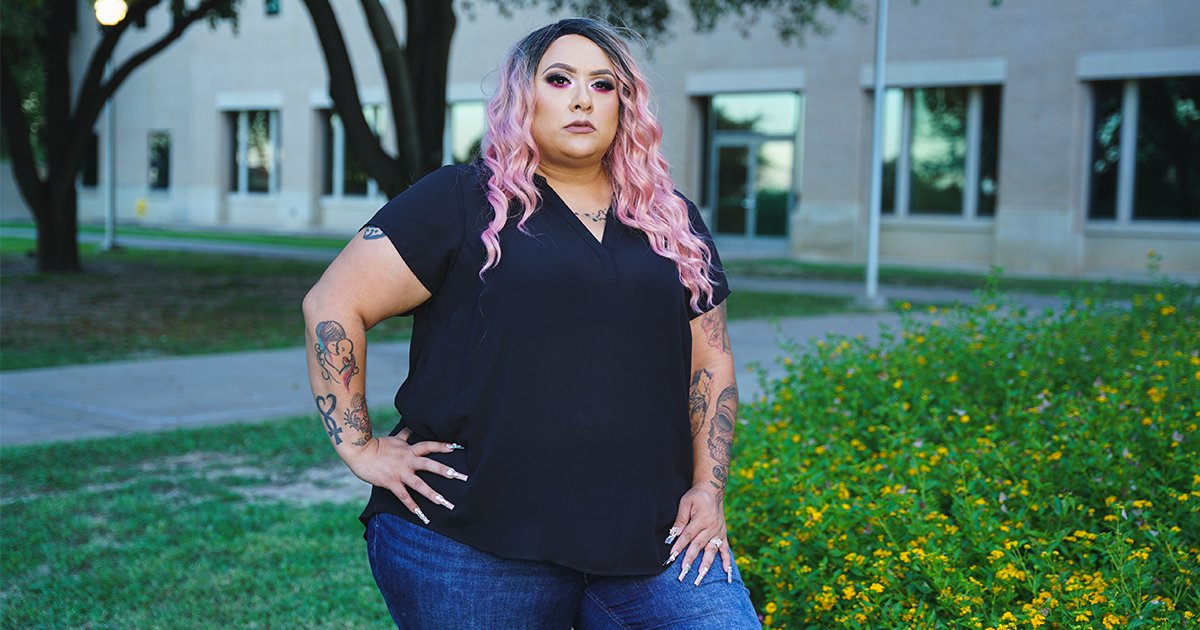
    The government can’t jail a journalist for asking a question. And when it does, it can’t get away with it scot-free. But that’s what happened to the police and prosecutors who arrested citizen journalist Priscilla Villarreal when she asked an officer questions in the course of reporting the news. 

    It was unconstitutional enough that these Laredo, Texas, officials arrested Priscilla for routine journalism — something freedom-loving Americans know the First Amendment protects. Even worse, they did so because she criticized them. And to further their plan to arrest Priscilla, they deployed a Texas penal statute aimed at curbing abuses of office —and one that Laredo officials had never before tried to enforce in its 23-year history. 

    After the Fifth Circuit denied Priscilla relief for her constitutional injury, the Supreme Court granted her petition and tossed out the Fifth Circuit’s decision. The Court ordered the Fifth Circuit to reconsider her case in light of an earlier ruling. But after the Fifth Circuit mostly reinstated its previous ruling, Priscilla and FIRE once again asked the Supreme Court to intervene. 

    Supporting Priscilla in front of the high court is an impressive and diverse coalition of media organizations, journalists, and defenders of civil liberties. These 11 amicus curiae briefs urge the Supreme Court to reverse the Fifth Circuit’s ruling in order to protect Americans’ First Amendment right to investigate and report the news and to ensure that officials can be held accountable when they infringe on that obvious right. 

    These reporters and media organizations wrote about how this important First Amendment case will impact the rights of all journalists:

    • The Reporters Committee for Freedom of the Press and 24 news organizations including The New York TimesThe Washington Post, and Dow Jones & Company (owner of The Wall Street Journal) demonstrate how history shows that “no technique has been more routine or central to newsgathering — from the Founding through the present day — than pursuing information about government affairs simply by asking for it.” In addition to attorneys from the Reporters Committee, the media coalition is also represented by Jackson Walker LLP.
    • The MuckRock Foundation, an organization that drives public records requests across the country, is a nonprofit that assists the public in filing governmental requests for public records and then publishes the returned information on its website for public access. Journalists routinely use records MuckRock publishes to expose government corruption, misuse of government funds, and other matters of public concern. MuckRock’s brief warns that if upheld, “the Fifth Circuit’s decision will encourage other government officials, both high and petty, to harass, threaten, and arrest people for requesting information that the government would prefer not to release — even if the government may lawfully release the information under state law.” MuckRock is represented by Prince Lobel Tye LLP.
    • group of five current and former journalists — David BarstowKathleen McElroyWalter RobinsonJohn Schwartz, and Jacob Sullum — emphasizes that no reasonable official would have thought Priscilla’s basic reporting practice was criminal. They also use real-life examples to demonstrate that “journalists cannot do their jobs if they must fear that any interaction with the government — even a simple request for truthful, factual information — may be used as a pretext for an arrest and criminal prosecution.” The journalists are represented by counsel at Covington & Burling LLP.
    • The Dallas Free Press submitted a brief with Avi Adelman and Steven Monacelli, two independent journalists who, like Priscilla, have been arrested or detained while reporting on law enforcement. The brief details how when faced with “closed doors and empty mailboxes … journalists must develop alternative sources to perform their job — a public service indispensable to our democracy.” And if communicating with these sources could result in arrest, independent journalists “are especially vulnerable … given that they may lack the resources and institutional backing of a larger news outlet in the event that they are prosecuted.” The Dallas Free PressAdelman, and Monacelli are represented by the SMU Dedman School of Law First Amendment ClinicThomas Leatherbury, and Vinson & Elkins LLP.

    This impressive group of organizations across the ideological spectrum wrote to emphasize the problems with applying qualified immunity in cases like Priscilla’s:

    • First Liberty Institute explains that “the government arresting a journalist for asking questions so obviously violates the First Amendment that no reasonable official would sanction such an action.” And FLI points out that “it comes as no surprise that there is no case directly on point with the facts here” because “these sorts of outrageous fact patterns are more frequently found in law school exams than in real life.” FLI is represented by Dentons Bingham Greenbaum LLP.
    • The Americans for Prosperity Foundation articulates that qualified immunity is inappropriate when it shields government officials from liability for “intentional and slow-moving” infringements of First Amendment rights. Moreover, AFPF argues, qualified immunity especially threatens constitutional rights when officials enforce rarely-used statues, because “the more obscure the state law, the less likely it is that a prior case was decided on a similar set of facts.”
    • The Law Enforcement Action Partnership — whose members include police, prosecutors, and other law-enforcement officials — stress that the Supreme Court “has consistently held that qualified immunity does not shield obvious violations of bedrock constitutional guarantees.” The brief observes that “the dramatic expansion of criminal codes across the country has made it easier than ever” for law enforcement to pretextually arrest someone as punishment for exercising their First Amendment rights. LEAP is represented by Gibson Dunn & Crutcher LLP.
    • Young America’s Foundation and the Manhattan Institute highlight that “the First Amendment’s guarantees limit state law, not the other way around.” Their brief also explains how the Fifth Circuit’s failure to recognize decades of Supreme Court precedent protecting “routine news-gathering activities under the First Amendment … erodes essential free-speech and free-press rights.” YAF and the Manhattan Institute are represented by the Alliance Defending Freedom and The Dhillon Law Group.
    • The Institute for Justice urges reversal of the Fifth Circuit’s decision because “it undermines the text and original meaning of Section 1983,” which protects constitutional rights when violated “under color of” state laws and “notwithstanding” state laws that purport to limit those rights. IJ also stresses that the Fifth Circuit’s application of qualified immunity in the context of an obvious constitutional violation “is inconsistent with the prudential rationale underlying qualified immunity: the carefully calibrated balancing of government and individual interests.”  
    • The Constitutional Accountability Center details the history of Section 1983 and cautions that because “qualified immunity is at odds with Section 1983’s text and history, courts should be especially careful to respect the limits on the doctrine.” CAC points out that this is an especially inapt case for qualified immunity because Section 1983 was adopted precisely to combat things like the criminalization of speech by pre-war slave codes and retaliatory prosecutions against critics of slavery.
    • The Cato Institute underlines that in the context of qualified immunity, “clearly established law is an objective inquiry of reasonableness, not a blind reliance on a lack of judicial precedent.” Cato also warns that “freedom of the press cannot meaningfully exist if journalists are not allowed to seek information from government officials.”

    Priscilla and FIRE are exceedingly grateful for the support of this diverse and formidable amicus coalition. With this support, she is hopeful the Supreme Court will hold that journalists — and all Americans — can seek information from government officials without risking arrest. 

    Source link

  • The Supreme Court’s decision in Free Speech Coalition v. Paxton

    The Supreme Court’s decision in Free Speech Coalition v. Paxton

    FIRE staff responds to the Court’s decision in Free Speech
    Coalition v. Paxton that addresses a Texas law requiring age
    verification for accessing certain sexual material online.

    Joining us:

    Will
    Creeley
    — Legal director

    Bob Corn-Revere — Chief counsel

    Ronnie London — General counsel

    Timestamps:

    01:21 How the case wound up at the Supreme Court 06:57 Bob’s
    experience with arguing strict scrutiny in the courts 09:32
    Ronnie’s perspective on the ruling 10:22 Brick + mortar stores vs.
    online sites 12:07 Has the Court established a new category of
    partially protected speech? 13:36 What speech is still subject to
    strict scrutiny after the ruling? 15:55 What does it mean to
    address the “work as a whole” in the internet context? 17:24 What
    modifications to the ruling, if any, would have satisfied FIRE?
    18:06 What are the alternatives to address the internet’s risks
    toward minors? 20:16 For non-lawyer Americans, what is the best
    normative argument against the ruling? 22:38 Why is this ruling a
    “canary in the coal mine?” 23:36 How is age verification really
    about identity verification? 24:42 Why did the Court assume the
    need to protect children without citing any scientific findings in
    its ruling? 26:17 Does the ruling allow for more identity-based
    access barriers to lawful online speech? 28:04 Will Americans have
    to show ID to get into a public library? 29:30 Why does stare
    decisis seem to mean little to nothing to the Court? 32:08 Will
    there be a problem with selective enforcement of content-based
    restrictions on speech? 34:12 Could the ruling spark a patchwork of
    state laws that create digital borders? 36:26 Is there any other
    instance where the Court has used intermediate scrutiny in a First
    Amendment case? 37:29 Is the Court going to keep sweeping
    content-based statutes in the “incidental effect on speech” bucket?
    38:14 Is sexual speech considered obscene? 40:33 How does the
    ruling affect adult content on mainstream social media platforms
    like Reddit and X? 43:27 Where does the ruling leave us on age
    verification laws?

    Show notes:

    – Supreme Court ruling: https://www.supremecourt.gov/opinions/24pdf/23-1122_3e04.pdf

    – FIRE statement on FSC v. Paxton ruling: https://www.thefire.org/news/fire-statement-free-speech-coalition-v-paxton-upholding-age-verification-adult-content

    – FIRE’s brief for the Fifth Circuit: https://www.thefire.org/news/supreme-court-agrees-review-fifth-circuit-decision-upholding-texas-adult-content-age

    – FIRE’s amicus brief in support of petitioners and reversal:
    https://www.thefire.org/research-learn/amicus-brief-support-petitioners-and-reversal-free-speech-coalition-v-paxton

    Source link

  • FIRE statement on Free Speech Coalition v. Paxton upholding age verification for adult content

    FIRE statement on Free Speech Coalition v. Paxton upholding age verification for adult content

    Today, the Supreme Court ruled 6-3 to uphold Texas’s age-verification law for sites featuring adult content. The decision in Free Speech Coalition v. Paxton effectively reverses decades of Supreme Court precedent that protects the free speech rights of adults to access information without jumping over government age-verification hurdles.

    FIRE filed an amicus brief in the case, arguing that free expression “requires vigilant protection, and the First Amendment doesn’t permit short cuts.” FIRE believes that the government’s efforts to restrict adults’ access to constitutionally protected information must be carefully tailored, and that Texas’ law failed to do so. 

    The following statement can be attributed to FIRE Chief Counsel Bob Corn-Revere


    Today’s ruling limits American adults’ access to only that speech which is fit for children — unless they show their papers first.

    After today, adults in the State of Texas must upload sensitive information to access speech that the First Amendment fully protects for them. This wrongheaded, invasive result overturns a generation of precedent and sacrifices anonymity and privacy in the process.

    Data breaches are inevitable. How many will it take before we understand the threat today’s ruling presents?

    Americans will live to regret the day we let the government condition access to protected speech on proof of our identity. FIRE will fight nationwide to ensure that this erosion of our rights goes no further. 

    Source link

  • Labor, Coalition and Green education policies compared – Campus Review

    Labor, Coalition and Green education policies compared – Campus Review

    Australians go to the polls this Saturday to choose the next government. The Australian Labor Party, the Liberal-National Coalition and the Australian Greens have a variety of different policies for education in the funding, content and management spaces.

    Please login below to view content or subscribe now.

    Membership Login

    Source link

  • $100m Coalition election promise to fund 200 regional medical students matches Labor – Campus Review

    $100m Coalition election promise to fund 200 regional medical students matches Labor – Campus Review

    Regional and rural Australia’s doctor shortage is being targeted as an election issue by the Coalition, which is promising to fund an extra 200 students to train as general practitioners to work in the bush.

    Please login below to view content or subscribe now.

    Membership Login

    Source link

  • Coalition announces harsher international student caps – Campus Review

    Coalition announces harsher international student caps – Campus Review

    The Coalition has said it would cap international students at 240,000 and triple the visa application fee to $5,000 for those applying to Group of Eight universities to free up room in the rental market.

    Please login below to view content or subscribe now.

    Membership Login

    Source link

  • Join Us on April 17, 2025 to Fight For Higher Education (Coalition for Action in Higher Education)

    Join Us on April 17, 2025 to Fight For Higher Education (Coalition for Action in Higher Education)

    As campus workers and citizens, educators and researchers, staff, students, and university community members, we exercise a powerful collective voice in advancing the democratic mission of our colleges and universities. It is our labor and our ideas which sustain higher education as a project that preserves and extends social equality and the common good—as a project of social emancipation.

    On
    April 17, 2025, we will hold a one-day action on and around our
    campuses to renew this vision of higher education as an autonomous
    public good, and university workers as its most important resource.   

    Free Higher Ed Now! will
    demand FIRST that public higher education in the U.S. be fully funded,
    politically independent, and FREE to all students and SECOND that higher
    ed be FREE of political interference that reduces the rights and
    autonomy of campus workers and students to teach, study, learn, speak,
    organize, and dissent. Read and endorse our agenda here. 


    Source link