Australia’s oldest university has come under fire after it was revealed international students made up the majority of its enrolments last year.
Please login below to view content or subscribe now.
Membership Login

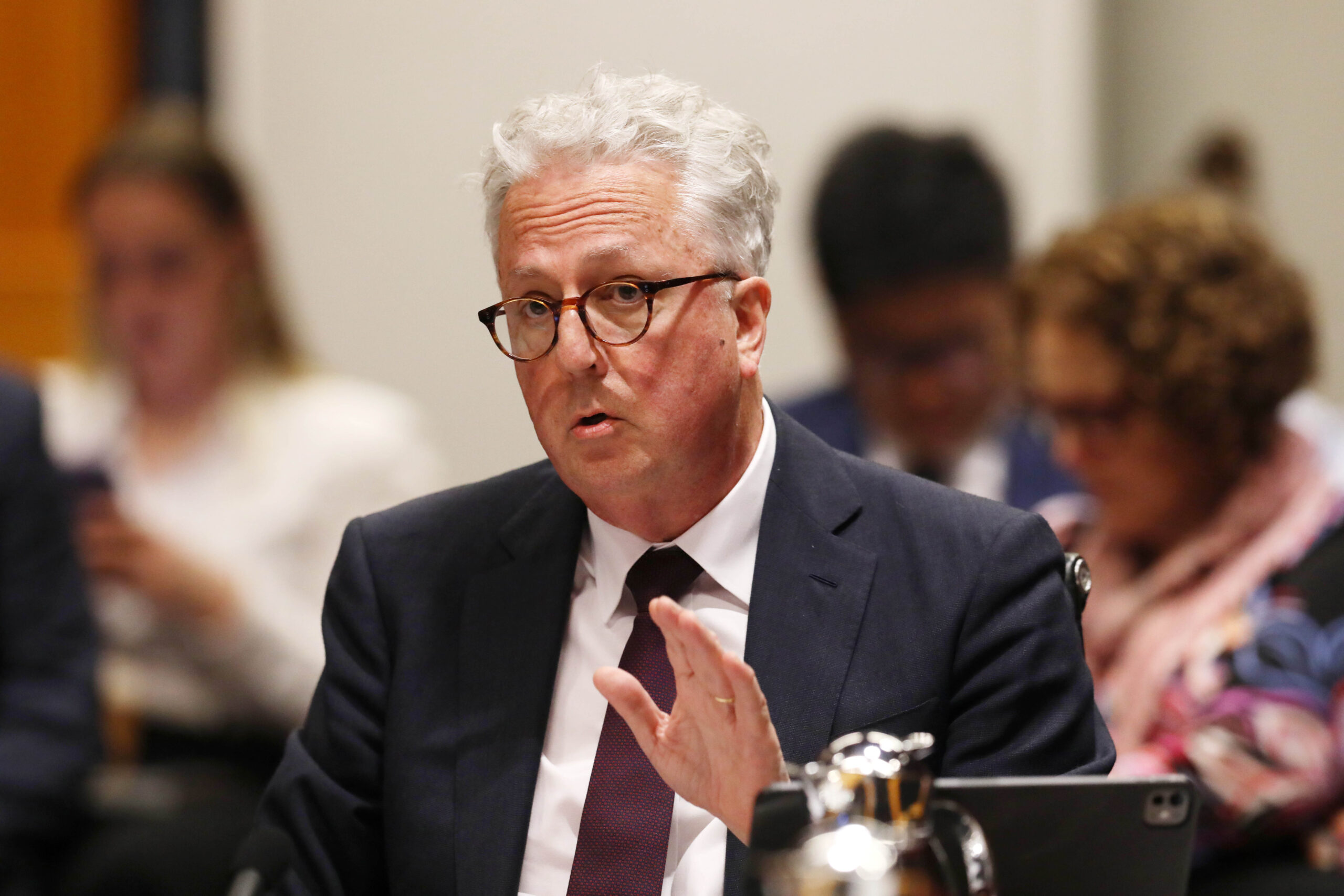
Australia’s oldest university has come under fire after it was revealed international students made up the majority of its enrolments last year.
Please login below to view content or subscribe now.
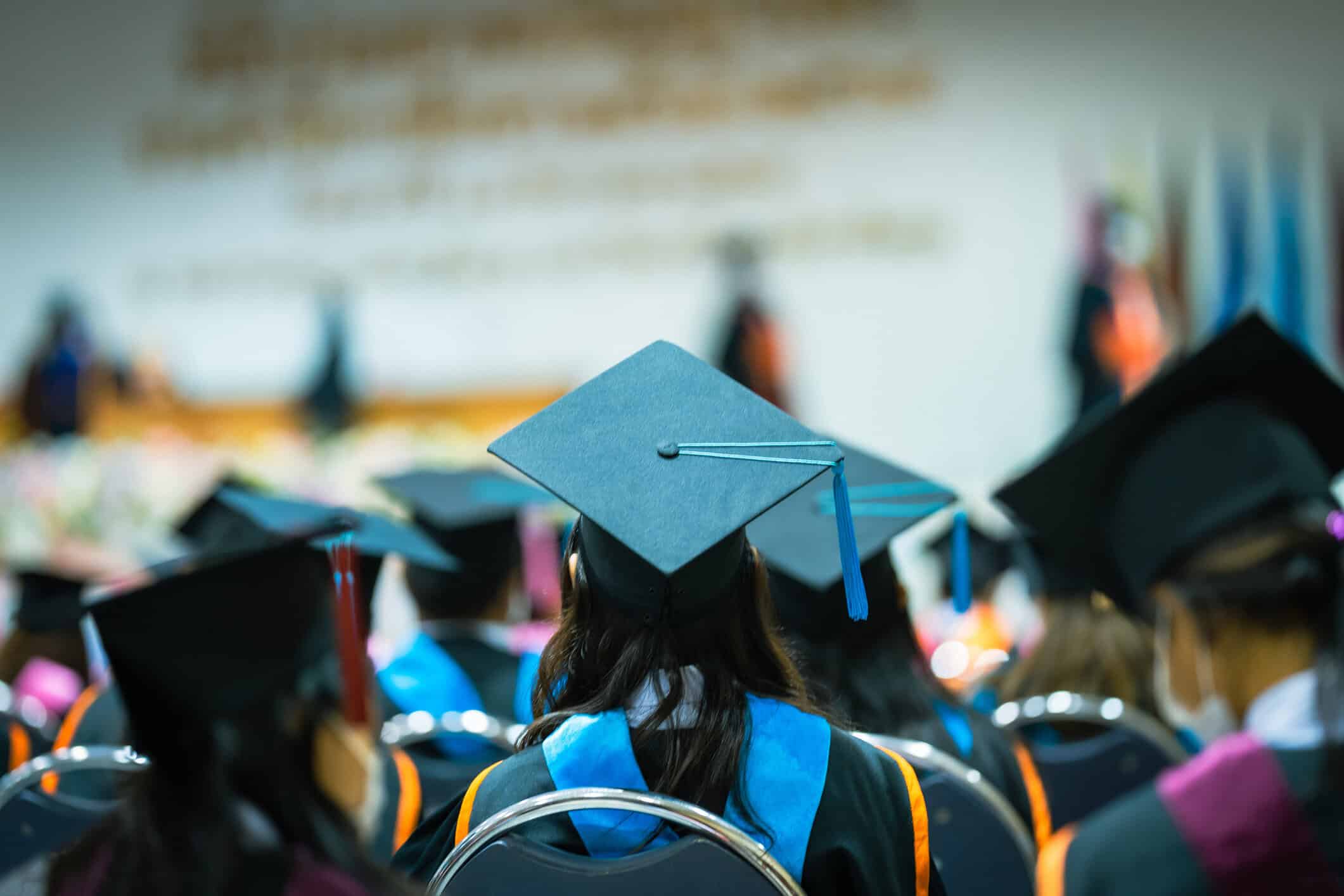
Rarely does a graduation ceremony mark a turning point in a country’s cultural trajectory. But this was the case for a handful of graduates at the American University of Iraq in Baghdad (AUIB). AUIB is a private university that was founded in February 2021 and began with only three colleges: the College of Business, the College of International Studies, and the College of Arts & Sciences.
The university has grown to nine colleges hosting approximately 1,600 students. Among its first graduation cohort, six were students from Iraq’s first College of Arts & Sciences, an academic innovation in a country where the education system is built on the separation of arts & sciences from high school education onwards. This college marks a new chapter in the story of rebuilding Iraq’s education and reclaiming its historic regional educational prominence.
Once they join high school, Iraqi students around the age of 15 must choose one of two academic tracks: arts or sciences. This choice, along with their percentage score in the national exam at the end of high school would determine their college majors. Unlike the UK system, students have little space for personal choice and preferences as their score and high school track are the sole determinants of major choice.
At Iraqi colleges, there are no core liberal arts courses. That is, courses outside the field that can allow students to explore a broad range of disciplines outside their major, allowing space for intellectual exploration. Rather, students must go through a strict year-by-year schedule of confined major courses with few standard courses outside their specialisations, such as computer science and human rights. For example, students majoring in biology are not able to take elective courses in psychology or archaeology. This would limit their intellectual experience in campus life and turn the college experience more towards an obligation that has to be fulfilled.
In 2021, AUIB disrupted the traditional model with its liberal arts education model through its College of Arts & Sciences. Here, students can pick their core liberal arts courses from a diverse list regardless of their major. Science students can pick up three courses in communication, five courses in humanities, and two courses in social sciences. These courses will not only enhance their intellectual mentality but will also enlighten their lives with purpose and meaning.
Their education experience has gone beyond sole preparation for the job market. It has sparked a deeper sense of belonging and responsibility for the future of their country. As some shared with me, computer science graduates look forward to contributing their AI experience to enhancing Iraqi institutions & country-rebuilding initiatives.
As an executive assistant to the college dean, I have witnessed firsthand the contributions of this innovative model to the graduates and how it has broadened their intellectual mindset beyond their specialisations and paved the way to a connection that the traditional system never allowed. When I congratulated Muqtada, a graduate student of computer science, he told me that he would like to contribute his knowledge of computer science to rebuilding the country, and this is why he joined a legal firm as a junior program manager.
‘I just do not feel like working in tech companies, I want to contribute my AI skills into something else, and this legal firm gave me a good chance to try.‘
This sentence struck me as a sign that the innovative model of AUIB is successful. AI was not the sole purpose; it was a tool Muqtada wanted to purposefully utilise. Isn’t that where arts & sciences meet?
I started talking to the graduates about their purposes or journeys to find one. This was the untold story of the first cohort of the first-ever college of Arts & Sciences in Iraq. I can only wait and witness what further contributions the rest of the cohorts will bring to my country.
The Ministry of Higher Education in Iraq has been working on the implementation of the Bologna Process, the European model, in Iraqi universities. This effort of reformation has been going back and forth. Aside from the essential differences between the Bologna Process and the Liberal Arts, both will give a chance to Iraqi students to have a university life that promotes freedom and choice early on into students’ college life. The first cohort of AUIB, specifically the College of Arts & Sciences, might be a further push towards a faster track to reform Iraqi universities.
e-Literate is excited to unveil the AI Learning Design Assistant (ALDA) Design/Build Workshop series, a pioneering initiative that brings together a diverse group of colleges and universities to collaboratively tackle the pressing challenges of learning design. This initiative extends beyond standard prompt engineering techniques, inviting participants to participate in co-designing a functioning AI application that we will build and refine throughout the series. It offers participants a unique opportunity to directly influence the development of solutions that will reshape the landscape of educational technology.
Why ALDA?
Despite decades of evolving learning design methodologies, today’s most commonly used tools remain rooted in outdated practices such as word processing and manual note-taking. Meanwhile, the rapid pace of job skill evolution demands more innovative approaches. The ALDA workshop series directly addresses this gap by facilitating a hands-on environment where institutions can collaboratively design, test, and refine AI-driven solutions across six intensive monthly workshops.
Immediate Benefits
Participants will contribute to and gain firsthand experience with cutting-edge technologies poised to revolutionize educational access and quality. This project offers each institution the tools to expand their course offerings and enhance educational quality, significantly impacting their students’ futures.
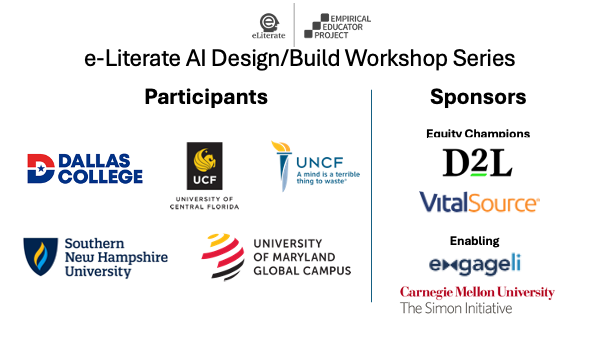
Participating Institutions
The cohort includes:
Together, these institutions serve over half a million students annually, positioning the cohort to impact educational access on a monumental scale.
Equity Champion Sponsors
D2L and VitalSource are our proud Equity Champion Sponsors, providing scholarships that facilitate cost-free participation for these mission-driven institutions. Their financial support and subject-matter expertise are crucial in paving the way for a future where technology inclusively serves all students.
Supporting Sponsors
Thanks to the generous contributions of Carnegie Mellon University’s Simon Initiative and Engageli, this workshop series has the resources needed to foster robust collaboration and innovation.
Join Us
We look forward to sharing insights and developments from each workshop as we progress.
“UNCF is excited to announce our partnership with the ALDA series and involve historically Black colleges and universities in efforts to co-design a groundbreaking AI application that will revolutionize educational technology. We believe that by harnessing the potential of AI, and involving HBCUs in the creative process, we can launch a transformative tool for faculty members in the development of curricula that will empower every student, regardless of their background or circumstances, to unlock their full potential, and reshape the landscape of educational technology,” said Dr. Shawna Acker-Ball, vice president, scholarships and programs, UNCF. “We look forward to the possibilities this partnership will bring and the positive impact it will have on the lives of students across the nation.”
MJ Bishop, Vice President for Integrative Learning Design at University of Maryland Global Campus shared a similar sentiment: “UMGC’s Integrative Learning Design (ILD) team is thrilled to be part of ALDA cohort and to have the opportunity to pioneer advancements in the use of GAI in instructional design with such an esteemed group of partner institutions and sponsors. We are excited to co-design and refine innovative AI-driven solutions that will enhance our learning design capabilities and significantly impact the educational experiences of our students.”
“I am absolutely thrilled with the quality, diversity, and commitment of the participating organizations,” said Michael Feldstein, CEO of e-Literate. “Artificial intelligence is clearly one of the defining changes of our time with wide-ranging implications for education. We all need to work together and get our hands dirty if we’re going to figure out how best to harness it for our students.”
e-Literate will provide updates as we learn and offer our participants opportunities to share their experiences with you. Institutions and sponsors interested in joining future cohorts or supporting our mission should contact us at [email protected].
by CUPA-HR | August 3, 2022
For the higher ed HR community to thrive there must be a pipeline of early-career professionals waiting in the wings, and one way CUPA-HR equips early-career pros to grow in their role and take steps toward their career goals is through the Wildfire program.
The program, sponsored in part by HigherEdJobs, is a 12-month immersive experience that connects a small, select group of early-career higher ed HR professionals with some of the top leaders in the profession, giving them a variety of learning opportunities.
Rob Keel, a member of the 2019-20 Wildfire cohort and past president of the CUPA-HR Tennessee Chapter, had this to say about the program: “Wildfire helped open my eyes to the possibilities within higher education HR. The network I gained through my involvement with Wildfire has provided so much support as I navigate my career. If you want to develop relationships that have the power to transform, Wildfire has the power to do just that.”
As a new year gets underway, we want to congratulate and welcome the Wildfire program participants for 2022-23:
Interested in joining our 2023-24 cohort? Learn more about the Wildfire program.
by CUPA-HR | July 19, 2022
The goal of CUPA-HR’s Emerging CUPA-HR Leaders program is to identify potential volunteer leaders who have shown exemplary leadership and initiative within higher ed HR and exhibit the desire to play an active role in advancing the profession. Invited participants have the unique opportunity to engage in problem-solving work groups and develop deep networks with peers while gaining an inside look at CUPA-HR’s operations and structure.
Throughout the program, participants are encouraged to serve the association in a leadership capacity, lending a fresh and informed perspective. Many participants have gone on to hold positions on chapter boards, region boards and CUPA-HR’s national board of directors.
Before our previous cohort of leaders embark on the next step in their professional journeys, we want to acknowledge a special project they developed over the past several months. Each year, CUPA-HR recognizes outstanding work by chapters across the country, especially in the areas of event planning and programming, engagement, chapter management and leader development. The 2021-22 Emerging CUPA-HR Leaders wanted to collect those best practices in a format that was easy to share with future chapter leaders. As a result, CUPA-HR’s Chapter Toolkit now includes recorded interviews with some of CUPA-HR’s most experienced chapter leaders passing along lessons learned and secrets to chapter success.
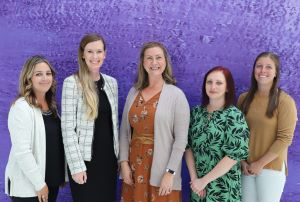
Many thanks to our 2021-22 Emerging CUPA-HR Leaders for their time and efforts:
“We are excited to welcome this year’s Emerging CUPA-HR Leaders cohort,” says CUPA-HR President and Chief Executive Officer Andy Brantley. “These individuals are outstanding higher education human resources leaders who will help us lead the association into the future.”
Congratulations to the 2022-23 Emerging CUPA-HR Leaders:
Interested in joining our 2023-24 cohort? Learn more about the Emerging CUPA-HR Leaders program.