Tag: Colleges

  • Too many communities lack broad-access colleges

    Too many communities lack broad-access colleges

    Most American college students attend broad-access institutions, or public colleges and universities that admit at least 80 percent of applicants. Yet millions of people live in communities without one of these institutions nearby—and millions more live in areas with only one option, according to a new report from the Institute for College Access and Success.

    The report, released today, shows stark disparities in higher ed access based on students’ geography and how some broad-access institutions are single-handedly serving whole regions. It also highlights communities with nearby colleges located across state lines, an understudied college-access issue, higher ed leaders say.

    Researchers analyzed different “commuting zones,” or clusters of counties workers commute between, to see which communities have broad-access institutions within a reasonable commuting distance.

    Nicholas Hillman, an education professor at the University of Wisconsin at Madison and co-author of the report, believes it’s critical to understand students’ geographical contexts.

    He said conversations about higher ed access often revolve around “informational problems”—whether students know about different college options and understand the college admissions process. But his previous research shows most students, even if well-informed, choose to stay close to home for college. That’s why he wanted to take a deeper look at where residents do or don’t have broad-access institutions within reach.

    “Maybe some of the problems in college access and opportunity are that there aren’t colleges nearby, or that there are not appropriate transportation infrastructures in place for students to access colleges … or that there are cost-prohibitive options nearby,” said Hillman, who also directs the university’s Student Success Through Applied Research Lab. When studying college access through a geographic lens, “you see problems differently. You might come up with a very different set of policy solutions.”

    He also sees the report as a “love letter” to broad-access institutions, especially those that are the only ones in their communities.

    “They’re doing the lion’s share of the work,” Hillman said. “They’re the blue-collar colleges out there, doing the heavy lifting in higher education, serving the most students and doing so oftentimes with the least amount of financial resources and under some of the most pressure.”

    The Findings

    To identify broad-access institutions, the report drew on data from the U.S. Department of Education’s Integrated Postsecondary Education Data System, with the caveat that IPEDS doesn’t account for all branch campuses.

    And then researchers used data from Pennsylvania State University’s Labor-sheds for Regional Analysis tool to measure commuting zones around the colleges. Finally, the report looked at how nearby these institutions were in “large-population commuting zones,” like urban or metropolitan areas, and “small-population commuting zones,” less populous areas, like rural communities.

    The report found that more than 831,000 people living in more populous commuting zones don’t have a local broad-access institution, and another 9.7 million had only one of these colleges nearby. That means about one in 16 people don’t have a broad-access institution nearby or just one, even in the country’s largest local labor markets.

    The issue was even more stark in less populous or rural local labor economies, where 2.8 million people don’t have a single broad-access institution in their area. Another 5.9 million live in areas with only one such institution. Meanwhile, among students who go to college in these less populous areas, 70 percent attend broad-access institutions, meaning these colleges “play an outsized role in creating opportunities and meeting local educational needs” in these communities, the report says.

    Riley Acton, an assistant professor of economics at Miami University in Ohio, said it’s important to differentiate between college access issues in the two types of regions, as the report did, because “what it means to have access, to have something nearby, can be really different in rural and urban environments.” In a rural area, a college might be miles away but easy to travel to by car, while in an urban area, a college could be close by but hard to reach via public transportation, she said, so the report opens up a conversation about those distinctions.

    Hillman added that a granular look at the data might surprise people. For example, some large metropolitan areas, like Chicago, are known for prominent private universities but have relatively few broad-access institutions for residents.

    “Local markets are just very different, depending on where you live, and I think that it’s important to put that out there, just to help remind ourselves that there’s no typical place or experience or market that every student experiences,” Hillman said.

    The report also highlights that some regions have broad-access institutions nearby but they’re across state borders, meaning they may not provide in-state tuition or could be harder to reach. There are 63 small-population commuting zones that cross state borders, which collectively have 77 broad-access institutions and serve about 190,000 students. The report also found 65 large-population zones that cross state lines with a total of 249 broad-access institutions enrolling roughly 1.3 million students.

    Acton said broad-access institutions that draw students from multiple states are an “understudied angle” in understanding students’ geographical contexts and what barriers could be getting in the way of their going to college.

    The Policy Implications

    To expand students’ access to these colleges, the report recommends that states offer nearby out-of-state students tuition discounts and that local leaders explore ways to improve transportation infrastructure, among other policy suggestions.

    Hillman emphasized that it’s also important to ensure broad-access institutions that are the only ones in their communities are well resourced. He suggested these colleges have a special federal or state designation that comes with extra financial support.

    “Sometimes a college is … serving a great need and is really an anchor for that community,” he said.

    Particularly in rural areas, broad-access institutions often do so much more for their communities than confer degrees, said Cecilia Orphan, associate professor of higher education at the University of Denver and founding co-director of the Alliance for Research on Regional Colleges. In some cases, these campuses provide local internet access and serve as major employers, among other services. Western Carolina University, for example, is home to its community’s power plant and has police officers that serve its surrounding area.

    “It’s very tempting for policymakers to simply look at enrollment numbers … and to ask themselves whether or not that institution is needed,” Orphan said. “But if you think about the broader services that institution likely provides a local community, closing it could be catastrophic.”

    Acton noted that limited access to broad-access institutions can especially hurt some of the most vulnerable students.

    She previously conducted research with a team of economists focused on how community college proximity affected Texas high school students’ college-going decisions. They found that Black, Hispanic and lower-income students without a community college nearby were less likely to pursue higher ed, while white, Asian and upper-income students were more likely to travel to go to college.

    She agrees higher ed decision-makers need to think carefully about what a college means to particular communities when they make policy choices.

    “Where do we open new colleges? Where do we close colleges? Where do we merge colleges?” she said. If an institution closes, “what are the other options for the people in this area? Are the people who are in this area ones who would be able to travel and go to something further away? … Those are conversations for state policymakers and institutional leaders to be having.”
    Source link

  • Trump’s federal funding freeze concerns colleges

    Trump’s federal funding freeze concerns colleges

    President Trump’s plan to temporarily freeze federal grants and loans set off a wave of confusion and concerns across higher ed Tuesday. But just minutes before it was set to take effect, a federal judge blocked the order.

    It is now on hold until next Monday, at least.

    College leaders worried they would lose access to a wide variety of federal funds, though the specific programs affected by the pause remained in flux throughout the day. Education Department officials said Pell Grants, student loans and Federal Work-Study would not be subject to the pause. But critical STEM research and student success initiatives were among the thousands of programs whose funding would have been paused until at least Feb. 10, according to the original White House directive released late Monday night.

    University lobbyists and administrators predicted earlier Tuesday that the president’s unprecedented action would be blocked in the courts, but they warned of significant consequences as they worked to gather more information about the order. Comparable to a government shutdown, they said, the impact of a freeze, if it ever comes to pass, would largely depend on how long it lasts. 

    “Obviously it’s of great concern,” said Patricia McGuire, president of Trinity Washington University in Washington, D.C., on Tuesday morning. “Most of us are finding the memo to be so broad and so incomprehensible that we don’t even quite know what the long-term impact is … But it makes no sense. Rather than helping ‘make America great again,’ it absolutely debilitates America.”

    Conservative policy experts say Trump’s actions are necessary to combat years of misguided spending and argue that institutions shouldn’t run budgets so razor-thin that a short-term loss of federal funds empties their coffers. But McGuire and other higher ed representatives say the proposed freeze along with other executive actions raises questions about whether they can count on stable federal funding in the long run.

    Universities have already seen some disruptions to research funding since Trump took office eight days ago, as the National Institutes of Health and the National Science Foundation canceled meetings to review grant applications last week. Before the federal court released its ruling, the proposed extension of that freeze had only further fueled academics’ initial concerns.

    The White House Office of Management and Budget had directed all federal agencies to pause any grants and loans they supervised in order to ensure that federal spending aligns with the president’s priorities, such as cracking down on diversity, equity and inclusion programs and illegal immigration. OMB specifically said it is aiming to cease any funding to activities that “may be implicated by the executive orders, including but not limited to, financial assistance for foreign aid, nongovernmental organizations, DEI, woke gender ideology, and the green new deal,” according to the memo.

    The two-page directive specifically exempted Social Security, Medicare and other programs that provide direct financial assistance to individuals. But colleges and universities would still lose access to grants that are targeted at minority-serving institutions, college preparation programs, childcare for student parents, food banks, student retention and graduation initiatives, campus hospital systems, and more. Over all, more than 2,600 grant programs are up for consideration across dozens of agencies, Bloomberg reported.

    A follow-up memo was published Tuesday in an attempt to help clarify the president’s orders, but higher ed stakeholders said much uncertainty remains.

    White House press secretary Karoline Leavitt said early Tuesday afternoon that the freeze would not be “a blanket pause on federal assistance and grant programs,” and she repeatedly said that direct federal assistance to individuals wouldn’t be affected. But she didn’t have a clear answer about what would happen to federal money that goes to states, organizations or colleges that support individuals. She also pushed back on questions about the legality of the pause and said the move was aimed at ensuring that federal spending aligns with the president’s priorities.

    “No more funding for illegal DEI programs,” she said. “No more funding for transgenderism and wokeness.”

    Leavitt was asked about funding for minority-serving institutions and said she hadn’t “seen the entire list” of programs either affected or exempted from the pause.

    Sarah Spreitzer, vice president and chief of staff for government relations at the American Council on Education, said concerns remain despite the legal injunction.

    In the initial memo, OMB instructed agencies to conduct a comprehensive review by Feb. 7 of federal programs to ensure they comply with Trump’s executive orders. White House officials offered more guidance Tuesday about what that would entail. Agencies will have to answer a series of questions for each program listed on the 52-page document by Feb. 7. Those questions include whether the programs fund DEI or support “illegal aliens,” the promotion of “gender ideology” or “activities overseas.”

    It’s just going to cause a lot of chaos when it comes to planning. It is definitely a developing story.”

    —Sarah Spreitzer, American Council on Education

    It’s unclear whether the judge’s order affects the broader review.

    To Spreitzer and others, that broader review could threaten more federal programs, as those considered unaligned with the president’s agenda could be altered or cut back entirely.

    “If there’s an injunction within a week and everything can start up again, I think that the impact is minimal,” Spreitzer said. But “there’s so much in that [memo] about the examination of all grants going forward … that go beyond just the pause that I think I’d have to see the further implementation instructions to understand the complete impact on the scientific and education enterprise.”

    ‘Unnecessary and Damaging’

    Higher ed officials and student advocacy groups warned throughout the day that the pause, in addition to a recent flurry of executive orders, would cause unnecessary disruption to the primary goals and functions of American colleges and universities and could jeopardize crucial scientific research. The National Association of College and University Business Officers said in a statement that the pause could cause “unnecessary disruption to the lives of tens of thousands of students and families at colleges and universities across the country.”

    “The overall impact to programs … could be both significant and chaotic,” NACUBO president Kara D. Freeman said. “College and university chief business officers will be front and center with their presidents, boards, and executive leadership in developing plans to mitigate immediate exposure and impacts. We urge the Trump administration to reconsider and rescind this misguided policy.”

    Mark Becker, president of the Association of Public and Land-grant Universities, called the memo’s orders “unnecessary and damaging.”

    “While we understand the Trump administration wants to review programs to ensure consistency with its priorities, it is imperative that the reviews not interfere with American innovation and competitiveness,” Becker said. “It will have far-reaching impacts in every corner of the country and hamper American innovation at a moment when it’s being fiercely challenged on a global stage.”

    Randi Weingarten, president of the American Federation of Teachers, said in a statement that she hopes Trump and Republicans on Capitol Hill will see how the pause could hurt American citizens and address the gap by resuming grant distribution.

    “Federal programs need to be more efficient, but no one voted for a president to halt their services—services that were appropriated, authorized and extended by Congress,” she said in a statement. “Americans need a federal government that works for them, not against them.”

    Democratic lawmakers have also raised the red flag, responding with outrage and “extreme alarm,” warning that the pause would undermine Congress’s authority and have “devastating consequences across the country.”

    Reactions from professors and student advocacy groups were swift late Monday and early Tuesday.

    “I don’t see how any Democrat can get away with voting to confirm Linda McMahon after this memo. The entire hearing should be focused on how the U.S. government is tearing apart everyday life for regular people,” Mike Pierce, executive director of the Student Borrower Protection Center, wrote on X.

    Jody Freedman, a professor at Harvard Law School, took to BlueSky. “What is going on here?” she wrote. “I think what’s going on here is that Russell Vought (perhaps others in the administration too, but certainly him) … are testing the Republicans in Congress on this issue to see if they spring to life.”

    “It’s like Hey, the door’s open, no one’s home, let’s rob the place. And by rob I mean, let’s take all the power Congress thinks it has over the appropriations,” she added.

    ‘Extremely Widespread’ Abuse

    Congressional Republicans have said little in response to the pause, and conservative policy experts say the freeze is a necessary step to address years of “illegal spending” by Democrats to advance their political motives.

    Inside Higher Ed reached out to both Senator Dr. Bill Cassidy and Representative Tim Walberg, chairs of the congressional committees that handle education policy, but neither responded with comment.

    Michael Brickman, an adjunct fellow at the American Enterprise Institute, a right-leaning think tank, said that the Trump administration’s actions—though “aggressive”—are justified decisions aimed to restore the rule of law and ensure that government money “isn’t being set on fire at every turn.”

    “What you’re seeing overall across the administration is an attempt to get a handle on the waste and the abuse of taxpayer dollars,” Brickman said.

    He went on to say that though it would be ideal to only freeze certain programs and limit the consequences of stalled grants, breadth was a necessity in this scenario.

    “We saw during the Biden administration, brazen attempts again and again to ignore the law” when utilizing federal funds, Brickman said. “Why let good money continue to go out the door when we know for the last four years that so much of it has been wasted … I wish it were narrow and targeted, but unfortunately, the abuse is extremely widespread.”

    And if colleges don’t have a contingency plan in place for any kind of budgetary disruption, “that’s malpractice on their part,” he added.

    ‘Plan for the Worst’

    McGuire, from Trinity, said the pause would likely affect grants for predominantly Black institutions, which her university uses to provide student advising, new lab materials and certification programs in high-demand areas of the workforce.

    Trinity has already received its $250,000 in such grants for the current academic year, so no programs will have to shut down immediately if the freeze is reinstated, she said. But she worries about the reliability of federal funds moving forward. She explained that uncertainty about grants could mean cuts and amendments to the budget for fiscal year 2026. 

    “We hope for the best but plan for the worst,” she said. “We’re going into budget season right now, so we will probably have to plan alternative support for the programs funded through the PBI [grants].”

    Spreitzer, from ACE, echoed the future impact but also noted that certain colleges could pay the price more immediately. Many large research universities require billions of dollars in federal grants to keep their labs and hospitals running every day, she said, and there’s variation in when grant funds are dispersed, so many may have yet to receive the dollars needed to keep the lights on.

    “It’s going to depend on whether institutions have existing grants and whether they’re waiting for disbursements. It’s just going to cause a lot of chaos when it comes to planning,” she said. “It is definitely a developing story.” 

    Source link

  • Hoke’s Notes – The Plight of Small Colleges – Edu Alliance Journal

    Hoke’s Notes – The Plight of Small Colleges – Edu Alliance Journal

    January 27, 2025

    It has been two years since I last wrote a blog post for the Edu Alliance Journal. During that time, I took on the role of President/CEO of the American Association of University Administrators (AAUA) and dedicated myself fully to the organization. I set ambitious goals, including:

    1. Launching a marketing and branding campaign to elevate AAUA’s visibility,
    2. Increasing institutional and individual membership,
    3. Establishing a high-profile multi-day conference, and
    4. Stabilizing the organization’s finances to allow the hiring of a paid executive director.

    While I initially anticipated achieving these milestones within three years, the board and I managed to accomplish them in just 18 months.

    Reaching these goals was a significant achievement, and it signaled to me that it was time to focus on other priorities. As such, I submitted my resignation, effective January 1st, and “retired” from my leadership role at AAUA. However, I’ve always felt that retirement, in the traditional sense, isn’t for me. At 74, I still have ideas to share and contributions to make in the field of higher education.

    I aim to address several projects and issues moving forward, such as returning to my work as an international higher education consultant and re-launching two podcast series. However, one other area is especially close to my heart: the plight of small colleges.


    The Plight of Small Colleges

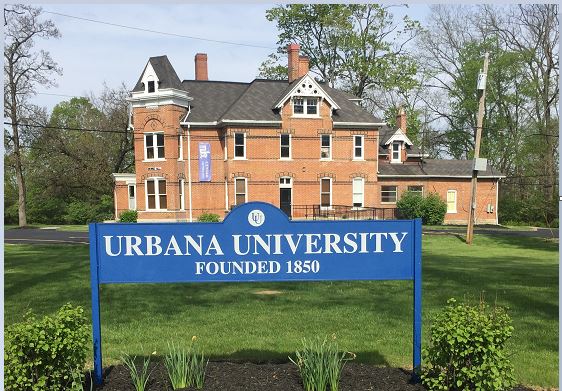
    If you’ve followed my journey, you know that I earned my undergraduate degree from Urbana University, a small private college in Urbana, Ohio—a city with a current population of 11,161. In 1975, I designed my own major in College Administration, combining courses in business, history/political science, and psychology. During my senior year, I also completed a year-long internship in admissions.

    As a nontraditional student (having started at the University of Dayton in 1968), it took me 6 ½ years and over 30 part-time jobs to complete my degree. Urbana gave me the opportunity to figure out what I wanted to do and how I could contribute to the world. It taught me adaptability and the goodness in people, which led me to the field I love—higher education.

    Unfortunately, Urbana University didn’t survive. After being acquired by Franklin College in 2014, it closed its doors in May 2020 due to challenges brought on by the coronavirus pandemic and years of low enrollment.

    Urbana had been an integral part of the community since 1850, serving as a significant economic engine. A 2017 study by the Southwestern Ohio Council for Higher Education estimated that Urbana contributed over $60 million annually to the economies of Champaign and Logan counties and employed 111 full-time staff during the 2015-2016 academic year. Its closure was devastating—not only for the university but also for the local businesses that depended on the foot traffic of students, visitors, and sports spectators.

    Rural colleges like Urbana serve as vital economic and social hubs for their communities. However, the increasing trend of college closures poses significant risks, including economic downturns, reduced social engagement, and the loss of cultural identity.


    Moving Forward

    To address this issue, I’m developing a funding proposal to analyze the multifaceted impacts of struggling colleges in rural areas. My goal is to propose actionable solutions and share findings that empower policymakers and community leaders. By combining innovative research, advocacy, and problem-solving, this initiative seeks to provide practical tools for fostering resilient rural communities.

    The research will focus on rural communities in Indiana, Ohio, and Pennsylvania. I’ve already received encouragement from regional leaders and am optimistic about finding partners to support this initiative. I’m seeking foundations, corporations, and government agencies to help fund this project, which aims to mitigate the ripple effects of college closures in rural America.

    If you have thoughts or suggestions on this topic—or know of potential funders—please feel free to contact me at [email protected].

    Stay tuned for updates on this and other projects I’m passionate about.


    Dean Hoke is Co-Founder and Managing Partner of Edu Alliance, an international higher education consultancy and podcast co-host of Higher Ed Without Borders and Small College America. He recently served as President/CEO of the American Association of University Administrators.

    Dean began his professional career in 1975 with Bellarmine University, working in a variety of roles, including Admissions and External Relations. In 1983, he entered the broadcasting field, serving as a senior executive for Public Broadcasting System stations and a cable network. In 1998, he co-founded The Connected Learning Network, a full-service online learning company. In 2009, he accepted an invitation to move to the United Arab Emirates, serving in senior positions at Higher Colleges of Technology and Khalifa University before co-founding Edu Alliance in Abu Dhabi in 2014.

    Hoke is passionate about advancing academic excellence and innovation worldwide.  He participates in numerous advisory and consulting projects on international branch campuses, marketing/branding, and business intelligence. Dean has consulted, presented, and written on leadership, higher education, and distance learning in the United States, Bahrain, Kazakhstan, Lebanon, Oman, Nigeria, Spain, and the United Arab Emirates.

    Hoke has a B.A. from Urbana University, an M.S. from the University of Louisville, and a Certificate in Executive Management from the University of Pennsylvania Wharton School. Dean currently resides in Bloomington, Indiana.

    Source link

  • As diversity rates at elite colleges hang in the balance, some students still face increased exclusion and barriers

    As diversity rates at elite colleges hang in the balance, some students still face increased exclusion and barriers

    Diversity rates at several elite colleges and universities have plummeted, a little over a year after the Supreme Court’s restriction on race-conscious admissions. It’s a divisive but unsurprising blow to historically underrepresented students seeking educational opportunity and access.

    While demographic data is still forthcoming, the challenges these students face to attend certain colleges continue to build. MIT, Amherst College, and Tufts have already seen sharp declines in the diversity of their student populations.

    But not all is lost. Ethnically diverse students have options to express their full identities, and organizations providing services to them have options to support these students’ overall success through postsecondary pathways.

    While assessing the state of race in higher education admissions, we cannot ignore its historical context in colleges in America. Colleges and universities were built by and explicitly served the educational needs of wealthy white men. For too long, the only people of color on campus were the (often enslaved) servants of white students.

    We should also bear in mind that, at elite universities today, the students who are overlooked in favor of race-neutral policies are not the only ones who miss out — students already on campus lose out on the richness that having a diverse array of educational experiences can provide, with their opportunities to encounter alternative viewpoints limited.

    Related: Interested in innovations in the field of higher education? Subscribe to our free biweekly Higher Education newsletter.

    Oftentimes, first-generation, Black, Hispanic and Native American students experience an inherent and often unspoken isolation on campus at predominantly white institutions.

    As a Black Chicana, I vividly remember being the singular student of color in my freshman-year seminar at Michigan State. My experience was not without the awkwardness of questioning my own merit and if I belonged there in the first place. We traveled to Ireland, and due to the humidity, I put on my silk bonnet to protect my hair. It was met with questions and stares.

    Here we are in 2025, discussing the all-too-familiar concept of racial bias in America, while institutions are bound by new laws that result in restricted access for the students whose right to educational access has historically been systematically denied. So what can we do?

    While it requires creativity, students can still highlight who they are in their applications by foregrounding their lived experiences outside of their grades, test scores and academic histories. For example, students can share the intricacies of being a historically marginalized person in America — from being asked to speak English to being pulled over for driving while Black. They can write about their experiences and identities in personal statements and on their resumes and through discussions of their community involvement. Students owe it to themselves to share their personal moments of overcoming barriers in everyday life.

    Related: What’s a college degree worth? States start to demand colleges share the data

    Institutions can ask essay questions that provoke such responses and allow students to share without prejudice or fear of reprisal. Students’ insightful perspectives should be applauded by educational institutions, and the power of their words should be respected.

    Underrepresented students also have options other than the traditional elite universities. Historically Black colleges and universities (HBCUs) and Hispanic-serving institutions (HSIs) are an alternative to predominantly white institutions like the ones mentioned above. Students can make the college experience what they want and need, and it is no different at smaller institutions like Lane College, an HBCU, or Colorado State University, Pueblo, an HSI.

    At these schools, a student’s culture and identity are revered and shared. Educational institutions that see the value in diversity should be reconsidered as the best option for ethnically diverse students.

    And, as educational institutions grapple with the effects of the Supreme Court ruling, they should support the students from historically marginalized populations already on their campuses to ensure that they feel welcome, supported and valued. Building robust affinity groups not only provides current students with communities they can co-create and adapt to their needs, but also demonstrates that the institutions are committed to creating spaces for all students.

    Scholarship providers and organizations that support underrepresented students will continue to play a vital role in fostering diversity on college campuses. Mission-driven organizations like the one I work for, the Sachs Foundation, still help Black students who lack the financial capacity or easy access to attend elite schools like MIT and Brown.

    Students deserve to have their whole selves valued, welcomed and supported when applying for higher education.

    Pamela Roberts-Mora is the chief operations officer at the Sachs Foundation, serving Black youth from Colorado through educational and community programs. She was a first-generation college student.

    Contact the opinion editor at [email protected].

    This story about college diversity was produced by The Hechinger Report, a nonprofit, independent news organization focused on inequality and innovation in education. Sign up for our higher education newsletter. Listen to our higher education podcast.

    The Hechinger Report provides in-depth, fact-based, unbiased reporting on education that is free to all readers. But that doesn’t mean it’s free to produce. Our work keeps educators and the public informed about pressing issues at schools and on campuses throughout the country. We tell the whole story, even when the details are inconvenient. Help us keep doing that.

    Join us today.

    Source link

  • Report: Community Colleges Are Leaving Millions in Medicaid Funding on the Table Each Year

    Report: Community Colleges Are Leaving Millions in Medicaid Funding on the Table Each Year

    According to a newly released report, community colleges miss out on at least $115 million in available Medicaid funding each year. Only 3% of community colleges bill Medicaid for services, despite 84% of community colleges likely being eligible for Medicaid reimbursement. 

    The report, “Increasing Student Support and Success by Boosting Medicaid Engagement,” draws on data collected from a review of over 1,000 community colleges.

    “There is a missed opportunity right now where community colleges could be getting in a significant source of recurring funds that they are not currently claiming,” said Ryan Stewart, report co-lead and Founder and CEO of Mile 2 Consulting, LLC. “I want to raise awareness of that and try to build a culture where more community colleges take advantage.” 

    There are growing mental health concerns among college students and an increase in demand for all student health services among community college students. Unfortunately, the demand for student health services often exceeds a community college’s resources.

    Eligible health services include but are not limited to, psychological services, counseling, nursing services, physical therapy, Medicaid outreach and case management. According to Stewart, the call for community colleges to consider Medicaid reimbursements is more critical now than ever.

    “We’ve seen this growing need for particularly mental health resources at at the college level, and we’ve also seen that many colleges relied on COVID relief funding,” said Stewart. “Those funds are now expired, so you have a lot of schools right now who are looking for ways to sustainably replace those funds, and Medicaid could be a really important source.”

    Stewart previously served as the Secretary of Education for New Mexico and has inspired his thinking about how K-12 schools accessed student resources through Medicaid.

    “In that role we had done a lot of work with our Human Services department because they were really passionate about making sure K-12 schools knew about Medicaid and were doing all they could to claim all available funds,” he said. “Since I’ve left that role, I’ve done a lot of work to try to look at this from a national perspective.”

    Dr. Sara Goldrick-Rab, report co-lead and senior fellow at Education Northwest, brought a higher education perspective to the project.

    “For more than a decade I’ve documented the clear need for community colleges to offer basic needs and related health services,” said Goldrick-Rab, who is also a columnist for Diverse. “A growing number of administrators are trying to offer that help to students but struggle to afford the costs. My hope is that this report spurs action and increases funding available to support student success at community colleges.” 

    Stewart and Goldrick-Rab projected the amount of money that community colleges could potentially generate through Medicaid reimbursement claims, taking into account the health services currently offered at the school, an estimate of the number of students receiving each category of services, an estimate of the number of Medicaid-eligible students enrolled at the school and an estimate of the average reimbursement per student.

    According to the report, community colleges in the United States could collectively generate approximately $115 million in recurring reimbursement revenue from Medicaid.

    “Healthcare access is a critical component of student success and if students are experiencing either mental health or physical health crises and don’t have access to care, that can be a barrier to successful post-secondary completion,” said Stewart. “But that has to be funded. A lot of these services are not cheap, and for colleges who are looking for every resource to try to sustain their whole portfolio of programming, finding sustainable resources like [Medicaid] where money is already appropriate could really make a big difference if you’re looking to either sustain or expand health service programming.”

    When asked why they choose not to claim Medicaid reimbursements for eligible services, community college administrators listed several reasons, including the lack of capacity to manage the Medicaid billing process.

    “​​The primary barrier colleges face when accessing this funding is a lack of information about its existence and what’s required to obtain it. Ironically, that’s the same challenge students face when accessing other funding like financial aid and SNAP,” said Goldrick-Rab. “Of course, some colleges will still struggle to have sufficient staff to offer services in the first place, [because] you have to offer them in order to be reimbursed and deal with the billing.

    Goldrick-Rab said she and Stewart hope to offer technical assistance to teach colleges how to manage this process adequately.

    “I believe addresssing the informational barriers alone will close a lot of the gap. Imagine if even 50% of the colleges offering eligible health services got Medicaid reimbursement, compared to just 3%? That would be a major win,” she added.

    The report provides recommendations for community colleges, state Medicaid agencies, and the Center for Medicare and Medicaid Services. It urges community colleges to create partnerships with their state Medicaid agencies so that they can be informed about their eligibility and request the support needed to optimize health services and revenue potential.

    “Everyone is talking about the student mental health crisis, but until now, I haven’t seen many offering funding options,” said Goldrick-Rab. “We have to ensure community colleges have the resources needed to do this critical work.”

    Source link

  • Trump’s sex and gender order could create risk for colleges

    Trump’s sex and gender order could create risk for colleges

    While running for president, Donald Trump pledged to fight the Biden administration’s efforts to expand protections for transgender students. On day one of his second term in office, he got to work fulfilling that promise.

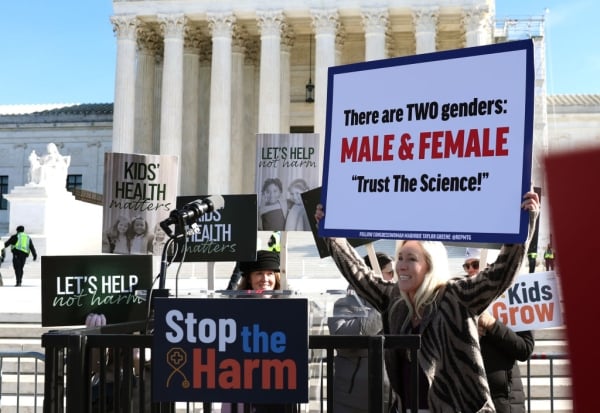
    In an executive order, which is part of a broader effort to restrict the rights of transgender people, Trump declared that there are only two sexes and banned the federal funding of “gender ideology.” His supporters hailed the move as a return to common sense, while LGBTQ+ advocates saw it as an attack seeking to erase the existence of trans people.

    For colleges and universities, the order raises more questions than it answers, and its immediate implications are unclear. As with other executive orders, it includes many provisions that require the Education Department to take action and issue guidance about how colleges should comply. But depending on how the department responds, the order could complicate institutions’ efforts to accommodate transgender students and eventually change how the federal government enforces Title IX of the Education Amendments of 1972.

    Susan​​​​ Friedfel, a higher education attorney at Jackson Lewis, a New York City law firm that works with colleges and other employers, said more information is needed from the Education Department to determine how the order will affect higher ed institutions, especially since other federal and state laws protect LGBTQ+ students.

    “We have a lot of questions,” she said. “It’s challenging because we have conflicting laws that apply to the same space.”

    In the meantime, she encouraged colleges to revisit their Title IX policies to ensure they are in compliance with the 2020 regulations put in place by the first Trump administration and to think about how best to accommodate everybody.

    The order, titled “Defending Women From Gender Ideology Extremism And Restoring Biological Truth to the Federal Government,” defines “sex,” “male” and “female,” among other terms, and orders federal agencies to use those definitions when “interpreting or applying statutes, regulations, or guidance and in all other official agency business, documents, and communications.”

    The order is likely to face legal challenges, said Cathryn Oakley, senior director of legal policy at the Human Rights Campaign, who argues that it’s unlawful.

    “It is important that people not give this executive order more credence than it deserves,” she said.

    Other LGBTQ+ advocates echoed Oakley, emphasizing that executive orders don’t create or change laws.

    “Discrimination based on sex, including discrimination against transgender, nonbinary, and intersex people, remains illegal, and it cannot be legalized through this executive order,” Fatima Goss Graves, president and CEO of the National Women’s Law Center, said in a statement.

    But Republican lawmakers, conservative legal organizations and other anti-trans advocates applauded Trump’s order, saying it would protect women and girls from discrimination and ground federal law in “biological fact.”

    “Blatant and deliberate attempts to redefine our sons’ and daughters’ identities by questioning biology itself has done significant harm to our children and society,” said Representative Tim Walberg, the Michigan Republican who chairs the House education committee. “[The] action by the Trump administration acknowledges the biological differences between men and women. In doing so, it is protecting women from discrimination and securing the progress women have made over the decades.”

    What’s in the Order

    In addition to defining “sex” and other terms, the order outlines a plan to combat “gender ideology,” which the Trump administration defines as replacing “the biological category of sex with an ever-shifting concept of self-assessed gender identity, permitting the false claim that males can identify as and thus become women and vice versa.”

    Federal officials were told to remove any internal or external documents that “inculcate gender ideology” and take “any necessary steps to end the federal funding of gender ideology.” Additionally, agencies will now only use the term “sex” instead of “gender” in all applicable federal policies and documents, according to the order. The Biden administration gave people the option on passport applications to mark their gender as X rather than choose male or female. That option is now being eliminated.

    On Thursday, Secretary of State Marco Rubio said that the State Department wouldn’t process any passport applications seeking to change the applicant’s gender from male to female or requesting the X option, The Guardian reported.

    Agencies are required to give an update on their efforts to implement the order in 120 days.

    The Trump administration also directed the attorney general to correct the Biden administration’s “misapplication” of the Supreme Court’s 2020 decision in Bostock v. Clayton County, which said that LGBTQ+ individuals were protected from discrimination in the workplace on the basis of sexual orientation or gender identity under Title VII of the Civil Rights Act of 1964.

    The first Trump administration said that Bostock didn’t apply to Title IX, which bars sex-based discrimination in education settings. But the Biden administration reversed that guidance in June 2021.

    The Bostock decision was key to the Biden administration’s new Title IX regulations, which clarified that the law also prohibits discrimination based on sexual orientation or gender identity. A federal judge ruled earlier this month that the new Title IX rule was unlawful and wiped the regulations off the books.

    Trump’s executive order also requires the education secretary to rescind a number of guidance documents related to the now-vacated Title IX regulations, as well as resources for supporting LGBTQ+ students. That includes the Education Department’s June 2021 Dear Colleague letter that said Title IX protects LGBTQ+ students from discrimination based on their sexual orientation or gender identity.

    In addition, the Trump administration is rescinding a back-to-school message for transgender students from the Departments of Education, Justice and Health and Human Services that provided resources for students who experience bullying or discrimination.

    ‘Nothing Radical’

    Kim Hermann, the executive director of the Southeastern Legal Foundation, a conservative legal organization that sued the Biden administration over the Title IX regulations, said Trump’s order immediately restores the privacy and physical safety rights of women, so colleges that don’t comply could face federal civil rights investigations or lawsuits.

    “There’s nothing radical about this executive order,” she said. “All it does is solidify Congress’s original intent when they passed the laws … Our girls and our women on college campuses are sick of their rights being eroded.”

    Friedfel said the current Trump administration will likely investigate complaints from cisgender students who are uncomfortable sharing spaces with transgender students.

    “That doesn’t mean that they necessarily have to do anything radically different, but recognize that there’s that risk there,” she said.

    Oakley said that guidance from the department is necessary for universities to understand what’s expected of them and how the Office for Civil Rights will enforce Title IX. She doesn’t expect OCR to take discrimination against LGBTQ+ faculty, staff and students seriously.

    “It’s also going to be very difficult to understand how to be in compliance when the folks who are enforcing the law are not respecting the actual case law,” she said. “So it is going to create a tremendous amount of confusion.”

    Source link

  • Trump signs executive order targeting DEI policies at colleges

    Trump signs executive order targeting DEI policies at colleges

    This audio is auto-generated. Please let us know if you have feedback.

    Dive Brief:

    • President Donald Trump signed an executive order Tuesday targeting diversity, equity and inclusion programs at colleges and other “influential institutions of American society,” escalating the Republican-led crusade against DEI. 
    • The executive order declares that DEI policies and programs adopted by colleges and others can violate federal civil rights laws and directs federal agencies to “combat illegal private sector DEI preferences, mandates, policies, and activities.”
    • Trump’s order also directs each federal agency to identify up to nine corporations or associations, large foundations, or colleges with endowments over $1 billion as potential targets for “civil compliance investigations.”

    Dive Insight: 

    Republicans have railed against diversity and inclusion programming on college campuses for years, with state lawmakers enacting 14 pieces of legislation that restrict or bar DEI since 2023, according to a tally from The Chronicle of Higher Education. 

    Federal lawmakers have likewise targeted DEI programs at colleges in hearings and proposed bills. With Trump’s flurry of recent executive orders, however, the newly sworn-in president has made clear that his administration will ramp up the fight against DEI at the federal level. 

    “Institutions of higher education have adopted and actively use dangerous, demeaning, and immoral race- and sex-based preferences under the guise of so-called ‘diversity, equity, and inclusion,’” the order states. 

    Jeremy Young, director of state and higher education policy at PEN America, a free expression organization, voiced concerns about the executive order. 

    “It launches a series of investigations into universities for merely having a DEI office or promoting DEI, diversity work on their campus,” Young said. “That, to us, is a pretty straightforward violation of the intellectual freedom of a university to promote ideas of all kinds on its campus.”

    At minimum, government investigations could amount to a nuisance, but at maximum, they could lead to lawsuits and actions against colleges, Young added. 

    Young also said the order is designed to sow division in the higher education sector by targeting colleges with endowments worth $1 billion or more. 

    “My hope is that higher education institutions will see this attack on a subset of their members as an attack on everyone,” Young said. 

    Trump’s new order also lacks a clear definition of what it deems as DEI programs or policies, Young said, raising concerns about unconstitutionally vague language. 

    State bills banning DEI similarly don’t have clear definitions, Young said. 

    “They become effectively a license to censor,” Young said. “Any government agency looking at them can claim that something is DEI because there is no actual definition in the order.”

    Trump’s order directs the nation’s attorney general, in consultation with federal agencies, to propose potential litigation against the private sector to enforce civil rights laws. It also orders agencies to identify “potential regulatory action and sub-regulatory guidance.”

    Trump also directed the U.S. education secretary to work with the nation’s attorney general to issue guidance to federally funded colleges within the next 120 days regarding how they can comply with the landmark 2023 Supreme Court decision that struck down race-conscious admissions. Trump’s nominee for education secretary, former World Wrestling Entertainment president and CEO Linda McMahon, is awaiting Senate confirmation hearings for the post.

    Tuesday’s executive order comes after he signed several other directives on the first day of his presidency meant to dismantle DEI efforts within the federal workforce. 

    Tim Walberg, the Michigan Republican who chairs the House Committee on Education and Workforce, lauded the executive actions against DEI. 

    “DEI has bloated education budgets while telling students what to think instead of how to think,” Walberg said in a Wednesday statement. “I commend the Trump administration for dismantling DEI.” 

    Tuesday’s executive order clarifies that instructors at colleges that get federal aid are not prohibited from “advocating for, endorsing, or promoting the unlawful employment or contracting practices prohibited by this order” in their academic courses. 

    But Young said he hasn’t seen any legislation or executive order claiming to restrict DEI that doesn’t also restrict faculty instruction or roles in some way. “We have come to the conclusion that it may be impossible to do that,” Young said. 

    Trump’s order also says it does not prevent colleges from engaging in speech protected by the First Amendment. 

    Young, however, said language like this amounts to a meaningless statement, as the First Amendment supersedes an executive order.  

    “The problem is that the language plainly does violate the First Amendment, and therefore it’s going to be years before the courts adjudicate it and, meanwhile, people have to live under these executive orders,” Young said.

    Source link

  • Trump administration allows immigration arrests at colleges

    Trump administration allows immigration arrests at colleges

    The acting secretary of the Department of Homeland Security on Tuesday rescinded guidance that prevented immigration arrests at schools, churches and colleges.

    Since 1993, federal policy has barred immigration enforcement actions near or at these so-called sensitive areas. The decision to end the policy comes as the Trump administration is moving to crack down on illegal immigration and stoking fears of mass deportations. 

    “This action empowers the brave men and women in [Customs and Border Protection] and [Immigration and Customs Enforcement] to enforce our immigration laws and catch criminal aliens—including murders and rapists—who have illegally come into our country,” acting DHS secretary Benjamine Huffman said in a statement. “Criminals will no longer be able to hide in America’s schools and churches to avoid arrest. The Trump administration will not tie the hands of our brave law enforcement, and instead trusts them to use common sense.”

    Advocates for undocumented people have warned that such a policy change was possible, and some college leaders have said they won’t voluntarily assist in any effort to deport students or faculty solely because of their citizenship status, although they said they would comply with the law. On Wednesday, the Justice Department said it would investigate state and local officials who don’t enforce Trump’s immigration policies.

    Source link

  • Colleges were quiet after the Nov. election. Students don’t mind

    Colleges were quiet after the Nov. election. Students don’t mind

    Colleges can be hot spots for debate, inquiry and disagreement, particularly on political topics. Sometimes institutional leaders weigh in on the debate, issuing public statements or sharing resources internally among students, staff and faculty.

    This past fall, following the 2024 presidential election, college administrators were notably silent. A November Student Voice survey found a majority (63 percent) of student respondents (n=1,031) said their college did not do or say anything after the election, and only 17 percent released a statement to students about the election.

    A more recent survey from Inside Higher Ed and Generation Lab found this aligns with students’ preferences for institutional response.

    Over half (54 percent) of respondents (n=1,034) to a December Student Voice survey said colleges and universities should not make statements about political events, such as the outcome of the 2024 presidential election. One-quarter of students said they weren’t sure if institutions should make statements, and fewer than a quarter of learners said colleges should publish a statement.

    Across demographics—including institution size and classification, student race, political identification, income level or age—the greatest share of students indicated that colleges shouldn’t make statements. The only group that differed was nonbinary students (n=32), of whom 47 percent said they weren’t sure and 30 percent said no.

    Experts weigh in on the value of institutional neutrality and how college leaders can demonstrate care for learners without sharing statements.

    What’s the sitch: In the past, college administrators have issued statements, either personally or on behalf of the institution, to demonstrate care and concern for students who are impacted by world events, says Heterodox Academy president John Tomasi.

    “There’s also an element, a little more cynically, of trying to get ahead of certain political issues so they [administrators] couldn’t be criticized for having said nothing or not caring,” Tomasi says.

    Students Say

    Even with a majority of colleges and universities not speaking out after the 2024 election, some students think colleges are still being supportive.

    The November Student Voice survey found 35 percent of respondents believed their institution was offering the right amount of support to students after the election results, but 31 percent weren’t sure.

    The events of Oct. 7, 2023, proved complicated for statement-issuing presidents, with almost half of institutions that published statements releasing an additional response after the campus community or others pushed back. Initial statements, according to one analysis, often lacked caring elements, such as the impact to students or health and well-being of university community members in the region.

    A growing number of colleges and universities are choosing to opt out of public political conversations at the executive level, instead selecting to be institutionally neutral. Heterodox Academy, which tracks colleges’ commitments to neutrality, saw numbers rise from a dozen in 2023 to over 100 in 2024.

    Some students are experiencing political fatigue in general, says Vanderbilt University chancellor Daniel Diermeier, particularly relating to the war in Gaza. “This dynamic of ‘which side are you on, and if you’re not with me, you’re against me’ was troubling to many students and was exhausting and had a detrimental impact on the culture of learning, exploration and discussion.”

    Vanderbilt University has held a position of neutrality for many years, part of a free expression policy, which it defines as a “commitment to refrain from taking public positions on controversial issues unless the issue is materially related to the core mission and functioning of the university.”

    College students aren’t the only group that want fewer organizations to talk politics; a November survey by Morning Consult found two-thirds of Americans believe companies should stay out of politics entirely after the 2024 presidential election and 59 percent want companies to comment neutrally on the results.

    However, an earlier survey by Morning Consult found, across Americans, 56 percent believe higher education institutions are at least somewhat responsible for speaking out on political, societal or cultural issues, compared to 31 percent of respondents who say colleges and universities are not too or not at all responsible.

    Allowing students to speak: Proponents of institutional neutrality say the practice allows discourse to flourish on campus. Taking a position can create a chilling effect, in which people are afraid to speak out in opposition to the prevailing point of view, Diermeier says.

    Recent polls have shown today’s college students are hesitant to share their political opinions, often electing to self-censor due to fears of negative repercussions. Since 2015, this concern has grown, with 33 percent of respondents sharing that they feel uncomfortable discussing their political views on campus, compared to 13 percent a decade ago.

    Part of this hesitancy among students could be an overstepping on behalf of administrators that affirms the institution’s perspective on issues one way or another.

    “I hear from students that they want to be the ones making the statements themselves … and if a president makes a statement first, that kind of cuts off the conversation,” says Tomasi, who is a faculty member at Brown University.

    A majority of campus community members want to pursue learning and research, Diermeier says, and “the politicization that has taken hold on many university campuses … that is not what most students and faculty want.”

    Institutional neutrality allows a university to step back and empower students to be political agents, Tomasi says. “The students should be platformed, the professors should be platformed, but the university itself should be a neutral framework for students to do all those things.”

    Neutral, not silent: One distinction Tomasi and Diermeier make about institutional neutrality is that the commitment is not one of silence, but rather selective vocalization to affirm the university’s mission.

    “Neutrality can’t just be the neutrality of convenience,” Tomasi says. “It should be a neutrality of a principle that’ll endure beyond the particular conflict that’s dividing the campus, because it celebrates and stands for and flows from that high ideal of university life as a community of imperfect learners that does value intellectual pluralism.”

    Another area in which universities are obligated to speak up is if the issue challenges the core mission of an institution. Examples of this could include a travel ban against immigration from certain countries, a tax on endowments, a ban on divisive topics or scrutiny of admissions practices.

    “On issues that are core to the academic mission, we’re going to be vocal, we’re going to be engaged and we’re going to be advocates,” Diermeier says, and establishing what is involved in the core mission is key to each institution. “Inside the core doesn’t mean it’s not controversial—it just means it’s inside the core.”

    So what? For colleges and university leaders considering how to move forward, Diermeier and Tomasi offer some advice.

    • Start with the mission in mind. When working with learners, practitioners should strive to advance the mission of seeking knowledge and providing a transformative education, Diermeier says. For faculty in particular, it’s important to give students “room to breathe” and to be exposed to both sides of an argument, because there’s power in understanding another position, even if it’s not shared.
    • Create space for discourse. “It’s expected that the groups that are organized and vocal, they’re more in the conversation and claiming more of the space,” Diermeier says. “It’s our responsibility as leaders of universities to make sure that we are not being unduly influenced by that.” Students should be given the opportunity to engage in free speech, whether that’s protesting or counterprotesting, but that cannot dictate administrative decisions. Vanderbilt student organizations hosted debates and spaces for constructive dialogue prior to the election, which were well attended and respectful.
    • Lean into the discomfort. Advancing free speech and scholarship can be complicated and feel “unnatural,” Tomasi says, because humans prefer to find like-minded people and others who agree with their views, “but there’s something pretty elevated about it that’s attractive, too,” to students. Colleges and universities should consider how promoting discourse can help students feel they belong.
    • Provide targeted outreach. For some issues, such as natural disasters, colleges and universities can provide direct support and messaging to impacted students. “It’s just so much more effective and it can be targeted, and then the messages are also more authentic,” Diermeier says.

    Not yet a subscriber to our Student Success newsletter? Sign up for free here and you’ll receive practical tips and ideas for supporting students every weekday.

    Source link

  • How five colleges recognize the National Day of Racial Healing

    How five colleges recognize the National Day of Racial Healing

    Racial healing circles, or opportunities for community members to share stories and connect on a human level, are common activities for the National Day of Racial Healing. This year is the ninth observance of the holiday.

    AJ Watt/E+/Getty Images 

    Over the past two decades, higher education has grown exceptionally diverse, enrolling students from all backgrounds and offering opportunities for education and career development for historically underserved populations.

    This diversification of the students, staff and faculty who make up higher education also offers opportunities for institutions to promote justice and racial healing through intentional education and programming. One annual marker of this work is the National Day of Racial Healing.

    The background: The National Day of Racial Healing was established by the W. K. Kellogg Foundation in 2017 as part of the Truth, Racial Healing and Transformation (TRHT) initiative to bring people together and inspire action to build a more just and equitable world.

    The day falls on the Tuesday after Martin Luther King Jr. Day and is marked by events and activities that promote racial healing. Racial healing, as defined by the foundation, is “the experience shared by people when they speak openly and hear the truth about past wrongs and the negative impacts created by individual and systemic racism,” according to the effort’s website.

    On campus: The American Association of Colleges and Universities encourages institutions to “engage in activities, events or strategies to promote healing and foster engagement around the issues of racism, bias, inequity and injustice in our society,” according to a Dec. 18 press release. AAC&U partners with 72 institutions to establish TRHT Campus Centers, with the goal of developing 150 self-sustaining community-integrated centers.

    Some ways institutions can do this is through organizing activities, inviting faculty to connect course material to racial healing during that week, coordinating events or sharing stories on social media, according to AAC&U.

    Here’s how colleges and universities, many that host TRHT Campus Centers, plan to honor the National Day of Racial Healing.

    • Baldwin Wallace University in Ohio will host two Jacket Circles for students to participate in storytelling and deep listening to build empathy and compassion. The University of Louisville, similarly, will host Cardinal Connection Circles.
    • Emory University in Georgia will hold a three-day event, beginning on Jan. 21, that includes a keynote, lunch-and-learn panel discussion, racial healing circles, and a dinner experience.
    • Binghamton University, part of the State University of New York system, will host its first National Day of Racial Healing this year, which includes healing circles, roundtable discussions and art-based initiatives.
    • The TRHT Center at Northern Virginia Community College will partner with the Fairfax County Board of Supervisors to issue a formal proclamation in a public forum, acknowledging the importance of the day, a tradition for the two groups.
    • The University of Hawai‘i at Mānoa will take a pause today to recognize the overthrow of the Hawaiian kingdom, as well as the legacy of Martin Luther King Jr. and the National Day of Racial Healing. The event, Hawai‘i ku‘u home aloha, which “Hawai‘i my beloved home,” honors the past, present and future of the islands.

    Get more content like this directly to your inbox every weekday morning. Subscribe here.

    Source link