The Office for Civil Rights is investigating five universities for offering scholarships to undocumented students, the Education Department announced Thursday.
The universities of Louisville, Nebraska Omaha, Miami, Michigan, and Western Michigan University have been accused of violating Title IV of the Civil Rights Act of 1964, which prohibits discrimination against or otherwise excluding individuals on the basis of race, color, or national origin, in offering the scholarships.
“Neither the Trump Administration’s America first policies nor the Civil Right Act of 1964’s prohibition on national origin discrimination permit universities to deny our fellow citizens the opportunity to compete for scholarships because they were born in the United States,” said Acting Assistant Secretary for Civil Rights Craig Trainor in a statement.
Trainor said the department is expanding its enforcement efforts to “protect American students and lawful residents from invidious national origin discrimination.”
The scholarships at issue that allegedly provide exclusionary funding based on national origin include the University of Miami’s U Dreamers Program and University of Michigan’s Dreamer Scholarship.
The investigations are in response to complaints submitted to OCR by the Equal Protection Project (EPP), an initiative from the Legal Insurrection Foundation (LIF), a national free speech advocacy group founded by Cornell law professor William A. Jacobson.
EPP describes itself as “devoted to the fair treatment of all persons without regard to race or ethnicity” and lists as part of its “Vision:2025” “continued OCR complaints” “strategic lawsuits” and “media-narrative setting.”
LIF also runs criticalrace.org, a series of databases cataloguing admissions policies, programming, funding models and other instances of alleged critical race training.
In a statement provided by the department, Jacobson said: “Protecting equal access to education includes protecting the rights of American-born students. At the Equal Protection Project, we are gratified that the Department of Education’s Office for Civil Rights is acting on our complaints regarding scholarships that excluded American-born students.”
The Department of Education also is planning to investigate the colleges for other scholarships detailed in the complaint that provide funding to undergraduate LGBTQ+ students of color, Hispanic students, Native American students, African American students and other underrepresented student groups.
Kansas public university leaders have ordered employees to remove “gender-identifying pronouns or gender ideology” from their email signatures. The officials say they’re complying with new state prohibitions against diversity, equity and inclusion.
In March, the Republican-controlled Kansas Legislature passed Senate Bill 125, a nearly 300-page piece of budget legislation. The following month, Gov. Laura Kelly, a Democrat, signed it into law. A spokesperson from the governor’s office didn’t respond to Inside Higher Ed’s request for comment on why.
According to a few lines on page 254, the Kansas secretary of administration must certify that all state agencies—including colleges and universities—have eliminated all positions, policies, preferences and activities “relating to diversity, equity and inclusion.”
SB 125 also specifically requires the secretary to certify that agencies have “removed gender identifying pronouns or gender ideology from email signature blocks on state employee’s [sic] email accounts and any other form of communication.” The law doesn’t define DEI or gender ideology.
Kansas isn’t the first state with a GOP-controlled legislature this year to pass nonfinancial public higher ed provisions by inserting them into budget legislation. Among other things, Indiana lawmakers required faculty to undergo “productivity” reviews and post syllabi online, and Ohio lawmakers stressed that boards of trustees have “final, overriding authority to approve or reject any establishment or modification of academic programs, curricula, courses, general education requirements, and degree programs.”
Ross Marchand, program counsel at the Foundation for Individual Rights and Expression, told Inside Higher Ed the new Kansas law is unconstitutional.
“No one knows how to interpret this, and it’s overly broad,” Marchand said. “And both of these issues are fatal for First Amendment purposes.”
Citing the law, the Kansas Board of Regents issued guidance in June directing universities to comply by the end of this month. On July 9, Kansas State University provost Jesse Perez Mendez wrote to K-State’s campuses that “all faculty, staff and university employees—including student employees—are asked to review and update their signature blocks accordingly.”
On Tuesday, the University of Kansas’s chancellor, provost and chief health sciences officer wrote to KU’s campuses that “all employees shall comply with this directive by removing gender-identifying pronouns and personal pronoun series from their KU email signature blocks, webpages and Zoom/Teams screen IDs, and any other form of university communications.”
The leaders also warned against efforts to circumvent the ban.
“Your KU email account is your only official means for sending emails related to your employment at the university,” they wrote. “Do not use an alternate third-party service, such as Gmail, to conduct university business or communications.”
They told supervisors that “employees who have not complied with the new proviso by July 31 should be reminded of it and the deadline.” They told supervisors to contact human resources about those who continue to refuse—while also telling KU community members to “please consider submitting a Support and Care referral” if they “know of a student, staff, or faculty member who needs assistance as a result of this new requirement.”
A KU spokesperson shared the university’s new policy banning pronouns from email signatures. While it broadly says it applies to “all employees and all affiliates that use ku.edu and kumc.edu email addresses,” it also says “this policy shall not apply to or limit or restrict the academic freedom of faculty.”
Joseph Havens, a KU undergraduate student researcher who has he/him/his listed in his email signature, said fellow students are unhappy with the order and are now adding their pronouns in protest. He said he doesn’t know how this will go over after July 31, but “I’m kind of excited to see the drama.”
Havens said listed pronouns help people to avoid assumptions, and helped him personally to avoid misgendering a professor. “It seems very likely to me that the university’s hands are tied on this,” he said. But “in a lot of ways it feels like they agree with it.”
This audio is auto-generated. Please let us know if you have feedback.
Dive Brief:
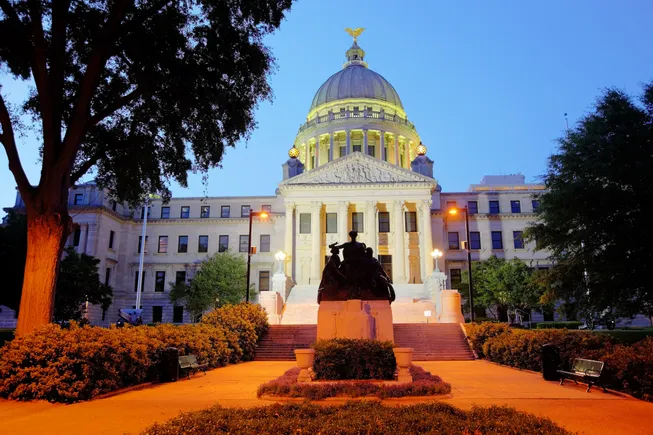
A federal judge on Sunday temporarily blocked enforcement of major parts of a new Mississippi law that bars diversity, equity and inclusion in the state’s public colleges and K-12 schools.
The American Civil Liberties Union of Mississippi and other organizations filed a lawsuit in June on behalf of students and educators, arguing the new law imposes the state government’s views on race, gender and sexuality on public colleges and schools and censors opposing views.
In his ruling, U.S. District Judge Henry Wingate pointed to accounts of educators having their programs shut down or censoring their own speech to ensure they don’t run afoul of the law. The accounts signal “possible widespread suppression of speech, programming, and institutional function,” Wingate wrote.
Dive Insight:
Educator and student groups sued over the law just two months after it took effect in April, arguing the legislation violates their First Amendment right to free speech and is unconstitutionally vague.
“It is difficult for administrators, teachers, and students to distinguish prohibited actions from permissible ones, making the law particularly susceptible to arbitrary and discriminatory enforcement,” the lawsuit said.
One contested aspect of the law is a provision that bans public colleges and K-12 schools from either engaging in or requiring diversity training, which it defines as any formal or informal education meant to increase “awareness or understanding of issues related to race, sex, color, ethnicity, gender identity, sexual orientation, religion or national origin.”
This edict applies to both elective or required courses, according to the lawsuit. The plaintiffs warn of dire consequences from the legislation, arguing its provisions would prohibit constitutional law professors from discussing discrimination and history teachers from teaching about the Civil War and slavery.
Under the bill, colleges and K-12 schools also can’t “engage in” eight “divisive concepts” — a provision the lawsuit calls “extremely broad.” One divisive concept, for instance, is that an individual “by virtue of his or her race, sex, color, national origin, is inherently racist, sexist, or oppressive, whether consciously or unconsciously.”
The lawsuit argues that could block discussions of implicit bias in sociology, psychology and other classes.
Public colleges and K-12 schools that don’t follow the law face a steep penalty if they rack up two violations — the potential loss of state funding. Colleges and schools must “cure” their violations to avoid this punishment, though the legislation doesn’t explain how that can be accomplished, sparking concerns that educators will be fired and students will be expelled, according to the lawsuit.
The legislation also carves out exceptions for “scholarly research or creative work” by students and employees. But the lawsuit argues those carve-outs are unclear and raise questions about whether students could discuss work on one of the banned concepts during class.
“Like other provisions of the act, this exception is vague and further confuses what is and what is not prohibited by the law,” the plaintiffs argued.
The defendants include Mississippi Attorney General Lynn Fitch, as well as the chairs of the state community college system’s coordinating board and education board, among others. They filed a motion to dismiss earlier this month, arguing that the plaintiffs lacked standing to sue and that the attorney general was shielded by sovereign immunity.
However, Wingate wrote that U.S. Supreme Court precedent allows plaintiffs to seek injunctive relief against state officials to prevent constitutional violations.
The temporary restraining order is in effect until further court order. Wingate is holding a hearing Wednesday over whether to grant a preliminary injunction, which would last until he issues a final ruling on the case.
In his ruling, the judge pointed to accounts from educators and students. One plaintiff, a librarian at Hinds Community College, expressed uncertainty about whether she can recommend books on race, gender or identity or curate material for events like Black History Month.
And the director of student development at Tougaloo College said she has suspended programs meant to support LGBTQ+ students out of concern that discussion of gender identity could risk her institution’s funding.
Since the law took effect in April, institutions have been attempting to follow the legislation, often “erring on the side of caution” by canceling programming that could now be prohibited, Wingate noted.
“This Court finds that each day the statute remains unclarified, undefined, and under a threat of open interpretation, exacerbates the suppression of protected speech,” Wingate wrote.
This audio is auto-generated. Please let us know if you have feedback.
Since President Donald Trump retook office, the U.S. Department of Education has launched investigations into several high-profile colleges over their compliance with Section 117,a decades-old law that was largely ignored until 2018.
The law — part of the reauthorization of the Higher Education Actin 1986 — requires colleges that receive federal financial assistance to disclose contracts and gifts from foreign sources worth $250,000 or more in a year to the U.S. Department of Education.
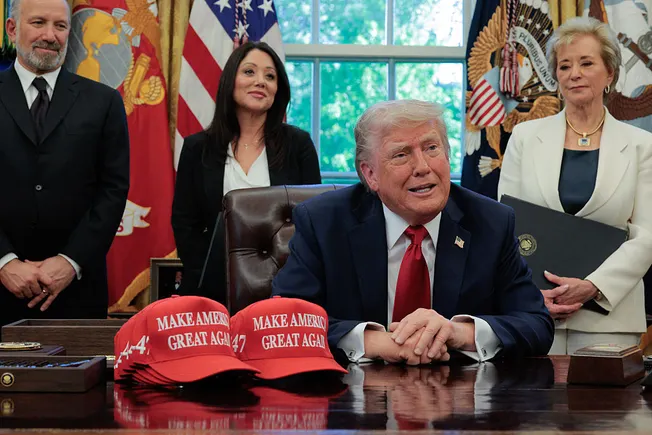
In late April, Trump signed an executive order charging U.S. Education Secretary Linda McMahon to work with other executive agencies, including the U.S. Department of Justice, to open investigations and enforce Section 117.The order also explicitly ties compliance with Section 117 to eligibility for federal grant funding and directs McMahon to require colleges to disclose more specific details about their foreign gifts and contracts.
However, complying with the law is difficult and time-consuming for colleges given the challenges they face collecting the needed data and uploading it to the Education Department’s system, according to higher education experts. That means universities must take steps to ensure they are complying, such as dedicating a staff member to meet the law’s requirements, they said.
Failing to properly do so could put colleges in the crosshairs of the Trump administration and potentially cause them to miss out on federal grants, as higher education experts speculate the executive order will be used as another tool to target institutions’ funding.
“The Trump administration has it out for American higher education, particularly those they have branded elite institutions,” said Jeremy Bauer-Wolf,investigations manager on the higher education program at New America, a left-leaning think tank. “Section 117 is another cudgel for them.”
The history of Section 117
After Section 117 was enacted nearly 40 years ago over concerns about foreign donations to colleges, it was never really implemented by the Education Department and went largely ignored, said Sarah Spreitzer, vice president and chief of staff for government relations at the American Council on Education. People just stopped thinking about the issue and didn’t pay attention to it, she said.
However, concerns in Congress grew in 2018 when then-Federal Bureau of Investigations Director Christopher Wray testifiedbefore a Senate panel that China was exploiting the open research and development environment in the U.S. and universities were naive to the threat.
Proactively monitoring Section 117 and investigating disclosures was seen at the time as a way to “mitigate malign and undue foreign influence,” a Congressional Research Service report released this past February stated.
Following the hearing, the first Trump administration “really started making a show of Section 117,” said Bauer-Wolf.
Between 2019 and2021, the Trump administration opened investigations into prominent institutions such as Harvard University, Georgetown University,Cornell University, the Massachusetts Institute of Technology and Yale University. The administration was more focused on enforcing compliance through investigations than working with colleges to help them understand what the law required, said Spreitzer.
That had a “chilling impact on our institutions,” said Spreitzer. Colleges had a lot of questions about Section 117 reporting that went unanswered because they “were worried that if they called the Department of Education, they would be hit with an investigation.”
The investigations led colleges to report $6.5 billion in “previously undisclosed foreign funds,” according to Trump’s executive order.
When the Biden administration took over, Education Department officials moved enforcement of Section 117 from the Office of the General Counsel to Federal Student Aid. The Biden Education Department also closed several investigations launched under the Trump administration, and it did not open any new ones.
Trump, in his executive order, alleged the Biden administration “undid” the investigatory work completed during his first term. But those investigations had been going on for several years, so it’s unclear whether those probes should or should not have been closed, said Spreitzer.
Today’s enforcement landscape
Since retaking office, the Trump administration has opened Section 117 investigations into several colleges, including the University of Pennsylvania and the University of California, Berkeley, and it has reopened a probe into Harvard University. The Education Department said it needed to verify whether Harvard was complying with the law and with a December 2024 agreement that ended an investigation launched in February 2020 during Trump’s first term.
In the agreement, Harvard said it would submit amended disclosure reports for gifts and contracts received between 2014-2019. But when reopening the investigation, the Education Department said it believed Harvard made inaccurate disclosures, including for the amended reports.
“Unfortunately, our review indicated that Harvard has not been fully transparent or complete in its disclosures, which is both unacceptable and unlawful,” U.S. Education Secretary Linda McMahon said when announcing the latest probe in April.
As part of its new investigation, the administration asked Harvard for information regarding foreign students who were expelled, including the research they conducted, and “all temporary researchers, scholars, students and faculty who are from or affiliated with foreign governments.”
It also asked Penn, among a host of other things, for all tax records since 2017. In addition, the department requested the names of contractors or staff who assisted international students or were involved in the university’s regulatory compliance with the federal Foreign Government Talent Recruitment Program — referring to foreign governments’ initiatives to recruit science and technology students and professionals.
“They are asking broader questions that go beyond the scope of Section 117,” said Spreitzer.
The threat of penalties, meanwhile, is all too real for universities on various fronts. The Trump administration has tried to compel universities to roll back their diversity, equity and inclusion efforts and has paused or terminated federal grants to universities such as Harvard,Princeton University, Northwestern University and Cornell University as it investigates antisemitism and civil rights allegations on their campuses.
Bauer-Wolf said he fears the Section 117 executive order will be used as another “political tool, almost as a shortcut to yanking colleges’ funding.”
“It will be another avenue that the administration can claim that colleges are not following the law, when in fact, this is a law I don’t think anyone had any recognition or compliance with,” he said.
“I really think there are legitimate uses for Section 117,” said Bauer-Wolf, adding that it’s unfortunate the Trump administration and Republicans have “chosen to politicize it — instead of actually trying to find policy that could protect American interests and campuses.”
The new executive order also ties compliance with Section 117 to the False Claims Act — a federal law that penalizes people who knowingly submit false claims to the government.
It’s not clear how the Education Department will use the False Claims Act to enforce Section 117 against individual college officials or professors, said Matthew Kennison, a partner at Kelley Drye, a law firm that represents clients in government Investigations and enforcement proceedings.
But the prospect that the False Claims Act liability could be tied to Section 117 reporting “creates risks to institutions due to its ambiguity and potential broad reach,” said Anne Pifer, managing director of research at consulting firm Huron, which provides risk management and compliance services to higher ed institutions.
“While there is a high degree of uncertainty on the details of enforcement, institutions should expect increased oversight and scrutiny,” Pifer said.
Navigating the landscape
To comply with Section 117 requirements, colleges should follow the Education Department’s published guidance and other resources and, when necessary, seek more specific advice from the department, said Kennison.
But reporting foreign gifts and contracts to the federal government is difficult and time-consuming, said Spreitzer.
An FSA reporting portal allows institutions to upload their Section 117 disclosures. Yet, according to Spreitzer, there’s no way for an institution to upload a spreadsheet listing all of their gifts and contracts.
“They have to go in and enter each gift or contract individually,” said Spreitzer. “For a large institution, it can take several days.”
Then, if an institution makes a mistake, there’s no phone number to call at the Education Department, said Spreitzer. The Biden administration set up an email address, but it’s unclear if it is being closely monitored or responded to in a timely manner, she said.
“It will be another avenue that the administration can claim that colleges are not following the law.”
Jeremy Bauer-Wolf
Investigations manager, New America
An Education Department official disputed Spreitzer’s characterization. Several full-time career staffers continuously monitor the email and respond to institutions’ questions regarding Section 117 reports and reporting issues, the department official said.
Julie Hartman, an Education Department spokesperson, added in an email that the first Trump administration created the reporting portal in 2020 after years of “inadequate disclosures.” The Biden administration did not open any new Section 117 investigations, nor did it update the reporting website’s capabilities, she said.
“The Trump-McMahon Education Department is committed to reinvigorating Section 117 enforcement, including by improving the reporting portal in the coming months,” Hartman said.
A lot of large research institutions have carefully considered how to conduct their Section 117 reporting, Spreitzer said. But it requires “a whole campus effort to be aware of this requirement and to make sure you’re reporting that information twice per year,” Spreitzer said. She worries about the smaller, under-resourced institutions.
Those smaller institutions should designate a single point of contact to conduct the needed due diligence and make decisions on foreign sources that should be reported, Pifer said. And someone should be responsible for consolidating data sources and preparing and verifying the institution’s report, she said.
“Identifying a single point of conduct can minimize the need to train multiple offices on conducting complex reviews and help ensure data integrity,” Pifer said.
Such gifts or contracts are often found in university offices overseeing advancement and alumni relations, research, administration, procurement, bursars, and global affairs, Pifer added. Colleges should create a standard operating procedure or policy to identify and validate the sources of such gifts and contracts, and they should regularly review their gift acceptance and naming policies, she said.
But that work requires buy-in from the key stakeholders involved in collecting that data, she said.
“It is essential for institutions to establish sound practices and methodologies that will be robust and defensible in audits or investigations,” Pifer said.
Compliance through investigations?
The landscape for Section 117 compliance may only get tougher for colleges. The House recently passed a bill, called the Deterrent Act, that would add new reporting requirements to Section 117 and reduce the reporting threshold for foreign gifts and contracts from $250,000 to $50,000.
The bill would also require institutions to get a waiver before entering into a contract with a country “of concern,” which includes China and Russia.They would also have to report all gifts from countries of concern.
Currently before the Senate’s education committee, the bill would also introduce penalties for noncompliance, ranging from fines of $50,000 to losing federal financial aid.
Numerous higher education organizations have opposed the measure. including ACE, arguing it would significantly impede critical research activities and duplicate interagency efforts. The organizations, in a March 25 letter to House leaders, added the Education Department’s expanded data collection was “problematic” and wouldn’t ensure that “actual national security or foreign malign influence threats” are addressed.
“It is essential for institutions to establish sound practices and methodologies that will be robust and defensible in audits or investigations.”
Anne Pifer
Managing director of research, Huron
Brandy Shufutinsky, director of the education and national security program at the Foundation for Defense of Democracies, a conservative research institute, suggested that nonmonetary penalties be considered for colleges that don’t comply with Section 117.
For instance, they could be blocked from granting degrees, have their accreditation reviewed or see their nonprofit status be rolled back. Shufutinsky also recommended implementing a lower reporting threshold and being specific on which departments, professors or centers receive foreign funds and for what purpose.
Trump’s executive order on Section 117 is needed because “foreign funding in the US education system can contribute to foreign influence at those universities,” Shufutinsky said.
Still, the Trump administration’s focus on launching Section 117 investigations, instead of helping institutions with compliance, will make it harder for institutions to ask the Education Department whether they are actually reporting something correctly, said Spreitzer.
“The Trump administration seems to be again, trying to drive compliance through investigations,” said Spreitzer. “I think that chills our campuses from actually asking questions.”
Disclosure: Jeremy Bauer-Wolf was a reporter on Higher Ed Dive from 2019 to 2023.
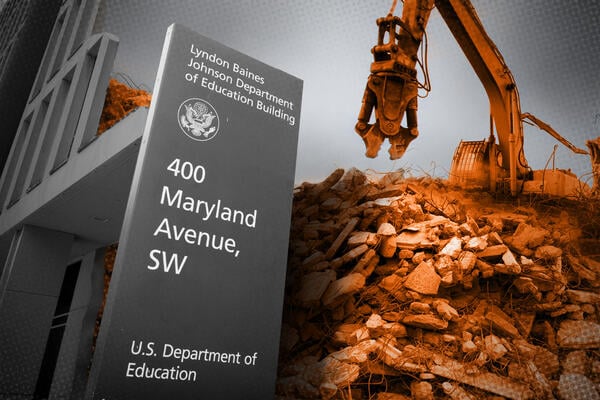
Before the Department of Education laid off half its staff in March, college financial aid officers on the west coast could typically help a student track down their missing login information for the federal aid application in a matter of minutes.
But now, due to limited hours of agency operation, tracking down a student’s Federal Student Aid ID can take days or even weeks; an east coast-based help line, which used to be open until 8 p.m. now closes at 3 p.m.—or noon Pacific time, according to Diane Cooper, the senior financial aid officer at Northwest Career College in Las Vegas.
For Cooper, the reduction in force has upended countless advising sessions and made it difficult to enroll working adult learners with tight schedules.
“When I have a student who’s driven 30 minutes to get here and then we have this issue, I can’t do anything,” Cooper said. “When they did this reduction, I don’t think they thought about colleges on the west coast.”
Over the past three months, the financial aid office at Northwest has tried to be proactive and warn students about retrieving their username and password in advance, but not everyone gets the message in time.
“When [prospective students] face a roadblock, it’s very frustrating,” Cooper said. “I’ve even had some people say, ‘Well, college just must not be meant for me.’”
Difficulties applying for financial aid are just one of the many road bumps students and university staff across the country have faced since Education Secretary Linda McMahon and the Department of Government Efficiency cut the department down to just over 2,000 employees—about half of what it was during the Biden administration.
The Department of Education told Inside Higher Ed that all three of its help lines, the Federal Student Aid Information Center, FSA Partner School Relations and the FPS Helpdesk were open well past noon Pacific time.
“Just within President Trump’s first six months, the Department has responsibly managed and streamlined key federal student aid features, including fixing identity verification and simplifying parent invitations, while ensuring the 2026–27 FAFSA form is on track,” said deputy press secretary Ellen Keast.
But Cooper said ever since the reduction in force if she calls FPS in the afternoon they are closed.
Since March, colleges, advocates and others have noticed lags in communication about financial aid. Between March 11 and June 27, the department also dismissed more than 3,400 civil rights complaints—an unprecedented number, according to one former official. Additionally, the department ended an IPEDS training contract, among other changes at the Institute for Education Sciences, sparking concerns about the future of data collection at the agency.
Some college administrators expressed optimism that the staff shortage would be temporary after a district court blocked the layoffs in May. But the Supreme Court extinguished that hope last week when it overturned the ruling, giving McMahon the go-ahead to proceed with the pink slips and other efforts to dismantle her agency.
Now, higher education experts are adjusting to the reality of a smaller department for potentially years to come.
“It’s a whole lot easier to break things than it is to put them back together again,” said Ted Mitchell, president of the American Council on Education (ACE).
He and others worry that the department’s deficiencies will only get worse as staffers rush to overhaul the federal student loan system and implement other policies in the Big Beautiful Bill over the course of the next year. Add to that President Trump’s plan to dismantle the department by transferring certain programs to other agencies and what you have, Mitchell said, is “a mess.”
“I suppose we all need to adopt a ‘time will tell’ philosophy about this,” he said. “But I for one am not optimistic.”
Keast, on the other hand, said the department is complying with court orders and fulfilling its statutory duties.
“We will continue to deliver meaningful and on time results while implementing the President’s [One Big Beautiful Bill] to better serve students, families, and administrators,” she said.
Behind the Scenes ‘Breakdown’
Cooper and Northwest Career College are not alone in struggling to get help from the Federal Student Aid Office. Nearly 60 percent of colleges and universities experienced noticeable changes in agency responsiveness or processing delays, according to a survey conducted by the National Association of Student Financial Aid Administrators in May.
While 48 percent of respondents ranked front-facing glitches that directly affect students as their top concern, Melanie Storey, NASFAA’s president and CEO, noted that the Free Application for Federal Student Aid and aid distribution have been operating relatively smoothly. Many of the challenges created by the reduction in force, she said, are actually taking place behind the scenes.
Nearly half of the institutions surveyed said that the FSA regional office they reported to had closed, and about a third said they were experiencing gaps in support as a result. Applying for the financial aid eligibility of a new program or addressing compliance concerns was already difficult before the regional offices closed, said Storey, who worked at FSA during the Biden administration. Now it will be even more arduous.
“Our communities are just not getting answers to questions that they have,” she explained. “But if we see a breakdown in that work, we will see a breakdown in the delivery of aid.”
Paula Carpenter, the director of financial aid at Jefferson College, a community college in eastern Missouri, said the biggest unknown is whether she will be able to complete the college’s recertification before the September 30 deadline and maintain its eligibility for federal aid.
In the past, when it was time to begin the recertification process, Carpenter received an email from staff at the FSA Kansas City office, which was one of eight that closed in March.
Now, “I’m uncertain on when I should submit the application, how long it’s going to take, and the impact it will have on other changes along the way,” she said. “The loss of those working relationships we had with the Kansas City participation team is definitely creating a lot of uncertainty.”
Although critics have accused DOGE of operating in a rash and haphazard manner, one senior FSA official told Inside Higher Ed that the decision to cut staff at the regional offices that handled eligibility and compliance was likely deliberate.
“The easiest place to cut is in functions that the broader public doesn’t see, even if they may be impactful,” said the official, who requested anonymity to speak freely. “You can’t cut the FAFSA … and you can’t cut the teams that support the actual technology for dispersing aid and handling repayment, because then borrowers start calling the press and calling Congress,” they added. “But if it just takes longer for schools to go through the process, get questions answered and get support then there’s not a discrete pain.”
But just because the pain may not be publicly distinct, that doesn’t mean colleges aren’t feeling it.
“There’s never been a worse time to be starting or renewing a Title IV program, and there’s never been a better time to be not following Title IV regulations,” the staffer said.
Future of ‘Flying Blind’
Other concerns raised by higher education advocates are more focused on the future.
The sweeping Big, Beautiful Bill, signed into law July 4, includes a swath of higher education policy changes, ranging from revamping student loan repayment plans to introducing a novel accountability metric for colleges. Getting those changes implemented by July 1, 2026 with fewer employees is a tall order for the department, and many higher education advocates worry that the agency will struggle to pull it off.
Mitchell from ACE fears that a general lack of data will hamper efforts to implement the new policies. The Institute for Education Sciences, an agency focused on collecting and analyzing education data to inform policy, was almost entirely gutted by the layoffs. Fewer than 20 employees remain, down from more than 175 at the start of the year, according to the Hechinger Report.The National Center for Education Statistics, one of the most crucial arms of IES, is down to just three staff members.
Without IES fully staffed, Mitchell worries colleges and universities will be held to new student outcome standards based on inaccurate data.
“Who will be on the other side receiving information about program level earnings? We don’t know,” he said, referring to the new post-graduation income test that colleges will have to pass. “If the cuts go through the way they are planned, higher education will largely be flying blind. We won’t know what programs and interventions will work to improve student success at the very moment when higher ed is facing a crisis of confidence about whether it is doing the right thing for students.”
Without the department, colleges will have to increase their own technical capacities, he added, and that comes at a cost.
The department acknowledged that the bill includes major changes to the federal student aid system and the development of a new accountability program but said that, with billions of dollars in federal funding, the Office of Federal Student Aid will be able to complete both projects.
More disruptions are expected at the department in months to come as the Trump administration aims to shift certain responsibilities and programs to other agencies. Last week, shortly after the Supreme Court ruling, McMahon formally announced a plan to move career, technical (CTE) and adult education programs to the Labor Department. Trump and other officials have also talked about moving the federal student loan program to either the Small Business Administration or the Treasury Department.
But the FSA official said the department is using the transfer of smaller CTE programs as a test run first and will take its time to move the federal aid system—if it does at all. The official is also confident the department will be able to put the new policies and programs in motion, but only if Congress extends the deadlines.
“I think there’s a wide recognition, including on the Hill, that the timelines in the bill aren’t realistic,” the official said. “I feel good about being able to get [it] done … [But] if the question is, can we hit all the details and all the timelines? I think that’s impossible.”
Both the department staffer and Storey from NASFAA said that if lawmakers and White House staff are smart, they will apply the lessons learned from the last time FSA overhauled student aid programs. For the Biden administration, pressure to finish a big project in a short amount of time, combined with a lack of feedback from college leaders, led to a botched rollout of the new financial aid application, they said. Hopefully, this time things will be different.
“If we learned anything from the FAFSA debacle, it was that while the department was struggling to get their implementation in order, they neglected institutions and vendors who are incredibly important partners in that ecosystem of delivering aid,” Storey said. “Let us not make that mistake again. Ignore the role of institutions, at your peril. They are the front lines.”
A record number of American students applied to college or university in the United Kingdom for fall 2025, according to recent data from the Universities and Colleges Admissions Service (UCAS), the U.K.’s shared admission service. Some 7,930 U.S. undergraduates submitted applications, a year-over-year increase of nearly 14 percent.
UCAS’s data points to a trend among Americans who have expressed interest in emigrating after President Trump’s reelection in November. Some young Americans have elected to leave the U.S. to pursue a graduate degree in response to the Trump administration and its policies.
Conversely, U.S. institutions are projecting a decline in international student enrollment. Recent figures from NAFSA, the association of international educators, found that among 150 institutions, 78 percent anticipate a decline in undergraduate and graduate international students.
UCAS also reported record growth in applications from China, up 10 percent year-over-year to 33,870 applicants, as well as from Ireland (15 percent increase) and Nigeria (23 percent growth). Overall, international applications grew 2.2 percent year-over-year.
In the U.S., Trump said the federal government would revoke visas from Chinese nationals who have ties to the Chinese Communist Party. Chinese students make up about one-quarter of international student enrollment in the U.S.(229,718 students), second to only India.
NAFSA member institutions also reported that international students from Nigeria are experiencing challenges getting visa appointments to enter the U.S., which could signal further enrollment declines in that group. As of June 2025, 23,689 students from Nigeria have active SEVIS statuses, according to data from the Department of Homeland Security.
According to Gallup, after reaching an all-time low in the past two years, American confidence in higher education has risen to where those expressing “quite a lot” or “a great deal” of confidence is now 42 percent (up from 36 percent), while those with little or no confidence has decreased from 32 percent to 23 percent.
A poll out of New America shows that Democrats and Republicans align with about 42 percent of respondents from both parties saying that higher education is “fine as it is.”
Higher education appears to be experiencing the “thermostatic model” of public opinion, where opinion moves in opposition to government action. The Trump administration attacks on higher ed have triggered some measure of backlash among public opinion, creating a certain rallying effect around the sector. Republicans saying that higher ed is “fine as it is” is essentially a declaration that they’d like to see institutions left alone.
Considering the scope and severity of the attacks, this is not particularly good news, but it is interesting news, and it is news that higher ed institutions should note and make use of moving forward. One of the realities I think everyone in higher ed must embrace is that the future is going to be different from the past and attempts to return to the past are unlikely to be successful, particularly since the return will be predicated on a rose-colored-glasses view of that past, rather than recognizing the real tensions prior to the present assault.
I am a believer in the thinking of Brendan Cantwell, a Michigan State professor who works on issues of institutional structure and operations and who believes in an “impoverished” future. As Cantwell says, “I do not believe Trump will be able to destroy American higher education, but his administration will try, and the sector will suffer.”
The aftermath of the suffering and how public opinion may ameliorate that suffering is what we’re talking about here.
During my post–grad school career as a market research consultant, I learned about something called SWOT analysis, where you draw a plus sign to make four quadrants, headlining the individual boxes with “strengths,” “weaknesses,” “opportunities” and “threats” and then listing the things you can think of that fit under the different categories in the individual boxes.
I will admit, I rolled my eyes the first time I witnessed this exercise, and continued to roll my eyes many times after that, because it often felt like a SWOT analysis was just something to do because you have to do something, rather than a truly useful tool.
For example, when “no one likes our product because it doesn’t work like we claim” is in the weakness category, whatever you might find in the opportunity box isn’t relevant.
That said, when there is something solid and meaningful at the core, threats often do come bundled with opportunities. My messaging around teaching writing and large language models has been to acknowledge the threat, but also to suggest that the existence of these text extruders can be viewed as an opportunity to move toward work that is meaningful to humans.
If we are in the midst of a rise in positive feeling toward higher education, the opportunity to shape public opinion around the attacks and to bolster the defenses must be seized.
Deeper in the data from New America, we see specific alignment around what institutions should be doing. As reported by Kathryn Palmer here at IHE, interpreting the results, “the vast majority of Americans, including both Republicans and Democrats, believe higher education should function as more than a transaction. They say it should not only equip students with the skills and knowledge to succeed in their chosen fields (97 percent of Democrats; 98 percent of Republicans), but also help students become informed citizens (97 percent of Democrats; 89 percent of Republicans) and critical thinkers (97 percent of Democrats; 92 percent of Republicans).”
People also want colleges and universities to do what colleges and universities do. They believe in education and opportunity and research and helping people reach their potential. Those of us who work within or are close observers of higher education understand that while these institutions are significantly flawed and could do better at this work, they also, often and for millions of people … work.
It’s important to recognize that this increased confidence has nothing to do with actions universities have taken thus far. If thermostatic politics are at work—and I think the evidence is significant—it is the outside attacks that have fueled it. It seems as though figures like Chris Rufo are overplaying their hand, as he did again recently in a statement published at the Manhattan Institute in which he declares, “Now, the truth is undeniable. Beginning with the George Floyd riots and culminating in the celebration of the Hamas terror campaign, the institutions of higher education finally ripped off the mask and revealed their animating spirit: racialism, ideology, chaos.”
The recent public opinion polling cited above suggests that a core plurality or majority of the public does not believe this. This is an opportunity.
The unfortunate wrinkle in seizing this opportunity is that what bipartisan supermajorities want from higher ed institutions (skills and knowledge to succeed, informed citizens, critical thinkers) is open to many different interpretations when it comes to actual institutional operations.
Indiana University has recently pivoted to becoming a place where the humanities are almost absent. Those currently in power at the University of Virginia are apparently trying to revivify the past, when it was primarily a finishing school for landed gentry. Florida has put their money down on being “anti-woke.”
Some schools will insist that the future is AI. Others will go the opposite way. As vague as those public desires are, and as unhelpful as they are in determining the specific path an institution must take, they are an excellent guide for how to frame the work of your institution, whatever it might be doing.
It is also a way to push back against things like the gutting of the student loan program, an initiative that will make it hard to impossible to do these things everyone wants colleges to do.
The assault on universities, first prosecuted by people like Rufo and partially fueled—whether intentional or not—by groups like Heterodox Academy before being put to work by Trump, was a narrative not really based in reality but sufficiently plausible to enough people to make things happen.
Resistance starts with a counternarrative. We have enough data to get going.
President Donald Trump’s return to office introduced myriad new fiscal ordeals for colleges, along with legal and political tribulations.
Already the administration has terminated or slowed countless research grants both universally and in targeted attacks on disfavored institutions. With the passage and signing of Republicans’ massive budget bill, taxes will rise for some of the larger college endowments while the student aid system will undergo a revamp that includes an end to Grad PLUS loans and introduction of various borrowing limits, all of which could weigh on revenues.
Moreover, Trump’s aggressive stance on immigration and international students could hamper college demand and revenue, as Moody’s analysts recently noted.
As colleges try to adapt, reimagine their operations or just survive, many are shrinking their budgets, including by laying off faculty and staff. In effect, Trump has introduced a new era of austerity for higher ed, while the pain of inflation and enrollment pressure never went away.
Here’s a look at how some are girding for an uncertain fiscal future in Trump’s second term:
Community colleges secured a massive legislative win earlier this month after more than a decade of advocacy. Workforce Pell, at long last, is en route to become a reality.
The One Big Beautiful Bill Act, signed into law July 4, extends Pell Grants to low-income students enrolled in eligible short-term programs, between eight and 15 weeks long. The policy shift is expected to put money in the pockets of hundreds of thousands of students per year to help them afford these quicker, increasingly popular programs—and bring an influx of funds to the institutions that offer them.
But realizing those gains will take some time, and with the policy scheduled to get off the ground next summer, some experts are worried a year won’t be long enough to parse the program’s details and ensure a smooth rollout.
Lawmakers in Congress and colleges have been working toward some form of workforce Pell since former senator Mary Landrieu of Louisiana pushed it forward as a part of the JOBS Act in 2014.
Since then, multipleattempts to enact the Pell expansion have failed even as the idea gained more bipartisan support. And for a moment in late June, workforce Pell seemed dead in the water when a nonpartisan Senate official, known as the parliamentarian, claimed it violated the rules of the Senate’s reconciliation process. Senators ultimately kept it in their version of the bill but limited the new Pell funds to accredited providers, appeasing the parliamentarian.
“We’re very thankful to the persistence of our champions in Congress on this legislation from both parties in both chambers, for the commitment they made to this legislation,” said David Baime, senior vice president of government relations at the American Association of Community Colleges, noting that while the bill was partisan, support for this provision has been “bipartisan all down the line.”
Community college leaders are “extremely enthusiastic” about the policy change after the immense “political effort that’s gone into this,” he added. “We consistently hear reports from our campuses about the importance of finding financing sources for low-income students to participate in these programs.”
Others, however, feel trepidation, as workforce Pell is on the precipice.
Wesley Whistle, project director for student success and affordability at New America, a liberal think tank, said for-profit colleges and online program managers, which set up short-term online programs for community colleges and other institutions, have also been eagerly awaiting the policy shift. Despite safeguards built into the legislation, such as job-placement rates, he worries students will still be lured into subpar programs at for-profits or slapdash, mass-produced online programs also eligible for the funds.
“I hope I’m wrong,” he said. “We’re talking about our most vulnerable students.”
Despite the bill’s passage, debates over workforce Pell are hardly over. Now, the hard work of planning for implementation begins.
What Happens Next
Workforce Pell is slated to take effect next July. But for that to happen, numerous details need to be hashed out by the U.S. Department of Education, states and program providers in the coming months.
Under the legislation, short-term programs need to meet a set of standards to be eligible for Pell money. And the task of making sure programs meet the qualifications is divvied up between states and the federal government.
The Education Department is responsible for checking that programs have existed for at least a year, boast completion and job-placement rates of at least 70 percent, and charge tuitions below graduates’ median “value-added earnings,” or the degree to which their income exceeds 150 percent of the federal poverty line three years out of the program.
State governors must ensure short-term programs prepare students for high-skill, high-wage or in-demand jobs. The resulting credentials also must be “stackable and portable across more than one employer,” unless preparing students for jobs with just one recognized credential. Credentials need to count toward academic credit for a certificate or degree program, as well.
Still, many questions linger about how workforce Pell will operate—likely to be answered through negotiated rule making, a lengthy process by which the Education Department creates rules and regulations by convening and listening to key stakeholders and experts, as well as public comment.
“There isn’t a lot of meat on the bones of the outline of what implementation would look like,” said Katie Spiker, chief of federal affairs for the National Skills Coalition, a research and advocacy organization focused on workforce training. “A whole lot of decisions and next steps … that will ultimately decide how impactful and effectively short-term Pell rolls out are still left to be determined.”
For example, some states already have quality frameworks in place for short-term programs and have spent more than $5 billion subsidizing these programs; it’s unclear how federal workforce Pell will work alongside these existing state-level initiatives. The legislation also doesn’t say who’s involved in deciding how “high-skill, high-wage or in-demand” jobs are defined. Spiker hopes those decisions draw on input from business leaders, education providers and state workforce agencies to make “public workforce and education systems better aligned.”
Whistle agreed some of the guardrails need ironing out. He was heartened to see a tuition limit based on graduates’ salaries—a new addition since earlier versions of the policy—but he finds aspects of the requirement murky. For example, bachelor’s degree holders qualify for workforce Pell under the law, so he worries their higher salaries could throw off the metric, intended to ensure tuitions are reasonable relative to what graduates will earn. The measure is also based on graduates’ earnings three years down the line, raising questions about how to ensure programs younger than three years don’t rip students off, he said.
Colleges’ To-Do List
As the department works through the policymaking process, colleges will also have their own work to do to get workforce Pell ready.
Higher ed institutions that want to participate will need to collect the data to prove they meet eligibility metrics, said Jennifer Stiddard, senior director of government relations at Jobs for the Future, an organization focused on the intersection between education and the workforce. If they don’t have that data, they’ll need to build up the reporting infrastructure.
In addition to measuring completion and job-placement rates, “do they think they have the data to prove a program is in demand?” Stiddard said. “Are they going to be able to demonstrate that the program articulates for credit?”
She expects community college systems in some states will be more ready than others to answer those questions, based on their states’ existing investments in short-term programs. For example, Virginia community colleges already have outcomes data on hand because of the FastForward program, which offers short-term training for jobs locally in high demand, with the state covering much of the cost. Institutions in other states, like Indiana, Iowa, Louisiana, Michigan, North Carolina and Texas, may have a head start, as well, she said. And some colleges that are further behind could decide it’s not worth it.
Baime, of AACC, said the association plans “to work as closely as we can with the administration to ensure that institutions are able to make their programs eligible as soon as possible.”
Among community college leaders, “the overwhelming feeling, of course, is positive,” he added, “but there are issues of implementation that need to be ironed out sometime hopefully before next July 1 so we can get this program up and running.”
An ‘Aggressive’ Timeline
Some experts guffawed at the yearlong timeline set for implementing workforce Pell.
Karishma Merchant, associate vice president of policy and advocacy at Jobs for the Future, called the July 2026 deadline “aggressive” but “possible” if the department gets started immediately. (Workforce Pell is just one item on the department’s task list for the next year, and experts are skeptical that the agency can get all the work done.)
Even if the process could be done in a year, Spiker believes it shouldn’t be. She said a year doesn’t seem like an “effective and reasonable” amount of time to solicit feedback from different stakeholders and disentangle how the program aligns with the patchwork of existing state investments in short-term training.
“We will be encouraging the department and states to take the time to be able to do a successful implementation that enables short-term Pell to grow over time and to serve more students and more workers, instead of pushing just to meet a relatively arbitrary timeline,” Spiker said.
She emphasized that the process comes on the heels of drastic staff cuts at the Education Department and a larger plan to dismantle the agency, which so far includes shifting career and technical education and adult basic education programs to the Department of Labor.
These changes are “taxing already on the agency,” she said, “and then to be spearheading an implementation simultaneous with all of those huge shifts … just makes the path forward even more difficult.”
A new report, released by the American Association of University Professors Tuesday, found mixed results when it comes to community colleges’ shared governance practices.
The report used data from the AAUP’s inaugural survey of community colleges, conducted in partnership with the Center for the Study of Community Colleges. In the first survey of its kind, faculty leaders at 507 community colleges were asked to assess their institutions’ shared governance practices in 26 different decision-making areas; faculty senate chairs and governance officials responded at 59 colleges.
The institutions excelled in some areas and proved lackluster in others. For example, at most institutions surveyed, especially those with tenure systems, faculty had an AAUP-recommended level of authority over decisions about curricula, salary policies, teaching assignments, faculty searches and evaluations, and tenure and promotion standards. But when it came to other decision-making areas—like budgets, provost selection, buildings and strategic planning—faculty were given little say, according to the report.
Community college professors also participated less than faculty at four-year institutions in most academic and personnel-related decisions, though they played more of a role in decisions about salary policies. The report speculated that the prevalence of community college faculty unions may account for the difference. At higher ed institutions where faculty engage in collective bargaining, faculty tend to have more authority in salary policies and teaching loads. At community colleges, unionized faculty are also more engaged in decisions about full-time, non-tenure-track faculty promotion.
“Community college–based faculty members and administrators can use the tools described in this report to assess governance practices at their institutions and compare those practices with national trends to identify areas where levels of faculty authority might be strengthened,” the report says. “Given the current political climate, economic uncertainty, demographic changes, and chronic underfunding of US higher education, now is the time for community colleges to identify and correct weaknesses in their own shared governance practices.”