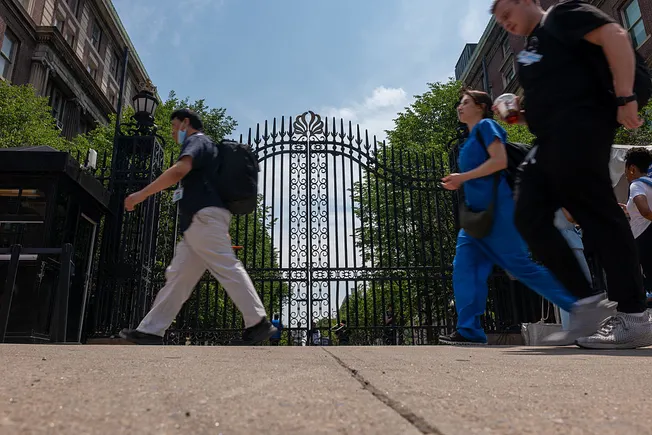
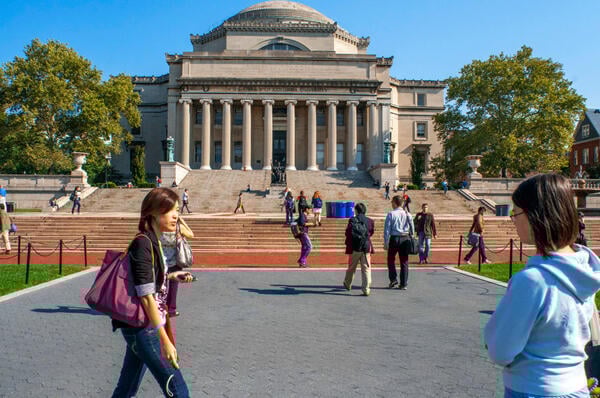
Mnookin will be the fourth leader in three years at Columbia.
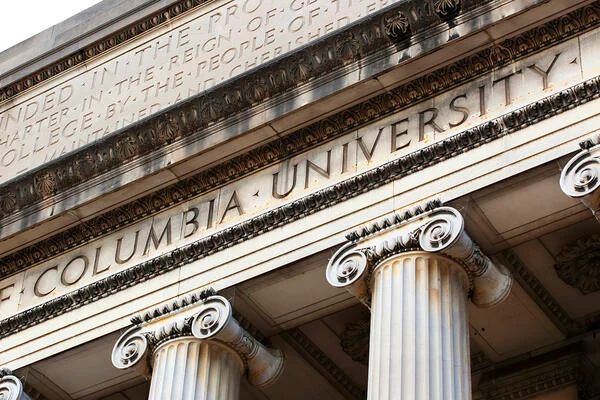
DNY59/iStock/Getty Images
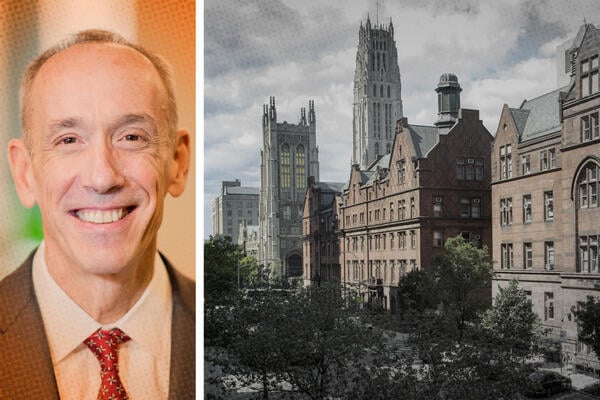
Columbia University has selected Jennifer Mnookin, a legal scholar and current chancellor at the University of Wisconsin at Madison, as its next president.
Jennifer L. Mnookin
University of Wisconsin–Madison
Mnookin has led the Wisconsin flagship since 2022 and will remain in her role through the spring commencement. Before taking the top spot at UW-Madison, she served as dean of the UCLA School of Law.
Mnookin will be the fourth leader in three years at Columbia. Since 2023 the institution has been disrupted by student protests, faced $400 million in cuts to federal research funding and agreed to a multimillion-dollar settlement with the Trump administration.
Mnookin will replace Claire Shipman, the former co-chairperson of the Board of Trustees, who has been acting president since March 2025, when interim president Katrina Armstrong resigned. Armstrong took over for Minouche Shafik, who was the university’s last permanent president and resigned in August 2024.
According to The Wall Street Journal, Columbia chose Mnookin because of her success navigating polarized politics in Wisconsin and dealing with the federal government.
During her tenure, Mnookin launched programs guaranteeing full financial support for Pell-eligible in-state students and for undergraduates who are members of federally recognized Wisconsin American Indian tribes and pursuing their first degree. She also increased the institution’s research spending to $1.93 billion, making it the fifth-highest-ranked institution in the country for research expenditures.
Her term has not been without controversy, though. Last July, the institution closed its diversity, equity and inclusion office amid scrutiny into its funding from Republican state lawmakers. In October, the university announced cost-cutting measures after it had federal grants terminated and received stop-work orders on some projects.
In a statement, Mnookin said her time at UW-Madison has been “life-changing.”
“It has been a true honor to be a part of the Wisconsin family. I am proud of what we have accomplished together, even in a challenging period for higher education, and I know great possibilities lie ahead for the UW-Madison campus community.”
Jay Rothman, president of the Universities of Wisconsin, extended “substantial gratitude” to Mnookin.
“During her tenure, Chancellor Jennifer Mnookin brought unbounded energy, resilience and deeply thoughtful leadership to this great university,” Rothman said.
This audio is auto-generated. Please let us know if you have feedback.
Dive Brief:
The U.S. Equal Employment Opportunity Commission has opened the claims process for current and former Columbia University employees who believe they experienced harassment due to their Jewish faith or ancestry, Israeli national origin, or due to objecting to or complaining about such harassment, EEOC announced Thursday.
EEOC Chair Andrea Lucas reiterated the Trump administration’s commitment to fighting antisemitism, commended Columbia for providing a “robust” claims fund and encouraged employees who may have been affected to file a claim.
The July settlement was “the largest EEOC public settlement in nearly 20 years for any form of discrimination or harassment” and “the largest EEOC settlement for victims of anti-semitism to date, as well as the most significant EEOC settlement for workers of any faith or religion,” the agency previously said.
Dive Insight:
EEOC created a website, eeoccolumbiasettlement.com, for those seeking to file claims. The settlement class includes those employed by Columbia between Oct. 7, 2023, and July 23, 2025, who believe they experienced antisemitic discrimination, harassment or retaliation during that period. EEOC will have sole discretion in determining eligibility and the amount awarded to successful claimants.
Claimants have until June 2, 2026, to submit a claim.
The settlement marked a major win for the Trump administration’s EEOC, which in March vowed to “hold accountable universities” for hostile-work conditions it said arose for Jewish workers in the wake of the Oct. 7, 2023, attack on Israel.
Lucas in June 2024 filed the Commissioner’s Charge that led to the agency’s investigation of antisemitism, EEOC noted in a press release. In April, various outlets reported that faculty members at Columbia and the affiliated Barnard College had begun receiving text messages from the agency asking whether they were Jewish or Israeli.
Columbia voluntarily resolved the charges “as part of a broader agreement with the Trump administration” and in order to avoid an extended dispute, EEOC said in July. The university did not admit liability.
The Trump administration has put extensive pressure on universities to change policies and make deals or risk losing millions in federal funding. Columbia’s $21 million settlement with EEOC was part of a broader deal that also included a $200 million, three-year payout to the federal government, as well as the provision of applicant demographic data, closer evaluation of foreign students and other requirements. In exchange, the Trump administration restored $400 million in canceled federal grants.
Brown University, Cornell University, Northwestern University, University of Pennsylvania and University of Virginia have likewise entered into deals with the administration. They have included dropping certain DEI practices; aligning policies for sports, housing and other sex-segregated spaces with President Donald Trump’s executive order on sex and gender; and conducting climate surveys to evaluate the experience of Jewish people on campus.
While only the Columbia deal so far has involved EEOC, the agency has continued to investigate other institutions. In November, EEOC asked a Pennsylvania district court to force Penn to comply with a subpoena requesting information in an ongoing investigation into bias against Jewish employees. A response to that request is still pending.
This audio is auto-generated. Please let us know if you have feedback.
Dive Brief:
Columbia University’s operating surplus fell by just over 63% year over year to $112.6 million in fiscal 2025, according to financial statements released Thursday.
Operating revenues increased 2.1% while expenses rose 5.3%, Anne Sullivan, the Ivy League university’s executive vice president for finance, noted in a public message. In a tumultuous political year, federal grant revenue remained essentially flat at $1.3 billion, she said.
Sullivan described the Trump administration’s termination of hundreds of grants to Columbia this year as “destabilizing” and said the university’s financial report “does not adequately capture the level of strain experienced by the research enterprise in the third and fourth quarters.”
Dive Insight:
Columbia’s head-on encounter with the Trump administration left a mark on its finances, even if — as Sullivan pointed out — the damage wasn’t fully captured in the institution’s fiscal year, which ended June 30.
In March, the administration terminated $400 million of Columbia’s federal grants and contracts. The cuts came just days after the government announced a probe over allegations that the university hadn’t done enough to protect Jewish students from antisemitism.
Amid the turmoil, Columbia laid off nearly 180 employees tied to federally funded projects. The university also dipped into its endowment’s unrestricted funds to help preserve some of the research projects, creating what the institution called its Research Stabilization Fund.
Sullivan on Thursday said the fund issued some 500 internal grants to Columbia researchers in June and September. She didn’t specify the total amount spent but described the scale as “modest.”
Soon after terminating Columbia’s funding in March, the Trump administration offered the university an ultimatum. Columbia agreed to a host of unprecedented conditions in return for the government reinstating most of the canceled research grants.
Columbia signed a formal agreement with the Trump administration in July that included a $200 million payment to the government, to be paid over three years, in addition to a $21 million sum for a claims fund under an agreement with the U.S. Equal Employment Opportunity Commission. Although signed just after the close of fiscal 2025, the settlement is accounted for in Columbia’s financial statements.
But the heaviest impact on the university’s income statement came from rising operating costs, which jumped 5.3% to $6.6 billion. Expenses rose across the board — from salaries for instructors and administrators to research costs to maintenance.
Meanwhile, revenues grew more slowly. Sullivan described Columbia’s 4.1% increase in net tuition and fee revenue, which totaled $1.6 billion, as “modest.” Tempering that gain was a 4.6% rise in institutional financial aid to $622.6 million for the fiscal year. Columbia is among the most expensive colleges in the country to attend, though it offers free tuition to students from families that make under $150,000 a year.
With expenses rising at more than double operating revenue, Columbia saw its operating income shredded by nearly two-thirds, which Sullivan characterized as “modest” and “lower than our historical average.”
Still, Sullivan described its operating surplus as critical to helping fund capital projects, including maintenance and renovation of its facilities.
“The University’s ongoing cost containment efforts remain important to preserve financial flexibility and ensure that resources are allocated in a manner consistent with our priorities for excellence in teaching, research, and patient care,” she added.
To be sure, Columbia is still among the wealthiest universities in the U.S. Its net assets grew 3.7% year over year to $20.5 billion.
Gifts to the university’s endowment fell by about a quarter, to $177.9 million. Even so, the value of the endowment’s donor-restricted funds still rose 8.7%, to $10.9 billion.
In terms of operating income, Columbia’s Ivy League peer Harvard University fared worse. Its recently issued fiscal 2025 financials showed a $112.6 million operating loss, Harvard’s biggest loss in nearly a decade and a half.
Like Columbia, Harvard has come under financial attack by the Trump administration, which has sought to damage the institution on multiple fronts and is using several government agencies in its withering campaign of attacks.
“Even by the standards of our centuries-long history, fiscal year 2025 was extraordinarily challenging,” Harvard President Alan Garber said in a message accompanying the financial statements.”
Columbia’s graduate student union is in the middle of negotiating a new contract with the university.
DNY59/iStock/Getty Images
Less than a month before the start of the semester, Ph.D. students at Columbia University in New York were told with little explanation that they would no longer be teaching this fall.
The catalyst for this change is unclear. The university said it’s an effort to reduce the teaching load on Columbia graduate students and allow them to finish their degrees in six years rather than seven. The students said it’s a move to weaken the labor power of their union, which is in the middle of tense negotiations with the university to renew its contract, which expired June 30.
The students, who are members of the graduate student union Student Workers of Columbia, will still be paid. However, instead of receiving a biweekly teaching stipend, they’ll get a lump sum at the start of the semester. To pay both the Ph.D.s and their replacements, “the cost to the university likely runs to millions of dollars,” estimated Michael Thaddeus, a mathematics professor at Columbia and vice president and acting president of the Columbia chapter of the American Association of University Professors. In July, Columbia agreed to a $221 million settlement with the federal government in order to restore hundreds of millions in federal research funding.
Columbia has traditionally tapped sixth- and seventh-year graduate students to teach foundational courses and some of the undergraduate college’s Core Curriculum classes, which includes courses, like University Writing and Frontiers of Science, that all first-year students are required to take. The work is more time-consuming than a regular TA job; as the so-called instructors of record, the Ph.D. students must teach two two-hour lectures and attend a pedagogy seminar each week, on top of all of the reading and prep time that goes on behind the scenes. The workload sidelines their research and writing, a representative from SWC explained. But it offers valuable teaching experience, and Ph.D. candidates are usually guaranteed a seventh year of funding when they sign on to teach a core class.
But this teaching expectation is unusually large for graduate students, according to Columbia officials.
“Columbia doctoral students have typically been required to teach more than Ph.D. students at peer institutions, which often means delays in their time to degree,” a university spokesperson wrote in a statement to Inside Higher Ed. “After discussions with some departments about teaching requirements and instructional staffing, we have released some graduate students from teaching obligations for the fall—while continuing to offer them the same funding and benefits. These students will have more time to complete academic requirements or advance their dissertation research and writing.”
Neither the students nor some faculty buy this explanation. Students say they didn’t receive any formal communication about changes to the graduate student teaching structure and that the move to dismiss or deny Ph.D.s from the teaching positions is an effort to undermine the labor power of the union, which had been planning a strike for the fall. As TAs and members of SWC, the students would still be able to participate in a work action, but it wouldn’t have as big an impact as lecturers walking out of class.
More than 100 students are affected by this change, according to the union. Columbia officials said the figure was much lower but declined to share an exact figure and noted that the number of Ph.D. core instructors varies year to year.
Columbia’s AAUP chapter denounced the university’s action in an Aug. 19 statement.
“We do not agree with the claim that this step has been taken to help graduate students. Rather, it clearly has to do with the looming contract negotiations. The timing makes this clear,” said Thaddeus. “Students applied for preceptor positions back in November, and then they heard nothing at all for many months. If this were being done to help graduate students, then it would have made sense to notify them promptly.”
The move will also damage the quality of Columbia’s doctoral and M.F.A. programs, Thaddeus argued.
“Practical experience with setting assignments and exams, giving final grades, and so on is invaluable to those graduate students who pursue a career in teaching,” he added.
One sixth-year Ph.D., who wished to remain anonymous to prevent retaliation from the university for speaking out, applied for a core teaching position in December. Over the next eight months, she received no communication about the position and finally received an offer for a TA position July 30. It wasn’t until Aug. 6, the day she was originally supposed to sign and return the teaching assistant appointment letter, that she heard back about the core position. She’d been rejected, the email said, and it included no explanation or information about the widespread changes to graduate teaching duties at Columbia.
The abrupt change is “really disrupting people in the later stage of the program, like myself, who thought that this was not going to be my last year,” says the Ph.D. student. “Now I’m having to go on the academic job market basically at the last minute.”
To fill the now-vacant teaching jobs, Columbia is recruiting for one-year lectureships and advertising the roles to adjuncts, postdocs and New York–based graduate students at other universities.
“I wanted to share with you a posting we’ve just made for full-time lecturer positions teaching all across our Core curriculum—in Art, Music, Literature, and Contemporary Civilization—where we are expecting a larger entering class that we’d originally thought,” Columbia officials wrote in a message that was passed along to faculty at the University of Chicago and obtained by Inside Higher Ed. Columbia has also sent the position to Yale University.
Research on community colleges has taken a hit amid the Trump administration’s ongoing war against the Ivy League.
The Community College Research Center, an independent organization based at Columbia University’s Teachers College, found out in March that four of its grantstotaling at about $12 million were immediately cancelled, despite being multiple years into their grant cycles. The remaining grant money expected from the Institute of Education Sciences amounted to at least $3.5 million. Four half-completed research projects relied on the funding. Now CCRC leaders are scrambling to find ways to continue the work.
The grants were swept up in the Trump administration’s slashing of $400 million in grants to Columbia University to cow the institution into agreeing to a set of demands. Columbia has since reached an agreement with the administration to restore its federal funding, but the deal only restored grants administered by the U.S. Department of Health and Human Services and the National Institutes of Health. Education Department grants, like the CCRC’s, didn’t return.
The center, now almost 30 years old, conducts rigorous research into community college programs and practices, like guided pathways and dual enrollment, to help institutions improve the student experience and student outcomes.
The canceled grants funded two efforts focused on pandemic recovery, including a study into a program at Virginia community colleges to support adults earning short-term credentials in high-demand fields. CCRC researchers were also using IES money to evaluate the Federal Work-Study program and for a fellowship that placed doctoral students in apprenticeships at education agencies and nonprofits. Teachers College has agreed to take over funding for the fellowship program for at least the upcoming academic year.
Thomas Brock, CCRC’s director, worries the field of community college research—and its benefits for students—are at risk at a time when federal funding has grown more tenuous. He spoke with Inside Higher Ed about how the center is moving forward in the absence of these funds. The conversation has been edited for length and clarity.
Q: How did you react when you first heard from the Education Department about the nixed IES grants?
A: It got us completely by surprise. We did not see that coming. The notification came on a Friday morning. We had to be finished with our work by the end of the day that Friday—we could have no further charges beyond that point. So, there was just no time to prepare. And all of our communications with IES until that point had been very positive. We were on track to complete the goals of our grants. We had been in frequent conversation with our program officers. So, there was simply no inkling that this would be coming.
Q: What was the extent of the funding loss for you?
A: The overall funding loss amounted to about $3.5 million. Most of the grants that we were working on were pretty far along. The total berth of the grants was well above $3.5 million, but that was about the amount we had remaining. Most of the work that was canceled was in the last year or two. It was all the more disappointing then, because we were so close to having results that we could share with the field. And that is important, of course, not just to CCRC but to the states and colleges that we partner with more broadly to accomplish our mission of informing community colleges, policymakers, practitioners about strategies that work to improve student outcomes.
Q: Going forward, what’s going to happen to projects funded by the canceled grants?
A: So, everything had to be put on hold. I will say we’ve been in discussion with some foundations about what they are calling last-mile funding to complete some of the IES-funded work. We don’t have the grants in hand just yet but invited proposals and ones we think have a good chance of funding.
We should hear news this fall about some of those. With the last-mile funding, we had to narrow the scope. Generally speaking, foundations don’t have the kinds of resources that the federal government does. So, most of these grants are just to really get out the final results and not putting as much emphasis on dissemination as we would have done with the federal funding. But nonetheless, we’re very grateful to have those opportunities.
We were lucky at CCRC. We’ve been around for a while. So, over many years, we’ve built up a reserve fund for rainy days, and we decided if this wasn’t a rainy day, we didn’t know what was. So, we have dipped into those reserves to keep many of our staff fully employed while they work on these proposals and to continue to have the ability to do the work if we get refunded. Those funds won’t last forever. We will have to make some tough decisions later this year about just what size of organization we can continue to support with foundation funds. And, I should note, we have already made a few layoffs and have had a couple of voluntary departures. So we are already smaller than we were, but we hope to maintain a critical core.
Q: Columbia recently reached an agreement with the Trump administration to have some of its research funds restored. Were you hopeful that your funds would be restored as well in that agreement?
A: We were, yes. We were not part of the negotiations. That was handled by Columbia University. And one of the complications here—really, going all the way back to the initial cancellation of our grants—was a misunderstanding, honestly, by the current administration of Teachers College’s relationship to Columbia. We are an affiliated institution, but we are independent—legally, financially, administratively. We have our own president, our own Board of Directors. We are a separate nonprofit organization, a separate 501(c)(3), so the affiliation we have is a loose one. It allows our students to cross-register and take courses at Columbia. But we do not benefit in any way from Columbia’s endowment or its wealth as an institution. Teachers College is a relatively poor stepchild within the Columbia University constellation.
So, when we first lost our grants, we appealed as we were instructed to do if we had an issue with the cancellation. The beginning of our appeal was just that we are a separate institution. Whatever complaints the administration may have about Columbia University and how it handled the student protests last year, that had no bearing on what happened at Teachers College. And indeed, we had no student protests. We had no actions that were of concern to the administration or to anyone. So, we hope, just on that basis, we might win on appeal.
Our appeals were acknowledged, but they have not ever been acted upon as the university went forward with its negotiations. We were hopeful that perhaps [the agreement] would benefit us as well. And when the settlement was reached, I had maybe 24 hours when I was I was really holding my breath. But unfortunately, as we looked at the details of the settlement, it only applied to grants made to the U.S. Department of Health and Human Services and the National Institutes of Health. Department of Education grants were not included.
Q: You touched on this, but what comes next for the CCRC? How are you thinking about moving forward and how you might have to pivot?
A: In the near term, we will have to depend on foundation funding exclusively or primarily. We are fortunate in that we have a long history of foundation funding, so that’s not new, but our model has always involved a blending of federal and foundation resources. And that’s just very important to an organization like ours, because foundations and the federal government have typically funded different kinds of things. They both are really critical to advancing a research agenda.
What is the most important about the federal funding is, No. 1, the strong emphasis on scientific rigor. So, things like the randomized controlled trials that we’re doing on Federal Work-Study, it’s possible you could get a foundation to pick up a project like that, but that is much more in the bailiwick, or at least traditionally has been in the bailiwick of the U.S. Department of Education and its Institute of Education Sciences—not just randomized controlled trials but rigor in all ways, the emphasis on nationally representative samples on longitudinal research. IES funding has been really important for that.
A second way IES has been so critical is this emphasis on dissemination. IES has been criticized, and justifiably so, for the What Works Clearinghouse, for instance, being a bit indecipherable at first and having too much in it that really wasn’t showing effectiveness. But it’s come a long way in improving that resource and also really in encouraging grantees to get their findings out into the field. We depended heavily on federal funding for our website, for our social media efforts, for attending practitioner conferences. It was really vital support for those purposes. So, that is largely what concerns us. Perhaps some new foundation supporters will be interested in that kind of work. [It’s] not likely we will find the level of funding that was available through the federal government, but we hope at least enough to keep our essential communications and outreach efforts intact.
Our agenda will probably have to shift a little bit. This is also what’s disappointing about the Department of Education and IES stepping back—we could count on them to really help set the national agenda and things that were of importance to all 50 states and students in all parts of the country. It’s not to say foundations don’t have that interest, but it is much more typical with foundations to find that they are investing in particular places. There simply are not that many foundations with the resources to kind of take the national view, and that is a concern moving forward. So, it’s something that we’re addressing or trying to think about strategically, but it will be a challenge.
Q: How does the uncertainty with federal funding affect the broader field of community college research?
A: Well, obviously I am biased here. I think research matters, or I would not have entered this profession.
There have been major advances in how community colleges think about developmental education, for example. The models that were in place 20 years ago just turned out to be fundamentally wrong. Most community college students coming in were assessed and placed into developmental education courses that actually did them more harm than good. It was years of careful research that documented that fact and that then supported partnerships with community colleges interested in trying different strategies.
And thanks to all of that work, we now have multiple-measures assessment, where students’ high school grades and other indicators are used. It’s resulting in far fewer students being placed in developmental courses. We also have corequisite remediation, where students are placed in college-level work right away with extra support, as opposed to requiring them to do what was known as prerequisite remediation before starting college-level work. So, those are strategies that we would not have known about, but for this kind of investment, and strategies that have been widely picked up now by the field that are demonstrably leading to improve student outcomes.
So, I guess what I worry about is the cessation, or near cessation, of those kinds of research and development efforts that lead to new insights, that lead to new ways of doing business that really could be transformative for students. And if you think about today’s challenges, they are no different or less concerning.
Artificial intelligence is transforming education. What will it mean for community college students? How could institutions best harness those tools to really ensure students are learning and moving forward? That’s a big, big area that I think cries out for deeper investigation. Another big area of interest is short-term training. Congress is prepared to make Pell Grants available for short-term training. Past evidence has shown not much effectiveness there. But what are the program areas that do lend themselves to short-term training? How might community colleges focus these efforts so that they really do lead to a payoff for students and for taxpayers?
These are big questions that, if we don’t have some of the foundational work in place, we’re not going to have answers five or 10 years from now. And the field as a whole, students specifically, will suffer as a result.
Jin Hee LeeColleges and universities play a critical role in American democracy. By bringing together young adults, faculty, and employees to live and learn in a shared educational setting, higher education institutions shape the future citizens and leaders of our country. But they can only achieve this mission if their campuses reflect the multiracial society that we all live in. Unfortunately, Columbia’s recent settlement with the Trump administration calls into question whether it can fulfill its educational mission to foster a dynamic learning environment for its campus community. Given longstanding problems with unfair underrepresentation and academic exclusion, Black students and faculty likely will bear the brunt of this troubling settlement. Other colleges and universities must not make the same mistake.
Columbia’s settlement agreement with the Trump administration gives the federal government unprecedented oversight into the university’s operations. Under the agreement, Columbia will allow administration officials to review, and potentially reject, any effort by the university to advance equal opportunity through admissions, hiring, and promotion. Notably, these conditions advance the administration’s express agenda to suppress and ban efforts to ensure an inclusive and welcoming educational environment for Black students and faculty, thereby preventing them from fully contributing their expertise and lived experiences to the larger campus community.
Such unprecedented scrutiny by the federal government is especially troubling given the administration’s flawed interpretation of our constitution and civil rights laws in recent guidance issued by the U.S. Department of Justice. For example, the Trump administration believes that programs open to people of all races, such as those geared towards first-generation college students or rural areas, are unlawful if they are intended to break down unfair barriers to equal access and opportunities for disadvantaged students, including disadvantaged students of color. Thus, according to the administration, higher admissions or hiring rates of Black students and faculty, following the implementation of more equitable practices that do not rely on any applicant’s race or ethnicity, could expose Columbia to legal sanctions pursuant to the Department of Justice’s inaccurate interpretation of equal protection and civil rights laws.
The settlement also causes Columbia to be subsumed into the Trump administration’s campaign to silence lawful protest and target immigrant communities. It requires Columbia to increase the number of employees trained and authorized to arrest and remove students for protesting in ways that the administration or Columbia, in their full discretion, deem inappropriate. Based on the settlement, student groups are subject to “sanction . . . including by defunding, suspending, or de-recognizing them” for “discriminatory conduct,” which threatens erasure of affinity spaces for underrepresented groups given the administration’s inaccurate understanding of “discrimination.”Student groups that express views disfavored by the Trump administration or Columbia’s leadership are particularly at risk. If an international student is arrested during a protest, the agreement requires Columbia to notify the Department of Homeland Security and disclose their identity.
Such government interference with campus protest, which has been integral to expressions of dissent and the free exchange of ideas throughout American history, undoubtedly will chill the speech of many students and faculty, thus eroding their First Amendment rights. It is particularly ironic that the settlement agreement requires student protesters, including those wearing masks, to identify themselves upon request,while masked ICE officers can abduct and detain college students without even charging them with a crime. As a consequence of the agreements’ terms, Columbia’s campus will become less welcoming to students, including Black students, who already struggle with discrimination and exclusion. This, in turn, will deter many talented students and faculty from joining Columbia’s campus, thereby degrading the university’s reputation and academic scholarship.
Other colleges and universities must not follow Columbia’s capitulation. Instead of being centers of learning, where people from diverse backgrounds can engage in a free flow of ideas, opinions, and perspectives, the current administration seeks to use these institutions to actualize an undemocratic vision of an America, where dissent is silenced and resources and opportunities are hoarded for the wealthy and powerful. In many ways, this cynical vision of America aims to turn back the clock to an era, not so long ago, when institutions of higher learning were reserved for the privileged few and either explicitly or implicitly excluded Black students and faculty as unwelcome and undeserving outsiders.
___________
Jin Hee Lee is director of strategic initiatives at the Legal Defense Fund (LDF), where she leads a department that integrates litigation, policy, organizing, communications, research, and public education to advance community-centered racial justice advocacy—most notably through the Pro Truth Initiative.
A recent hack of Columbia University’s computer system compromised the personal information of hundreds of thousands of people, including students and applicants, new documents show. Over all, about 870,000 individuals were affected by the breach.
The university provided draft notices to officials in Maine and California that it intends to send to affected parties in their states, according to the state attorneys general’s websites. Both states require that their residents be swiftly informed of any breach that includes their data, according to Bloomberg, which reported on the notices.
The notices said a technical outage disrupted some of the university’s IT systems in June, which led university leaders to suspect a possible cybersecurity attack. An investigation revealed that a hacker had taken files from Columbia’s system in May.
The stolen data includes any personal information prospective students provided in their applications or current students gave Columbia over the course of their studies, including their contact details, Social Security numbers, birthdays, demographic information, academic history, financial aid information, insurance details and health information. No patient data from the Columbia University Irving Medical Center seems to have been compromised, according to the notices. The university encouraged those affected to monitor account statements and credit reports to keep an eye out for any fraudulent activity. It also offered them two years of free credit monitoring and identity restoration services from a financial and risk advisory firm.
“We have implemented a number of safeguards across our systems to enhance our security,” the letters read. “Moving forward, we will be examining what additional steps we can take and additional safeguards we can implement to prevent something like this from happening again.”
A public statement from the university’s Office of Public Affairs last week said that since June 24, Columbia has seen no evidence of any further unauthorized access to the university’s system. Starting Aug. 7, the university promised to begin notifying affected students, employees and applicants on a rolling basis via mail.
“We recognize the concern this matter may have raised and appreciate your ongoing patience during this challenging time,” the statement read. “Please know we are committed to supporting the University community.”
A Columbia official previously toldBloomberg that the hacker seemed to be trying to further a “political agenda.” The investigation into the matter also found that the hacker was “highly sophisticated” and “very targeted.”
The alleged hacker, who got in contact with Bloomberg, gave the news outlet 1.6 gigabytes of data, claiming it contained decades’ worth of applications to Columbia. That application data included New York City mayoral candidate Zohran Mamdani, who applied to Columbia but didn’t get in.
Bloomberg confirmed with eight Columbia students and alumni, who applied between 2019 and 2024, that the information about them contained in the data was accurate. They verified that details such as their university-issued ID codes, citizenship statuses and admissions decisions were all correct. The data provided to Bloomberg didn’t contain names, Social Security numbers or birth dates.
The person claiming to be the hacker, who didn’t provide their name, texted Bloomberg that the purpose of the stolen data was to prove the university continued affirmative action in admissions after the 2023 Supreme Court ruling against such practices. They claimed to have hacked about 460 gigabytes of data total from the university—including 1.8 million Social Security numbers of employees, students and their family members—after spending more than two months ensuring their access to Columbia’s computer systems.
Much of the money funds medical research, including time-sensitive clinical trials.
Photo illustration by Justin Morrison/Inside Higher Ed | Wolterk/iStock/Getty Images | Alex Kent/Getty Images
Days after reaching deals with the Trump administration, Columbia and Brown Universities say the government has already initiated the process of restoring hundreds of millions in federal research dollars it terminated earlier this year in retaliation for their alleged failures to address antisemitism on campus.
Many of those grants came from the National Institutes of Health, which is overseen by the Department of Health and Human Services, and funded medical research, including time-sensitive clinical trials.
“The agreement finalized this week restored all National Institutes of Health grants to Brown researchers that had been terminated,” Brian Clark, a Brown spokesperson, wrote in an email to Inside Higher Ed Thursday evening. “We started to see that formalized in award letters today and expect in the coming days and weeks to see this across all of these grants.”
In April, the administration blocked $510 million in federal grants and contracts for Brown. But under the terms of the agreement the government and university finalized Wednesday, Clark said, “Any payments should resume within 30 days,” which applies to both “the restoration of specific grants that had been terminated, and also to active (non-terminated) grants for which Brown had not been reimbursed.”
If you had a grant frozen because of the Trump administration’s investigations, we want to hear about your experience and whether you’ve received your funding. Email [email protected] to share more.
According to Columbia’s website, “Funding and reimbursement payments have already begun to flow.”
“One week later, more than half of the terminated grants have been restored, and we expect the others to be reinstated promptly,” the website says. “Renewals and continuations that were frozen are also coming in on non-terminated grants.”
The university wrote that it’s “reviewing all grants that were terminated or suspended over the last months to identify those that were specifically directed at Columbia” and expects “the fair treatment of Columbia grants and ability to compete to be honored by all federal agencies.”
The university noted that the agreement only applies to HHS and NIH grants that the administration canceled as part of its targeted pressure campaign on Columbia.
Faculty who asked to remain anonymous told Inside Higher Ed that either the university or NIH has told them that some grants are being reinstated or renewed. But it was unclear to them whether actual dollars have resumed flowing, and how many.
Since Trump took office in January, numerous federal agencies, including the NIH, the National Science Foundation and Education Department, have terminated thousands of other research grants at institutions across the country that don’t align with their ideological priorities. In particular, many grants that focused on transgender health, vaccine hesitancy, climate change and racial disparities have been canceled.
Columbia researchers whose grants were terminated as part of that sweep should not expect to see their funding restored as part of this deal, the university wrote on its website.
“Some of these grants were terminated or suspended across the board for all institutions, and have nothing specific to do with Columbia,” the webpage said. “To the extent that the federal government has made the decision not to fund certain types of projects at any institution, those grants will not be coming back to Columbia.”
Columbia and Brown are just two of numerous Ivy League Institutions that the Trump administration has targeted by threatening federal funding.
So far, the administration has frozen nearly $5.9 billion across eight universities, including Brown, Columbia and Penn. Most of the funding freezes started in March, but in the last week, the administration resumed blocking funds at institutions under investigation. First, it put about $108 million on hold at Duke University, and then officials suspended an unspecified number of grants at the University of California, Los Angeles.
Attorneys for Columbia Sportswear say the university is in breach of a written agreement between the parties over the sale of apparel merchandise. The two groups entered a written agreement in 2023 that the university would not use the “Columbia” name alone.
Last year, Columbia University’s webstore offered for sale shirts, sweatshirts and hats that bare the word “Columbia” on its own, which attorneys for Columbia Sportswear say violate the contract and its trademark rights.
Dive Insight:
Columbia Sportswear is seeking a jury trial in the complaint against Columbia University. It also asks that the university be prevented from using the trademark name alone on apparel and accessories, along with recalling any such products currently in the university’s possession. The brand also is seeking monetary damages.
In 2023, the sportswear company said the two groups entered a written agreement whereby the university could use the “Columbia” name, for which the sportswear company has a trademark, if the name was used with one other distinguishing mark associated with the university, such as its shield, crown or lion mascot logo, or words, such as “university,” “Columbia Law,” or its year of founding.
The lawsuit was filed last week in the U.S. District Court for the District of Oregon. Columbia Sportswear is headquartered in Portland, Oregon.
Some of the Columbia University apparel mentioned in the lawsuit include the Nike and Champion logos, which attorneys for Columbia Sportswear say can create customer confusion and a false association between Columbia Sportswear and its competitors.
An example of Columbia University’s allegedly infringing products.
“Though Columbia Sportswear and Nike are headquartered in the same State and are both highly reputable sporting apparel designers and have a generally friendly relationship, the two companies have never collaborated to jointly design, manufacture, market, or sell any product,” the complaint says. “A consumer looking at the Infringing Merchandise would never know that, and, in fact, would reasonably be induced into believing the companies had.”
A Columbia University spokesperson declined to comment on the pending litigation.
It’s likely that this case will be settled out of court, and fairly quickly, said Josh Gerben, trademark attorney and founder of Gerben IP law firm.
However, “if Columbia Sportswear’s version of the story in the complaint is not entirely accurate, and Columbia University decides to defend the case, things could get interesting,” Gerben said in an email. “This is because Columbia University has been around much longer than Columbia Sportswear. It gives the university some very interesting defenses to the overall claims regarding trademark infringement.”
Columbia Sportswear is set to announce its second quarter earnings Thursday. In Q1, the company reported a net sales increase of 1% to $778.5 million. At the time of the announcement, the company withdrew its full-year financial outlook due to economic uncertainty related to tariffs.
The Trump administration’s landmark settlement with Columbia University threatens the institution’s independence and academic freedom, higher education experts say. Many warn that the agreement marks a threat not only to higher education, but also to democracy at large.
The agreement, announced Wednesday, comes after Columbia faced months of intense pressure from the White House to address alleged antisemitism on campus and agree to a number of demands. It’s the latest example of how this administration is pushing the boundaries of its authority to secure changes that conservatives have long sought in higher ed.
In the end, Columbia agreed to comply with the government’s extensive demands while forking over more than $200 million to unlock $400 million in federal grants.
Education Secretary Linda McMahon celebrated the long-anticipated deal as an example of “commonsense reform,” saying in a statement that Americans have “watched in horror” for decades as the most esteemed campuses were occupied by “anti-western teachings and a leftist groupthink.”
“Columbia’s reforms are a roadmap for elite universities that wish to regain the confidence of the American public by renewing their commitment to truth-seeking, merit and civil debate,” she added. “I believe they will ripple across the higher education sector and change the course of campus culture for years to come.”
But some higher education faculty, legal experts and free speech advocates say the settlement is unlawful, pointing to the quick investigation, vague allegations and unprecedented way federal funds were retracted before Columbia had a chance to appeal. Some went as far as to compare the executive actions to past power grabs by authoritarian leaders in countries like Hungary, Turkey and Brazil.
The very real danger is that if elite institutions choose to submit to the authority of the Trump administration, the whole rest of the industry will follow.”
Kevin Carey, vice president of education and work at New America
Columbia’s capitulation “represents the upending of a decades-long partnership between the government and higher education in which colleges and universities nevertheless retained academic freedom, institutional autonomy and shared governance,” said Lynn Pasquerella, president of the American Association of Colleges and Universities. “It signals a rise in authoritarian populism in which higher education is positioned as the enemy in a fight against corrupt, inefficient and elite institutions that are out of touch with the needs of the working class.”
A federal taskforce convened to combat antisemitism first presented the university with the sweeping list of demands in March. The decision was simple: comply or permanently lose the federal funds that were frozen a week prior. The Ivy League institution agreed a week later to nearly all of the president’s demands. But the funds remained frozen.
McMahon and other Trump administration officials signed the agreement with Columbia.
Brendan Smialowski/AFP/Getty Images
Though Columbia was on the “right track,” McMahon and other task force members said the university had a long way to go. While talks with Columbia continued, the task force turned its focus to Harvard University and made similar demands. The Crimson, however, rejected the task force’s mandates and sued after it froze more than $2.7 billion in federal funds.
Many higher education leaders say that Columbia had a choice and chickened out. But regardless, they add, Trump’s ultimatum amounted to extortion.
“Whether you applaud or despise the terms of the deal, the way in which the government is operating, and getting universities like Columbia to make these deals is fundamentally coercive,” said David Pozen, a constitutional law professor at Columbia. “Therefore, it poses a significant threat to the future of higher education as well as the rule of law.”
Pozen and others fear that this will only further embolden Trump to take similar strikes at more institutions.
“The very real danger is that if elite institutions choose to submit to the authority of the Trump administration, the whole rest of the industry will follow,” said Kevin Carey, vice president of education and work at New America, a left-leaning think tank. “It will be like a stack of dominoes one falling after the other.”
Chilling First Amendment Rights
The Trump administration has said the measures taken against Columbia were necessary to address antisemitism on the campus as officials accused the university of failing to protect Jewish students and later said Columbia violated federal civil rights law.
As part of the settlement, Columbia is paying $21 million to address allegations that Jewish employees faced discrimination. The agreement also requires the university to hire a student liaison to support Jewish students.
But the settlement goes beyond antisemitism and focuses on unrelated campus policies. For example, starting in paragraph 16, the administration says that Columbia students cannot reference race in admissions essays and mandates that the university must provide annual data showing both rejected and admitted students broken down by racial demographics, grade point averages and test scores.
When campuses like Columbia and Harvard allowed antisemitism to run amok, the consequences were going to follow. The chickens had come home to roost.”
Frederick Hess, director of education policy studies at the American Enterprise Institute
The settlement also requires similar data concerning the admission of international students, bans the participation of transgender women in female sports and calls for Columbia to establish a process to ensure that all students “are committed to the longstanding traditions of American universities, including civil discourse, free inquiry, open debate, and the fundamental values of equality and respect.”
In Carey’s view, by buckling to the Trump administration, Columbia surrendered its identity as a private institution—and so would any other university that follows suit.
“The essence of an independent university is deciding who is part of your academic community, and Columbia University has surrendered that,” he said, referring to the admissions provisions.
Will Creeley, legal director of the Foundation for Individual Rights and Expression, said that, in addition to admission practices, this settlement and its “blatant disregard for federal law” will upend academia’s core commitment to fostering First Amendment rights.
“The reforms themselves require Columbia students to commit to laudable values like free inquiry and open debate,” Creeley wrote in an email to Inside Higher Ed. “But demanding students commit to vague goals like ‘equality and respect’ leaves far too much room for abuse, just like the civility oaths, DEI statements, and other types of compelled speech FIRE has long opposed.”
Michael Thaddeus, a Columbia math professor and president of the faculty union chapter, said though administrators insist they won’t allow the government to interfere, that assurance doesn’t mean such acts won’t occur.
“Students and scholars at American universities must be free to think and speak their minds,” he wrote in a statement to Inside Higher Ed. “The settlement … risks imperiling this freedom.”
Ditching Due Process
Beyond the terms of the settlement itself, education advocates are primarily concerned with the process used to reach the agreement, which they said didn’t follow procedural norms.
Pozen, the Columbia law professor, outlined in a blog post Wednesday night how the task force bypassed nearly all statutory requirements of such an investigation.
This administration must return to following the rule of law.”
Ted Mitchell, president of the American Council on Education
Past administrations, Pozen explained, have pushed the boundaries of regulation, utilizing more guidance letters and fewer formal rule-making sessions with public comment. But even those enforcement strategies consisted of policies that applied to all institutions and were based on thorough investigations, not rushed accusations, he added.
“The means being used to push through these reforms are as unprincipled as they are unprecedented,” Pozen wrote. “Higher education policy in the United States is now being developed through ad hoc deals, a mode of regulation that is not only inimical to the ideal of the university as a site of critical thinking but also corrosive to the democratic order and to law itself.”
Conservative higher education experts who support the administration’s approach acknowledged that it lacked due process, but also argued that Columbia deserved the stipulations and financial penalty it faced.
“When campuses like Columbia and Harvard allowed antisemitism to run amok, the consequences were going to follow,” said Frederick Hess, director of education policy studies at the American Enterprise Institute, a right-leaning think tank. “The chickens had come home to roost.”
Hess added that the Trump administration was not the first to “short circuit” regulatory processes, citing the Biden administration’s loan forgiveness campaign and Obama’s use of the gender equity law, Title IX, to combat sexual assault as examples.
“We live in a time when concern for legal requirements and norms is increasingly dismissed across the political spectrum,” so to chastise one administration for skipping steps and not the other is problematic, he said. “I continue to be deeply troubled every time [the procedural statutes] are broken. But you cannot have asymmetrical expectations for the parties in these kinds of debates.”
Shifting the Political Paradigm
While a few figures, including former Harvard president and treasury secretary Lawrence Summers, applauded the resolution, many faculty members and higher education leaders expressed fear that their institutions could be next.
Columbia’s reforms are a roadmap for elite universities that wish to regain the confidence of the American public by renewing their commitment to truth-seeking, merit and civil debate.”
Education Secretary Linda McMahon
Kirsten Weld, a history professor and president of the Harvard faculty union chapter, said she is “very concerned” and rejects any suggestion that Columbia’s settlement should be a “blueprint” for her own institution’s negotiations.
“This is about deploying the coercive power of the federal government to dictate to universities, faculty, and students what they should teach, research, and learn, on ideological grounds,” she wrote in an email to Inside Higher Ed. “It is a dangerous abuse of federal regulatory and civil rights enforcement authority to obtain … what it would otherwise be unable to mandate through proper legislative channels.”
Ted Mitchell, president of the American Council on Education, also suggested via email that “this cannot be a template for the government’s approach to American higher education.”
This administration “reached a conclusion before an investigation and levied a penalty without affording Columbia due process—that is chilling,” he wrote. “This administration must return to following the rule of law.”
But many policy experts are doubtful that will happen any time soon.
When looking beyond just Harvard and Columbia, one thing becomes clear, said Dominique Baker, an associate professor of education and public policy at the University of Delaware, the president is inciting an “outright attack” on higher education, and he has no plans of slowing down.
From the political ousting of University of Virginia president James Ryan to the legislative termination of countless academic programs in Indiana with little to no faculty input, Baker identified one defining thread: curtailing the power of democratic institutions.
“We are in a very dangerous time, both for U.S. higher education, but more importantly for our country,” she explained. “These types of outright attacks on colleges and universities are typically the moves of autocrats and dictators, often seen as signs of authoritarian takeovers.”
She later added, “if one wanted to overthrow our constitutional republic, these are the types of moves you would make.”