Tag: Community

  • Recent Executive Orders and Higher Ed HR’s Role in Creating and Sustaining an Inclusive Campus Community

    Recent Executive Orders and Higher Ed HR’s Role in Creating and Sustaining an Inclusive Campus Community

    by Andy Brantley | January 30, 2025

    In the wake of the recent Executive Orders on DEI, gender identity and immigration, higher ed institutions, like so many other organizations, are assessing the impacts and formulating next steps.

    Amid the inevitable changes that lie ahead, it’s important to remember that the role of HR in creating and sustaining a higher ed workplace that provides access and opportunity for all employees hasn’t changed. The programs, policies, processes and language we use to support this work may need to evolve, but the work and the institutional values it supports remain the same.

    We can still:

    • Promote equitable work and career pathing opportunities and pay for all employees.
    • Cultivate inclusive learning and working communities.
    • Create a workplace culture that embraces respect and civil discourse.
    • Level the playing field for everyone by working to remove bias, reviewing outdated policies, and creating transparency.
    • Reinforce institutional values by ensuring that all employees feel connected and supported.

    However, as we review and evaluate the work we’re doing, we have the opportunity to do so with fresh eyes, reframing it in ways that are both purpose-driven and inclusive. For example:

    • Communities of people with diverse backgrounds and life experiences create opportunities for community members to grow, both personally and professionally. To support a diverse workforce, institutions must explore ways to generate a more diverse applicant pool.
    • Access, opportunity and equitable pay for all employees promote job satisfaction, recruitment and retention. To support access and opportunity, institutions must identify and remove roadblocks to opportunity. To support equity in pay, institutions must ensure their compensation structures support these efforts.
    • A safe and welcoming work environment fosters community and collaboration. To create a work environment that’s welcoming and psychologically safe, institutions must ensure that systems, policies and processes are free from discriminatory practices.

    If you have resources or ideas to share with other CUPA-HR members regarding ways that you and your HR colleagues are refining your approach to creating and sustaining an inclusive campus community, please email them to [email protected]. Your submission will be treated as confidential and, if shared, will be described in terms that will not identify your institution.

    You’re Not Alone

    We know that HR leaders are often caught in the middle as different groups of employees and administrators express strong opinions and feelings regarding changes we must implement. In the coming weeks, CUPA-HR will share guidance and support to help you make changes to programs, policies and procedures and communicate these changes to the campus community.

    We are also hosting webinars focused on the recent Executive Orders, as well as the rollback of the Title IX regulations. And we’ll continue to keep you informed about future Executive Orders and legislation, as well as potential actions we should take as higher education HR leaders.

    The higher ed HR community has proved time and again how strong and resilient it is. Thanks for all the ways you lead and support your organizations, your employees and your CUPA-HR community.


    Source link

  • Report: Community Colleges Are Leaving Millions in Medicaid Funding on the Table Each Year

    Report: Community Colleges Are Leaving Millions in Medicaid Funding on the Table Each Year

    According to a newly released report, community colleges miss out on at least $115 million in available Medicaid funding each year. Only 3% of community colleges bill Medicaid for services, despite 84% of community colleges likely being eligible for Medicaid reimbursement. 

    The report, “Increasing Student Support and Success by Boosting Medicaid Engagement,” draws on data collected from a review of over 1,000 community colleges.

    “There is a missed opportunity right now where community colleges could be getting in a significant source of recurring funds that they are not currently claiming,” said Ryan Stewart, report co-lead and Founder and CEO of Mile 2 Consulting, LLC. “I want to raise awareness of that and try to build a culture where more community colleges take advantage.” 

    There are growing mental health concerns among college students and an increase in demand for all student health services among community college students. Unfortunately, the demand for student health services often exceeds a community college’s resources.

    Eligible health services include but are not limited to, psychological services, counseling, nursing services, physical therapy, Medicaid outreach and case management. According to Stewart, the call for community colleges to consider Medicaid reimbursements is more critical now than ever.

    “We’ve seen this growing need for particularly mental health resources at at the college level, and we’ve also seen that many colleges relied on COVID relief funding,” said Stewart. “Those funds are now expired, so you have a lot of schools right now who are looking for ways to sustainably replace those funds, and Medicaid could be a really important source.”

    Stewart previously served as the Secretary of Education for New Mexico and has inspired his thinking about how K-12 schools accessed student resources through Medicaid.

    “In that role we had done a lot of work with our Human Services department because they were really passionate about making sure K-12 schools knew about Medicaid and were doing all they could to claim all available funds,” he said. “Since I’ve left that role, I’ve done a lot of work to try to look at this from a national perspective.”

    Dr. Sara Goldrick-Rab, report co-lead and senior fellow at Education Northwest, brought a higher education perspective to the project.

    “For more than a decade I’ve documented the clear need for community colleges to offer basic needs and related health services,” said Goldrick-Rab, who is also a columnist for Diverse. “A growing number of administrators are trying to offer that help to students but struggle to afford the costs. My hope is that this report spurs action and increases funding available to support student success at community colleges.” 

    Stewart and Goldrick-Rab projected the amount of money that community colleges could potentially generate through Medicaid reimbursement claims, taking into account the health services currently offered at the school, an estimate of the number of students receiving each category of services, an estimate of the number of Medicaid-eligible students enrolled at the school and an estimate of the average reimbursement per student.

    According to the report, community colleges in the United States could collectively generate approximately $115 million in recurring reimbursement revenue from Medicaid.

    “Healthcare access is a critical component of student success and if students are experiencing either mental health or physical health crises and don’t have access to care, that can be a barrier to successful post-secondary completion,” said Stewart. “But that has to be funded. A lot of these services are not cheap, and for colleges who are looking for every resource to try to sustain their whole portfolio of programming, finding sustainable resources like [Medicaid] where money is already appropriate could really make a big difference if you’re looking to either sustain or expand health service programming.”

    When asked why they choose not to claim Medicaid reimbursements for eligible services, community college administrators listed several reasons, including the lack of capacity to manage the Medicaid billing process.

    “​​The primary barrier colleges face when accessing this funding is a lack of information about its existence and what’s required to obtain it. Ironically, that’s the same challenge students face when accessing other funding like financial aid and SNAP,” said Goldrick-Rab. “Of course, some colleges will still struggle to have sufficient staff to offer services in the first place, [because] you have to offer them in order to be reimbursed and deal with the billing.

    Goldrick-Rab said she and Stewart hope to offer technical assistance to teach colleges how to manage this process adequately.

    “I believe addresssing the informational barriers alone will close a lot of the gap. Imagine if even 50% of the colleges offering eligible health services got Medicaid reimbursement, compared to just 3%? That would be a major win,” she added.

    The report provides recommendations for community colleges, state Medicaid agencies, and the Center for Medicare and Medicaid Services. It urges community colleges to create partnerships with their state Medicaid agencies so that they can be informed about their eligibility and request the support needed to optimize health services and revenue potential.

    “Everyone is talking about the student mental health crisis, but until now, I haven’t seen many offering funding options,” said Goldrick-Rab. “We have to ensure community colleges have the resources needed to do this critical work.”

    Source link

  • New York governor proposes free community college initiative

    New York governor proposes free community college initiative

    During her State of the State address on Tuesday, New York governor Kathy Hochul announced a plan to make community college tuition-free for residents pursuing associate degrees in certain high-demand fields. 

    The program would be open to adults aged 25 to 55 pursuing degrees in nursing, teaching, technology fields and engineering. If enacted, it could take effect as early as this fall and cover tuition, fees and textbook costs for students attending State University of New York and City University of New York community colleges. Hochul also proposed the creation of new apprenticeship programs for similar high-demand jobs. 

    Currently, New York students from families making under $125,000 can attend SUNY and CUNY schools tuition-free, regardless of their degree program. For most of its nearly 200-year existence, all CUNY schools were free for New York residents to attend. That policy was abandoned after the 1976 city financial crisis.

    In recent years, a number of states have enacted free tuition initiatives targeted to midcareer adults and aimed at boosting employment in specific high-demand jobs. Massachusetts’s new MassReconnect program led to a surge in community college enrollment last year, and Michigan enacted a similar plan last summer.

    Source link

  • Community colleges in the lurch after WIOA bill founders

    Community colleges in the lurch after WIOA bill founders

    A bipartisan effort to update the nation’s workforce development law is dead, depriving hundreds of community colleges of increased funds and opportunities to cut through the red tape surrounding short-term job training.

    The Stronger Workforce for America Act would have given community colleges automatic eligibility to enter into training contracts with local workforce development offices, introduced a new federal grant and protected several existing programs from potential budget cuts in the new fiscal year.

    The bill’s sponsors were hopeful that the bipartisan legislation to reauthorize the Workforce Innovation and Opportunity Act would pass Congress before the end of the year, as it was included in a wider spending package to fund the government. But when Republicans voiced opposition to the omnibus spending bill just over 24 hours before the government shutdown deadline, lawmakers reversed course. They instead passed a pared-down continuing resolution to fund the government through mid-March, and WIOA reauthorization didn’t make the cut.

    Leaders on the House education and workforce committee had said the Stronger Workforce for America Act would create “transformative change” for the American workforce, pointing to how WIOA helps American workers keep pace with an ever-changing job market and gain high-demand skills. Reauthorizing WIOA was a top priority for Representative Virginia Foxx, the North Carolina Republican who chaired the committee until December.

    Members of the House and Senate education and workforce committees worked for the last two years to update the workforce bill, which expired in 2020. The House plan overwhelmingly passed last spring, and the Senate released a draft plan over the summer. The Senate bill didn’t move forward, but key lawmakers in the House and Senate reached a compromise in late November to update WIOA.

    Groups like the National Association of Workforce Boards and the American Association of Community Colleges say the death of the Stronger Workforce act won’t kill their programs, but nonetheless they expressed concerns about how a lack of reauthorization makes their programs vulnerable. They are trying to remain hopeful that reauthorization will be a priority for this Congress.

    “As the session waned, it was clear that getting a bill enacted in 2024 was going to be extremely difficult,” David Baime, senior vice president of government relations at AACC, said in a statement. “However, we are grateful for WIOA’s champions and very optimistic that a reauthorization will be enacted by the next Congress.”

    Until then, Inside Higher Ed called Baime to talk about the bill and what it means for community colleges and short-term workforce training. Here are three key obstacles he said remain until WIOA gets an update.

    Bureaucracy and Eligibility

    One of the largest benefits for community colleges under the Stronger Workforce act was that their training programs would have automatically qualified for federal WIOA grants.

    Currently, any training provider—be it a community college, an employer or a for-profit technical institution—must meet certain performance criteria in order to receive WIOA dollars. About $500 million is available for job training vouchers each year.

    Often, colleges receive funds by entering a contract with a local workforce board. The process begins with local workforce development agencies identifying key trades or certifications that are in high demand among their community. Then the board picks an approved training provider and contracts with them to train a set number of workers.

    But for years, jumping through the hoops required to make that eligibility list kept many underresourced community colleges from receiving those contracts and federal funds.

    “The bureaucratic nature of WIOA has made for some presidents not being as engaged as they might be,” Baime said. “In these cases, they just don’t find it worthwhile to invest a lot of time in their local workforce boards.”

    The WIOA update would have cut down that red tape.

    Increased Funds

    But even if community colleges did automatically qualify, Baime said, the funding set aside specifically for training programs is limited, and competition with other providers like for-profit technical institutions and employers is steep.

    “In fact, a lot more money for training goes to our students through Pell than through WIOA,” Baime explained.

    Since 2020, the Strengthening Community Colleges Training Grant program has provided dedicated funding for training programs at community colleges. Most recently, the Labor Department awarded $65 million to 18 colleges. Through five rounds of funding, more than 200 colleges have received a total $265 million.

    But the grant program was never formally authorized. That means there is no mandate requiring Congress to set aside a certain amount of funds each year, and the grant depends entirely on advocacy from specific lawmakers.

    The WIOA update would have authorized the grant, providing statutory protection for the funds.

    “SCCTG is a really important program for us. The program relies upon a tested model of community colleges working directly with businesses, in coordination with the federal workforce system. It’s not funded at the level we would like, but it reflects an appropriate prioritization of the role that community colleges play in job training,” Baime said.

    A few other, less direct funding increases were also lost when the legislation died. For example, one policy would have required 50 percent of all WIOA funds to be spent on training rather than administrative fees, leading local workforce boards to invest more in contracts with outside providers.

    Another would have specified that historically broad H1-B grants, which use the revenue from skills-based visas to train American workers, must be used to upskill individuals forced out of their current roles by innovations like AI. Workers would have received up to $5,000 through that change.

    “We think a voucher that size may be an attractive inducement for dislocated workers to receive training at community colleges,” Baime said.

    Future Vulnerability

    Finally, for community colleges, a key concern is how the incoming Congress and Trump administration will approach WIOA, especially now that legislation has failed.

    Republicans in Congress have made it clear they want to “substantially reduce funding,” so Baime fears that WIOA funding of all types could face serious cuts.

    The SCCTG, for example, which has historically been advocated for by Democrats, may no longer get a budget line at all.

    “The importance of workforce education is appreciated by lawmakers across the Hill,” he explained. “But we certainly would have rather gotten that bipartisan, bicameral demonstration of support by being part of this bill and enacted into statute going into the [fiscal year 2026] appropriations process.”

    Source link

  • How Community Colleges Can Simplify the Student Enrollment Process

    How Community Colleges Can Simplify the Student Enrollment Process

    Key Takeaways:

    • Community colleges play a vital role in addressing enrollment barriers, offering tailored support to first-generation and working students.
    • Proactive strategies, such as early communication, community outreach, and wraparound services like food assistance and mental health support, help students navigate challenges and stay engaged.
    • Leveraging technology like CRM systems and AI tools simplifies the student enrollment process and enhances conversion rates.
    • Measuring success through metrics such as conversion rates, re-enrollment, and first-semester engagement lets colleges refine their strategies and better support student persistence and retention.

    The enrollment journey at community colleges can be far from straightforward, as many students face barriers beyond academics—from concerns over affordability to balancing family and work responsibilities and navigating financial aid. For example, nearly 75% of public two-year college students work while enrolled, including 46% working full time, and two-thirds of people enrolled in community colleges are first-generation students, who often do not receive the guidance and support that other students might receive from within their support systems.

    Community colleges are uniquely positioned to open doors for these students who might otherwise never step foot into higher education. By breaking down enrollment barriers, fostering early communication, and utilizing technology, community colleges can create an enrollment experience that meets students where they are. In turn, they can build pathways that lead to success, one student at a time.

    Identifying Enrollment Barriers

    For students new to the world of higher education, the student enrollment process can feel daunting. While community colleges are open-access institutions, this does not always translate to an easy path. Many students come from communities where attending college is not the norm, and some face resistance from family members or struggle with time constraints due to family responsibilities. Financial aid is also a common sticking point. Some students worry about taking on debt, while others have families unwilling to fill out the FAFSA due to privacy concerns, which adds to the complexity of obtaining financial assistance.

    Community colleges that proactively identify these barriers can uncover solutions tailored to each student’s situation. For instance, understanding the unique financial, familial, or community pressures facing students can inform how colleges offer support. Identifying opportunities to become more transparent, such as having standardized institutional aid packages that allow students to see how much aid they would receive, exemplifies this shift toward recognizing and removing institutional barriers. By locating obstacles early, colleges can guide students more effectively throughout the enrollment process, keeping them on track and engaged.

    Strategies for Eliminating Barriers in the Student Enrollment Process

    Addressing these challenges often requires creative solutions that reach beyond academic support. A critical strategy lies in educating students—and, when possible, their communities—on the value of a college education. Many students find themselves questioning the worth of a degree, particularly in communities where traditional college education may be seen as unnecessary. To address this, some colleges have begun integrating community outreach programs that outline the tangible benefits of a college education, from career advancement to personal growth. Tracking college enrollment trends also offers insight into where additional guidance might be needed, ensuring that community colleges can adapt and refine their programs.

    Community colleges can better aid students by offering wraparound services, such as food assistance, mental health counseling, transportation services, and financial literacy courses. Food insecurity, for example, is a widespread problem affecting 23% of community college students. Liaison’s IMPACT Grant, which champions initiatives such as on-campus food pantries, is an excellent example of how colleges can tackle this barrier head-on. By promoting awareness of available resources, colleges make sure students know where to find the support they need, allowing them to focus on their studies rather than their next meal or car troubles.

    Free community college programs, now offered in 36 states, also alleviate the financial strain of pursuing a credential by removing student debt as a barrier to entry. As more colleges promote these programs, the cost of higher education becomes less intimidating, particularly for first-generation and low-income students who might otherwise forgo college due to cost concerns.

    The Critical Role of Early Communication

    Community colleges often enter the higher education conversation with prospective students later than four-year institutions, missing critical opportunities to provide guidance. While some universities engage students as early as their freshman year of high school, community colleges might not start outreach until a student’s senior year. This timing can make a significant difference: earlier communication lets students weigh all their options without feeling pressured by high tuition at traditional four-year colleges. It also opens up time to explore scholarships, grants, and other options.

    Reaching students sooner can reduce enrollment anxiety, allowing them to explore programs that align with their financial needs and career goals. By actively promoting programs and resources through social media, local events, and high school partnerships, community colleges can position themselves as accessible, affordable, and valuable options for higher education.

    Leveraging Technology to Support Enrollment Journeys

    Innovative technology, such as CRM systems and AI-driven tools, plays a transformative role in simplifying the enrollment process. Liaison’s TargetX and Outcomes CRMs, for example, provide tailored platforms for managing student engagement and application processing. With tools for omnichannel marketing, application management, and progress tracking, these platforms allow students to communicate with advisors and gain clear guidance throughout the admissions process. As a result, institutions are able to improve conversion rates and enroll more best-fit students.

    AI-powered chatbots, now integrated into these CRMs, also assist students in navigating questions and concerns in real-time. This technology offers immediate, practical support that keeps students on track toward enrollment and reduces logistical barriers.

    Measuring Enrollment Success

    To understand the impact of their enrollment strategies, community colleges must look at specific metrics that reflect student progress and satisfaction. Identifying conversion rates at each enrollment stage offers insight into where students might drop off and allows administrators to refine support systems accordingly. Once students are on campus, tracking their first-semester engagement—particularly through the crucial first four weeks—can highlight early challenges and help colleges design interventions to boost retention as well as persistence after the first year.

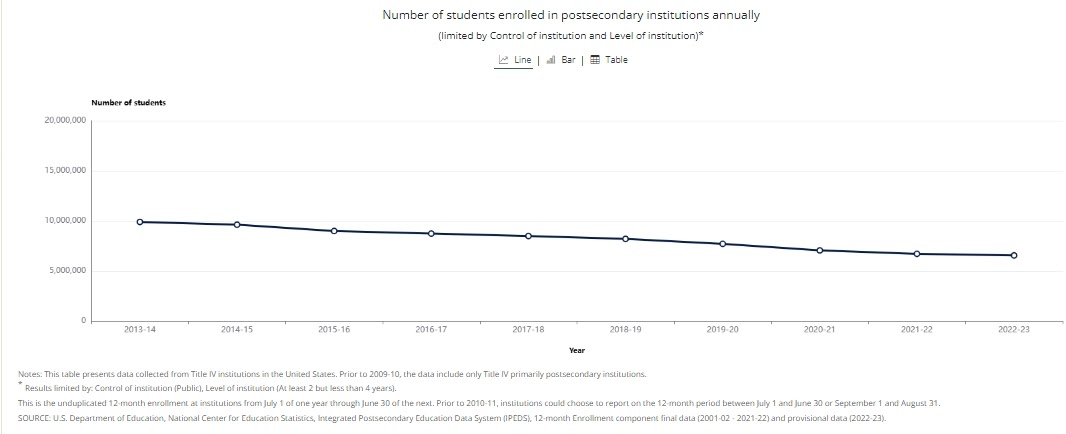
    Examining re-enrollment rates from semester to semester is another key indicator of success. Demonstrating steady improvements in these areas reflects well on the effectiveness of a school’s holistic support and technology. Such data can also indicate how effectively institutions are offsetting the rate of community college enrollment decline, a pressing issue for those seeking to sustain their missions.

    Community colleges serve as the best opportunity to access higher education for many students. By removing enrollment barriers, actively communicating early and often, and leveraging technology to simplify the admissions process, community colleges can create pathways that lead students to fulfilling educational journeys. The more colleges embrace these strategies, the more efficient and successful the enrollment journey becomes for all students, leading to an increasingly inclusive and accessible higher education landscape.

    Liaison is committed to helping community colleges streamline admissions and improve student outcomes. Contact us today to learn more about our products and services.


    Source link

  • Prioritizing Mental Health Support in Community Colleges: Key Data from 2023

    Prioritizing Mental Health Support in Community Colleges: Key Data from 2023

    Title: Supporting Minds, Supporting Learners: Addressing Student Mental Health to Advance Academic Success

    Source: Center for Community College Student Engagement

    The 2023 Community College Survey of Student Engagement (CCSSE) and Survey of Entering Student Engagement (SENSE) gathered essential data to guide community colleges in supporting student mental health and well-being. The surveys collected responses from 61,085 students at 149 community colleges in spring 2023 and 13,950 students at 61 community colleges in fall 2023, respectively.

    Key findings include:

    • Mental health concerns are prevalent among CCSSE and SENSE respondents. In the two weeks before taking the survey, half of CCSSE students and 47 percent of SENSE students reported feeling down, depressed, or hopeless for at least several days. Additionally, 66 percent of students in both groups felt nervous, anxious, or on edge for at least several days.
    • Approximately 26 percent of CCSSE respondents and 23 percent of SENSE respondents likely have a depressive disorder. Over half (53 percent) of students who identify with a gender identity other than man or woman have a probable depressive disorder, compared with 28 percent of women and 25 percent of men. Traditional college-age students (31 percent) and those with a GPA of C or lower (39 percent) are more likely to have a depressive disorder, compared with 19 percent of nontraditional-age students and 23 percent of students with a GPA of B or higher.
    • Overall, 32 percent of CCSSE respondents and 29 percent of SENSE respondents likely have generalized anxiety disorder. Among CCSSE students, 62 percent of those identifying with another gender likely have an anxiety disorder, in contrast to 36 percent of female and 25 percent of male students. Students identifying with two or more races saw the highest levels of generalized anxiety disorder, at 36 percent. Among SENSE respondents, traditional-age students were more likely to have generalized anxiety disorder, at 30 percent, compared to 23 percent of nontraditional-age students.
    • Over half of CCSSE respondents (56 percent) reported that emotional or mental health challenges affected their academic performance in the previous four weeks. 30 percent noted these issues impacted their performance for three or more days. Nearly two-thirds of women (63 percent) and almost half of men (47 percent) reported performance declines due to mental health issues, while 85 percent of students identifying with another gender faced academic impacts. Lower GPA students were more likely to report that mental health issues affected their academic performance.
    • Students with likely generalized anxiety disorder are twice as likely, and those with a depressive disorder are almost twice as likely, to report academic performance declines due to emotional or mental difficulties compared to students likely without these disorders.
    • 63 percent of students identifying with another gender reported that mental health challenges could lead them to withdraw from classes, compared to 39 percent of women and 29 percent of men. More than half of students with a GPA of C or lower (53 percent) stated they were at least somewhat likely to consider withdrawal due to mental health concerns, in contrast to 33 percent of students with a GPA of B or higher.
    • High percentages of students felt their college prioritizes mental health, yet about three in 10 CCSSE respondents and slightly more SENSE respondents said they wouldn’t know where to seek help if needed. Hispanic or Latino students were most likely among racial/ethnic groups to report not knowing where to turn for mental health support.
    • Over one-third of students with likely depressive or generalized anxiety disorders reported not knowing where to find professional mental health assistance if needed. Among CCSSE respondents who needed mental health support in the past year, 42 percent never sought help, with Hispanic or Latino students and men more likely than other groups to indicate they hadn’t pursued support. Approximately one-third of students with probable depressive or generalized anxiety disorders reported never seeking help.Many students cited limited resources as the main barrier to seeking mental health support. Students, especially traditional-age students and men, also frequently mentioned concerns about others’ perceptions and uncertainty about what kind of help they need.
    • Across all groups, students expressed a strong preference for in-person individual counseling or therapy over teletherapy and other support options.
    • Only 16 percent of CCSSE respondents considered it essential that their mental health provider understands their cultural background. However, students with another gender identity and Black or African American students were more likely to value culturally informed mental health support.

    Check out the full report on the CCSSE website.

    —Nguyen DH Nguyen


    If you have any questions or comments about this blog post, please contact us.

    Source link

  • Busting Roadblocks in the Community College Enrollment Cycle

    Busting Roadblocks in the Community College Enrollment Cycle

    Top Student Enrollment Roadblocks and How to Overcome Them

    In my more than two decades of steering enrollment management at various institutions, I’ve seen students encounter numerous hurdles on their journey to and through higher education. 

    My experience has consistently shown that the decision to enroll is heavily influenced by four critical factors: 

    Understanding these priorities is critical to attracting and retaining students in the community college space. By aligning your enrollment strategies with the needs and expectations of prospective students, you can ensure a smoother, more engaging educational journey that benefits both the students and your educational institution alike. 

    Common Ease of Enrollment Roadblocks for Students

    The pursuit of higher education is a daunting task in itself. When students encounter challenges at the enrollment phase — before the actual coursework even starts — it can be easy for them to bow out of the process altogether. To ensure that doesn’t happen, avoid these common pitfalls in the community college enrollment journey: 

    Complex Enrollment Processes

    Orientation and Information Overload

    Confusing Websites

    Placement Testing Delays

    How to Overcome Ease of Enrollment Roadblocks

    So, those are the potential enrollment roadblocks for community college students. But what are the enrollment solutions? Solutions for overcoming enrollment roadblocks for community college students include the following: 

    Common Clear Path to Graduation Roadblocks for Students

    Now that you’ve mowed down the enrollment roadblocks, it’s time to ensure that the ride stays smooth. Remember, it’s never too late for students to change their direction. They might do so if these issues persist: 

    Course Registration Problems

    Technology Barriers

    How to Create a Clear Path to Graduation

    Constructing a clear path to graduation isn’t easy, and with limited resources, it can be difficult to avert every bump in the road. But in my experience, you can keep most students on track by focusing on these two key areas: 

    Common Reasonable Degree Completion Roadblocks for Students

    You’ve cleared two major hurdles by easing the enrollment process and creating a clear path to graduation. But you’re only halfway home. Here are some common mistakes institutions make when it comes to the time it takes to complete a degree: 

    Inadequate Academic Advising

    Lack of Clear Communication

    Social and Emotional Challenges

    How to Help Students Reach Their Goals in a Reasonable Amount of Time

    When it comes to keeping students on track, intervention is key. Follow these tips: 

    Common Cost/Benefit Roadblocks for Students

    You’ve now reached the last but never the least critical roadblock in higher education: return on investment. It’s why your students are showing up, and if the numbers don’t make sense, they can — and should — turn back. Here are some financial concerns that your students are likely to face: 

    Housing and Transportation Challenges

    Cost of College Data Is Hard to Find

    Ways to Help Students With Their Financial Concerns

    Your institution is responsible for ensuring that students understand their financial obligations and how to meet them. Here are a few ways that you can do this: 

    Bust Down Roadblocks by Partnering With Archer 

    In my 20 years of experience, I’ve helped lots of institutions navigate these potential roadblocks to enrolling and retaining more students. And I’m far from alone in my expertise at Archer. Our full-service team partners with colleges of all kinds to help them build and scale their capacities. 

    Is your institution ready for a collaborative partner who takes the time to get to know you, then makes custom recommendations based on decades of experience? Reach out to us today

    Subscribe to the Higher Ed Marketing Journal:


    Brian Messer

    Brian Messer has over 20 years of experience overseeing all aspects of university administration, including online, operations, academic affairs, enrollment management, marketing, financial management, and human resources and student affairs. Specifically, his extensive experience in scaling marketing and enrollment initiatives in all sectors of nontraditional higher education have contributed to student success and growth at many institutions of higher learning.
    Messer holds a doctorate in higher education administration from Saint Louis University.

    Source link

  • Go Higher – a true sense of community and support, by Skye Brocklebank – ALL @ Liverpool Blog

    Go Higher – a true sense of community and support, by Skye Brocklebank – ALL @ Liverpool Blog

    I joined the GoHigher programme at just 19, I had always wanted to opportunity to be able to help others and wanted to serve justice and after doubting my self, it gave me an opportunity to follow my dream. I didn’t think I was capable of Law after leaving  school so took an NVQ route and planned on going into engineering.

    As a woman in STEM, it was extremely difficult to be taken seriously, so I thought, why not just put the shift in to do what I really wanted to do? Not only did I get into my goal university studying my dream subject, but I for the first time enjoyed learning, I felt a real sense of community and belonging in GoHigher, with students from different backgrounds and life experiences; it really is a shared learning experience with your peers. You’re all in it together and everyone in my time at GoHigher was incredibly open minded and accepting, with that being the tone set for the environment.

    The Go Higher teachers adore the subjects they teach and it really inspires people and makes the learning experience extremely enjoyable and rewarding. The broad range of subjects that are taught on this course are incredibly thought provoking and eye opening. I was able to engage in creative subjects that I know and love such as literature and arts and cultures, and also be intrigued by philosophy and social sciences, I also found a new liking to maths, which I always struggled with at school. The patience and support from all GoHigher staff is outstanding and all teachers, lecturers and professors should take a leaf out of their book.

    Image by Freepic

    Source link

  • At Hudson County Community College, Inclusion Drives Recruitment and Retention – CUPA-HR

    At Hudson County Community College, Inclusion Drives Recruitment and Retention – CUPA-HR

    by Julie Burrell | February 27, 2024

    The motto at Hudson County Community College is “Hudson is Home,” a saying created by their students that reflects HCCC’s commitment to community across their three New Jersey campuses. Located in one of the densest and most ethnically diverse counties in the country, HCCC uses inclusive strategies to boost employee recruitment and retention.

    HCCC’s focus on promoting a culture of care and belonging positions them well to contend with voluntary turnover, which remains on the rise nationally as higher ed employees report feeling overworked and undervalued. HCCC’s inclusion and belonging initiatives, including their new peer-to-peer recognition program, address the top three predictors that employees will seek work elsewhere: recognition for contributions, being valued at work, and having a sense of belonging.

    In their recent CUPA-HR webinar, HCCC’s Anna Krupitskiy, vice president for human resources, and Stephanie Sergeant, assistant director of human resources, explained how they use inclusive strategies to engage their approximately 1,000 employees, including:

    Prioritizing a Culture of Care

    Addressing the needs of parents is one way HCCC creates a culture of care through inclusion. In the past, parents who were employees or students were confronted with unclear and inconsistent guidelines. But the institution’s new parent-friendly children on campus policy makes it clear that children are welcome on HCCC’s three campuses. With the new policy, Krupitskiy says, “we wanted to make sure that there’s a strong message that we do allow children on campus.” HR has also collaborated with campus partners on their Take Your Child to Work Day program, where children of employees engage in a range of campus activities, like participating in science projects or watching a nursing demonstration, before ending the day with an ice cream social.

    Using Checkpoints During Recruitment to Ensure Inclusive Hiring

    HCCC has created checkpoints to ensure there are meaningful milestones to reflect on inclusion during the recruitment and selection process. The first checkpoint is the composition of the hiring committee itself. Krupitskiy and Sergeant stress that screening committees should be representative of HCCC, not just in terms of demographics, but also such characteristics as how long a person has been employed at HCCC, what role or level of position they hold, what union affiliation they have, etc. They’ve also invited students to participate in searches when appropriate.

    Job descriptions are another area they’ve scrutinized, asking if certain minimum qualifications inherently limit a pool of applicants. Might a minimum qualification, like years of experience, be listed as a preferred qualification instead?

    Implementing a Peer-to-Peer Recognition Program  

    Recognizing employee contributions is a critical retention tool. Only 59% of higher ed employees say they receive regular verbal recognition for doing good work, according to CUPA-HR data. To address recognition, HCCC holds a years-of-service event, with awards for five to 40-plus years of service for both part-time and full-time employees. Their new Hudson is Home employee recognition program allows colleagues to nominate each other for awards ranging from Collaboration and Team Achievement to a Part-Time Spotlight award. Employees receive an email notification when they’ve been nominated, which has driven up participation overall.

    To learn more about the programs and initiatives at HCCC — including working to close pay equity gaps and establishing professional development funds — view the recording of Retention Strategies for an Inclusive and Engaged Workforce. For data on higher ed retention challenges and recommendations, see The CUPA-HR 2023 Higher Education Employee Retention Survey.


    Source link