Tag: Compact

  • Penn, U of Southern California Reject Trump Compact

    Penn, U of Southern California Reject Trump Compact

    Photo illustration by Justin Morrison/Inside Higher Ed | Jumping Rocks/Universal Images Group/Getty Images | Mario Tama/Getty Images

    The Universities of Pennsylvania and Southern California have now refused to sign the Trump administration’s “Compact for Academic Excellence in Higher Education,” making them the third and fourth of the nine initial institutions that were presented the deal to publicly turn it down. No institution has agreed to sign so far.

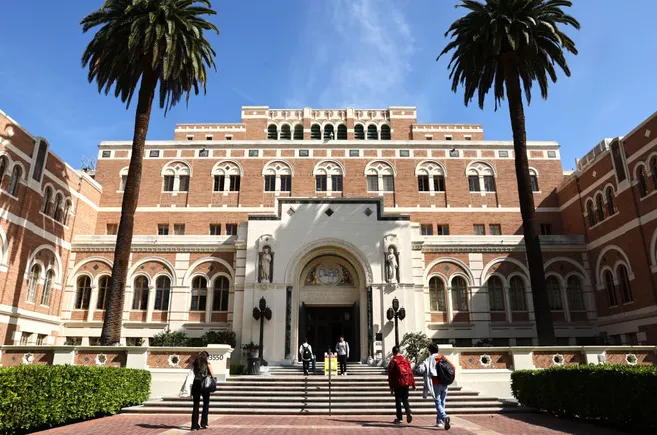
    Both announcements came Thursday, a few days before the Oct. 20 deadline to provide feedback on the proposal. Beong-Soo Kim, interim president of the University of Southern California, shared his message to Education Secretary Linda McMahon, which outlined how USC already seems to adhere to the compact.

    “Notwithstanding these areas of alignment, we are concerned that even though the Compact would be voluntary, tying research benefits to it would, over time, undermine the same values of free inquiry and academic excellence that the Compact seeks to promote,” Kim wrote. “Other countries whose governments lack America’s commitment to freedom and democracy have shown how academic excellence can suffer when shifting external priorities tilt the research playing field away from free, meritocratic competition.”

    Kim added that the compact does raise issues “worthy of a broader national conversation to which USC would be eager to contribute its insights and expertise.”

    California governor Gavin Newsom, a possible Democratic presidential contender in 2028, had threatened that any university in his state that signed the compact would “instantly” lose billions of state dollars.

    Over at Penn, President J. Larry Jameson wrote in a message to his community Thursday that his university “respectfully declines to sign the proposed Compact.” He added that his university did provide feedback to the department on the proposal.

    Penn spokespeople didn’t say Thursday whether the university would sign any possible amended version of the compact that addressed the university’s concerns, nor did they provide Inside Higher Ed a copy of the feedback provided to the Trump administration. (Penn is the only university of the four that didn’t provide its response to McMahon.)

    The White House also didn’t provide a copy of Penn’s feedback, but it emailed a statement apparently threatening funding cuts for universities that don’t sign the compact.

    “Merit should be the primary criteria for federal grant funding. Yet too many universities have abandoned academic excellence in favor of divisive and destructive efforts such as ‘diversity, equity, and inclusion,’” spokesperson Liz Huston said in the statement. “The Compact for Academic Excellence embraces universities that reform their institutions to elevate common sense once again, ushering a new era of American innovation. Any higher education institution unwilling to assume accountability and confront these overdue and necessary reforms will find itself without future government and taxpayers support.”

    Brown University announced it had rejected the compact Wednesday, and the Massachusetts Institute of Technology did the same last Friday. Following MIT’s rejection, the Trump administration said the compact was open to all colleges and universities that want to sign it.

    The compact is a boilerplate contract asking colleges to voluntarily agree to overhaul or abolish departments “that purposefully punish, belittle, and even spark violence against conservative ideas,” without further defining what those terms mean. It also asks universities to, among other things, commit to not considering transgender women to be women, to reject foreign applicants “who demonstrate hostility to the United States, its allies, or its values” and to freeze “effective tuition rates charged to American students for the next five years.”

    In exchange for these agreements, the White House has said signatories would “be given [funding] priority when possible as well as invitations to collaborate with the White House.” But the White House hasn’t revealed how much extra funding universities would be eligible for, and the nine-page compact doesn’t detail the potential benefits. The compact, and the Thursday statement from the White House, can also be read as threatening colleges’ current federal funding if they don’t sign. Multiple higher ed organizations have allied in calling on universities to reject the compact.

    Jameson said in his statement that “at Penn, we are committed to merit-based achievement and accountability.”

    Earlier this year, the Trump administration said that Penn violated Title IX of the Education Amendments of 1972 when it allowed a transgender woman to swim on the women’s team in 2022, and officials issued several demands to the university. Penn ultimately conceded to those demands over the summer, a decision that the administration said restored about $175 million in frozen federal funds.

    Marc Rowan, a Penn graduate with two degrees from its Wharton School of Business who’s now chief executive officer and board chair for Apollo Global Management, wrote in The New York Times that he “played a part in the compact’s initial formulation, working alongside an administration working group.” Rowan argued that the compact doesn’t threaten free speech or academic freedom.

    Apollo has funded the online, for-profit University of Phoenix. AP VIII Queso Holdings LP—the previous name for majority owner of the University of Phoenix—was the successor of Apollo Education Group, which went private in 2017 in a $1.1 billion deal backed by Apollo Global Management Inc. and the Vistria Group.

    AP VIII Queso Holdings LP was recently renamed Phoenix Education Partners as part of a new deal to take the company public once again. Phoenix Education Partners, now owner of the University of Phoenix and backed by both Apollo and Vistria, started trading on the stock market last week and was valued at about $1.35 billion after the first day.
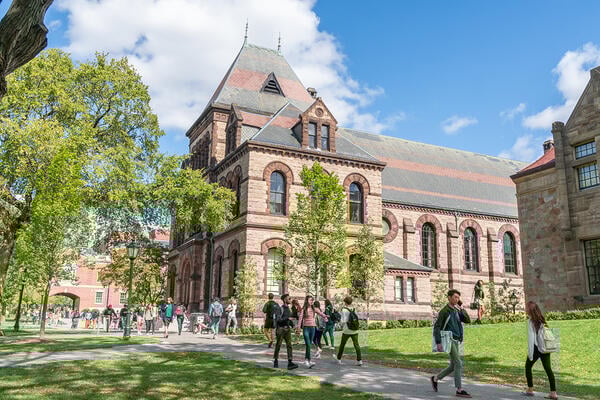
    Source link

  • Brown University Rejects Trump’s Higher Ed Compact

    Brown University Rejects Trump’s Higher Ed Compact

    Wolterk/iStock/Getty Images

    Citing multiple concerns, Brown University on Wednesday rejected an invitation to join the “Compact for Academic Excellence in Higher Education” that the Trump administration proposed.

    The compact, initially sent to nine institutions, would require universities to make a number of far-reaching changes, including suppressing criticism of conservatives on campus. Of the original nine, Brown is now the second to reject the deal after the Massachusetts Institute of Technology.

    The administration has promised preferential treatment on federal funding for those that sign on, though the document itself doesn’t detail those benefits. Higher ed experts and observers have warned against signing, arguing that it threatens institutional independence and give the federal government much more power over universities.

    Following MIT’s rejection, the Trump administration said the compact was open to all colleges. But of the original nine invitees, there are no takers so far, though officials at the University of Texas system have indicated they view the proposal favorably. The system’s flagship in Austin was part of the nine.

    “President Trump is committed to restoring academic excellence and common sense at our higher education institutions,” White House spokesperson Liz Huston said in a statement. “Any university that joins this historic effort will help to positively shape America’s future.”

    Brown president Christina Paxson released her response to federal officials Wednesday, arguing that while Brown agreed with some of the aims of the proposal—such as keeping tuition costs down and maintaining a vibrant exchange of ideas across the ideological spectrum—other issues, including academic freedom concerns, prompted the university to reject the compact.

    She also pointed to the settlement Brown and the Trump administration reached in July to restore more than $500 million in frozen federal research funding amid an investigation into alleged campus antisemitism. She noted that the agreement “reflects similar principles” to the compact. But while the settlement did not wade into campus curriculum or programs, the compact would impose much greater restrictions on academic offerings for signatories.

    “In return for Brown signing the July agreement, the federal government restored the University’s research funding and permanently closed three pending investigations into shared ancestry discrimination and race discrimination. But most important, Brown’s existing agreement with the federal government expressly affirms the government’s lack of authority to dictate our curriculum or the content of academic speech—a principle that is not reflected in the Compact,” Paxson wrote.

    A White House official said that the settlement was aimed at “rectifying past harm and discrimination,” whereas the compact is more “forward looking.”

    Paxson also echoed concerns raised by MIT president Sally Kornbluth—who wrote in her letter to the Education Department that “scientific funding should be based on scientific merit alone”—and other higher ed groups such as the Association of American Universities, of which Brown is a member.

    Paxson wrote, “A fundamental part of academic excellence is awarding research funding on the merits of the research being proposed.”

    ”The cover letter describing the compact contemplates funding research on criteria other than the soundness and likely impact of research, which would ultimately damage the health and prosperity of Americans,” she added. “Our current agreement with the federal government—beyond restoring Brown’s research funding from the National Institutes of Health—affirms the University’s ability to compete fairly for new research grants in the future, a doctrine of fairness and a commitment to excellence that aligns with our values.”

    The Department of Education did not respond to a request for comment.

    Todd Wolfson, president of the American Association of University Professors, celebrated the decision on social media and in a statement, highlighting efforts by Brown employees to push back against the compact, including a campus protest last week that called on administrators to reject the deal.

    Both the national AAUP and Brown’s AAUP chapter have spoken out against the compact, and faculty at other universities along with students have also urged their leaders to reject the compact.

    “By declining to compromise its core mission, Brown University has affirmed that no amount of federal inducement is worth surrendering the freedom to question, explore, and dissent,” Wolfson said in the statement. “In rejecting the Compact, Brown stands as a bulwark for higher education’s sacred commitment to academic freedom and institutional self-governance.”

    Source link

  • MIT becomes first college to reject Trump’s higher education compact

    MIT becomes first college to reject Trump’s higher education compact

    This audio is auto-generated. Please let us know if you have feedback.

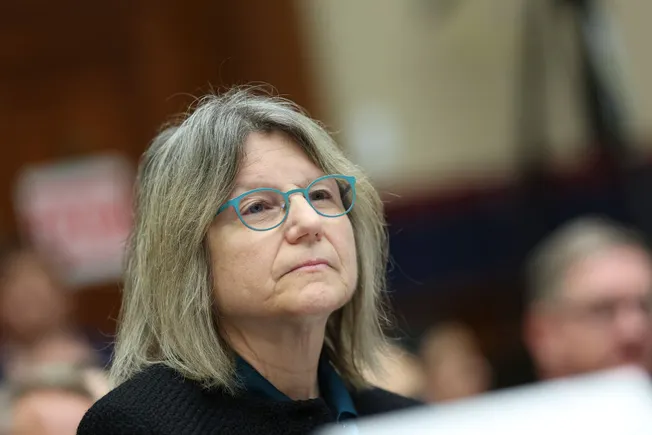
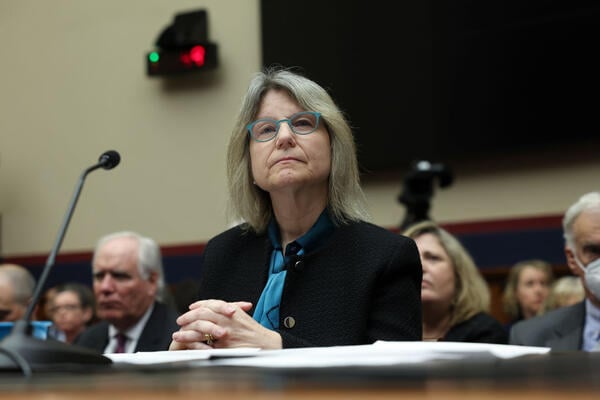
    The Massachusetts Institute of Technology on Friday rejected the Trump administration’s proposed compact that offers priority for federal research funding in exchange for making sweeping policy changes. 

    MIT is the first institution to formally reject the compact, which the administration sent to nine research universities on Oct. 1. 

    The nine-page compact’s wide-ranging terms include freezing tuition for five years, capping international student enrollment to 15% of the institution’s undergraduate student body, and changing or eliminating units on campus that “purposefully punish, belittle, and even spark violence against conservative ideas.” 

    MIT already meets or exceeds many of the proposed standards in the compact, university President Sally Kornbluth said in a Friday message to U.S. Education Secretary Linda McMahon. However, the compact includes other principles that would restrict the university’s free expression and independence, Kornbluth said. 

    And fundamentally,” Kornbluth added, “the premise of the document is inconsistent with our core belief that scientific funding should be based on scientific merit alone.”

    The White House did not immediately respond to a request for comment on Friday. 

    Kornbluth’s letter to the Trump administration

    In her message, which she shared publicly, Kornbluth pointed to several MIT policies that she said were already in step with the compact. For instance, the proposed agreement dictates that colleges mandate standardized testing for applicants, and MIT reinstated its SAT and ACT requirement in 2022 after pausing it due to the coronavirus pandemic. 

    Similarly, Kornbluth noted that MIT limits international enrollment to about 10% of its undergraduate population — below the Trump administration’s proposed cap of 15%. 

    The compact also focuses on affordability, including through a standard that would require colleges with large endowments to not charge tuition to students enrolled in “hard science programs,” with exceptions for those from well-off families. 

    Kornbluth shared MIT’s own affordability initiatives, including not charging tuition to incoming undergraduate students from families earning under $200,000. She noted that 94% of undergraduate degrees awarded at MIT are in science, technology, engineering and mathematics fields. 

    But the MIT president opposed other compact provisions over concerns that they would restrict free expression at the university — which she underscored as a core MIT value.  

    “We must hear facts and opinions we don’t like — and engage respectfully with those with whom we disagree,” Kornbluth wrote.

    The compact’s terms have raised alarms from free speech advocates since becoming public. 

    Tyler Coward, lead counsel for government affairs at the Foundation for Individual Rights and Expression, said that the compact contains troubling language, pointing to the provision to eliminate departments that “belittle” or “spark violence” against conservative beliefs. 

    “Let’s be clear: Speech that offends or criticizes political views is not violence,” Coward wrote in an Oct. 2 statement. “Conflating words with violence undermines both free speech and efforts to combat real threats.”

    Widespread opposition to the compact

    The eight other colleges that received the compact are Brown University, Dartmouth College, the University of Arizona, the University of Pennsylvania, the University of Southern California, the University of Texas at Austin, the University of Virginia and Vanderbilt University. 

    The compact has drawn widespread opposition from employee groups and students. 

    Faculty senates at two institutions — the University of Arizona and UVA — have voted to oppose the agreement. It has also drawn campus protests and petitions to urge administrators to reject the proposal. 

    Democratic state lawmakers have likewise pushed colleges to reject the agreement. 

    In California, Gov. Gavin Newsom threatened to pull state funding from colleges that sign the deal. A pair of Pennsylvania lawmakers took a similar tack by moving to bar state-funded colleges from signing onto the compact. And in Virginia, leaders of the Democrat-controlled state Senate threatened funding consequences if UVA agreed to the compact. 

    “This is not a partnership,” the Virginia lawmakers said in an Oct. 7 letter to UVA leadership. “It is, as other university leaders have aptly described, political extortion.”

    Source link

  • MIT Rejects Proposed Federal Compact

    MIT Rejects Proposed Federal Compact

    Photo by Kevin Dietsch/Getty Images

    Massachusetts Institute of Technology has rejected the Trump administration’s proposal to sign on to the “Compact for Academic Excellence in Higher Education,” which would mandate sweeping changes across campus in exchange for preferential treatment on federal funding.

    MIT is the first of the nine universities invited to join the compact to publicly reject the proposal that has ignited fierce pushback from other higher ed leaders, faculty and experts who see the document as a way to strip institutions of their autonomy. The Trump administration also asked Brown University, Dartmouth College, the University of Arizona, the University of Pennsylvania, the University of Southern California, University of Texas at Austin, the University of Virginia and Vanderbilt University to sign. Most have provided vague statements saying that they are reviewing the compact, though Texas officials have expressed some enthusiasm about the offer.

    MIT President Sally Kornbluth announced the move in a Friday morning letter to the campus community, which included a copy of her response to Education Secretary Linda McMahon.

    Kornbluth highlighted in the response to McMahon a number of areas emphasized by the White House in the compact, such as focusing on merit, keeping costs low for students and protecting free expression. 

    “These values and other MIT practices meet or exceed many standards outlined in the document you sent. We freely choose these values because they’re right, and we live by them because they support our mission—work of immense value to the prosperity, competitiveness, health and security of the United States. And of course, MIT abides by the law,” Kornbluth wrote.

    She also noted that MIT disagreed with a number of the demands in the letter, arguing that it “would restrict freedom of expression and our independence as an institution” and that “the premise of the document is inconsistent” with MIT’s belief that funding should be based on merit.

    “In our view, America’s leadership in science and innovation depends on independent thinking and open competition for excellence,” Kornbluth wrote. “In that free marketplace of ideas, the people of MIT gladly compete with the very best, without preferences. Therefore, with respect, we cannot support the proposed approach to addressing the issues facing higher education.”

    This is a breaking news article and will be updated.

    Source link

  • Virginia lawmakers threaten state funding consequences if UVA signs Trump compact

    Virginia lawmakers threaten state funding consequences if UVA signs Trump compact

    This audio is auto-generated. Please let us know if you have feedback.

    Dive Brief:

    • Three leading Virginia state senators this week urged University of Virginia’s top officials to immediately reject the Trump administration’s proposed higher education compact and threatened the institution’s state funding if they signed on.
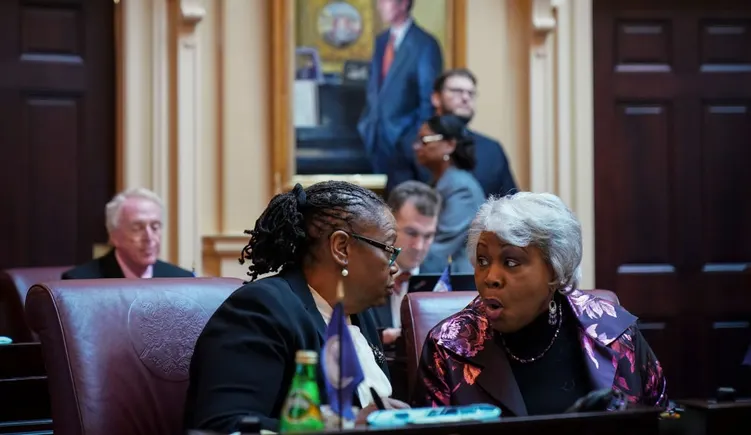
    • In an Oct. 7 letter to UVA leaders, Democratic state Sens. Scott Surovell, L. Louise Lucas and Mamie Locke called the federal government’s conditions “an unprecedented federal intrusion into institutional autonomy and academic freedom.” 
    • Agreeing to those terms would invite further federal interference at the university, the trio said, citing the Trump administration’s recent ouster of UVA’s president. If UVA agrees to the compact, they warned, the institution will face “significant consequences in future Virginia budget cycles.”

    Dive Insight:

    The Trump administration’s compact would offer UVA, along with eight other research universities, preferential access to federal research funding if they agree to its wide-ranging and unprecedented conditions. 

    Some of those terms are straightforward, such as a five-year tuition freeze, a standardized testing requirement for admissions and a 15% cap on international students’ share of undergraduate enrollment.

    Others are less clear cut, including required public audits of the viewpoints of employees and students, institutional neutrality on most political and social events, and a commitment to changing — or ending — institutional units that purposefully “punish” or “belittle” conservative ideas.

    All of the proposed conditions of the agreement “are fundamentally incompatible with the mission and values of a premier public research university,” the lawmakers told UVA Interim President Paul Mahoney and Rachel Sheridan, head of the institution’s governing board. 

    For instance, the state senators raised alarms about one element of the compact that would bar signatories with large endowments from charging tuition for students enrolled in “hard science programs.”

    That would force students in humanities and social sciences “to subsidize” those enrolled in STEM programs, representing “a bizarre federal intrusion into institutional financial planning that devalues essential fields of study,” they wrote. 

    “This is not a partnership,” the lawmakers said. “It is, as other university leaders have aptly described, political extortion.”

    Surovell, Lucas and Locke wield significant legislative power as the state Senate majority leader, president pro tempore and chair of the Senate Democratic Caucus, respectively. They underlined this influence in their letter, vowing “to ensure that the Commonwealth does not subsidize an institution that has ceded its independence to federal political control.”

    The three senators pointed specifically to the forced departure of former UVA President Jim Ryan, who abruptly resigned in June amid federal pressure to step down over the university’s diversity efforts during his seven-year tenure. 

    In his announcement, Ryan said he wouldn’t fight back against the Trump administration and attempt to keep his job because staying would cost UVA research funding and student aid and hurt its international students.

    Federal officials ousted Ryan, the state senators said, “not for any failure of leadership, but because they disagreed with the University’s approach to diversity and inclusion.” They categorized Ryan as a successful leader who was made into a political sacrifice — one that didn’t stave off further interference.

    “President Ryan’s resignation was meant to spare the University from federal retaliation, yet here we are again, facing even more aggressive demands on institutional autonomy,” they told UVA leaders. “The lesson is unmistakable — appeasing this Administration only emboldens further encroachment.”

    UVA faculty similarly called for institutional leaders to rebuke the compact. In a 60-2 vote, the university’s faculty senate approved a resolution on Oct. 3 whose preamble called the proposal dangerous to UVA and a likely violation of state and federal law.

    The Trump administration gave the nine universities until Oct. 20 to offer feedback on the compact and until Nov. 21 to sign the agreement.

    Source link

  • Trump’s higher ed compact draws condemnation from faculty and college unions

    Trump’s higher ed compact draws condemnation from faculty and college unions

    This audio is auto-generated. Please let us know if you have feedback.

    Faculty groups and employee unions are urging universities to reject a proposed compact from the Trump administration that would trade control over their policies for preferential access to federal research funding.

    Of the nine colleges that received the offer, at least two faculty senatesthe University of Virginia and the University of Arizonavoted to oppose the deal and pushed their institution’s leadership to reject it. Other instructors and employee groups have also decried the compact. 

    Leaders at the colleges have thus far issued mostly noncommittal responses, with none publicly announcing they would decline the deal as of Wednesday afternoon. 

    Along with UVA and the University of Arizona, the Trump administration sent the compact to Brown University, Dartmouth College, the Massachusetts Institute of Technology, the University of Texas at Austin, the University of Pennsylvania, the University of Southern California and Vanderbilt University. It gave the institutions until Oct. 20 to respond with feedback and up to Nov. 21 to sign.

    Faculty groups weigh in

    At a Monday meeting, the University of Arizona’s faculty senate approved a resolution opposing the compact in a 40-8 vote, with one member abstaining.

    The resolution called the compact a danger to “the independence, excellence, and integrity” of the institution and the constitutional rights of the campus community.

    “Others wiser than I have called it recently a trap, a poisoned apple,” Faculty Chair Leila Hudson said before the vote. “Federal funds are not a drug that we need a quick fix of to be forever extortable.”

    Hundreds of miles east, faculty at the University of Virginia similarly rebuked the Trump administration’s proposal.

    The UVA faculty senate on Friday, in a 60-2 vote with 4 abstentions, approved a resolution whose preamble called the compact a danger to the university that runs antithetical to its mission and traditions. It also said the deal “likely violates state and federal law.”

    At least one law firm, Ropes & Gray, has said the compact raises legal questions, adding that it “does not explain the statutory or other basis that authorizes the Administration to give preferential access to federal programs.”

    The law firm also said the compact used vague and broad language and doesn’t explain key elements of the proposal. For instance, it threatens to strip federal funding from institutions that sign and then violate its terms — but it doesn’t explain which dollars could be revoked.

    “Would all federal benefits — research dollars and beyond — be affected by an instance of non-compliance, or would only those additional or new federal benefits that have accrued as a result of the institution having signed onto this Compact (the scope of which is unclear as well) be affected?” it posited in a Wednesday analysis.

    A second round of deals?

    Two of the institutions that received the offer — Penn and Brown — have previously struck deals with the Trump administration.

    Penn President J. Larry Jameson said Sunday that he would seek input on the compact from the campus community, including Penn’s trustees and faculty senate.

    “The long-standing partnership with the federal government in both education and research has yielded tremendous benefits for our nation. Penn seeks no special consideration,” he said in a statement.

    Jameson added that he would keep five factors front of mind: “freedom of inquiry and thought, free expression, non-discrimination, adherence to American laws and the Constitution of the United States, and our own governance.”

    In March, the Trump administration suspended $175 million of Penn’s research funding over its prior policy permitting transgender women to compete in women’s sports. The U.S. Department of Education formally alleged in April that the university’s policies had violated Title IX, a law banning sex-based discrimination at federally funded institutions.

    Source link

  • How Trump’s Compact Threatens Higher Ed Funding, Freedom

    How Trump’s Compact Threatens Higher Ed Funding, Freedom

    The nine universities that were sent the Trump administration’s new deal for higher ed are under increasing pressure to reject the compact.

    Multiple major associations representing institutions and faculty have urged them not to sign it. California governor Gavin Newsom has said the University of Southern California and any other university in his state that signs will “instantly” lose billions of state dollars. Faculty groups at the University of Virginia, another institution presented with the compact, overwhelmingly urged university leaders to reject it. A group of progressive student and higher ed worker organizations is circulating a petition that calls on university presidents and boards to “reject the Trump administration’s attempt to cajole universities into compliance through explicit bribery.” 

    So far, the universities at the center of the fight are remaining mostly mum, saying they’ll review the proposal. Some leaders are hinting they have reservations about signing. But other higher ed leaders and observers say that beyond what those institutions do, the nine-page document represents another escalation in the White House’s precedent-shattering crusade to overhaul postsecondary ed—one that could restrict freedoms at colleges across the nation. They expect the compact will likely serve as a blueprint for the administration’s dealings with other colleges.

    “It’s making it really clear that the dominoes are being set up … they’re going to expand this to the rest of higher ed,” said Amy Reid, interim director of PEN America’s Freedom to Learn program.

    A White House official told Inside Higher Ed in an email that “other schools have affirmatively reached out and may be given the opportunity to be part of the initial tranche.” The New York Times cited May Mailman, a White House adviser, as saying the compact could be extended to all institutions.

    The administration has dangled the compact before universities with promises of extra benefits it hasn’t revealed. It’s an evolution in the White House’s quest to upend higher ed using the blunt instrument of federal funding access. The federal government earlier slashed billions of dollars from Harvard and Columbia Universities and other selective institutions to pressure them to change their internal policies and practices.

    But now, the administration has written a boilerplate contract asking colleges to voluntarily agree to overhaul or abolish departments “that purposefully punish, belittle, and even spark violence against conservative ideas,” without further defining what those terms mean. It also asks universities to, among other things, commit to not considering transgender women to be women and to reject foreign applicants “who demonstrate hostility to the United States, its allies, or its values.”

    In addition to a murky promise of additional money, the compact can be read as threatening colleges’ current federal funding. Higher ed groups say those that sign are taking a big gamble. The compact says failure to adhere to the terms of the agreement, which are vague, can lead to a loss of all federal funding. But it’s also unclear whether the universities have the freedom to refuse. A line at the end of the compact’s introduction says, “Institutions of higher education are free to develop models and values other than those below, if the institution elects to forego [sic] federal benefits.”

    The nine institutions sent the Compact for Academic Excellence in Higher Education aren’t necessarily being asked to sign it. The letter sent to the University of Virginia requested “limited, targeted feedback” on the compact by Oct. 20—before the White House sends invitations to finalize language and sign to universities showing “a strong readiness to champion this effort.”

    Lynn Pasquerella, president of the American Association of Colleges and Universities, said many campus leaders worry that, if any institutions do sign the compact, it will start a ripple effect in which other university leaders feel pressured to sign so they don’t lose out on funding.

    Joy Connolly—president of the American Council of Learned Societies, a federation of 81 groups including the American Academy of Arts and Sciences and the American Historical Association—added that with this compact, the White House “is using nine months of intimidation tests to take its divide-and-conquer strategy to the next level.”

    “If one by one institutions give in and sign, hoping to mitigate the damage later, it will set a truly problematic precedent,” Connolly said. “Some of the most powerful and wealthy institutions on the planet will have agreed to subject their faculty and research and teaching to state approval, and academia will be visibly divided into an insider group and an outsider group.”

    Unclear Carrots, Clearer Sticks

    According to the letter to UVA—signed by Mailman, Education Secretary Linda McMahon and Vincent Haley, director of the White House’s Domestic Policy Council—universities that sign will reap “multiple positive benefits … including allowance for increased overhead payments where feasible, substantial and meaningful federal grants, and other federal partnerships.” The White House didn’t provide Inside Higher Ed further information on how much extra money signatories would be able to receive.

    The compact itself makes no mention about the potential financial benefits of signing.

    For this unclear gain, a signatory university would risk all of their federal funding: The compact says “all monies advanced by the U.S. government during the year of any violation shall be returned to the U.S. government.”

    Asked to clarify whether a university that refuses to sign could lose all federal funding, White House spokeswoman Abigail Jackson replied in an email simply that “the Administration does not plan to limit federal funding to schools that sign the compact.”

    Jackson said universities that do sign “would be given [funding] priority when possible as well as invitations to collaborate with the White House. This is an opportunity for collaboration that all institutions of learning should be excited about.” The White House didn’t grant Inside Higher Ed an interview or answer written requests for more information about the compact’s benefits and how some of its requirements should be interpreted.

    Pasquerella, of AAC&U, said the compact is “meant to be vague as a way of fomenting confusion.”

    “Part of the strategy, I believe, of this administration is to engage in overly broad, overly vague language that is confusing so it’s not clear when institutions are complying,” Pasquerella said—a form of jawboning that pressures universities to overcomply. She said the compact’s promise of federal funds for signatories and apparent threat of cuts for those who refuse is “not a real choice.”

    “It is the continued weaponization of federal funding,” she said. The compact isn’t “reforming higher education but dismantling it and replacing it with institutions that have a conservative ideology.” It disadvantages those institutions that are unwilling to relinquish their academic freedom and other freedoms, such as transgender people’s rights, she said.

    Jon Fansmith, senior vice president for government relations at the American Council on Education, expressed concern that institutions that don’t sign could face the same “harassment” Harvard has suffered for refusing the administration’s earlier demands on that university. The administration cut off Harvard’s access to billions of dollars in research funding, placed it on heightened cash monitoring and tried to prevent it from enrolling international students, among other efforts in a growing pressure campaign against the institution.

    “Now they’re essentially saying we’re going to create two classes of institutions,” Fansmith said: those “swearing fealty to the administration” and getting extra benefits, and those that are punished.

    “That’s a massive step in the wrong direction in the history of American higher education,” he said. He said prioritizing less merit-worthy candidates for federal funding just because they signed the compact is “harmful to the goal of getting the best science performed on behalf of the American people.”

    Standing Up

    Fansmith noted the compact’s ideas aren’t necessarily new for the administration, but they would add up to “very specific intrusions into institutional policies.” For instance, the compact would mandate that all “undergraduate applicants take a widely-used standardized test … or program-specific measures of accomplishment.” Signatories must also agree that no more than 15 percent of their undergraduates be in the “Student Visa Exchange Program [sic], and no more than 5 percent shall be from any one country.” (The Student and Exchange Visitor Program, not the Student Visa Exchange Program, collects information on international students.)

    Reid, of PEN America, said, “The administration has gone from picking off individual schools to selecting a group—a group of well-respected universities, but that for different reasons are seen as perhaps likely to comply—and putting everyone on notice that this is coming for everyone.”

    Some of the nine institutions, however, have hinted at reservations about signing. On Friday, Dartmouth College president Sian Leah Beilock noted in a statement that “you have often heard me say that higher education is not perfect and that we can do better. At the same time, we will never compromise our academic freedom and our ability to govern ourselves.”

    On Sunday, University of Pennsylvania president J. Larry Jameson said Penn’s “long-standing partnership with the federal government in both education and research has yielded tremendous benefits for our nation,” but also that “Penn seeks no special consideration.” On Monday evening, University of Virginia Board of Visitors chair Rachel Sheridan and interim president Paul Mahoney wrote in a message to the campus community that “it would be difficult for the University to agree to certain provisions in the Compact.”

    Reid told Inside Higher Ed that “for those of us who are not at those nine targeted institutions, the question is how do we all respond in a way that bolsters the resolve of any institution to stand up.”

    “It is wrong to call this a compact, because there’s nothing mutual about it,” Reid said. “It is a one-sided coercive proposition that has a bow of commonality stuck onto it that it doesn’t deserve. We need to call this what it is, which is an attempt to extort universities, to shut down free expression on campuses, to impose ideological restrictions under another name.”

    Source link

  • A Compact for Control (opinion)

    A Compact for Control (opinion)

    For more than 80 years, the system of higher education in the United States has partnered with the federal government to produce the best science, technology and scholarship in the world. Competing for federal research support on the basis of merit, universities have produced countless innovations and spurred enormous economic growth. The Trump administration has now proposed a “Compact for Academic Excellence in Higher Education” that threatens to destroy this partnership.

    Holding hostage federal loans and grants, the “compact” is essentially a unilateral executive decree that cannot be refused. Although it sounds in high and unobjectionable ideals, it is in fact designed to undermine the traditional academic independence and freedom that have sustained the greatness of American universities. The compact should be immediately and forcefully rejected by all self-respecting institutions of higher education.

    Universities and colleges have two essential missions. They serve to increase our knowledge of the world and to educate our young. Knowledge cannot be increased if it is assessed by political criteria, as distinguished from standards of intellectual merit. But the compact requires that institutions of higher education abolish “institutional units that … belittle … conservative ideas.” What exactly counts as conservative is unstated and left in the control of the administration. The compact seeks to supplant intellectual competence with explicitly political criteria, to be determined by a political agency. This demand violates not only academic freedom, but also free speech. It imposes government orthodoxy on private entities.

    The compact demands that universities offer empirical verification that each institutional field, department and unit represent a “broad spectrum of viewpoints.” It thus invites government to overrule scientific consensus on the range of acceptable inquiry. Most colleges of environmental sciences, for example, teach that global climate change is accelerated by human conduct. But Trump himself, speaking before the United Nations, branded this view the “greatest con job.” Most medical schools teach that vaccines are important to health. But Trump’s secretary of health and human services “has been crusading against vaccines for decades.” Under the compact, government might insist that every biology department house a vaccine denier, or that every environmental science program contain a climate change skeptic. Political control of this kind would quickly degrade the intellectual integrity of university scholarship.

    Early in the 20th century, American universities were managed by laypersons who attempted to censor and control the scholarship of professors. But in 1915, the newly established American Association of University Professors defined and defended academic freedom in the canonical Declaration of Principles on Academic Freedom and Academic Tenure. The declaration set forth principles that are now enshrined in contracts at virtually every American college and university. These principles protect academic freedom, which rests on the axiom that scholarly excellence is to be determined by academic rather than political standards. Trump’s proposed compact wantonly violates this essential principle, even as it purports to protect academic freedom.

    The declaration also makes clear the educational goal of American colleges and universities, which is to equip students to think for themselves. The compact, in contrast, requires universities to suppress “support for entities designated by the U.S. Government as terrorist organizations.” Government may of course create such designations, but unfortunately they may also be problematic, overbroad or erroneous. Students and professors should be allowed to criticize such errors, but the compact would prevent this. It would require American colleges and universities to become instruments of official thought control. This is what happened in the United States during World War I, when professors were fired for opposing the war. We have spent a century repenting those mistakes, and now the Trump administration demands that we repeat them.

    Some provisions in the compact are unobjectionable because they merely restate existing law. The Supreme Court has outlawed the use of race in admissions. Congress has laid out procedures for enforcing antidiscrimination law under Title VI and Title IX. These tools are adequate to enforce the law. But the compact has a larger goal: It seeks to break the independence of American higher education, an independence that has fueled the ascent of American colleges and universities to greatness. The compact goes far beyond the Supreme Court’s ruling on affirmative action to require that all admissions decisions “be based upon and evaluated against objective criteria.” It also requires “grade integrity,” freezing tuition rates for five years, disclosure of postgraduate earnings and free tuition for students in the hard sciences at universities with large endowments. It limits the percentage of foreign students and requires screening for anti-American bias.

    The diversity of American institutions of higher education is commonly understood to be a source of its enormous strength. Competing against each other for students, American colleges and universities admit students based on their own distinct and legal criteria. But the administration seeks to end that heterogeneity. For many institutions what matters is the creativity of a student’s essay, the qualitative assessment of recommendations and the resilience of an applicant’s personality as revealed in a résumé. The administration would have universities ignore all that. It would turn our colleges and universities into drab, bureaucratic and uniform institutions, under the shadow of the continuous threat of government interference.

    Under the compact, universities also must commit to institutional neutrality, the idea that university leaders and departments will not officially comment on social and political issues of the day that do not affect the university. This is an ideal embodied in the 1967 Kalven report at the University of Chicago, but its adoption and interpretation is a very local matter, and it should not be required as a condition for receipt of federal funds.

    Institutional neutrality is important because it protects the maximum freedom of students and faculty to vigorously inquire, without battling the pall of official ideas. But some institutions might have specific missions that they deem essential. For example, a religious institution of higher learning might have a certain set of principles that require leaders to speak out. If government gets to decide what counts as a social or political issue, a medical school might not be able to opine on the safety of vaccines, an environmental department on the impacts of climate change or a law school on violations of the rule of law. Of course, universities may choose not to opine on these matters, but for the administration to impose this silence is truly inimical to a marketplace of ideas.

    The compact insists that universities “commit to defining” gender roles “according to reproductive function and biological processes.” Gender troubles certainly abound in universities, and prior administrations may have contributed to these difficulties. But these quandaries are for universities to settle. The diversity of approaches taken by American colleges and universities is our greatest strength. The compact unaccountably seeks to impose its own ideology on all institutions of higher education. It seeks to replace a pluralist market with a single orientation set by Washington, D.C.

    The architect of America’s public-private research partnership, Vannevar Bush, asserted that “scientific progress” required “the free play of free intellects, working on subjects of their own choice, in the manner dictated by their curiosity for exploration of the unknown.” The Trump administration would do well to recognize that a genuine marketplace of ideas requires academic freedom for scholars and a competitive environment for institutions.

    For the administration to attempt to use federal funds to force colleges and universities to toe a conservative line is to create what our constitutional law calls unconstitutional conditions. No university that is committed to independently searching for the truth, or to producing students who can think for themselves, should submit to the deliberate and possibly illegal humiliations contained in the compact. Institutions that do so may very well cease being universities in the full sense of the term. They should just say no.

    Robert Post is the Sterling Professor of Law at Yale Law School, where he served as dean from 2009 to 2017. His research specialties include issues of free speech and academic freedom.

    Tom Ginsburg is the Leo Spitz Distinguished Service Professor of International Law at the University of Chicago Law School and director of Chicago’s Forum for Free Inquiry and Expression.

    Source link

  • Newsom vows to pull state funding from California colleges that sign Trump’s compact

    Newsom vows to pull state funding from California colleges that sign Trump’s compact

    This audio is auto-generated. Please let us know if you have feedback.

    Dive Brief:

    • California Gov. Gavin Newsom on Thursday threatened to pull state funding from colleges that signed a proposed compact from the Trump administration seeking to impose sweeping policy changes in return for priority in research funding. 
    • If any California university signs this radical agreement, they’ll lose billions in state funding,” Newsom said in a statement. “California will not bankroll schools that sell out their students, professors, researchers, and surrender academic freedom.”
    • First reported by the Wall Street Journal, federal officials offered the compact to the University of Southern California and eight other high-profile research universities this week.

    Dive Insight:

     Since taking office, President Donald Trump and his administration have waged a legal and financial campaign against colleges in an effort to transform them ideologically. It comes after Trump on the campaign trail described colleges as “dominated by Marxist maniacs and lunatics” and full of academics “obsessed with indoctrinating America’s youth.” 

    With the compact, the administration has gone from using mainly sticks — typically in the form of civil rights investigations and canceled research grants — to using carrots as a means of pushing institutions to make reforms.

    The Trump administration offered to prioritize colleges for research grants and other funding if they agree to give the government unprecedented control over internal institutional decisions and governance. 

    That includes:

    • Taking a position of institutional neutrality on events that don’t directly impact the college.
    • Committing not to consider race, gender, religion and other characteristics “explicitly or implicitly” in admissions. (The compact would grant exceptions for religious and single-sex institutions to limit admissions based on religious belief and gender, respectively.)
    • Conducting broad, public assessments of the viewpoints of employees and students.
    • Changing governance structures and potentially dissolving or taking over departments that “purposefully punish, belittle, and even spark violence against conservative ideas.”
    • Adopting policies that recognize “academic freedom is not absolute” and prevent “discriminatory, threatening, harassing, or other behaviors that abridge the rights of other members of the university community.”
    • Capping international undergraduate enrollment at 15% of the broader student body while screening out “students who demonstrate hostility to the United States, its allies, or its values.”
    • Freezing tuition for five years.
    • Requiring applicants to take standardized tests such as the SAT.
    • Committing to using “lawful force” and “swift, serious, and consistent sanctions” to handle protests that “delay or disrupt class instruction or disrupt libraries or other traditional study locations.”

    The compact would also require colleges with endowments worth $2 million or more per student to waive tuition for students studying hard sciences, though the memo didn’t define the field. 

    Along with USC, eight other colleges received the administration’s memo detailing the compact: the University of Arizona, Brown University, Dartmouth College, Massachusetts Institute of Technology, the University of Pennsylvania, the University of Texas, Vanderbilt University and the University of Virginia.

    The compact has drawn alarm and stern rebukes throughout the higher education world. 

    “College and university presidents cannot bargain with the essential freedom of colleges and universities to determine, on academic grounds, whom to admit and what is taught, how, and by whom,” the American Association of Colleges and Universities said in a statement Friday.

    Denise Forte, president and CEO of the policy analysis and advocacy organization EdTrust, described the compact in a statement as an “existential threat to all institutions of higher learning and the latest example of the federal government overexerting its power to intimidate colleges and universities viewed as ideological enemies.”

    In a joint statement Thursday, top leaders of the American Association of University Professors and the American Federation of Teachers described the compact as offering preferential treatment “in exchange for allegiance to a partisan ideological agenda” and said that it “stinks of favoritism, patronage, and bribery.” They urged all governing boards and administrators to reject the agreement.

    American Council on Education President Ted Mitchell in an interview with The New York Times described the compact as a power play “designed to divide the higher education community.” 

    And then there is Newsom, who has been among the most vocal Democrats opposing Trump, especially since the president sent the National Guard into Los Angeles this summer, a move that a judge later ruled illegal.

    In a press release, Newsom’s office described the compact as tying access to federal research funding to “radical conservative ideological restrictions on colleges and universities.” The governor also specifically threatened to “instantly” pull colleges’ eligibility for Cal Grants, a form of state aid for students from low- and middle-income families.

    USC on Friday confirmed it had received and was reviewing the administration’s letter, but the university did not offer further comment.

    Most of those institutions have remained quiet about their plans, if any, to sign or reject the agreement. A leader from one, however, voiced enthusiastic openness to the compact. 

    In a widely shared statement, Kevin Eltife, chair of the University of Texas Board of Regents, said that the system was “honored” that its flagship in Austin was selected among the nine to receive the compact. 

    We enthusiastically look forward to engaging with university officials and reviewing the compact immediately,” said Eltife, a former Republican state senator.  

    Source link

  • White House Floats Compact for Preferential Treatment

    White House Floats Compact for Preferential Treatment

    The Trump administration has asked nine universities to sign on to a proposed compact, mandating certain changes in exchange for preferential treatment on federal funding.

    First reported by The Washington Post and confirmed, with additional details, by The Wall Street Journal, the proposal seeks an agreement with nine institutions that are being asked to commit to a 10-point memo referred to as the “Compact for Academic Excellence in Higher Education.”

    Among the various conditions, institutions are reportedly being asked to:

    • Ban consideration of race or sex in hiring and admissions processes
    • Freeze tuition for a five-year period
    • Limit international undergraduate enrollment to 15 percent of the student body
    • Commit to institutional neutrality
    • Require applicants to take standardized tests, such as the SAT or ACT
    • Clamp down on grade inflation
    • Ensure a “vibrant marketplace of ideas on campus” 
    • Restrict employees from expressing political views on behalf of the institution
    • Shut down departments that “punish, belittle” or “spark violence against conservative ideas”
    • Anonymously poll students and employees on compact compliance and publish the results

    Another requirement mandates that signatories “deploy their endowments to the public good,” such as by not charging tuition to students “pursuing hard science programs (with exceptions, as desired, for families of substantial means)” for universities with more than $2 million per undergraduate student in endowment assets. Universities would also be required to post more details about graduates’ earnings and refund tuition to those who drop out in their first semester.

    After leveraging funding freezes and other tactics to pressure colleges to make changes, the compact reflects a different approach from the administration while still geared toward the same goal—remaking higher education in Trump’s image. May Mailman, a Trump adviser, hinted at the plan in a New York Times interview a week before the proposal emerged, saying it could be a way for universities to affirm they are “doing the right things.”

    “The Trump administration does not want to be all Whac-a-Mole or all negative, but these are the principles that universities and the Trump administration and, frankly, private donors can ascribe to to say, ‘This makes a great university,’” she told the Times.

    Institutions reportedly invited to join are: Brown University, Dartmouth College, the Massachusetts Institute of Technology, the University of Arizona, the University of Pennsylvania, the University of Southern California, University of Texas at Austin, the University of Virginia and Vanderbilt University.

    Those that agree will receive “multiple positive benefits,” including “substantial and meaningful federal grants,” according to a copy of the memo published by The Washington Examiner.

    But failure to comply with the agreement would come with steep consequences. Noncompliant universities would “lose access to the benefits of this agreement” for a year. Subsequent violations would lead to a two-year punishment. And the federal government could claw back “all monies advanced by the U.S. government during the year of any violation.” Private donations would also be required to be returned, upon request.

    The Department of Justice would be tasked to enforce the agreements.

    Institutional Responses

    Most universities did not respond to requests for comment from Inside Higher Ed. But Texas officials seem eager to sign on, sharing a statement indicating their enthusiasm for the compact.

    University of Texas system Board of Regents chairman Kevin P. Eltife wrote in the statement that the flagship was “honored” to be among the institutions “selected by the Trump Administration for potential funding advantages” under the proposed compact, which it is currently reviewing.

    “Higher education has been at a crossroads in recent years, and we have worked very closely with Governor [Greg] Abbott, Lt. Gov. [Dan] Patrick and Speaker [Dustin] Burrows to implement sweeping changes for the benefit of our students and to strengthen our our [sic] institutions to best serve the people of Texas,” Eltife wrote. “Today we welcome the new opportunity presented to us and we look forward to working with the Trump Administration on it.”

    University of Virginia spokesperson Brian Coy told Inside Higher Ed by email that interim president Paul Mahoney “created a working group under the leadership of Executive Vice President and Provost Brie Gertler and Executive Vice President and Chief Operating Officer J.J. Davis to advise him” on UVA’s response to the letter but has not yet made a decision to sign or not.

    USC simply said in a statement, “We are reviewing the Administration’s letter.”

    Both the White House and the Department of Education initially responded to requests for comment with automatic replies because of the federal government shutdown, which began Wednesday. A press office official later responded only to confirm The Wall Street Journal’s reporting.

    Outside Perspectives

    News of the proposal prompted a flurry of criticism within academic circles.

    American Association of University Professors president Todd Wolfson blasted the idea in a Thursday statement and called on governing boards to reject it.

    “The Trump administration’s offer to give preferential treatment to colleges and universities that court government favor stinks of favoritism, patronage, and bribery in exchange for allegiance to a partisan ideological agenda. This compact is akin to a loyalty oath. Adherence by university administrations would usher in a new era of thought policing in American higher education,” Wolfson wrote.

    The executive committee of Penn’s AAUP chapter also opposed the proposal.

    The Foundation for Individual Rights and Expression also criticized it in a post on X, writing that “the compact includes troubling language” specifically pointing to the call to eliminate academic departments critical of conservative ideas, which it cast as undermining free speech.

    “A government that can reward colleges and universities for speech it favors today can punish them for speech it dislikes tomorrow. That’s not reform. That’s government-funded orthodoxy,” FIRE officials wrote.

    Trinity Washington University president Pat McGuire called the proposal “political extortion.”

    Brendan Cantwell, a higher education professor at Michigan State University, told Inside Higher Ed there are multiple issues with the proposal, including vague language about political speech that could allow universities or the federal government to single out faculty members for publicly discussing topics within their expertise. He added that “enforcement is so vague” that it would be easy for the federal government to declare universities out of compliance with the agreement.

    Cantwell suggested, “This is probably a bigger deal than the Columbia [settlement] because it’s creating an incentive structure” that spurs universities to go along or opens them up to retaliation from the federal government, making it risky whether a university signs on or not.

    (Columbia agreed to far-reaching changes to admissions, hiring, disciplinary processes and more in July, including a $221 million fine, when it reached a deal with the federal government to settle over findings that it failed to properly police antisemitism on campus. Columbia did not admit to wrongdoing, but administrators have acknowledged the need for reforms.)

    Brian L. Heuser, a Vanderbilt professor and long-standing member of the university’s Faculty Senate, urged fellow senators and other faculty colleagues to organize against the idea in an email shared with Inside Higher Ed. Heuser called the compact “a dangerous departure from the core values that should underpin our institutions—namely, free inquiry, open debate, and institutional autonomy” and argued that it endangers academic freedom, among other concerns.

    But some conservatives have lauded the idea and want ED to push harder.

    “Secretary [Linda] McMahon deserves credit for working to disincentivize the use of race or sex in college admissions,” U.S. Sen. Todd Young, an Indiana Republican, wrote in a social media post. “We must go further—federally accredited institutions should eliminate ALL preferences grounded in ancestry, such as legacy status, or other factors unrelated to merit.”

    Why These 9?

    While it is unclear how the federal government landed on the nine schools as candidates for the proposal, one official told The Wall Street Journal the Trump administration believed they would be “good actors.” But contextual clues offer insights into why some may have been picked.

    Of the nine, only five presidents signed on to a letter published earlier this year by higher education organizations pushing back on government overreach and political interference, which ultimately gathered 662 signatures. Of those five presidents, one has since resigned: Jim Ryan at UVA, who faced pressure from the Trump administration after it claimed the university failed to fully dismantle diversity, equity and inclusion programs.

    Two institutions—Brown and Penn—previously struck deals with the federal government.

    Others have drawn attention for political reasons. At Vanderbilt, Chancellor Daniel Diermeier has emerged as a leading voice advocating for institutional neutrality and has clashed with other campus leaders, arguing that higher education is in desperate need of reform, agreeing with frequent conservative criticisms of the sector. And Texas—one of three public institutions on the list—has an overwhelmingly conservative board, and both the system and flagship are led by former Republican elected officials.

    Source link