The Trump administration has asked nine universities to sign on to a proposed compact, mandating certain changes in exchange for preferential treatment on federal funding.
First reported by The Washington Post and confirmed, with additional details, by The Wall Street Journal, the proposal seeks an agreement with nine institutions that are being asked to commit to a 10-point memo referred to as the “Compact for Academic Excellence in Higher Education.”
Among the various conditions, institutions are reportedly being asked to:
- Ban consideration of race or sex in hiring and admissions processes
- Freeze tuition for a five-year period
- Limit international undergraduate enrollment to 15 percent of the student body
- Commit to institutional neutrality
- Require applicants to take standardized tests, such as the SAT or ACT
- Clamp down on grade inflation
- Ensure a “vibrant marketplace of ideas on campus”
- Restrict employees from expressing political views on behalf of the institution
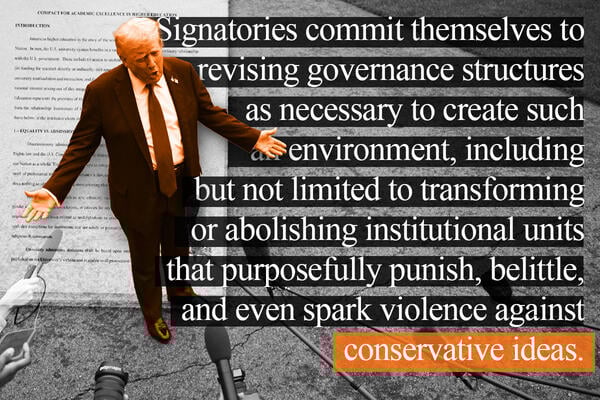
- Shut down departments that “punish, belittle” or “spark violence against conservative ideas”
- Anonymously poll students and employees on compact compliance and publish the results
Another requirement mandates that signatories “deploy their endowments to the public good,” such as by not charging tuition to students “pursuing hard science programs (with exceptions, as desired, for families of substantial means)” for universities with more than $2 million per undergraduate student in endowment assets. Universities would also be required to post more details about graduates’ earnings and refund tuition to those who drop out in their first semester.
After leveraging funding freezes and other tactics to pressure colleges to make changes, the compact reflects a different approach from the administration while still geared toward the same goal—remaking higher education in Trump’s image. May Mailman, a Trump adviser, hinted at the plan in a New York Times interview a week before the proposal emerged, saying it could be a way for universities to affirm they are “doing the right things.”
“The Trump administration does not want to be all Whac-a-Mole or all negative, but these are the principles that universities and the Trump administration and, frankly, private donors can ascribe to to say, ‘This makes a great university,’” she told the Times.
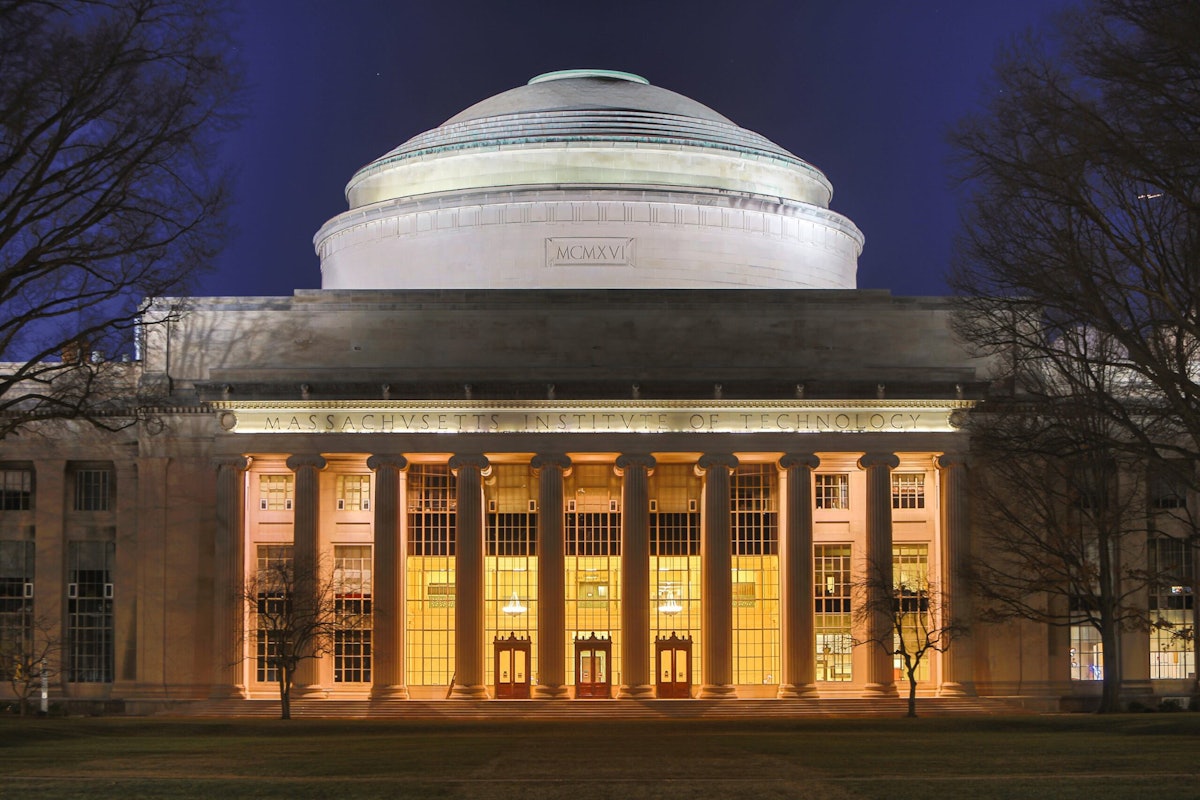
Institutions reportedly invited to join are: Brown University, Dartmouth College, the Massachusetts Institute of Technology, the University of Arizona, the University of Pennsylvania, the University of Southern California, University of Texas at Austin, the University of Virginia and Vanderbilt University.
Those that agree will receive “multiple positive benefits,” including “substantial and meaningful federal grants,” according to a copy of the memo published by The Washington Examiner.
But failure to comply with the agreement would come with steep consequences. Noncompliant universities would “lose access to the benefits of this agreement” for a year. Subsequent violations would lead to a two-year punishment. And the federal government could claw back “all monies advanced by the U.S. government during the year of any violation.” Private donations would also be required to be returned, upon request.
The Department of Justice would be tasked to enforce the agreements.
Institutional Responses
Most universities did not respond to requests for comment from Inside Higher Ed. But Texas officials seem eager to sign on, sharing a statement indicating their enthusiasm for the compact.
University of Texas system Board of Regents chairman Kevin P. Eltife wrote in the statement that the flagship was “honored” to be among the institutions “selected by the Trump Administration for potential funding advantages” under the proposed compact, which it is currently reviewing.
“Higher education has been at a crossroads in recent years, and we have worked very closely with Governor [Greg] Abbott, Lt. Gov. [Dan] Patrick and Speaker [Dustin] Burrows to implement sweeping changes for the benefit of our students and to strengthen our our [sic] institutions to best serve the people of Texas,” Eltife wrote. “Today we welcome the new opportunity presented to us and we look forward to working with the Trump Administration on it.”
University of Virginia spokesperson Brian Coy told Inside Higher Ed by email that interim president Paul Mahoney “created a working group under the leadership of Executive Vice President and Provost Brie Gertler and Executive Vice President and Chief Operating Officer J.J. Davis to advise him” on UVA’s response to the letter but has not yet made a decision to sign or not.
USC simply said in a statement, “We are reviewing the Administration’s letter.”
Both the White House and the Department of Education initially responded to requests for comment with automatic replies because of the federal government shutdown, which began Wednesday. A press office official later responded only to confirm The Wall Street Journal’s reporting.
Outside Perspectives
News of the proposal prompted a flurry of criticism within academic circles.
American Association of University Professors president Todd Wolfson blasted the idea in a Thursday statement and called on governing boards to reject it.
“The Trump administration’s offer to give preferential treatment to colleges and universities that court government favor stinks of favoritism, patronage, and bribery in exchange for allegiance to a partisan ideological agenda. This compact is akin to a loyalty oath. Adherence by university administrations would usher in a new era of thought policing in American higher education,” Wolfson wrote.
The executive committee of Penn’s AAUP chapter also opposed the proposal.
The Foundation for Individual Rights and Expression also criticized it in a post on X, writing that “the compact includes troubling language” specifically pointing to the call to eliminate academic departments critical of conservative ideas, which it cast as undermining free speech.
“A government that can reward colleges and universities for speech it favors today can punish them for speech it dislikes tomorrow. That’s not reform. That’s government-funded orthodoxy,” FIRE officials wrote.
Trinity Washington University president Pat McGuire called the proposal “political extortion.”
Brendan Cantwell, a higher education professor at Michigan State University, told Inside Higher Ed there are multiple issues with the proposal, including vague language about political speech that could allow universities or the federal government to single out faculty members for publicly discussing topics within their expertise. He added that “enforcement is so vague” that it would be easy for the federal government to declare universities out of compliance with the agreement.
Cantwell suggested, “This is probably a bigger deal than the Columbia [settlement] because it’s creating an incentive structure” that spurs universities to go along or opens them up to retaliation from the federal government, making it risky whether a university signs on or not.
(Columbia agreed to far-reaching changes to admissions, hiring, disciplinary processes and more in July, including a $221 million fine, when it reached a deal with the federal government to settle over findings that it failed to properly police antisemitism on campus. Columbia did not admit to wrongdoing, but administrators have acknowledged the need for reforms.)
Brian L. Heuser, a Vanderbilt professor and long-standing member of the university’s Faculty Senate, urged fellow senators and other faculty colleagues to organize against the idea in an email shared with Inside Higher Ed. Heuser called the compact “a dangerous departure from the core values that should underpin our institutions—namely, free inquiry, open debate, and institutional autonomy” and argued that it endangers academic freedom, among other concerns.
But some conservatives have lauded the idea and want ED to push harder.
“Secretary [Linda] McMahon deserves credit for working to disincentivize the use of race or sex in college admissions,” U.S. Sen. Todd Young, an Indiana Republican, wrote in a social media post. “We must go further—federally accredited institutions should eliminate ALL preferences grounded in ancestry, such as legacy status, or other factors unrelated to merit.”
Why These 9?
While it is unclear how the federal government landed on the nine schools as candidates for the proposal, one official told The Wall Street Journal the Trump administration believed they would be “good actors.” But contextual clues offer insights into why some may have been picked.
Of the nine, only five presidents signed on to a letter published earlier this year by higher education organizations pushing back on government overreach and political interference, which ultimately gathered 662 signatures. Of those five presidents, one has since resigned: Jim Ryan at UVA, who faced pressure from the Trump administration after it claimed the university failed to fully dismantle diversity, equity and inclusion programs.
Two institutions—Brown and Penn—previously struck deals with the federal government.
Others have drawn attention for political reasons. At Vanderbilt, Chancellor Daniel Diermeier has emerged as a leading voice advocating for institutional neutrality and has clashed with other campus leaders, arguing that higher education is in desperate need of reform, agreeing with frequent conservative criticisms of the sector. And Texas—one of three public institutions on the list—has an overwhelmingly conservative board, and both the system and flagship are led by former Republican elected officials.