Tag: Company

  • PeopleAdmin A PowerSchool Company

    PeopleAdmin A PowerSchool Company

    Navigating Change in Higher Education

    Change is a constant in higher education, and institutions are continually evolving to meet the demands of the modern world. In a recent PeopleAdmin webinar, Mastering Change Management in HigherEd’s Digital Transition, experts from Central Oregon Community College and Chapman University shared their experiences with change management during two large technology implementations, offering tips and best practices for other institutions anticipating change in the new year. In a poll at the start of the webinar, 95% of attendees responded that they would be facing a change in the new year. 31% are facing a major change, while 64% are navigating minor adjustments. If you’re among that 95%, read on below.


    Case Study: Central Oregon Community College.

    Laurel Kent, IT Project Manager at Central Oregon Community College, explored her team’s journey through a Performance Management upgrade that took place over the past year.

    Case Study Focus: Performance Review Transformation

    • Moving from manual, PDF-based processes to a digital platform within PeopleAdmin.
    • Addressing issues like inconsistency, versioning, and tracking associated with PDF processes.
    • Utilizing the PeopleAdmin portal to streamline performance evaluation tracking.

    Wins and Lessons Learned:

    • Leadership Buy-in and clear project vision: Project support from the CHRO and CIO helped provide the appropriate resources. Dedicated project managers and functional analyst team, working collaboratively with HR, oversaw project timelines and deliverables to keep things on track.
    • Clear project plan and frequent communication: Sharing the project progress and updates regularly across campus meant that end-users knew what to expect.
    • Clear Roles and Timelines: Regular and predictable working sessions, clearly defined roles, and a reasonable timeline for testing and implementation kept things moving forward.
    • Relationships matter: Make sure that you have users across campus who can answer questions and provide feedback.
    • Build in time to fine tune product: A lesson learned was to include extra time for testing and stakeholder feedback. The team found it was important to see the product live and get direct feedback, and then tweak the platform as necessary.


    Case Study 2: Chapman University

    Robin Borough, Director of Talent Acquisition at Chapman University, shared insights from her many experiences with change management—and her top tip was a formula.

    Change Management Formula from Beckhard and Harris: Change (C) = Dissatisfaction (A) * Desirability (B) * Practicality (D) > Perceived Cost (X)

    “This formula is old, but everybody will be able to relate to it and see that it’s a real quick and dirty way to see if you can get the funding, and the sponsorship that you need, or if you need to prove something to get that funding and sponsorship,” said Robin. “‘C’ is the change. ‘A’ is the level of dissatisfaction with the status quo, and ‘B’ is the desirability of the change or proposed end state. ‘D’ is the practicality of the change—so are the steps to make this change practical and are we minimizing risk and disruption as much as possible? ‘X’ is the perceived cost of the change. For change to make sense, A * B * D has to be greater than X—meaning, I have to have a lot of dissatisfaction and a lot of desire for something different, and the plan has to be practical. If AB, or D are zero, you’re out. Don’t even try to make the change. So much of what we’re doing is subjective, because there’s so many people and constituents involved with change management, so I thought this formula was an interesting way to think about it.”

    Final Thoughts

    In the ever-evolving landscape of higher education, change is inevitable. The experiences shared by Central Oregon Community College and Chapman University underscore the significance of proactive change management, user-centric approaches, the value of learning from past successes and challenges—and how important it is to understand what you’re getting into from the start. As institutions embark on their journeys of transformation, these insights can serve as guiding principles for navigating the complexities of change in higher education. For more, check out this webinar on-demand.


    Source link

  • The misleadingly named Student Loans Company

    The misleadingly named Student Loans Company

    Why that title?

    Well, the name seems to mislead people into thinking that the provider of student finance is a private institution, potentially making profit out of students, when it is in fact publicly owned.

    There are 20 shares in the SLC: 17 are owned by the Department for Education (which has responsibility for English-domiciled students) and another three, each of those owned by one of the devolved administrations.

    When you want to see what’s going on with student loans you look at government accounts: national, departmental or those of devolved administrations.

    OK. So what’s the point of mentioning this factoid?

    I believe that the misunderstanding about the publicly-owned nature of the SLC contributes to thinking that leads to other confusions, such as those surrounding function of the interest rate in student loans and what the effect of reducing them would be.

    Here’s a former Higher Education minister getting into a pickle in an article that even has the title, “Student Finance? It’s the interest rate, stupid”.

    Let’s leave aside the misunderstandings about the recent ONS accounting changes and concentrate on the claim that reducing interest rates would “address the size of the debt owed itself”.

    The government is looking to reduce public debt, but lowering interest rates would only do this in the long-run, if the loan balances eventually written off were written off by making a payment to a private company to clear those balances.

    As it is, reducing interest rates on loans mean that higher earners will pay back less than they would otherwise and government debt would be higher in nominal terms (all else being equal). (I do support reducing interest rates on student loans, but for different reasons).

    There is probably another confusion here regarding the Janus-faced nature of student debt: it is an asset for government (it is owed to government) and a liability for borrowers. The outstanding balances on borrowers’ accounts are not the same as the associated government debt.

    When the government thinks about public debt in relation to student loans, it is thinking about the borrowing it had to take on in order to create the student loans.

    Imagine that I borrow £10 in the bond markets to lend you £10 for your studies: I have a debt to the markets and an asset, what you owe me. The interest on the former and the latter are not the same and the terms of repayment on the latter are income-contingent so I don’t expect to get sufficient repayments back from you to cover my debt to the markets.

    Student loans are not self-sustaining. It requires a public subsidy – any announcements about loans in the spending review at the end of the month will be about how much subsidy the government is prepared to offer.

    Source link

  • Excerpt from In The Company of Thieves: Conferences and Vacation: Confercationing

    Excerpt from In The Company of Thieves: Conferences and Vacation: Confercationing


        Confercationing is  when law professors claim to be going to a conference on the law school’s dime but are really on a
    one to 5 day vacation. The biggest on of these for law professors takes place
    in early January when the Association of American Legal Schools  meet. Not as
    big but easily a bigger boondoggle is the Southeastern Association of Law Teachers Conference
    which conveniently takes place in the summer in a family friendly location. Palm
    Beach is a favorite destination as is Orlando. Since Universities pay for
    transportation, meals, and lodging for faculty, the only cost to the vacationer and his or her family is transportation for the partner and kids and their meals. Pretty good deal for a week in Florida. I will say this about this meeting. There is very little hypocrisy. No one attending pretends to be doing anything other than vacationing on the school’s dime. 

                Three things characterize
    these meetings. Since law professors are, by nature, climbers whenever you are
    talking to someone at these meetings they are always looking over your shoulder to
    see if there is someone more important in the room they could attempt to smooze
    with. The second is a contest over who know the best ethic restaurant in town.
    So people with gather in hyped up groups decided were to go eat. The discussion
    invariable comes down to who know the hippest place to go that no one else has
    discovered. Third, at
     these conferences members of a  panel present papers to groups ranging from 0 to 50.  After the presentation people can
    ask questions The questions rarely indicate something the questioner wants to
    know but is for the questioner to impress the rest of the audience with how
    much they should be reckoned with. It’s actually pretty easy to seem impressive
    because the papers are almost always duds. The papers
      drawn from already published articles or
    recycled from previous talks. The main idea is be able to put on your resume
    that you presented a paper at such and such a meeting.

                These conferences are pretty much a waste in terms of
    producing anything for the money spend but there is a even bigger sham than these two main conferences. These are the manufactured conferences, Someone gets the
    idea to have a conference on British contract law or South American
    Comparative. The law school provides a grant that could be used for almost
    anything else that would be more  useful.
    The conferences always take place in exotic places; not some small retreat
    where there is little to do but actually confer but in Rio, London, Amsterdam,
    Geneva, Paris, etc.

    Here is an example of one
    of these manufactured conferences:

    International
    Conference on Latin American Issues

    Rio de Janerio

    June 10, 2015

    Friday June 10

    8:30 AM Coffee and
    Pastries in the Lobby

    9:30-10.30 AM Session 1. Evolution of the
    Peruvian Constitution, Room 23

    Co
    Chairs: Eve St. John, Berta Hurns, Georgio Penata, Julio Peso, J.J. Fields

    Presenters:

    Coby
    Claster: Early Peru

    Sylvia
    Macado: Peru After the Early Years

    Paco
    Smith: Peru in the 1930s: Penises

    Joan
    Streeter: Peru and Constitutional Reform

    Miquel
    Mendoza: Consolidation


    Audience
    comments and questions


    10:40
    – 11:40  Session 2. Brazilian
    International Policy, Room 56


    Co
    Chairs: Zeke Palmer, Ted Crammer, Luigi Longo, Roberto Santos, Carmen Zips

    Presenters:

    Lonnie
    Funk: Brazil and Slavery

    Festus
    Johan: Brazil and Argentina: History and Perspectives.

    Chester
    Bores: Brazil and Acai: The Importance of the Smoothy

    Constance
    Vaya: Brazil in 2024

    Pepe
    Vargus: Looking Forward


    Audience
    Comments


    11:40
    – 1:00 Lunch: Box Lunches Provided in the Lobby 


    [there
    are also two afternoon sessions, a time for a reception and then dinner at a
    posh restaurant]


                This looks pretty good, right? Maybe
    even interesting. But let’s take a closer look. Notice the location. Rio! Who
    does not want to go to Rio. Since the airfare is the same if you stay one day
    or two weeks, no one in his right mind would only be going to the conference.
    So this has convercationing all over it.

                You may also notice the number of co
    chairs of each session. A Chair is someone who contacts and schedules the
    panels. Having 5 co chairs is a sure sign of a boondoggle. Each co chair can
    list on his or her resume that they were a co chair without revealing that they did
    next to nothing and also justify the law school footing the bill. Perhaps
    their duties involved making one phone call to ask something else if he or she
    too could be a co chair.

                Now look at each session. They have
    5 speakers. The session is an hour long. Take some time for introductions and
    then some time for audience questions and the speakers are left with about 40
    minutes to present their “papers.” That’s 8 minutes each. So let’s say the
    airfare is about $1200. Two nights at a Rio hotel is $400 and meals, say, $100 a
    day. Is an 8 minute talk or listening to other 8 minute talks worth $1700. Put
    it another way. Each session has a total of 10 people involved and there are 4
    sessions for the one day conference. That comes out to 40 people at $1700 each
    or $108,000 for participants costs only not counting any charge for the rooms
    and meals. There actually may also be a fee to attend.

                You will notice that there is time
    for audience participation. What audience? There is actually  no audience other than the people who are participating on other sessions who may or may not show up for anything other than their own 8 minutes, It’s not like a show for
    the purpose of advancing the understanding of anything by anybody. In fact, I
    personally have been a panelists when there was no audience at all. But the
    school still paid for my confercation. Thanks, taxpayers!

    Source link

  • CLASS BIAS AND RANDOM THINGS LAW REVIEW: Excerpt from In the Company of Thieves: The Senator’s Visit

    CLASS BIAS AND RANDOM THINGS LAW REVIEW: Excerpt from In the Company of Thieves: The Senator’s Visit


    The
    Senator

    [This is an an excerpt from the diary of one of
    my more elitist colleagues. (Reprinted with Permission) The particulars of the story were generally well
    know  by every one including me but I
    will let him tell it in his own words. [I have changed the name of the Senator involved because I cannot guarantee all the facts.]

    At Nine couple of weeks ago, I received the following
    from Dean Bob:

    Memorandum

    To: Professor Harris

    From: Dean Bob

    Date: February 7, 2007

    Re: Visit of Senator Faceworth

    As you are aware [I was not aware]
    the Law School has invited Senator Jerry Faceworth to guest lecture for two
    weeks on the subject of Labor Law. I would like to you to serve as his host
    during this time. I know you have many commitments [actually I don’t] but we
    need to put our best foot forward given that Senator Faceworth has recently
    announced his candidacy for President of the United States.

    Please advise me of your availability
    as soon as it is convenient. Senator Faceworth arrives on February 15th.

    I
    responded right away feeling kind of honored. Playing host to an honest to
    goodness presidential candidate sounded like it would be fun.

    So let’s  start with Senator Faceworth. First you should know that I read in the Times
    that in response to some questions about his private life he dared reporters to
    follow him around. “You will regret it. The boredom will be
    intolerable.”

    He
    arrived by private jet. A squadron of reporters arrived soon thereafter and
    more were waiting at the hotel when I took him there at about 8 P.M. I gave him
    my cell number and the phone rang a midnight just as I was dozing off.
    “Let’s have a drink,” he said. “I’ll be at the service ramp. Be
    here in 15 minutes” I was and found him, a knit cap pulled low and
    wrap-around sun glasses. He was very direct about wanting to go to a student
    “club.” I had no idea where to take him but drove him to a part of
    town with student bars. We parked and went into something called the
    “Music Store.” Average age 21. By now, if you know Senator Faceworth,
    you know what happened. After 30 minutes he found me. He wanted to go back to
    his room. “Of course,” I said, not realizing that the two coeds – one
    on each arm – were to accompany him. So, at 1:00 A.M. I left him as he and his
    new playmates quickly scrambled from the car and darted for the service
    elevator. This cannot be good. And, he is here for three weeks.

            The
    next night the same midnight call and it was off to the same bar. This time he
    emerged with two more pals.  The next day Dean Bob picked up the Senator in the hotel lobby – again was the ever
    present   swarm of reporters–  and took him to school. My assignment? Go to
    the service entrance and pick up his two companions from the previous night —
    Heather and Misty. They piled in the car and immediately said. “Jeffy, Gar-Gar told us you
    would take us to breakfast and for tanning.” And I did. What could I do? I
    wore dark glasses but I was a little nervous about the car that seemed to be
    following.

            So you get the drift. The
    man who said people would be bored if they following him was and absolute hound
    for college girls. And this went on non stop. Well non stop until some rapidly
    unfolded events.

    The
    Senator is off to Bimini for the week end and I am sleeping.

    Senator
    Faceworth evidently came back late last night, having taken Monday off. Judging
    by his sun burn, the trip to Bimini was a success. Now he is followed by a
    caravan of pink faced reporters. The cocktail party in is honor is this
    Thursday. He has not thanked me for the selection of single malt scotches in
    his office. I am beginning to look forward to his departure. I have had
    way too many Heathers and Jennifers to escort back to their apartments or
    dorms.

    Two
    more midnight calls from Faceworth and four more Gingers or Kimberlys — who
    knows, who cares. Even though I pick him up at the loading dock of the hotel
    and he has his stocking cap pulled low, it is not always fool proof. Last night
    at what has become his favorite bar I spotted a pink-faced reporter who I
    recognized from the caravan of cars that following us each day. He definitely
    saw Faceworth and then left hurriedly.

    Faceworth
    finally made his break back to Bimini for the weekend. This time he took two
    Jennifers who were on the same flight to Miami. I took all three to the airport
    but dropped them at different places. At one point we were almost spotted by
    reporters and Faceworth hit the floor while the Jennifers giggled and did other
    unmentionable things.

     I am not cut out for this!! Word has leaked
    out among the faculty and today someone accused me of “pimping” for
    Gerard.

    You know the routine. A
    midnight run and two Jennifers each night.
    I find it very annoying that on our trips to the clubs the Senator sits in the
    back seat and rarely speaks to me. On the way back, he is in the back with his
    pals.
        Faceworth  left Thursday late for Binimi, too early the see the following article in
    today’s Ivyville Sun. First you should know that that there is big photo on Faceworth on the front page leaving his regular bar at 1:00 with two Jennifers,
    miniskirts and cowboy boots. I am in the photo just barely. The caption:
    Senator Gerard Faceworth parties with friends and an unidentified law
    professor.

    The article:

    “Senator Gerard Faceworth, a
    visiting professor at the Ivyville Law School, has been photographed with two
    companions leaving the Campus Buzz, a popular late night gather place for
    Ivyville singles. Senator Faceworth only recently challenged reporters to
    follow him around after rumor emerged that he is something of a
    “womanizer.” According the regulars at the Buzz, Senator Faceworth
    has been in the club several nights, usually escorted by a law professor. The
    routine is that he arrives soon after midnight and leaves by 1:00 A.M. with one
    or two college aged women. The hotel management where the Senator is staying
    declined comment. The identity of his law professor host is currently being
    examined.”

            I am happy to report that Faceworth  called in Monday morning to say that he would be unable to finish his
    three week teaching assignment here. The Ivyville Sun article about his late
    night activities — as surely you know — has gone national, even
    international.
            Reporters are everywhere wanting to know the details and trying to identify his
    mysterious law professor escort. So far no one on the faculty had identified
    me.

    Source link

  • CLASS BIAS AND RANDOM THINGS LAW REVIEW: Draft Excerpt from “In the Company of Thieves:” Foreign Programs

    CLASS BIAS AND RANDOM THINGS LAW REVIEW: Draft Excerpt from “In the Company of Thieves:” Foreign Programs


    Foreign
    Programs

    One
    way mid and lower level law schools compete with each other is by offering
    foreign opportunities. In some cases the students can spend a semester studying
    at a law school in France or Italy or Germany. They get a semester worth of
    credit for traveling and drinking for 3 months. These are programs for the well
    to do, of course because there are airfares, apartments to rent, etc. Nevertheless, they can be rewarding and informative.

    On the other hand, summer abroad programs are a bit of a scam. These are essentially law schools acting as
    travel agencies. The idea is that a couple of professors travel to Paris,
    London, Rome or where ever and take 15 or twenty students with them. Then the
    students hang out with each other, drink, travel, and spend a modest amount of
    time in the classroom.  They, of course,
    pay extra for this and that extra is what covers the housing and expenses of
    their teachers. In short, the students subsidize the summer vacation of the
    profs and they, in turn, get academic credit. Their actual emersion in local
    culture is kept to a minimum as they search out the closest McDonalds.

    Now
    that you know the background, you should know that one of the committees I am
    chair of is the “Programs Committee”.  A
    summer program has to be OKed by the programs committee and then voted on by
    the faculty. Very often it is a fait accompli. For example, one year at a mid summer faculty meeting 17 members
    of the 60 person faculty voted by 9 to 8 to have a summer program in France.
    Unusually only 2 faculty can go at a time but most deans also feel it is their duty to stop by, at the school’s expense, for a few days. And sometimes,
    someone from the Programs Committee is also “obligated to go.” In the case of
    the France program all 9 yes voters went at some point over the next three
    years although at times the enrollment dwindled to 12 which was not enough to
    cover their expenses.

    Here
    is the proposal the Programs Committee considered last October for
    implementation next summer. I’ve inserted some information in brackets to help
    you understand:

    Re: Summer Program in Italy

    Date: February 12, 2007

    Supreme Senior Vice President of
    Foreign Programs, Hugo Valencia and I [Chadsworth Feldman] are happy to propose
    a new study abroad opportunity for our students. The details are as follows:

    A. Location:

    Three weeks in Rome, three weeks in
    Florence.

    B. Expected enrollment and student
    costs.

    For the first year, expected
    enrollment is 30 but the actual enrollment can exceed this. The program has no
    upper limit on enrollment. The initial tuition is $3,000 per student. This
    includes all housing and transportation, to the extent those are necessary.

    C. Need and
    Opportunities

    This program will complement our
    other excellent foreign study opportunities. Many of our students have
    expressed a desire to study in Italy and to learn Italian law. Many of our
    colleagues have connections with scholars in Italy and would gain a great deal
    with respect to their work in comparative law. It is critical that we have a
    presence in Italy.

    Several members of our faculty will
    be invited to travel to Rome or Florence to serve as guest lecturers and to
    attend graduation ceremonies at the end of the term.

    D. Staffing.

    Professor Feldman is the Director of
    the Program and will go each year. In addition to the director, one other full
    time professor will travel to the site. Two assistants will accompany the
    professors. These will be the spouses of the professors as long as they accept
    no salary. Of course, all their expenses will be paid.  After the initial year, it is anticipated
    that the position of professor will be circulated among the faculty.

    E. Students Activities

    Students will earn six credit hours.
    In addition, they will be taken on several tours of important Italian sites.

    F. Budget:

    Airfare for Professors and
    assistants: $10,000

    Housing: $80,000

    G. Impact

    This program will put us in the first
    tier of foreign program offering schools. The net cost to the School, other
    than trips of guest lecturers, is zero. The two professors involved will be
    paid the usual stipend for summer teaching.

                Nothing seemed unusual about the program although
    everyone knew it was the usual faculty boondoggle. The Committee approved it
    and then then faculty. Then things started to unravel. By December several
    students had put down their deposits.  Over the next few months some issues came
    to light. Two stood out. One was that Hugo and Chad, with spouses, had already,
    with the Dean’s permission and on the law school’s dime, spend 10 days in Italy
    scouting out, as they put it, suitable restaurants, clubs, spas, and coastal
    areas for the program. Ok, it’s like what we call in the trade convercationing.
    That is you are paid for a business trip but you are really taking a vacation
    while checking off the boxes to make it seem like business.

    The
    second matter had to do with the budget. Usually there is a host institution
    that provides a  low fee some classroom
    space.  My curiosity piqued, I asked Chad
    about this. He seemed a little sheepish but something you never do as a law
    professor is show weakness or admit wrongdoing. His answer. “That is the beauty
    of the Program. It will all be conducted by Zoom with the students staying at
    home. Hugo and I will Zoom not just classroom activities but dining out,
    clubbing, sight seeing, the works. It will be exactly like they are there.” He
    went on. “I am sure it will be appealing to the students since they can stay in
    the comfort of their homes and not worry about finding housing, eating in
    strange places where no one understands a word they are saying.” Finally, “If
    there are technological problems we will send them postcards.”

    I
    was reeling from this revelation when I got back to my office. None of this was
    revealed when the programs committee met or at the faculty meeting. Everyone
    was too busy, I suppose, booking passage to Italy for some year in the future.
    When I got back to my office, there was a phone message to call Linda James. I
    knew I had a student in my class named Tom James but I did not make the
    connection. I called and she told me that she had tried to reach Professor
    Feldman but he was not in. The secretary had directed her to me since I was
    chair of the programs committee and she had a question about the program since
    her son James was going. She started by saying how excited James was and how she
    and her husband planned to meet James for the portion of the course in Rome.

    Her
    question was what types of things should James bring – clothing, dressy or not,
    extra notebooks, computer, and so on. I lied, I told her that I did not know. I
    did chair the committee that had approved the program but that she needed to
    talk to Professor Feldman. I assumed she did eventually because I the next day
    I received the following email from Chad:

    Today Tom James’ mother called and asked what sort of
    things he should bring from his summer in Italy. I told her that the students
    were not actually going to Italy. She asked what the $3000 is for and I said
    “expenses.” Then she pressed me and asked about the $80,000 for
    faculty. I told her that was the going rate for appropriate housing for the
    Professors and any guest lecturers who might join us. She seemed miffed about
    no students going. Isn’t that just perfect!!! You try to do something for the
    students and you get in hot water for it.

    Later the same day:


    So far two more  sets of parents have contacted me. It seems to
    have come as a surprise to them that the Summer Program in Italy does not
    involve their dear children actually traveling to Italy. Hugo and I designed
    the whole program on the theory that he and I and our spouses would go to Italy
    and show the lectures and sights by Zoom (or postcard). We would do the heavy
    lifting and the students would have time to study. Do they not get it.

                 In any case the
    “program” ran for one summer only.  The
    revenue did not begin to cover the expenses which the law school ended up
    eating. I suppose it was a success because I received the following email from
    Chad:

    Here is the great news. I am writing from Rome. Yes,
    the summer program is in tact and Hugo, Marvel, Caroline and I are here working
    hard for the students. It is true we are down to 5 students and it is true that
    those five did not actually make the trip to Italy but we are working hard.

    As you know, some of the students were upset that the
    Summer in Italy program did not actually mean they were going to Italy — only
    the professors. Some parents were quite rude and the initial enrollment dwindled
    to 5. Good riddance I say. Those students obviously were not cut out for
    foreign travel. The Law School decided we had to operate the program anyway
    because the American Association of Law Schools had already purchased 30
    tickets for a team to come and inspect the program.

    We are doing our best for the five students. Each week
    we send a postcard with some interesting fact about Italian law. In the
    interest of giving the students what they want, we have decided not to
    administer a final exam.

    As for me, being a dedicated teacher of young people
    is its own reward.

    Source link

  • CLASS BIAS AND RANDOM THINGS LAW REVIEW: DRAFT Excerpt from “In the Company of Thieves”: The Tenure Process

    CLASS BIAS AND RANDOM THINGS LAW REVIEW: DRAFT Excerpt from “In the Company of Thieves”: The Tenure Process


    Law professors are evaluated to determine if they should be tenured. Supposedly you must excel in scholarship, teaching, and service. You would think that if someone actually excelled at all three, he or she would be hired away by better law schools. Very few are. Why? Because in actuality there are three requirements:

    1.
    write something – anything would do,

    2.
    be politically correct, (or very quiet),

    3,
    be acceptable socially.

    (4.
    I have also heard isolated inane standards like “she is a good mother.” but these usually do not count.)

    As noted, decent teaching is supposed to count but I have seen many instances in which awful
    teaching was explained away as actually an indication of good teaching. 
    To
    determine
      a candidate’s teaching there
    are class visitations by 2 or 3 professors and the students fill out anonymous
    evaluation forms at the end of the semester. Not wanting to offend someone who
    may get life time employment if they meet the above “standards” the visitors
    uniformly say the teacher was brilliant, engaging, showed respect for the
    students and so on. One has to keep in mind that the professor knows in advance
    who is coming and when. Not to be well prepared and energetic those days would
    mean you are an idiot. Still, there are some who go one step beyond. For
    example, at one point several students asked me why their professor gave the
    same lecture day after day. As it turns out these were the days when there were class visitation, and I suppose he had the one lecture down perfectly.

    The
    students fill out evaluations at the end of each semester. These are pretty
    much ignored whether high or low if one passes the three part test above. On
    the other hand, if they are low to average, they become the hammer to justify
    getting rid of the candidate who fails the three part test. But even here, many
    professors do not want to leave student evaluations to chance. I have seen
    professors going into classes with the forms the students must fill out in one
    hand and platters of cookies or boxes of pizza in the other. Sometimes the
    bribes are so shameful that even the students know what is up but this does not
    discourage them accepting the bribe. One professor would sponsor a softball
    game in the afternoon for his class followed by cocktails at a local pub. The
    tab could run in excess of $1000 dollars. There are far more subtle bribes like
    not calling on students and appearing to be deeply concerned about their
    welfare when you could not care less. One very subtle effort involves handing out your own evaluations a day
    or two before the official ones. A colleague who does this says it takes the
    sting out of what the students may say on the official evaluations and illustrates how seriously he or she takes teaching.

    Faculty
    who are able to turn evaluations into popularity polls take high evaluations to
    mean they are good teachers. Yet, the vast majority of studies find that there
    is no correlation between student evaluations and student learning. In fact, some
    find students of the highly rated professors actually learn less than those who
    have professors rated lower. Actually no one knows what student evaluations
    indicate. One interesting study showed students very short silent movies of
    teacher and asked them to evaluate them. After the course, they also filled
    out evaluations and they were about the same as the first set. One
    interpretation was that the students were responding to body language and
    facial expressions as much as anything else.

    If
    the whole evaluation of teaching process is a joke it stands right beside the
    evaluation of scholarship. I am pretty sure if someone wrote nothing, not even
    doodles in napkins at Starbucks he or she would not get tenure. I am just as
    sure that a person who writes next to nothing but satisfies the three part test
    described above will be tenured. There are two things at work here. Letters are
    sent out to experts in the field. It’s a small honor or form of recognition to
    be asked to review someone’s scholarship. Like many things in the law professor
    world, it is something people want to be asked to do but pretend that it is
    burdensome. And, it is actually burdensome to those who are popular reviewers.
    Who are the popular reviewers? Typically, they are people who write positive
    reviews. Who are the unpopular reviewers? Reviewers who are honest. The popular
    ones use terms like “rising star,” “insightful,” “major contribution,” etc. The
    unpopular ones are not afraid to say unoriginal, not carefully researched, a
    repetition of his or her earlier work.

    It
    is not a stretch to say there is something of a market for letters. Tenure and
    promotion committees want positive reviews for those passing the three part test.
    If someone fails the three part test they would prefer negative reviews. But
    negative reviews are hard to come by. Why? Because if you write  negative reviews you may not be asked again
    and, remember, being asked is a feather in your cap.

    There
    s a second factor in this letter solicitation process. What happens if someone
    passes the three part test and a negative letter slips through. The negative
    letter is either ignored or is subject to scrutiny with the result being that is is rejected. Let’s take the case of a professor who I believe had the most expensive
    education available in American – Exeter, Princeton, Harvard — a nice
    enough guy who fits in the category discussed later of law professors who
    really do not want to be law professors so they change the job. He passed the
    three part test. In fact, one colleague noted  how upsetting it would be
    socially if he were denied tenured. His specialty was writing about meditation.  A negative letter came in observing that one of his articles was in large part the same as an earlier
    article the reviewer had been asked to review for promotion. In this case, the faculty ignored
    the letter. The recycling of an idea was not addressed. In some cases, the
    treachery is especially extreme. We call the collection of review letters a “packet.”
    I have seen packets that included quite negative reviews and the committee
    making a recommendation to the faculty has said “all the letters were positive”
    and no one uttered a word because the three part test was passed with flying
    colors. 

    Remember,
    these are law professors so they will often game the system. They may tell the
    committee doing the evaluations who not to ask for a letter and who to ask for
    a letter. It can get pretty extreme. One well know professor/politician was
    said to have mailed drafts of an article to possible reviewers before hand to make
    sure when the reviewer received the manuscript to review they would, in effect,
    be reviewing themselves.

    Source link

  • Inside an Expanding EdTech Company – EdTech Digest

    Inside an Expanding EdTech Company – EdTech Digest

    Why the CEO of a pioneering firm assembled a brand-new leadership team.  

    PANEL DISCUSSION | moderated by Victor Rivero

    Jamie Candee is relentless in her pursuit to put the educator first in everything that her online teaching and learning company does.

    So it follows that Jamie, recently featured as one of the Top 100 Influencers in EdTech by EdTech Digest, would expand her executive team with industry experts and educators:

    Marcus Lingenfelter, Senior VP of Strategic Initiatives and Partnerships;

    Karen Barton, Ph.D., Senior VP of Research and Design;

    Jason Scherschligt, VP of Product Strategy and Experience; and

    Christy Spivey, VP of Curriculum and Assessment Development

    …join her company, Edmentum, as it experiences strong growth and demand for partnerships with educators across the globe.

    (pictured above, from left: Marcus, Karen, Jason, Christy)   

    Built on 50 years of experience in education, the company’s solutions currently support educators and students in more than 40,000 schools nationwide.

    “I am beyond ecstatic to welcome all of our new executive team members,” says Jamie.

    “Our team has been trailblazers in education technology, and we are just getting started. As we enter a new chapter, we have assembled the right team to better serve educators worldwide,” she says.

    In this panel-in-print, we get up close with the individuals on her newly expanded team to get a better idea of the people leading the technology, and how their mindset and their approach will be key components of their future success.

    They have a lot to say.

    At a later point, we’ll follow up to see how they’ve done—and where they’re headed next.

    For now, enjoy an enlightening conversation.

    As former teachers, why do you think it’s important to have an educator’s perspective in the edtech business?

    Karen Barton: Educators, students, and their contexts vary, and sometimes vary in ways designers may not have anticipated, even in ways that may have unintentional outcomes. Understanding the contexts in which any solution is being utilized is critical to ensuring the solution best meets the needs of the educators and learners.

    Christy Spivey: The most important thing we can do is listen to educators and what they need. Any decision that is made for a new product must be made with the best interest of the teacher in mind. That’s a philosophy we embrace at Edmentum. What we need to do is extend that to having great empathy for educators and build programs that delight them and allow them to have a better connection to improving learning for their students.

    What was the biggest lesson you learned from your previous positions that will inform your current work?

    Karen Barton: 3 things: 1) The interactions we have with one another matter. They matter because when those interactions are positive, there is engagement, trust, joy, and success in our work, in the educators we serve, and in our personal lives and communities. 2) Data is only as powerful as our collection of it and should not be limited by the modeling paradigms of the past. And, 3) we should understand that even the best designs, methods, and intentions may not be aligned with the way in which educators leverage our solutions. As such, we should be sure to focus on what educators and learners really need – first – and work to meet those needs with flexibility, innovation, and usefulness.

    Marcus Lingenfelter: No significant challenges are overcome by any one individual, organization, or governmental entity – ergo, strategic partnerships are critical to mission success. Consider the partners enlisted to put American Neil Armstrong on the moon. Competing aerospace companies Boeing, Northrop Grumman, and Lockheed Martin aligned their unique capabilities to the demanding requirements to realize technological and engineering capabilities previously regarded as science fiction. Education’s challenges today are equally daunting and require a similar approach that aligns interests and capabilities of multiple organizations to ensure mission success. That mission – student success!

    Jason Scherschligt: Many times in my career I’ve been reminded of the value of observing and understanding the challenges of those who use your product. If you want to lead a product, you need to get out of your office and experience what your users experience. Educators work in complex environments with a unique set of demands and pressures. I want our product teams to obsess over the needs of educators. Getting to know educators in their natural environment is the best way to do that.

    Christy Spivey: Most of my career has been spent in Education. First as a classroom teacher and then at Edmentum. Over the years, I have worked with many educators and school districts, and all of them have one thing in common – needing more time to help students achieve their goals. With this experience, I am excited to continue to work with educators to make sure that everything we create exceeds educators’ and students’ expectations. 
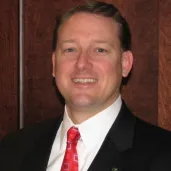

    MarcusMarcus Lingenfelter, Edmentum’s newly-appointed Senior Vice President of Strategic Initiatives and Partnerships, has two decades of leadership experience in postsecondary education including campus roles at the University of Virginia and Penn State University along with cabinet-level positions at Widener University and Harrisburg University of Science and Technology. He previously served as Senior Vice President of Advancement for the National Math and Science Initiative (NMSI) – the non-profit established to dramatically improve math and science educational outcomes for the country.


    What would you say is the biggest need for educators today?

    Karen: Empowerment – the freedom to meet the needs of their learners in a variety of ways; and the training and support to ensure they are equipped to do so. 

    Christy: Educators need to feel supported and to have their voices heard. If we can provide educators with tools and data that give them the information they need to maximize their time with their students, then we are supporting teachers in a way that gives them the ability to use their talents in the classroom.

    Why should educators feel optimistic about the future of education technology?

    Marcus: Education technology, when properly deployed, has the ability to put a highly effective state-certified teacher in front of every student regardless of location or personal circumstances. Whether it is reaching students located in exceptionally rural parts of the country where teachers can’t be recruited or into the urban centers that experience high teacher turnover rates, technology has the ability to positively impact some of education’s most intractable challenges. Therefore, educators concerned about equity and access for all students should feel tremendous optimism about what the present and future hold for impacting student outcomes via education technology.

    Jason: Several trends in technology and culture are converging in ways that will help educators and students succeed. These include big data sets and powerful analytics, which will help us understand the outcomes produced by our instruction and assessment, and new interactive capabilities, like virtual and augmented reality, which will enable teachers to provide really creative and engaging learning experiences. At our company, we won’t chase technology for sizzle, but apply it on a solid base of research to genuinely help teachers teach and students learn. 

    What trends in education have you most excited?  

    Karen: I’m most excited about the shift away from a sole focus on state summative tests and a focus on supporting educators in collecting evidence through multiple and varied measures and meeting the needs of all learners.

    Christy: I’m really excited about the focus on equity and access in education today. We live in a time where the power of technology should be providing access to all kinds of instruction for all student populations. There’s no reason we shouldn’t be fighting as edtech professionals to ensure every student has access to this technology. I’m also excited about the discussions around new ways to assess student learning. If we really want to know how students learn, then we need to rethink how we assess that knowledge. 


    Karen

    Karen Barton, Ph.D. joins Edmentum as the Senior Vice President of Research and Design, bringing 20 years of experience in education to the role. She previously served as Vice President of Learning Analytics at Discovery Education and most recently as Vice President of Assessment Solutions at NWEA. In her new role, Karen will lead Edmentum’s research, academic program design, and psychometric efforts, with a focus on ensuring every Edmentum program is valid, reliable, endorsed by educators, and produces positive student outcomes.


    What is technology’s role in education?  

    Karen: To support educators in providing engaging and accessible material to all students, freeing their preparation time to focus on needs of individual students (not just prepping material for the whole class), and providing data, recommendations, and relevant content for each student – where they are in their learning journey and what they need to move forward. For students to have access to greater experiences and learning in the medium of their future, and exposure to digital opportunities (careers, access to information, working digitally, etc.). 

    Jason: I think it’s fundamentally augmentative. You can never take people out of education, because the entire enterprise of education is intended to help people become more capable and societies become stronger. So, technology in education exists to help teachers and students thrive, rather than to replace anyone. 

    What four trends in the coming years are edtech “trends to watch”, ones that will require some shaping and leadership? Name and define the trend, and describe briefly the sort of leadership that may be required to navigate it. 

    Karen:

    • Innovations in data modeling to expand our understanding of student learning, strategies, and needs.
    • Collaborative problem solving to build skills necessary for working in teams in career and even in college courses.
    • Adaptive learning, that is, not only adapting assessments but adapting recommendations of instruction. This should incorporate rich models of data and learning. It will be important for these systems to incorporate educator and student perspectives relative to learning needs.
    • Tighter integration of assessment and learning, where assessments close to the classroom become part of the larger system of assessments connected to state-level assessments and accountability. Ensuring the purposes and usefulness of classroom based assessments do not lose their value and meaning when put into an accountability context will be critical.

    Jason:

    These four really come to mind:

    • Really granular competency-based education (CBE), where every morsel of learning and assessment is closely aligned to specific standards and outcomes.
    • Adaptive learning, where we use artificial intelligence to deliver the right kind of instruction at the right time for the student.
    • Gamification, where the psychology of motivation and competition are applied to enable learning.
    • This one’s a bit of a personal interest, but technology applied to teaching the arts and humanities. Historically, edtech has emphasized math and hard sciences, where right and wrong answers might be easy to calculate, but I’m especially interested in watching how technology is applied to more nebulous and complex artifacts like poems and plays and paintings and history.

    JasonJason Scherschligt joins Edmentum as Vice President of Product Strategy and Experience. He brings more than 18 years of experience leading innovative product management and user experience approaches in organizations like the Star Tribune, Capella University, Jostens and GoKart Labs. Jason will focus on designing and managing industry changing, captivating education products that truly empower educators, engage students, and provide education leadership with the insights they need to develop and maintain education programs that create access, equity, engagement, and positive learning outcomes.


    What is the responsibility of a more established company such as yours to the edtech space? What makes you say that? 

    Marcus: As the nation’s original distance learning platform (PLATO), Edmentum most certainly has a responsibility to lead. However, such leadership is not just in the “edtech space” per se, but rather for helping all our education partners realize positive student learning outcomes for the benefit of all concerned. The challenges facing our communities – local and global – are significant and require everyone to lift their gaze to get the bigger perspective and then act responsibly, in collaboration with others, to solve the problems.

    Christy: For any edtech company, there is a big responsibility to make sure that all programs and solutions we provide really have the educator in mind. We can only do that if we work with educators directly and listen to what they need. We also have a responsibility to use technology to bring more access and equity to student learning. At our company, we want to be at the forefront of pushing for innovative and proven programs that work for all students and educators. 


    ChristyChristy Spivey assumes the role of Vice President of Curriculum and Assessment Development for Edmentum. During her tenure, Christy has served in a variety of roles shaping the company’s curriculum development strategy. Embracing her experience in the classroom, she ensures educators are involved in every step of Edmentum’s design and development to provide programs that meet the needs of educators everywhere. Christy leads a team of deeply committed curriculum and assessment designers focused on creating a new paradigm in differentiated instruction, blended learning, and active learning models.


    Anything else you might care to add or emphasize, any parting words of edtech-relevant wisdom, or commentary about the future of edtech?

    Karen: Educational technology has the potential to revolutionize our education systems – from primary through university and career training, and how we teach, train, learn and collaborate, and to bring societal balance. To do so, we need to attend to building platforms, data, content, and assessments that balance our attention across the diversities of learners and contexts, and work to address the discomfort of change that comes with progress – change that will require edtech companies to attend to legislation around the educational systems that govern educational models, as well as to be very cognizant and intentional around data privacy.

    Jason: I often think about Marc Andreesen’s aphorism that software is eating the world: almost every interaction or transaction we conduct somehow involves software, and that includes educational experiences. We can’t escape that, but we can shape it. Education remains humanity’s best hope for its future, and I’m excited that we get to shape how teachers apply software to enable student achievement.

    Christy: Today’s students should be going to school and interacting with technology in the same way they do in their social lives and time outside of school. We have a responsibility to support educators who want to make technology a seamless part of their instruction to engage students in learning. We need to have empathy for the complexity of teaching and learning and find ways to make both easier for students and educators.

    Victor Rivero is the Editor-in-Chief of EdTech Digest. Write to: [email protected]

    Source link