The tertiary education union will this week ask staff whether they are confident in the leadership of University of Technology Sydney (UTS) vice-chancellor Andrew Parfitt.
Please login below to view content or subscribe now.
Membership Login

The tertiary education union will this week ask staff whether they are confident in the leadership of University of Technology Sydney (UTS) vice-chancellor Andrew Parfitt.
Please login below to view content or subscribe now.

The no-confidence resolution reflects faculty pushback against Bennett since September, when the chancellor unveiled a proposal to slash six programs — which he later reduced to four — as part of a budget-reduction plan.
Criticisms have focused largely on what faculty say is a lack of transparency about how, precisely, programs were judged worthy of keeping or cutting. They also allege that Bennett, who joined UNL as chancellor in 2023, has largely failed to include faculty in the decision-making process.
The budget process and timeline precluded “meaningful faculty and departmental leadership consultation” and “undermines the possibility of completing a thorough review of evidence, consequences, and public comments,” according to a Nov. 3 memo the faculty senate circulated ahead of the no-confidence resolution.
As to the timeline, Bennett announced his initial proposal on Sept. 12, and roughly two months later issued his final recommendation, which the University of Nebraska System’s regents plan to vote on at a Dec. 5 meeting.
The memo also questioned Bennett’s approach to reducing UNL’s deficit, saying that his plan relies on “immediate cost-reductions and across-the-board cuts rather than multi-year fiscal modeling or revenue diversification.”
“This system is a $3.5 to $4 billion enterprise, and we are damaging it for $27.5 million,” Faculty Senate President John Shrader said in prepared remarks at a Nov. 4 meeting. “These cuts are going to be devastating to this campus. So damaging to be irreparable.”
The memo further said Bennett had been “noticeably absent” from several faculty senate meetings and accused him of having periods of sparse contact with the senate’s executive committee, despite UNL bylaws calling for him to meet twice a month with the panel.
“Faculty shared governance represents one of many voices of institutions of higher education,” University of Nebraska System President Jeffrey Gold said in a statement emailed Wednesday. “We value the voice of UNL’s faculty; however, ultimate decisions rest with the Board of Regents.
A UNL spokesperson said Wednesday that Bennett does not plan to comment on the no-confidence vote.
In October, an academic advisory body of faculty, staff, students and administrators tasked with reviewing Bennett’s plan called for more time to consider alternatives to ending programs and voted against winding down four of the original six programs Bennett originally put forward for closure.
Bennett’s final plan spares two programs that were on the chopping block but still included two others that the Academic Planning Committee voted against eliminating.
“None of us want to be in this space, where the decisions we must make will inevitably impact the lives of individuals and change how we do some things on campus,” Bennett said in November when announcing his final proposal. “However, our reality is that UNL’s expenses have been greater than its revenue for many years.”
The proposal would slash UNL’s statistics, educational administration, Earth and atmospheric sciences, and textile, merchandising and fashion design programs.
UNL’s chapter of the American Association of University Professors, which has actively opposed the cuts, lauded Tuesday’s no-confidence vote by the faculty senate.
“The faculty has made clear that this chancellor does not have what it takes to lead our flagship institution,” UNL AAUP President Sarah Zuckerman, who is an educational administration professor at the university, said in a statement Tuesday. “We will not accept a lack of transparency, the exclusion of faculty from decision-making, or the erosion of our university’s 156-year-old mission to educate Nebraska’s students.

Some students are more likely to use generative AI to find answers instead of learning.
Colleges and universities have sought to equip students with the skills to use generative artificial intelligence tools thoughtfully and ethically, but a recent study finds students often outsource thinking to chatbots.
Research from the University of Southern California Center for Generative AI and Society found that the average student who uses generative AI services does so to get a direct answer, not to learn. Students who feel less confident in a course or who do not engage with their peers are also more likely to turn to technology for help.
The findings point to a need for greater learning support for students, including teaching them improved internet search skills, providing more faculty assistance on how to use generative AI and instilling a sense of belonging in the classroom.
State of play: As generative AI tools become more common, a large share of students say they engage with AI regularly. Two-thirds of students say they use generative AI chatbots weekly, according to a 2025 study from Tyton Partners.
Faculty have expressed concern that students are circumventing thinking and learning by using artificial intelligence tools, but students claim they’re using AI to advance their educations. A recent survey by Inside Higher Ed and Generation Lab found that 85 percent of students said they’d used generative AI for coursework in the past year; 55 percent said they used it for brainstorming, half asked it questions as if it were a tutor and 46 percent used it to study for quizzes or exams.
Nearly all students Inside Higher Ed surveyed said colleges and universities should respond to threats against academic integrity, with over half of students requesting clear, standardized policies about when and how to use AI or for colleges to provide additional flexibility around AI for transparent student use.
The study: USC researchers surveyed 1,000 U.S. college students to understand when and how they’re using generative AI, compared to other help sources. Researchers distinguished between instrumental help-seeking behaviors—such as getting clarification on a topic covered in class—versus executive help-seeking as a means to an end, like getting quick answers to complete an assignment.
Students said they were most likely to turn to the internet or an instructor for learning assistance, ranking tutors and peers below generative AI. For executive help, students similarly turned to the internet most often, but then looked to generative AI or a peer before instructors or tutors.
To researchers, the trend indicates that students feel more comfortable turning to technology than human sources for help.
National data on how and when students engage with technology versus human supports is mixed; one analysis from the Center for Studies in Higher Education at the University of California, Berkeley, found that post-pandemic, fewer students reported helping their classmates. However, Tyton Partners found that 84 percent of students said they first turn to people, including a peer or instructor, when they need help in a course, and only 17 percent primarily use AI tools.
USC’s research also found that certain students were less likely to depend on AI; those who had better internet search skills or perceived themselves as competent in their courses were less likely to turn to generative AI tools for help.
Conversely, students who were averse to asking peers for support or perceived themselves as less competent were much more likely to engage with generative AI. Students who trusted generative AI, similarly, were more likely to use the tools to find answers.
A recent survey from WGU Labs found that students from marginalized backgrounds, including first-generation students and students of color, were more likely to say they’re open to AI tools for academic support. WGU Labs’ report theorized this trend could be tied to what they see as a lack of support in other traditional forms offered by institutions.
However, pedagogy can have an impact on how students interact with AI; if the professor encourages thoughtful generative AI use, students are more likely to engage in learning-oriented behaviors, rather than just ask for answers from chatbots. Researchers believe this speaks to the social impact professors can have on how students use AI.

Forty-seven percent of Americans have “a great deal” or “quite a lot” of confidence in higher education, according to a new poll.
Jumping Rocks/Universal Images Group/Getty Images
Despite the Trump administration’s ongoing attacks on colleges and universities, American confidence in higher education is growing.
According to a poll the Vanderbilt Project on Unity and American Democracy published Thursday, 47 percent of 1,030 Americans surveyed said they have “a great deal” or “quite a lot” of confidence in higher education institutions, with a net positive rating of 33—up 13 percentage points since 2023. Survey respondents reported more confidence in higher education than in the police (44 percent), the medical system (38 percent) and large tech companies (25 percent).
Those findings echo the results of two recent polls—one by New America and another by Gallup and the Lumina Foundation. The latter showed that 42 percent of Americans said they have a “great deal” or “quite a lot” of confidence in higher education, compared to a low of 36 percent in 2024 and 2023.
But like those polls, Vanderbilt’s showed partisan divides.
While 69 percent of Democrats said they were confident in higher education, only 35 percent of Republicans said the same; just 24 percent of respondents who identify with Trump’s Make America Great Again movement expressed confidence. However, the vast majority (78 percent) of people surveyed said a college education is “very” or “somewhat” important for a young person to succeed, including 87 percent of Democrats and 68 percent of Republicans.
“While the conventional wisdom may suggest that support for colleges and universities is low, it’s important to highlight that most Americans view higher education as a net positive for society, and its support has actually increased from the low levels we saw in 2023 and 2024,” Josh Clinton, co-director of the Vanderbilt poll, said in a news release. “Yes, there are real concerns—most people think affordability is a major problem, and many perceive colleges and universities as having a partisan slant—but that’s very different from widespread opposition to the idea of higher education itself.”
Fifty-six percent of people surveyed believe that colleges and universities conduct scientific and medical research that saves lives, but only 14 percent said they remain as affordable as possible. The majority (67 percent) also cited political bias on campuses as a serious problem, though Democrats (54 percent) were less likely to agree than Republicans (79 percent), especially those who identified with the MAGA movement (91 percent).
Nearly three-quarters (71 percent) of respondents said universities should refrain from taking official stances on political issues, including 83 percent of Republicans and 59 percent of Democrats.

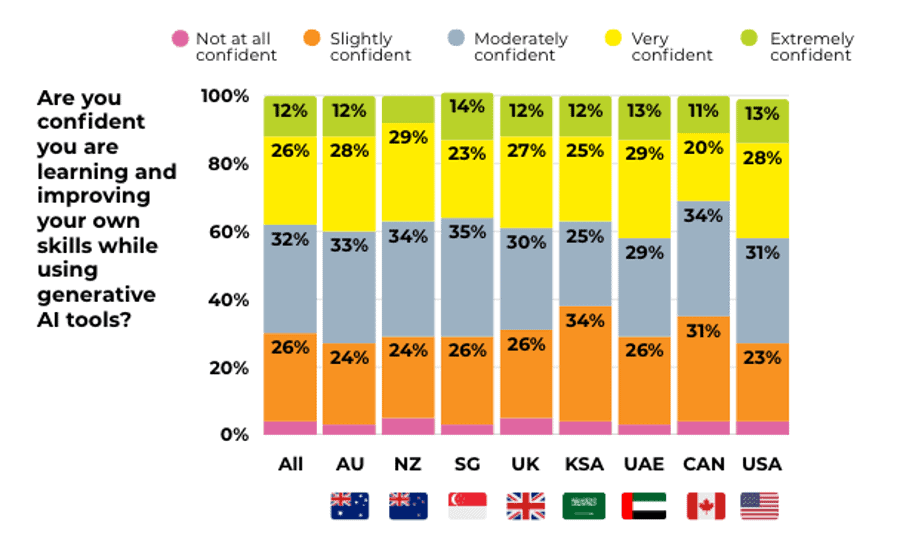
Studiosity’s ninth annual Student Wellbeing Survey, conducted by YouGov in November 2024, gathered insights from university students on their experiences and concerns, and made recommendations to senior leaders. This global research included panels from Australia, Canada, New Zealand, Saudi Arabia, Singapore, the UAE, the UK and the US (see below for the country sample size breakdown).
The report highlights key learning on AI’s rapid integration into higher education and its impact on student wellbeing. The following are the key takeaways, specifically examining country-specific differences in student experiences with AI, alongside broader issues of stress, connection, belonging, and employability.
AI is now a pervasive tool in higher education, with a significant 79% of all students reporting using AI tools for their studies. While usage is high overall, the proportion of students saying they use AI ‘regularly’ to help with assignments shows interesting variations by country:
This greater scepticism towards AI among UK students also shows up elsewhere, with students in the UK least likely among the eight countries to expect their university to offer AI tools.
However, the widespread adoption of AI tools is linked to considerable student stress. The survey found that 68% of students report experiencing personal stress as a result of using AI tools for their coursework. From free text comments, this might be for a number of reasons, including the fear they might be unintentionally breaking the rules; there are also concerns that universities are not moving fast enough to provide AI tools, leaving students to work out for themselves how best to use AI tools. This highlights that navigating the effective and appropriate use of AI is a significant challenge that requires support.
Furthermore, the way AI is currently being used appears to be affecting students’ confidence in their own learning. Some 61% feel only ‘moderately’ or less confident that they are genuinely learning and improving their own skills when using generative AI.


Perhaps as a result of this uncertainty, students often seek ‘confidence’ when using university-provided AI support, desiring guided tools that help them check their understanding and validate their genuine learning progress. This motivation was particularly strong in countries like:
This suggests a tension between unstructured AI use (linked to lower learning confidence) and the student desire for confidence-building support (which AI, when properly designed for learning, offers).
Perceptions of how well universities are adapting to AI also vary globally, with 56% of students overall feeling their institutions are adapting quickly enough. However, scepticism is notably higher in certain regions:
Conversely, students in other countries feel their university is adapting fast enough to include AI support tools for study:
While AI contributes to stress, study stress is a broader, multi-faceted challenge for student wellbeing, with frequency and causes differing significantly across countries. Students reported experiencing stress most commonly on a weekly basis (29% overall), with more students than average in Australia and New Zealand (both 33%) experiencing stress on a weekly basis. However, the intensity increases elsewhere:
The top reasons for general study stress also vary, pointing to the diverse pressures students face:
A sense of belonging is a crucial component of student wellbeing, and the survey revealed variations across countries. Students in Australia (62%) and the UK (65%) reported lower overall belonging levels compared to the global average. What contributes to belonging also differs:
The study also explored direct connections, addressing concerns that AI might reduce human interaction. Students were largely neutral or unsure if generative AI impacted their interactions with peers and teachers (including 63% of students in the UK and 55% in New Zealand). In contrast, students in Saudi Arabia (64%) and the UAE (61%) were most likely to report more interaction due to AI use, followed by Singapore (42%) and the USA (41%).
Beyond AI’s influence on connection, the survey found that four in ten students (42%) were not provided a mentor in their first year, although over half (55%) would have liked one. Difficulty asking questions of other students was also mentioned by one in ten (13%) students overall. This difficulty was reported more by:
Employability is another key area impacting student confidence and overall wellbeing as they look towards the future. The survey found that 59% of students are confident in securing a job within six months of graduation, an increase from 55% in 2024, though concerns remain higher in Canada and the UK. Overall, 74% agree their degree is developing necessary future job skills, although Canadian students were less confident here (68%). Specific concerns about the relevance of a job within six months were more pronounced among:
The YouGov-Studiosity survey provides valuable data highlighting the complex reality of student wellbeing in the current higher education landscape. Rapid AI adoption brings new sources of stress and impacts confidence in learning, adding to existing pressures from general study demands, financial concerns, belonging, connection, and employability anxieties. These challenges, and what supports students most effectively, vary significantly by country. Universities must respond to this complex picture by developing tailored support frameworks that guide students in navigating AI effectively, while also bolstering their sense of belonging, facilitating connections, addressing mental health needs, and supporting their confidence in future careers, in ways responsive to diverse national contexts.
By country totals: Australia n= 1,234: Canada n= 1,042: New Zealand n= 528: Saudi Arabia n= 511: Singapore n= 1,027: United Arab Emirates n=554: United Kingdom n= 2,328: United States n= 3,000
You can download further Global Student Wellbeing reports by country here.
Studiosity is a HEPI Partner. Studiosity is AI-for-Learning, not corrections – to scale student success, empower educators, and improve retention with a proven 4.4x ROI, while ensuring integrity and reducing institutional risk.

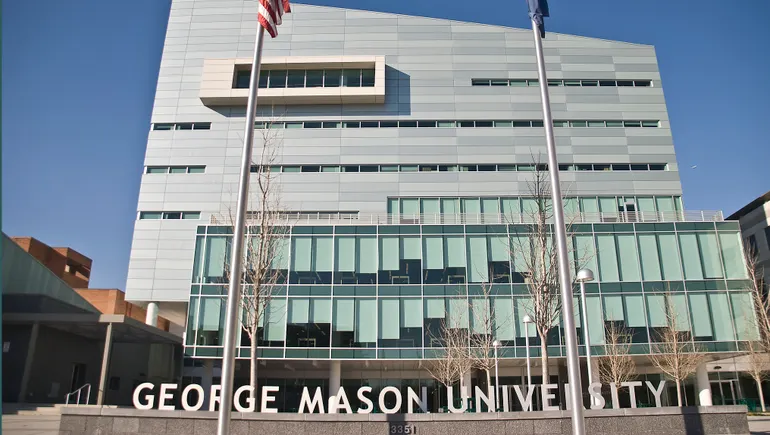
Over the course of roughly three weeks, the Trump administration has opened multiple civil rights probes into George Mason through the U.S. Department of Education and U.S. Department of Justice.
The most recent investigation, launched by the Justice Department’s civil rights unit, is looking at whether George Mason’s admissions and scholarship practices violate Title VI, which forbids discrimination based on race, color or national origin at federally funded institutions. It is also probing the university’s response to antisemitism.
A letter this week to the head of George Mason’s board from Harmeet Dhillon, the assistant attorney general for the Justice Department’s civil rights division, didn’t contain any specific allegations against the university, but stated that “a school administration’s deliberate indifference to a racially hostile educational environment is illegal.”
It followed the Justice Department’s earlier announcement of a probe into racial discrimination in George Mason’s employment practices. In informing officials of that investigation, Dhillon cited past comments by Washington about George Mason’s efforts to diversify its ranks and support women and faculty members of color.
The probes come just weeks after former University of Virginia President Jim Ryan abruptly announced his resignation in June amid pressure from Trump’s Justice Department and a similar investigation into the public institution’s diversity efforts.
In public statements, George Mason’s board — headed by Charles Stimson, who holds leadership positions at The Heritage Foundation, a conservative think tank — has said little beyond that it will provide government agencies with requested information and comply with law.
In a statement Tuesday in response to the latest probe, the board said it will “ensure GMU complies with all federal anti-discrimination laws.” In an earlier statement, it said it had a fiduciary obligation to “ensure that the University continues to thrive as the largest public university in Virginia.”
George Mason’s board did not immediately respond to a request for comment.
Washington himself has defended the university’s diversity efforts, writing last week, “It is inaccurate to conclude that we created new university policies or procedures that discriminated against or excluded anyone.”
In the resolution, the George Mason AAUP chapter defended Washington’s record at the university where the board has been publicly silent.
“President Washington has demonstrated exceptional leadership by advancing the university’s longstanding commitment to inclusion and diversity, overseeing significant improvements in the university’s national rankings, while still maintaining Mason’s ethos of access and affordability, particularly for first-generation students,” it stated.
The resolution also blasts the board as having “utterly failed to support President Washington and George Mason University during this period of unprecedented and increasing federal scrutiny and political targeting,” adding that “the silence from the Board has become deafening.”
The faculty group additionally called out the board’s choice of attorneys to represent it in talks with the Trump administration, noting that the firm Torridon Law was co-founded by former Attorney General Bill Barr, who served under Trump, and has several prominent Republican lawyers on staff.
Among them is Mike Fragoso, who is handling communications about the investigations for George Mason and was previously chief counsel to former Senate Republican Leader Mitch McConnell.
“The hiring of Torridon Law PLLC to defend GMU against the Trump administration’s ideological attacks is like hiring a wolf to protect the sheep,” the faculty group wrote.
Torridon’s Fragoso did not immediately respond to a request for comment.
The George Mason AAUP “overwhelmingly” voted in favor of the no-confidence resolution, according to the letter to the university’s board.

Along with breaking a decadelong trend, Wednesday’s findings are noteworthy because they come amid increasing conservative attacks on the sector and continued questioning of the value of college.
Researchers polled just over 1,400 adults via phone from June 2 to 26.
When asked to explain their responses, 30% of participants confident in higher education pointed to the value of being educated. And 24% said colleges provide good training, with some respondents citing learning to think for oneself and others citing the ability to appreciate different viewpoints.
Other reasons were named more frequently than they were in previous years. Last year, 5% of surveyed adults cited the innovations higher education fosters as inspiring confidence. This year, that share jumped to 15%. And 14% said U.S. colleges are some of the best in the world, up from 7% last year.
In contrast, the share of respondents who pointed to the strength of college instructors and administrators declined from 7% last year to 4% in 2025. And just 1% of adults said college is available to anyone who wants to further their education, down from 2% the previous year.
More than a third of respondents who said they lacked confidence in higher ed, 38%, cited concerns about political agendas, up from 28% in 2024. Those who had little confidence in the sector also expressed concerns about the cost of college and institutions not focusing on and teaching the “right things,” though mentions of both reasons declined from 2024 to 2025.
When researchers asked all participants what would increase their confidence in higher education, they said colleges could focus more on practical job skills, lower their costs, and remove politics from the classroom.
Confidence increased among respondents across the political spectrum, researchers found. But Republicans — who drove much of the decline in confidence in the sector over the past decade — continue to hold more negative views of higher education.
Among Democrats, 61% expressed confidence in higher ed, up from 56% last year. By comparison, 26% of Republicans said the same, an increase from 20% in 2024.
About 2 in 5 respondents who identified as politically independent, 41%, expressed confidence in higher ed. That’s up from 35% last year.
Republicans are more likely to express confidence in two-year colleges than four-year colleges, the research found. Almost half of surveyed adults in the party, 48%, expressed confidence in two-year institutions, while just over a quarter, 26%, said the same of four-year colleges.
A majority of surveyed Democrats had high confidence in both institutional types.

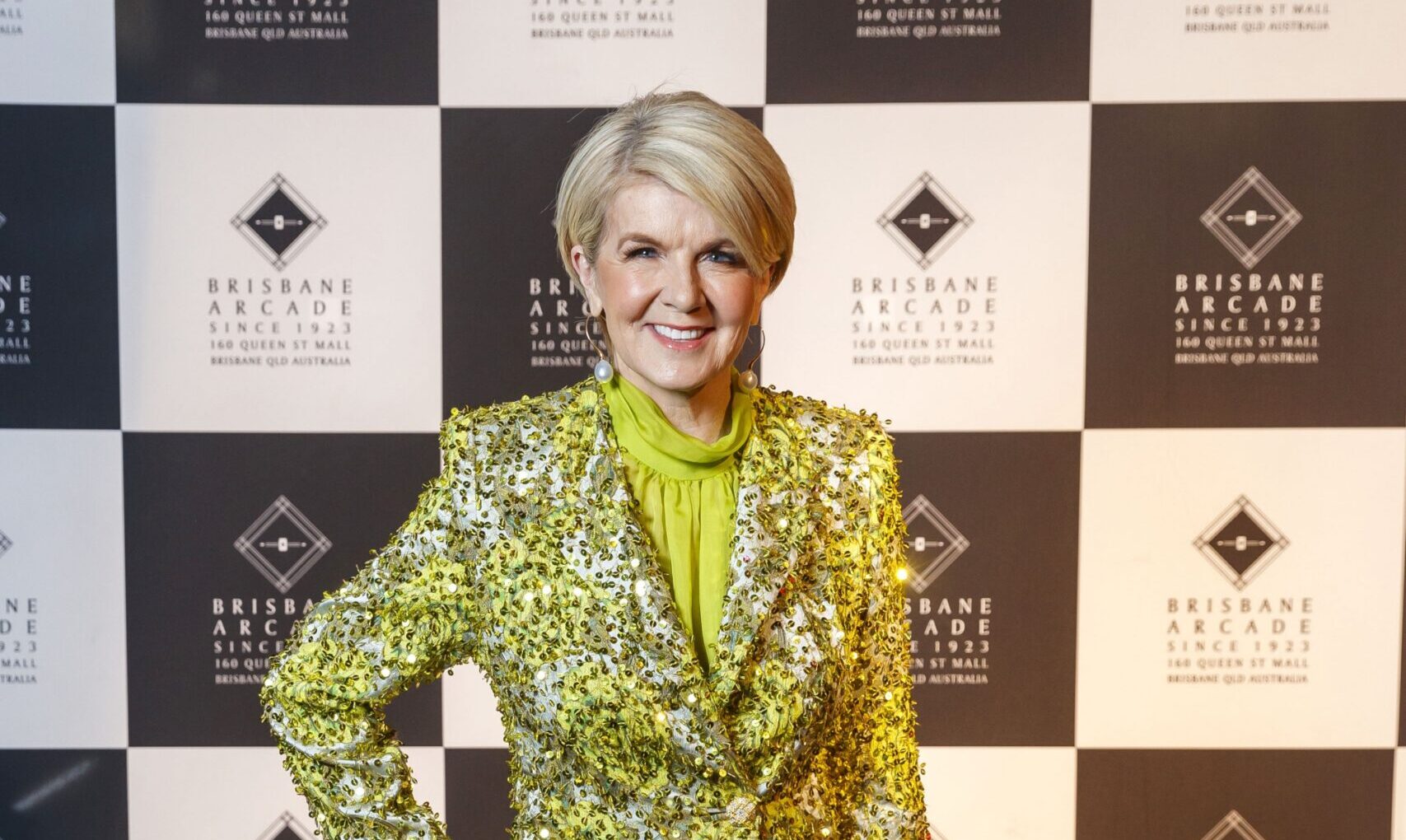
Nearly all Australian National University (ANU) union members on Thursday supported a vote of no confidence in vice-chancellor Genevieve Bell and chancellor Julie Bishop.
Please login below to view content or subscribe now.