
Tag: Confirmed

  • FIRE warnings confirmed again | The Foundation for Individual Rights and Expression

    FIRE warnings confirmed again | The Foundation for Individual Rights and Expression

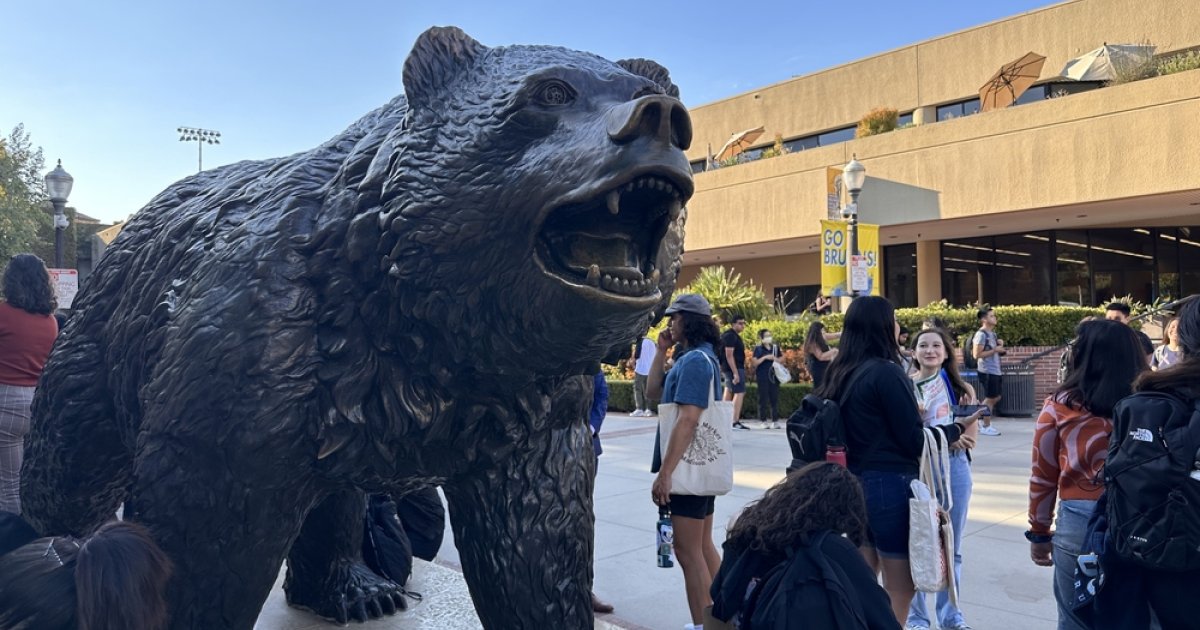
    A federal court has once again vindicated FIRE’s longstanding concerns with the Trump administration’s unlawful and unconstitutional approach to enforcing Title VI — including combatting antisemitism — in higher education. This time, the smackdown came in a ruling for plaintiffs at the University of California. 

    In a blistering opinion, the court found that the Trump administration has weaponized federal funding and “flouted the requirements of Title VI and Title IX,” all with the goal of “bringing universities to their knees and forcing them to change their ideological tune.”

    In light of this and a similar victory for Harvard in federal court, universities should take note: if they stand up for themselves, their students, and their faculty in court, there’s a strong pathway to victory.

    To avoid future losses in court, the Trump administration must cease its pressure campaign and follow the congressionally mandated procedure for enforcing federal civil rights laws. Failure to do so will only hurt students who have actually experienced discriminatory hostile environments and need serious, lawful federal oversight. The federal government should seek to get things right the first time and not let procedural infirmities and unlawful demands delay civil rights enforcement.

    Unlike the Harvard case, which was brought by university leaders alongside other stakeholders, this suit was filed by associations and labor unions that represent over 100,000 UC employees, faculty, and students. They brought their case after the administration fined the University of California, Los Angeles $1.2 billion and froze further research funding, asserting that UCLA violated the Equal Protection Clause and Title VI.

    UCLA may well have failed to protect some of its Jewish students from unlawful discrimination, and the federal government should ensure that the university is now complying with Title VI. But the court found that the administration’s goals go far beyond the issue of antisemitism, explaining:

    The record shows that Defendants engaged in a concerted policy to use allegations of antisemitism to justify funding cancellations, when their intent is to coerce universities into purging disfavored “left” and “woke” viewpoints from their campuses and replace them with views that the Administration favors.

    This, of course, violates the First Amendment. And the court notes that even if the administration were solely focused on combatting antisemitism, it could not “accomplish that goal by coercing the UC into adopting practices with widespread chilling effects on constitutionally protected speech.”

    Accordingly, the court’s preliminary injunction prohibits federal agencies from withholding funds, “or threatening to do so, to coerce the UC in violation of the First Amendment.” And just to ensure its message is clear, the court provided examples of funding conditions that would violate the plaintiff’s First Amendment rights, including:

    • Requiring the UC to make hiring, firing, or funding decisions on the basis of Plaintiffs’ members’ protected speech or freedom of assembly.
    • Requiring the UC to restrict its curriculum, scholarship, or research based on the Defendants’ preferred viewpoints. 
    • Requiring the UC to screen international students based on “anti-Western” or “anti-American” views and/or “socialize” international students to favored “norms.”

    Beyond the First Amendment, the court also found that the administration failed to “follow longstanding, legally-required process that is intended to safeguard against coercive or retaliatory government actions under Title VI and IX.” These procedural failures include denying UCLA a hearing and the opportunity to voluntarily remedy alleged violations, failing to provide a written report to Congress, and failing to limit the scope of funding suspensions to noncompliant entities.

    The federal government has a legal and moral obligation to ensure that schools are protecting students from discrimination, including antisemitism. But it must meet that obligation in ways that uphold the law and the Constitution. Unfortunately, the administration’s strategy has so far failed on both fronts. And ultimately, those hurt most by this failure will be students in need of lawful civil rights enforcement.

    Source link

  • Richey confirmed to lead Education Department’s Office for Civil Rights

    Richey confirmed to lead Education Department’s Office for Civil Rights

    This audio is auto-generated. Please let us know if you have feedback.

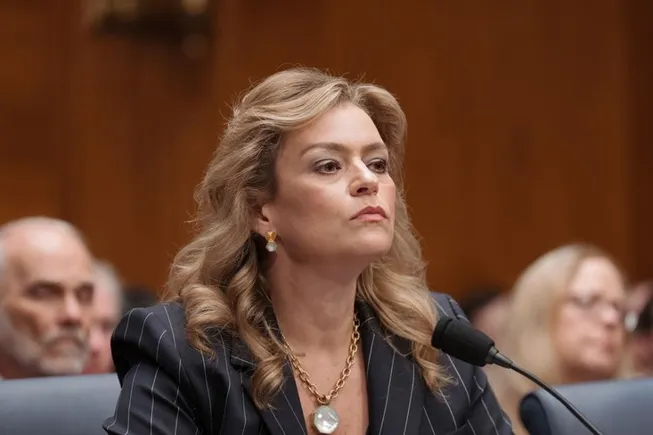
    The Senate confirmed Kimberly Richey as the next assistant secretary for civil rights at the U.S. Department of Education in a 51-47 vote along party lines late Tuesday afternoon. The approval came as part of a resolution allowing senators to consider for confirmation Richey and over 100 other federal nominees at once. 

    Richey served as acting assistant secretary at the Education Department under the first Trump administration — first for the Office of Special Education and Rehabilitative Services and then for the Office for Civil Rights — and also worked at OCR under the George W. Bush administration. 

    Her approval had been nothing short of expected, considering the slight Republican majority in the Senate and President Donald Trump’s nomination in February to head the Education Department’s civil rights arm.

    As assistant secretary of OCR, Richey will be responsible for overseeing investigations into alleged civil rights complaints, protecting all students’ civil rights, and drafting and implementing civil rights regulations, including but not limited to Title IX, Title VI and Section 504. 

    She was confirmed to steer a ship that is functioning at half of its previous capacity, with OCR down to five out of 12 of its offices. She faces a backlog of over 12,000 open investigations and more than 25,000 complaints, and a pared down staff as a result of Trump and U.S. Education Secretary Linda McMahon’s efforts to wind down the department. 

    She’s also entering the office as the Education Department is embroiled in a lawsuit that, until recently, required OCR be restored to its previous capacity by returning laid off workers to their jobs. Just as the Education Department began returning OCR staffers back to the job in waves, the federal district court order requiring its restoration was overturned in September by the 1st U.S. Circuit Court of Appeals.

    The Education Department, most of whose staff is furloughed as part of the government shutdown, has not responded to K-12 Dive’s requests about what that means for the over 80 staffers who had already returned to their old posts.

    Before the Senate’s Health, Education Labor and Pensions Committee confirmed Richey’s nomination in June, Sen. Patty Murray, D-Wash., shared that attorneys at OCR are juggling on average 115 cases, more than double the previously reported caseload of 42 cases per person. 

    Richey said she would “always advocate for OCR to have the resources to do its job.” However, she dodged questions about whether OCR, under Trump’s first administration, had enough resources to do its job.  

    “I’m going to have to be really strategic if I’m confirmed, stepping into this role, helping come up with a plan where we can address these challenges,” she said about OCR’s reduced resources under the current administration. 

    Among her first steps, Richey said, would be to evaluate the current caseload and determine where complaints stand in their investigative timelines. She would also examine the staff distribution and organizational structure of OCR, she said. 

    Richey said that rather than put certain investigations on pause, as has been the case under the second Trump administration, she would prioritize all complaints that fall at OCR’s footsteps.

    After the mass layoffs at the agency that left OCR gutted along with other department offices, the Education Department told K-12 Dive in March that OCR was undergoing organizational changes and said it would deliver on its statutory responsibilities. 

    Source link

  • “Phased implementation” of new UK BCA thresholds confirmed

    “Phased implementation” of new UK BCA thresholds confirmed

    Director of Universities UK International (UUKi), Jamie Arrowsmith, has issued an update to the sector regarding various changes due to take place as a result of the government’s immigration white paper, published in May 2025.

    UUKi, the sector body representing UK universities’ global interests, has been engaging with officials on the various proposals facing the sector. This includes the government’s ambition to implement an international student levy, shortening the Graduate Route from two years to 18 months, and tightening the Basic Compliance Assessment (BCA) thresholds that universities are held to.

    Arrowsmith’s update brought the news that the Home Office has committed to phased implementation of the new BCA thresholds. He also said that the Home Office has also committed to “discretionary exceptions for smaller providers and for institutions that would have passed under current rules”.

    ⁠The government’s proposal is to raise the minimum pass requirement of each BCA metric by five percentage points, so that a sponsor must maintain a course enrolment rate of at least 95% and a course completion rate of 90% in order to pass the compliance threshold.

    However, the change that has most unsettled the sector is the proposal to tighten the visa refusal rate compliance threshold, halving it from 10% to 5%.

    Arrowsmith told members that UKVI is now piloting enhanced data sharing to give sponsors more insight into visa refusals – a step UUKi has long called for.

    “While this is welcome, we’re clear that further systems and data improvements are needed as a matter of course to support institutions in adjusting to the tighter thresholds,” said Arrowsmith.

    The incoming measures also include a traffic-light banding system that rates sponsors on compliance performance, with underperforming institutions facing being placed on a UKVI action plan or a possible recruitment cap.  

    “We’re also seeking greater clarity on the proposed red-amber-green rating system and will continue to engage through the Education Advisory Group and regular discussions with UKVI and the Home Office,” added Arrowsmith.

    A spokesperson for the Home Office told The PIE News: “We strongly value the contribution of international students and recognise their importance to the UK’s world-leading universities. That’s why we’re tightening the rules to ensure those coming here are genuine students and education providers take their responsibilities seriously.”

    Communications surrounding curtailing the Graduate Route are “expected imminently”, said Arrowsmith, and UUKi is arguing strongly against the implementation from the January/February 2026 intake, “so that those students are able to access the two-year offer they applied for”.

    “We continue to press for written confirmation that PhD graduates will retain three years’ eligibility, and for changes to apply from a set course start date rather than a graduation date, to provide clarity for institutions and applicants,” he continued.

    We strongly value the contribution of international students and recognise their importance to the UK’s world-leading universities. That’s why we’re tightening the rules to ensure those coming here are genuine students and education providers take their responsibilities seriously
    UK Home Office

    News from this week’s Labour Party conference has brought some overdue clarity on the proposed levy on universities’ income from international students. Education Secretary Bridget Phillipson confirmed the measure remains on the table, with the revenue earmarked to fund targeted maintenance grants.

    The announcement sparked backlash from sector leaders. Some took aim at the government’s assumptions that universities will be able to simply pass the levy onto international students through higher tuition fees, while others argued that it’s unfair to force international students to essentially pay for domestic maintenance grants.

    As the government seeks to implement these reforms, most can be enacted through changes to the immigration rules without requiring an act of parliament — the only exception being the levy on international student fees.

    Source link

  • Jay Bhattacharya Confirmed as NIH Director

    Jay Bhattacharya Confirmed as NIH Director

    The Senate confirmed President Donald Trump’s pick to lead the National Institutes of Health on Tuesday. 

    Jay Bhattacharya, a Stanford University health economist who gained notoriety for his criticism of the NIH’s handling of the COVID-19 pandemic, secured the confirmation with a 53-to-47 party-line vote, The New York Times reported

    His confirmation as NIH director comes as the agency, which sends billions in funding each year to researchers at more than 2,500 universities, faces dramatic funding cuts and a shake-up of its research priorities. In the two months since Trump took office, the NIH has eliminated some 1,200 staff, effectively paused grant reviews and sent termination letters to many researchers whose NIH-funded projects allegedly conflict with Trump’s orders to eliminate support for diversity, equity and inclusion initiatives and other topics.

    The NIH also issued guidance in February that would cap the funding it gives to universities for the indirect costs of research, such as building maintenance, hazardous waste removal and adhering to patient safety protocols. A federal judge blocked that guidance after numerous universities, research and higher education advocacy organizations, and 22 Democratic state attorneys general sued the NIH, arguing that the plan will hurt university budgets, local economies and the pace of scientific discovery. 

    At a confirmation hearing before the Senate Committee on Health, Education, Labor and Pensions earlier this month, Bhattacharya said that if confirmed, he would “fully commit to making sure that all the scientists at the NIH and the scientists that the NIH supports have the resources they need to meet the mission of the NIH.” However, he offered few specifics on how he’d do that and wouldn’t commit to axing the agency’s plan to cut indirect costs by more than $4 billion.

    Source link
