Tag: confusion

  • WEEKEND READING: Knowledge and skills in higher education: coherence, conflict or confusion?

    WEEKEND READING: Knowledge and skills in higher education: coherence, conflict or confusion?

    Join HEPI for a webinar on Thursday 11 December 2025 from 10am to 11am to discuss how universities can strengthen the student voice in governance to mark the launch of our upcoming report, Rethinking the Student Voice. Sign up now to hear our speakers explore the key questions.

    This blog was kindly authored by Dr Adam Matthews, Senior Research Fellow at the University of Birmingham.

    Skills have dominated the policy and political discourse in recent years. In a recent HEPI blog, Professor Ronald Barnett observed how the education policy world has been dominated by the language of skills, whilst academic discourse has focused on education and knowledge. Professor Barnett argues that these two discourses are speaking past each other, disconnected and polarising.

    In this blog I look at how skills have come to dominate policy, political and institutional discourse, present some speculations and provocations as to why this might be, and call for precision in language when it comes to knowledge and skills policy. Here, in both simple and more philosophical terms, we are looking at discursive binaries which are concerned with doing (skills) and knowing (knowledge) in higher education.

    The 2025 Post-16 Education and Skills whitepaper is clear in its opening:

    Skills are at the heart of our plan to deliver the defining mission of this government – growth.

    The skills turn in policy and political discourse has, in many cases, sidelined or muted knowledge. This is not the case in academic literature. The Oxford Review of Education, recently published a special issue Knowledge crises and democratic deficit in education.

    Where does this then leave many universities who are, and have been for centuries producers, co-producers and distributors of knowledge? Burton Clark summed up a universities’ core mission well in 1983:

    If it could be said that a carpenter goes around with a hammer looking for nails to hit, then a professor goes around with a bundle of knowledge, general or specific, looking for ways to augment it or teach it to others. However broadly or narrowly we define it, knowledge is the material. Research and teaching are the main technologies.

    This is despite many universities starting life in the 20th century as civic institutions with a focus on the training of professions. Immanuel Kant described these two sides as a Conflict of the Faculties in 1798. In The Conflict of the Faculties, Kant argues that universities contain a necessary tension between “higher” faculties that serve the state’s skills needs and train professionals, and the “lower” faculty of philosophy, which must remain autonomous to pursue knowledge through free inquiry.

    The Post-16 Education and Skills Government white paper, uses the word ‘skills’ 438 times and ‘knowledge’ just 24 times. So, what has happened to knowledge in higher education? Professor Barnett thinks that there is something else going on other than the traditional liberal (education and knowledge) and vocational (skills) polarisation.

    With all of this in mind, I was interested in how universities described their teaching practice in the 2023 TEF submissions (a corpus of 1,637,362 words and 127 qualitative provider submissions). The pattern of a focus on skills continued. Across the whole corpus, in total, ‘skills’ was used 4,785 times, and ‘knowledge’ 1284 times – that means that skills trumped knowledge by a ratio of 3.7.

    I wondered if it made a difference about the type of institution. We might think large, research-intensive universities would be more interested in knowledge in educational terms or, be more balanced on knowledge and skills. So, I divided those numbers up by institution type using the handy, KEF classifications.

    Cluster Skills (per thousand)  Knowledge (per thousand)  Ratio difference 
    All   4785 (2.92)  1284 (0.78)  3.7 
    ARTS (Specialist) 648 (2.28)  220 (0.77)  2.9 
    STEM (Specialist) 384 (4.27)  89 (0.99)  4.31 
    E (Large broad disciplines) 1243 (2.94)  350 (0.82)  3.55 
    J (Mid-size teaching focus) 411 (2.74)  109 (0.72)  3.77 
    V (Very large, research-intensive) 745 (3.28)  184 (0.81)  4.05 
    M (Smaller with teaching focus) 672 (2.9)  197 (0.85)  3.41 
    X (Large, research-intensive, broad discipline) 682 (2.93)  135 (0.58)  5.05 

    As shown above, the pattern holds – skills are being written about more than knowledge.  Institutions in the clusters X and V (large and very large, broad-discipline and research-intensive) show the widest disparity in the balance between knowledge and skills (with the balance in favour of skills). This is surprising as these are the institutions, one might think are more interested in knowledge production alongside and integrated with education.

    Taking a slightly different line of inquiry, the shift does not appear to be drawn within political party lines. In 2022, Minister for Skills, Apprenticeships and Higher Education, Robert Halfon spoke at the Times Higher Education Conference as Minister for Skills, Apprenticeships and Higher Education (no ‘knowledge’ in his job title) and used the word ‘knowledge’ just once.

    At the turn of the century, the political discourse was dominated by knowledge and a knowledge economy, and then Prime Minister, Tony Blair claimed in 2002 that this was the route to prosperity:

    This new, knowledge-driven economy is a major change. I believe it is the equivalent of the machine-driven economy of the industrial revolution.

    This was just as the internet became accessible to all and globalisation dominated, promising an opening up and democratising of knowledge. As we enter the AI revolution, why have skills become the dominant policy and political narrative? Skills-based or knowledge-rich curricula debate has been linked to the emergence of AI technologies.

    Ideologically, knowledge and skills have produced dividing lines in education systems politically. Moreover, knowledge and skills are hotly contested in binary terms in schooling.

    In 2016, the Conservative Party held that knowledge was the route to economic growth, arguing that higher education played a key part in achieving success as a knowledge economy. In the same year, the UK voted to leave the European Union, kicking off a decade of political instability, coinciding with political orders being disrupted globally.

    During the liberal consensus of the Blair to Cameron era, governments in England aimed to keep taxes low and markets open, whilst expanding the nation’s knowledge capabilities through graduates and research. They had a broad faith in the benefits of growing knowledge and stimulating enterprise, rather than shaping the economy. They also expected communications technologies to empower citizens in a climate of open debate.

    Now, as we enter 2026, the pendulum has swung firmly toward skills dominating policy and political discourse. Rather than swinging between the two polarising discourses, it is important to develop a practical coherence between skills and knowledge.

    Professor Barnett calls for a rebalancing in debates, our language and our practice. Surely, it’s reasonable for educators, students, researchers, policy makers and politicians to expect higher education to consider doing (skills) and knowing (knowledge) as equals rather than sides to be taken. It can be argued that separating these two very human capabilities is not possible at all. However, Skills England have developed a new classifications for skills which could prove useful but needs careful integration with higher education curriculum, knowledge production and pedagogy.

     The question of why the pendulum has swung towards skills at this current moment, I can only speculate and offer provocations to be picked up in the HEPI blog and beyond:

    • The push towards a knowledge economy and 50% of young people attending university failed to result in economic growth (we might argue that the 2008 financial crash, Brexit, pandemic and many other things could have contributed too).
    • Liberalism, globalisation and knowledge came together within the notion of a knowledge economy and society. A populist backlash to knowledge and liberal higher education has resulted in a shift towards skills.
    • A genuine attempt to remedy a left behind 50% of the population who do not pursue a knowledge based academic degree.
    • The internet did not deliver on social or economic positives and growth – as Peter Thiel famously said “We wanted flying cars, instead we got 140 characters”.
    • Artificial intelligence is, or could disrupt knowledge and white collar work.
    • Often, knowledge and skills are used as synonyms for each other leading, to confusion.

    Knowing (knowledge) and doing (skills) should be at the heart of economic growth, social change and flourishing societies and not two binaries to be fought over. Precision in the language we use to make these cases needs to be sharpened and made clearer in order to avoid confusion and aid policy and practice.

    Source link

  • Why so much confusion over climate change?

    Why so much confusion over climate change?

    Bwambale estimates that less than 1% of the global population truly grasps the implications of climate change. “Even worse are Ugandans,” he said.

    Gerison pointed out that much of the population of Uganda is young. “With 80% below the age of 25, many haven’t witnessed the full extent of climate changes,” he said.

    A diminishing crop is easily understood.

    Janet Ndagire, Bwambale’s colleague, said it is difficult for Ugandan natives to connect with climate campaigns. They often perceive them as obstacles to survival rather than crucial interventions.

    “Imagine telling someone who relies on charcoal burning for survival that cutting down a tree could be hazardous!” Ndagire said. “It doesn’t make sense to them, especially when the tree is on their plot of land.”

    Reflecting on personal experiences, Ndagire recalled childhood days of going to sleep fully covered. Nowadays it is too hot to do that, he said.

    Ssiragaba Edison Tubonyintwari, a seasoned bus driver originally from western Uganda but currently driving with the United Nations, recounts the challenges of driving between 5 and 9 AM in the Albertine rift eco-region especially around the Ecuya forest reserve.

    “It would be covered in mist,” said Tubonyintwari. “We’d ask two people to stand in front, one on either side of the bus, signalling for you to drive forward, or else, you couldn’t see two metres away. Currently, people drive all day and night!”

    Irish potatoes in the African wetlands

    What happened? Tubonyintwari pointed to unauthorised tree cutting in the reserve, residential constructions and the cultivation of tea alongside Irish potatoes in the wetlands. The result was rising temperatures.

    His account supplements a Global Forest Watch report which puts commodity-driven deforestation above urbanisation.

    It’s notable that Tubonyintwari didn’t explicitly use the term “climate change,” yet the sexagenarian can effectively explain the underlying concept through his detailed description of altered environmental conditions.

    Global Forest Watch reports alarming deforestation trends, with 5.8 million hectares lost globally in 2022. In Uganda, more than 6,000 deforestation alerts were recorded between 22 and 29 November this year.

    The consequences of such environmental degradation are dire. Ndagire emphasised that those who once wielded axes and chainsaws for firewood are now the very individuals facing reduced crop yields due to extreme weather conditions.

    Even as Uganda grapples with the aftermath of a sudden surge in heavy rains from last October, Bwambale questions the country’s meteorological department, highlighting the failure to provide precise explanations and climate-aware preparations.

    These interconnected narratives emphasise the need for accessible climate campaigns and community-driven solutions. As COP28 gathers elites, the call for a simplified narrative gains prominence, mirroring successful communication models seen during the Covid-19 pandemic; else it’s the same old throwing of good money after bad.


    Questions to consider:

    1. Why does deforestation continue in places like Uganda when people know about its long-term consequences?

    2. In what ways are high level discussions about climate change disconnected from people’s everyday experiences?

    3. In what way do you think scientists and environmentalists need to change the climate change narrative?

    Source link

  • The Confusion in Higher Ed Right Now “Knows No Bounds”

    The Confusion in Higher Ed Right Now “Knows No Bounds”

    When he was mayor of Lexington, Ky., Jim Newberry worked closely with the University of Kentucky, Transylvania University and Bluegrass Community Technical College and came to understand how important the institutions were to the city. He built close relationships with the leaders at all three colleges and said he admires the broad mission of higher education institutions: to educate and train the next generation.

    “That was the mission to which I wanted to devote the rest of my professional career when I left the mayor’s office,” Newberry said. In 2012, he refocused his law practice on the higher education sector, and he is currently a member of Steptoe and Johnson, where he is co-chair of the firm’s higher education team. He predominantly represents private, nonprofit, independent colleges, but also works with large R-1 institutions.

    Inside Higher Ed recently reached out to Newberry over Zoom to hear how he is helping his clients navigate the uncertainty in federal regulations, what advice he’d give to college presidents who might want to speak out and why he took Project 2025 at its word. Excerpts of the conversation follow, edited for space and clarity.

    Q: What are the biggest concerns you’re hearing from your clients right now?

    A: Confusion, lack of information, uncertainty about what the future may hold, who they will be dealing with. It’s, in short, the fear of the unknown right now.

    Project 2025 is this administration’s playbook, Newberry said. “It’s a pretty aggressive agenda.”

    Q: Is that mostly fear around new regulations or about how to stay compliant with current regulations amid all the uncertainty?

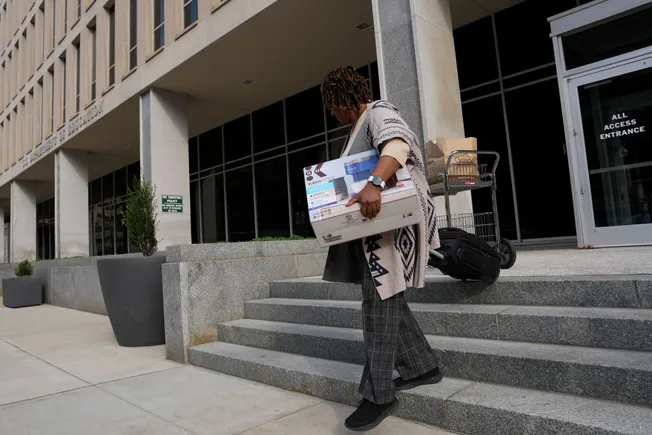
    A: The confusion right now knows no bounds, and a lot of that has to do with the fact that federal offices are being closed. People who were responsible for overseeing projects are no longer there, and so if you’re trying to resolve an issue with the Department of Education, it is very, very challenging.

    Q: And so what are you able to tell your clients, if anything?

    A: You just kind of throw your hands up. I had one client that wanted me to give them an estimate of the cost for the regulatory compliance component of a project they asked us to assess. I said, “I’ve got no idea what to tell you about that. And I don’t know when I will be in a position to give you an estimate about that.” So we really are looking for answers. Of course, we watch Inside Higher Ed and we watch the evening news reports about what’s going on at the department, and we’re trying to piece together some mosaic that would make some sense when you stand back and look at it. But right now, it’s very sketchy.

    Q: Under previous administrations, compliance was incredibly burdensome for institutions. Do you have any sense of there being more, less or similar levels of regulatory obligations under the Trump administration?

    A: I do have a sense it’s going to be less. The prior administration took a pretty aggressive approach when complaints were filed with them on some matter over which they had jurisdiction, and, typically, the inquiries that you would get from [the Office for Civil Rights] would go far beyond the one complaint that initiated the whole process.

    If I had to bet right now, I would say we’ll see substantially less of those kinds of inquiries, and we may see fewer investigations being initiated with institutions just because the department doesn’t have the personnel to do them. And what investigations are initiated will probably take much longer to complete just because they don’t have the personnel to review the documents necessary to reach a conclusion. I mean, even before the new administration took office, OCR investigations seemingly took forever to resolve. And now, with half as many employees, you gotta think they’re gonna take twice as long in the future as they have in the past, just on the basis of the number of people who are available to do the work.

    Q: You were one of the few people I spoke to who were certain the Trump administration was going to follow through on the Project 2025 mission to dismantle the Department of Education. Why were you so confident? And what else do you see in your crystal ball?

    A: It just simply appeared to me that Donald Trump had developed a remarkable level of control over the Republicans in Congress, particularly when they went through the confirmation process. And he was able to get virtually everybody he wanted confirmed. It just struck me that if you could get some of those confirmations approved, it was quite likely there would be a fair degree of support within the Republican party to materially diminish the role of the Department of Education, if not abolish it altogether. Now, whether it actually ceases to exist remains to be seen, but it’s certainly going to be in a diminished capacity. I don’t think there’s any question at all about that now, and I suspect many of its functions will be transferred elsewhere.

    With respect to the future, I don’t know that I’ve got any clairvoyant ability here, but all you had to do is look at Project 2025. I mean, that’s their playbook. It has been proven repeatedly that’s exactly what they are working from. And therefore, you ought to anticipate that there’s going to be a substantial effort made to materially change the way institutions are accredited. You ought to see a substantially greater role for state regulatory agencies who are involved in higher education. And FERPA is probably going to be on the list of things that get changed. Those are some things that I think one could glean from looking at the section of Project 2025 that deals with education. It’s a pretty aggressive agenda.

    Q: I mean, the spectrum of ability and capacity at the state level to take on some of these responsibilities is enormous. Does that fill you with dread as a lawyer, having to get to grips with 50 different ways of doing things in 50 different regulatory environments?

    A: Yes, that’s exactly what I anticipate is going to happen. And just as there’s a substantial degree of difference from one state to the next in terms of the existing ability, I suspect, even after we go through some wholesale change that would result in functions moving from the federal level to the state level, you’re still going to see a wide variety of regulatory standards and enforcement of those standards. That’s going to create a challenging new environment for a lot of folks in higher ed. And, you know, higher ed has been very much a national kind of industry, if you will. People could go basically from one state to the next and not notice a huge amount of change in terms of how the institution would operate. That’s going to be different if they follow through with all they’re talking about doing.

    Q: We’re seeing this ping-pong effect happening right now where the federal government will say one thing or take an action and then a lawsuit challenging it will follow. It’s incredibly inefficient policymaking to begin with, but how confident are you that we’ll get any sort of resolution to a lot of these extrajudicial actions coming from the administration?

    A: That’s a great question, and it is one that is going to require a lot of attention, especially in the next six months, because I would anticipate during that period there will be a few of these cases that will percolate up to the Supreme Court in some fashion or another. And I hope the Supreme Court will be able to provide some clarity that will then drive the decisions that are being made at the district court and in the various courts of appeals, because it’s just going to be all over the place, I’m afraid, with different judges and courts taking different positions. Ultimately, the nine people on the Supreme Court bench are going to have to sort through some of this. They will be very, very influential.

    Q: Some legal scholars have declared a constitutional crisis in this country. Would you say that we are in one now?

    A: The ultimate constitutional crisis is going to be what happens when the Supreme Court makes a decision in one of these cases. If the administration refuses to abide by a Supreme Court decision, we’ll be in a full-blown constitutional crisis. But we have some limited crises percolating right now. Orders from federal courts have traditionally been honored by whichever administration, whichever party may have been in power, and that does not appear to be the current case, and that’s a real concern.

    Q: What’s your take on Columbia’s concession to the department?

    A: I have a lot of empathy for the leadership on every campus right now, as they try to discern as best they can what the appropriate course of action is for their institution. There are some incredibly capable people serving these institutions, both on the boards of trustees and in senior administrative levels. There is no way I could understand all of the factors they are considering as they try to chart a course for their individual institutions. And I wouldn’t try to do that, because they’ve got a lot of responsibility. They’ve got a lot of stakeholders, many of whom are taking conflicting positions. And it’s a very challenging time for folks in leadership positions—and for their lawyers, too, I might add.

    Q: I appreciate you won’t give an opinion about something you aren’t involved in, but what do you think the decision might mean for institutional autonomy and academic freedom in general?

    A: When you have an institution as prominent as Columbia conceding to a lot of the demands that were made, it makes it very, very difficult for lesser institutions to contemplate a fight. That’s not to say they made the wrong decision, but it is to say that their decision will probably lead others to find ways to avoid a fight with the new administration, and that’s understandable. I mean, absent some set of circumstances, this administration is going to be there for almost four years. You gotta live with them, and getting involved in litigation is problematic. It is outrageously expensive for the institutions. And even if you win, you’ve got a regulator sitting there that’s not very happy about the outcome of that litigation who can make your life pretty complicated, if not miserable, for several years to come. So there’s substantial motivation for folks not to fight. And I recognize there are constituencies—students, faculty and others—who vehemently oppose anything less than a battle to the death. But presidents and boards have to consider the overall well-being of their institutions. I don’t envy that task.

    Q: We’re hearing lots of calls for leaders to speak out and condemn what’s happening to the sector. What would you tell a client who is thinking about penning an op-ed for The Wall Street Journal defending higher education?

    A: I’m generally an advocate of institutional neutrality on matters of public affairs, because I think campuses need to be places where competing ideas can be exchanged without the administration leaning on the scales one way or the other. This is a little different, though, in that these issues are really going to the heart of what our system of higher education is going to be in the future. I happen to think the people that know the most about that are folks that are sitting in administration buildings or in boardrooms these days, and their voices need to be heard in some fashion about what the implications some of the decisions that are being made have.

    So there’s certainly an interest in speaking out. I think the art of this, though, is speaking out in such a way that the points are clearly made without there being a lot of vitriol in the op-ed piece. There are a lot of constituencies on campus that want every member of the Board of Trustees and the president to go the White House and spit in the face of everybody coming and going. I understand that. I don’t think that serves their institutional interests well, but I do think a calm and thoughtful, well-reasoned, well-documented argument about some of the policy options that are available and which ones are good and which ones are bad for higher education is an appropriate thing for folks in higher education to be talking about.

    Q: Interesting that you bring up institutional neutrality, because that’s part of the reasoning some leaders have given for not speaking publicly about the situation. You’re saying this issue doesn’t fall under institutional neutrality for you.

    A: I don’t think this does. If I were in Minnesota, let’s say, and a client had a strongly held point of view about whether or not we need to have Canada as our 51st state, I’d discourage an institution in Minnesota from expressing that. On the other hand, that same institution may well be serving the higher ed industry if it makes some points about why having accreditation done by regional accreditors, as opposed to 50 different state agencies, is better. Then I think that kind of thing would be an appropriate subject for their comments.

    Source link

  • ‘Turbulence’ and ‘confusion’: Groups raise alarm over Trump’s push to kill the Education Department

    ‘Turbulence’ and ‘confusion’: Groups raise alarm over Trump’s push to kill the Education Department

    This audio is auto-generated. Please let us know if you have feedback.

    President Donald Trump and Republicans promised to shutter the U.S. Department of Education on the 2024 campaign trail, a goal of many conservatives going back decades. 

    The department — created by statute in 1979 — legally cannot be eliminated without congressional approval and a president’s signature. Such a move would have to pass the 60-vote threshold for overcoming a filibuster in the Senate, which could partly explain why past efforts to nix the department have not gotten far.

    But on Thursday, Trump threw the department’s fate into deep uncertainty after he signed an executive order directing U.S. Secretary of Education Linda McMahon “to the maximum extent appropriate and permitted by law, take all necessary steps to facilitate the closure of the Department of Education and turn its authority over to states. 

    The order came just over a week after the department announced massive layoffs that cut its workforce in half.

    Thursday’s order provided for the “effective and uninterrupted delivery of [Education Department] services, programs, and benefits on which Americans rely,” but it offered few details on how the Trump administration plans to restructure or distribute the agency’s functions.

    Those include managing and distributing billions in Pell Grants and student loans every year, as well as enforcing civil rights laws related to education on college campuses, among other functions.

    A statement from McMahon similarly offered scant details on what the shuttering would mean in practical terms.

    “We’re going to follow the law and eliminate the bureaucracy responsibly by working through Congress to ensure a lawful and orderly transition,” McMahon said.

    On Friday, Trump told media that the Education Department’s management of student loans would be moved to the Small Business Administration. “That’s coming out of the Department of Education immediately,” he said. The announcement came as the SBA said it will cut 43% of its staff

    While much remains uncertain about the ultimate effects of Trump’s order, higher education groups panned the order and raised alarms over what Trump’s unilateral attempt to shutter the agency will mean for students and institutions.

    “This is political theater, not serious public policy,” American Council on Education President Ted Mitchell said in a statement Thursday. “To dismantle any cabinet-level federal agency requires congressional approval, and we urge lawmakers to reject misleading rhetoric in favor of what is in the best interests of students and their families.”

    Kara Freeman, president and CEO of the National Association of College and University Business Officers, said that Trump’s order “adds to the turbulence colleges and universities are experiencing and the uncertainty students and families are facing at this critical time in the academic year.”

    Freeman voiced concerns around key functions of the department, including federal student aid processing, aid to institutions and data tracking “that is so important to institutional decision-making.”

    “Most troubling is that these collective actions involving the department could cause enough confusion to discourage students and families from considering a path to college,” Freeman said. 

    Congressional Democrats were sharper in their criticism. In a letter to McMahon, Rep. Bobby Scott, ranking member of the House Committee on Education and Workforce, and Rep. Gerald Connolly, ranking member of the Committee on Oversight and Government Reform, described both the Thursday order and the Department’s mass layoffs as illegal moves to “usurp Congress’s authority.”

    Scott is leading an effort within the House to open an inquiry into the effort to dismantle the department. 

    He and Connolly also noted in their letter that the Trump administration’s efforts to shutter the agency run “counter to the will of the American people, the majority of whom oppose efforts to close the Department.”

    To their point, recent nationally representative surveys have found fairly wide support for the department. A March poll from Quinnipiac University found 60% of those surveyed opposed Trump’s plan to close the Education Department, while only 33% supported it. 

    Source link