Indianapolis, IN — Project POTUS, a national middle school history initiative from the Benjamin Harrison Presidential Site, has named winners for this year’s competition.
Since the founding of our nation, there have been nearly half a billion American citizens. Of those, over 12,000 of us have served in Congress. Just 115 have become Supreme Court Justices. Only 45 citizens have become President of the United States. There’s something exceptional about each POTUS — good, bad, or otherwise. Project POTUS? challenges students in middle school to research an American president and create a video, 60 seconds or less, representing the POTUS chosen in a way that is creative, supported by good history research, and fun. A Citizen Jury made up of nearly 100 people reviewed all qualifying submissions and selected this year’s winners.
Grand Jury’s Grand Prize and Spotlight Award Selections
Grand Prize Winner ($500 award)
6th grader Peter Gestwicki from Muncie, Indiana won grand prize for his video about Theodore Roosevelt. Watch his winning video here.
Spotlight Award Winners ($400 award winners)
8th grader Grace Whitworth from St. Richard’s Episcopal School in Indianapolis, Indiana won for her video about President Thomas Jefferson. Watch her winning video here.
8th grader Izzy Abraham from Sycamore School in Indianapolis, Indiana for her video about President Calvin Coolidge. Watch his winning video here.
8th grader Clara Haley from St. Richards Episcopal School in Indianapolis, Indiana for her video about President George W. Bush. Watch his winning video here.
8th graders Delaney Guy and Nora Steinhauser from Cooperative Middle School in Stratham, New Hampshire for their video about President James Polk. Watch their winning video here.
37 students throughout the country each won their Presidential Category and received $100 awards. Check out all of their videos here.
The 2026 Project POTUS competition begins Election Day, November 4, 2025 and all submissions must be entered by Presidents Day, February 16, 2026. Learn more here.
Project POTUS is made possible by the generous support from Russell & Penny Fortune.
About the Benjamin Harrison Presidential Site
The Benjamin Harrison Presidential Site is the former home of the 23rd U.S. President. Now celebrating its 150th anniversary, it is a stunningly restored National Historic Landmark that shares the legacy of Indiana’s only President and First Lady with tens of thousands of people annually through guided tours, educational programs, special events and cultural programs. Rated “Top 5 Stately Presidential Homes You Can Visit” by Architectural Digest, the Harrison’s 10,000 square foot Italianate residence in downtown Indianapolis houses nearly 11,000 curated artifacts spanning more than two centuries of American and presidential history. Recently expanded and restored through a $6 million campaign, the Benjamin Harrison Presidential Site is also consistently ranked a Top 5 Thing To Do in Indianapolis by TripAdvisor. Signature programs and initiatives include: Future Presidents of America; Project POTUS, Candlelight Theatre; Juneteenth Foodways Festival; Wicket World of Croquet; and Off the Record. Founded in 1966 as a private 501c(3) that receives no direct federal support, the Benjamin Harrison Presidential Site is dedicated to increasing public participation in the American system of self-government through the life stories, arts and culture of an American President. Find out more at PresidentBenjaminHarrison.org.
eSchool Media staff cover education technology in all its aspects–from legislation and litigation, to best practices, to lessons learned and new products. First published in March of 1998 as a monthly print and digital newspaper, eSchool Media provides the news and information necessary to help K-20 decision-makers successfully use technology and innovation to transform schools and colleges and achieve their educational goals.
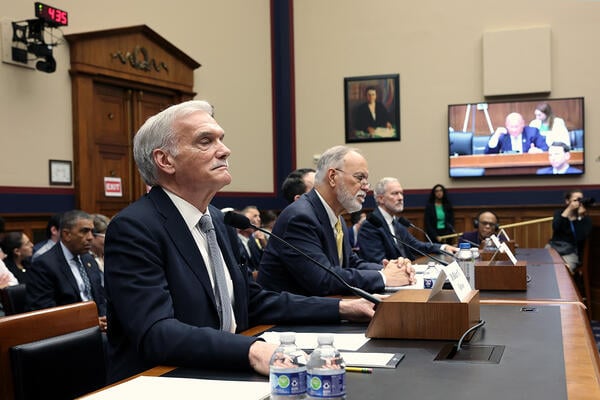
For the fifth time since late 2023, congressional Republicans on Tuesday interrogated a group of university leaders about campus antisemitism. But unlike previous hearings, this one was short on fireworks and viral moments, even as the three leaders—Georgetown University interim president Robert Groves; University of California, Berkeley, chancellor Rich Lyons; and City University of New York chancellor Félix V. Matos Rodríguez—faced a grilling over faculty remarks, foreign funding and alleged failures to protect Jewish students from discrimination and harassment.
While the first hearing, in December 2023, contributed to the ouster of the presidents of Harvard University and the University of Pennsylvania, who equivocated on a hypothetical question about calls for the genocide of Jewish students, subsequent sessions have not had the same impact.
Conducted by the Republican-led Committee on Education and the Workforce, Tuesday’s hearing—titled “Antisemitism in Higher Education: Examining the Role of Faculty, Funding and Ideology”—spanned more than three hours and was interrupted several times by pro-Palestinian protesters, who were quickly removed. In sometimes-heated questioning, lawmakers focused on controversial social media posts by college employees and hypothetical situations, such as whether a faculty union might demand a boycott of Israel in collective bargaining agreements.
But the campus leaders largely avoided gaffes and appeared to emerge mostly unscathed.
Here are highlights from Tuesday’s hearing.
Social Media in the Spotlight
While past hearings often centered on what happened on campus—particularly at institutions that had pro-Palestinian encampments—at Tuesday’s hearing lawmakers focused more on social media, questioning and condemning posts by professors that were critical of Israel. Some posts also seemed to show support for Hamas’s terrorist attack on Israel on Oct. 7, 2023.
Rep. Glenn Thompson, a Pennsylvania Republican, specifically highlighted a social media post from Georgetown employee Mobashra Tazamal, associate director of a multiyear research project on Islamophobia who allegedly reposted a statement that said, “Israel has been recreating Auschwitz in Gaza for two years.” Thompson asked interim president Robert Groves if he thought it was “appropriate for a Georgetown-affiliated scholar to publicly endorse a statement comparing Israel actions in Gaza to the evil of Auschwitz.”
Groves made it clear that he rejected the statement and apologized to anyone harmed by it. But he also defended Georgetown officials for not disciplining Tazamal for the post.
“That’s behavior covered under the First Amendment on social media that we don’t intervene on,” Groves told Thompson in response. “What we do intervene on quickly is behavior that affects our students in the classroom and research-related activities that involve students.”
Republican lawmakers also asked about posts by Ussama Makdisi at UC Berkeley, zeroing in on one that read, “I could have been one of those who broke through the siege on October 7,” the title of an article sympathetic to the Palestinian plight that praised the “determination and courage” of the attackers.
Several Republicans pressed Berkeley chancellor Rich Lyons on how he perceived that post and why Makdisi, a Palestinian American scholar who teaches history, was hired in the first place. Lyons, who became chancellor last July, acknowledged his concerns about the post.
“I believe it was a celebration of the terrorist attack on Oct. 7,” he told lawmakers.
Despite that acknowledgement, Lyons twice defended Makdisi as “a fine scholar” and said he was hired as the inaugural chair of a new Palestinian and Arab Studies program based on his qualifications. His defense prompted a sharp rebuke from Lisa McClain, a Michigan Republican.
“I’m sure there’s a lot of murderers in prison that are fine people, too, fine scholars, but they do some pretty nefarious and heinous acts,” McClain responded to Lyons.
Protest Interruptions
Pro-Palestinian protesters interrupted Tuesday’s proceedings at least four times. Authorities quickly shut down and removed protesters, who were not visible and only faintly audible via live stream.
The protesters seemed to be targeting City University of New York chancellor Félix V. Matos Rodríguez, given that the interruptions occurred when he was speaking or being questioned by Congress. Partial phrases audible over the live stream included “blood on your hands” and “genocidal warmonger.”
Florida Republican Randy Fine fired back after one such interruption.
“Shut up and get out of here,” he bellowed at a protester, calling them a “loser” before blaming campus leaders for the disruption. “I hold you all responsible for this. It is the attitude that you have allowed on your college campuses that make people think that this is OK.”
Stefanik Targets Legal Clinic
New York Republican Elise Stefanik made headlines in prior hearings when she asked the hypothetical genocide question that tripped up the presidents of Harvard, Penn and the Massachusetts Institute of Technology. But for the first time in five antisemitism hearings, she did not ask that question. Instead she focused on a legal clinic at the CUNY School of Law
She expressed concern that the legal clinic, CUNY CLEAR, is representing Mahmoud Khalil, the Columbia University graduate who was arrested without charge and incarcerated for three months for his role in organizing pro-Palestinian campus protests.
Khalil, who was freed last month, has not been accused of a crime and has subsequently sued the Trump administration, alleging he was falsely imprisoned and smeared by the federal government for First Amendment–protected activism.
“Does it concern you that New York taxpayers are paying the salary for the legal defense fund of Mahmoud Khalil?” Stefanik asked Rodriguez. ”And I’ll remind you who Mahmoud Khalil is: This is the chief pro-Hamas agitator that led to the antisemitic encampments at Columbia, the rioting and violent takeover of Hamilton Hall, the harassment and physical assault of Jewish students.”
The CUNY chancellor told Stefanik he was not aware CUNY CLEAR was representing Khalil, but that such decisions are “made in the clinics” and at the individual campus level.
Dems Needle the GOP
Democratic lawmakers focused less on the presidents on the stand than on the hearing itself. Several cast antisemitism concerns as pretext for the Trump administration’s crackdown on higher education. They also criticized the administration for slashing staff at the Office for Civil Rights, the enforcement arm of the Department of Education tasked with investigating antisemitism and other complaints.
Suzanne Bonamici, an Oregon Democrat, argued that Republicans are “weaponizing the real problems of the Jewish community” to attack higher education. She also noted that Republicans have been largely silent about President Donald Trump’s own antisemitic remarks recently.
Bobby Scott, a Virginia Democrat and ranking member of the Education and Workforce Committee, argued that the Trump administration is not approaching concerns about antisemitism in good faith but rather as a way to exert control.
“The Trump administration is destabilizing higher education itself, eroding trust, silencing dissent and undermining universities’ ability to promote diversity and critical inquiry, while at the same time sabotaging the Office [for] Civil Rights,” he said in closing remarks. “Who suffers most from this strategy? It’s the students, Jewish and non-Jewish, marginalized and unrepresented. They’re the ones who will be left vulnerable and voiceless. This should not be a partisan debate. It should be about ensuring that our schools are safe, inclusive and intellectually vibrant.”
However, House Education and Workforce chairman Tim Walberg, a Michigan Republican, made it clear that despite criticism from Democrats, such hearings will continue to be held.
“We need to continue to highlight bad actors in our higher education institutions,” Walberg said.
From free speech rights and desegregation to gun rights and religious freedoms, civil rights litigation has long been a cornerstone of personal liberty in America. But in February, the Supreme Court issued an opinion that will make it harder for us as Americans to vindicate our constitutional rights when the government violates them.
In Lackey v. Stinnie, a group of Virginia drivers challenged a state law that punished people for failing to pay court fees by automatically suspending their driver’s licenses. The plaintiffs secured a preliminary injunction — a court order issued early in a case to prevent potential harm while it is litigated in full — allowing them to keep their licenses. Virginia did not appeal that ruling, and before the case went to trial, the legislature changed the law and reinstated any licenses that had been suspended under it.
In cases alleging violations of constitutional rights, a federal statute preempts the general rule that litigants pay their own fees and costs by allowing “prevailing” parties to recover attorney’s fees from the government actor who violated their rights. But in this case, the federal district court held the drivers had not in fact “prevailed” given that the case did not progress to a final conclusion, making them ineligible to recover attorney’s fees. This flew in the face of what courts and litigators had understood the law to be for decades.
The case eventually made its way to the Supreme Court to determine what “prevailing” meant in federal law and whether the drivers were entitled to reimbursement. The court, to the disappointment of advocates for civil rights and liberties, held that plaintiffs who do not obtain a final judgment on the merits do not qualify as “prevailing” even if, as with the Virginia drivers, they prevail in getting the government to change the law.
Unlike corporate litigation, civil rights cases rarely involve large financial recoveries. In any event, plaintiffs often seek changes to laws or policies rather than monetary gain. Yet these are vital cases, not just for the individuals involved but for the communities they represent, even if they rarely provide enough financial incentive to make private representation feasible — unless attorneys receive compensation after winning the case.
Congress intended to encourage civil rights litigation by tying fee awards to success, whether through final judgments or preliminary relief. The House Judiciary Committee report on the legislation enacting the attorney’s fees provision noted, “a defendant might voluntarily cease the unlawful practice. A court should still award fees even though it might conclude … that no formal relief, such as an injunction, is needed.” Despite this clear evidence of congressional intent, the court held otherwise.
Importantly, as the court pointed out, Congress has the power to clarify in the statute that attorney’s fees can be awarded before a final judgement on the merits. Congress must do so.
The breadth of amicus briefs submitted in this case — from the ACLU to the Alliance Defending Freedom to the Firearms Policy Coalition — demonstrates that across the ideological spectrum, organizations recognize the critical role awarding attorney’s fees plays in civil rights litigation.
As FIRE noted in its amicus brief to the Supreme Court, “Withholding attorney’s fees from victims of these First Amendment violations would be devastating — not just for them individually, but for access to justice more broadly.”
Congress must enact a simple, clarifying change that will have broad support and ensure all Americans can vindicate their constitutional rights. Justice isn’t free, but we can ensure it remains accessible to all.
In 2010, United States lawmakers passed the Healthy, Hunger-Free Kids Act, which aimed to tackle both childhood obesity and hunger by making school meals more nutritious. Two years later, the Department of Agriculture updated its guidance for schools participating in the National School Lunch Program, or NSLP, in accordance with the law. Whereas schools could previously serve fat-free, 1 percent, 2 percent, or whole milk and be eligible for federal reimbursement, now they could only recoup meal costs if they ditched 2 percent and whole milk, which were thought to be too high in saturated fat for kids.
Representative Glenn “G.T.” Thompson has been on a mission to change that. The Republican legislator representing Pennsylvania’s 15th congressional district believes the 2010 law sparked a decline in students drinking milk across the board. “We have lost a generation of milk drinkers since whole milk was demonized and removed from schools,” he told a local agribusiness group in 2021.
Between 2019 and 2023, Thompson introduced the Whole Milk for Healthy Kids Act — a bill that would allow schools to serve whole milk again under the NSLP — three times without success.
In January of this year, he reintroduced the bill once again — and inspired a group of animal welfare, environmental, and public health organizations to push for a vegan countermeasure. This month, a bipartisan group of legislators put forward the Freedom in School Cafeterias and Lunches, or FISCAL, Act, which would expand the definition of milk under the NSLP to include plant-based options. Currently, schools participating in the NSLP can offer milk substitutions to students with a note from a parent or doctor — but the FISCAL Act is promoting a world where vegan milks are offered freely, alongside cow’s milk.
If students end up replacing their daily cow’s milk with a plant-based alternative, this has the potential to bring down food-related greenhouse gas emissions. But you won’t hear supporters of the FISCAL Act talking up the climate benefits of plant-based milk in the halls of Congress. Instead, they’re focusing on the health benefits of soy, oat, and other vegan drinks for students who can’t digest or simply don’t want cow’s milk.
“Most of this nation’s children of color are lactose intolerant, and yet our school lunch program policy makes it difficult for these kids to access a nutritious fluid beverage that doesn’t make them sick,” said Senator Cory Booker, a Democratic co-sponsor of the bill. This focus on student health — and the absence of any environmental talking points — reflect the eternally tricky politics around milk in U.S. schools, which have become even more complicated in President Donald Trump’s second term.
Milk has a relatively low carbon footprint compared to other animal proteins, like beef, pork, poultry, and cheese. But dairy production still comes with considerable climate impacts — mainly from the food grown to feed cows, as well as methane emitted via cow burps and manure. In 2020, researchers at Pennsylvania State University found that a dairy cow can release 350 pounds of methane every year through their burps — meaning, all told, dairy cows are responsible for 2.7 percent of the U.S.’s total greenhouse gases.
Nondairy milks — fortified drinks like soy, almond, oat, and rice milk — have varying impacts on the environment and climate, but all of these plant-based alternatives use less land and water than cow’s milk to produce, and result in fewer emissions.
Under the NSLP, schools cannot be reimbursed for the cost of meals unless they offer students milk. The Center for a Humane Economy, an animal welfare and environmental group backing the FISCAL Act, calls this America’s “milk mandate.” In 2023, student Marielle Williamson sued her Los Angeles high school for not allowing her to set up an informational table about plant-based milk unless she also promoted dairy. Subsidized school lunches have been described as “a guaranteed market” for farmers’ products; this is all but acknowledged when legislators like Thompson blame school lunch for the decline of the dairy industry. Indeed, in a recent Senate agricultural committee hearing over the whole milk bill, Senator Amy Klobuchar, a Democrat, said, “Not only do school meal programs reduce hunger and promote learning, they also support our local farmers and ranchers at a time when it’s probably the very worst time I’ve seen in decades” for farmers.
The animal welfare groups backing the FISCAL Act argue schools need more flexibility to meet the needs of students with lactose intolerance. Consumption of milk has fallen consistently since the 1970s, according to the U.S. Department of Agriculture’s Economic Research Service. That change is thought to be the result of shifting diets, as well as perhaps a reflection of America’s growing racial and ethnic diversity. It is estimated that half of American adults have difficulty digesting lactose, the protein found in milk and many other dairy products. These rates are higher in Black, Asian American, Hispanic, Native American, and Jewish communities.
“We’ve had so much marketing to tell us that the milk of a cow is, you know, nature’s perfect food, and it clearly is not,” said Wayne Pacelle, the head of Animal Wellness Action, an advocacy group that opposes animal cruelty and supports the FISCAL Act.
Pacelle acknowledged the climate impact of the dairy industry: “It’s just a truth that cows are big contributors to greenhouse gas emissions.” But he noted that arguments related to the climate are unlikely to sway the debate over school lunch beverages. “The Republican Congress is not really so attuned to that,” he said.
As a result, his group and the others pushing for the FISCAL Act aren’t talking much about the environmental considerations of drinking cow’s milk. This aligns with a shift happening in the broader food industry under the second Trump administration, as producers and manufacturers figure out which talking points are most appealing to leaders like Health and Human Services Secretary Robert F. Kennedy, Jr., who has called for schools to start offering whole milk again.
The Republicans pushing for whole milk in schools are talking up the health and economic benefits of whole milk, an argument that came into sharp relief during a Senate agricultural committee hearing in early April. Senator Roger Marshall of Kansas, who drank from a tall glass of milk before addressing the committee, referenced the term “Make America Healthy Again,” or MAHA, when making his case. The movement, popularized by Robert F. Kennedy Jr., taps into wellness, environmental, and food safety concerns in the general public and offers solutions based in pseudoscience and conspiracy theories. Marshall, a co-sponsor of the whole milk bill in the Senate, said MAHA is “about whole foods, and I think we could categorize whole milk as part of” that framework.
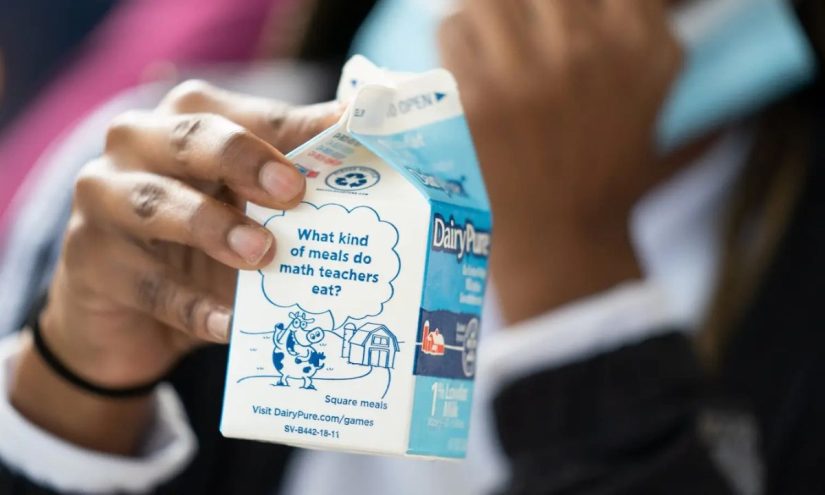
While Republicans and Democrats alike may be sidestepping the dairy industry’s environmental impact and spending more time talking about student health, there is one environmental consideration that’s caught the attention of advocates of both whole milk and plant-based milk. That’s food waste, a leading source of greenhouse gas emissions. Forty-five percent of the milk cartons offered at breakfast in schools are thrown out annually because students don’t take them. When students do grab milk at breakfast, a fourth of those cartons still wind up unopened in the trash.
Krista Byler, a food service director for the Union City Area School District in northwestern Pennsylvania, spoke at the Senate agricultural committee hearing and said serving whole milk in her schools helped milk consumption go up, ultimately reducing the amount of milk wasted.
“I hated seeing such an exorbitant amount of milk wasted daily in our small district and was hearing stories of even bigger waste ratios in larger districts,” Byler said in her written testimony.
A similar case has been made by Pacelle and other supporters of the FISCAL Act, who argue students will be more likely to drink — and finish — their beverage at school if they have the option to go plant-based.
Recently, the Whole Milk for Healthy Kids bill passed a House agriculture committee vote. If it passes a full House vote, it could then move on to the Senate. Meanwhile, the FISCAL Act is still in committee in both houses of Congress.
Pacelle said the best chance the FISCAL Act has of passing is if its provisions are included as an amendment to the whole milk bill — framing it not as a rival measure, but as a complementary effort to create more choice for students. “Moving it independently is unlikely because of the power of the dairy lobby,” said Pacelle, “and the G.T. Thompsons of the world.”
Welcome Inside Higher Ed‘s legislation tracker, a database of the key higher-ed related bills lawmakers have proposed in Congress. Few will likely become law, but the proposals offer insights into how Republicans and Democrats want to reshape the sector.
So far, lawmakers have proposed 31 bills that would directly impact colleges and universities.
You can search the database below to learn more about each proposal. The current session of Congress runs through the end of 2026 which means this list will grow. We’ll update the database regularly, so please check back for updates.
Questions, comments or think we’re missing a bill? Email [email protected].
American voters want to see an overhaul in higher education and Republicans are taking advantage of it. Over the course of its first 75 days, the 119th Congress introduced more than 30 pieces of legislation concerning higher education—more than half of which came from members of the GOP.
Historically, conservative lawmakers have taken a laissez-faire approach to governing colleges and universities. But at a time when students and families are demanding greater accountability and a solution to the debt crisis, Republicans—who hold majority in both the House and the Senate—are laying the legislative groundwork to increase federal control over colleges.
But while the bills do in some ways levy penalties against institutions, lawmakers are also aiming to advance key Trump agenda items, an Inside Higher Edanalysis tracking proposed legislation shows. For example, they’ve introduced bills to crack down on immigration and foreign influence by threatening student visas and restricting international donations; to hamper flexibility for borrowers by capping student loan amounts; and to suppress “liberal ideologies,” by establishing penalties for pro-Palestinian protests. Republicans are also escalating their ongoing attacks on wealthy colleges with proposals to significantly increase the tax on university endowments.
Rep. Tim Walberg, a Michigan Republican who chairs the House Committee on Education and Workforce, has applauded Trump’s “enormous strides” and reinforced that these efforts will be a priority.
“Under President Trump, common sense is returning to America, and House Republicans are committed to enacting his bold vision for the country,” he said in a statement after the President’s March 4 joint address. “I will work in lockstep with this administration to protect students, workers, and job creators to ensure every American has a chance to thrive.”
Meanwhile, Democrats have rallied in defiance, introducing many bills that promote the exact opposite of what Republicans are trying to achieve. For example, the Republican bill that would ban transgender women from participating in female sports has a direct Democrat counterpart that would prohibit discrimination in athletics based on gender identity.
And all of that doesn’t even take into account the possibility that Republicans could revive parts of the College Cost Reduction Act—a comprehensive piece of legislation introduced last Congress to overhaul higher education. Although the bill itself has yet to be introduced, many of its provisions—such as requiring colleges to pay back a portion of students’ unpaid loans—could be part of the forthcoming reconciliation bill, a top priority for Congressional Republicans this spring that could mean billions in cuts to higher education. (Reconciliation is a budgetary tool which can be used once a year to quickly advance high-priority—and often controversial—pieces of legislation.)
Combined, the proposed legislation and potential for sweeping changes via reconciliation could lead to an unprecedented amount of federal focus on higher ed that college and university advocates say could heavily discourage international enrollment, indirectly increase the cost of attendance and cause a chilling effect on campus free speech.
“Higher education has moved to the forefront of the minds of our policy makers,” said Emmanual Guillory, senior director of government relations at the American Council on Education. “It has become a point of contention, especially with the increased oversight over institutions themselves by the current administration.”
But regardless of which party’s behind a bill, Guillory said he’s focused on educating lawmakers on how each piece of legislation could also have unintended consequences for institutions and the students they serve.
“Oftentimes what we see with Republicans and Democrats is they have good intentions behind what they’re trying to do, it’s just the way that they go about doing it,” he said. “When we begin to have more detailed conversations. Then [lawmakers] are like, ‘Oh, well no, we didn’t think about that. We didn’t realize this would happen. So it’s just a matter of us still continuing to do our job in advocating and educating.”
Given the emphasis on higher education in this session of Congress and the stakes for colleges, Inside Higher Ed is tracking higher-ed related bills. The searchable database, available here, currently includes 31 bills introduced since January, and we’ll update it regularly. Below you can find a breakdown of the legislation proposed so far.
Legislating at the federal level is complicated, so below you can find more information about how a bill becomes a law in 2025 as well as more details about the legislation raising concerns for institutions.
How a Bill Becomes Law
Few of the introduced bills will ever become law, based on Congress’s recent track record. And while the process is similar to what Schoolhouse Rock! described in the 1970s, partisan divides over policy have led to much gridlock on Capitol Hill.
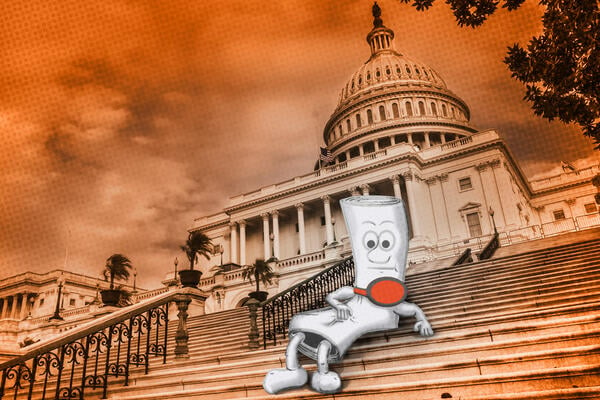
An Inside Higher Ed cartoon showing a bill on the steps of Congress.
Photo illustration by Justin Morrison/Inside Higher Ed dkfielding/iStock/Getty Images
During the 118th Congress—which ran from 2023 to 2025 with a Republican-controlled House and Democrat-controlled Senate—more than 90 percent of measures introduced died in committee and only about 3 percent became law, according to GovTrack.US. Even during the 115th Congress, the last time the Republicans held a trifecta, 85 percent of bills got stuck in committee and only 8 percent became law.
Many pieces of legislation introduced are considered nothing more than messaging bills by which a party or lawmaker signals their priorities. For example, it’s highly unlikely the Democrats will advance either the Closing the College Hunger Gap Act or the Affordable College Textbook Act, but they demonstrate a focus on meeting students’ most basic needs.
But if the legislation comes from Republicans on the House Committee on Education and Workforce and the Senate Committee on Health, Education, Labor and Pensions, it might be more likely to gain traction.
The chairs of those committees hold a lot of power over whether a bill will move forward. They control the schedule for public hearings and mark up sessions—where a bill is debated, amended and then voted on—so if a bill isn’t a priority for the chairs, it’s dead in the water.
But once again, having support and investment from an education committee member is helpful here. If they can make a case for the bill to receive time on the floor, it will face debate, amendments and a final vote. Bills have to pass both chambers and undergo negotiations to settle legislative differences before they go to the White House to become law. And that doesn’t include potential road bumps like the Senate filibuster.
Long story short, it’s a tedious process that can take months or even years. That’s why having support from Republicans on the education-focused committees—especially committee chairs—is critical to gaining momentum this year.
As Guillory said, “There are other members of Congress that are introducing legislation in the higher education space, but it doesn’t mean that those bills will necessarily have legs and actually be able to move through regular order.”
Bills Higher Ed Is Watching
Much of lawmakers’ attention right now is on reconciliation as they work to cut billions in dollars from the federal budget in order to pay for tax cuts and Trump’s other priorities. But outside of that just a handful of bills have received a hearing and/or a markup session so far. One of the most notable and concerning to higher ed advocates is the DETERRENT Act.
Scheduled for a vote on the House floor next week, this bill would require colleges to submit much more information about the foreign gifts and contracts that they receive. Republicans have claimed for years that colleges aren’t sufficiently complying with Section 117 of the Higher Education Act, which requires them to disclose twice a year all foreign gifts and contracts totaling $250,000 or more.
The legislation, which supporters say would discourage foreign influence in higher education, would lower the threshold to $50,000. For gifts and contracts from countries of concern—China, Russia, Iran and North Korea—colleges would have to report gifts and contracts of any amount. Institutions that fail to comply could lose access to federal student aid.
The House passed a nearly identical bill last Congress, but it died in the then-Democrat controlled Senate. House Republicans argued that as tensions with communist countries like China rise, universities have not taken their reporting obligations and vetting processes for international students seriously and in doing so are risking national security by granting foreign governments access to American research.
But institutional advocates say this bill goes well beyond what Section 117 of the Higher Education Act ever intended, making an already time consuming and confusing process more difficult.
Sarah Spreitzer, ACE’s chief of staff for government relations, said that these added steps and the processing workload that will come with it for the shrinking Education Department could lead to major delays in launching countless research collaborations and study abroad programs
In addition to the DETERRENT Act, Guillory said ACE is also paying attention to any measures focused on accountability, affordability and transparency of institutional data, many of which represent threads of last year’s College Cost Reduction Act (CCRA).
For example, the Graduate Opportunity and Affordable Loans Act would put a cap on the amount of loans available to graduate students and terminate their access to PLUS loans. The Endowment Tax Fairness Act would increase the amount of excise tax private institutions pay each year. And the Ensuring Distance Education Act would reverse some components of the Education Department’s 90-10 rule.
“In a lot of ways, CCRA is still alive, even though it has not been reintroduced this Congress,” Guillory said.
Lastly, he noted that many of the bills echo the Trump administration’s focus on more culture war facing topics like campus protests and immigration. The Laken Riley Act, which has already been passed, could impact visa access for international students from countries with a large number of undocumented immigrants. And several bills focused on antisemitism are likely to be discussed in the HELP Committee’s first education-specific hearing, Guillory said.
In general, he noted, a lot of the agenda is left to be determined. “I think it’s a matter of what can we accomplish in reconciliation first? Then, after that, what would we have to move through regular order?”
Over 7,000 of these student and exchange visitors that overstayed their visas came from India, house representatives heard in a committee hearing on immigration enforcement in the US on January 22.
“Thirty-two countries have student/exchange visitor overstay rates of higher than 20%,” Jessica Vaughan, director of policy studies at the anti-immigration think-tank, the Center for Immigration Studies, told the committee.
However, sector leaders have argued that Vaughan’s testimony contained “some serious and inaccurate generalisations” and relied on “faulty statistics for her claim about the student visa overstay rate,” according to NAFSA‘s director of immigration policy, Heather Stewart.
“International students are the most tracked non-immigrants in the US and a clear and comprehensive understanding of student visa misuse is needed if the field is to arrive at effective and appropriate solutions,” said Stewart.
After India, Vaughan highlighted China, Colombia and Brazil as each having more than 2,000 of their citizens overstay student/exchange visas in 2023, urging Congress to eliminate OPT and impose penalties for institutional sponsors, among a host of regulations.
“The F and M visa categories have [the] highest overstay rates of any of the broad categories of temporary admission,” Vaughan told committee members, with F visas used for academic study and M visas for vocational study.
According to recent DHS figures, the total overstay rate for student and exchange visitors in 2023 was 3.67% with a suspected in-country overstay rate of 2.86%, dropping slightly to 2.69% solely for F-1 students, with all metrics excluding Mexico and Canada.
Countries with highest student/exchange overstay rates by numbers (2023):
Country
Suspected in-country overstays
Total overstays
Total overstay rate
India
5,818
7,081
4.67%
China
3,012
5,255
2.1%
Colombia
2,792
3,223
8.29%
Brazil
1,692
2,198
4.6%
Source: US Homeland Security Entry/Exit Overstay Report FY 2023
While India, China, Colombia and Brazil recorded the largest numbers of student overstays in 2023, their overstay rate as a percentage of overall student populations in the US were relatively low.
It is perhaps unsurprising that India and China, whose combined student populations made up 54% of total international enrolments at US institutions in 2023/24, also saw the highest levels of visa overstays.
Country
Total overstay rate
Equatorial Guinea
70.18%
Chad
55.64%
Eritrea
55.43%
Congo (Kinshasa)
50.06%
Djibouti
43.75%
Burma
42.17%
Yemen
40.92%
Sierra Leone
35.83%
Congo (Brazzaville)
35.14%
Togo
35.05%
Global (excl. Mexico + Canada)
3.67%
Source: US Homeland Security Entry/Exit Overstay Report FY 2023
Notably, the ‘in-country overstay rate’ refers to the percentage of individuals suspected to still be physically present in the US after their visa expired, while the ‘total overstay rate’ includes both those still in the country and those who may have eventually left after overstaying their visa, but were not recorded as departing.
Sector members have raised concerns about the “troubling” scale of the problem uncovered by the report, ranging from benign violations of legitimate students to “cases of wilful fraud”, said Eddie West and Anna Esaki-Smith, two leading US educators.
NAFSA, however, has disputed the figures as “unreliable”, claiming that the report “overstates” the issue and urged stakeholders to take caution when taking the figures out of context.
Indeed, DHS concedes that “infrastructural, operational and logistical challenges” in the exit environment make it difficult to identify students who do not depart via air or who transition from F-1 status to H-1B, legal permanent residency and other statuses.
What’s more, DHS data revealed a 42% decline in the suspected overstay rate for student and exchange visitors across a 15-month period ending in January 2024, indicating a lag time for the system to register students’ changing situations.
“Not only do visa issuance policies need to be adjusted and interior enforcement boosted, in addition Congress should amend the law in several important ways,” Vaughan told the hearing.
In a statement raising some concern about Vaughan’s testimony, she recommended that “the concept of dual intent should not apply to student visa applicants”.
Under current law, it does not.
While the Optional Practical Training (OPT) program has been widely proven to benefit American workers as well as international graduates, Vaughan blamed the initiative for spawning “an industry of diploma mills and fake schools”, calling for it to be eliminated or “much, much more closely regulated”.
Vaughan also recommended stricter regulations on H1-B specialty occupation visas, a move which Stewart warned would “immediately” make the US look less attractive to international students who “strongly consider” post-study employment opportunities when deciding where to study abroad.
During Donald Trump’s presidential campaign, he surprised some of the sector.
The second-time US president spoke out in support of the H1-B visa during his presidential campaign amid a row about the work pathway among prominent Republicans.
The US is the only one out of the ‘Big Four’ study destinations – US, UK, Australia and Canada – to publish data on international student overstay rates.
On Wednesday, FIRE and the National Press Photographers Association filed a lawsuit challenging the arbitrary and unconstitutional laws that require Americans to apply for a permit and pay costly fees before exercising their right to film in national parks. The very next day, the U.S. Senate passed a bill addressing these same issues. The bill now goes to President Biden, who is expected to sign it in a huge victory for filmmakers — and for the First Amendment.
Currently, filmmakers must obtain a permit and pay a fee if they intend to later profit from their footage in national parks, even if they are using the same handheld camera or phone that a tourist would use. Permits are routinely denied for arbitrary and unpredictable reasons, making it difficult for people like documentary filmmakers, press photographers, and wedding videographers to earn a living. Under the EXPLORE Act, that changes.
WATCH VIDEO
The EXPLORE Act, championed in the Senate by West Virginia Democrat Joe Manchin and Wyoming Republican John Barrasso, does several things to fix the constitutional problems with the permit scheme that FIRE is challenging. First, so long as the filming takes place where the public is allowed, doesn’t impact other visitors or damage parks resources, and involves five or fewer people, no permit is required. Second, no permit is required simply because the filmmaker intends to make a profit. Third, no permit is needed to film activities that are already allowed in the park. And fourth, the EXPLORE Act makes clear that when the National Park Service has already approved an event like a wedding to take place in a national park, no additional permit is needed to film or photograph the special occasion.
After filing, FIRE and NPPA took the story to the media and to Capitol Hill. FIRE looks forward to seeing this bill become law.
What is the state of free speech on college campuses? More students now support shouting down speakers. Several institutions faced externalpressure from government entities to punish constitutionally protected speech. And the number of “red light” institutions — those with policies that significantly restrict free speech — rose for the second year in a row, reversing a 15-year trend of decreasing percentages of red light schools, according to FIRE research.
These are just a few of the concerns shared by FIRE’s Lead Counsel for Government Affairs Tyler Coward, who joined lawmakers, alumni groups, students, and stakeholders last week in a discussion on the importance of improving freedom of expression on campus.
Rep. Greg Murphy led the roundtable, along with Rep. Virginia Foxx, Chairwoman of the House Committee on Education and the Workforce, and Rep. Burgess Owens.
But the picture on campus isn’t all bad news. Tyler highlighted some positive developments, including: an increase in “green light” institutions — schools with written policies that do not seriously threaten student expression — along with commitments to institutional neutrality, and “more and more institutions are voluntarily abandoning their requirements that faculty and students submit so-called DEI statements for admission, application, promotion, and tenure review.”
Tyler noted the passage of the Respecting the First Amendment on Campus Act in the House. The bill requires public institutions of higher education to “ensure their free speech policies align with Supreme Court precedent that protects students’ rights — regardless of their ideology or viewpoint.” Furthermore, crucial Title IX litigation has resulted in the Biden rules being enjoined in 26 states due to concerns over due process and free speech.
Lastly, Tyler highlighted areas of concern drawn from FIRE’s surveys of students and faculty on campus, including the impact of student encampment protests on free expression on college campuses.
WATCH VIDEO: FIRE Lead Counsel for Government Affairs Tyler Coward delivers remarks at Rep. Greg Murphy’s 4th Annual Campus Free Speech Roundtable on Dec. 11, 2024.
Students across the political spectrum are facing backlash or threats of censorship for voicing their opinions. Jasmyn Jordan, an undergraduate student at University of Iowa and the National Chairwoman of Young Americans for Freedom, shared personal experiences of censorship YAF members have faced on campus due to their political beliefs. Gabby Dankanich, also from YAF, provided additional examples, including the Clovis Community College case. At Clovis, the administration ordered the removal of flyers YAF students posted citing a policy against “inappropriate or offensive language or themes.” (FIRE helped secure a permanent injunction on behalf of the students. Additionally, Clovis’s community college district will have to pay the students a total of $330,000 in damages and attorney’s fees.)
VICTORY: California college that censored conservative students must pay $330,000, adopt new speech-protective policy, and train staff
Press Release
Federal court orders Clovis and three other community colleges to stop discriminating against student-group speech based on viewpoint.
Conservative students aren’t the only ones facing challenges in expressing their ideas on campus. Kenny Xu, executive director of Davidsonians for Free Speech and Discourse, emphasized that free speech is not a partisan issue. Citing FIRE data, he noted that 70% of students feel at least somewhat uncomfortable publicly disagreeing with a professor in class. “I can assure you that 70% of students are not conservatives,” he remarked. Kyle Beltramini from the American Council of Trustees and Alumni, reinforced this point. Sharing findings from ACTA’s own research, he emphasized that “this is not a problem faced by a single group of students but rather an experience shared across the ideological spectrum.”
The roundtable identified faculty as a critical part of the solution, though they acknowledged faculty members often fear speaking up. FIRE’s recent survey of over 6,000 faculty across 55 U.S. colleges and universities supports this claim. According to the results, “35% of faculty say they recently toned down their writing for fear of controversy, compared to 9% who said the same during the McCarthy era.”
While this data underscores the challenges faculty face, it also points to a broader issue within higher education. Institutions, Tyler said, have a dual obligation to “ensure that speech rights are protected” and that “students remain free from harassment based on a protected characteristic.” Institutions did not get this balance right this year. But, ACTA’s Kyle Beltramini noted the positive development that these longstanding issues have finally migrated into the public consciousness: “By and large, policy makers and the public have been unaware of the vast censorial machines that colleges and universities have been building up to police free speech, enforce censorship, and maintain ideological hegemony in the name of protecting and supporting their students,” he stated. This moment presents an opportunity to provide constructive feedback to institutions to hopefully address these shortcomings.
FIRE thanks Rep. Murphy for the opportunity to contribute to this vital conversation. We remain committed to working with legislators who share our dedication to fostering a society that values free inquiry and expression.
Alumni are also speaking up, and at the roundtable they shared their perspectives on promoting free speech and intellectual diversity in higher education. Among them was Tom Neale, UVA alumnus and president of The Jefferson Council and the Alumni Free Speech Alliance, who highlighted the importance of connecting with alumni from institutions like Cornell, Davidson, and Princeton, since they’re “all united by their common goal to restore true intellectual diversity and civil discourse in American higher-ed.”
Other participants at the roundtable included members of Speech First, and Princetonians for Free Speech.
So what can be done? Participants proposed several solutions, including passing legislation that prohibits the use of political litmus tests in college admissions, hiring, and promotion decisions. They also suggested integrating First Amendment education into student orientation programs to ensure incoming undergraduates understand their rights and responsibilities on campus. Additionally, they emphasized the importance of developing programs that teach students how to engage constructively in disagreements — rather than resorting to censorship — and to promote curiosity, dissent, talking across lines of difference, and an overall culture of free expression on campus.
FIRE thanks Rep. Murphy for the opportunity to contribute to this vital conversation. We remain committed to working with legislators who share our dedication to fostering a society that values free inquiry and expression.
You can watch the roundtable on Rep. Murphy’s YouTube channel.
On June 13, the House Education and Workforce Committee voted to advance H.R. 8534, the Protecting Student Athletes’ Economic Freedom Act. The bill would prohibit student-athletes from being classified as employees under federal and state labor laws and regulations due to their participation in intercollegiate athletics.
The bill was introduced on May 23 by Rep. Bob Good (R-VA) and 10 House Republicans. If enacted, the bill would prohibit student-athletes from being classified as employees at institutions of higher education, athletic conferences or athletic associations (such as the NCAA). In effect, the legislation would prohibit student-athletes from being classified as employees under federal labor laws, such as the Fair Labor Standards Act (FLSA) and National Labor Relations Act (NLRA), as well as state laws and regulations determining employment classification.
Throughout the Biden administration’s first term, the National Labor Relations Board (NLRB) has issued significant guidance and decisions with respect to the classification of student-athletes as employees. In September 2021, the NLRB’s general counsel issued a memorandum asserting the agency’s position that student-athletes are considered employees under the NLRA. The memorandum was followed by an NLRB complaint filed against the University of Southern California, the Pac-12 Conference and the NCAA for allegedly misclassifying USC’s men’s football and men’s and women’s basketball players as student-athletes rather than employees. Additionally, in March 2024, the Dartmouth College men’s basketball team voted in favor of joining the Service Employees International Union, after a regional NLRB director determined that players on the team are employees under the NLRA using the board’s general counsel memorandum.
The bill passed out of committee by a partisan vote of 23-16, only gaining support from Republicans on the committee. The bill now awaits a full House vote, where Republicans can pass the bill with a simple majority. The fate of the bill is more uncertain in the Senate, as it is unlikely that it will gain enough support from Democrats to bypass the 60-vote filibuster. CUPA-HR will keep members apprised of any updates relating to this bill and employee classification of student-athletes generally.