Tag: Connecting

  • Connecting Birds, Grief, and Communities

    Connecting Birds, Grief, and Communities

    This week, I got to welcome Clarissa (Rissa) Sorensen-Unrue back to Teaching in Higher Ed. She’s been on a few times in the past, exploring critical pedagogy; intersectionality, power, and pedagogy; and about the wonderful learning made possible through the MYFest community. This time, Rissa was joined by her sister, Christy Albright. They both shared about their unique (and some shared) experiences with grief and how it has shaped and formed them.

    Why write about grief, when discussing communities, as part of this week’s Personal Knowledge Mastery Workshop, led by Harold Jarche?

    Grief can be such a lonely experience. Yet there are opportunities to feel less alone through the power of community. I’ve witnessed the ways that networks have helped people with disabilities navigating difficulties with access or inclusion, grieving parents who have lost a child, and connecting those who are looking to advocate for chance in higher education. Harold Jarche quotes Ronald Burt, author of Neighbor Networks: Competitive Advantage Local and Personal, in this week’s reading:

    It is not being in the know, but rather having to translate between different groups so that you develop gifts of analogy, metaphor, and communicating between people who have difficulty communicating to each other.

    Getting Started with Mastodon

    Jarche then invites us to set up and share our Mastodon profile, which we will be using throughout the workshop. I already had one set up on Mastodon.Social (a larger instance of Mastodon): bonni208, as usual, so this was relatively easy for me. Originally, Dave had set us up on a unique Mastodon instance. Ultimately, we decided that it wasn’t worth the expense for us to do so and now we’re both on a larger instance.

    If my description of instances are getting confusing, Jarche suggests: Dear Friend: Let’s Talk About Mastodon.

    I’m still mourning the loss of community I used to experience on Twitter. First, I went radio silent and ultimately decided to delete my entire account. When discussing communities, that’s one of the things we’re warned against. If we put our metaphorical eggs in one basket and something happens to that basket, there’s no putting Humpty Dumpty back together again. I was able to move some the people I followed over to other platforms, but it isn’t at all the same as it once was.

    Many people find themselves on newsletter and social media platforms that are misaligned with their values. Then, there’s all the work with how to navigate that cognitive dissonance. This is messy business. I would advocate holding yourself to high standards as you’re making decisions about where to farm and nurture your communities, but to be gentle with others who are in the process of making their own decisions about where to engage.

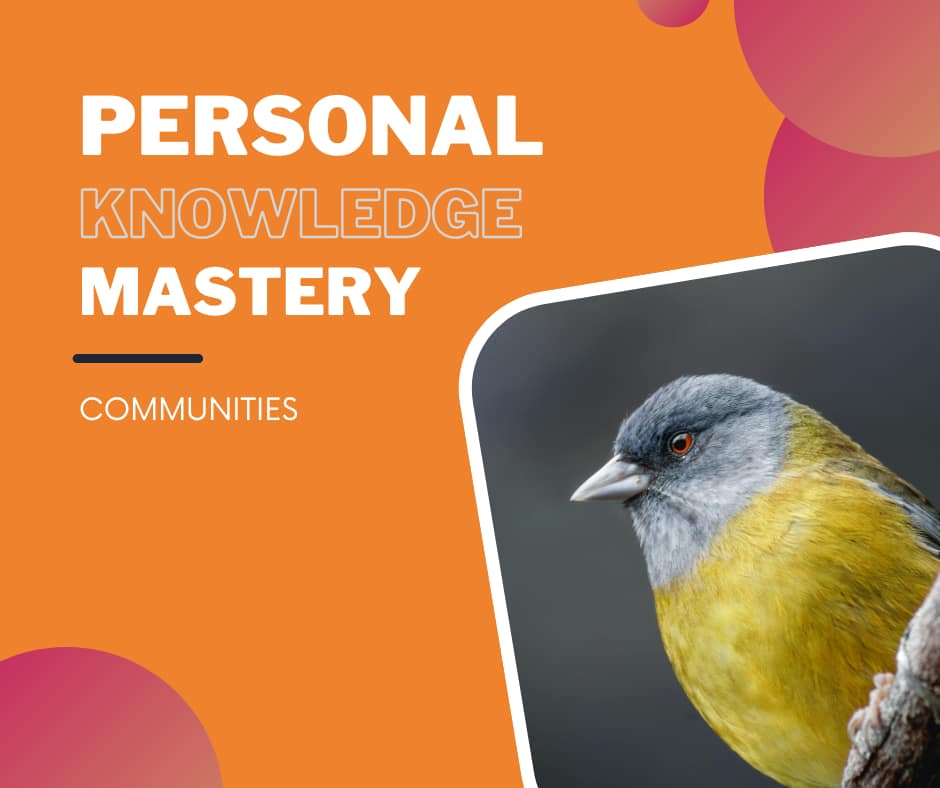
    I know Harold and plenty of others aren’t a fan of Bluesky, for reasons of replicating the issues many of us faced when investing so much on Twitter back in the day. However, that’s been the closest experience I’ve had to some aspects of community I used to get to enjoy. I like that they have starter kits (thank you for all the bird starter kits, people of the internet) and that my feed has a mix of hard-to-read-yet-important stories, satire and humorous posts, and then there are the birds. Many, many birds.

    Note: As I gather a few more links for this piece from my Raindrop.io bookmarks, I see that there is a way to: Roll Your Own Mastodon Starter Kits, thanks to Alan Levine’s ongoing contributions to my learning over many years now.

    Fact Checking Bird-Related Claims

    Speaking of birds, when I was talking with Rissa and Christy, I mentioned something about not having fact checked an Instagram post, but enjoying the idea of when we listen to bird song, that the experience can be associated with positive health benefits. Before finishing the show notes for that episode, I figured I had better do my due diligence and assess the veracity of that claim. Using Mike Caulfield’s Deep Background: Fact Checks and Context GPT,

    In the first round of fact checking, the GPT stated that a fact checker might say that this statement is “mostly true.”

    Strong evidence shows short-term relaxation and mood benefits from hearing birdsong, including reduced anxiety/paranoia versus urban noise. Broader or lasting “health benefits” (physiological and clinical) are plausible but less well established for birdsong specifically and should be qualified.

    Another Round

    When I followed Caulfield’s advice and typed: “another round” in the text box, more nuance emerged. Note the parentheses in the following text, which indicates what is new in this follow up query:

    What’s new here is marked (NEW).

    What changed / what we learned this round

    • We found a credible conflicting lab study (Hedblom 2019) reporting no significant physiological stress-recovery benefit from bird-song masking in a traffic-noise context—suggesting that some of the stronger “health” claims (physiology) don’t always replicate when visuals and context are controlled. 
    • Two different angles refine the claim: (1) not all birds are equal—e.g., crow calls lower restorativeness scores relative to other species; (2) the mix with urban noise matters—bird/stream sounds may reduce annoyance only when traffic noise isn’t perceptually dominant. These both caution against blanket statements and point to designable soundscapes (what species? what mix?). 
    • Net effect: support for short-term mood/annoyance relief remains strong (Urban Mind; Stobbe; Buxton), but broad physiological or long-term clinical benefits from listening to birdsong alone remain unproven or context-dependent, and species/mixture effects are meaningful. 

    Pattern to note

    • Higher-quality, controlled lab studies split: some show physiological recovery with general nature sounds (often water + birds), while others show null effects for birdsong specifically—especially when traffic noise is present or visuals drive recovery. Reviews also warn about conflating “birdsong” with “being in nature.” This pattern suggests the moderate claim is well supported, while the strong claim needs tighter, preregistered trials parsing species, diversity, and noise context.

    Context Report

    Finally, I followed Caulfield’s guidance to type “context report” for a summary and can share the following results.

    Core Context

    • The claim is often presented as “listening to birdsong relaxes people and produces other health benefits,” which can imply broad, causal, even physiological effects; reviews caution that many studies are short, context-dependent, or conflate “birdsong” with being in nature generally. 

    • In real-time diary research using the Urban Mind app, moments when participants reported seeing or hearing birds were associated with higher mental wellbeing, with benefits persisting to the next check-in; this is strong evidence of association but not proof of causation. 

    • A randomized online experiment (~6 minutes of audio) found that birdsong reduced anxiety and paranoia relative to traffic noise; depression decreased only with a higher-diversity birdsong track, and there were no cognitive gains—supporting short-term mood benefits rather than sweeping health effects. 

    • Evidence syntheses indicate natural sounds overall improve affect and reduce stress/annoyance, with birdsong showing particularly strong links to stress/annoyance relief; these findings speak to psychological states more than durable clinical outcomes. 

    • Not all studies find physiological benefits from birdsong: in a controlled lab study, masking traffic with birdsong did not improve physiological stress recovery versus traffic or silence, suggesting context and modalities matter. 

    • Species and soundscape context shape effects: crow calls score low on perceived restorativeness, and the ability of birdsong to temper annoyance depends on how dominant traffic noise is in the mix—underscoring that “birdsong” is not a single, uniform stimulus.

    I felt that note about crow calls hard. Real hard. 😅

    Back to the Birds

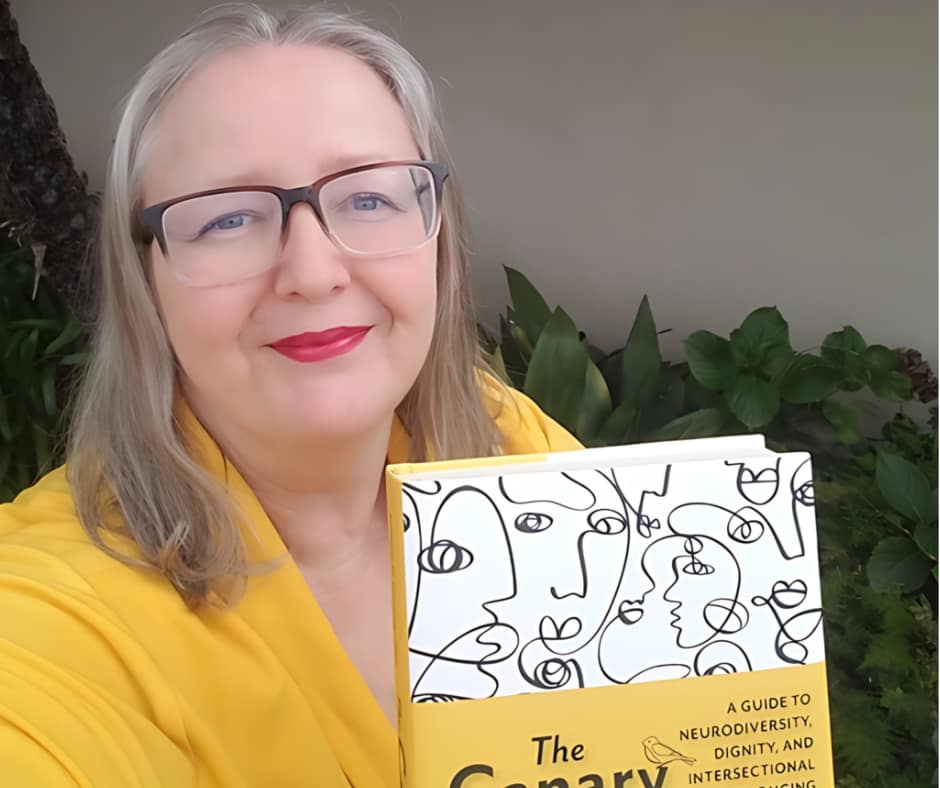
    Finally, I could hardly do all this writing and thinking about birds without brining up my colleague Ludmila Praslova’s book: The Canary Code: A Guide to Neurodiversity, Dignity, and Intersectional Belonging at Work. The community Ludmila has fostered on LinkedIn to help organizations “transform toxic cultures into thriving ones-reducing moral injusry, unlocking neurodivergent brilliance, and turning inclusion into innovation and belonging into business success,” is a great example of the power of networks.

    Ludmila holds a copy of her book: The Canary Code
    Dr. Ludmila Praslova holds a copy of her book: The Canary Code

    Until next time…

    …and here’s a long list of sources, which I thought seemed appropriate, given what we’re fact checking in this post.

    Bibliography

    • Alvarsson, J. J., Wiens, S., & Nilsson, M. E. (2010). Stress recovery during exposure to nature sound and environmental noise. International Journal of Environmental Research and Public Health, 7(3), 1036–1046. https://doi.org/10.3390/ijerph7031036
    • Annerstedt, M., Jönsson, P., Wallergård, M., Johansson, G., Karlson, B., Grahn, P., Hansen, Å. M., & Währborg, P. (2013). Inducing physiological stress recovery with sounds of nature in a virtual reality forest—Results from a pilot study. Physiology & Behavior, 118, 240–250. https://doi.org/10.1016/j.physbeh.2013.05.023
    • Buxton, R. T., Pearson, A. L., Allou, C., Fristrup, K., & Wittemyer, G. (2021). A synthesis of health benefits of natural sounds and their distribution in national parks. Proceedings of the National Academy of Sciences, 118(14), e2013097118. https://doi.org/10.1073/pnas.2013097118
    • Hammoud, R., Tognin, S., Burgess, L., Bergou, N., Smythe, M., Gibbons, J., Davidson, N., Afifi, A., Bakolis, I., & Mechelli, A. (2022). Smartphone-based ecological momentary assessment reveals mental health benefits of birdlife. Scientific Reports, 12, 17589. https://doi.org/10.1038/s41598-022-20207-6
    • Hedblom, M., Gunnarsson, B., Schaefer, M., Knez, I., Thorsson, P., & Lundström, J. N. (2019). Sounds of nature in the city: No evidence of bird song improving stress recovery. International Journal of Environmental Research and Public Health, 16(8), 1390. https://doi.org/10.3390/ijerph16081390
    • Methorst, J., Rehdanz, K., Mueller, T., Hansjürgens, B., Bonn, A., & Böhning-Gaese, K. (2021). The importance of species diversity for human well-being in Europe. Ecological Economics, 181, 106917. https://doi.org/10.1016/j.ecolecon.2020.106917
    • National Geographic. (2025, May 14). Listening to birds sing really does soothe your brain. Here’s how. National Geographic. https://www.nationalgeographic.com/health/article/birds-sing-brain-mental-health
    • Praslova, L. N. (2024). The canary code: A guide to neurodiversity, dignity, and intersectional belonging at work (1st ed.). Berrett-Koehler Publishers. https://www.oreilly.com/library/view/-/9781523005864/
    • Ratcliffe, E. (2021). Sound and soundscape in restorative natural environments: A narrative literature review. Frontiers in Psychology, 12, 570563. https://doi.org/10.3389/fpsyg.2021.570563
    • Stobbe, E., Sundermann, J. M., Ascone, L., & Kühn, S. (2022). Birdsongs alleviate anxiety and paranoia in healthy participants. Scientific Reports, 12. https://doi.org/10.1038/s41598-022-20841-0
    • Zhao, W., Li, H., Zhu, X., & Ge, T. (2020). Effect of birdsong soundscape on perceived restorativeness in an urban park. International Journal of Environmental Research and Public Health, 17(16), 5659. https://doi.org/10.3390/ijerph17165659

    Source link

  • ACE, Other Higher Ed Groups Endorse Strada Framework for Connecting College and Career

    ACE, Other Higher Ed Groups Endorse Strada Framework for Connecting College and Career

    The American Council on Education (ACE) has joined a coalition of higher education organizations—including the American Association of Community Colleges, the American Association of State Colleges and Universities, the Association of American Colleges and Universities, and NASPA—in endorsing Strada Education Foundation’s Principles for Quality Education-to-Career Guidance.

    The framework lays out a clear vision for how colleges and universities can help students connect their education to meaningful careers. It calls for guidance that is equity-centered, driven by student agency, and informed by evidence and labor market data.

    “By centering education-to-career guidance on equity, student agency, and evidence, these principles strengthen ACE’s work in shaping responsive policy, supporting nontraditional learners, and advancing flexible, career-aligned pathways,” said ACE President Ted Mitchell.

    Strada’s five guiding principles are:

    1. Centered on education-to-career outcomes
    2. Driven by student agency
    3. Foundational and universal
    4. Rooted in relationships
    5. Informed by data and evidence

    The framework builds on Strada’s 2024 report Quality Coaching: Helping Students Navigate the Journey from Education to Career, which outlined the essential components of effective coaching to help students persist, complete, and secure college-level jobs after graduation.

    —Hollie Chessman


    If you have any questions or comments about this blog post, please contact us.

    Source link

  • Preventing harm by connecting the dots in school safety

    Preventing harm by connecting the dots in school safety

    Key points:

    Swatting–false reports of school violence intended to trigger a police response–continues to increase across the country. During the 2022–2023 school year, nearly 64 percent of reported violent incidents in K–12 schools were linked to swatting. That’s over 440 incidents in one year–a more than 500 percent jump from just four years prior.

    Each call pulls officers from genuine emergencies, disrupts classrooms, and leaves students and staff shaken. While emergency protocols are essential, when swatting becomes routine, it’s clear that response plans alone won’t solve the problem.

    Unpacking the early signals

    Swatting rarely emerges out of thin air. It’s often the final act following a series of compounding behaviors, such as:

    • Online harassment
    • Peer conflicts
    • Risky social media challenges
    • Unaddressed behavioral concerns

    These warning signs exist, but are typically scattered across multiple school departments.

    Counselors might log escalating incidents. Teachers may notice changes in student behavior, and school resource officers (SROs) might track repeated visits involving the same individuals. Without a unified way to connect these observations, critical warning signs go unnoticed.

    Operationalizing early intervention

    Districts are reimagining how they capture and coordinate behavioral data. The goal isn’t surveillance or punitive action. It’s about empowering the right people with the right context to align and intervene early.

    When schools shift from viewing incidents in isolation to seeing behavior patterns in context, they are better positioned to act before concerns escalate. This can mean initiating mental health referrals, alerting safety teams, or involving families and law enforcement partners at the appropriate moment with comprehensive information.

    Technology that enables teams

    The process requires tools that support secure, centralized documentation and streamline communication across counselors, administrators, safety staff, and other stakeholders. These systems don’t replace human judgment, but create conditions for clearer decisions and more timely coordination.

    Swatting is just one example of how fragmented behavioral data can contribute to high-risk outcomes. Other incidents, such as escalating bullying, persistent mental health concerns, or anonymous threats often follow recognizable patterns that emerge over time. When schools use a centralized system to document and track these behaviors across departments, they can identify those patterns earlier. This kind of structured coordination supports proactive interventions, helping prevent larger issues before they unfold and reinforcing a culture of safety and awareness.

    Consider Washington State, where swatting affected more than 18,000 students last year, costing schools over $270,000 in lost instructional time. These figures illustrate the operational and human costs when coordination breaks down.

    Reducing risk, not just reacting to it

    Swatting is a symptom of a larger issue. Building safer schools means moving upstream from reactive emergency response to proactive coordination. It requires shared insight across teams, strengthened behavioral threat assessment protocols, and the right supports in place well before crisis calls occur.

    Early intervention isn’t about adding complexity. It’s about reducing risk, improving situational clarity, and equipping school communities to act with confidence–not simply responding when harm is imminent.

    Latest posts by eSchool Media Contributors (see all)

    Source link

  • A decade connecting young people to the world they live in

    A decade connecting young people to the world they live in

    To understand the chaos that is the world today it helps to look back a decade.

    This past year, world representatives met at COP29 to fight climate change in a place led by an authoritarian regime dependent on fossil fuels. The Israeli government under Prime Minister Benjamin Netanyahu has been massacring Palestinians in Gaza. The United States bombed Iran in an attempt to eliminate its nuclear capability. And U.S. President Donald Trump and an increasing number of European leaders have closed their doors to immigrants and refugees.

    In great contrast, when News Decoder launched 10 years ago, 196 nations signed onto the landmark agreement known as the Paris Accords, ushering in the hope that together we could cool down the planet. The administration of then-U.S. President Barack Obama signed a historic agreement with Iran, in which Iran would get rid of 97% of its supply of enriched uranium. A million refugees flooded into Europe from conflicts in Syria and elsewhere.

    In the years in between, the world locked down during the Covid-19 pandemic, Great Britain exited the European Union, the #MeToo movement erupted across the world, nations across the globe began legalizing same sex marriage, Russia invaded Ukraine, Trump got elected, tossed out and re-elected and we began ceding everything to artificial intelligence.

    Can you imagine coming of age in that world?

    Decoding world events

    When Nelson Graves founded News Decoder to help young people “decode” the world through news, it seemed that we lived in an age of optimism. Now young people feel helpless and disconnected. In April 2024, the World Economic Forum reported that young people worldwide are increasingly unhappy and this trend would have real consequences for the future.

    “We live in a world where teenagers grapple with a sense of crisis before adulthood; a time when young people, historically beacons of optimism, report lower happiness than their elders,” the report said.

    But even back in 2015, Nelson knew things would change. He’d spent years as a foreign correspondent covering world events. 

    “Anyone with a sense of history and someone with experience in following current events — especially a foreign correspondent — would have known that the world is most likely to change when you’re least expecting it,” he said. “Nothing is immutable — except the truism that the political pendulum is always swinging.”

    The roots of Brexit, the Make America Great Again movement in the United States and antipathy towards immigrants were already deep in 2015, even if they were largely underground and out of sight, he said. 

    A decade later, News Decoder’s mission of connecting young people to the world around them seems more relevant than ever.

    For 10 years, the high school students News Decoder has worked with have explored — through articles, podcasts, videos and photo essays and in live, cross-border dialogues — how problems in their communities connect to things happening elsewhere in the world. In 2016, for instance, a student studying abroad in China worked with News Decoder to explore how growing consumerism was leading to mountains of trash and created an army of people who mined that trash building up around them.

    That same year in an online roundtable, News Decoder brought together students from the Greens Farms Academy in the United States with students from Kings Academy in Jordan, Aristotle University in Greece and School Year Abroad in France to discuss the ongoing war in Syria and the worldwide crisis of Syrian refugees.

    Kindling curiosity

    One of the Greens Farms Academy students who participated, Samyukt Kumar, further explored the topic in an article News Decoder published that year. Looking back, he now tells, the practical experience it gave him was valuable.

    “Less for the substance but more for the practical experience,” he said. “My views on these topics evolved significantly as I received greater education and real-world exposure. But I still reap the benefits from gaining more confidence in my writing, learning to embrace the editing process and engaging my curiosity about the world.”

    In 2017, a News Decoder student at Haverford College in the United States explored the problem of migrants flooding into her home country of Italy. She came to this conclusion:

    “The roots of the problem lie outside of Italy, which nonetheless bears a heavy burden as the first EU destination for thousands of Africans crossing the Mediterranean,” she wrote. “A solution to the migration crisis depends not only on Italy’s good will — now being stretched to the limits — but also on the willingness of the rest of Europe and the international community to tackle the armed conflicts, poverty and human rights abuses that stir so many Africans to attempt the perilous Mediterranean crossing.”

    Fast forward to 2025. News Decoder worked with high school students in the British Section at the Lycée International Saint-Germain-en-Laye outside of Paris to take what they learned about the United Nations Sustainable Development Goals and find and tell narrative stories through podcasts. They explored such things as the problem of poverty in resource-rich areas of Africa and the connection between actions of multinational corporations and climate change.

    Crossing borders

    In Switzerland, News Decoder worked with students at Realgymnasium Rämibühl Zürich on a series of articles that explored gender inequity in sports, the connection between social media and the decline of democracy, how a local community is affected when it hosts a world conference and the connection between the quality of life in a country and the people’s willingness to pay for that through high prices and high taxes.

    And in monthly “Decoder Dialogues” News Decoder put together students from countries such as the United States, Colombia, France, India, Belgium and Rwanda in online roundtables to discuss such topics as the future of journalism, climate action, censorship, leadership and artificial intelligence.

    Through the exploration of a problem in the world, by seeking out experts who can put it into context and by seeking out different perspectives from other places, students make sense out of chaos. They begin to see that there are people out there thinking about these problems in different ways and seeking solutions to them.

    Ultimately, the message News Decoder wants students to take away is that you don’t need to run from complicated problems. You don’t need to disengage from the news and the events happening around you. By delving more into a topic or issue or controversy, you can begin to understand it and see the path forward.

    At News Decoder, we believe people should be able to listen to each other and exchange viewpoints to work through problems across differences and borders. Back in 2015, Graves posed this challenge: How to tap into the intellectual energy of the generation that will soon assume leadership in business, government, academia and social enterprise? 

    For the past 10 years we have worked to empower young people by giving them the information they need, connecting them to the world around them and providing them a forum for expression. For a decade we have helped them find coherence out of the chaos around them — and we intend to continue doing that for the next 10 years. 

    One thing we know: 10 years from now the world will be a lot different from what it is now. 

    “While no one has a perfect crystal ball, you can be sure that nothing remains unchanged for long,” Graves said. “Yesterday’s mortal enemy can become a fast friend — think of U.S. relations with Vietnam since the 1950s. Lesson: Always expect change, even if you can’t anticipate the precise contours, and don’t project linearly into the future. As ever, keep an open mind and beware confirmation bias.”

    That’s the message News Decoder tries to instill in the young people we work with. After all, a decade from now, they will be the ones making that change happen. 

    Source link

  • Connecting Universities in a Divided World: International Association of Universities’ Mission

    Connecting Universities in a Divided World: International Association of Universities’ Mission

    There are a lot of transnational associations of universities out there. Some are meant to advance specific political goals, like the European Universities Association. Others exist simply to support their members without engaging in lobbying or political work, such as the African Association of Universities, whose former president, Ernest Aryeetey, was a guest on the show last year.

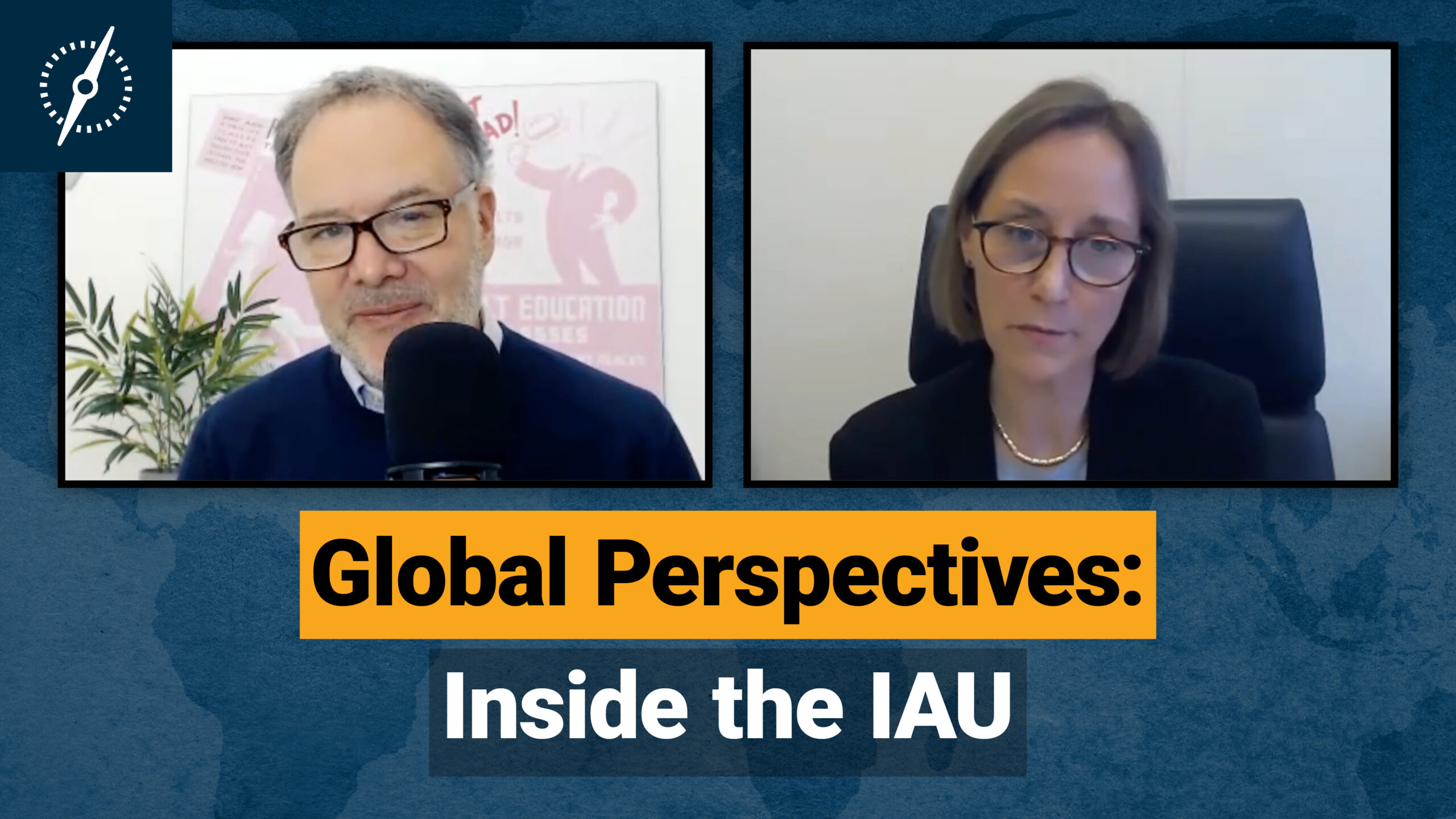
    But the oldest of all these associations is the International Association of Universities (IAU), based in Paris and created by UNESCO in 1950. I had the pleasure of attending their annual meeting in Tokyo last November—a unique opportunity to see global higher education, in all its glorious diversity, reflected in a single room.

    While I was there, I asked their Secretary-General, Hilligje Van’t Land, to join us on the show. Graciously, she agreed, leading to today’s podcast.

    My chat with Hilligje revolved mainly around two issues. First, the state of global higher education—spoiler: it’s been better. And second, the challenges of maintaining an association across a membership spanning over 100 countries.

    How do you keep an organization relevant across institutions with such different capacity levels, facing such different problems in vastly different external environments? And at the global level, can universities even be considered a single community?

    Hilligje, who has one of the most interesting vantage points in global higher education, brings sharp insights to these big questions. And so, without further ado, let’s turn it over to Hilligje.


    The World of Higher Education Podcast
    Episode 3.23 | Connecting Universities in a Divided World: International Association of Universities’ Mission 

    Transcript

    Alex Usher (AU): Hilligje, I’m not sure all our viewers, listeners, or readers are familiar with the history of the International Association of Universities. I know it was founded in 1950, but how has it evolved since then? And what does your membership look like geographically?

    Hilligje Van’t Land (HVL): Yes, well, my name is indeed HVL, and I’m the Secretary-General of this wonderful organization, the International Association of Universities.

    As you mentioned, it was founded in 1950 under the auspices of UNESCO, and its secretariat is based in Paris. I point that out because it’s one of the most common questions I get—where are you based?

    At the same time, we represent a truly global higher education community, with universities from 130 countries across five continents.

    How has it evolved over time? In the beginning, the association was largely led by universities from the Global North, working to rebuild the world after World War II on a foundation of shared values—values that would help create peace among people through higher education. And today, that vision still underpins much of what we do. Our goal is to bring together voices from around the world to collaboratively shape a collective vision of what universities can stand for, ultimately helping societies develop toward something better.

    So what does our membership look like? We have 600 engaged members who contribute financially to the association, and it’s an incredibly diverse group of universities spanning all five continents. That diversity is central to our mission—not just representing one group, but bringing together many perspectives.

    AU: We often think of university associations in terms of rectors’ conferences, where their primary job is to lobby—whether at a national level or through organizations like the European Universities Association. The International Association of Universities (IAU) obviously doesn’t have that kind of function. So is it more about universities speaking to each other? What exactly is its role in the global higher education ecosystem? Who is it speaking to beyond just its membership?

    HVL: That’s a very good question—sorry if my English stumbles sometimes!

    Indeed, we are a truly global association of universities, but without a specific regional or local resonance. For example, the European Universities Association engages with the European Commission, the Arab Association of Universities works closely with ministries across the Arab world, and American universities are involved in national-level associations that influence policy, like the Association of American Universities (AAU). In Africa, university associations work closely with the African Union.

    Our role is to bring these voices together, encouraging universities to collaborate globally in ways that contribute to transforming the world. From where we sit, we advocate to the United Nations and UNESCO, influencing policy decisions within global agenda-setting bodies affiliated with UNESCO.

    Right now, we are approaching the end of the UN Agenda 2030. A new global agenda will have to be developed because we are far from achieving the current goals. Yet, those goals have played a crucial role in bringing universities together around essential topics. As we look ahead, universities worldwide will help shape this next agenda, ensuring higher education continues to be a key driver of global progress.

    AU: One thing that struck me when I attended your meeting in Tokyo last November—an amazing gathering, by the way—was how difficult it must be to create an institutional agenda that speaks to universities from such different parts of the world. How can I put it? Institutions in Australia, Indonesia, and Somalia—where I think you even had a delegate from Somaliland—are all dealing with vastly different domestic challenges. Given that universities are so deeply embedded in their national contexts, how do you find themes that resonate across all of them? How do you create a common agenda that works for everyone?

    HVL: It’s both a challenge and an opportunity, Alex.

    When institutions are deeply embedded in their national dynamics, it can be difficult to see beyond them. But without looking outward, how can they truly make the case for what they do? Staying in an echo chamber or only engaging in national-level discussions limits the ability to develop informed policies. That’s why bringing in diverse voices from the global higher education community is so important—it enriches conversations at institutional, national, and regional levels.

    The agenda we co-develop with our board is then put to the IAU membership every four years for discussion at the global level. Are these the right topics to focus on? Yes or no? From there, a strategy is developed, and universities engage by seizing opportunities for responsible and meaningful internationalization.

    For example, universities rally around themes like fair and inclusive leadership, the role of higher education in sustainable development, and, since COVID, the global conversation on digital transformation in higher education. A major focus now is open science and AI—how do these shape the future of universities?

    And while institutions may come from Somaliland, Ghana, Colombia, Reykjavik, or Paris, they often grapple with similar questions. University rectors and policymakers worldwide are asking themselves the same things. By facilitating global leadership meetings, we create spaces where these shared concerns resonate and where new perspectives can emerge.

    AU: You’ve mentioned the three big areas that IAU works in—sustainability, internationalization, and digital transformation. You also have those large surveys and studies that go out every couple of years. How do you engage institutions in these areas? What are universities doing in each of these three areas with IAU, and what are they getting out of it?

    HVL: Fair and inclusive internationalization—one of the key topics that resonates strongly, even within the name International Association of Universities—translates into at least 10 different ways for universities to engage.

    For example, just yesterday, we hosted a webinar on what responsible internationalization means today. Does it mean closing borders and fencing off countries that are perceived as threats to our intellectual work? Or, on the contrary, is responsible internationalization an opportunity to connect universities globally around key topics and foster international research collaborations? These collaborations are critical for addressing global challenges like climate change and crises in their many forms.

    So, these discussions are one way we engage institutions. We also offer a service called HEIAS (Higher Education Internationalization Strategies Advisory Service), which helps universities refine their internationalization approaches.

    Additionally, we maintain a network of internationalization associations, including NAFSA in the U.S., EAIE in Europe, and the African Association for Internationalization. By bringing these voices together, we co-develop statements that universities can adopt, ensuring that key topics remain at the forefront of global discussions.

    On sustainability, we created the Global Cluster on Higher Education and Research for Sustainable Development. This initiative invites universities worldwide to champion specific Sustainable Development Goals (SDGs) while ensuring their projects remain interconnected. The goal is not to work in silos but to collaborate and co-create solutions to pressing challenges—whether water issues, gender inequality, or unsustainable urban development.

    These efforts lead to research projects, joint initiatives, and meaningful impact across the global higher education community.

    AU: Hilligje, you held that meeting in Tokyo last November, which I mentioned earlier. What do you think were some of the main takeaways from that event? What did you learn about how universities are coping with the challenges of the 2020s?

    HVL: The 2020s—universities are coping with everything that comes their way, I would say.

    One of the major takeaways was something you might not expect: the theme itself—University Values for the Future in a Changing World. When planning the conference, we had many discussions with the program committee. People said, We need to talk about AI. We need to talk about sustainability. We have to discuss the financial sustainability of universities because that’s what institutions are struggling with.

    And I said—many organizations are already tackling these topics specifically. Let’s focus on values. Where do values stand today? What values do we need to cultivate to build a meaningful, impactful higher education system for the future?

    As you saw at the conference, we had an unusually large group of university leaders attending—more than in previous years. We brought together leadership from universities worldwide to discuss the values they stand for, each from their own unique perspectives.

    What this told me is that IAU has a unique opportunity to rally around topics that other organizations aren’t addressing. And these conversations are essential.

    We received a lot of feedback—messages and even letters—from participants saying these discussions were eye-opening. They allowed universities to develop new collaborations, whether by inviting each other to campuses or by looking at institutional challenges through a different lens.

    So the key takeaway? These conversations are crucial if we want to shape the future of higher education differently. Of course, IAU will continue to address the pressing issues on universities’ daily agendas, but leaders are also craving more space for these deeper discussions—discussions that are vital yet often overlooked.

    AU: At the meeting, one session in particular stood out to me—the one led by Fanta Aw from NAFSA in the United States. A lot of participants from North America, Australia, and other OECD countries came in very concerned about university values, feeling that they were under threat. This was just a week or two after the U.S. elections, so people were thinking about issues like that, as well as the rise of movements like Alternative für Deutschland in Germany and what these political shifts could mean for universities.

    What struck me, though, was the response from universities in other parts of the world—particularly in Asia and Africa. It wasn’t outright pushback, but more of a gentle chiding. Their message was, We live with these challenges all the time. From IAU’s perspective, that’s just another example of how institutions come from vastly different contexts. How do you bridge these experiences within IAU? How do you ensure that both perspectives are heard?

    HVL: Well, those perspectives were very much present on that panel, and the discussion continued long after the session ended.

    It’s important to recognize that these challenges aren’t confined to a single region or a divide between so-called “developed” and “developing” countries. In fact, I’d like to discard that terminology altogether—many of the countries we traditionally label as developing have advanced in ways that often surpass others.

    The key takeaway is that these conversations are essential. Just because one university or country is newly experiencing pressures from policymakers, threats to academic freedom, or restrictions on institutional autonomy doesn’t mean these issues are new globally. For some institutions, this is an everyday reality.

    But these challenges must be debated openly. If the future of higher education is one without institutional autonomy and academic freedom, what kind of education system are we building? What happens if governments dictate which topics can be discussed on campus, replace rectors at will, or shut down academic departments based on political agendas?

    These issues need to be confronted head-on. From these discussions, the conversation must be taken further—to the United Nations, to UNESCO policymaking forums, and to global decision-makers. If we don’t address them now, the future could be even bleaker than it already appears in many parts of the world.

    AU: A couple of weeks ago, we had American author Ben Wildavsky on the show. Of course, he wrote The Great Brain Race 15 years ago, and we invited him to discuss that book because it presented such an optimistic view of higher education—one where globalization would bring everyone closer together.

    But looking around the world today, I find myself questioning the future of globalization and internationalization. IAU is deeply tied to a version of internationalization—maybe not the one Ben was promoting, but still a vision of global academic collaboration. If globalization really does roll back over the next four or five years, what do you see as IAU’s role?

    HVL: Globalization is a complex phenomenon, with many facets—and it’s often questioned because it brings challenges alongside opportunities. Increasingly, it also comes with fear.

    What IAU fosters, however, is global cooperation. Cooperation starts at the institutional level, extends to national and regional levels, and then reaches the global stage. But cooperation is never a given—it must be nurtured carefully, strategically, and consistently.

    Just yesterday, during our Futures of Higher Education webinar series—which now includes 75 recorded sessions available on our website—we hosted Ayesha Maikundi, the new Vice Chancellor of the University of Abuja. She was asked about responsible internationalization and what globalization means today.

    She raised an important point: We send the best and brightest into the world, but they rarely come back. Some return as expats, contributing to higher education in their home countries occasionally, but not in a sustained way. The challenge of brain drain remains significant.

    While brain gain and brain circulation are often discussed—though, of course, brains don’t literally circulate on their own—the real issue is ensuring meaningful global academic connections. Different models have been used over time, but we need to continuously rethink how we facilitate these exchanges.

    For example, not every system is easy to engage with—Nigeria, as Ayesha noted, presents logistical challenges. But beyond that, there are many places around the world that remain overlooked, not because they lack value, but because we fail to recognize them as worthy academic destinations.

    That’s why global collaboration and mobility must be continuously worked on—strategically, deliberately, and persistently—to strengthen the international higher education ecosystem.

    AU: Beyond issues like globalization and state intrusion into university decision-making, from your vantage point, what are the other major trends shaping higher education globally today? Are we seeing a convergence of concerns at the university level? In other words, are institutions becoming more similar—more isomorphic, so to speak? Or, at a global level, are we seeing more diversification among institutions?

    HVL: Universities are institutions with many, many faces.

    There are certainly harmonization processes underway in different parts of the world. In Europe, for instance, you have the European Higher Education Area and the Bologna Process, along with ministerial meetings aimed at creating greater alignment among institutions.

    But the goal isn’t to make every university the same. In Europe, the aim is to embrace diversity while fostering better dialogue and collaboration across institutions. A similar trend is slowly emerging in Asia as well.

    Now, if you look at the United States—it’s technically one country, but in reality, it has so many states, so many systems, and so many different kinds of universities within those systems. That diversity is significant.

    This is why, right from IAU’s founding in 1950, we began developing the World Higher Education Database. At the time, it included just 50 universities. Today, we track and document over 21,000 institutions worldwide, mapping entire higher education systems in order to foster better understanding and appreciation of their differences.

    In the end, this work also feeds into UNESCO’s Global Convention on the Recognition of Higher Education Qualifications, which aims to improve system compatibility. Harmonization is important in the sense that it allows students and scholars to navigate different systems more easily and become true global citizens.

    If systems are entirely disconnected—with different academic calendars, study periods, and structures—it creates barriers. So yes, harmonization is happening, but there is no one-size-fits-all model. Universities will remain distinct, and that’s the beauty of it.

    AU: So, maintaining harmonization while preserving diversity—that could be one of the major global trends over the next 15 to 20 years. How do you see IAU evolving over the next 10 to 15 years as sustainability, internationalization, and digital transformation continue to accelerate? Will you stick with these three focus areas, or do you anticipate new priorities emerging? And will new ways for institutions to collaborate globally develop as well?

    HVL: I’m convinced that this will remain a movable feast, to borrow a phrase—because universities are never static. Their interests and priorities evolve over time.

    We host International Conferences annually, but every four years, we hold a General Conference where we elect a new board and bring together the global higher education community to define our next strategic plan.

    Right now, we have four priority areas—though leadership is a major focus as well. These priorities may shift over time, as they have in the past. While the core mission remains, new challenges continue to emerge.

    For instance, we need to address the massification of higher education, as more people around the world seek university degrees. We must also consider the commodification of higher education, which is becoming an increasing concern. At the same time, there is a strong push for skills-based education, which we try to balance by advocating for the continued importance of the humanities.

    Another tension that remains unresolved is collaboration versus competition—how universities navigate national interests while engaging in global partnerships. The rise of digital education also raises new questions about what it means to be a university in a rapidly changing world.

    In terms of IAU’s membership, we currently have 600 institutions that financially support our vision and mission. But many more universities align with our values and participate in our initiatives.

    Looking ahead 10 years, where do I see IAU? Well, in an ideal world, I’d love to see 21,000 universities as members—creating a truly global dialogue, not just about the future of higher education, but about how universities shape society itself.

    Because ultimately, we’re not just looking inward—we’re asking what universities contribute to the world.

    AU: Hilligje, thank you so much for joining us today.

    HVL: You’re welcome.AU: And before we wrap up, I’d like to thank our excellent producers, Tiffany MacLennan and Sam Pufek, as well as you—our viewers, readers, and listeners—for tuning in. If you have any questions or comments about today’s episode, please reach out to us at [email protected]. And don’t forget to subscribe to our YouTube channel so you never miss an episode of The World of Higher Education. Join us next week when our guest will be Dendev Badarch, a professor at the Mongolian University of Science and Technology. He’ll be with us to discuss the future of higher education in Mongolia. Bye for now.

    *This podcast transcript was generated using an AI transcription service with limited editing. Please forgive any errors made through this service. Please note, the views and opinions expressed in each episode are those of the individual contributors, and do not necessarily reflect those of the podcast host and team, or our sponsors.

    This episode is sponsored by Studiosity. Student success, at scale – with an evidence-based ROI of 4.4x return for universities and colleges. Because Studiosity is AI for Learning — not corrections – to develop critical thinking, agency, and retention — empowering educators with learning insight. For future-ready graduates — and for future-ready institutions. Learn more at studiosity.com.

    Source link