Tag: consequences

  • Virginia lawmakers threaten state funding consequences if UVA signs Trump compact

    Virginia lawmakers threaten state funding consequences if UVA signs Trump compact

    This audio is auto-generated. Please let us know if you have feedback.

    Dive Brief:

    • Three leading Virginia state senators this week urged University of Virginia’s top officials to immediately reject the Trump administration’s proposed higher education compact and threatened the institution’s state funding if they signed on.
    • In an Oct. 7 letter to UVA leaders, Democratic state Sens. Scott Surovell, L. Louise Lucas and Mamie Locke called the federal government’s conditions “an unprecedented federal intrusion into institutional autonomy and academic freedom.” 
    • Agreeing to those terms would invite further federal interference at the university, the trio said, citing the Trump administration’s recent ouster of UVA’s president. If UVA agrees to the compact, they warned, the institution will face “significant consequences in future Virginia budget cycles.”

    Dive Insight:

    The Trump administration’s compact would offer UVA, along with eight other research universities, preferential access to federal research funding if they agree to its wide-ranging and unprecedented conditions. 

    Some of those terms are straightforward, such as a five-year tuition freeze, a standardized testing requirement for admissions and a 15% cap on international students’ share of undergraduate enrollment.

    Others are less clear cut, including required public audits of the viewpoints of employees and students, institutional neutrality on most political and social events, and a commitment to changing — or ending — institutional units that purposefully “punish” or “belittle” conservative ideas.

    All of the proposed conditions of the agreement “are fundamentally incompatible with the mission and values of a premier public research university,” the lawmakers told UVA Interim President Paul Mahoney and Rachel Sheridan, head of the institution’s governing board. 

    For instance, the state senators raised alarms about one element of the compact that would bar signatories with large endowments from charging tuition for students enrolled in “hard science programs.”

    That would force students in humanities and social sciences “to subsidize” those enrolled in STEM programs, representing “a bizarre federal intrusion into institutional financial planning that devalues essential fields of study,” they wrote. 

    “This is not a partnership,” the lawmakers said. “It is, as other university leaders have aptly described, political extortion.”

    Surovell, Lucas and Locke wield significant legislative power as the state Senate majority leader, president pro tempore and chair of the Senate Democratic Caucus, respectively. They underlined this influence in their letter, vowing “to ensure that the Commonwealth does not subsidize an institution that has ceded its independence to federal political control.”

    The three senators pointed specifically to the forced departure of former UVA President Jim Ryan, who abruptly resigned in June amid federal pressure to step down over the university’s diversity efforts during his seven-year tenure. 

    In his announcement, Ryan said he wouldn’t fight back against the Trump administration and attempt to keep his job because staying would cost UVA research funding and student aid and hurt its international students.

    Federal officials ousted Ryan, the state senators said, “not for any failure of leadership, but because they disagreed with the University’s approach to diversity and inclusion.” They categorized Ryan as a successful leader who was made into a political sacrifice — one that didn’t stave off further interference.

    “President Ryan’s resignation was meant to spare the University from federal retaliation, yet here we are again, facing even more aggressive demands on institutional autonomy,” they told UVA leaders. “The lesson is unmistakable — appeasing this Administration only emboldens further encroachment.”

    UVA faculty similarly called for institutional leaders to rebuke the compact. In a 60-2 vote, the university’s faculty senate approved a resolution on Oct. 3 whose preamble called the proposal dangerous to UVA and a likely violation of state and federal law.

    The Trump administration gave the nine universities until Oct. 20 to offer feedback on the compact and until Nov. 21 to sign the agreement.

    Source link

  • Universities should face the consequences for misleading students over the cost of living

    Universities should face the consequences for misleading students over the cost of living

    Why do students run out of money? And is it their mistake?

    It’s partly because student maintenance support has not kept pace with the cost of living.

    Last year, the Centre for Research in Social Policy (CRSP) at Loughborough University calculated that students need £18,632 a year outside London (and £21,774 a year in London) to have a minimum acceptable standard of living.

    But if you’re living away from home in England, the maximum maintenance loan is £10,227 – and it’s less than that once your parents earn over £25,000.

    And if you’re an international student, the Home Office’s “proof of funds” figure – the money you need to show you have in the bank to cover your living costs – has been (un)helpfully aligned to that inadequate figure.

    In that scenario, you’d need help with budgeting – especially if you’ve never lived away from home before, if you’ve not participated in higher education before, or if you’ve never lived in the UK before.

    You’d want to know, for example, how much a TV license costs. The good news is that your chosen university has a guide to student living costs, and it lists the license as costing £159 per year.

    The problem? £159 was the 2021 rate – a TV licence now costs £174.50. Still, one little mistake like that isn’t going to break the bank, surely?

    Delay repay

    Over the past few years I’ve whiled away some of my train delays surfing around university websites looking at what the sector says about student cost of living.

    I’ve found marketing boasts dressed up as money advice, sample student budgets that feature decades old estimates, and reassuringly precise figures that turn out to be thumbs in the air from the ambassadors in the office.

    Often, I find webpages that say things like this:

    The problem is that the “fact” turns out to be from 2023, the source on the “lowest rents” claim turns out to be “not yet reliable”, and the “one of the cheapest pints in the country” claim has its source this story in the Independent. From 2019.

    That’s also a webpage that says you can get a bus to the seaside and back for £4.30 (it’s currently £12), a ferry to Bruges for £50 (the route was withdrawn in 2020), and a train to London for “for just over a tenner” – when even with a railcard, the lowest fare you’ll find is £22.66.

    Campus gym prices are listed as less than £20 a month (it’s actually from £22.95 for students), rent for a one-bed city flat is listed as £572 (the source actually says £623.57), and you’re even told that you can head to a “legendary” local nightclub to “down a double” for £1.90.

    Sadly, even Spiders Nightclub is having to cover “the increasing cost of basic overheads” and “the ongoing inflationary cost of purchasing stock”. The current price is £2.50.

    Those were the days

    Sometimes, I find tables like this – where the costs listed appear to be exactly the same as when the webpage was updated in 2022.

    HERTS 1

    Actually, that’s not quite true. Someone has bothered to update the lower rent estimate up to £500 a month since then – leaving all of the other figures unchanged.

    Archive.org allows me to see all sorts of moments when someone, somewhere, has performed an update. Of sorts.

    Here’s one where food and rent have gone up, but everything else is as it was in 2022. The main difference is that the “Yearly costs for students” lines in the table have been deleted – presumably because they would stretch credibility.

    Not every university has a run at listing costs. Many (over 30 at the time of typing) refer their readers to the Which? Student Budget Calculator.

    The Which? Student budget calculator was deleted in 2022 – and even when it was live, its underpinning figures were last updated in 2019.

    Sometimes the google search takes you to undated slide decks and PDFs. This metadata suggests that this one is from 2023 – although the figures in it look suspiciously similar to the numbers in the UG prospectus in 2015.

    To be fair, that’s a university that has at least got an updated chart showing sample costs in its international arrival guide – with a reassuring note that average costs are correct as of March. You’d perhaps be less reassured to find that those average costs – other than the cost of (university) accommodation – have remained exactly as they were since last year.

    Sometimes, a picture is painted of painstaking research carried out by dedicated money advisors. Here’s a table that says the minimum costs have been estimated by the university’s support teams:

    How lucky students in that city are, given that the only things that have increased over the past year are accommodation and rent:

    Actually, tell a lie. Many of the costs seem to be identical to those in 2020:

    Save us from your information

    Lost of the sample budgets and costs are unsourced – but not all of them. A large number quote figures from Save the Student’s student money survey – which last year used responses from 1,010 university students in the UK to calculate the results.

    Even if that was a dataset that could be relied upon at provider or city level, that was a survey that found 67 per cent of students skipping meals to save money, 1 in 10 using food banks and 60 per cent with money related mental health problems. Not a great basis on which to budget, that.

    Others quote their costs from the NatWest Student Living Index – which for reasons I’ve explained in 2024, 2023 and 2022, isn’t an approach that I think comes close to being morally sound.

    Plenty of universities don’t list costs at all, but imply to international students that the “proof of funds” figure has been calculated by Home Office officials as enough to live on:

    It has, of course, just been copied across from DfE’s maximum maintenance loan – a figure widely believed to be wholly inadequate as an estimate of living costs for students.

    Sometimes you find things like this, a set of costs “based on feedback from our current international undergraduate and master’s students”. Someone has gone in and updated the costs for university halls – but hasn’t updated anything else, and nor have they updated the estimate for total monthly living expenses:

    Sometimes you find things like this – costs that haven’t changed in two years contained in an official looking document called “Student Regulations and Policies: Standard Additional Costs”:

    And sometimes you find miracles. Here’s a university where most of the costs haven’t increased in 18 months, and the cost of clothing has fallen dramatically – despite ONS calculating that clothing inflation is currently 5.9 per cent.

    Then there’s charts like this that are “subject to change” – although no change since last summer:

    Or unsourced tables like this, where somehow student costs have started to fall. I want to move there!

    2024. Here’s 2025:

    The long arm

    The good news for prospective students – and the bad news for universities – is that this is all now going to have to change.

    Looking at all of this through the lens of the new Digital Markets, Competition and Consumers (DMCC) Act, it’s hard to avoid the conclusion that universities have been sailing remarkably close to the wind – and that the wind direction has now changed dramatically.

    Under DMCC, the systematic provision of outdated cost-of-living information would likely constitute a serious breach of consumer protection law. The Act makes it automatically unfair to omit material information from invitations to purchase – and there’s little doubt that accurate living costs are material information for prospective students making decisions about whether and where to study.

    Crucially, there’s no longer any need to prove that students were actually misled by the information, or that it influenced their decision-making. The omission itself is the problem.

    The legal framework has fundamentally shifted in universities’ disfavour. The scope of what counts as material information has expanded beyond those categories defined by EU obligations, while misleading actions are no longer restricted to predefined “features” of a product or service.

    Instead, any information relevant to a student’s decision can now trigger a breach – meaning universities can no longer rely on narrow, checklist-based approaches to compliance. Outdated transport costs, inflated claims about local entertainment prices, or misleading accommodation estimates all fall squarely within this expanded scope, even though they might previously have been considered peripheral to the core “product” of education.

    The Act has also lowered the threshold for proving breaches of professional diligence. Previously, universities might have argued that minor cost discrepancies didn’t cause “material distortion” of student decision-making. Now, practices need only be “likely to cause” a different decision – shifting the focus from proving impact to ensuring accurate practice from the outset.

    The Act explicitly recognises that certain groups of consumers are particularly vulnerable, and that practices which might not affect others can cause disproportionate harm to those groups.

    International students – who rely heavily on university cost estimates for visa applications and have limited ability to verify information independently – are a textbook example of vulnerable consumers. So too are first-generation university students, those from lower-income families, and young people making major financial commitments for the first time. The Act requires universities to proactively identify and mitigate risks to these vulnerable groups as part of their duty of care.

    The Competition and Markets Authority now has significant new enforcement powers, including the ability to impose civil penalties of up to 10 per cent of an organisation’s turnover and to hold corporate officers personally liable where they have consented to or negligently allowed breaches to occur.

    Given the sector-wide nature of these problems, and the ease with which accurate cost information could be obtained and maintained, it would be difficult for universities to argue that continued reliance on years-old estimates meets the standard of professional diligence now required by law.

    The sector has had years to get this right voluntarily. With enhanced legal obligations, fundamentally expanded definitions of what constitutes actionable information, lowered thresholds for proving breaches, and much sharper enforcement teeth now imminent, universities that continue to present outdated or inaccurate living costs as current information may find that their casual approach to accuracy has become a rather expensive mistake. Their mistake.

    Source link

  • Causes and consequences of access disparities by ethnicity

    Causes and consequences of access disparities by ethnicity

    If you haven’t looked recently at the stats on the different rates of HE participation by ethnicity, you may find them quite striking.

    Today, young people from ethnic minority backgrounds are progressing to university in record numbers.

    According to the most recent figures from DfE, the proportion of school pupils in England of white ethnicity who progress to HE by age 19 (41.8 per cent) is comfortably exceeded by the corresponding proportions of school pupils of Asian (68.4 per cent), Black (62.4 per cent) and mixed (51.8 per cent) ethnicity.

    White school pupils now also have the lowest progression rate to more selective high tariff universities. Statistics concerning the intersection of ethnicity and socioeconomic background are even more striking – Black school pupils who are also free school meals (FSM) eligible, for example, have a higher HE participation rate (51.3 per cent) than white pupils who are not FSM eligible (45.1 per cent).

    Can these gaps be explained?

    Whilst as a sector we (quite rightly) focus more on the gap in degree-level attainment by ethnicity (where white students typically outperform those from ethnic minority backgrounds), it is still worth considering why gaps in HE access by ethnicity are so large and what the longer term ramifications of these gaps may be. I recently published a piece of academic research which sought to understand the drivers of HE participation gaps by ethnicity.

    This is a much less straightforward task than trying to understand the drivers of disparities in HE participation by socioeconomic background or gender. A number of statistical modelling exercises, using England’s rich administrative datasets, have shown that gaps in HE participation by FSM eligibility and gender tend to almost vanish once average differences in school attainment are controlled for statistically. Of course, this does not excuse such disparities, but it does help us to better understand why they exist.

    However, when it comes to the link between ethnicity, school attainment and the likelihood of going to university, the relationship here seems to be far from straightforward. For example, Black school pupils in England get slightly lower grades, on average, in their GCSE exams than their white counterparts. Yet at the same time Black pupils are (quite comfortably) more likely to end up progressing to university. At first glance therefore, these statistics appear somewhat counter-intuitive.

    In an analysis of linked National Pupil Database (NPD) and HESA data, I discovered that to better understand overall disparities in HE access by ethnicity, we need to investigate how these disparities vary at different points along the overall school attainment spectrum.

    This can be done using a really straightforward method. First, take an entire cohort of all state school pupils in England (I used the one who took their GCSE exams in 2015) and divide them up into five attainment quintiles based on their grades in their best 8 GCSE subjects. Then, within each of these attainment sub-populations, investigate how HE participation varies by ethnicity.

    For higher attainers, the results were largely unremarkable. But for those with slightly below average attainment, the results were truly staggering.

    The participation gulf for those with lower school attainment

    Young people from ethnic minority backgrounds with high attainment are more likely to end up at university than their high-attaining white British counterparts, but only slightly so. For example, 81.2 per cent of those pupils who were both white British and in the highest quintile of attainment ended up at university, compared to 83.3 per cent of high attainers of Black Caribbean ethnicity and 87.7 per cent of high-attainers of Pakistani ethnicity. So far, so “meh”.

    But consider what happens at the second lowest quintile of attainers. This time, only 9.7 per cent of all white British students in this attainment bracket end up at university. At this same level of attainment, the HE progression rate for those of Pakistani ethnicity is 38.4 per cent, while the rate for those of Black African ethnicity is 52.1 per cent.

    You can take a look at all the percentages here in Table 4 of my paper if you’re really keen, but I can sum it up for you quite simply. While young people from ethnic minority backgrounds with high school attainment are slightly more likely to go to university than high attainers from white British backgrounds, lower attainers from ethnic minority backgrounds are considerably more likely to end up at university than their lower attaining white British counterparts.

    And when I say considerably, I mean considerably.

    Implications

    The upshot of all this is quite simple. Rightly or wrongly, once you get below a certain level of attainment, young people of white British ethnicity just don’t seem interested in going to university anymore. On the other hand, lower attainers from ethnic minority backgrounds are still quite keen to participate in HE, even though their level of attainment might mean that they may face a somewhat constrained choice of different institutions and courses.

    This leads us then to another question – why are young people from ethnic minority backgrounds (especially those with lower attainment) – so much keener to go to university? One somewhat unhelpful answer to this question was offered in the controversial Commission on Race and Ethnic Disparities report which was commissioned by the previous Conservative government. In the view of the commissioners, many people in ethnic minority communities have “an exaggerated respect for the academic route as the only path to success and economic safety on the part of ethnic minorities”. This perspective of course conveniently ignores another explanation which is well grounded in the sociological literature, which is that within ethnic minority communities, becoming as well-qualified as possible is seen as a necessary strategy to adopt in order to counteract the effects of racial discrimination in the labour market.

    Those of white ethnicity, in contrast, may enjoy more latitude to follow alternative pathways with the confidence that they are likely to fall on their feet in the end whatever happens.

    Aesop’s fables

    One thing we know for sure is that, for those with slightly lower school attainment, white and ethnic minority students seem to be making different choices on average at age 18. How might this all pan out in the longer term? Or, to put it another way, how do graduates with lower school attainment fare in the jobs market, compared to non-graduates with lower school attainment?

    When I look at analyses of the LEO earnings data for answers to this question, what I see reminds me of that familiar tale of the race between the tortoise and the hare. School leavers with lower attainment (defined here as not having at least 5 A*-C grades at GCSE) who do not go to university are the hares who dash out of the traps fairly quickly, typically earning wages (albeit fairly low ones) between the ages of 18-21. They have typically enjoyed slightly higher total earnings by age 30 than those lower attainers who went to university, who tend to enjoy only a fairly limited graduate earnings premium at first.

    But the graduate tortoises tend to plod their way to greater career earnings in the end, since graduates are much more likely to enjoy wage increases through midlife, whilst the non-graduate hares take an earnings siesta.

    Of course, most analysis of LEO so far concerns cohorts of people born in the mid to late 1980s. Without a crystal ball, young people today with lower school attainment can’t really be sure whether going to university (from a career and earnings perspective) will be a smart move or not. Either decision could be justified.

    Going to university has always tended to pay off (on average) so far, even as naysayers have continued to argue that the jobs market is becoming too saturated with graduates. On the other hand, continued (and very much welcome) increases in the salaries of less-educated workers (brought about in part by successive real-terms increases to the National Living Wage) may serve to both reduce the size of the graduate earnings premium for lower attainers whilst also increasing the opportunity cost (though foregone earnings) of attending university.

    Only the longitudinal studies of the future will confirm whether young people today with lower school attainment will turn out to be better off in the jobs market by going to university or not.

    However, if the fortunes of lower attaining graduates turn out to be different on average to the fortunes of lower attaining non-graduates, we can be pretty confident that disparities in fortunes by ethnicity will follow.

    Source link

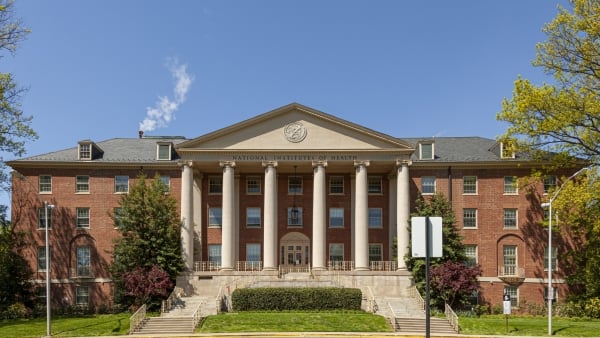
  • Higher ed leaders warn of dire consequences after NIH cut

    Higher ed leaders warn of dire consequences after NIH cut

    In a move that sparked swift outrage from the higher education sector, the National Institutes of Health announced late Friday that it is dramatically cutting funding for grant recipients’ “indirect costs” of conducting medical research at universities, including hazardous waste disposal, utilities and patient safety. 

    “It is difficult to overstate what a catastrophe this will be for the US research and education systems, (particularly) in biomedical fields,” Carl Bergstrom, a biology professor at the University of Washington, posted on Bluesky. “It is deliberate and wanton devastation entirely out of scale with any concern about DEI activities on campuses. The goal is destroy US universities.”

    Effective Monday, the NIH is planning to cap funding of indirect costs at 15 percent of all grants, down from the average of 27 to 28 percent. The change means that colleges and universities are on the hook for millions of dollars. They’ll likely have to cut their budgets or reduce research activities to make up the difference.

    Republicans and President Trump have long sought to limit funding for indirect costs. The latest proposal is similar to a recommendation included in Project 2025, a conservative playbook for the second Trump administration that the president has disavowed. Project 2025 authors said the cap would “reduce federal taxpayer subsidization of leftist agendas.”

    Historically, universities have been able to negotiate reimbursement rates for those indirect costs, with institutional reimbursements averaging nearly 28 percent. Some of the nation’s leading research institutions, including Harvard, Yale and Johns Hopkins Universities, receive reimbursements of more than 60 percent. NIH said in a social media post that it expects to save $4 billion from the change; an Inside Higher Ed analysis of fiscal year 2024 grant data shows that colleges would lose about $4.3 billion in NIH reimbursements if indirect costs were capped at 15 percent.

    Previously, if a college or university received a $5 million grant, they could also be reimbursed up to $1.4 million to pay for related costs, such as renting space for a lab. Under this new policy, that will be capped at $750,000.

    “The United States should have the best medical research in the world,” the NIH said in its announcement. “It is accordingly vital to ensure that as many funds as possible go towards direct scientific research costs rather than administrative overhead.”

    While the NIH said it has the authority to cap indirect costs, Senator Patty Murray, a Democrat from Washington, said on social media Friday that the proposal is illegal.

    “It will mean shuttering labs across the country, layoffs in red & blue states, & derailing lifesaving research on everything from cancer to opioid addiction,” Murray wrote.

    Cuts to ‘Life-Saving’ Research

    While the NIH is casting indirect costs as a burden, Association of American Universities President Barbara R. Snyder said in a statement that they are “real and necessary costs of conducting the groundbreaking research that has led to countless breakthroughs in the past decades.”

    A $4 billion cut to reimbursements for NIH grants, she added, “is quite simply a cut to the life-saving medical research that helps countless American families.”

    NIH has worked feverishly in recent weeks to comply with President Trump’s executive orders to eliminate all support for diversity, equity and inclusion and “gender ideology.” Grant reviews stopped for two weeks, alarming researchers who rely on federal funding, and some scientists worried about the future of their funding under the agency.

    But researchers and their advocates say an abrupt $4 billion cut to NIH funding—which has not been approved by Congress—has dire implications for the future of the United State’s scientific research enterprise and will undermine the NIH’s stated goal of producing superior medical research.  

    “Cuts to reimbursement of these costs are cuts to medical research and represent the federal government stepping back from commitments it has made to world-leading researchers,” Mark Becker, president of the Association of Public Land Grant Universities, said in a statement. “This action will slow advances for millions of patients who desperately need critical breakthroughs and imperil the U.S.’s position as the world leader in biomedical innovation.”

    The NIH is the largest federal funding source for research universities, and has supported breakthroughs in medical technology and treatments for diseases like cancer and Alzheimer’s. 

    Ted Mitchell, president of the American Council on Education, said the decision was “short-sighted, naive, and dangerous.”

    “It will be celebrated wildly by our competitors, who will see this for what it is—a surrender of U.S. supremacy in medical research,” Mitchell said. “It is a self-inflicted wound that, if not reversed, will have dire consequences on U.S. jobs, global competitiveness, and the future growth of a skilled workforce.”


    Source link