

Tag: consolidations

  • Austin ISD eyes school consolidations as enrollment keeps dropping

    Austin ISD eyes school consolidations as enrollment keeps dropping

    Dive Brief:

    • Austin Independent School District in Texas is weighing school consolidations that could go into effect as soon as the 2026-27 school year, amid challenges with prolonged declining enrollment, Superintendent Matias Segura told families in a letter this week. 
    • The district also released a data rubric scoring each of its schools based on size, condition, student enrollment and operational costs. The scores will help inform any changes that might be necessary, including boundary adjustments, transfer policies, or school closures and consolidations, according to the district. 
    • Austin ISD lost over 10,000 students within the past decade — resulting in about 21,000 empty seats districtwide. And it’s likely that enrollment will continue to decrease, the district said.

    Dive Insight:

    “Right now, we’re serving fewer students than we did nearly 30 years ago, but we’re operating more schools than ever. That spreads us too thin and limits what we can offer each campus,” Segura said in the Aug. 11 letter to families. 

    “Consolidation is one piece of a bigger plan to reinvest in what matters most — strong academic programs, outstanding teachers, modern facilities and the wraparound supports that help every student succeed,” the superintendent said.

    District officials said they would make a draft plan available to the community before presenting proposed changes to the board of trustees on Oct. 9. The board is then to vote on a final consolidation plan on Nov. 20. 

    The rubric released Monday measures how aligned a school building is in serving students’ needs. It is not, however, a list of schools that are closing, Segura told families.

    The district said on its consolidation planning website that it will aim to minimize impact on students and families, balance enrollment among the remaining schools, create clear feeder patterns as students move from elementary to middle to high school, and focus on long-term stability for the district. 

    During the 2024-25 school year, Austin ISD enrolled 72,700 students across 113 schools, according to district data. 

    Austin ISD’s planning reflects a broader national trend as many districts reckon with declining enrollment, straining already uncertain school budgets

    The Austin announcement follows similar news from other large urban districts. 

    Last week, Atlanta Public Schools said it was in the early stages of looking at school consolidation and merger plans in the face of significant enrollment drops. Additionally, St. Louis Public Schools in July proposed shuttering over half, or 37 of its 68 schools, within the next two school years due to declining enrollment and buildings running under capacity. 

    Researchers foresee districts having to close and consolidate more schools in the coming months and years, with student enrollment unlikely to rebound. A recent analysis from Bellwether, an education nonprofit, estimates declining enrollment may have cost the nation’s 100 largest districts $5.2 billion in total lost revenue based on 2023-24 enrollment. 

    Public school enrollment changes nationally seemed to have persisted after the COVID-19 pandemic when parents increasingly explored alternatives to the traditional public school model and pivoted to private schools and homeschooling, according to a July study by Education Next. 

    Moving forward, public schools will need to continue navigating not only those shifts, but also declining birth rates and expanding school choice policies at both the state and federal levels.
    Source link

  • Senate committee rejects K-12 grant consolidations in FY 26 bill

    Senate committee rejects K-12 grant consolidations in FY 26 bill

    This audio is auto-generated. Please let us know if you have feedback.

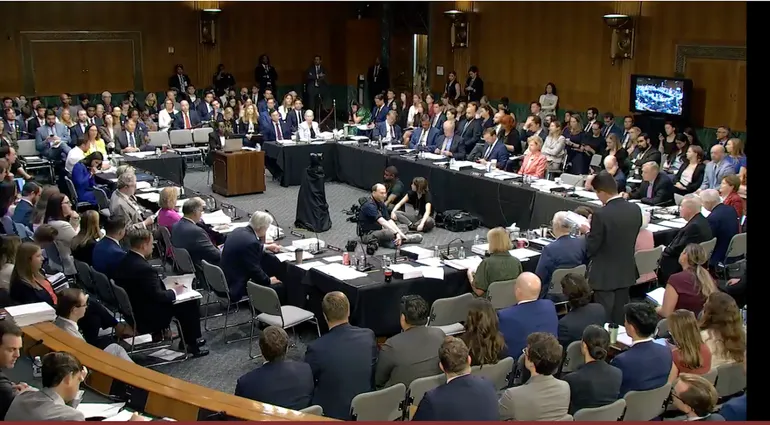
    The U.S. Senate Appropriations Committee on Thursday approved a bipartisan fiscal year 2026 K-12 education bill that would prevent the executive branch from removing Title I and special education programs to agencies outside the U.S. Department of Education. The legislation also rejects several other funding reforms proposed by the Trump administration.

    The bill would require timely awarding of formula grants by the Education Department to states and districts. For several weeks in July, the Education Department and the White House’s Office of Management and Budget withheld $6.2 billion in grant funding that states and districts expected access to starting July 1.

    That funding at pre-approved FY 2025 spending levels was released after the Trump administration conducted a “programmatic review” and added “guardrails” to ensure the funds would not violate executive orders or administration policy, a senior administration official at OMB told K-12 Dive in an email July 25.

    Educators, parents, education organizations, and Republican and Democratic lawmakers had pressured the administration to make the funds available, citing that the disruption in funds was causing school program cuts, canceled contracts and staff layoffs. 

    In total, the Senate Appropriations Committee recommends funding the Education Department in FY 26 at $79 billion, according to the bill text. That’s $12.3 billion more than President Donald Trump’s proposal of $66.7 billion. In the current fiscal year, the Education Department is funded at $78.7 billion. 

    “The bill also supports families by investing in education and affordable child care, which promotes financial stability for working parents and benefits our economy,” said Appropriations Committee Chair Sen. Susan Collins, R-Maine.

    The proposed education budget — which was included in funding legislation for the U.S. Departments of Labor, Health and Human Services, and related agencies — passed the committee in a 26-3 vote. 

    “Our bills reject devastating cuts — and reject many of this administration’s absurd proposals — like dismantling the Department of Education,” said Sen. Patty Murray, D-Wash., vice chair of the Senate Appropriations Committee, in her opening remarks. 

    “We all know President Trump cannot dismantle the Department of Education or ship education programs to other agencies. Authorizing laws prevent that. Appropriations laws prevent that,” Murray said. 

    Trump has said he wants to reduce the size and scope of the federal government and give states and localities more fiscal decision-making authority while reducing bureaucracy. 

    In March, Trump signed an executive order to shutter the Education Department to the “maximum extent appropriate.” Congress, however, would need to approve the closing of the agency.

    Maintaining separate formula grants

    The Trump administration’s budget proposed a new K-12 Simplified Funding Program that would merge 18 current competitive formula funding grant programs into one $2 billion formula grant program. The administration said the SFP would spur innovation and give states more spending flexibility and decision-making power.

    The Senate Appropriation Committee instead rejected that plan by keeping the formula grants separate. The Senate plan would provide a $50 million increase over FY 2025 spending for both Title I-A funding for low-income schools and districts, and for special education services under the Individuals with Disabilities Education Act.

    The bill would maintain current spending levels, except for a few reductions, across other K-12 formula and competitive grant programs targeting improvements in teaching and learning, according to a bill summary from Murray’s office. 

    Other notable spending proposals from the Senate Appropriations Committee FY 26 bill include:

    • The Office for Civil Rights would maintain level spending at $140 million.
    • The Institute of Education Sciences would be funded at $793 million, level with the FY 25 budget. 
    • Title I and IDEA would be funded at $18.5 billion and $15.2 billion, respectively. The two grant programs make up the largest share of funding for K-12 at the Education Department.
    • Under the HHS portion of the legislation, the committee recommends increasing funding for the early childhood learning programs Head Start and the Child Care and Community Block grant by $85 million each to $12.4 billion and $8.8 billion, respectively. 

    The Senate Appropriations bill will now be considered by the House and full Senate. FY 26 starts Oct. 1.

    Source link