Tag: contemporary

  • Dialogic assessments are the missing piece in contemporary assessment debates

    Dialogic assessments are the missing piece in contemporary assessment debates

    When I ask apprentices to reflect on their learning in professional discussions, I often hear a similar story:

    It wasn’t just about what I knew – it was how I connected it all. That’s when it clicked.

    That’s the value of dialogic assessment. It surfaces hidden knowledge, creates space for reflection, and validates professional judgement in ways that traditional essays often cannot.

    Dialogic assessment shifts the emphasis from static products – the essay, the exam – to dynamic, real-time engagement. These assessments include structured discussions, viva-style conversations, or portfolio presentations. What unites them is their reliance on interaction, reflection, and responsiveness in the moment.

    Unlike “oral exams” of old, these conversations require learners to explain reasoning, apply knowledge, and reflect on lived experience. They capture the complex but authentic process of thinking – not just the polished outcome.

    In Australia, “interactive orals” have been adopted at scale to promote integrity and authentic learning, with positive feedback from staff and students. Several UK universities have piloted viva-style alternatives to traditional coursework with similar results. What apprenticeships have long taken for granted is now being recognised more widely: dialogue is a powerful form of assessment.

    Lessons from apprenticeships

    In apprenticeships and work-based learning, dialogic assessment is not an add-on – it’s essential. Apprentices regularly take part in professional discussions (PDs) and portfolio presentations as part of both formative and end-point assessment.

    What makes them so powerful? They are inclusive, as they allow different strengths to emerge. Written tasks may favour those fluent in academic conventions, while discussions reveal applied judgement and reflective thinking. They are authentic, in that they mirror real workplace activities such as interviews, stakeholder reviews, and project pitches. And they can be transformative – apprentices often describe PDs as moments when fragmented knowledge comes together through dialogue.

    One apprentice told me:

    It wasn’t until I talked it through that I realised I knew more than I thought – I just couldn’t get it down on paper.

    For international students, dialogic assessment can also level the playing field by valuing applied reasoning over written fluency, reducing the barriers posed by rigid academic writing norms.

    My doctoral research has shown that PDs not only assess knowledge but also co-create it. They push learners to prepare more deeply, reflect more critically, and engage more authentically. Tutors report richer opportunities for feedback in the process itself, while employers highlight their relevance to workplace practice.

    And AI fits into this picture too. When ChatGPT and similar tools emerged in late 2022, many feared the end of traditional written assessment. Universities scrambled for answers – detection software, bans, or a return to the three-hour exam. The risk has been a slide towards high-surveillance, low-trust assessment cultures.

    But dialogic assessment offers another path. Its strength is precisely that it asks students to do what AI cannot:

    • authentic reflection, as learners connect insights to their own lived experience.
    • real-time reasoning – learners respond to questions, defend ideas, and adapt on the spot.
    • professional identity, where the kind of reflective judgement expected in real workplaces is practised.

    Assessment futures

    Scaling dialogic assessment isn’t without hurdles. Large cohorts and workload pressures can make universities hesitant. Online viva formats also raise equity issues for students without stable internet or quiet environments.

    But these challenges can be mitigated: clear rubrics, tutor training, and reliable digital platforms make it possible to mainstream dialogic formats without compromising rigour or inclusivity. Apprenticeships show it can be done at scale – thousands of students sit PDs every year.

    Crucially, dialogic assessment also aligns neatly with regulatory frameworks. The Office for Students requires that assessments be valid, reliable, and representative of authentic learning. The QAA Quality Code emphasises inclusivity and support for learning. Dialogic formats tick all these boxes.

    The AI panic has created a rare opportunity. Universities can either double down on outdated methods – or embrace formats that are more authentic, equitable, and future-oriented.

    This doesn’t mean abandoning essays or projects altogether. But it could mean ensuring every programme includes at least one dialogic assessment – whether a viva, professional discussion, or reflective dialogue.

    Apprenticeships have demonstrated that dialogic assessments are effective. They are rigorous, scalable, and trusted. Now is the time for the wider higher education sector to recognise their value – not as a niche alternative, but as a core element of assessment in the AI era.


    Source link

  • The four contemporary mindsets of leadership

    The four contemporary mindsets of leadership

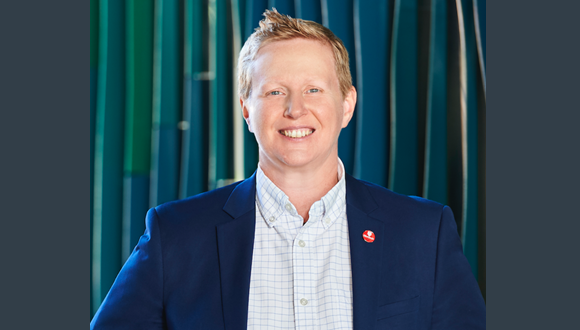
    Following the launch of Advance HE’s Framework for Leading in Higher Education, Romy Lawson, Senior Deputy Vice Chancellor at Flinders University in Australia, shares thoughts on contemporary leadership

    When I reflect on my career, and particularly my leadership development, I must admit it was rather adhoc and self-motivated instead of being part of a planned and structured program. 

    As I believe is probably the case for many others, I learnt as a follower. I learnt on the job through doing. I learnt through assimilating and accommodating. I learnt by being challenged. I learnt from mentors, and occasionally I learnt through being trained. 

    These are all very valuable ways to learn but I question if I had had a framework to use as a reference point, could I have planned my development in a more productive fashion? Self-assessing my competencies in different areas, seeking out opportunities to optimise strengths and work on areas of development, as a tool to help showcase my ability and as a way to support career choices.

    Framework for leadership

    I think having a framework is even more important in this day and age where many top-down leadership models of leader-follower are being left behind for a leader-leader model. A model where decision-making authority is delegated down to where the information originated (control), where focus is given on increasing competence and knowledge so teams can make good decisions (competence), and ensuring staff are clear on the organisation’s goals to align their decisions (clarity).

    This shift in leadership was, in part, derived from the black swan event of the Covid-19 pandemic that made us appreciate that there are times when there just is not a blueprint. During times like this, leaders must adapt, transition, transform, shift and adjust. 

    The experience of leading in a university during a pandemic made me question whether the role of a leader has changed permanently. I adopted four contemporary leadership mindsets that I believe are essential for the modern-day leader.

    1. Power of doubt

    During Covid, the one certainty was uncertainty. This meant the ability to predict what was going to happen and, subsequently, knowing how and what to plan became very challenging. During this time leaders still had to make decisions, often with limited information, and under immense time pressures. In hindsight, some of these decisions were not always the right decisions, or only had value for a short time span. 

    The power of doubt is when leaders are willing to constantly question themselves, to doubt their decisions, and have the humility to see when decisions are wrong or only appropriate for a moment in time. Modern leaders need to be open to reversing or changing their decisions. Adopting this approach allows leaders to be more agile as well as more relatable.

    2. Incomplete leader (complete team)

    The second important leadership shift is the move from leader as master to that of the incomplete leader (complete team). Leaders need to acknowledge that in some areas they will always have more to learn, or they have areas of weakness. Leaders need to have the self-awareness to understand that they are always incomplete. 

    The way to achieve completeness is through building a complete team; a group that augments the leader’s skills and compensates for their limitations. One of the most important roles of the leader is to purposefully select and assemble a team of people representing a wide range of skills and abilities suitable for the current climate. Leaders then need to be a part of this team, rather than an external leader, for it to function most effectively.

    3. Engagement

    Leaders need to recognise the value of their people in a direct and intentional way. It is time for leaders to open the doors to connect, engage, listen and understand where people are coming from; their intentions.

    Leaders need to adopt meaningful dialogue rather than broadcasting; to strive to understand before being understood; and when they think they understand, to listen twice as hard. This is true engagement.

    4. Empowering

    Empowering people is the last leadership approach that is fundamental.

    Staff often experience frustrations in their work environments that make their job hard or annoying. These may be simply the equivalent of “pebbles in their shoes”, where it is possible for an individual to fix the problem and remove the pebble themselves. However, frequently staff do not take this initiative, because they need to feel they have the power to stop and improve something themselves or the tools to support them in solving the issue. Often in these situations what is most important to the staff member is for the pebble to be acknowledged by others before they are ready to sort it out themselves. 

    Challenging people to find their pebbles empowers them and providing tools helps the pebbles to be recognised and the solution celebrated. 

    Repositioning leadership

    The Framework for Leading in Higher Education helps us to reposition leadership to this more contemporary perspective. It builds from the concept of knowing, being, doing, which is an Aboriginal model of leadership. This model sees leaders gaining an understanding that they translate into application and in time these actions become behaviour, then values and mindsets. 

    The Framework for Leading in Higher Education provides guidance for leaders at any level to enhance their ‘being’ as a leader. 

    Learn more about Advance HE’s Framework for Leading in Higher Education and download the resource for free now.

    Advance HE also offers leadership development designed for staff working in higher education. Explore the opportunities.

    Romy Lawson is the Senior Deputy Vice Chancellor at Flinders University. She has been actively involved in higher education in both the UK and Australia. She is a member of Advance HE’s Steering Group for the Framework for Leading in Higher Education and sits on Advance HE’s Leadership & Management Advisory Board. She is also Chair of Universities Australia DVCA Executive and Co-Chair of UA Women.

    Do you have an idea for a story?
    Email [email protected]

    Source link