Tag: council

  • Appointed council members defended at inquiry – Campus Review

    Appointed council members defended at inquiry – Campus Review

    Academics and businesspeople have given evidence to a NSW inquiry into university governance about the role appointed council members play in the management of institutions.

    Please login below to view content or subscribe now.

    Membership Login

    Source link

  • Expert council on governance reports – Campus Review

    Expert council on governance reports – Campus Review

    Universities will be required to justify how much is spent on consultants and disclose whether vice-chancellors are drawing multiple incomes as recommended by a governance committee on Saturday.

    Please login below to view content or subscribe now.

    Membership Login

    Source link

  • British Council undeterred after Russian strike “practically obliterated” Kyiv HQ

    British Council undeterred after Russian strike “practically obliterated” Kyiv HQ

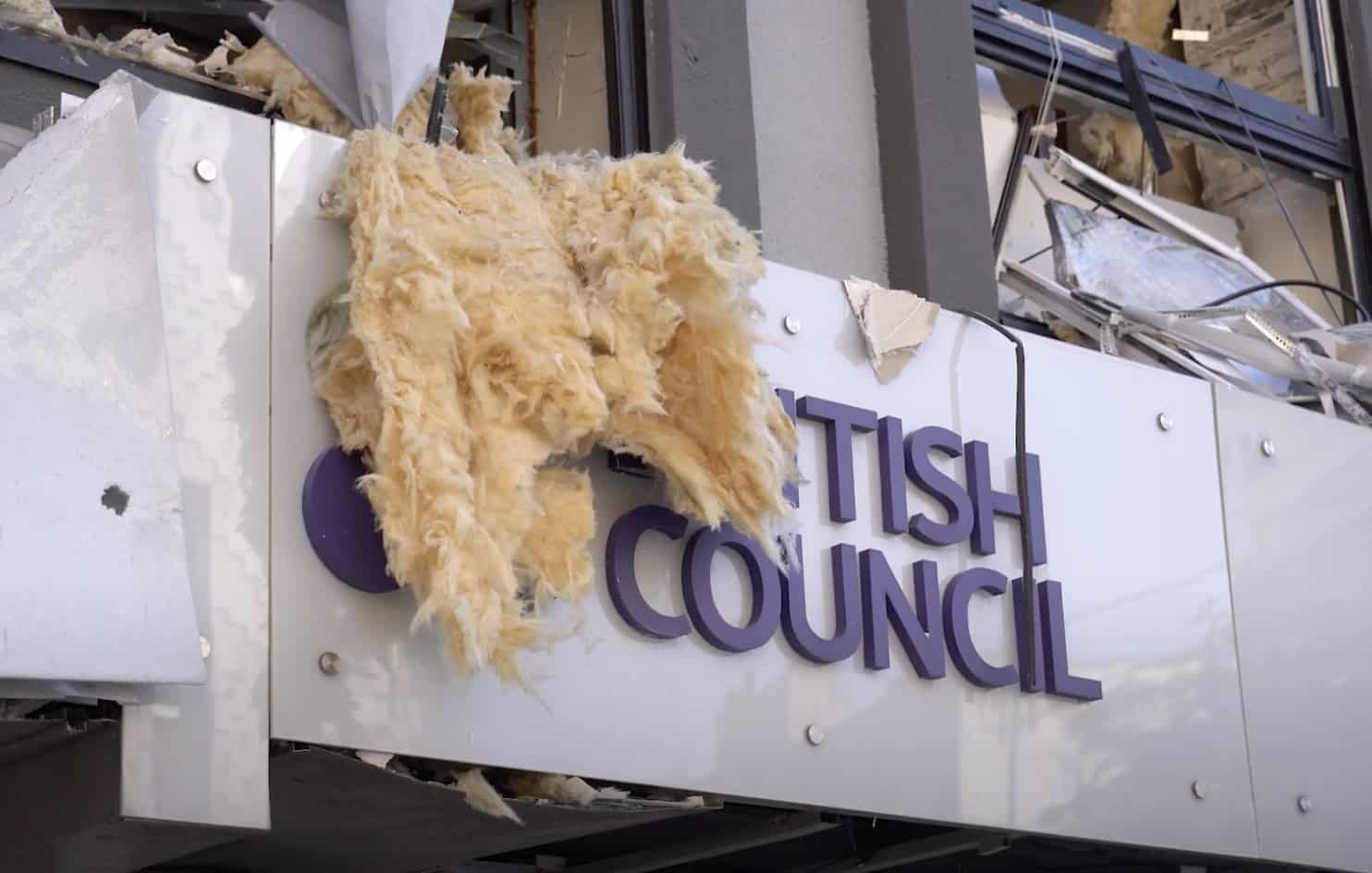
    Speaking on August 29, two days after an attack on the Ukrainian capital in which at least 16 people were killed, the British Council’s director for the country, Colm McGivern, laid bare the impact on the organisation’s offices in Kyiv.

    Standing outside the ravaged offices, which were severely damaged after Russian forces fired two missiles at it, McGivern said that the building had been “absolutely devastated – it’s been practically obliterated”.

    While extending condolences to the families of those who died during the “horrific attack”, McGivern was firm in his resolve that the British Council’s work in Ukraine would continue even as the war with Russia wages on.

    “I’d like to tell everyone that the British Council’s resolve is still there,” he said. “We will be here in Ukraine, we’ve been here 30 years. We’ll continue our work.”

    He pointed out that the organisation did not stop its work in Ukraine following Russia’s invasion in 2022, and that this will not change. “To the contrary, we’re more determined than ever to make sure that cultural and educational links between the UK and Ukraine can thrive, not just survive,” he said.

    He pledged that an upcoming British Council event in Lviv, located in the west of Ukraine, would take place this week as planned, as well as promising young Ukrainians that face-to-face learning would also resume in the coming days.”We will keep those promises. We will start those classes,” he stressed.

    McGivern extended best wishes to a British Council colleague who had been injured on the evening of the attack, who he said was recovering in hospital. And he said his team had been overwhelmed by the support they had received from the international education community, as well as the Ukrainian first responders and emergency services who helped in the immediate aftermath of the attack.

    There has been an outpouring of support for British Council colleagues in Ukraine by the international education community.

    Our work will not stop now because of this horrific attack. To the contrary, we’re more determined than ever
    Colm McGivern, British Council

    Gwen van der Helden, a professor of education reconstruction during/post war, crisis and conflict at the University of Warwick and a visiting professor at V. N. Karazin Kharkiv National University, expressed her shock.

    “The BC is hardly of military interest, not a danger to anyone, and the people working there do nothing than trying to contribute to the future of fellow citizens. It is utter codswallop to think that the BC is in any way a reasonable target. But then, so few of the targets that have been hit in this war have been,” she wrote on LinkedIn.

    “Furious is how we should all feel at this point. Our colleagues in Kyiv (and yes I do think we should regard BC colleagues as exactly that), deserve better.
    Sending courage, strength and a large portion of defiance to our British Council colleagues.”

    The British Council’s mission in Ukraine offers English language programs and other training or educational programs. In June, Russia made accusations that it was being used as a cover for British intelligence operations in Kyiv.

    After the attack, British Council chief executive Scott McDonald confirmed that bombing in the city had damaged its offices.

    “Our guard was injured and is shaken but stable. At the insistence of my amazing colleagues, we will continue operations in Ukraine today wherever possible,” he said.

    Meanwhile, European leaders have condemned the strike, which saw 629 missiles and drones launched at the city.

    President of the European Council, António Costa, confirmed that the British Council’s Ukrainian office “was damaged in this deliberate Russian strike”, while UK Prime Minister Keir Starmer hit out at Vladimir Putin – accusing him of “sabotaging peace”.

    Source link

  • Canberra staff “in the dark” after council review – Campus Review

    Canberra staff “in the dark” after council review – Campus Review

    A review of the University of Canberra’s (UC) management said governing body members should be held more accountable after staff felt ‘shut down‘ and shunned from decision making.

    Please login below to view content or subscribe now.

    Membership Login

    Source link

  • Chancellor’s council kicks VC pay to tribunal – Campus Review

    Chancellor’s council kicks VC pay to tribunal – Campus Review

    The University Chancellors Council (UCC) on Tuesday said the Commonwealth Remuneration Tribunal should advise on vice-chancellor pay packages, some of which are exceeding $1 million per year.

    Please login below to view content or subscribe now.

    Membership Login

    Source link

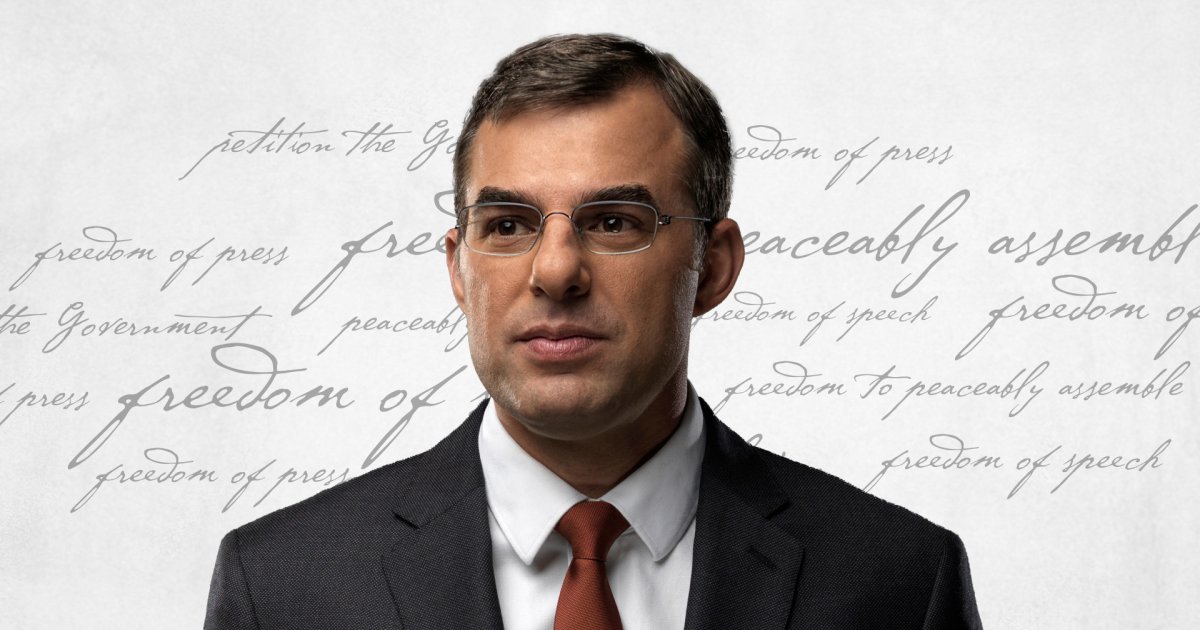
  • Former Rep. Justin Amash joins FIRE’s Advisory Council

    Former Rep. Justin Amash joins FIRE’s Advisory Council

    When former Representative Justin Amash announced that he would not be seeking reelection to the House of Representatives in 2020, a lot of people wondered what he was going to do next. Voters in western Michigan first elected him to the House in 2010, and Amash won reelection four times. In office, he developed a reputation as a principled independent who wasn’t afraid of calling out members in his own party — including the president — when he thought their actions threatened Americans’ civil liberties.

    Since leaving Congress, Amash has remained an outspoken advocate for the individual freedoms protected under the Constitution, especially free speech.

    “The value of free speech comes from encountering views that are unorthodox, uncommon, or unaccepted. Humans learn and grow by engaging with ideas that challenge conventional thinking,” he wrote on Twitter back in 2022. “Free speech is a barren concept if people are limited to expressing views already widely held.”

    FIRE is excited to announce that Amash has joined our Advisory Council, where his expertise in constitutional law and federal policymaking will support FIRE’s mission to defend and sustain the individual rights of all Americans to free speech and free thought — the most essential qualities of liberty.

    Amash remains politically active and is a vocal opponent of all efforts — from both the left and the right — to undermine constitutional protections and individual liberty. 

    Amash was born in Grand Rapids, Michigan, and has spent most of his life there. His father, a Palestinian refugee, and his mother, a Syrian immigrant, inspired his dedication to the cause of liberty. 

    “When I was a child, they spoke often about the value of freedom and how blessed we were to live in America,” says Amash.

    A graduate of the University of Michigan, with a bachelor’s degree in 2002 and juris doctor in 2005, Amash practiced law until his election to the Michigan House of Representatives in 2008, where he served one term before being elected to Congress in 2010, where he served until 2021.

    While in office, much of Amash’s work focused on civil liberties issues and protecting constitutionally secured rights. He was the chairman of the House Liberty Caucus — a nonpartisan congressional caucus supporting limited, constitutional government — and he was a member of the Second Amendment Caucus and co-chair of the Fourth Amendment Advisory Committee. His sponsored legislation included bills to rein in warrantless government surveillance, eliminate civil asset forfeiture, and end qualified immunity for government officials who violate constitutional rights. Since leaving office, Amash has also called for repealing the Espionage Act, which the federal government has used to punish protected free speech for more than 200 years.

    Amash was known for explaining his votes online as part of a commitment to government transparency and accountability. Amash remains politically active and is a vocal opponent of all efforts — from both the left and the right — to undermine constitutional protections and individual liberty. His commentary can be found on X and Substack, and his words have recently appeared in Reason MagazineThe Free Press, and other outlets.

    Source link

  • Monash underpays $7.6m as ‘expert council’ on uni governance members announced

    Monash underpays $7.6m as ‘expert council’ on uni governance members announced

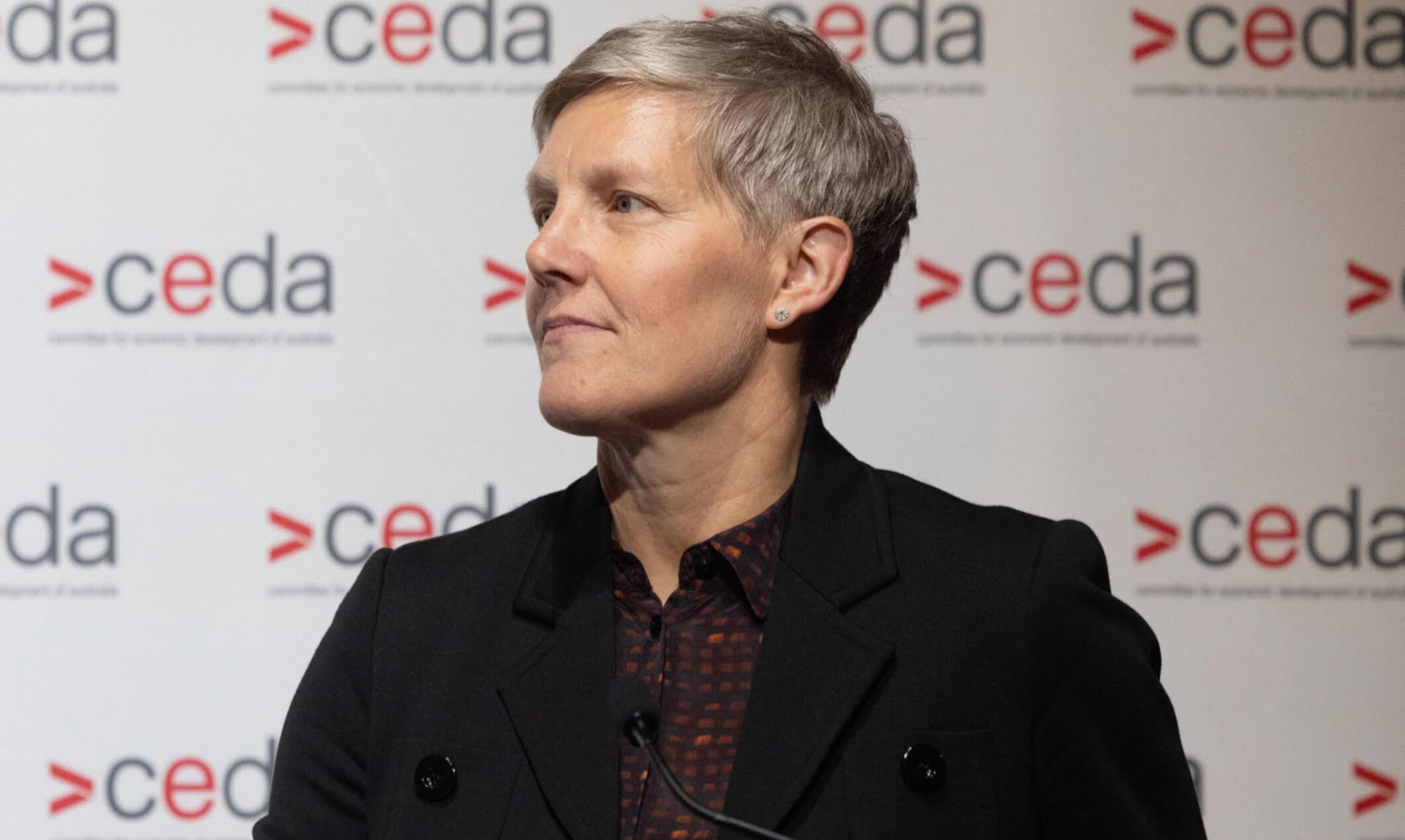
    CEDA CEO Melinda Cilento interviewing Prime Minister Anthony Albanese in August last year. Picture: Irene Dowdy

    The members who will sit on the council overseeing university governance and advising government on “universities being good employers” have been announced.

    Please login below to view content or subscribe now.

    Membership Login

    Source link

  • Historians’ council vetoes Gaza scholasticide condemnation

    Historians’ council vetoes Gaza scholasticide condemnation

    The American Historical Association’s top elected body has shot down a resolution opposing scholasticide in Gaza, after members who attended its annual convention approved the statement early this month by a 428-to-88 margin.

    The association’s elected council, which has 16 voting members, could have accepted the resolution or sent it to the organization’s roughly 10,450 members for a vote. Instead, the council rejected it as the official position of the association.

    Jim Grossman, the association’s executive director and a nonvoting member of the council, said the Thursday afternoon vote was 11 to 4, with one abstention. He said the meeting was over Zoom.

    The rejected resolution had condemned the U.S. government’s funding of Israel, saying it “has supplied Israel with the weapons being used to commit this scholasticide” and that Israel “has effectively obliterated Gaza’s education system.” Scholasticide is defined as the intentional eradication of an education system.

    The resolution also called for a permanent ceasefire and for the association to form a committee to help rebuild Gaza’s “educational infrastructure.”

    In a written explanation of the veto, the council said it “deplores any intentional destruction of Palestinian educational institutions, libraries, universities and archives in Gaza.”

    However, it considers the resolution to be a contravention of AHA’s “constitution and bylaws because it lies outside the scope of the association’s mission and purpose.” The constitution, the council noted, defines that mission and purpose as “the promotion of historical studies through the encouragement of research, teaching and publication; the collection and preservation of historical documents and artifacts; the dissemination of historical records and information; the broadening of historical knowledge among the general public; and the pursuit of kindred activities in the interest of history.”

    Grossman said the vote to approve that explanation was 10 to zero with three abstentions, after some members left the meeting following the veto vote. He said he couldn’t reveal who voted which way in either tally because the discussion was confidential.

    “We consider it imperative that council members be able to speak freely and candidly during the meeting, and that’s why they’re not recorded and that’s why we do not quote any individual council members,” Grossman said. “And they did speak freely and candidly.”

    Van Gosse, a co-chair and founder of Historians for Peace and Democracy, which wrote the resolution, said “we are extremely shocked by this decision, and disappointed.” He said, “It overturns the democratic decision at that huge [conference] business meeting and the landslide vote.”

    Anne Hyde, a council member and a University of Oklahoma history professor, said she voted to veto “to protect the AHA’s reputation as an unbiased historical actor,” noting that the organization does congressional briefings. She also said the current war in Gaza “is not settled history, so we’re not clear what happened or who to blame or when it began even, so it isn’t something that a professional organization should be commenting on yet.”

    Asked why she didn’t support sending the resolution to the full membership for a vote, Hyde said, “As a council member, you really are thinking about the full 10,000 people, and it includes high school teachers, people who teach in really difficult circumstances and who don’t agree about this issue.” She said, “You could imagine all kinds of scenarios” where a full membership vote “still wasn’t representative.”

    This marks the second time this academic year that the top body of a major scholarly organization has shot down a pro-Palestinian resolution before the group’s full membership could vote on it. In the fall, the Modern Language Association’s executive council rejected a resolution that would’ve also accused Israel of scholasticide—and would’ve gone further by endorsing the international boycott, divestment and sanctions movement against Israeli policy.

    Unlike the American Historical Association, the Modern Language Association Executive Council, which has different bylaws, axed that resolution before its convention this month even began.

    In February 2022, the AHA council did approve a statement on another current war. It condemned “in the strongest possible terms Russia’s recent invasion of Ukraine” and said, “This act of overt military aggression violates the sovereignty of an independent Ukraine, threatening stability in the broader region and across the world.”

    The statement rebutted Russian president Vladimir Putin’s historical justifications for the invasion, saying, “Putin grossly simplifies and distorts Ukraine’s history, essentially erasing its distinct past and rendering it indistinguishable from Russia.” The statement ended with this: “We vigorously support the Ukrainian nation and its people in their resistance to Russian military aggression and the twisted mythology that President Putin has invented to justify his violation of international norms.”

    Grossman told Inside Higher Ed Friday that “the Ukraine statement was purely historical. It was well within our scope.” He said, “No serious professional historian in the United States considers Putin’s historical explanation to be anything close to accurate history, so the war itself was based on an abuse of history, and that’s what our statement addressed.” There’s “no such consensus” among U.S. historians on the situation in Gaza, he said.

    Two pro-Israel organizations, the American Jewish Committee and the Academic Engagement Network, said they sent a joint letter to the council Thursday urging the veto. The letter calls the scholasticide accusation “preposterous.”

    “There is no evidence to suggest that Israel is deliberately and systematically targeting the Palestinian educational system for destruction,” the letter said. “The resolution blatantly ignores the fact that Hamas routinely launches rockets from, and houses its weapons and fighters in, civilian structures and facilities.”

    The organizations wrote that “as an institution, the AHA should steer clear of weighing in on contentious political conflicts, particularly when so many members vehemently disagree.” They said such resolutions can “create a hostile and unwelcoming environment for scholars and students who identify as Zionists and those with strong personal, academic and professional ties to Israel.” They further argued that “the association would be better served by adopting a stance of political neutrality on geopolitical issues.”

    This story has been updated.

    Source link